
Non-fiction
These are the non-fiction books I have read since the beginning of 2019 I have been reading. I like non-fiction but have started reading fiction since the love of my life passed away.
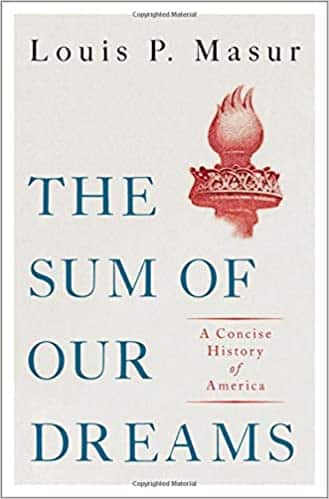
by Louis P. Masur
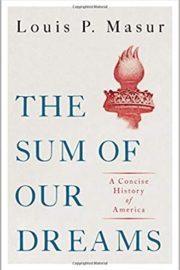
The Sum of Our Dreams: A Concise History of America by Louis P. Masur is a book I got through my membership at One Day University. Professor Masur is one of the best teaches that One Day University has. He is the Board of Governors Distinguished Professor of American Studies and History at Rutgers University.
Most concise histories leave out more than they include. I found the Sum of our Dreams to be an excellent book to read, and professor Masur conveyed the American experience concisely and clearly. The more recent history is complex as events like the Global War on Terror are still being analyzed and re-understood.
Evoking Barack Obama’s belief that America remains the “sum of its dreams,” Masur locates the origin of those dreams of freedom, equality, and opportunity and traces their progress chronologically, illuminating the nation’s struggle over time to articulate and fulfill their promise.
Masur lets the story of American tell itself. Inspired by James Baldwin’s observation that “American history is longer, larger, more beautiful and more terrible than anything anyone has ever said about it,” he expands our notion of that history while identifying its threads.
I recommend this book as well as any of Professor Masur’s lectures at One Day University.
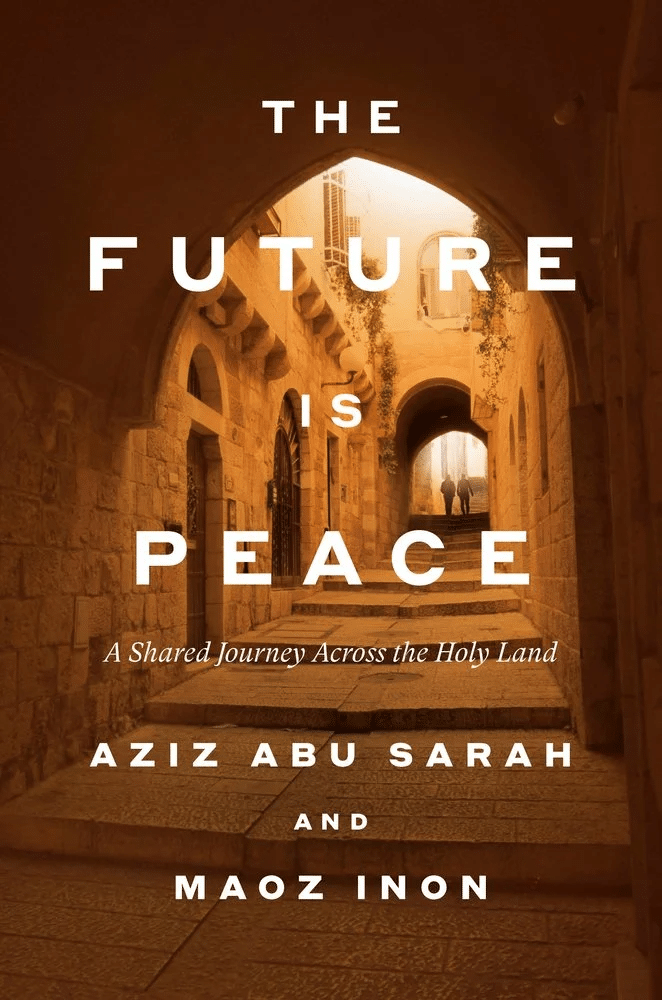
by Aziz Abu Sarah and Maoz Inon
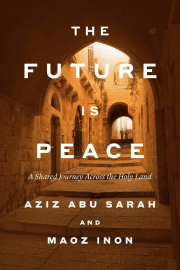
“The Future Is Peace: A Shared Journey Across the Holy Land” explores the experiences of two lifelong peace activists, Aziz Abu Sarah and Maoz Inon, who serve as guides in Israel and Palestine. Both have personally endured loss due to the ongoing conflict. They lead readers on a profound and transformative journey through this sacred yet tumultuous land, revealing the historical, political, and personal narratives that both divide and connect their communities and peoples.
“We do not see ourselves as Palestinians and Israelis, or as Jews and Arabs, but as human beings who believe in fostering a culture of dialogue, a culture of forgiveness, and a culture of peace. To those who see only division lines, we say: If you must divide us, let it be as those who believe in peace and equality and those who don’t… yet.”
Palestinian Aziz Abu Sarah and Maoz Inon forged a bond of brotherhood when the world expected them to be enemies. Both have lost family to the conflict. Both have known the bitterness of righteous anger. Yet, they chose a different path.
In The Future Is Peace, Sarah and Inon take readers on a transformative weeklong journey across a sacred and bloodstained land. Facing competing narratives, they explore how compassion and unity can pull humanity back from the precipice of blind hatred. Throughout their travels, they have been asked again and again: In the face of so much loss, how can we ever find hope? Their answer is always the same. One cannot find hope. We must create it.
This book is a rebuttal to a broken world and a bold challenge to the belief that more violence can ever bring security. Told with unflinching honesty, their story is proof that peace is not a naive dream, but a courageous choice—for reconciliation to heal the wounds of revenge, for partnerships to change a destiny of war, and for empathy to save us from drowning in sorrow.
Pairing unapologetic candor with inspirational prose, Sarah and Inon are sending an urgent message: the people have the power to make change. Peace is inevitable. For Palestinians, for Israelis, and for the world that awaits their example, it is not just possible—it is the future.
Aziz Abu Sarah serves as Co-CEO of InterAct International, a nonprofit organization dedicated to promoting peace in the Middle East. He is a peacebuilder, entrepreneur, National Geographic Explorer, TED Fellow, and a respected speaker and trainer in conflict resolution and responsible travel.
Aziz is also the co-founder of MEJDI Tours, a travel company aiming to transform tourism into a powerful tool for citizen diplomacy. He has received numerous accolades, including awards from the United Nations, the Institute of International Education, and the Explorers Club.
Recognized as one of the world’s 500 most influential Muslims by the Royal Islamic Strategic Studies Center in Jordan, Aziz has contributed opinion pieces to prominent publications such as The New York Times, The Washington Post, Al-Quds, and Haaretz.
Maoz Inon is the Co-CEO of InterAct International, a nonprofit organization dedicated to promoting peace in the Middle East. He is a peace activist from Israel and an entrepreneur. In recognition of his efforts, he has received the prestigious Franco-German Human Rights Prize and the Shared Living Award from Abraham Initiatives.
He has spoken before audiences on Capitol Hill, at universities across the United States, and in the European Parliament. Additionally, Inon has contributed articles to various publications, including The Washington Post, Al Jazeera, and Haaretz.
He has also founded several initiatives aimed at fostering peace in Israel and the Middle East, including the Jesus Trail, Fauzi Azar Inn, and the Abraham Hostel & Tour brands.
Discover your next favorite book and dive into a world of curated, exciting reads by purchasing through my links. You’ll have access to a diverse selection of books I’ve personally vetted for quality and enjoyment. Supporting these selections not only helps me continue to provide you with personalized recommendations but also ensures you have access to meaningful stories that enrich your life. Your support truly makes a difference in helping me share more books and insights with you!
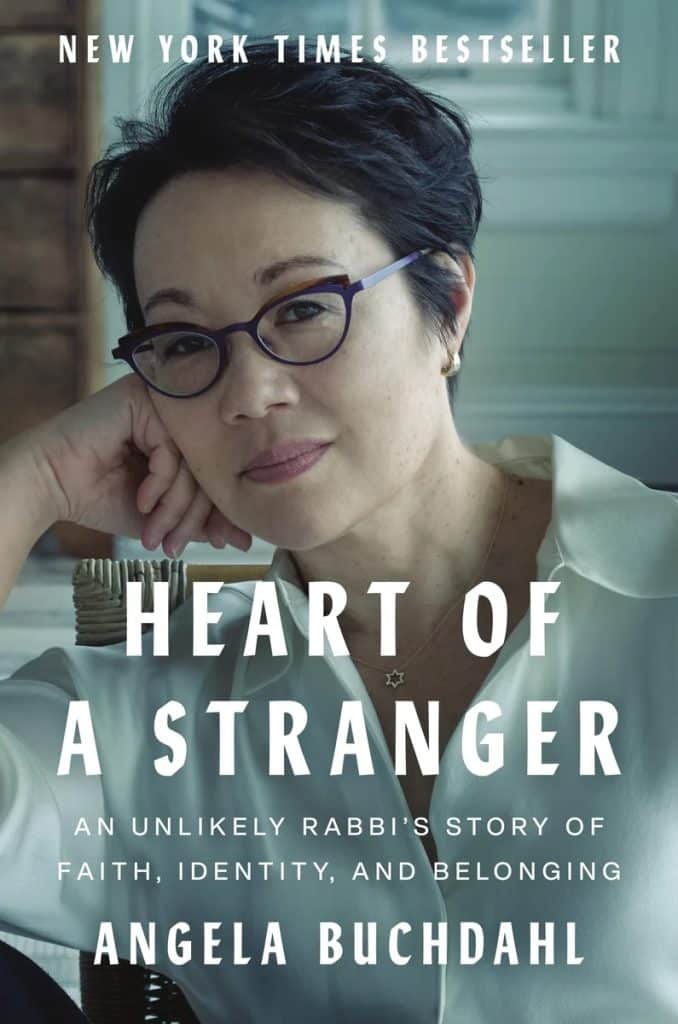
by Rabbi Angela Warnick Buchdahl
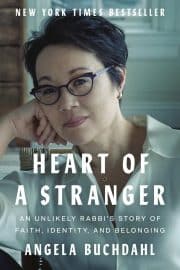
In “Heart of a Stranger,” Angela Buchdahl shares her journey from feeling like an outsider to becoming an officiant. She describes her transformation from estrangement to belonging, ultimately emerging with a deep conviction that we are all connected to a larger whole and purpose. Her book serves as both a memoir and a spiritual guide for everyday living, addressing a need that many of us experience today. As the first Asian American ordained as a rabbi, she offers a compelling account of her evolution into one of the world’s most respected religious leaders.
Angela Buchdahl was born in Seoul, the daughter of a Korean Buddhist mother and Jewish American father. Profoundly spiritual from a young age, by sixteen, she felt the first stirrings to become a rabbi. Despite the naysayers and periods of self-doubt—Would a mixed-race woman ever be seen as authentically Jewish or chosen to lead a congregation?—she stayed the course, which took her first to Yale, then to rabbinical school, and finally to the pulpit of one of the largest, most influential congregations in the world.
Today, Angela Buchdahl inspires Jews and non-Jews alike with her invigorating, joyful approach to worship and her belief in the power of faith, gratitude, and responsibility for one another, regardless of religion. She does not shy away from difficult topics, from racism within the Jewish community and the sexism she confronted when she aspired to the top job, to rising antisemitism today. Buchdahl teaches how these challenges, which can make one feel like a stranger, can ultimately be the source of our greatest empathy and strength.
While reading this book, I experienced a revival and deepening of my faith. “Heart of a Stranger,” “Man’s Search for Meaning,” “Judaism is About Love,” “Hostage,” and “The Amen Effect” are all cherished titles that I will reference and reread for years to come.
Angela Buchdahl is the first Asian American rabbi. She serves as the Senior Rabbi of Central Synagogue in New York City, the first woman to lead this flagship congregation in its 185-year history. Under her leadership, Central has grown into one of the largest synagogues in the world, with live-stream viewers in more than 100 countries. She has led prayers in the White House for two U.S. presidents and has been featured on national news outlets, including Today, NPR, and The Wall Street Journal, to discuss the day’s moral issues.
Rabbi Buchdahl and her husband live in New York City and have three children.
Discover your next favorite book and dive into a world of curated, exciting reads by purchasing through my links. You’ll have access to a diverse selection of books that I’ve personally vetted to ensure quality and enjoyment. Additionally, by supporting these selections, you’ll help me continue to provide you with more personalized recommendations. I earn a small commission from your purchase, which allows me to buy and share even more books with you. Your support truly makes a difference!
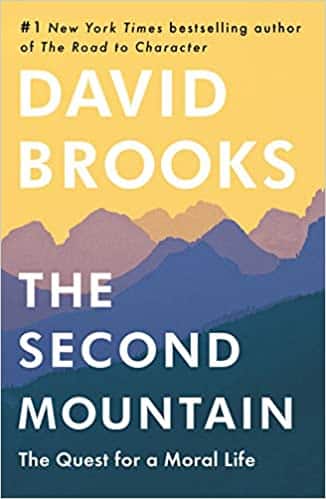
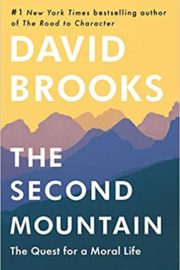
by David Brooks
 The Second Mountain: The Quest for a Moral Life by David Brooks is a book I often recommend. Mr. Brooks writes about the first mountain that most people climb. The book challenges the reader to “live for a cause greater than themselves.”
It is about “to be a success, make your mark, experience personal happiness.” Even when they reach the top of the mountain, most people find they are unhappy. The climb to the summit has become unsatisfying.
On the second mountain, life moves from self-centered to other-centered.” Life becomes interdependent, not independent; it becomes a life of commitment, not about us.
Mr. Brooks “explores the four commitments that define a life of meaning and purpose: to a spouse and family, to a vocation, to a philosophy or faith, and to a community.
We live in a society, Brooks argues, that celebrates freedom, that tells us to be true to ourselves, at the expense of surrendering to a cause, rooting ourselves in a neighborhood, binding ourselves to others by social solidarity and love. We have taken individualism to the extreme—and in the process we have torn the social fabric in a thousand different ways.
When I read The Second Mountain, it became clear that Jan and I never even attempted to climb the first mountain. We were constantly climbing the second mountain.
We had chosen to do work that repaired the world; we both had a faith community and lived in a community.
All we were missing as far as commitments when we met was each other. Our love for each other provided the missing link and allowed us to climb to the top of the second mountain.
The Jan Lilien Education Fund sponsors ongoing sustainability and environmental awareness programs. Gifts made this month; I will match dollar-for-dollar. All donations are tax-deductible.
I receive a commission when you buy a book or product using a link on this page. Thank you for supporting Sharing Jan’s Love blog.
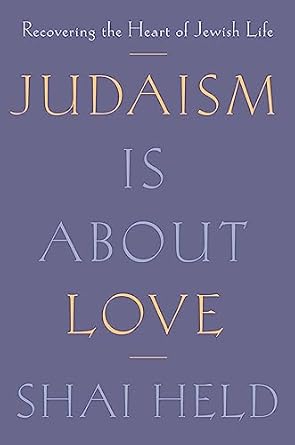
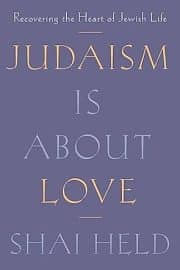
by Rabbi Shai Held
Today, I embarked on a transformative journey with Rabbi Shai Held’s book, “Judaism Is About Love.” Rav Uri‘s mention of this book during this year’s Yom Kippur service at Temple Sha’arey Shalom sparked a profound connection to the Divine, as echoed in my writings “Love Can Conquer Even Death” and “High Holiday Meditation Cleanses My Soul.” Rabbi Held’s book, which focuses on love, meaning, purpose, and faith, has guided my quest to become the best version of myself.
“Judaism Is About Love” is a beacon of understanding, offering a profound and groundbreaking perspective on Jewish life. It challenges a long-standing misinterpretation that has shaped the Western narrative: Christianity is the religion of love, while Judaism is the religion of law. Rabbi Shai Held, a leading Jewish thinker in America, passionately argues for correcting this misconception. He asserts that love is not just a part of Judaism but a fundamental aspect, thus reclaiming the heart of the Jewish tradition.
With a unique blend of intellectual rigor, respect for tradition, and a vibrant Judaism, Held’s aim is clear: to reclaim Judaism in its authentic form. He illustrates that love is the foundation of the true Jewish faith, influencing our unique perspectives on injustice, protest, grace, family life, responsibilities toward neighbors and enemies, and chosenness.
“Judaism Is About Love” is a work of ambition and revelation. It serves as a beacon, illuminating the true essence of Judaism. More than just a book, it is an act of restoration from within, reclaiming the authentic form of Judaism.
When you purchase a book through one of my links, I earn a small commission that helps support my passion for reading. This contribution allows me to buy even more books to share with you, creating an incredible cycle of discovering great reads together! Your support truly makes a difference!
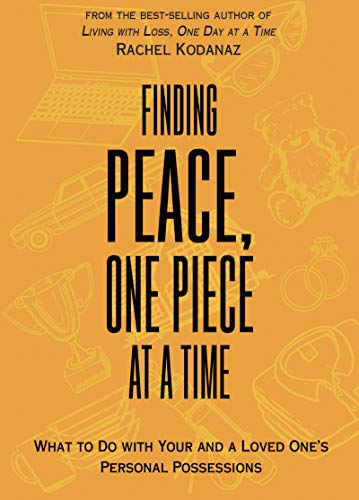
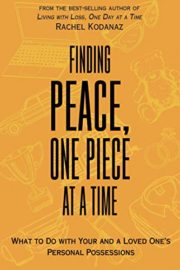
by Rachel Blythe Kodanaz
Finding Peace, One Piece at a Time by Rachel Blythe Kodanaz is a book I wish I had long before Jan died. It provides helpful information on maintaining an organized lifestyle and handling a loved one’s possessions.
Having lost almost everything I had except for the clothes on my back after a house fire in 1972, I thought I had adopted a view that possessions were not significant. With Jan’s death, the truth is that she and I had collected essential possessions, and now it was my responsibility to decide what to do with them.
Rachel’s book is a practical guide, offering a comprehensive understanding of the significance of possessions and a step-by-step plan to manage them. Chapter 3, in particular, is a treasure trove of practical advice, focusing on Building Your Game Plan: The Ten Essentials and covering all the crucial topics – triggers, building a team, and creating a timeline, among others.
Magic of the Six Piles is a well-designed plan that will help most of us confront the possessions of our loved ones. The piles are:
Having absorbed the book’s wisdom, I am ready to transition from contemplation to action. This is how I sort my wife’s possessions into six piles. I am optimistic that it will also help me streamline my possessions, making books my trusted company more accessible for my sons.
Ms. Kodanaz has presented at my bereavement groups and has been an inspiration. She has also encouraged me to write about my love for Jan in a journal.
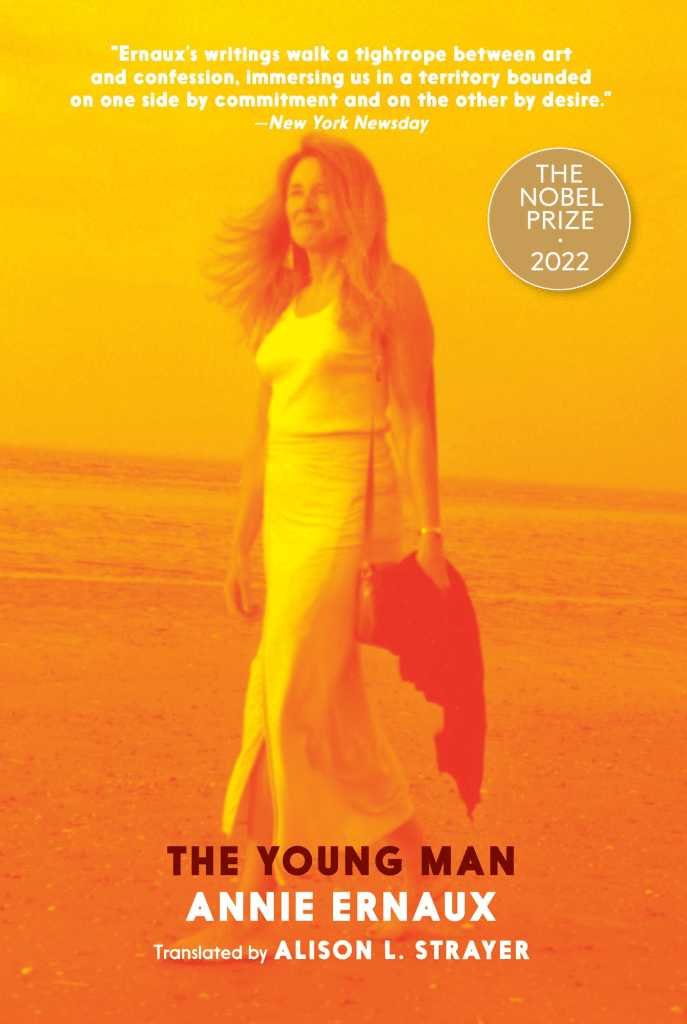
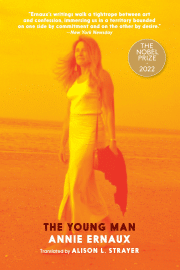
by Annie Ernaux
Annie Ernaux, the winner of the 2022 Nobel Prize in Literature, is the author of “The Young Man,” which chronicles her passionate love affair with A., a man about 30 years her junior, while she was in her fifties. This relationship prompts her to reflect on her own youth while also making her feel ageless, as if she is living her life in reverse.
Amidst talk of having a child together, she feels time running its course, and menopause approaching. The Young Man recalls Ernaux as the “scandalous girl” she once was, but is composed with the mastery and the self-assurance she has achieved across decades of writing. The book was published in France in 2022
Annie Ernaux, the winner of the 2022 Nobel Prize in Literature, is the author of approximately twenty works of fiction and memoir. She received the Prix Renaudot for her book A Man’s Place and the Marguerite Yourcenar Prize for her body of work. Additionally, she has won the International Strega Prize and the French-American Translation Prize and was shortlisted for the Man Booker International Prize for her book The Years. In 2019, Ernaux was awarded the Prix Formentor. She is now recognized as France’s most important literary voice and is the first French woman to win the Nobel Prize in Literature.
Alison L. Strayer is a Canadian writer and translator whose work has been shortlisted for the Governor General’s Award for Literature and Translation, the Grand Prix du livre de Montréal, and the Prix littéraire France-Québec. She currently resides in Paris.
Discover your next favorite book and dive into a world of curated, exciting reads by purchasing through my links. You’ll have access to a diverse selection of books I’ve personally vetted for quality and enjoyment. Supporting these selections not only helps me continue to provide you with personalized recommendations but also ensures you have access to meaningful stories that enrich your life. Your support truly makes a difference in helping me share more books and insights with you!
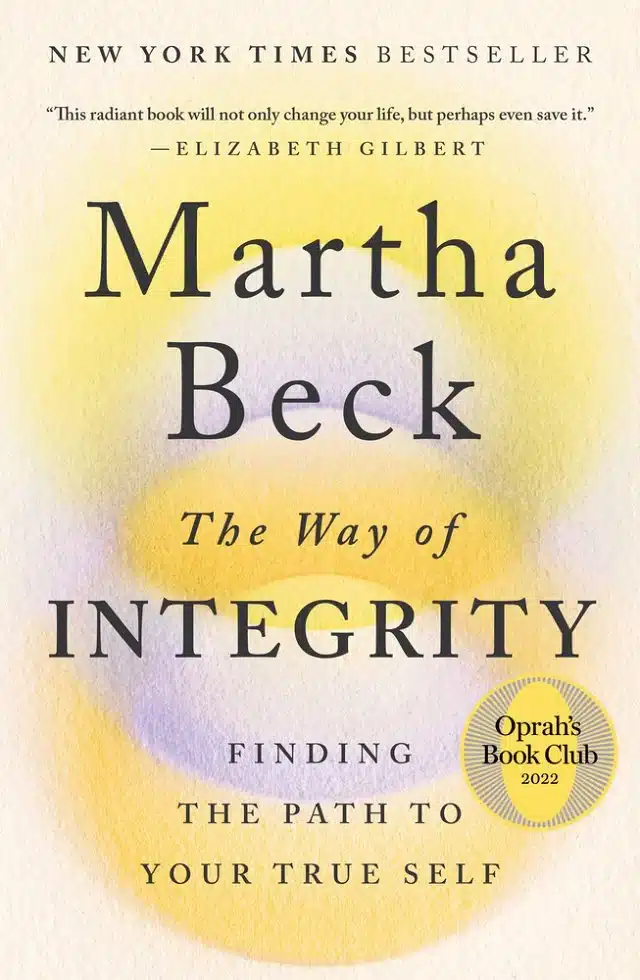
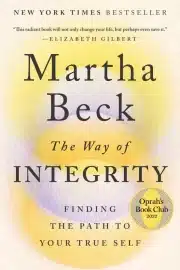
by Martha Beck
Today, I started reading Martha Beck‘s “The Way of Integrity: Finding the Path to Your True Self,” a book recommended by my friend Mark. I always appreciate receiving book recommendations from friends and readers of my blog. In her self-help book, Ms. Beck asserts, “Integrity is the cure for psychological suffering. Period.” This book will be invaluable during my early period of grief. I purchased the eBook from Bookshop and plan to do so.
Bestselling author, life coach, and sociologist Martha Beck explains why “integrity”—needed now more than ever in these tumultuous times—is the key to a meaningful and joyful life. As she writes,
This book, as you may have gleaned from the title, is all about integrity. But I don’t mean this in a moralizing sense. The word integrity has taken on a slightly prim, judgmental nuance in modern English, but the word comes from the Latin integer, meaning “intact.” To be in integrity is to be one thing, whole and undivided. When a plane is in integrity, all its millions of parts work together smoothly and cooperatively. If it loses integrity, it may stall, falter, or crash. There’s no judgment here. Just physics.
In The Way of Integrity, Beck presents a four-stage process that anyone can use to find integrity, a sense of purpose, emotional healing, and a life free of mental suffering. Many issues, such as people-pleasing, staying in stale relationships, and maintaining unhealthy habits, arise from a disconnection from what truly makes us feel complete.
Inspired by The Divine Comedy, Beck uses Dante’s classic hero’s journey as a framework to break down the process of attaining personal integrity into small, manageable steps. She shows how to read the internal signals that lead us toward our true path and recognize what we yearn for versus what our culture sells us.
With techniques tested on hundreds of her clients, Beck brings her expertise as a social scientist, life coach, and human being to help readers uncover what integrity looks like in their lives. She takes us on a spiritual adventure that will change the direction of our lives and bring us to a place of genuine happiness.
Other books I have read with a similar theme, which I also recommend, include Man’s Search for Meaning, Climbing the Second Mountain, and The Pursuit of Happiness.
When you purchase a book through one of my links, I earn a small commission that helps support my passion for reading. This contribution allows me to buy even more books to share with you, creating an incredible cycle of discovering great reads together! Your support truly makes a difference!
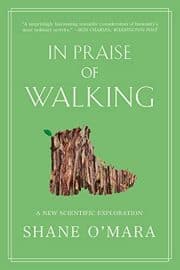
by Shane O'Mara
I recently received a book from my family that combines two interests: walking and reading. The book, “In Praise of Walking” by Shane O’Mara, celebrates the joys, health benefits, and mechanics of walking. It emphasizes the importance of getting out of our chairs and discovering a happier, healthier, more creative self.
One of the most important insights I gained from this book is that walking can lead to mind wandering, focusing on autobiographical memory rather than the immediate environment. This realization helped me accept and appreciate Jan’s love and move forward with her passion.
The book also explores the significance of walking to our human identity. Walking upright has given us many advantages, including the freedom of our hands and minds. Walking has enabled us to spread worldwide and has many benefits for our bodies and minds, such as protecting and repairing organs, aiding digestion, and sharpening our thinking.
Overall, “In Praise of Walking” inspires us to start walking again and recognize its many benefits to our lives and societies.
The Jan Lilien Education Fund sponsors ongoing sustainability and environmental awareness programs. Gifts made this month; I will match dollar-for-dollar. All donations are tax-deductible.
I receive a commission when you buy a book or product using a link on this page. Thank you for supporting Sharing Jan’s Love blog.
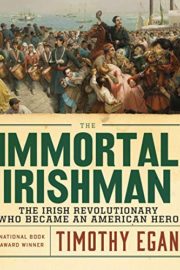
by Timothy Egan
The Immortal Irishman: The Irish Revolutionary Who Became an American Hero by Timothy Egan is a book I started reading as The Worst Hard Timesincluded the first fifty pages.
I often only read a few pages and then return the book to the e-library. The Immortal Irishman was not the case, and I could not stop reading and borrowed the book immediately.
I had never heard of Thomas Francis Meagher or his life in Ireland or America. The story was fascinating, unique, and essential.
The Irish-American story, with all its twists and triumphs, is told through the improbable life of one man. A dashing young orator during the Great Famine of the 1840s, in which a million of his Irish countrymen died, Thomas Francis Meagher led a failed uprising against British rule, for which he was banished to a Tasmanian prison colony. He escaped and six months later was heralded in the streets of New York – the revolutionary hero, back from the dead, at the dawn of the great Irish immigration to America.
Meagher’s rebirth in America included his leading the newly formed Irish Brigade from New York in many of the fiercest battles of the Civil War – Bull Run, Antietam, Fredericksburg. Twice shot from his horse while leading charges, left for dead in the Virginia mud, Meagher’s dream was that Irish-American troops, seasoned by war, would return to Ireland and liberate their homeland from British rule.
The hero’s last chapter, as territorial governor of Montana, was a romantic quest for a true home in the far frontier. His death has long been a mystery to which Egan brings haunting, colorful new evidence.
I recommend this book.
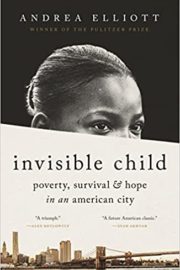
by Andrea Elliott
Invisible Child: Poverty, Survival & Hope in an American City by Andrea Elliott was a gift from my son Jon. The New York Times selected “Invisible Child” as one of the best books published this year. It is indeed one of the top books on my all-time list.
GoodReads summary provides a good overview,
The riveting, unforgettable story of a girl whose indomitable spirit is tested by homelessness, poverty, and racism in an unequal America—from Pulitzer Prize-winning journalist Andrea Elliott of The New York Times
Invisible Child follows eight dramatic years in the life of Dasani Coates, a child with imagination as soaring as the skyscrapers near her Brooklyn homeless shelter. Born at the turn of a new century, Dasani is named for the bottled water that comes to symbolize Brooklyn’s gentrification and the shared aspirations of a divided city. As Dasani grows up, moving with her tight-knit family from shelter to shelter, this story goes back to trace the passage of Dasani’s ancestors from slavery to the Great Migration north. When Dasani comes of age, New York City’s homeless crisis explodes as the chasm deepens between rich and poor.
In the shadows of this new Gilded Age, Dasani must lead her seven siblings through a thicket of problems: hunger, parental drug addiction, violence, housing instability, segregated schools, and the constant monitoring of the child-protection system. When, at age thirteen, Dasani enrolls at a boarding school in Pennsylvania, her loyalties are tested like never before. As she learns to “code switch” between the culture she left behind and the norms of her new town, Dasani starts to feel like a stranger in both places. Ultimately, she faces an impossible question: What if leaving poverty means abandoning the family you love?
By turns heartbreaking and revelatory, provocative and inspiring, Invisible Child tells an astonishing story about the power of resilience, the importance of family, and the cost of inequality. Based on nearly a decade of reporting, this book vividly illuminates some of the most critical issues in contemporary America through the life of one remarkable girl.
Jan and I were involved and knew that child poverty and homelessness needed repair. In addition, Jan lived on Washington Park across from Ft. Greene Park in 1974-75. We knew the neighborhood where much of the book’s story takes place.
Before meeting Jan in 1973, I was both a community/tenant organizer and a youth worker. In the latter role, I made weekly hostel trips for eight to ten young boys from East Williamsburg during 1973. The trips were the first the boys had ever been outside of their neighborhood.
Many of them had imaginations like Dasani. They also had her instinct to fight. One of my first tasks was to check for any weapons.
Decades later, when I would see any of them, now adults, they would ask when we were going on another trip. I wish I had met Jan when I made those trips. She would have helped me improve them and document the impact. If I could re-write history, I would have her join me as the second adult on the hostel trips.
After that summer, it was clear my primary skills were as a community/tenant organizer. Over the next few years, my work focused on creating affordable and supportive housing.
Jan and I did meaningful work that made a difference, yet the need for a permanent solution to the crisis remains. The book highlights the crucial role of resilience, the importance of family, and the cost of inequality. As a nation, we cannot undermine those values by breaking up families, impeding resilience, and maintaining racial and economic inequality.
The current debate in Washington over the Build Back Better legislation needs to focus not on how much we spend but on its impact on children and families.
David Brooks, a conservative commentator, has supported these expenditures for what they can do to address this country’s cultural and economic crisis.
These packages say to the struggling parents and the warehouse workers: I see you. Your work has dignity. You are paving your way. You are at the center of our national vision.
This is how you fortify a compelling moral identity, which is what all of us need if we’re going to be able to look in the mirror with self-respect. This is the cultural transformation that good policy can sometimes achieve. Statecraft is soulcraft.
If you can only read one book this year, this is the one to read. Child poverty, homelessness, and inequality impact all of us. Ending child poverty and homelessness will make us a healthier and more inclusive nation. It is time for a compelling moral call to action!
When you buy a book or product using a link on this page, I receive a commission. Thank you for supporting Sharing Jan’s Love blog.
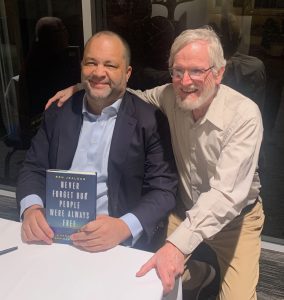
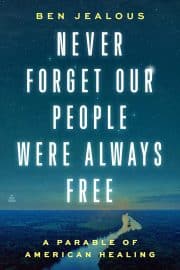
by Ben Jealous
Today, I started reading “Never Forget Our People Were Always Free: A Parable of American Healing” by Ben Jealous, the Executive Director of the Sierra Club. The book highlights how the path to healing America’s broken heart begins with each of us having the courage to heal ourselves. According to Mr. Jealous, it would be transformative if every American treated each other as cousins.
Ben Jealous is the son of parents who had to leave Maryland because their cross-racial marriage was illegal.
I briefly met Ben Jealous last May when I went to Washington with the Religious Action Center of Reform Judaism‘s Day of Action. When I saw Mr. Jealous speaking at Temple Emanu-El in neighboring Westfield, I immediately signed up to attend in person. He is an inspiration as an advocate for the environment, civil rights, and the healing of America’s broken heart.
His lively, courageous, and empathetic storytelling calls on every American to look past deeply cut divisions and recognize that we are all in the same boat now. Along the way, Jealous grapples with hidden American mysteries, including:
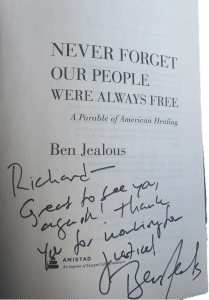 The book Never Forget Our People Were Always Free is told through parables. It features intimate glimpses of political and faith leaders such as Jack Kemp, Stacey Abrams, and the late Archbishop Desmond Tutu. The book also highlights unlikely heroes such as a retired constable, a female pirate from Madagascar, a long-lost Irishman, a death row inmate, and a man with a Confederate flag over his heart.
Never Forget Our People Were Always Free offers readers hope that America’s oldest wounds can heal and her oldest divisions can be overcome.
Although I have only read a handful of pages of the book, I highly recommend it!
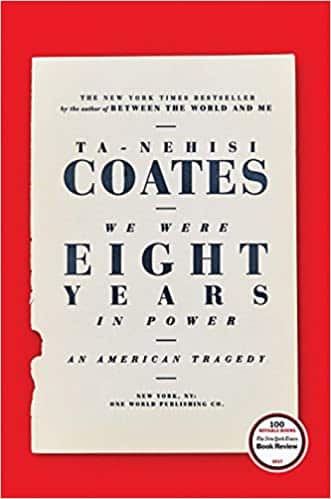
by Ta-Nehisi Coates
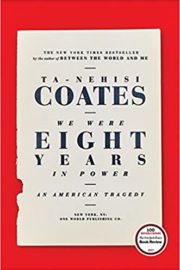
We Were Eight Years in Power by Ta-Nehisi Coates is a collection featuring the landmark essay The Case for Reparations he wrote for The Atlantic. Even though I am a subscriber to The Atlantic and have read many of the pieces, this is a must-read book as it reflects on race, Barack Obama’s presidency, and its jarring aftermath, including the election of Donald Trump.
We were eight years in power as the lament of Reconstruction-era black politicians as the American experiment in multiracial democracy ended with the return of white supremacist rule in the South. In this sweeping collection of new and selected essays, Ta-Nehisi Coates explores the tragic echoes of that history in our own time: the unprecedented election of a black president followed by a vicious backlash that fueled the election of the man Coates argues is America’s first white president.
But the story of these present-day eight years is not just about presidential politics. This book also examines the new voices, ideas, and movements for justice that emerged over this period and the effects of the persistent, haunting shadow of our nation’s old and unreconciled history. Coates powerfully examines the events of the Obama era from his intimate and revealing perspective:” the point of view of a young writer who begins the journey in an unemployment office in Harlem and ends it in the Oval Office, interviewing a president.
We Were Eight Years in Power features Coatesa’s iconic essays first published in The Atlantic, including Fear of a Black President, The Case for Reparations, and The Black Family in the Age of Mass Incarceration, along with eight fresh essays that revisit each year of the Obama administration through Coate’s own experiences, observations, and intellectual development, capped by a bracingly original assessment of the election that fully illuminated the tragedy of the Obama era. We Were Eight Years in Power is a vital account of modern America, from one of the definitive voices of this historic moment.
I recommend this book to all readers.
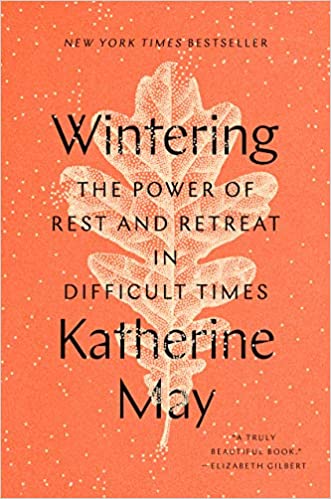
by Katherine May
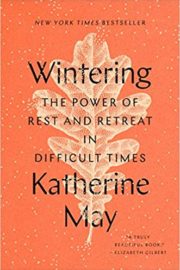
Wintering: The Power of Rest and Retreat in Difficult Times by Katherine May is “an intimate, revelatory book exploring the ways we can care for and repair ourselves when life knocks us down.”
Two quotes that resonated with me were:
That’s what grief is – a yearning for that one last moment of contact that would settle everything.
We are in the habit of imagining our lives to be linear, a long march from birth to death in which we mass our powers, only to surrender them again, all the while slowly losing our youthful beauty. This is a brutal untruth. Life meanders through the woods. We have seasons when we flourish and seasons when the leaves fall upon us, revealing our bare bones. Given time they grow again.
May writes in a clear voice that conveys the importance of accepting the cycles of life instead of fighting them.
Sometimes you slip through the cracks: unforeseen circumstances like an abrupt illness, the death of a loved one, a breakup, or a job loss can derail a life. These periods of dislocation can be lonely and unexpected. For May, her husband fell ill, her son stopped attending school, and her own medical issues led her to leave a demanding job. Wintering explores how she not only endured this painful time but embraced the singular opportunities it offered.
A moving personal narrative shot through with lessons from literature, mythology, and the natural world, May’s story offers instruction on the transformative power of rest and retreat. Illumination emerges from many sources: solstice celebrations and dormice hibernation, C.S. Lewis and Sylvia Plath swimming in icy waters, and sailing arctic seas.
Ultimately Wintering invites us to change how we relate to our own fallow times. May models an active acceptance of sadness and finds nourishment in deep retreat, joy in the serene beauty of winter, and encouragement in understanding life as cyclical, not linear. A secular mystic, May forms a guiding philosophy for transforming the hardships that arise before the ushering in of a new season.
I recommend this book without reservation.
The Jan Lilien Education Fund sponsors ongoing sustainability and environmental awareness programs. Gifts made this month; I will match dollar-for-dollar. All donations are tax-deductible.
I receive a commission when you buy a book or product using a link on this page. Thank you for supporting Sharing Jan’s Love blog.
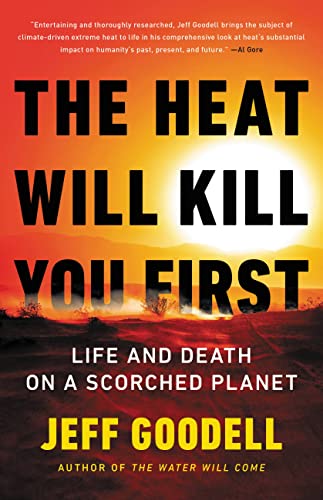
by Jeff Goodell
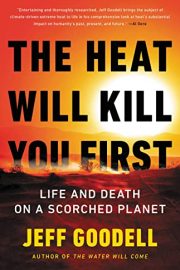
I recently started reading “The Heat Will Kill You First” by Jeff Goodell, which delves into the extreme ways our planet is already changing. The book explores how spring is arriving earlier and fall is arriving later and how this will impact our food supply and disease outbreaks. As I have stated in my Action Alert: EPA’s Carbon Rule, the time to act is now.
The book also predicts the consequences of summer days in cities like Chicago and Boston, reaching temperatures as high as 110°F. Goodell explains that heat waves are used only to affect the most vulnerable people, but as they become more intense and familiar, they will affect everyone.
It is becoming increasingly clear that the world is facing a new reality. In California, wildfires are now seasonal, while the Northeast is experiencing less and less snow each winter. Meanwhile, the Arctic and Antarctic ice sheets are melting alarmingly. Heat is the primary threat that is driving all other impacts of the climate crisis. As temperatures rise, it exposes weaknesses in our governments, politics, economy, and values.
The basic science is straightforward: If we stop burning fossil fuels tomorrow, the global temperature will also stop rising. However, if we wait for 50 years to stop burning them, the temperature will continue to rise, making parts of our planet uninhabitable. The responsibility to act is in our hands. The hotter it gets, the more our underlying issues will surface and expand.
Jeff Goodell has been an award-winning journalist in the field of environmental reporting for several decades. His latest book explains how extreme heat will cause significant changes in the world. The book is an excellent blend of scientific insights and on-the-ground storytelling, and Goodell explores some of the most significant questions surrounding the topic. He reveals that extreme heat is a force we have yet to comprehend fully.
The Jan Lilien Education Fund sponsors ongoing sustainability and environmental awareness programs. Gifts made this month; I will match dollar-for-dollar. All donations are tax-deductible.
I receive a commission when you buy a book or product using a link on this page. Thank you for supporting Sharing Jan’s Love blog.
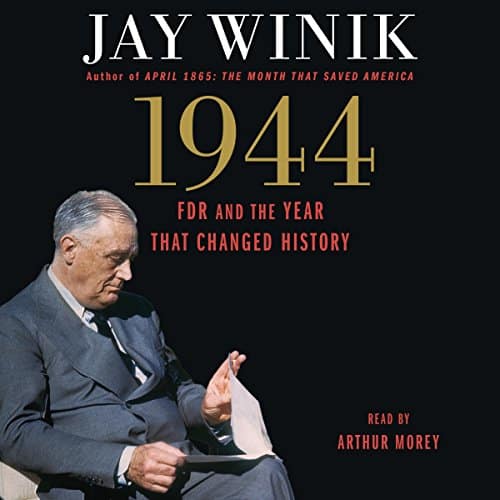
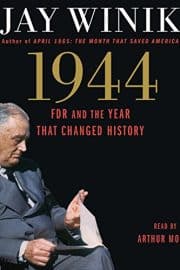
by Jay Winik
1944: FDR and the Year That Changed History by Jay Winik is a book that I had put off reading several times. When I finally did read it, I could not remember why I had not read it sooner. Had I gone to graduate school and become a professor, it might have been the type of book I might write, and I certainly would have had on my list of books for my classes.
As The NY Times wrote, “Jay Winik brings to life in gripping detail the year 1944, which determined the outcome of World War II and put more pressure than any other on an ailing yet determined President Roosevelt.” Reading a book about events five years before my birth that transformed the world I live in becomes an easy page-turner.
It was not inevitable that World War II would end as it did or that it would even end well. Nineteen forty-four was a year that could have stymied the Allies and cemented Hitler’s waning power. Instead it saved those democracies – but with a fateful cost. Now, in a superbly told story, Jay Winik, the acclaimed author of April 1865 and The Great Upheaval, captures the epic images and extraordinary history as never before.
1944 witnessed a series of titanic events: FDR at the pinnacle of his wartime leadership as well as his reelection, the planning of Operation Overlord with Churchill and Stalin, the unprecedented D-Day invasion, the liberation of Paris, and the horrific Battle of the Bulge, and the tumultuous conferences that finally shaped the coming peace. But on the way, millions of more lives were still at stake as President Roosevelt was exposed to mounting evidence of the most grotesque crime in history, the Final Solution. Just as the Allies were landing in Normandy, the Nazis were accelerating the killing of millions of European Jews.
Winik shows how escalating pressures fell on an all but dying Roosevelt, whose rapidly deteriorating health was a closely guarded secret. Here then, as with D-Day, was a momentous decision for the president. Was winning the war the best way to rescue the Jews? Was a rescue even possible? Or would it get in the way of defeating Hitler? In a year when even the most audacious undertakings were within the world’s reach, including the liberation of Europe, one challenge – saving Europe’s Jews – seemed to remain beyond Roosevelt’s grasp.
I recommend this book.
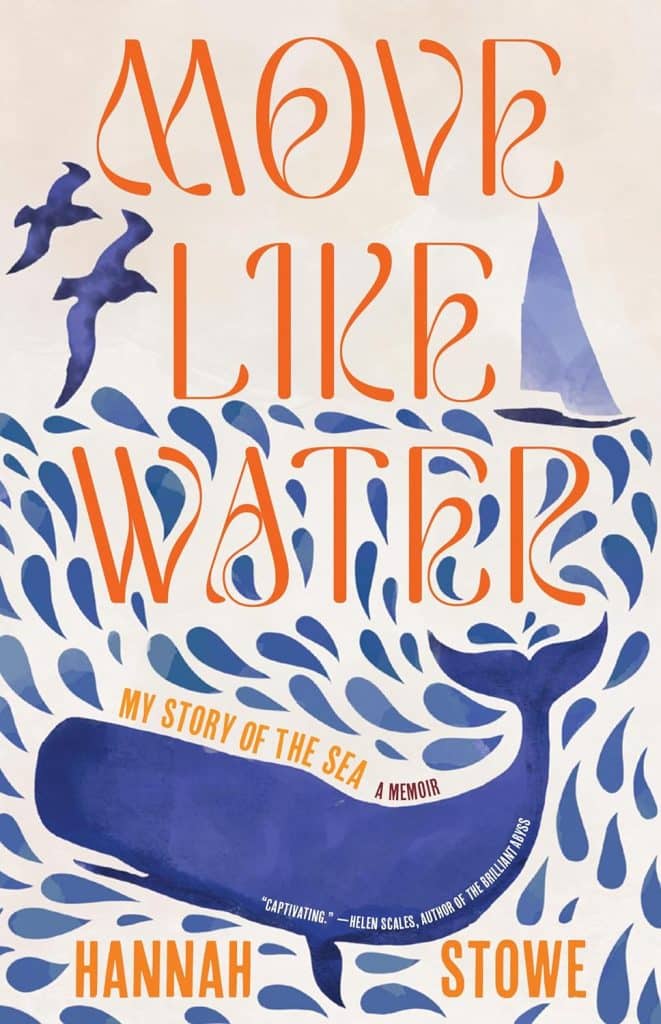
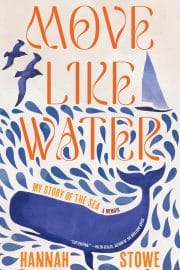
by Hannah Stowe
I recently started reading a book called “Move Like Water: My Story of the Sea” by Hannah Stowe. It’s a captivating book that immerses you in a world of water, whales, storms, and starlight, allowing you to experience what it’s like to sail for weeks and live life to a new rhythm.
Hannah Stowe, a marine biologist and sailor in her mid-twenties, grew up on the Pembrokeshire coast of Wales, where she fell asleep to the sound of the lighthouse beam. Drawing upon her experiences sailing tens of thousands of miles in various seas, including the North Sea, North Atlantic, Mediterranean, Celtic Sea, and the Caribbean, she explores the human connection to the wild waters. Stowe ponders why she and others are drawn to life at sea and what we can learn from the water around us.
Stowe intertwines her narrative and illustrations with stories of six keystone marine creatures: the fire crow, sperm whale, wandering albatross, humpback whale, shearwater, and barnacle. Through these stories, she invites readers to fall in love with the sea and its inhabitants and to discover the majesty, wonder, and fragility of the underwater world.
If you enjoy the works of Rachel Carson and Annie Dillard, then “Move Like Water: My Story of the Sea” is a must-read. It’s an inspiring and heartfelt tribute to the sea, a testimony to pursuing and achieving a dream, and an unforgettable introduction to a talented new nature writer.
The Jan Lilien Education Fund sponsors ongoing sustainability and environmental awareness programs. Gifts made this month; I will match dollar-for-dollar. All donations are tax-deductible.
I receive a commission when you buy a book or product using a link on this page. Thank you for supporting Sharing Jan’s Love blog.
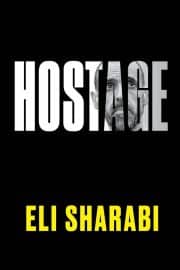
by Eli Sharabi
In a raw and unflinching memoir, Eli Sharabi, a survivor of 491 days in Hamas captivity, recounts his harrowing ordeal in “Hostage: A Memoir.” He was abducted from Kibbutz Be’eri on October 7, 2023. In this powerful narrative, he shares the profound loss of his wife and daughters along with his unwavering determination to survive. Comparisons can be drawn to Elie Wiesel‘s “Night” and Laura Hillenbrand‘s “Unbroken.” “Hostage” stands as a significant testimony to history, ensuring that his experience will neither be forgotten nor erased.
“I refuse to let myself drown in pain. I am surviving. I am a hostage in the heart of Gaza, a stranger in this unfamiliar land, living with a family that supports Hamas. And I am getting out of here. I have to. I’m getting out of here. I’m coming home.” — Eli Sharabi.
On October 7, 2023, Hamas terrorists stormed Kibbutz Be’eri, shattering the peaceful life Eli Sharabi had built with his British wife, Lianne, and their teenage daughters, Noiya and Yahel. Dragged barefoot out his front door while his family watched in horror, Sharabi was plunged deep into the suffocating darkness of Gaza’s tunnels. As war raged above him, he endured a grueling 491 days in captivity, all the while holding onto the hope that he would one day be reunited with his loved ones.
Eli Sharabi‘s story is one of hunger and heartache, of physical pain, longing, loneliness, and a helplessness that threatens to destroy the soul. But it is also a story of strength, of resilience, and of the human spirit’s refusal to surrender. It is about the camaraderie forged in captivity, the quiet power of faith, and one man’s unrelenting decision to choose life, time and time again.
In the first memoir by a released Israeli hostage, and the fastest-selling book in Israel’s history, Sharabi offers a searing firsthand account of survival under unimaginable conditions—starvation, isolation, physical beatings, and psychological abuse at the hands of his captors.
Franklin Foer‘s essay –The Existential Heroism of the Israeli Hostages – was written about Hostage. His closing paragraph eloquently summarizes how hope can persist even in our darkest days.
“This weekend, on the cusp of the release of the last 20 living hostages in Gaza, Donald Trump’s son-in-law Jared Kushner stood in the plaza in front of the Tel Aviv Museum of Art, dubbed Hostages Square, to address a jubilant throng. He called the hostages’ release the end of a nightmare. In reality, the nightmare never ends; trauma that endures for generations is the surest outcome of this war. But we also know that the hostages are going home, living proof that hope can persist even in the darkest hole.”
Eli Sharabi is a former hostage who survived 491 days in Hamas captivity after being abducted from Kibbutz Be’eri on October 7, 2023. Since his release, Sharabi has become a global advocate for the remaining hostages. He has met with world leaders, including former US President Donald Trump, spoken at the United Nations, and shared his story with audiences around the world. His memoir, *Hostage*, which is the first published account by a released Israeli hostage, quickly became a number one bestseller in Hebrew and the fastest-selling book in Israeli history.
Born in Tel Aviv to Yemenite and Moroccan parents, Sharabi moved to Be’er Sheva as a teenager. He later married Lianne, a British woman, and they have two daughters, Noiya and Yahel, aged sixteen and thirteen. A longtime resident of Be’eri, Sharabi worked as the Kibbutz’s business manager and served as the Chief Financial Officer for Be’eri Printing and other private companies in Israel. He continues to work tirelessly as a leader in the campaign for the release of captives.
Discover your next favorite book and dive into a world of curated, exciting reads by purchasing through my links. You’ll have access to a diverse selection of books that I’ve personally vetted to ensure quality and enjoyment. Additionally, by supporting these selections, you’ll help me continue to provide you with more personalized recommendations. I earn a small commission from your purchase, which allows me to buy and share even more books with you. Your support truly makes a difference!
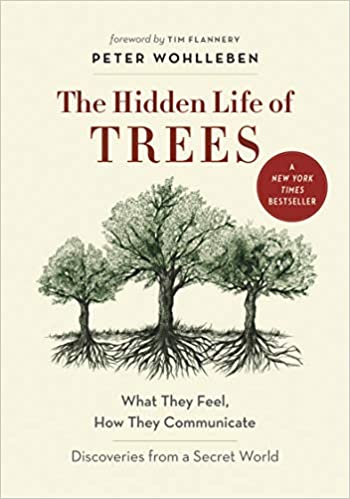
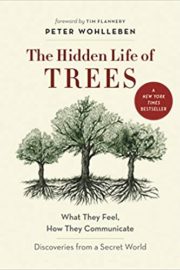
by Peter Wohlleben
The Hidden Life of Trees: What They Feel, How They Communicate ― Discoveries from A Secret World is a book I have wanted but had not had the time to read. In July of this year, when I was still in the early stages of my recovery journey, I talked to a friend of my wife’s (whom I now count as my friend) about our plans to plant a tree in Hanson Park.
As I talked about our plans, my friend suggested I read this book as it would help me understand the importance of trees. I will forever be grateful for her recommendation, as it made me read this book sooner than later.
To read that trees have a social network with more prominent, healthier trees concerned about the smaller, weaker ones. How is it that humans, a supposedly advanced species, have a social network that divides and weakens our community?
Are trees social beings? In The Hidden Life of Trees forester and author Peter Wohlleben convincingly makes the case that, yes, the forest is a social network. He draws on groundbreaking scientific discoveries to describe how trees are like human families: tree parents live together with their children, communicate with them, support them as they grow, share nutrients with those who are sick or struggling, and even warn each other of impending dangers. Wohlleben also shares his deep love of woods and forests, explaining the amazing processes of life, death, and regeneration he has observed in his woodland.
Having read this book, I am more sensitive to trees and have enjoyed my walks more than ever. In addition, when we plant Jan’s tree in Hanson Park, I will now have even more reasons to talk about the importance of trees to Jan, myself, and the community.
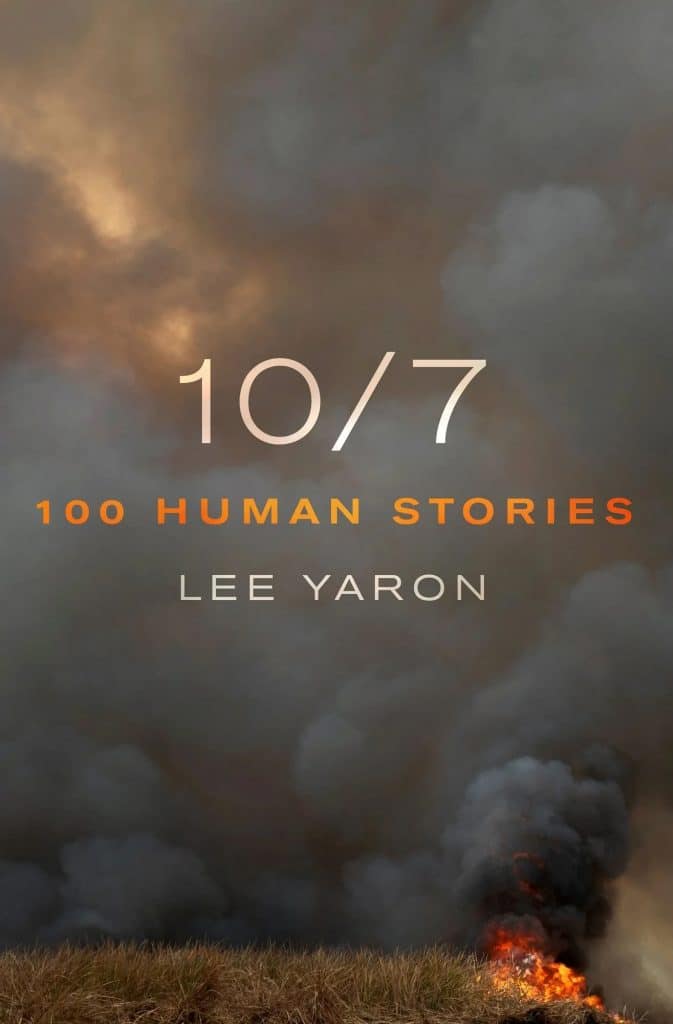
by Lee Yaron
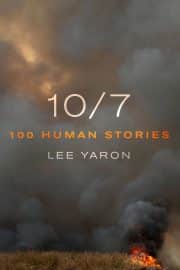
The speaker at the Selichot Service with VAAD at Congregation Beth Israel on September 13, 2025, will be Lee Yaron, the author of 10/7: 100 Human Stories. Yaron is the recipient of the National Jewish Book Awards’ 2024 Jewish Book of the Year and The Natan Fund’s Winter 2025 Notable Book Award. This book provides a definitive account of the 10/7 attacks, sharing the stories of the victims and the communities they called home.
On October 7, 2023—the Sabbath and the final day of the holiday of Sukkot—the Gaza-based terror group Hamas launched an unprecedented assault on the people of Israel. Crashing through the border, attacking from the sea and air, militants indiscriminately massacred civilians in what became one of the worst terror attacks in modern history, and the most lethal day for the Jewish people since the Holocaust.
A radically passionate work of investigative journalism and political critique by acclaimed Haaretz reporter Lee Yaron, 10/7 chronicles the massacre that ignited a war through the stories of more than 100 civilians. These stories are the result of extensive interviews with survivors, bereaved individuals, and first responders in Israel and around the world. The victims run the gamut from left-wing kibbutzniks and Burning Man-esque partiers to radical right-wingers, from Bedouins and Israeli Arabs to Thai and Nepalese guest workers, peace activists, elderly Holocaust survivors, refugees from Ukraine and Russia, pregnant women, and babies.
At a time when people are seeking a deeper understanding of the history of the Israeli-Palestinian conflict and how internal political turmoil in Israel has affected it, they predominantly encounter perspectives from the powerful—from politicians and military officers. 10/7 takes a fresh approach, offering answers through the stories of everyday people, those who lived tenuously on the border with Gaza.
Yaron profiles victims from a wide range of communities—depicting the fullness of their lives, not just their final moments—to honor their memories and reveal the way the attack ripped open Israeli society and put the entire Middle East on the precipice of disaster. Each chapter begins with a portrait of a community, interweaving history with broader political analysis of the Israeli-Palestinian conflict to provide context for the narratives that follow. Ultimately, 10/7 shows that the tragedy is much greater than the violence of the attacks, and in fact extends back through the entire Netanyahu era, which propagated a false image of Israel as a technologically advanced, militarily formidable powerhouse so essential to the region that it could continue to ignore and undermine Palestinian statehood indefinitely.
Lee Yaron has been a journalist with Haaretz, Israel’s oldest and most award-winning newspaper, for nearly a decade. Her investigative reporting has led to the establishment of state-level commissions and the revision of substantial bodies of Israeli policy and law. She is an elected member and representative of the Executive Committee of the Union of Israeli Journalists. She has also written and directed acclaimed theater productions notable for their use of found materials, including official governmental texts, to bring attention to marginalized communities both in Israel and throughout the Middle East. Born in Tel Aviv, Yaron splits her time between her native city and New York.
Joshua Cohen is the author of ten books, including the novels Book of Numbers, Moving Kings, and Witz. Called “a major American writer” by the New York Times and “an extraordinary prose stylist, surely one of the most prodigious at work in American fiction today” by the New Yorker, Cohen was awarded Israel’s 2013 Matanel Prize, and in 2017 was named one of Granta’s Best Young American Novelists. His book, The Netanyahus, won the 2021 National Jewish Book Award for Fiction and the 2022 Pulitzer Prize for Fiction.
Discover your next favorite book and dive into a world of curated, exciting reads by purchasing through my links. You’ll have access to a diverse selection of books that I’ve personally vetted to ensure quality and enjoyment. Additionally, by supporting these selections, you’ll help me continue to provide you with more personalized recommendations. I earn a small commission from your purchase, which allows me to buy and share even more books with you. Your support truly makes a difference!
Subscribe to Sharing Jan's Love Newsletter!
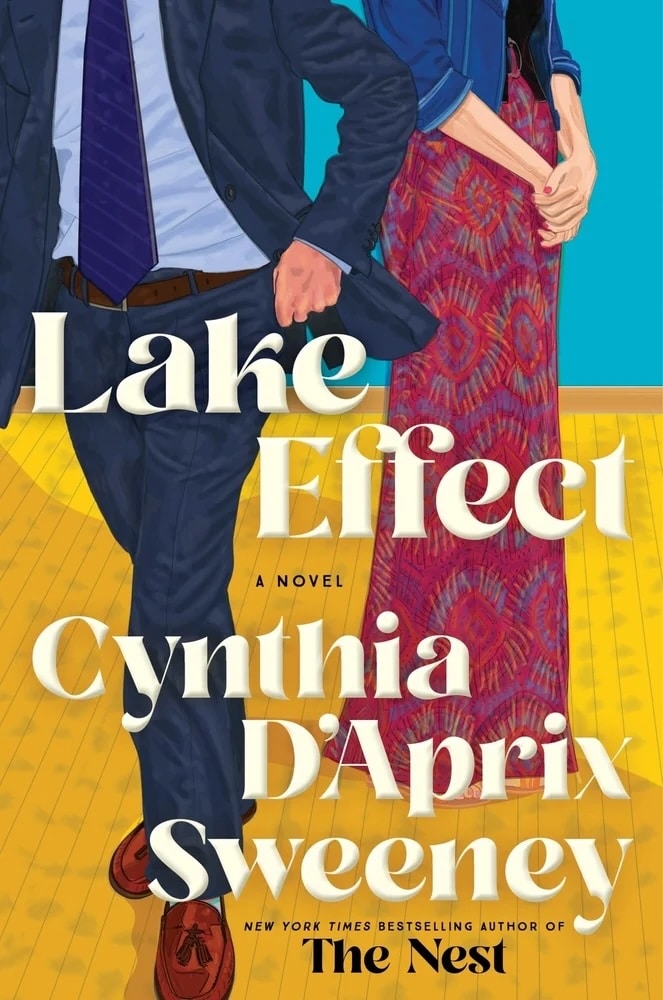
by Cynthia D'Aprix Sweeney
Cynthia D’Aprix Sweeney‘s Lake Effect is a wry and tender portrait of two families forever changed by one impulsive decision that will reverberate for decades. Written with Cynthia D’Aprix Sweeney‘s signature humor and insight, Lake Effect offers a wise and probing exploration of love and desire, the relationships between mothers and daughters, loss and grief, and what we owe to the people we love most.
It’s 1977, and an air of restlessness hangs over the residents of Cambridge Road in Rochester, New York—a community long influenced by the booming fortunes of Kodak and Xerox, and for some, the traditions of the Catholic church. When Nina Larkin receives a copy of *The Joy of Sex* from her newly divorced friend, she can no longer ignore the lack of intimacy in her marriage.
Just as her oldest child, Clara, is experiencing her first love, Nina finds herself yearning for something forbidden: a midlife awakening. An intoxicating affair with a prominent neighbor introduces Nina to a freedom she never thought possible. Still, it also jeopardizes the reputations of both families and upends Clara’s world as she stands on the brink of adulthood.
Years later, Clara, now a successful food stylist in New York City, has never fully escaped the shadow of the childhood scandal. Drawn back home by the pull of a family wedding and grappling with her own challenges, she makes a pivotal decision that turns her life upside down.
Cynthia D’Aprix Sweeney is the author of the bestselling novels “The Nest,” which became an instant New York Times bestseller and was named one of the best books of the year by People, the Washington Post, and NPR, as well as “Good Company,” a selection for Read with Jenna. She has appeared as a guest on shows like Today, Late Night with Seth Meyers, and NPR’s All Things Considered. Her works have been translated into more than twenty-eight languages, and “The Nest” is currently in development as a limited series with AMC Studios.
Ms. Sweeney holds an MFA from the Bennington Writing Seminars and lives in New York City with her husband.
Discover your next favorite book and dive into a world of curated, exciting reads by purchasing through my links. You’ll have access to a diverse selection of books I’ve personally vetted for quality and enjoyment. Additionally, by supporting these selections, you’ll help me continue to provide you with more personalized recommendations. I earn a small commission from your purchase, which allows me to buy and share even more books with you. Your support truly makes a difference!
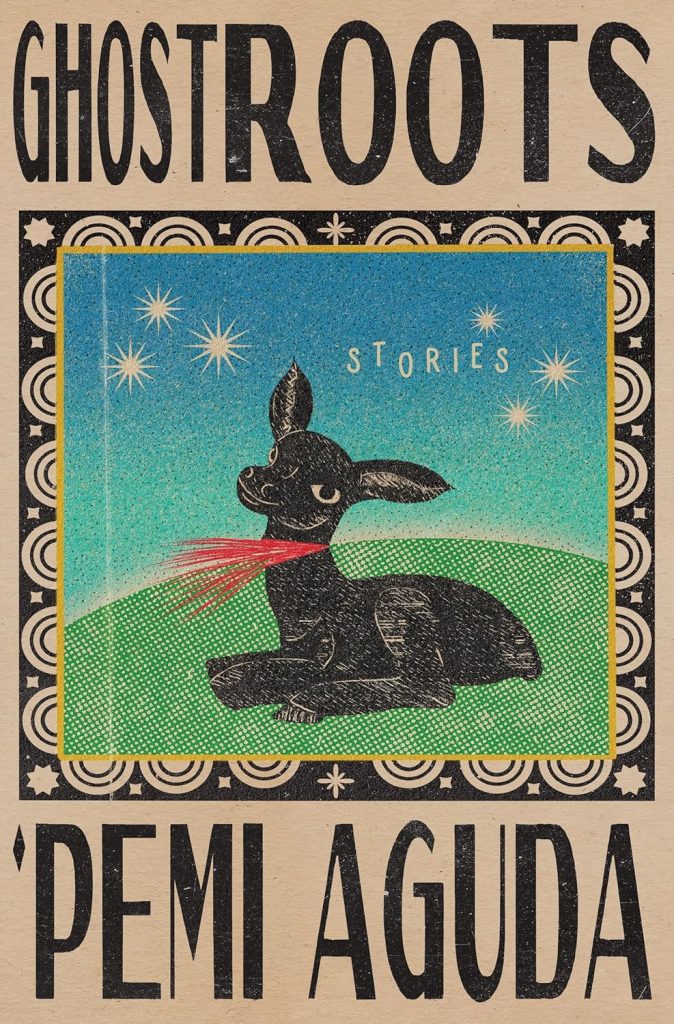
by ’Pemi Aguda
Today, I started reading Ghostroots: Stories by ‘Pemi Aguda, a finalist for the 2024 National Book Award for Fiction. This collection features twelve imaginative stories set in Lagos, Nigeria, in which ‘Pemi Aguda explores the tension between our desire to be individuals and the influence of our past. One of the stories, “Breastmilk,” was shortlisted for the 2024 Caine Prize for African Writing.
The story “Manifest” depicts a woman who sees the ghost of her abusive mother in her daughter’s face, which leads to her daughter exhibiting destructive behavior. In “Breastmilk,” a wife forgives her husband for infidelity. Still, she later struggles with producing milk for her newborn, feeling like she’s failed to uphold her mother’s feminist values and doubts her ability as a mother. Things Boys Do” follows a trio of fathers who sense something unnatural about their infant sons, leading to their lives falling apart as they fear their sons are the cause of their troubles. Lastly, “24, Alhaji Williams Street” tells the story of a teenage boy living in the shadow of a mysterious disease that’s killing the boys on his street.
These stories in “Ghostroots” delve into the emotional and physical worlds, unveiling the profound impact of family, myth, tradition, gender, and modernity in Nigerian society. Pemi Aguda’s storytelling, infused with empathy and humor, showcases her as a significant new literary talent. Her deep understanding of human emotions and thorough exploration of these societal influences will leave you feeling enlightened and informed, eager to explore more of her work.
When you purchase a book through one of my links, I earn a small commission that helps support my passion for reading. This contribution allows me to buy even more books to share with you, creating an incredible cycle of discovering great reads together! Your support truly makes a difference!
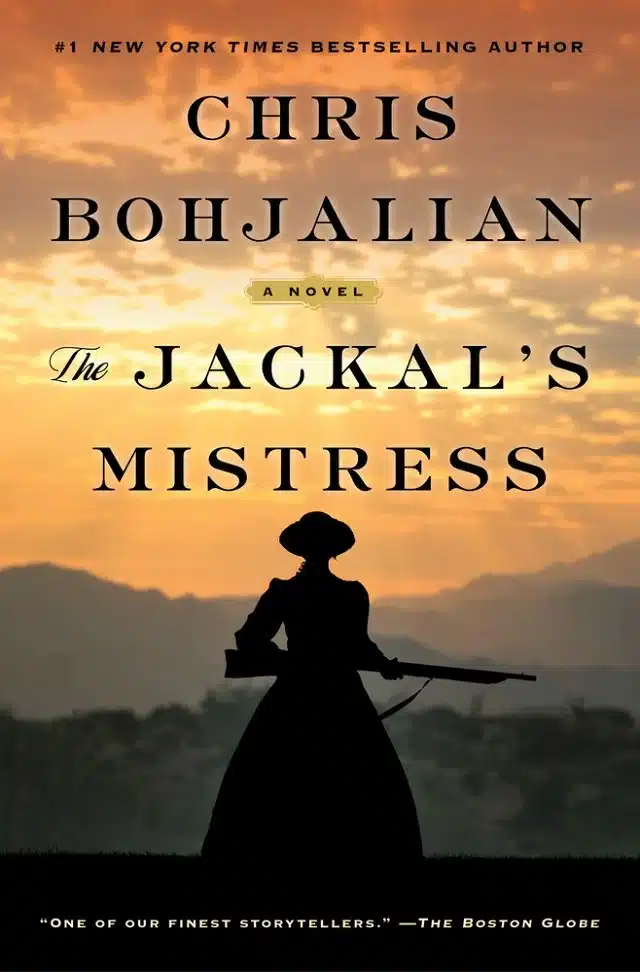
by Chris Bohjalian
Today, I dove into “The Jackal’s Mistress” by Chris Bohjalian, a gripping Civil War love story inspired by a true friendship that defied the odds. It follows the wife of a missing Confederate soldier as she stumbles upon a wounded Yankee officer. With the battlefield’s tension looming, she faces a heart-wrenching choice: How much is she willing to risk for the life of a stranger?
Written by a New York Times bestselling author renowned for captivating historical novels like “Hour of the Witch” and “The Sandcastle Girls,” this tale promises an unforgettable journey of love and sacrifice.
Virginia, 1864—Libby Steadman’s husband has been away so long that she can barely remember his voice in her dreams. While she longs for him at night, fearing he is dead in a Union prison camp, her days are spent running a gristmill with her teenage niece, a hired hand, and his wife. The Confederate Army requisitions all the grain they produce. It’s a precarious life in the Shenandoah Valley, a region that frequently changes hands, with control shifting back and forth between North and South. Libby wakes each morning expecting to see her land transformed into a battlefield.
Then, Libby discovers a gravely injured Union officer left for dead in a neighbor’s house, his hand and leg bones shattered. Captain Jonathan Weybridge of the Vermont Brigade is her enemy, but he is also in dire need. Libby faces a terrible decision: should she leave him to die alone, or should she risk treason and try to nurse him back to health? If she succeeds, will she attempt to secretly bring him across Union lines in hopes of negotiating a trade for news about her husband?
“The Jackal’s Mistress” is a vivid and sweeping story of two people navigating the boundaries of love and humanity amid a backdrop of brutal violence. This heart-stopping novel is based on a largely unknown piece of American history and showcases one of our greatest storytellers.
Chris Bohjalian is the #1 New York Times bestselling author of twenty-five books, including “The Princess of Las Vegas,” “The Lioness,” “Hour of the Witch,” “Midwives,” and “The Flight Attendant,” which has been adapted into a limited series on Max starring Kaley Cuoco.
His other notable works include “The Red Lotus,” “The Guest Room,” “Close Your Eyes, Hold Hands,” “The Sandcastle Girls,” “Skeletons at the Feast,” and “The Double Bind.” Several of his novels, including “Secrets of Eden,” “Midwives,” and “Past the Bleachers,” have been adapted into movies. Bohjalian’s works have been translated into more than thirty-five languages. In addition to writing novels, he is also a playwright, with works such as “The Club,” “Wingspan,” and “Midwives.
He resides in Vermont and can be found online at chrisbohjalian.com and on Facebook, Instagram, X, TikTok, Litsy, and Goodreads.
When you purchase a book through one of my links, I earn a small commission that helps support my passion for reading. This contribution allows me to buy even more books to share with you, creating an incredible cycle of discovering great reads together! Your support truly makes a difference!
by Robert Seethaler
Today, I started reading The Café with No Name by Robert Seethaler, translated by Katy Derbyshire. It’s a vibrant story of love, companionship, and renewal in 1960s Vienna. With warm prose and tender humor, Seethaler has created a delightful parable about human existence, brought to life by unforgettable characters and a rich tapestry of narratives.
In the summer of 1966, Robert Simon was in his early thirties and had a dream. Raised in a home for war orphans, he has grown into a warm-hearted, hard-working, and determined man. When the former owners of the corner café in Carmelite Market Square close the business, Robert sees an opportunity to realize his dream.
The café, dark and dilapidated, is located in an impoverished neighborhood of the Austrian capital. However, a new energy is beginning to fill the air, signaling a desire for renewal. In the newspapers that fishmongers use to wrap char and trout from the Danube, one can read about the great things to come, heralding a bright future emerging from the shadows of the past.
Inspired by this optimism, Robert refurbishes the café. His efforts pay off as customers arrive, drawn to a congenial space where they can gather, talk, read, or sit and reflect. Each visitor brings their passion, friendship, loss, and heartache stories. Some search for companionship, while others long for love or a place to feel understood. As the city transforms, Robert’s café becomes a haven—a refuge from which to observe life, mourn, and rejoice.
Robert Seethaler was born in Vienna in 1966 and is the author of eight novels. In 2017, he was a finalist for the Man Booker International Prize with A Whole Life (FSG, 2016). He also works as an actor, most recently in Paolo Sorrentino’s Youth. He lives in Berlin.
Katy Derbyshire translates contemporary German writers, including Christa Wolf, Heike Geissler, and Olga Grjasnowa. Her translation of Clemens Meyer‘s While We Were Dreaming was longlisted for the 2023 International Booker Prize. She was born in London and has been based in Berlin for over twenty years.
When you purchase a book through one of my links, I earn a small commission that helps support my passion for reading. This contribution allows me to buy even more books to share with you, creating an incredible cycle of discovering great reads together! Your support truly makes a difference!
Enjoy a limited-time offer of 20% off your next book purchase at Bookshop.org!
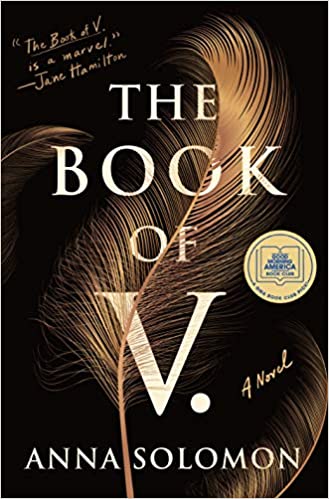
by Anna Solomon
The Book of V by Anna Solomon is a book that I may not have read at another time in my life, and I did find it to be a book that I could not stop reading.
Goodreads summarizes its plot.
Anna Solomon’s kaleidoscopic novel intertwines the lives of a Brooklyn mother in 2016, a senator’s wife in 1970s Washington, D.C., and the Bible’s Queen Esther, whose stories of sex, power and desire overlap and ultimately converge—showing how women’s roles have and have not changed over thousands of years.
Being Jewish, I knew the story of Queen Esther, although this version added new layers of the story that I did not know. The book’s illumination that women’s roles have not changed over thousands of years was something I knew but did not fully understand.
The three characters are very vivid and weave a story that is worth reading.
Lily is a mother and a daughter. And a second wife. And a writer, maybe? Or she was going to be, before she had children. Now, in her rented Brooklyn apartment, she’s grappling with her sexual and intellectual desires while also trying to manage her roles as a mother and a wife.
Vivian Barr seems to be the perfect political wife, dedicated to helping her charismatic and ambitious husband find success in Watergate-era Washington D.C. But one night he demands a humiliating favor, and her refusal to obey changes the course of her life—along with the lives of others.
Esther is a fiercely independent young woman in ancient Persia, where she and her uncle’s tribe live a tenuous existence outside the palace walls. When an innocent mistake results in devastating consequences for her people, she is offered up as a sacrifice to please the king, in the hopes that she will save them all.
I recommend this book.