

Day Two Building Jan's Memorial Garden

Day Two Building Jan’s Memorial Garden

Estimated reading time: 1 minute, 1 second
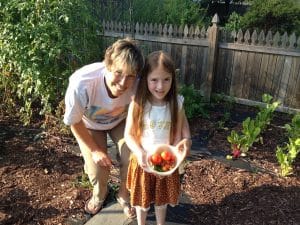
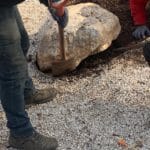
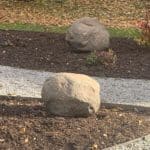
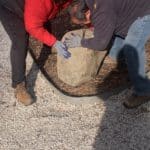
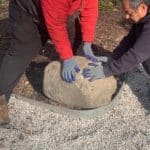
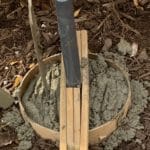
Jan the GardenerOn Day Two, we made progress on Jan’s Memorial Triangle Garden, although some of it is not visible to the naked eye.

The garbage can hides the foundation for the wind sculpture.

The wind sculpture and some other plants still need to be fully installed.

As of now, both will occur on Thursday, November 3rd, or Friday, November 4th.

The Hanson Park Conservancy is working with  Carole Huber Landscape Architecture to develop the Jan Lilien Memorial Triangle Garden.

Click here for a PDF of the entire design.
I am very grateful to my family, friends, and the Hanson Park Conservancy, who helped make Jan’s Memorial Garden possible.

Related Links

    1. Celebrate Jan Day
    2. Jan’s Memorial Garden
    3. Donate to the Jan Lilien Education Fund
    4. Photos
    5. Additional Photos
    6. Videos
    7. Day One
    8. Day Two
    9. The Wind Sculpture Poem

The Jan Lilien Education Fund sponsors ongoing sustainability and environmental awareness programs. Gifts made this month; I will match dollar-for-dollar. All donations are tax-deductible.

Subscribe

Contact Us

I receive a commission when you buy a book or product using a link on this page. Thank you for supporting Sharing Jan’s Love blog.

Jan’s Memorial Garden Day One

It is the end of Day One, and we made progress on the Jan Lilien Memorial Triangle Garden. We will have more plants and the base for the Wind Sculpture on Friday.

Due to rain, they will not be able to do the foundation for the wind sculpture until Friday.

But work on the garden was started on Jan's six-month birthday!

Show thread (1)

Share your thoughts and ideas

This site uses Akismet to reduce spam. Learn how your comment data is processed.

The Jan Lilien Education Fund!

Day Two Building Jan's Memorial Garden
×
Day Two Building Jan's Memorial Garden
×
A Parish Chronicle

Read: February 2026

Get this book

A Parish Chronicle

by Halldór Laxness

In “A Parish Chronicle,” celebrated novelist Halldór Laxness weaves an essayistic tale about the unlikely miracles that keep a church—destined to disappear time and again—rooted on the same hillside. Laxness explores the minutiae of history, from the location of the ancient burial mound of national hero Egill Skallagrímsson to the end of the 19th century, where weak-sighted Ólafur and boisterous farmhand Gunna each play unexpected roles in the parish’s enduring survival.

1882. In the still of morning, Ólafur sharpens his scythe on the bone-dry pavestones that separate his farmhouse from the rest of Mosfell Valley, where life revolves around sheep. The sound of his hammer rings out like a high-pitched bell over the tussocky fields. Across the valley, perched on a hill that receives more sunshine than others, stands Mosfell Church. Nearby, the parish priest’s maid Gunna pours her “slosh,” a weak cup of coffee. Further afield in Reykjavík (“down south” as the locals say), the general assembly decides to revisit an old plan to cut costs by consolidating small parishes and calls for the demolition of Mosfell. Yet today a church stands on that same hillside—its sharp steeple silhouetted against the clouds, its crown bell hanging to the left of the altar.

This intimate tribute to life in Laxness‘s home valley also offers a thoughtful commentary on how the peculiarities of certain individuals can shape history. “A Parish Chronicle” is rich with life and detail.


Halldór Laxness (1902-1998) is the undisputed master of modern Icelandic fiction. He was awarded the Nobel Prize in Literature in 1955, “for his vivid epic power which has renewed the great narrative art of Iceland.” His body of work includes novels, essays, poems, plays, stories, and memoirs: more than sixty books in all. His works available in English include Independent People, The Fish Can Sing, World Light, Under the Glacier, Iceland’s Bell, and Paradise Reclaimed.

Philip Roughton has translated the work of Halldór Laxness, Jón Kalman Stefánsson, Kristín Marja Baldursdóttir, and many others. He has twice been awarded the American-Scandinavian Foundation Translation Prize for his renderings of Halldór Laxness‘s work, in 2001 for Iceland’s Bell and in 2015 for Wayward Heroes. He also received the 2016 Oxford-Weidenfeld Prize for his translation of Jón Kalman Stefánsson’s The Heart of Man. He lives in Iceland. Translator Residence: Akureyri, Iceland

Salvatore Scibona is the recipient of a Mildred and Harold Strauss Living Award from the American Academy of Arts and Letters. His first novel, The End, was a finalist for the National Book Award and winner of the Young Lions Fiction Award. His second novel, The Volunteer, was called a “masterpiece” by the New York Times and won the Ohioana Book Award. His books have been translated into ten languages. His work has won a Guggenheim Fellowship, a Pushcart Prize, an O. Henry Award, and a Whiting Award, and the New Yorker named him one of its “20 Under 40” fiction writers. He is the Sue Ann and John Weinberg Director of the Cullman Center for Scholars and Writers at the New York Public Library.


Discover your next favorite book and dive into a world of curated, exciting reads by purchasing through my links. You’ll have access to a diverse selection of books I’ve personally vetted for quality and enjoyment. Additionally, by supporting these selections, you’ll help me continue to provide you with more personalized recommendations. I earn a small commission from your purchase, which allows me to buy and share even more books with you. Your support truly makes a difference!


×
The Covenant of Water

Read: December 2023

Get this book

The Covenant of Water

by Abraham Verghese

Today, I began reading The Covenant of Water, the long-awaited new novel by Abraham Verghese, the author of the significant word-of-mouth bestseller Cutting for Stone, which has sold over 1.5 million copies in the United States alone and remained on the New York Times bestseller list for over two years. The Covenant of Water was a holiday gift from Mike, Elyssa, Nick, and Wes.

From 1900 to 1977, The Covenant of Water is set in Kerala, on South India’s Malabar Coast. It follows three generations of a family that suffers a peculiar affliction: in every generation, at least one person dies by drowning—and in Kerala, water is everywhere. At the turn of the century, a twelve-year-old girl from Kerala’s long-existing Christian community, grieving the death of her father, is sent by boat to her wedding, where she will meet her forty-year-old husband for the first time. From this unforgettable new beginning, the young girl—and future matriarch, known as Big Ammachi—will witness unthinkable changes throughout her extraordinary life, full of joy and triumph as well as hardship and loss, her faith and love the only constants.

A shimmering evocation of a bygone India and of the passage of time itself, The Covenant of Water is a hymn to progress in medicine and human understanding and a humbling testament to the difficulties undergone by past generations for the sake of those alive today. It is one of the most masterful literary novels published in recent years.


The Jan Lilien Education Fund sponsors ongoing sustainability and environmental awareness programs. Regarding gifts made this month, I will match dollar for dollar. All donations are tax-deductible.

Subscribe

Contact Us

I receive a commission when you buy a book or product using a link on this page. Thank you for supporting Sharing Jan’s Love blog.


×
Still Life: A GMA Book Club Pick: A Novel

Read: January 2025

Get this book

Still Life: A Novel

by Sarah Winman

I began reading “Still Life,” a GMA Book Club pick by Sarah Winman. This captivating and bighearted novel weaves a rich tapestry of stories about people connected by love, war, art, flood, and the ghost of E.M. Forster. Kristen V. Brown, in The Atlantic Magazine’s Culture Survey, describes “Still Life” as the best novel she has recently read and considers it the best nonfiction work.

In Tuscany in 1944, as Allied troops advance and bombs fall around deserted villages, a young English soldier, Ulysses Temper, finds himself in the wine cellar of an abandoned villa. There, he encounters Evelyn Skinner, a middle-aged art historian who has come to Italy to salvage paintings from the ruins and recall long-forgotten memories of her youth. In each other, Ulysses and Evelyn find a kindred spirit amidst the rubble of war-torn Italy and set off on a course of events that will shape Ulysses’s life for the next four decades.

As Ulysses returns home to London, reimmersing himself in his crew at The Stoat and Parot—a motley mix of pub crawlers and eccentrics—he carries his time in Italy. And when an unexpected inheritance brings him back to where it all began, Ulysses knows better than to tempt fate and returns to the Tuscan hills.

With beautiful prose, extraordinary tenderness, and bursts of humor and light, Still Life is a sweeping portrait of unforgettable individuals who come together to make a family and a deeply drawn celebration of beauty and love in all its forms.


When you purchase a book through one of my links, I earn a small commission that helps support my passion for reading. This contribution allows me to buy even more books to share with you, creating an incredible cycle of discovering great reads together! Your support truly makes a difference!


×
The New Wilderness

Read: October 2021

Get this book

The New Wilderness

by Diane Cook

The New Wilderness by Diane Cook. The New Wilderness is a timely book and one that resonated with me. When Jan and I met in 1973, it was a revolutionary time with movements encouraging communes and returning to the farm. Neither Jan nor I were interested in living in a commune. Reading this book helped reassure me that we made the correct choice.

The summary of the book is:

Margaret Atwood meets Miranda July in this wildly imaginative debut novel of a mother’s battle to save her daughter in a world ravaged by climate change; A prescient and suspenseful book from the author of the acclaimed story collection, Man V. Nature.

Bea’s five-year-old daughter, Agnes, is slowly wasting away, consumed by the smog and pollution of the overdeveloped metropolis that most of the population now calls home. If they stay in the city, Agnes will die. There is only one alternative: the Wilderness State, the last swath of untouched, protected land, where people have always been forbidden. Until now.

Bea, Agnes, and eighteen others volunteer to live in the Wilderness State, guinea pigs in an experiment to see if humans can exist in nature without destroying it. Living as nomadic hunter-gatherers, they slowly and painfully learn to survive in an unpredictable, dangerous land, bickering and battling for power and control as they betray and save one another. But as Agnes embraces the wild freedom of this new existence, Bea realizes that saving her daughter’s life means losing her in a different way. The farther they get from civilization, the more their bond is tested in astonishing and heartbreaking ways.

At once a blazing lament of our contempt for nature and a deeply humane portrayal of motherhood and what it means to be human, The New Wilderness is an extraordinary novel from a one-of-a-kind literary force.

When I finished this book, I read Pompeii Still Has Buried Secrets by  in The New Yorker. It reminded me of all of the threats to civilization that we face, who will be Pliny the Younger to be “the only surviving eyewitness account of the disaster.” Fleeing our cities for the wilderness is no longer an option!

Subscribe

Contact Us

When you buy a book or product using a link on this page, I receive a commission. Thank you for supporting Sharing Jan’s Love blog.

×
Monkey Grip: A Novel

Read: February 2024

Get this book

Monkey Grip: A Novel

by Helen Garner

Today, I began reading Monkey Grip: A Novel by Helen Garner. It’s a book that launched the career of one of Australia’s most celebrated writers. The story follows the infatuations of a young, single mother fascinated by the excesses of Melbourne’s late-70s counterculture. Monkey Grip is a seminal novel about Australia’s turbulent 1970s, including communal households, music, friendships, children, love, drugs, and sex.

Helen Garner is a renowned novelist, short-story writer, and journalist. She’s best known for her frank, unsparing, and intricate portrayals of Australian life, often drawn from the pages of her journals and diaries. A new US edition of her debut novel, which establishes Garner’s masterful and quietly radical literary voice, is now available.

The novel is set in Australia during the late 1970s and tells the story of Nora, a single mother and writer. Nora navigates Melbourne’s bohemian underground with her young daughter, Gracie, in tow. Nora falls in love with Javo, a flighty man trapped in his addiction. As their relationship disintegrates, Nora struggles to wean off a love that feels impossible to live without.

When Monkey Grip was first published in 1977, it caused a sensation. Critics praised Garner for her craft, but many criticized her gritty depictions of the human body, frankness about sex and drugs, the mess of motherhood, and her unabashed use of her own life as inspiration. Today, such criticism feels old-fashioned and glaringly gendered, and Monkey Grip is considered a modern masterpiece.

×
Victory City: A Novel

Read: February 2023

Get this book

Victory City: A Novel

by Salman Rushdie

Victory City: A Novel by Salman Rushdie is an epic tale of a woman who breathes a fantastical empire into existence, only to be consumed by it over the centuries from the transcendent imagination of Booker Prize-winning, internationally bestselling author Salman Rushdie. It is well written and was a page-turner from page one to the end. I highly recommend this novel and encourage everyone to read it.

Brilliantly styled as a translation of an ancient epic, this is a saga of love, adventure, and myth that is a testament to storytelling’s power. After witnessing her mother’s death, the grief-stricken Pampa Kampana becomes a vessel for the goddess Parvati, who begins to speak out of the girl’s mouth. I was hooked when Pampa Kampana provided the seeds that created Victory City out of thin air.

David Remnick’s interview with Salman Rushdie in The New Yorker provided background I would have missed.

“The first kings of Vijayanagara announced, quite seriously, that they were descended from the moon,” Rushdie said. “So when these kings, Harihara and Bukka, announce that they’re members of the lunar dynasty, they’re associating themselves with those great heroes. It’s like saying, ‘I’ve descended from the same family as Achilles.’ Or Agamemnon. And so I thought, Well, if you could say that, I can say anything.”

Above all, the book is buoyed by the character of Pampa Kampana, who, Rushdie says, “just showed up in my head” and gave him his story, his sense of direction. Rushdie’s pleasure in writing the novel was in “world building” and, at the same time, writing about a character building that world: “It’s me doing it, but it’s also her doing it.” The pleasure is infectious. “Victory City” is an immensely enjoyable novel. It is also an affirmation. At the end, with the great city in ruins, what is left is not the storyteller but her words:

I, Pampa Kampana, am the author of this book.
I have lived to see an empire rise and fall.
How are they remembered now, these kings, these queens?
They exist now only in words . . .
I myself am nothing now. All that remains is this city of words.
Words are the only victors.

The Goodreads summary provides a brief overview,

In the wake of an insignificant battle between two long-forgotten kingdoms in fourteenth-century southern India, a nine-year-old girl has a divine encounter that will change the course of history. After witnessing her mother’s death, the grief-stricken Pampa Kampana becomes a vessel for the goddess Parvati, who begins to speak out of the girl’s mouth. Granting her powers beyond Pampa Kampana’s comprehension, the goddess tells her that she will be instrumental in the rise of a great city called Bisnaga–literally victory city–the wonder of the world.

Over the next two hundred and fifty years, Pampa Kampana’s life becomes deeply interwoven with Bisnaga’s, from its literal sowing out of a bag of magic seeds to its tragic ruination in the most human of ways: the hubris of those in power. Whispering Bisnaga and its citizens into existence, Pampa Kampana attempts to make good on Parvati’s task: giving women equal agency in a patriarchal world. But all stories have a way of getting away from their creator, and Bisnaga is no exception. As years pass, rulers come and go, battles are won and lost, and allegiances shift, the very fabric of Bisnaga becomes an ever more complex tapestry–with Pampa Kampana at its center.


The Jan Lilien Education Fund sponsors ongoing sustainability and environmental awareness programs. Gifts made this month; I will match dollar-for-dollar. All donations are tax-deductible.

Subscribe

Contact Us

I receive a commission when you buy a book or product using a link on this page. Thank you for supporting Sharing Jan’s Love blog.


×