Blood Cancer United (BCU): CLIMB, CONQUER, CURE CANCER

Each year, I set out on a meaningful pilgrimage to the top of the One Gateway Center in Newark, a tribute to my beloved wife, Jan, and to everyone touched by the harsh reality of blood cancers. It’s staggering to think that every three minutes, someone in the U.S. receives a diagnosis of leukemia, lymphoma, or myeloma, and heartbreakingly, someone loses their fight every nine minutes.

Continue reading →

People Die, But Love
Lives On Forever!

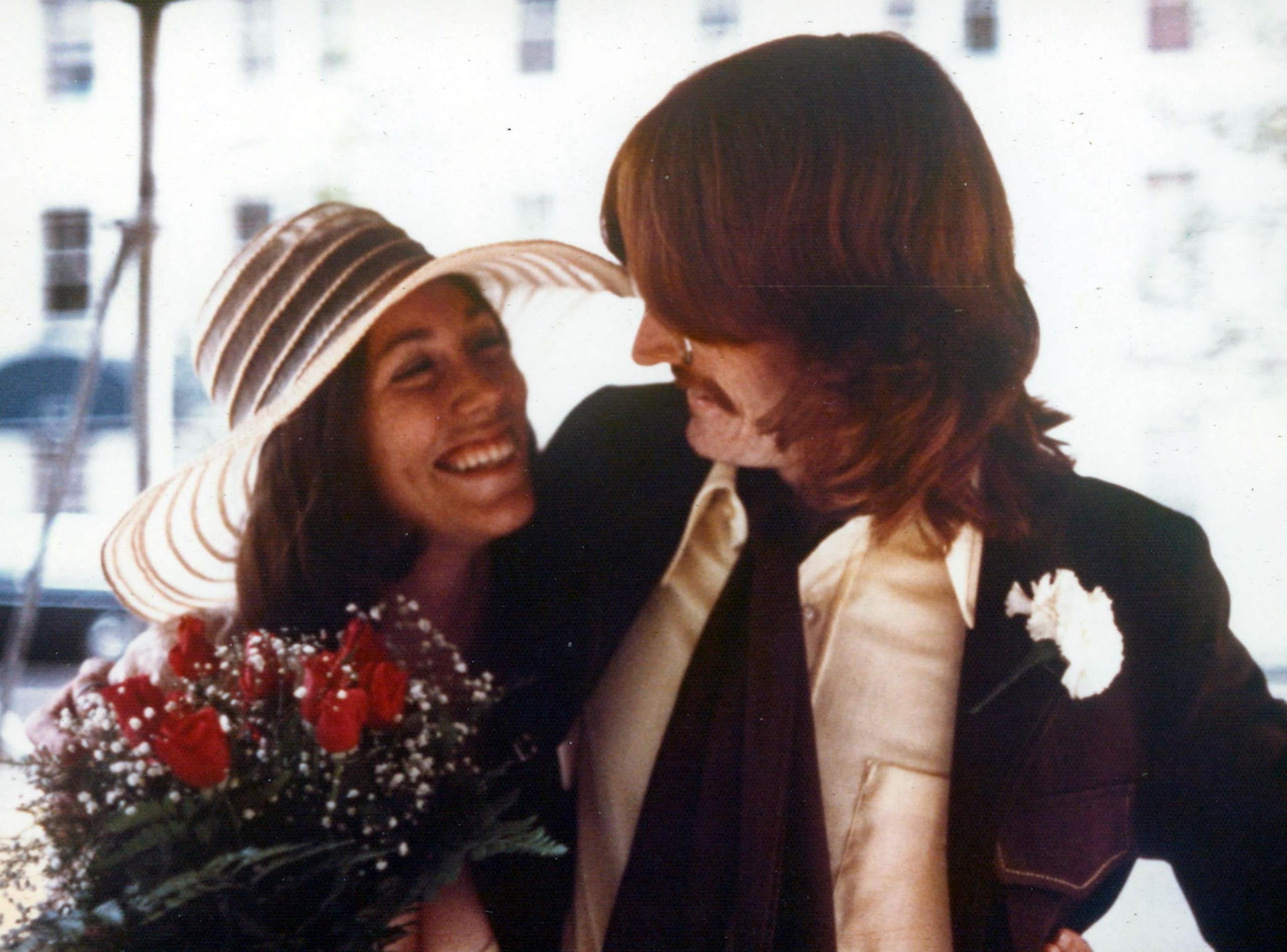
“Penthouse, please,” I requested, my finger hovering over the button of the self-service elevator. The compact space could barely accommodate three people, yet somehow, it felt roomy. Jan stepped in beside me, her eyes sparkling with anticipation, and one of her friends joined us. In that moment, I couldn’t help but admire her. She had always captivated me, but on our wedding day fifty years ago, she was nothing short of breathtaking.

Continue reading →

Will My Heel Pain Stop My Daily Walking Streak?

“Richard!” A familiar voice called out just as I was about to step into the narrow alleyway between Sofia Color Lounge and the soon-to-open coffee shop where Beadsmith once stood. I turned around and saw—Eric! A genuine smile spread across my face as I recognized him. He was pushing a stroller, his daughter peeking out with bright, curious eyes.

Continue reading →

God’s Light, the Soul of Humanity,
Illuminates the Darkness

Rituals often become another item on our to-do lists, rushed and stripped of their more profound significance. When we overlook their meaning and purpose, we hinder our ability to heal from loss and navigate the complexities of grief.

Continue reading →

The Jan Lilien Education Fund!

The Café with No Name

Read: May 2025

Get this book

The Café with No Name

by Robert Seethaler

Today, I started reading The Café with No Name by Robert Seethaler, translated by Katy Derbyshire. It’s a vibrant story of love, companionship, and renewal in 1960s Vienna. With warm prose and tender humor, Seethaler has created a delightful parable about human existence, brought to life by unforgettable characters and a rich tapestry of narratives.

In the summer of 1966, Robert Simon was in his early thirties and had a dream. Raised in a home for war orphans, he has grown into a warm-hearted, hard-working, and determined man. When the former owners of the corner café in Carmelite Market Square close the business, Robert sees an opportunity to realize his dream.

The café, dark and dilapidated, is located in an impoverished neighborhood of the Austrian capital. However, a new energy is beginning to fill the air, signaling a desire for renewal. In the newspapers that fishmongers use to wrap char and trout from the Danube, one can read about the great things to come, heralding a bright future emerging from the shadows of the past.

Inspired by this optimism, Robert refurbishes the café. His efforts pay off as customers arrive, drawn to a congenial space where they can gather, talk, read, or sit and reflect. Each visitor brings their passion, friendship, loss, and heartache stories. Some search for companionship, while others long for love or a place to feel understood. As the city transforms, Robert’s café becomes a haven—a refuge from which to observe life, mourn, and rejoice.


Robert Seethaler was born in Vienna in 1966 and is the author of eight novels. In 2017, he was a finalist for the Man Booker International Prize with A Whole Life (FSG, 2016). He also works as an actor, most recently in Paolo Sorrentino’s Youth. He lives in Berlin.

Katy Derbyshire translates contemporary German writers, including Christa Wolf, Heike Geissler, and Olga Grjasnowa. Her translation of Clemens Meyer‘s While We Were Dreaming was longlisted for the 2023 International Booker Prize. She was born in London and has been based in Berlin for over twenty years.


When you purchase a book through one of my links, I earn a small commission that helps support my passion for reading. This contribution allows me to buy even more books to share with you, creating an incredible cycle of discovering great reads together! Your support truly makes a difference!

Enjoy a limited-time offer of 20% off your next book purchase at Bookshop.org!


×
The Garden of Letters

Read: June 2021

Get this book

The Garden of Letters

by son Richman

The Garden of Letters by Alyson Richman was one of the first books I read after Jan died. It was the perfect love story to read after the loss of the love of my life. The love Jan and I shared was because we shared a portion of the soul of the other, and thus we were meant for each other from day one. 

The two primary characters – Elodie Bertolotti and Angelo Rosselli – resonated with me as they were also people who shared souls. The book “captures the hope, suspense, and romance of an uncertain era, in an epic intertwining story of first love, great tragedy, and spectacular bravery.

As I turned every page, the story filled my heart with love and happiness as it reminded me of the love that Jan and I shared.

Portofino, Italy, 1943. A young woman steps off a boat in a scenic coastal village. Although she knows how to disappear in a crowd, Elodie is too terrified to slip by the German officers while carrying her poorly forged identity papers. She is frozen until a man she’s never met before claims to know her. In desperate need of shelter, Elodie follows him back to his home on the cliffs of Portofino.

Only months before, Elodie Bertolotti was a cello prodigy in Verona, unconcerned with world events. But when Mussolini’s Fascist regime strikes her family, Elodie is drawn into the burgeoning resistance movement by Luca, a young and passionate bookseller. As the occupation looms, she discovers that her unique musical talents, and her courage, have the power to save lives.

In Portofino, young doctor Angelo Rosselli gives the frightened and exhausted girl sanctuary. He is a man with painful secrets of his own, haunted by guilt and remorse. But Elodie’s arrival has the power to awaken a sense of hope that Angelo thought was lost to him forever.

I not only recommend this book, but I am also looking forward to reading more of her novels.

Subscribe

Contact Us

×
The Exhibitionist: A Novel

Read: July 2023

Get this book

The Exhibitionist: A Novel

by Charlotte Mendelson

I began reading Charlotte Mendelson‘s novel, The Exhibitionist, today. The book tells the story of Lucia and Ray, two artists whose marriage starts to fall apart over a weekend. It explores themes such as art, sacrifice, family dynamics, queer desire, and personal freedom. Charlotte Mendelson has created yet another exceptional novel with The Exhibitionist, ranked as the year’s novel by The Times of London, and described as “furiously funny.”

The Hanrahan family is coming together for an important weekend. Ray Hanrahan, a well-known artist with a big ego, is preparing for his first exhibition in many years. His eldest daughter, Leah, is his biggest supporter. His son, Patrick, has decided to pursue his own path. His youngest daughter, Jess, has a big decision to make. Ray’s wife, Lucia, is also an artist but has always prioritized her roles as a wife and mother. She is keeping secrets of her own and must decide which desires to pursue as the weekend progresses and the exhibition approaches.


The Jan Lilien Education Fund sponsors ongoing sustainability and environmental awareness programs. Gifts made this month; I will match dollar-for-dollar. All donations are tax-deductible.

Subscribe

Contact Us

I receive a commission when you buy a book or product using a link on this page. Thank you for supporting Sharing Jan’s Love blog.


×
Invisible Child

Read: December 2021

Get this book

Invisible Child: Poverty, Survival & Hope in an American City

by Andrea Elliott

Invisible Child: Poverty, Survival & Hope in an American City by Andrea Elliott was a gift from my son Jon. The New York Times selected “Invisible Child” as one of the best books published this year. It is indeed one of the top books on my all-time list.

GoodReads summary provides a good overview,

The riveting, unforgettable story of a girl whose indomitable spirit is tested by homelessness, poverty, and racism in an unequal America—from Pulitzer Prize-winning journalist Andrea Elliott of The New York Times

Invisible Child follows eight dramatic years in the life of Dasani Coates, a child with imagination as soaring as the skyscrapers near her Brooklyn homeless shelter. Born at the turn of a new century, Dasani is named for the bottled water that comes to symbolize Brooklyn’s gentrification and the shared aspirations of a divided city. As Dasani grows up, moving with her tight-knit family from shelter to shelter, this story goes back to trace the passage of Dasani’s ancestors from slavery to the Great Migration north. When Dasani comes of age, New York City’s homeless crisis explodes as the chasm deepens between rich and poor.

In the shadows of this new Gilded Age, Dasani must lead her seven siblings through a thicket of problems: hunger, parental drug addiction, violence, housing instability, segregated schools, and the constant monitoring of the child-protection system. When, at age thirteen, Dasani enrolls at a boarding school in Pennsylvania, her loyalties are tested like never before. As she learns to “code switch” between the culture she left behind and the norms of her new town, Dasani starts to feel like a stranger in both places. Ultimately, she faces an impossible question: What if leaving poverty means abandoning the family you love?

By turns heartbreaking and revelatory, provocative and inspiring, Invisible Child tells an astonishing story about the power of resilience, the importance of family, and the cost of inequality. Based on nearly a decade of reporting, this book vividly illuminates some of the most critical issues in contemporary America through the life of one remarkable girl.

Jan and I were involved and knew that child poverty and homelessness needed repair. In addition, Jan lived on Washington Park across from Ft. Greene Park in 1974-75. We knew the neighborhood where much of the book’s story takes place. 

Before meeting Jan in 1973, I was both a community/tenant organizer and a youth worker. In the latter role, I made weekly hostel trips for eight to ten young boys from East Williamsburg during 1973. The trips were the first the boys had ever been outside of their neighborhood.

Many of them had imaginations like Dasani. They also had her instinct to fight. One of my first tasks was to check for any weapons.

Decades later, when I would see any of them, now adults, they would ask when we were going on another trip. I wish I had met Jan when I made those trips. She would have helped me improve them and document the impact. If I could re-write history, I would have her join me as the second adult on the hostel trips.

After that summer, it was clear my primary skills were as a community/tenant organizer. Over the next few years, my work focused on creating affordable and supportive housing.

Jan and I did meaningful work that made a difference, yet the need for a permanent solution to the crisis remains. The book highlights the crucial role of resilience, the importance of family, and the cost of inequality. As a nation, we cannot undermine those values by breaking up families, impeding resilience, and maintaining racial and economic inequality. 

The current debate in Washington over the Build Back Better legislation needs to focus not on how much we spend but on its impact on children and families

David Brooks, a conservative commentator, has supported these expenditures for what they can do to address this country’s cultural and economic crisis. 

These packages say to the struggling parents and the warehouse workers: I see you. Your work has dignity. You are paving your way. You are at the center of our national vision.

This is how you fortify a compelling moral identity, which is what all of us need if we’re going to be able to look in the mirror with self-respect. This is the cultural transformation that good policy can sometimes achieve. Statecraft is soulcraft.

If you can only read one book this year, this is the one to read. Child poverty, homelessness, and inequality impact all of us. Ending child poverty and homelessness will make us a healthier and more inclusive nation. It is time for a compelling moral call to action!

Subscribe

Contact Us

When you buy a book or product using a link on this page, I receive a commission. Thank you for supporting Sharing Jan’s Love blog.

×
The City We Became

Read: October 2021

Get this book

The City We Became: A Novel

by N. K. Jemisin

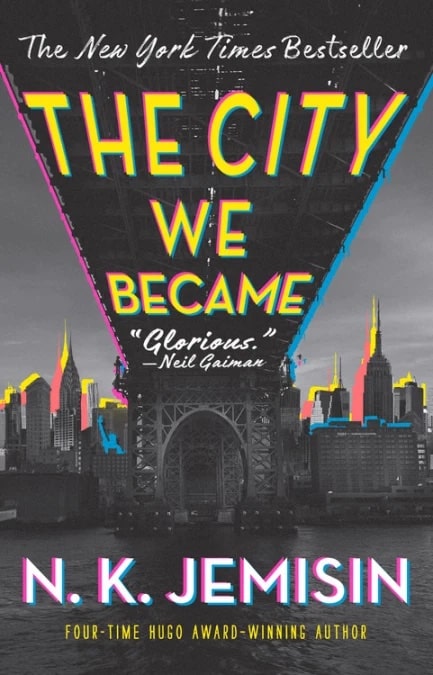
The City We Became: A Novel by N. K. Jemisin is my first science fiction and urban fantasy novel in quite some time. It is a story of culture, identity, magic, and myths in contemporary New York City. Jan and I had lived in New York City, and the book brought back fond memories.

Every great city has a soul. Some are ancient as myths, and others are as new and destructive as children.

But every City also has a dark side. A roiling, ancient evil stirs beneath the earth, threatening to destroy the City and her five protectors unless they can come together and stop it once and for all.

As Jemisin writes:

A city is never alone, not really — and this city seems less solitary than most. More like a family: many parts, frequently squabbling … but in the end, against enemies, they come together to protect one another. They must, or die.

The challenge is when evil forces threaten the City; the entire community needs to unite, and the City’s avatars for each of the five boroughs.

Initially, this is supposed to be one for each borough and one for the entire City. In the end, one of the avatars for the five boroughs chooses not to unite with the others. Without all six, they stand no chance to defeat the forces of evil.

How do they solve this? By adding the sixth borough – Jersey City.

I recommend this book without reservation.

When you buy a book or product using a link on this page, I receive a commission. Thank you for supporting Sharing Jan’s Love blog.

Subscribe

Contact Us

×
Great Expectations: A Novel

Read: March 2024

Get this book

Great Expectations: A Novel

by Vinson Cunningham

Today, I began reading “Great Expectations: A Novel” by Vinson Cunningham, a staff writer and theatre critic at The New Yorker. David, the protagonist, had seen the Senator speak a few times before my life got caught up, however distantly, with his. Still, the first time I can remember paying real attention was when he delivered the speech announcing his run for the Presidency.

Upon hearing the Senator from Illinois speak, David experiences conflicting emotions. He is fascinated by the Senator’s idealistic language yet ponders the balance between maintaining solid beliefs and making the necessary compromises to become America’s first Black president.

The book Great Expectations narrates David’s experience working for eighteen months on a Senator’s presidential campaign. During his journey, David encounters diverse individuals who raise questions about history, art, race, religion, and fatherhood. These inquiries prompt David to introspect his life and identity as a young Black man and father living in America.

Meditating on politics, religion, family, and coming-of-age, Great Expectations is a novel of ideas and emotional resonance, introducing a prominent new writer.

×