Jan Voting by Mail

I Voted Today!

Is Voting a Right or an Obligation?

Estimated reading time: 2 minutes, 36 seconds

“Would you like a sticker?” the poll worker asked. As she handed me the sticker, I placed it on my jacket, feeling proud and connected to the voting process. She asked me to tell everyone there was no line. I pointed out that I was the first to vote even though the polls had been open for twenty minutes. We chatted for a moment or two, sharing our hopes for the upcoming elections. Hopefully, the lines will be longer in November, I mentioned to her when I started to leave. The poll worker responded that it was a bet she would take. Not being a gambler, I agreed with her, feeling a sense of anticipation for the next time I would vote in the Lower Auditorium of Cranford High School.
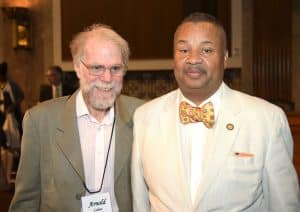
Congressman Payne and Arnold CohenWhy did I have to vote on a Wednesday in the middle of September? My congressman, Donald Payne, Jr., passed away in April—the photograph of Congressman Payne, Jr. and my friend Arnold Cohen at the Congressional Reception in Washington, DC, July 16, 2016. The annual Reception was a project I worked on with hundreds of people at Monarch Housing.

New Jersey scheduled the primary in July. Today, less than seven weeks before the presidential and general elections for this position, I hear from neighbors and friends that we have to vote too often, and they are overwhelmed. I am concerned that too many opt out of voting due to the overload.

I have always believed voting is a right and an obligation of citizenship. In all my long years, I have only missed casting a ballot on one day. In 1993, the day before an election for members of the town’s school board, I had been in an accident that dislocated my thumb and totaled the car I was driving. At first, the medical team was concerned I might have broken my spine.

While waiting for my wife and the doctors to decide how seriously injured I was, a nurse tried to take off my wedding ring, which, after eighteen years, had become permanently attached to my finger. I wept because I was afraid the nurse might misplace it. My wife entered the room and put the ring in her purse once the ring was off. Squeezing her hand, I said, “I have never had my ring off my finger. Will you still love me?”

Her answer should be evident to anyone reading my amateur posts. I loved her thoroughly, and I never doubted she loved me.  In addition, between the pain and the medication, the next day, an election day, I stayed home. As much as I would like to say, I remembered there was an election, but that is untrue. Since my ringless day, I have never missed an election, regardless of the day or the positions on the ballot. I could vote by mail or early in person at my age. I choose not to, as I enjoy the small talk with the Poll Workers and like to know how many people have voted when I arrive. Will I be the first to vote in November in my precinct?

Jan Voting by Mail

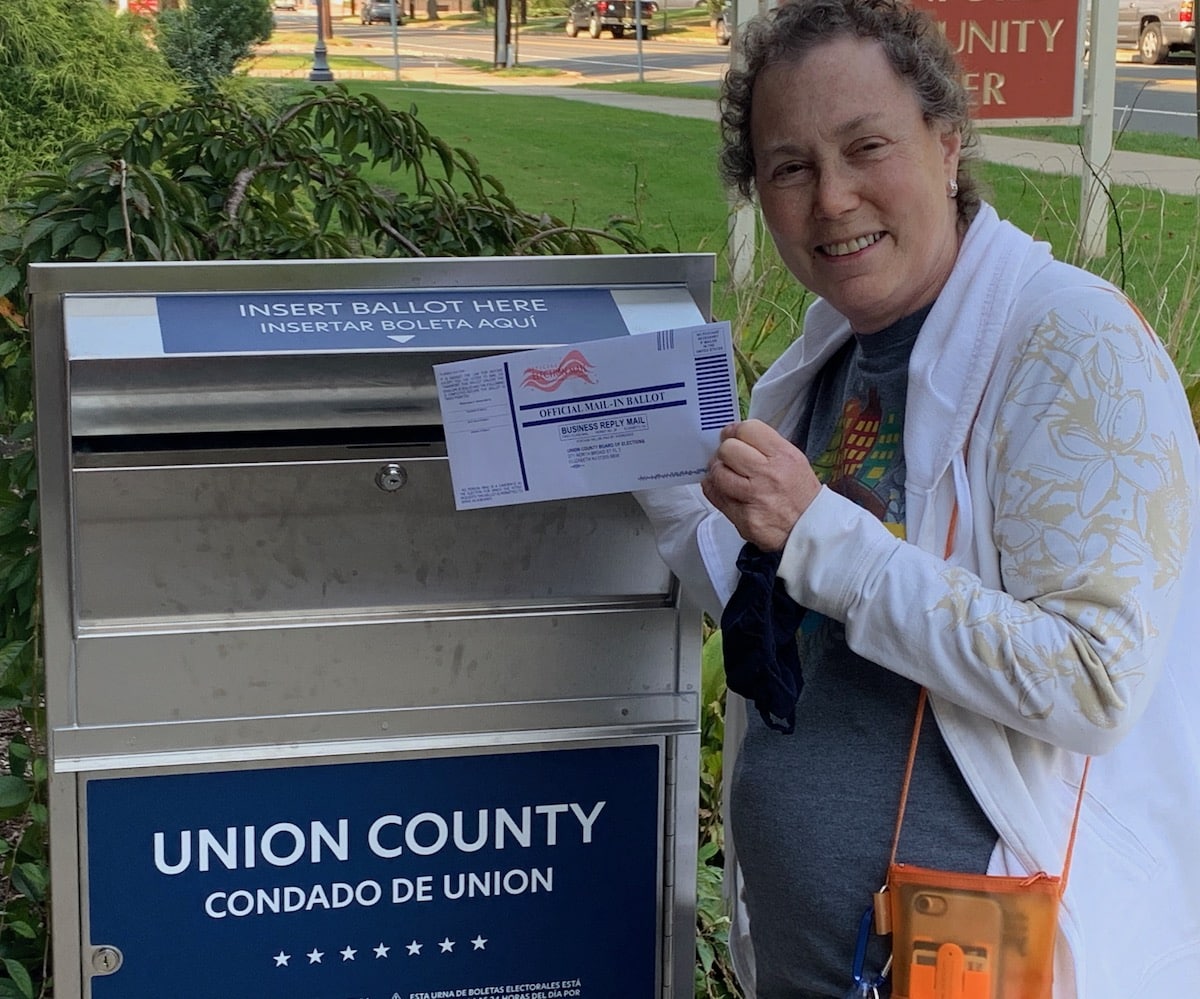
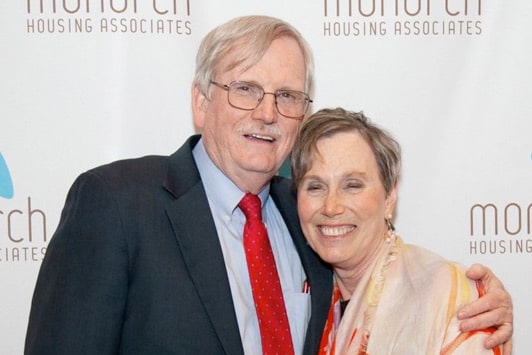
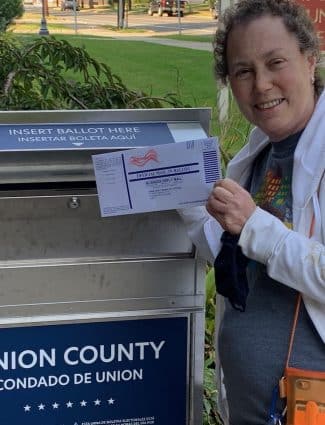
Voting is not only a right but an obligation. Jan and I voted together in every election. We both voted absentee last year with Jan’s Lymphoma and COVID-19. The Dropbox was by our town’s library. It usually is a short four-tenths of a mile walk from our apartment, and last year, it was a slower, lovely walk together.

1 comment add your comment

Share your thoughts and ideas

This site uses Akismet to reduce spam. Learn how your comment data is processed.

The Jan Lilien Education Fund!

Jan Voting by Mail
×
The Compound

Read: July 2025

Get this book

The Compound: A Novel

by Aisling Rawle

Addictive and prescient, The Compound by Aisling Rawle, is an explosive debut from a prominent new voice in fiction. This gripping novel, set in a remote desert compound, will linger in your mind long after the game ends. It’s a story of survival, competition, and the human spirit, making it a must-read for any fiction enthusiast. Lily—a bored, beautiful twenty-something—wakes up on The Compound, alongside nineteen other contestants competing on a massively popular reality show.

For Lily to emerge victorious, she must outlast her housemates and stay in The Compound the longest. Her journey is filled with challenges, from competing for luxury rewards like champagne and lipstick to securing communal necessities for their new home, including food, appliances, and even a front door.


Aisling Rawle was born in 1998 and raised in County Leitrim in the West of Ireland. She now lives in Dublin. The Compound is her first book.


When you purchase a book through one of my links, I earn a small commission that helps support my passion for reading. This contribution allows me to buy even more books to share with you, creating an incredible cycle of discovering great reads together! Your support truly makes a difference!

Enjoy a limited-time offer of 20% off your next book purchase at Bookshop.org!


×
The Hidden Life of Trees

Read: August 2021

Get this book

The Hidden Life of Trees

by Peter Wohlleben

The Hidden Life of Trees: What They Feel, How They Communicate ― Discoveries from A Secret World is a book I have wanted but had not had the time to read. In July of this year, when I was still in the early stages of my recovery journey, I talked to a friend of my wife’s (whom I now count as my friend) about our plans to plant a tree in Hanson Park.

As I talked about our plans, my friend suggested I read this book as it would help me understand the importance of trees. I will forever be grateful for her recommendation, as it made me read this book sooner than later.

To read that trees have a social network with more prominent, healthier trees concerned about the smaller, weaker ones. How is it that humans, a supposedly advanced species, have a social network that divides and weakens our community?

Are trees social beings? In The Hidden Life of Trees forester and author Peter Wohlleben convincingly makes the case that, yes, the forest is a social network. He draws on groundbreaking scientific discoveries to describe how trees are like human families: tree parents live together with their children, communicate with them, support them as they grow, share nutrients with those who are sick or struggling, and even warn each other of impending dangers. Wohlleben also shares his deep love of woods and forests, explaining the amazing processes of life, death, and regeneration he has observed in his woodland.

Having read this book, I am more sensitive to trees and have enjoyed my walks more than ever. In addition, when we plant Jan’s tree in Hanson Park, I will now have even more reasons to talk about the importance of trees to Jan, myself, and the community.

Subscribe

Contact Us

×
Move Like Water: My Story of the Sea

Read: October 2023

Get this book

Move Like Water: My Story of the Sea

by Hannah Stowe

I recently started reading a book called “Move Like Water: My Story of the Sea” by Hannah Stowe. It’s a captivating book that immerses you in a world of water, whales, storms, and starlight, allowing you to experience what it’s like to sail for weeks and live life to a new rhythm.

Hannah Stowe, a marine biologist and sailor in her mid-twenties, grew up on the Pembrokeshire coast of Wales, where she fell asleep to the sound of the lighthouse beam. Drawing upon her experiences sailing tens of thousands of miles in various seas, including the North Sea, North Atlantic, Mediterranean, Celtic Sea, and the Caribbean, she explores the human connection to the wild waters. Stowe ponders why she and others are drawn to life at sea and what we can learn from the water around us.

Stowe intertwines her narrative and illustrations with stories of six keystone marine creatures: the fire crow, sperm whale, wandering albatross, humpback whale, shearwater, and barnacle. Through these stories, she invites readers to fall in love with the sea and its inhabitants and to discover the majesty, wonder, and fragility of the underwater world.

If you enjoy the works of Rachel Carson and Annie Dillard, then “Move Like Water: My Story of the Sea” is a must-read. It’s an inspiring and heartfelt tribute to the sea, a testimony to pursuing and achieving a dream, and an unforgettable introduction to a talented new nature writer.


The Jan Lilien Education Fund sponsors ongoing sustainability and environmental awareness programs. Gifts made this month; I will match dollar-for-dollar. All donations are tax-deductible.

Subscribe

Contact Us

I receive a commission when you buy a book or product using a link on this page. Thank you for supporting Sharing Jan’s Love blog.


×
The Field of Blood: Violence in Congress and the Road to Civil War

Read: March 2019

Get this book

The Field of Blood

by Joanne B. Freeman

The Field of Blood: Violence in Congress and the Road to Civil War by Joanne B. Freeman, Professor of History and American Studies at Yale University, is a must-read in our hyper-partisan times. The partisanship and divisiveness of the period before the Civil War have many parallels to our time, and the difference is the violence of the Civil War era. Professor Freeman recovers the long-lost story of physical violence on the floor of the U.S. Congress.

She can do this by first source materials from Benjamin Brown French. He was never elected to office but was an acquaintance of twelve consecutive presidents, from Andrew Jackson to Ulysses S. Grant. In addition, he maintained a diary for forty years that highlighted the violence and his and the nation’s political transformation.

During much of this period, he was the Clerk in the House.  His diary documents the violence that did not get covered by the press. Legislative sessions included mortal threats, canings, flipped desks, and all-out slugfests. When debate broke down, members of Congress drew pistols and waved Bowie knives. One representative even killed another in a duel. Many were beaten and bullied in an attempt to intimidate them into compliance, particularly on the issue of slavery.

The Field of Blood is one of four books I purchased after my first One Day University class.

Subscribe

Contact Us

×
The Book of Love: A Novel

Read: March 2024

Get this book

The Book of Love: A Novel

by Kelly Link

I started reading “The Book of Love: A Novel” by Kelly Link today. The book showcases her exceptional writing skills, where she channels different forms of love, including friendships, romance, and family ties, with her trademark compassion, wit, and literary prowess. Readers can expect to experience joy, a little terror, and an affirmation that love endures despite challenges.

The story revolves around Laura, Daniel, and Mo, who mysteriously vanished from their hometown in Lovesend, Massachusetts, and were presumed dead. However, almost a year later, they find themselves in a high school classroom with their unremarkable music teacher. The teacher seems to know why they disappeared and what brought them back. They agree to undertake magical tasks to reclaim their lives, allowing them to return to their families and friends, but they can’t reveal where they’ve been. The tasks would lead to winners and losers.

Their resurrection attracts the attention of other supernatural beings with their agendas, which puts the community in danger and chaos. As Laura, Daniel, and Mo try to piece their lives together, and Laura’s sister Susannah tries to make sense of what she remembers, they must solve the mystery of their deaths to prevent a looming disaster.

The story takes place in Lovesend, where readers will experience love and loss, laughter and dread, magic, karaoke, and some delicious pizza.

×
Never Forget Our People Were Always Free

Read: March 2024

Get this book

Never Forget Our People Were Always Free

by Ben Jealous

Today, I started reading “Never Forget Our People Were Always Free: A Parable of American Healing” by Ben Jealous, the Executive Director of the Sierra Club. The book highlights how the path to healing America’s broken heart begins with each of us having the courage to heal ourselves. According to Mr. Jealous, it would be transformative if every American treated each other as cousins.

Ben Jealous is the son of parents who had to leave Maryland because their cross-racial marriage was illegal.

I briefly met Ben Jealous last May when I went to Washington with the Religious Action Center of Reform Judaism‘s Day of Action. When I saw Mr. Jealous speaking at Temple Emanu-El in neighboring Westfield, I immediately signed up to attend in person. He is an inspiration as an advocate for the environment, civil rights, and the healing of America’s broken heart.

His lively, courageous, and empathetic storytelling calls on every American to look past deeply cut divisions and recognize that we are all in the same boat now. Along the way, Jealous grapples with hidden American mysteries, including:

  • Why do white men die from suicide more often than black men die from murder?
  • How did racial profiling kill an American president?
  • What happens when a Ku Klux Klansman wrestles with what Jesus said?
  • How did Dave Chappelle know the DC Snipers were Black?
  • Why shouldn’t the civil rights movement give up on rednecks?
  • When is what we have collectively forgotten about race more important than what we know?
  • What do the most indecipherable things our elders say tell us about ourselves?

The book Never Forget Our People Were Always Free is told through parables. It features intimate glimpses of political and faith leaders such as Jack Kemp, Stacey Abrams, and the late Archbishop Desmond Tutu. The book also highlights unlikely heroes such as a retired constable, a female pirate from Madagascar, a long-lost Irishman, a death row inmate, and a man with a Confederate flag over his heart.

Never Forget Our People Were Always Free offers readers hope that America’s oldest wounds can heal and her oldest divisions can be overcome.

Although I have only read a handful of pages of the book, I highly recommend it!

×