Why Am I Giving Her Love Away?

Estimated reading time: 1 minute, 59 seconds

Sharing Jan’s Love
Because Love Never Dies

“Why are you giving her love away?” My answer is that I am not giving it away. What I am doing is sharing her love. The love they receive increases as they share it with others. Ultimately, that love returns to me, and I have more of Jan’s passion for life that I can re-share.

The idea of sharing her love resulted from a poem – Merrit Malloy’s Epitaph – that Jan and I both liked. It was read at her funeral and will be at mine. The last stanza explains why I share her love to preserve her memory and legacy.

Love doesn’t die,
People do.
So, when all that’s left of me
Is love,
Give me away.

Merrit Malloy, Epitaph
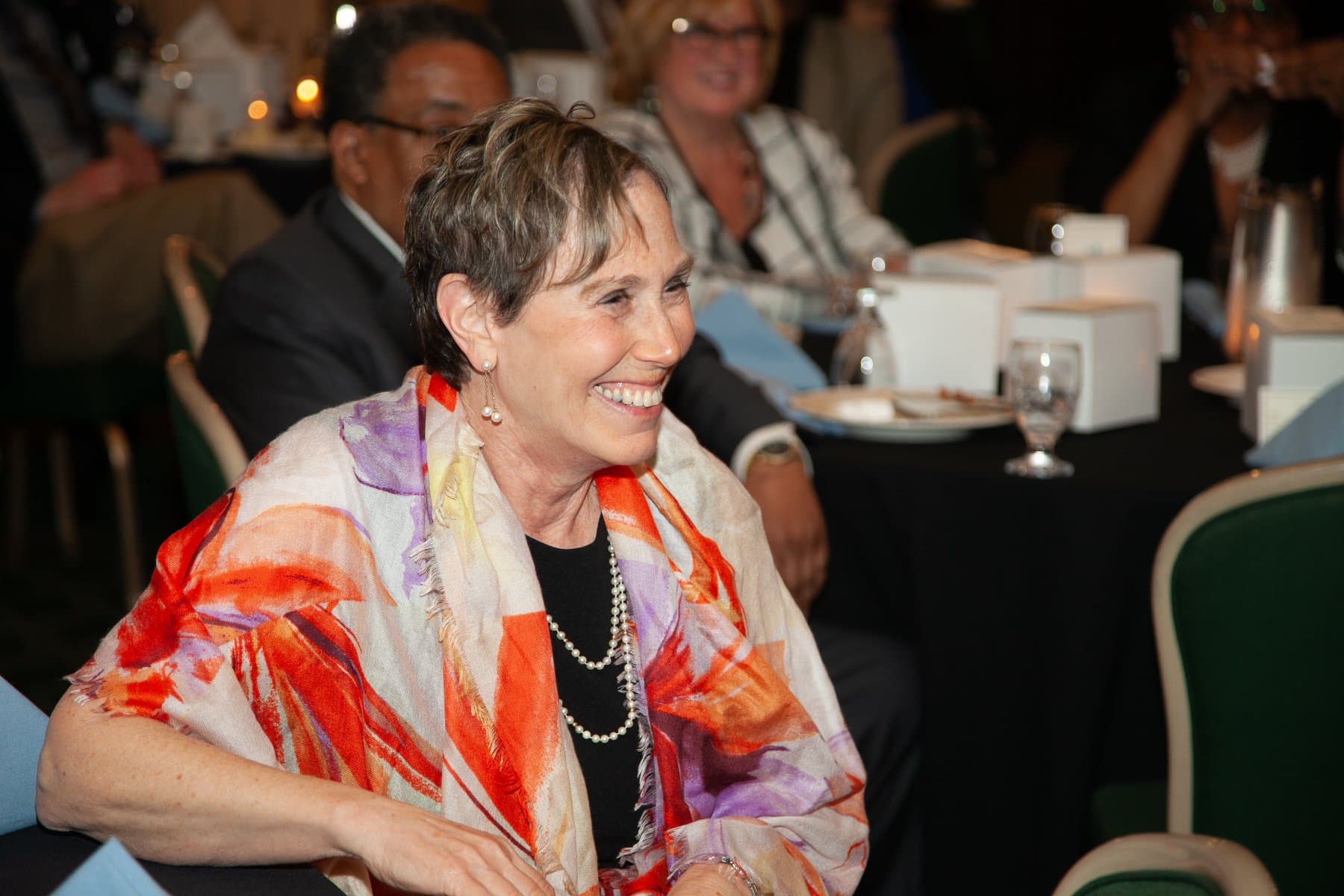
My two daughters-in-law, Karen Tillou and Elyssa Nucero read.
Epitaph by Merrit Malloy at Celebrate Jan Day, April 24, 2022.

I need to share her love to avoid living on an island of grief. I do not do this because I no longer love her; I do it because I love her now more than ever.

By sharing her love, it will return to me more robust.

Sharing Jan’s love will preserve her memory and legacy and make us all stronger.

We will all be inspired and empowered to repair the world and make it a better place for everyone by sharing her love.

If my choice is either an island of grief or a community of love, I will always choose love.

Sharing Jan’s love is the true meaning of my love for her!


Why are you giving her love away?” My answer is that I am not giving it away, and what I am doing is sharing her love…

Posted by Richard W. Brown on Monday, November 15, 2021


Subscribe
Contact Us

17 comments add your comment

Share your thoughts and ideas

This site uses Akismet to reduce spam. Learn how your comment data is processed.

The Jan Lilien Education Fund!

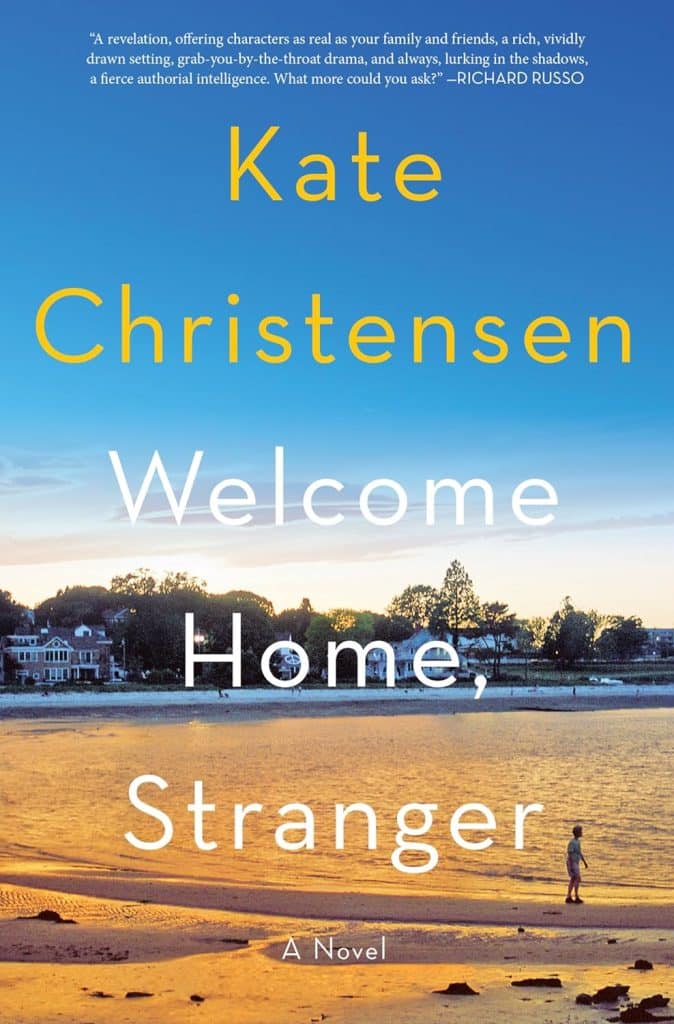
Welcome Home, Stranger: A Novel

Read: January 2024

Get this book

Welcome Home, Stranger: A Novel

by Kate Christensen

Today, I began reading “Welcome Home, Stranger: A Novel” by Kate Christensen. The book tells the story of a woman in her fifties who returns home to Maine after her mother’s passing. The novel explores themes of grief, love, growing older, and family complexities. It raises the question: Can you ever honestly go back home?

Rachel is an environmental journalist living in Washington, DC. She has been estranged from her working-class family in New England for many years. Having gone through a divorce and being childless in her middle age, Rachel is a truly independent spirit who has experienced a lot of pain. She feels like her life is falling apart and is struggling to cope with big and small challenges. However, her life takes a different turn when she gets a call to return home for her mother’s funeral.

Then, everything falls apart.

Rachel is surrounded by a cast of characters who are sometimes comical, sometimes heartbreakingly earnest. Her sister is an arriviste, her brother-in-law is an alcoholic, and the love of her life has recently married her sister’s best friend. Rachel must face her past and come to terms with the sorrow she has long buried. She must also confront the ghost of her mother, who, for better or worse, made her the woman she is today.

Lively, witty, and painfully familiar, this sophisticated and emotionally resonant novel from the author of The Great Man holds a mirror up to modern life as it considers the way some of us must carry on now.


The Jan Lilien Education Fund sponsors ongoing sustainability and environmental awareness programs. Gifts made this month; I will match dollar-for-dollar. All donations are tax-deductible.

Subscribe

Contact Us

I receive a commission when you buy a book or product using a link on this page. Thank you for supporting Sharing Jan’s Love blog.


×
The Vegetarian: A Novel

Read: October 2024

Get this book

The Vegetarian: A Novel

by Han Kang

Today, I started reading The Vegetarian: A Novel by Han Kang, Winner of the 2024 Nobel Prize in Literature. The novel also won The International Booker Prize and is one of The New York Times’s 100 Best Books of the 21st Century. Celebrated by critics worldwide, The Vegetarian is a darkly allegorical, Kafka-esque tale of power, obsession, and one woman’s struggle to break free from the violence both without and within her.

Before the nightmares began, Yeong-hye and her husband lived an ordinary, controlled life. But the dreams—invasive images of blood and brutality—torture her, driving Yeong-hye to purge her mind and renounce eating meat altogether. It’s a small act of independence, but it interrupts her marriage and sets into motion an increasingly grotesque chain of events at home.

As her husband, her brother-in-law, and her sister each fight to reassert their control, Yeong-hye obsessively defends the choice that’s become sacred to her. Soon, their attempts turn desperate, subjecting first her mind and then her body to ever more intrusive and perverse violations, sending Yeong-hye spiraling into a dangerous, bizarre estrangement, not only from those closest to her but also from herself.


Han Kang was born in 1970 in South Korea. She is the author of The Vegetarian, which I have read, and winner of the International Booker Prize,  Human ActsThe White BookGreek Lessons, and We Do Not Part. In 2024, she received the Nobel Prize in Literature.


When you purchase a book through one of my links, I earn a small commission that helps support my passion for reading. This contribution allows me to buy even more books to share with you, creating an incredible cycle of discovering great reads together! Your support truly makes a difference!


×
John of John

Read: August 2026

Get this book

John of John: A Novel

by Douglas Stuart

John of John” is a captivating novel that explores themes of duty, passion, and the transformative power of truth. This remarkable literary work solidifies Douglas Stuart‘s reputation as one of the greatest contemporary novelists. The story follows a young man who returns to his home on a Hebridean island, depicting the complex relationship between a father’s expectations and a son’s desires.

Out of money and with little to show for his art school education, John-Calum Macleod takes the ferry back home to the Isle of Harris in the Outer Hebrides to find that little has changed except for him. He returns to the windswept croft and the two pillars of his childhood: his father John, a sheep farmer, tweed weaver, and lay preacher in the local Presbyterian church, and his maternal grandmother Ella, a profanity-loving Glaswegian whose steady warmth helped Cal weather the sudden departure of his mother.

Cal privately wonders if any lonely men might be found on the barren hillsides of home, while John is dismayed by his son’s long hair, strange clothes, and seeming unwillingness to be saved. But Cal isn’t the only one in the croft house who is keeping secrets. As lambing season turns to shearing season, the threads holding the community together become increasingly frayed, and nothing will remain as it was before.


Douglas Stuart is a Scottish-American author. His New York Times bestselling debut novel Shuggie Bain won prizes including the 2020 Booker Prize and the Sue Kaufman Prize from the American Academy of Arts and Letters, was a finalist for the National Book Award and the PEN/Hemingway Award, and was named one of the “25 Best Books of the 21st Century” by the Sunday Times (UK). His second novel, Young Mungo, was a national bestseller, longlisted for the Andrew Carnegie Medal and a finalist for the British Book Award, and one of the most highly acclaimed books of the year. His stories are published in The New Yorker, and his essays have featured on Literary Hub. He lives in New York City.


Discover your next favorite book and explore curated, exciting reads by purchasing through my links. Your support truly helps me share more meaningful stories and insights with you, enriching your reading journey.


×
Losing Earth: A Recent History

Read: October 2019

Get this book

Losing Earth: A Recent History

by Nathaniel Rich

Losing Earth: A Recent History by Nathaniel Rich reminds us how close we were to halting the climate emergency, and our failure has resulted in our passing the tilting point. The book “reveals, in previously unreported detail, the birth of climate denialism and the genesis of the fossil-fuel industry’s coordinated effort to thwart climate policy through misinformation propaganda and political influence.”

By 1979, we knew nearly everything we understand today about climate change – including how to stop it. Over the next decade, a handful of scientists, politicians, and strategists, led by two unlikely heroes, risked their careers in a desperate, escalating campaign to convince the world to act before it was too late. Losing Earth is their story and ours.

The New York Times Magazine devoted an entire issue to Nathaniel Rich’s groundbreaking chronicle of that decade, which became an instant journalistic phenomenon – the subject of news coverage, editorials, and conversations all over the world. In its emphasis on the lives of the people who grappled with the significant existential threat of our age, it made vivid the moral dimensions of our shared plight.

Losing Earth tells the human story of climate change in even richer, more intimate terms. It reveals, in previously unreported detail, the birth of climate denialism and the genesis of the fossil-fuel industry’s coordinated effort to thwart climate policy through misinformation propaganda and political influence. The audiobook carries the story into the present day, wrestling with the long shadow of our past failures and asking crucial questions about how we make sense of our past, our future, and ourselves.

Like John Hersey’s Hiroshima and Jonathan Schell’s The Fate of the Earth, Losing Earth is the rarest of achievements: a riveting work of dramatic history that articulates a moral framework for understanding how we got here and how we must go forward.

Losing Earth is a must-read book!

Subscribe

Contact Us

×
How the Word is Passed

Read: December 2021

Get this book

How the Word Is Passed: A Reckoning with the History of Slavery Across America

by Clint Smith

How the Word Is Passed: A Reckoning with the History of Slavery Across America by Clint Smith. This book was a gift from my son Jon. The New York Times selected How the Word is Passed as one of the best books published this year. Beginning in his hometown of New Orleans, Clint Smith leads the reader on an unforgettable tour of monuments and landmarks—those that are honest about the past and those that are not—that offer an intergenerational story of how slavery has been central in shaping our nation’s collective history, and ourselves.

How the Word is Passed is one of the best books I have read in 2021. I had read an excerpt in The Atlantic on the Whitney Plantation, one of the only former plantations devoted to preserving the experience of the enslaved people whose lives and work sustained it. Like most of us, I had placed the book on my to-read list, where it remained lost in the cobwebs. Fortunately, my son Jon purchased the book for me.

Secondly, the book rekindled my long-lost dream of being an American Studies professor. As soon as Jan and I met, I dropped plans to leave Brooklyn and start graduate school in the fall of 1974. I made that decision primarily because of how much I loved Jan. But it was also partly that I did not have a clear vision of what my life would be like as a professor. The book provided clear examples of people like Yvonne Holden at The Whitney Plantation redefining history to be more accurate and inclusive. I probably could not have done as well as she did, but I can now see that it might have resulted in a career for me that could have been impactful.

Goodreads provides this overview for those who still need to be convinced to read this book.

It is the story of the Monticello Plantation in Virginia, the estate where Thomas Jefferson wrote letters espousing the urgent need for liberty while enslaving over 400 people on the premises. It is the story of the Whitney Plantation, one of the only former plantations devoted to preserving the experience of the enslaved people whose lives and work sustained it. It is the story of Angola Prison in Louisiana, a former plantation named for the country from which most of its enslaved people arrived and which has since become one of the most gruesome maximum-security prisons in the world. And it is the story of Blandford Cemetery, the final resting place of tens of thousands of Confederate soldiers.

In a deeply researched and transporting exploration of the legacy of slavery and its imprint on centuries of American history, How the Word Is Passed illustrates how some of our country’s most essential stories are hidden in plain view-whether in places we might drive by on our way to work, holidays such as Juneteenth, or entire neighborhoods—like downtown Manhattan—on which the brutal history of the trade in enslaved men, women and children has been deeply imprinted.

Informed by scholarship and brought alive by the story of people living today, Clint Smith’s debut work of nonfiction is a landmark work of reflection and insight that offers a new understanding of the hopeful role that memory and history can play in understanding our country.

How the Word is Passed is one of the best books I have read this year and many prior ones. I encourage you to read it and share your comments.

Subscribe

Contact Us

When you buy a book or product using a link on this page, I receive a commission. Thank you for supporting Sharing Jan’s Love blog.

×
The Catch

Read: June 2025

Get this book

The Catch: A Novel

by Yrsa Daley-Ward

In “The Catch,” her captivating debut novel, Yrsa Daley-Ward creates a vibrant multiverse that delves into the complexities of daughterhood and mother-want. She explores the sacrifices women often make in their pursuit of self-actualization. The result is a remarkable novel that boldly poses the question: “How can it ever be a crime to choose yourself?”

Twin sisters Clara and Dempsey have always struggled to connect, their familial bond severed after their mother vanished into the Thames. As infants, they were adopted by different families: Clara went to live with a successful, upper-class couple, while a distant and unaffectionate city councilor took in Dempsey. As adults, the sisters have settled into a comfortable estrangement until Clara spots a woman on the streets of London who looks exactly like their mother. The twist? This version of Serene appears ageless and has lived a childless life — the very life she might have had if the girls had never been born.

As with most things, Clara and Dempsey cannot agree on the strange appearance of this woman. Clara, a celebrity author with a penchant for excessive drinking and one-night stands, is eager to welcome the confident and temperamental Serene into her home. In contrast, reclusive Dempsey, who makes a modest living doing menial data entry work from her apartment, is suspicious of the entire situation, believing it to be a cunning scheme by a con woman.

As the sisters clash over this stranger who increasingly intrudes into their lives, they hurtle toward a confrontation that threatens their very existence, ultimately forcing them to face their shared past together.


Yrsa Daley-Ward is a poet, writer, and actress. She is the author of The Howbone, and The Terrible, for which she won the PEN Ackerley Prize. She lives in Los Angeles.


When you purchase a book through one of my links, I earn a small commission that helps support my passion for reading. This contribution allows me to buy even more books to share with you, creating an incredible cycle of discovering great reads together! Your support truly makes a difference!

Enjoy a limited-time offer of 20% off your next book purchase at Bookshop.org!


×

Discover more from Sharing Jan’s Love

Subscribe now to keep reading and get access to the full archive.

Continue reading