Is Grief Narcissistic?

Estimated reading time: 8 minutes, 52 seconds
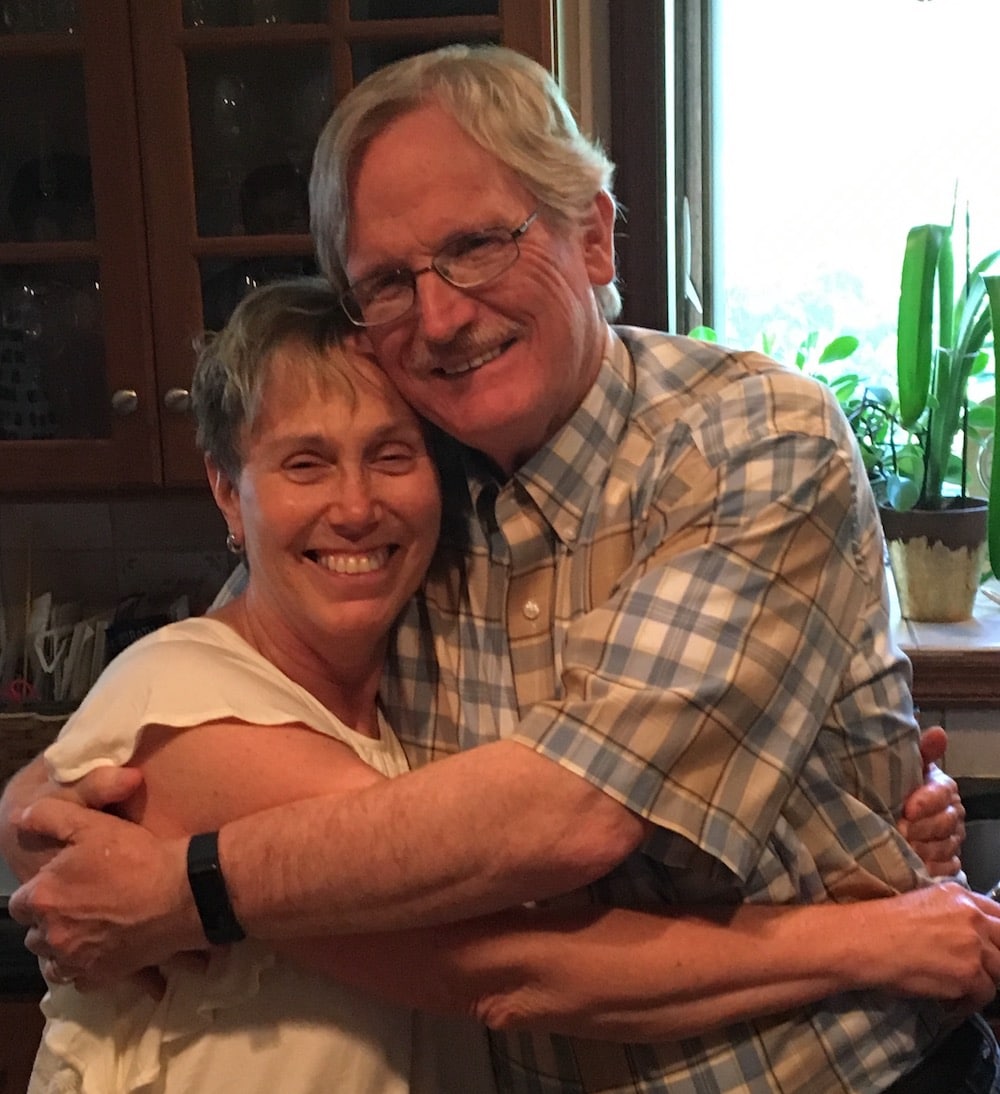
Discovering Altruism as the Antidote to Love and Grief

“Can you please hold on for a moment? I need to make a quick phone call,” she asked. With my hand over the mouthpiece, I asked for a minute to handle the call. Since moving into Clara Martini’s Mansion, a one-bedroom place without heat or hot water, I had encouraged my colleagues to rent the larger apartment next door. Allowing their apartment to use the same phone number as mine was how I treated others as cousins. Until late November, I had not felt the need to make any calls, and the number of times people called for me could be counted on one hand. However, after meeting Jan, I constantly wanted to talk to her. What was supposed to be a minute-long interruption turned into over an hour. I realized that instead of being a considerate neighbor, I had selfishly focused only on my needs.
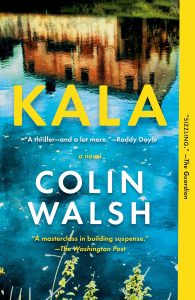
Kala: A Novel

I remember the evening when I stopped being altruistic and became a borderline narcissist after reading “Kala: A Novel” by Colin Walsh. Former friends, estranged for twenty years, reckon with the terrifying events of the summer that changed their lives. Three old friends are reunited in the seaside town of Kinlough, on Ireland’s west coast, for the first time in years. In the book, one of the protagonists, Helen, reflects on her grief about losing Kala, her best friend and falling in love. Helen says,

“Grief is like falling in love; it is always narcissistic. Some catastrophe cuts through your life, and immediately, you reshape the world to make this disaster the secret heartbeat of all things, the buried truth of the universe.

Falling in Love
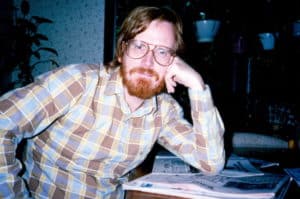
Richard

After meeting Jan, my life changed drastically, like a whirlwind sweeping through a quiet town. Just a few days earlier, I had been going about my routine, unaware of the impending storm of emotions. When Jan and I finally embraced, our lips met in a deep, fervent kiss that left me breathless. It was a kiss that surpassed all our previous sweet moments, igniting a fire within me that left me feeling weightless, as if I were soaring through the air. It was a kiss so electrifying that I half believed it could have knocked my boots off if I had not been wearing them. In that instant, our love for each other was forever sealed.

Coming back to East Williamsburg on Monday morning after meeting Jan, I was on cloud nine. My smile was as wide as the Grand Canyon. As I walked into my basement office at St. John’s Lutheran Church on Maujer Street, I hoped others might be just as happy for me.

We were a little worried when you didn’t return yesterday,” Mark laughed.

I had always wanted to be a bandleader, even without musical talent; I laughed and began leading them through the highlights of the last thirty-two hours. “After you guys left, we talked and cleaned up all night…” I told them about the bagel run, the Rose, walking over most of the City, and taking the Staten Island Ferry. I hoped they could see how happy I was in love.

They all congratulated me, and some gave me high fives.

By the end of the week, Vanessa, a neighbor and friend, spoke to me while I waited to board the subway to visit Jan. “We are all thrilled you have found love, but it is normal and not something people boast about.” I looked at her and felt dejected but did not know how to respond. She filled the empty void. People fall in love or get laid daily, but it is not…” The arriving train kept me from hearing the end of her comment. Riding the L train, I knew I had wanted to say that it wasn’t about getting laid but falling in love that made me happy. But I was not sure I wanted to admit we had only kissed. Switching to the A train, I felt relaxed and knew I needed to tone down my exuberance, but not how much I loved Jan.

I had long dreamt of finding genuine, enduring love, which finally became a reality. This experience taught me that love is a fleeting emotion and an everlasting force that outlives everything. As we parted ways for work, a tender kiss confirmed that our love is eternal. This transformative power of love, which transcends time and never fades, has inspired me to remain a romantic, helping me overcome the loss of my wife. It’s a comforting reminder that love, in its most valid form, never truly dies.

The First Widow

In the early days of grief,” I explained to Bruce, a retired Lutheran minister, “I felt as if my entire world had collapsed. I don’t believe I felt that way, but some widows act as if they were the first person in the world to lose a spouse.” Bruce chuckled as we walked. Imagine the first person to become a widow, to watch the first person die?” We both agreed it would have been shocking to find our partner had died when we had no idea that our lives would end.

As we turned a corner, I shared with Bruce, a retired Lutheran minister, that I was not the first or last person to become a widow. I had heard that approximately 2800 people become new widows daily in the US. ‘Wow, I did not know there were that many,’ Bruce responded. If we are to have love, it is a risk we must accept.’ I nodded and responded that none of us would live forever, and to choose not to love because I feared I might one day grieve was not logical. This shared experience of grief, this understanding that we are not alone in our loss, can bring us together and help us heal. It’s a reminder that we are all part of a larger community, and our shared experiences can be a source of strength and comfort.
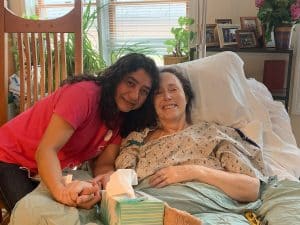
When Jan died, I explained to Bruce that my life had collapsed as I did not know how I could live without her. Although I had not read Kala aa, it had not been published. I understood why Helen would describe how a catastrophe cut through my life, and immediately, I reshaped the world to make this disaster the secret heartbeat of all things.

I had been hurt, and I believed my life would never be the same again. I wanted everyone to focus on me as if I were the first person in the world to lose a loved one. When my boys were young, I played Oregon Trail with them. As much as I enjoyed being a pioneer in the game, I was not and did not want to be a pioneer in grief. But not knowing how to grieve or make myself whole again, for the first few months, I viewed my experience as a life-consuming tragedy. They were not the best days of my life, and I knew if I continued to talk only about my pain from losing Jan, my family, friends, and neighbors would see me as a grumpy old widow. I knew I had to change and focus not on my loss but on my better, selfless nature. We chatted until we returned home and had a glass of water.

Reflecting on that conversation with Bruce in May 2023, I understand that creating a memorial garden for Jan was a turning point in my life. Despite the considerable emotional and financial investment, I saw it as a crucial step in redirecting my attention from my concerns to the needs of others. The project kept me dedicated to a selfless endeavor. I chose to work to overcome my grief even though I had no experience or confidence it would succeed. It did more than succeed in creating the garden; it helped me to volunteer, immerse myself in books, spend time outdoors, and get involved in my community. I embraced the task of facing each day as it came, adapting to life without Jan. This process of overcoming grief, step by step, gave meaning and purpose to my shattered life, inspiring me to find resilience and a new sense of self.

Pages: 1 2

20 comments add your comment

Share your thoughts and ideas

This site uses Akismet to reduce spam. Learn how your comment data is processed.

The Jan Lilien Education Fund!

Losing Earth: A Recent History

Read: October 2019

Get this book

Losing Earth: A Recent History

by Nathaniel Rich

Losing Earth: A Recent History by Nathaniel Rich reminds us how close we were to halting the climate emergency, and our failure has resulted in our passing the tilting point. The book “reveals, in previously unreported detail, the birth of climate denialism and the genesis of the fossil-fuel industry’s coordinated effort to thwart climate policy through misinformation propaganda and political influence.”

By 1979, we knew nearly everything we understand today about climate change – including how to stop it. Over the next decade, a handful of scientists, politicians, and strategists, led by two unlikely heroes, risked their careers in a desperate, escalating campaign to convince the world to act before it was too late. Losing Earth is their story and ours.

The New York Times Magazine devoted an entire issue to Nathaniel Rich’s groundbreaking chronicle of that decade, which became an instant journalistic phenomenon – the subject of news coverage, editorials, and conversations all over the world. In its emphasis on the lives of the people who grappled with the significant existential threat of our age, it made vivid the moral dimensions of our shared plight.

Losing Earth tells the human story of climate change in even richer, more intimate terms. It reveals, in previously unreported detail, the birth of climate denialism and the genesis of the fossil-fuel industry’s coordinated effort to thwart climate policy through misinformation propaganda and political influence. The audiobook carries the story into the present day, wrestling with the long shadow of our past failures and asking crucial questions about how we make sense of our past, our future, and ourselves.

Like John Hersey’s Hiroshima and Jonathan Schell’s The Fate of the Earth, Losing Earth is the rarest of achievements: a riveting work of dramatic history that articulates a moral framework for understanding how we got here and how we must go forward.

Losing Earth is a must-read book!

Subscribe

Contact Us

×
What Kind of Paradise

Read: July 2025

Get this book

What Kind of Paradise: A Novel

by Janelle Brown

What Kind of Paradise is a captivating and suspenseful novel by bestselling author Janelle Brown. It follows a young woman on her quest to understand self-identity. The story boldly explores complex themes, including the relationships between parents and children, the balance between nature and technology, the tension between innocence and knowledge, the losses we experience in our past, and our aspirations for the future.

This unforgettable narrative delves into what shapes us as individuals. The first thing you have to understand is that my father was my entire world, says Jane, the narrator.

Growing up in an isolated cabin in Montana in the mid-1990s, Jane knows only the world that she and her father live in: the woodstove that heats their home, the vegetable garden where they try to eke out a subsistence, the books of nineteenth-century philosophy that her father gives her to read instead of going to school. Her father is elusive about their pasts, giving Jane little beyond the fact that they once lived in the Bay Area and that her mother died in a car accident, the crash propelling him to move Jane off the grid to raise her in a Walden-esque utopia.

As Jane becomes a teenager, she begins to push against the boundaries of her restricted world. She begs to accompany her father on his occasional trips away from the cabin. But when Jane realizes that her devotion to her father has made her an accomplice to a horrific crime, she flees Montana to the only place she knows to look for answers about her mysterious past and her mother’s death: San Francisco. It is a city amid a seismic change, where her quest to understand herself will force her to reckon with both the possibilities and the perils of the fledgling internet, and where she will come to question everything she values.


Janelle Brown is the New York Times bestselling author of I’ll Be You, Pretty Things, Watch Me Disappear, All We Ever Wanted Was Everything, and This Is Where We Live. An essayist and journalist, she has written for Vogue, The New York Times, Elle, Wired, Self, Los Angeles Times, Salon, and more. She lives in Los Angeles with her husband and their two children.


When you purchase a book through one of my links, I earn a small commission that helps support my passion for reading. This contribution allows me to buy even more books to share with you, creating an incredible cycle of discovering great reads together! Your support truly makes a difference!

Enjoy a limited-time offer of 20% off your next book purchase at Bookshop.org!


×
Martyr! A Novel

Read: October 2024

Get this book

Martyr! A Novel

by Kaveh Akbar

Today, I started reading “Martyr! A Novel” by Kaveh Akbar, one of the five finalists for the 2024 National Book Award for Fiction, I have read. This is also the 79th book I have read this year, surpassing my record from last year. Kaveh Akbar‘s “Martyr!” is a tribute to our pursuit of meaning in faith, art, ourselves, and others. The story follows Cyrus Shams, the newly sober, orphaned son of Iranian immigrants.

He is guided by the voices of artists, poets, and kings as he embarks on a search for a family secret, which leads him to a terminally ill painter living out her final days in the Brooklyn Museum.

Cyrus Shams, our protagonist, grapples with an inheritance of violence and loss. His mother’s tragic death and his father’s limited life in America have left him with scars. He’s a drunk, a person with a substance use disorder, and a poet, but above all, he’s a human being on a journey of self-discovery. His fascination with martyrs leads him to explore the mysteries of his past, including his uncle’s inspiring yet haunting role on Iranian battlefields and a painting that suggests his mother may not have been who or what she seemed.

Martyr!” is a novel that’s not just electrifying and funny but also wholly original. It’s a testament to Kaveh Akbar‘s unique storytelling and heralds the arrival of an essential new voice in contemporary fiction. Get ready to be captivated by his narrative prowess.


When you purchase a book through one of my links, I earn a small commission that helps support my passion for reading. This contribution allows me to buy even more books to share with you, creating an incredible cycle of discovering great reads together! Your support truly makes a difference!


×
Half His Age

Read: January 2026

Get this book

Half His Age: A Novel

by Jennette McCurdy

Half His Age by Jennette McCurdy is a strikingly insightful and humorously poignant character study of a yearning seventeen-year-old girl who faces numerous obstacles—or attempts to overcome them—in her quest to be seen, desired, and loved. This novel is a blend of sadness, humor, and thrills, exploring themes of sex, consumerism, class, desire, loneliness, the internet, rage, intimacy, power, and the often misguided lengths we go to obtain what we want. The New York Times has listed it as one of “The Novels Everyone Will Be Talking About in 2026.”

Waldo is ravenous. Horny. Blunt. Naive. Wise. Impulsive. Lonely. Angry. Forceful. Hurting. Perceptive. Endlessly wanting. And the thing she wants most of all: Mr. Korgy, her creative writing teacher with the wife and the kid and the mortgage and the bills, with the dead dreams and the atrophied looks and the growing paunch. She doesn’t know why she wants him. Is it his passion? His life experience? The fact that he knows books and films and things that she doesn’t? Or is it purer than that, rooted in their unlikely connection, their kindred spirits, the similar filter with which they each take in the world around them? Or, it’s just enough that he sees her when no one else does.


Jennette McCurdy is the #1 New York Times bestselling author of “I’m Glad My Mom Died,” which won the 2023 American Library Association Alex Award. The book has been published in over thirty countries and has sold more than three million copies. McCurdy is also creating, writing, and executive producing an Apple TV+ series loosely inspired by “I’m Glad My Mom Died,” starring Jennifer Aniston. Additionally, “Half His Age” is her debut novel.


Discover your next favorite book and dive into a world of curated, exciting reads by purchasing through my links. You’ll have access to a diverse selection of books I’ve personally vetted for quality and enjoyment. Additionally, by supporting these selections, you’ll help me continue to provide you with more personalized recommendations. I earn a small commission from your purchase, which allows me to buy and share even more books with you. Your support truly makes a difference!


×
The Book of I

Read: October 2025

Get this book

The Book of I: A Novel

by David Greig

The Book of I” by David Greig is a remarkable debut novel from Scotland, shortlisted for both the Highland Book Prize and the Bookmark Book Festival Book of the Year. This unique work offers a philosophical exploration of themes such as guilt, redemption, humanity, love, and the beliefs we hold dear. Told with humor and enhanced by sharply vivid dialogue, David Greig skillfully bridges the gap between our contemporary world and the past.

Set in the year 825 CE, the story unfolds in the aftermath of a brutal attack by northern raiders, leaving an unlikely trio as the sole survivors on a remote Scottish island. The survivors include Brother Martin, a young monk who is the only member of the local monastery to escape martyrdom; Una, a beekeeper and mead maker who has freed herself from her violent husband during the chaos; and Grimur, an aging Norseman who digs himself out of a makeshift grave where his fellow raiders had left him, believing him to be dead.

As the seasons change in this wild and isolated environment, their initial distrust of one another evolves into a complex exploration of the distances and connections among them. “The Book of I” is a unique novel that serves as a philosophical commentary on guilt, redemption, humanity, love, and the beliefs we choose to embrace.


David Greig is a renowned Scottish writer whose plays have been performed extensively across the UK and internationally. His notable works for the theatre include The Strange Undoing of Prudencia Hart, Touching the Void, Midsummer, The Events, Charlie and the Chocolate Factory, Local Hero, and Macbeth (also known as Dunsinane). He served as the Artistic Director of Edinburgh’s Lyceum Theatre from 2015 to 2025. The Book of I marks his debut novel.


Discover your next favorite book and dive into a world of curated, exciting reads by purchasing through my links. You’ll have access to a diverse selection of books that I’ve personally vetted to ensure quality and enjoyment. Additionally, by supporting these selections, you’ll help me continue to provide you with more personalized recommendations. I earn a small commission from your purchase, which allows me to buy and share even more books with you. Your support truly makes a difference!


×
Flashlight

Read: August 2025

Get this book

Flashlight: A Novel

by Susan Choi

A monumental new novel by National Book Award winner Susan Choi, Flashlight spans decades and continents in a captivating and emotional exploration of family, loss, memory, and the ways we are influenced by what remains hidden. Longlisted for the 2025 Booker Prize, the novel follows the journey of a father’s disappearance over time, across nations, and within the realm of memory. This work comes from the author of Trust Exercise.

On a summer night, Louisa and her father take a walk along the breakwater. Her father is carrying a flashlight, but he cannot swim. Later, Louisa is found on the beach, soaked to the skin and barely alive. Her father is missing. She is only ten years old.

Louisa is the only child of parents who have distanced themselves from their pasts. Her father, Serk, is Korean but was born and raised in Japan. He lost touch with his family after they embraced the promises of postwar Pyongyang and relocated to North Korea. Her American mother, Anne, is estranged from her Midwestern family due to a reckless adventure in her youth. Then there’s Tobias, Anne’s illegitimate son, whose unexpected return will have profound consequences.

For now, it is just Anne and Louisa—Louisa and Anne—adrift and facing the challenges of everyday life in the aftermath of their immense loss. Bound together yet estranged, they struggle to cope with their shared grief and attempt to move forward. However, they cannot escape the haunting memories of that fateful night. What happened to Louisa’s father?

With shifting perspectives across time and character, and repeatedly revisiting that night by the sea, Flashlight explores the shockwaves of one family’s tragedy while also engaging with the invisible currents of history.


Susan Choi is the author of Trust Exercise, which won the National Book Award for fiction. She has also written the novels The Foreign Student, American Woman, A Person of Interest, and My Education.

Choi has received several prestigious awards, including the Asian American Literary Award for fiction, the PEN/W. G. Sebald Award, a Lambda Literary Award, and the Sunday Times Audible Short Story Award. Additionally, she has been awarded fellowships from the National Endowment for the Arts and the Guggenheim Foundation.

Currently, she teaches in the Writing Seminars at Johns Hopkins University and resides in Brooklyn, New York.


When you purchase a book through one of my links, I earn a small commission that helps support my passion for reading. This contribution allows me to buy even more books to share with you, creating an incredible cycle of discovering great reads together! Your support truly makes a difference!

Enjoy a limited-time offer of 20% off your next book purchase at Bookshop.org!


×

Discover more from Sharing Jan’s Love

Subscribe now to keep reading and get access to the full archive.

Continue reading