
Temple Sha'arey Shalom

Love Can Conquer Even Death

We Should Pray not for the Deceased but Pray for the Living!

Estimated reading time: 2 minutes, 33 seconds

The beautiful and haunting sound of the shofar lingered in my thoughts like a reverberating echo as Roger and I settled into his car after Yom Kippur at Temple Sha’arey Shalom. “The services felt more poignant this year than they have in a long time,” Roger remarked, echoing my sentiments. We couldn’t help but discuss the day’s profound impact on us. Once I was back home, I sank into the comfort of my couch, eager to capture the raw intensity of my emotions by translating them into written words within a Word document before they slipped away into the recesses of my mind.

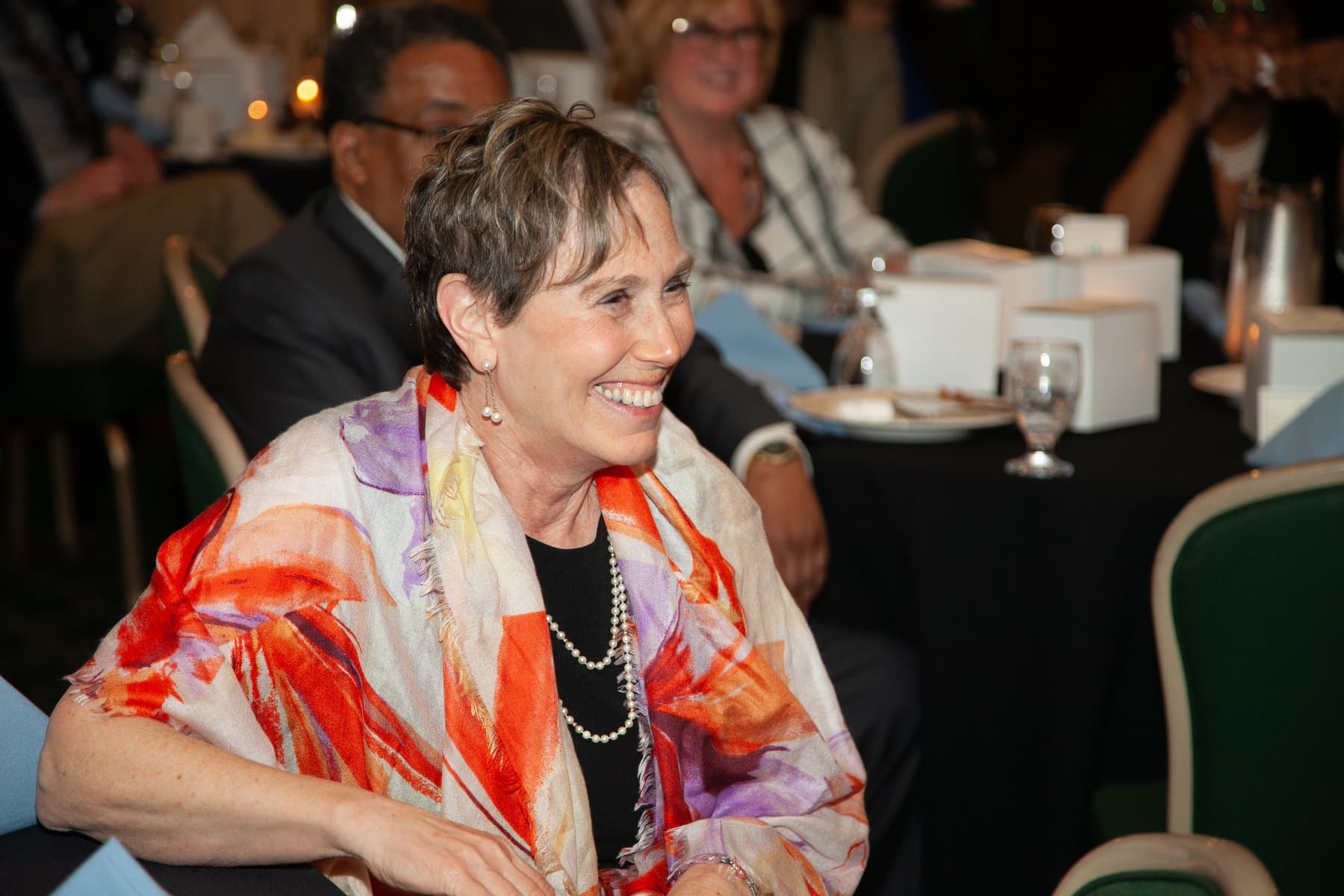
Chatting with Bill and Brian, Temple Sha'arey Shalom's co-presidents after Yom Kippur

I was chatting with Bill and Brian, Temple Sha’arey Shalom’s co-presidents after Yom Kippur.

Despite the hunger after a 24-hour fast, I composed my thoughts. The High Holidays were genuinely touching and meaningful last night and today. They were a transformative experience, leading me to a profound connection to the divine that helped me release my past transgressions.
I look forward to a year filled with faith, hope, and love, knowing that change is possible.

Without pausing, my hands typed my thoughts about the Yizkor service, which has been challenging for me in the past and took on a new and profound meaning this year. It wasn’t just a prayer for the departed; it became a pledge for the living. How often have I read that line but not comprehend it in the last three-plus years? Finally, like hearing the shofar, I listened to the commandment, and I’m dedicated to being a better parent, grandparent, friend, neighbor, and the best version of myself! I screamed—love indeed conquers even death—so loud that I feared my neighbors would be considered, and I might have lost my mind.

But how do I become a better person? My friend Danny has written that he perceives me as having changed.

You are an incredible person, a new person, and a better person! Jan, although not physically here, has done so much for you!

I have made significant progress on my journey through grief. It has been a challenging and sometimes painful experience, but I have gained valuable insights about myself and the world. Each lesson has been meaningful, and I have embraced them wholeheartedly. However, I have always viewed Danny’s words more as an honorary description than a reality that resonates deeply within me.

Two years ago, I took off my wedding ring as a symbol of embracing the loss of my wife. The fifteen months of grief I went through were the most difficult challenge of my life at that time. While the challenge of becoming a better parent, grandparent, friend, neighbor, and the best version of myself may be equally demanding, it is not one I can shy away from. Love’s magical power helped me conquer grief. Understanding that love can conquer even death will guide me daily on this new journey. Achieving this goal will require the love and support of all my overlapping communities. Can I count on you?
A Journey Worth Taking

We have been blessed with the incredible gifts of hearing, embracing, and walking into the future. I am dedicated to fearlessly approaching the future with determination, cherishing every moment, and striving to become the best version of myself.

Show thread (1)

Tashlich

We Should Pray not for the Deceased but Pray for the Living!

Estimated reading time: 2 minutes, 33 seconds

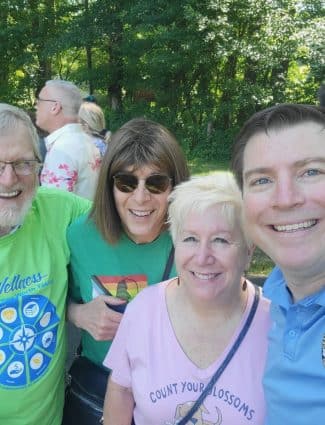
Temple Sha’arey Shalom, my congregation, gathered after Rosh Hashanah services at Briant Park in Summit to observe the custom of Tashlich, a ritual symbolic of the “casting off” of sins into a body of water. Rabbi Uri Allen led the service with songs and blew the shofar!

Share your thoughts and ideas

This site uses Akismet to reduce spam. Learn how your comment data is processed.

The Jan Lilien Education Fund!

Temple Sha'arey Shalom
×
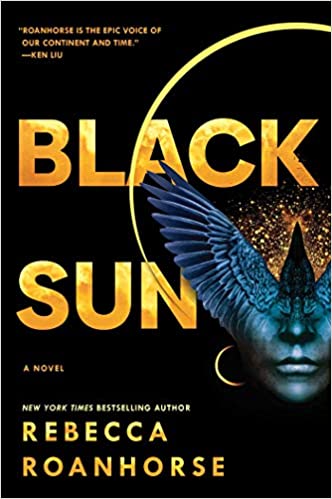
Black Sun

Read: November 2021

Get this book

Black Sun – Between the Earth and Sky

by Rebecca Roanhorse

Black Sun by Rebecca Roanhorse.  Black Sun is the first book in the Between Earth and Sky trilogy, inspired by the civilizations of the Pre-Columbian Americas and woven into a tale of celestial prophecies, political intrigue, and forbidden magic.

I have always enjoyed fantasy novels like Black Sun, and this is the first one set in the Pre-Columbian Americas.

A god will return
When the earth and sky converge
Under the black sun

In the holy city of Tova, the winter solstice is usually a time for celebration and renewal, but this year, it coincides with a solar eclipse, a rare celestial event proscribed by the Sun Priest as an unbalancing of the world.

Meanwhile, a ship launches from a distant city bound for Tova and set to arrive on the solstice. The captain of the ship, Xiala, is a disgraced Teek whose song can calm the waters around her as quickly as it can warp a man’s mind. Her ship carries one passenger. Described as harmless, the passenger, Serapio, is a young man, blind, scarred, and cloaked in destiny. As Xiala well knows, when a man is described as harmless, he usually ends up being a villain.

Will Serapio be harmless or a villain? The answer, my friend, will be known when you read this book or perhaps the second one in the trilogy.

Before meeting and falling forever in love with Jan, I had dreamed of the life of an American Studies professor. Thousands of students are relieved to know I did not pursue that life. If I had opened that door, an area of focus would have been on Pre-Columbian Americas.

I recommend this book and will read the next two in the Between Earth and Sky trilogy.

Subscribe

Contact Us

When you buy a book or product using a link on this page, I receive a commission. Thank you for supporting Sharing Jan’s Love blog.

×
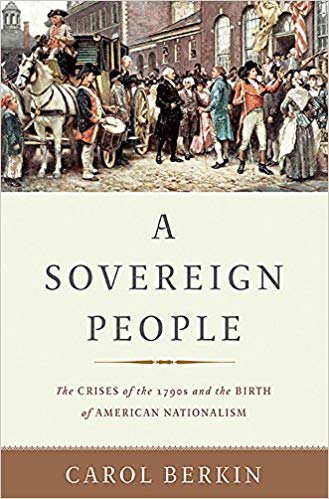
A Sovereign People: The Crises of the 1790s and the Birth of American Nationalism

Read: February 2019

Get this book

A Sovereign People: The Crises of the 1790s and the Birth of American Nationalism

by Carol Berkin

A Sovereign People: The Crises of the 1790s and the Birth of American Nationalism by Carol Berkin, Presidential Professor American Colonial and Revolutionary History; Women’s History Professor at Baruch College, focuses on four crises in the first decade. Most historians view these are part of the early partisan debates in America.

Professor Berkin takes a different perspective. She focuses on how the Whiskey Rebellion, the Genet Affair, the XYZ Affair, and the Alien and Sedition Acts helped build nationalism. Despite the partisan divisions, both sides could find solutions that helped America survive its first decade. The failure to resolve anyone of these could have doomed America to failure.

The Federalists – Washington, Hamilton, and Adams – were the leaders of that first decade and managed the successive crisis of sovereignty.

A Sovereign People is one of four books from my first One Day University class.

Subscribe

Contact Us

×
Killing Stella

Read: July 2025

Get this book

Killing Stella

by Marlen Haushofer

Yesterday, I read “Killing Stella,” written by Marlen Haushofer and translated by Shaun Whiteside, which is a domestic horror story that culminates in an apocalyptic ending. This novella captures many of the themes present in Haushofer’s acclaimed novel, “The Wall,” presenting them within a claustrophobic, gothic, and striking narrative. It offers a gripping and incisive exploration of a fractured marriage, highlighting the remarkable talent of the author of “The Wall,” now available in English for the first time.

Main description: Left alone for the weekend while her husband and two children visit her in-laws, the narrator of “Killing Stella” recounts the addition of her friend’s daughter, Stella, to their already tense and tumultuous household. As she stares out the window at her garden, she worries about a baby bird in the linden tree, her husband Richard, who flits from one adulterous affair to another, her son’s gloomy demeanor, and her daughter’s obliviousness to everything. Most of all, she worries about Stella, a confused teenager who has met a sudden and disastrous end.


Marlen Haushofer (1920–1970) was an Austrian author known for her short stories, novels, radio plays, and children’s books. Her work has significantly influenced many German-speaking writers, including Nobel Prize winner Elfriede Jelinek, who dedicated one of her plays to Haushofer. One of her most notable works, “The Wall“, was adapted into a film in 2012, directed by Julian Pölsler and starring Martina Gedeck.

Shaun Whiteside is known for his translations of classic works from German, including those by Freud, Musil, and Nietzsche.


When you purchase a book through one of my links, I earn a small commission that helps support my passion for reading. This contribution allows me to buy even more books to share with you, creating an incredible cycle of discovering great reads together! Your support truly makes a difference!

Enjoy a limited-time offer of 20% off your next book purchase at Bookshop.org!


×
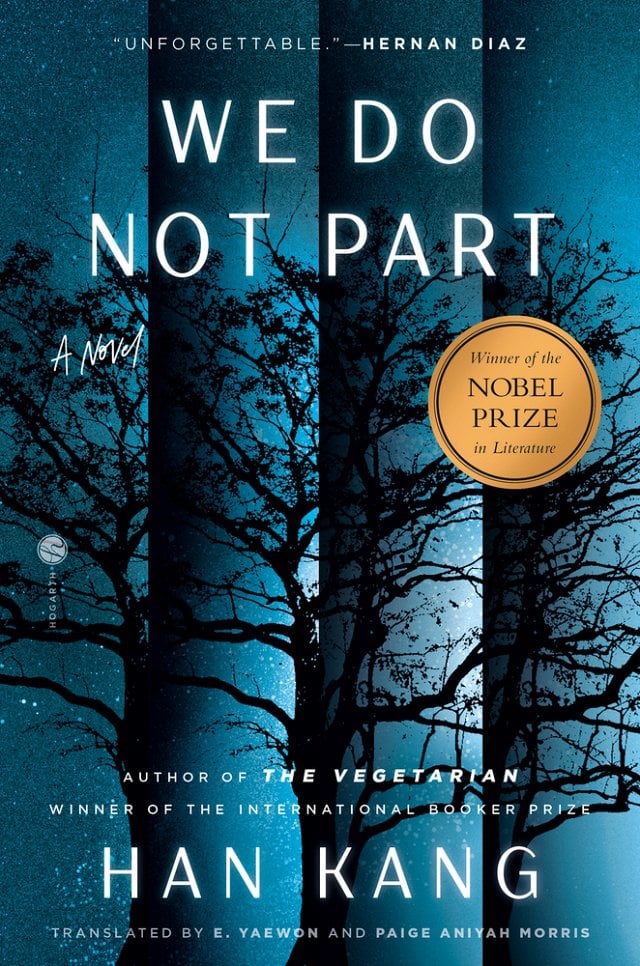
We Do Not Part

Read: March 2025

Get this book

We Do Not Part: A Novel

by Han Kang

Today, I explored “We Do Not Part,” the latest novel by Han Kang, the 2024 Nobel Prize in Literature laureate. Translated by the talented e. yaewon and Paige Aniyah Morris, this book offers a remarkable journey. The New York Times has called it Kang’s most revealing work since her acclaimed novel, “The Vegetarian.” What captivates me the most is how it intricately weaves the story of two women’s friendship while shedding light on a hidden chapter of Korean history.

One winter morning, Kyungha receives an urgent message from her friend Inseon, asking her to visit a hospital in Seoul. Inseon has injured herself in an accident and begs Kyungha to return to Jeju Island, where she lives, to save her beloved pet—a white bird named Ama. A snowstorm hits the island when Kyungha arrives. At all costs, she must reach Inseon’s house, but the icy wind and blizzards slow her down as night falls. She wonders if she will arrive in time to save the animal—or even survive the terrible cold that envelops her with every step. Lost in a world of snow, she does not yet suspect the vertiginous plunge into darkness that awaits her at her friend’s house.

Blurring the boundaries between dream and reality, “We Do Not Part” powerfully illuminates a forgotten chapter of Korean history buried for decades, bringing to light the lost voices of the past to prevent them from fading into oblivion. It is both a tribute to enduring friendship and a plea for remembrance. The novel tells a story of profound love in the face of unspeakable violence and celebrates life, however fragile.


Han Kang was born in 1970 in South Korea. She is the author of The Vegetarian, which I have read, and winner of the International Booker Prize,  Human Acts, The White Book, Greek Lessons, and We Do Not Part. In 2024, she received the Nobel Prize in Literature.

e. yaewon is based in Korea and translates from and into Korean, including titles by Hwang Jungeun, Deborah Levy, and Samuel Beckett.

Paige Aniyah Morris divides her time between the United States and Korea. Recent translations include works by Pak Kyongni, Ji-min Lee, and Chang Kang-myoung.


When you purchase a book through one of my links, I earn a small commission that helps support my passion for reading. This contribution allows me to buy even more books to share with you, creating an incredible cycle of discovering great reads together! Your support truly makes a difference!


×
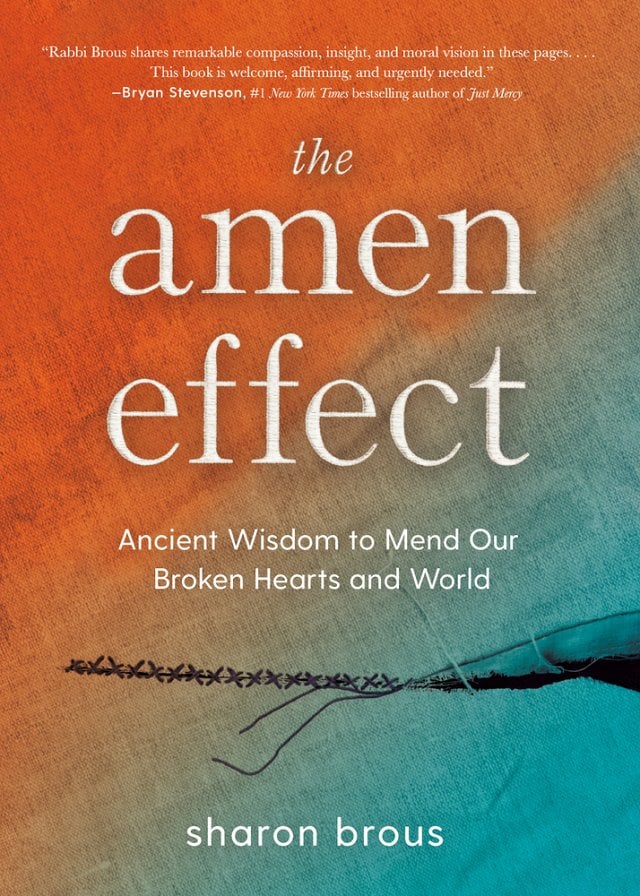
The Amen Effect

Read: March 2025

Get this book

The Amen Effect

by Sharon Brous

Sharon Brous, a prominent American rabbi, argues in The Amen Effect: Ancient Wisdom to Heal Our Hearts and Mend Our Broken World that the essential spiritual work of our time—though instinctual and often countercultural—focuses on connecting through celebration, sorrow, and solidarity. We must support one another in times of joy and pain, embracing vulnerability and possibility, nurturing relationships with shared purposes, and creating communities centered on care.

From one of our country’s most prominent rabbis comes this inspiring book about the power of community, based on one of her most impactful sermons. What will it take to mend our broken hearts and rebuild our society in a time of loneliness, isolation, social rupture, and alienation?

Brous contends that honoring our most basic human instinct—the yearning for authentic connection—is the way to reawaken our shared humanity and begin the healing process. This kind of sacred presence is captured by the word amen, a powerful ancient idea that we affirm the fullness of one another’s experience by demonstrating, in body and word: “I see you. You are not alone.”

An acclaimed preacher and storyteller, Brous pairs heart-driven anecdotes from her experience building and pastoring to a leading-edge faith community over the past two decades with ancient Jewish wisdom and contemporary science. The result is a clarion call: the sense of belonging engendered by our genuine presence is both a social and biological need, as well as a moral and spiritual necessity.

With original insights and practical tools, The Amen Effect translates foundational ideas into simple practices that connect us to our better angels, offering a blueprint for a more meaningful life and a more connected and caring world.

As she writes in the preface, after listing the joys and pains of life, weddings, births, and death,

It’s in these times that I feel the weight of the work, the privilege of being alive, the blessing of being so close to such raw beauty and pain. It’s there that I have learned the power of saying ‘Amen‘ to one another’s grief and joy, sorrow and celebration with our very presence. Of bearing witness to profound suffering and protesting injustice with our very presence. Of comforting and consoling, surviving and thriving with our very presence. What I’ve learned, during the years, is the meaning of sacred companionship. I have seen, in ways subtle and pronounced, a longing to connect with others who can help hold the pain, a need to share what we’ve learned in the trenches, and a desire to give, even when we ourselves have barely caught our breath. And I have seen how knowing that we’re not alone can both heighten our joy and help us endure unimaginable hardship.

Click here to read about my experience listening to Rabbi Brous at the Kol Tzedek Speakers Series at Temple Emanu-El in Westfield.


Sharon Brous is the senior and founding rabbi of IKAR, a leading-edge Jewish community based in Los Angeles, and the author of The Amen Effect: Ancient Wisdom to Heal Our Hearts and Mend Our Broken World, a national bestseller.

In 2013, Brous blessed President Obama and Vice President Biden at the Inaugural National Prayer Service, and in 2021, returned to bless President Biden and Vice President Harris and then led the White House Passover Seder 2021 and the Hanukkah candle lighting with the Vice President and Second Gentleman in 2023. She was ranked as the number one most influential Rabbi in America by Newsweek/The Daily Beast. She has also been recognized by The Forward and the Jerusalem Post as one of the most influential Jews alive today. Her work has appeared in prominent publications, including The New York Times, The Los Angeles Times, and The Washington Post. Additionally, her TED talk, “Reclaiming Religion,” has been viewed by over 1.5 million people.

Brous is part of the inaugural cohort of Auburn Seminary’s Senior Fellows program, which brings together top faith leaders working on the frontlines for justice. She sits on the faculty of REBOOT and serves on the International Council of the New Israel Fund, as well as the national steering committee for the Poor People’s Campaign.

A Columbia University graduate (holding both undergraduate and M.A. degrees in Human Rights), she was ordained by the Jewish Theological Seminary and resides in Los Angeles with her husband and children.


When you purchase a book through one of my links, I earn a small commission that helps support my passion for reading. This contribution allows me to buy even more books to share with you, creating an incredible cycle of discovering great reads together! Your support truly makes a difference!


×
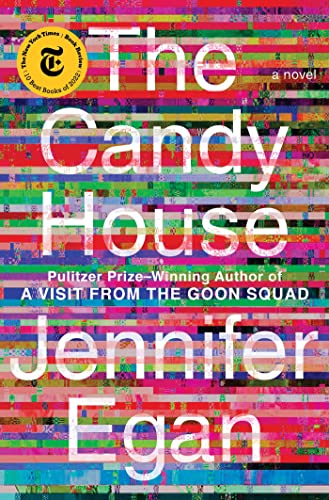
The Candy House

Read: December 2022

Get this book

The Candy House: A Novel

by Jennifer Egan

The Candy House: A Novel by Jennifer Egan focuses on a new technology that allows you access to every memory you’ve ever had and to share your memories in exchange for access to the memories of others—it has seduced multitudes. According to the NYTimes, “this is minimalist maximalism. As a widow, I live in a world of memories, but I would not want them shared as they are in The Candy House. “It’s as if Egan compressed a big 19th-century novel onto a flash drive.”

Of course, I am not able to access my unconscious memories. Albeit in an amateur way, I write down some of my memories as they remind me of the power of the love that Jan and I shared. For example, the essay when I met Jan rekindles the memory and attempts to tell the story the way it happened, not how some would like it to be remembered.

The Candy House is one of the NYTimes’ top five fiction books of 2022. I have read two of them, The Furrows and Checkout 19. Initially, I was overwhelmed by the multitude of characters and was confused. By the novel’s middle, their interconnectedness helped me understand its real meaning. In the end, Egan delivers a fierce and exhilarating testament to the tenacity and transcendence of human longing for authentic connection, love, family, privacy, and redemption. As a widow, authenticity Is what I need to heal.

The Candy House is the seventieth (70) book I have read this year. 

The Goodreads summary provides an overview.

It’s 2010. Staggeringly successful and brilliant tech entrepreneur Bix Bouton is desperate for a new idea. He’s forty, with four kids, and restless when he stumbles into a conversation with mostly Columbia professors, one of whom is experimenting with downloading or “externalizing” memory. Within a decade, Bix’s new technology, Own Your Unconscious—that allows you access to every memory you’ve ever had and to share every memory in exchange for access to the memories of others—has seduced multitudes. But not everyone.

In spellbinding linked narratives, Egan spins out the consequences of Own Your Unconscious through the lives of multiple characters whose paths intersect over several decades. Egan introduces these characters in an astonishing array of styles—from omniscient to first person plural to a duet of voices, an epistolary chapter, and a chapter of tweets. In the world of Egan’s spectacular imagination, there are “counters” who track and exploit desires and “eluders” who understand the price of taking a bite of the Candy House.

Intellectually dazzling and extraordinarily moving, The Candy House is a bold, brilliant imagining of a world that is moments away. With a focus on social media, gaming, and alternate worlds, you can almost experience moving among dimensions in a role-playing game.​ Egan delivers a fierce and exhilarating testament to the tenacity and transcendence of human longing for real connection, love, family, privacy, and redemption.


The Jan Lilien Education Fund sponsors ongoing sustainability and environmental awareness programs. Gifts made this month; I will match dollar-for-dollar. All donations are tax-deductible.

Subscribe

Contact Us

I receive a commission when you buy a book or product using a link on this page. Thank you for supporting Sharing Jan’s Love blog.


×