
Our Lives Are Intertwined

Our Lives Are Intertwined

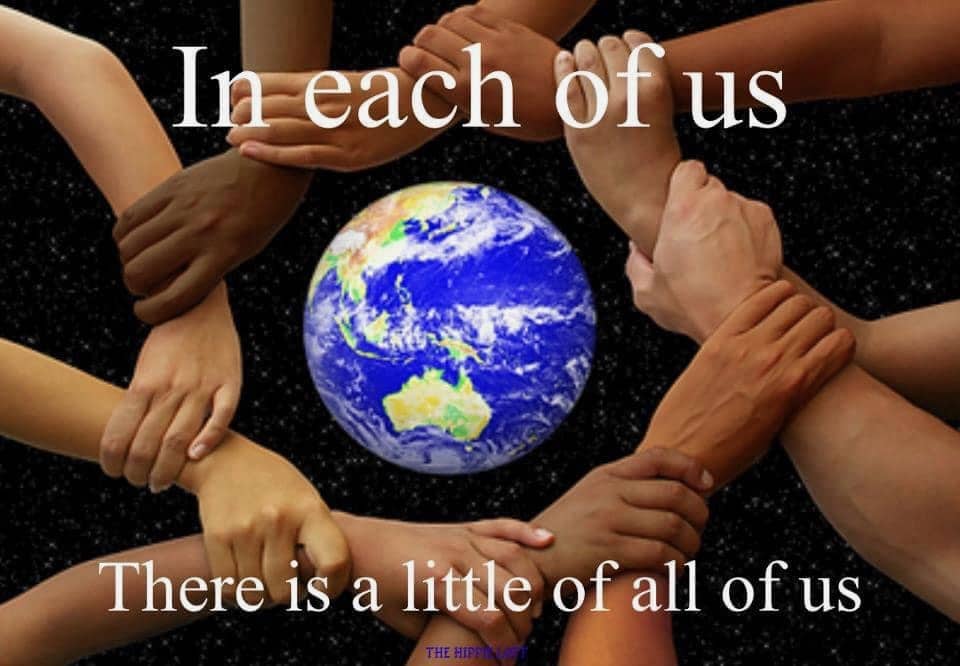
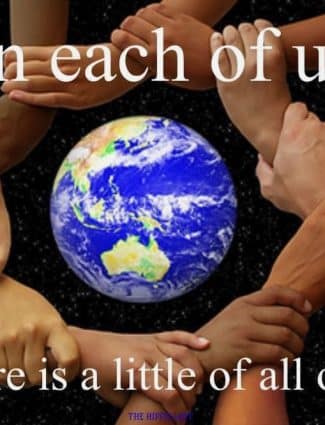
Within Each of Us, Resides a Reflection of All of Us

Estimated reading time: 2 minutes, 40 seconds

The constant notifications we receive on our devices can create a sense of a world in chaos. From melting glaciers and rising seas to wars, famines, hate speech, and online bullying, the barrage of information can be overwhelming. I disengage during my walks and when reading, writing, or worshiping to find peace and tranquility. These moments without notifications are crucial for me to find clarity and be productive. Since my wife passed away three years ago, these moments of quiet have helped me to understand myself and live my life as the best version of myself.

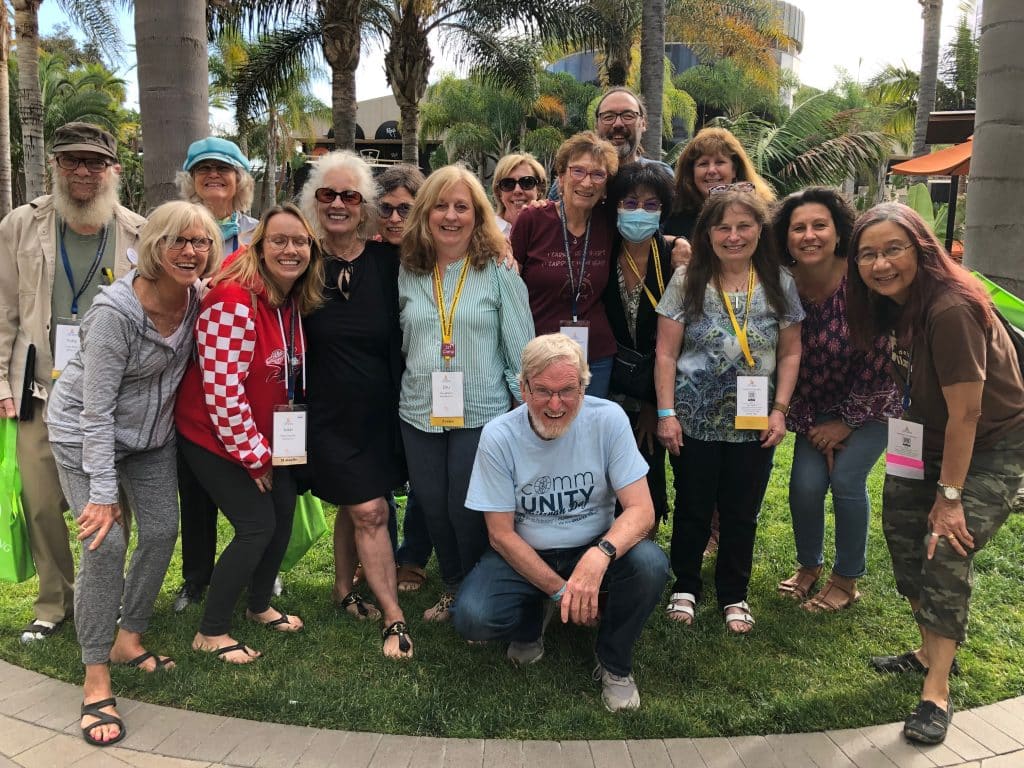
A sea of people swarmed around me as I navigated yesterday’s bustling Cranford Street Fair. While conversing with two neighbors, I unexpectedly remarked, “I am like a transistor; I connect people.” This comparison to a semiconductor, the cornerstone of modern electronics, had never crossed my mind. As I pondered this notion, I couldn’t help but question whether I had awakened this morning to discover that I was not a flesh-and-blood human but rather a mere entanglement of wires.

As the bustling city streets gradually emptied, making way for the increasing flow of vehicular traffic, Joe leaned forward and remarked, “You connect people to people,” to which his wife, Kate, nodded in wholehearted agreement. Their words lingered in my mind, prompting me to question whether I was more than just a semiconductor. Amid this contemplation, I reflected on my evolving sense of self as I navigated the new experience of living alone.
When I feel disconnected or confused, I take an evening walk to Hanson Park and sit on the bench dedicated to my wife, facing the Rahway River. As much as my subconscious makes me believe I am having a two-way conversation with her, I speak out loud only to the birds and bees. When I walked into the park, with the sunset rapidly descending behind me, I expressed my enduring love for her. Sitting on the bench, I spoke about the 1110 days I have traveled with her.

“I am giving it my all,” I declared as a rabbit hopped across my path. “I have three square meals daily, navigate the complexities of living independently, and have cultivated more friendships and connections than I ever imagined.” Even though I knew she couldn’t see me anymore, I couldn’t help but wonder what her opinion of me would be. Instead of dwelling on that, I voiced the burning question. Today, I described myself as a transistor, the essential semiconductor that powers our modern world. What’s your take on that?”

If I shared with you that she acknowledged that I am simply a collection of wires, you might think I have lost my mind. Despite not speaking directly to me, on the way home, I knew the answer. While my eyesight may be imperfect and clouded with age, my vision remains clear. I have been a bridge, bringing people together and mending a fractured world. By helping others recognize that each of us carries a reflection of all humanity, we grow stronger together. When we unite, we understand a profound reality: we are all interwoven, akin to long-lost relatives meeting for the first time.
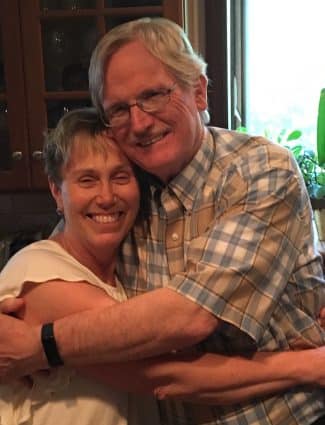
Love is a Magical Force!

Whenever I fall in love, I do so with all my heart and soul, leaving no room for half-steps. My love is unconditional and knows no boundaries. My wife knew and accepted me for who I am. Together, Jan and I created a legacy for ages to come.

Show thread (1)

Health, Community, Novelty, Purpose

Within Each of Us, Resides a Reflection of All of Us

Estimated reading time: 2 minutes, 40 seconds

Health, Community, Novelty, Purpose

I am fully aware that, eventually, my body will falter. My legs will cease to bear me with ease, my eyes will lose their sharpness, and the words on the page will blur. However, until that moment arrives, I pledge not to age gracefully but with unyielding determination to make the most out of my life.

2 comments add your comment

Share your thoughts and ideas

This site uses Akismet to reduce spam. Learn how your comment data is processed.

The Jan Lilien Education Fund!

Our Lives Are Intertwined
×
A Gentleman in Moscow

Read: November 2022

Get this book

A Gentleman in Moscow

by Amor Towles

A Gentleman in Moscow by Amor Towles is a transporting novel about a man sentenced by the government to spend the rest of his life inside a luxury hotel. In 1922, a Bolshevik tribunal deemed Count Alexander Rostov an unrepentant aristocrat. His house arrest in the Metropol, a grand hotel across the street from the Kremlin. Rostov, an indomitable man of erudition and wit, has never worked a day and must now live in an attic room while some of the most tumultuous decades in Russian history are unfolding outside the hotel’s doors.

During my grief journey, I have on occasion felt as if I was a prisoner in my apartment, so I found this novel to be one that provided me an alternative to understanding what it would have been like to be under house arrest as Count Rostov was.

A Gentleman in Moscow was a page-turner. The plot captures a unique historical time and how Count Rostov makes the best of a bad situation. I highly recommend this novel.

The Goodreads summary provides an overview.

With his breakout debut novel, Rules of Civility, Amor Towles established himself as a master of absorbing, sophisticated fiction, bringing late 1930s Manhattan to life with a splendid atmosphere and an excellent command of style. As NPR commented, readers and critics were enchanted, “Towles writes with grace and verve about the mores and manners of a society on the cusp of radical change.”

A Gentleman in Moscow immerses us in another elegantly drawn era with the story of Count Alexander Rostov. When, in 1922, he is deemed an unrepentant aristocrat by a Bolshevik tribunal, the count is sentenced to house arrest in the Metropol, a grand hotel across the street from the Kremlin. Rostov, an indomitable man of erudition and wit, has never worked a day. He must now live in an attic room while some of the most tumultuous decades in Russian history are unfolding outside the hotel’s doors. Unexpectedly, his reduced circumstances provide him a doorway into a much larger world of emotional discovery.

Brimming with humor, a glittering cast of characters, and one beautifully rendered scene after another, this singular novel casts a spell as it relates to the count’s endeavor to gain a deeper understanding of what it means to be a man of purpose.


The Jan Lilien Education Fund sponsors ongoing sustainability and environmental awareness programs. Gifts made this month; I will match dollar-for-dollar. All donations are tax-deductible.

Subscribe

Contact Us

I receive a commission when you buy a book or product using a link on this page. Thank you for supporting Sharing Jan’s Love blog.

×
The Brief Wondrous Life of Oscar Wao

Read: August 2024

Get this book

The Brief Wondrous Life of Oscar Wao

by Junot Diaz

Today, I started reading Junot Diaz‘s The Brief Wondrous Life of Oscar Wao, one of The New York Times’ 100 Best Books of the Century. The book also won a Pulitzer Prize. Oscar is a sweet but disastrously overweight ghetto nerd who—from the New Jersey home he shares with his old-world mother and rebellious sister—dreams of becoming the Dominican J.R.R. Tolkien and, most of all, finding love.

But Oscar may never get what he wants. Blame the fukú—a curse that has haunted Oscar’s family for generations, following them on their epic journey from Santo Domingo to the USA. Encapsulating Dominican-American history, The Brief Wondrous Life of Oscar Wao opens our eyes to an astonishing vision of the contemporary American experience. It explores the endless human capacity to persevere—and risk it all—in the name of love.

×
Sea of Tranquility

Read: September 2022

Get this book

Sea of Tranquility

by Emily St. John Mandel

Sea of Tranquility by Emily St. John Mandel has been on my reading list for months. I recommend the book without reservations. Sea of Tranquility is a novel of art, time, love, and plague that takes the reader from Vancouver Island in 1912 to a dark colony on the moon three hundred years later, unfurling a story of humanity across centuries and space. It was a page-turner from page one.

With the delay of Artemis I, I have been thinking a lot about the Sea of Tranquility, the original lunar landing site. Sea of Tranquility reminded me of the days of my youth when we believed that NASA would colonize the moon as it is in the novel.

One of the passages that moved me was when Olive Llewellyn asked, “What if it always is the end of the world.” A second profound passage asks, “A life lived in a simulation is still a life.

The Goodreads summary provides a good overview,

Edwin St. Andrew is eighteen years old when he crosses the Atlantic by steamship, exiled from polite society following an ill-conceived diatribe at a dinner party. He enters the forest, spellbound by the beauty of the Canadian wilderness, and suddenly hears the notes of a violin echoing in an airship terminal—an experience that shocks him to his core.

Two centuries later a famous writer named Olive Llewellyn is on a book tour. She’s traveling all over Earth, but her home is the second moon colony, a place of white stone, spired towers, and artificial beauty. Within the text of Olive’s bestselling pandemic novel lies a strange passage: a man plays his violin for change in the echoing corridor of an airship terminal as the trees of a forest rise around him.

When Gaspery-Jacques Roberts, a detective in the Night City, is hired to investigate an anomaly in the North American wilderness, he uncovers a series of lives upended: The exiled son of an earl driven to madness, a writer trapped far from home as a pandemic ravages Earth, and a childhood friend from the Night City who, like Gaspery himself, has glimpsed the chance to do something extraordinary that will disrupt the timeline of the universe.


The Jan Lilien Education Fund sponsors ongoing sustainability and environmental awareness programs. Gifts made this month; I will match dollar-for-dollar. All donations are tax-deductible.

Subscribe

Contact Us

I receive a commission when you buy a book or product using a link on this page. Thank you for supporting Sharing Jan’s Love blog.

×
A Parish Chronicle

Read: February 2026

Get this book

A Parish Chronicle

by Halldór Laxness

In “A Parish Chronicle,” celebrated novelist Halldór Laxness weaves an essayistic tale about the unlikely miracles that keep a church—destined to disappear time and again—rooted on the same hillside. Laxness explores the minutiae of history, from the location of the ancient burial mound of national hero Egill Skallagrímsson to the end of the 19th century, where weak-sighted Ólafur and boisterous farmhand Gunna each play unexpected roles in the parish’s enduring survival.

1882. In the still of morning, Ólafur sharpens his scythe on the bone-dry pavestones that separate his farmhouse from the rest of Mosfell Valley, where life revolves around sheep. The sound of his hammer rings out like a high-pitched bell over the tussocky fields. Across the valley, perched on a hill that receives more sunshine than others, stands Mosfell Church. Nearby, the parish priest’s maid Gunna pours her “slosh,” a weak cup of coffee. Further afield in Reykjavík (“down south” as the locals say), the general assembly decides to revisit an old plan to cut costs by consolidating small parishes and calls for the demolition of Mosfell. Yet today a church stands on that same hillside—its sharp steeple silhouetted against the clouds, its crown bell hanging to the left of the altar.

This intimate tribute to life in Laxness‘s home valley also offers a thoughtful commentary on how the peculiarities of certain individuals can shape history. “A Parish Chronicle” is rich with life and detail.


Halldór Laxness (1902-1998) is the undisputed master of modern Icelandic fiction. He was awarded the Nobel Prize in Literature in 1955, “for his vivid epic power which has renewed the great narrative art of Iceland.” His body of work includes novels, essays, poems, plays, stories, and memoirs: more than sixty books in all. His works available in English include Independent People, The Fish Can Sing, World Light, Under the Glacier, Iceland’s Bell, and Paradise Reclaimed.

Philip Roughton has translated the work of Halldór Laxness, Jón Kalman Stefánsson, Kristín Marja Baldursdóttir, and many others. He has twice been awarded the American-Scandinavian Foundation Translation Prize for his renderings of Halldór Laxness‘s work, in 2001 for Iceland’s Bell and in 2015 for Wayward Heroes. He also received the 2016 Oxford-Weidenfeld Prize for his translation of Jón Kalman Stefánsson’s The Heart of Man. He lives in Iceland. Translator Residence: Akureyri, Iceland

Salvatore Scibona is the recipient of a Mildred and Harold Strauss Living Award from the American Academy of Arts and Letters. His first novel, The End, was a finalist for the National Book Award and winner of the Young Lions Fiction Award. His second novel, The Volunteer, was called a “masterpiece” by the New York Times and won the Ohioana Book Award. His books have been translated into ten languages. His work has won a Guggenheim Fellowship, a Pushcart Prize, an O. Henry Award, and a Whiting Award, and the New Yorker named him one of its “20 Under 40” fiction writers. He is the Sue Ann and John Weinberg Director of the Cullman Center for Scholars and Writers at the New York Public Library.


Discover your next favorite book and dive into a world of curated, exciting reads by purchasing through my links. You’ll have access to a diverse selection of books I’ve personally vetted for quality and enjoyment. Additionally, by supporting these selections, you’ll help me continue to provide you with more personalized recommendations. I earn a small commission from your purchase, which allows me to buy and share even more books with you. Your support truly makes a difference!


×
After Annie: A Novel

Read: February 2024

Get this book

After Annie: A Novel

by Anna Quindlen

I started reading Anna Quindlen‘s “After Annie: A Novel” today. Forty years ago, my wife Jan and I used to read Ms. Quindlen’s column “Life in the Thirties” in The New York Times, even if we didn’t have time to read anything else. We clipped and saved each column, which helped us manage getting older with children. I am reading “After Annie,” which is about how love can overcome loss.

Anna Quindlen, the #1 New York Times bestselling author of Still Life with Bread Crumbs and One True Thing, is known for her insightful wisdom on family, friendship, and the bonds that unite us. Her latest novel explores the power of love to overcome loss and adversity.

The story centers around the Brown family and their matriarch, Annie. When Annie suddenly passes away, the family is forced to navigate life without their beloved wife, mother, and friend. Bill, Annie’s husband, struggles to cope with the loss, while Annemarie, her best friend, must confront the bad habits she once overcame with Annie’s help. Ali, Annie’s eldest child, must take on new responsibilities to care for her younger brothers and father.

Although Annie is no longer physically present, her memory continues to guide and inspire those who love her. Her voice resonates in their minds, offering them comfort, wisdom, and clarity. Through the power of her love, Annie gives her family the strength they need to move on without her. They learn that even though their beloved Annie is gone, she will always be with them in spirit.

After Annie” is a poignant and touching story exploring the unanticipated ways adversity can transform our lives. With her signature style that strikes an emotional chord, Quindlen delivers a heartwarming tale about the tenacity of love and how it can triumph over even the most formidable obstacles. This story of hope is a testament to the enduring strength of the human spirit and its ability to rise above life’s challenges. It inspires us to believe in the power of love and its capacity to reshape our lives for the better.

×
The Time Traveler's Wife

Read: May 2021

Get this book

The Time Traveler’s Wife

by Audrey Niffenegger

My wife had asked me to read – The Time Traveler’s Wife by Audrey Niffenegger – on several occasions. When we first met, we both liked to read fiction and non-fiction. As we aged, I focused almost exclusively on non-fiction, and she focused on fiction. Since her passing, I have started reading more of both genres. We could now have a book club!

Both Jan and I have always enjoyed books and movies about time travel. If I could travel back in time, there are tens of thousands of days I would love to spend with her again. But time travel is not possible. Or is it? Her spirit returns to me whenever I am paralyzed and encourages me to dust myself off and keep going. Maybe one day we will time travel together!

I enjoyed reading this book, even if it was difficult to keep track of the periods. It is very much the type of time-traveling book that both of us would have liked to read, and it has helped me to imagine a world in which Jan and I will meet again.

But what if it is not time travel as imagined by H. G. Wells. As the Hasidic story foretold, God split our souls at birth and placed one part of my soul in her body and placed the rest into my body. Very few people are lucky enough to find the person who has the other half of their soul, and Jan and I did.

When my life ends, what if God takes a portion of our two souls and places them into new bodies. Each of their souls would include a part of each of us. Those two new people would have to find each other in the future to connect as we did. They might not see each other and forever hunger for true love. Whatever happened, they would not know that they once were very much in love.

Subscribe

Contact Us

×