
When Richard Met Jan!

Estimated reading time: 9 minutes, 0 seconds
Wine on my Head and
Love in My Heart!

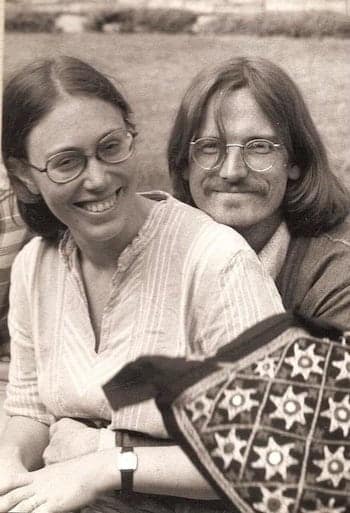
“You came to my party,” Jan exclaimed with a big smile to greet me. My concerns about needing someone to introduce me to her were no longer necessary. I’ve never been speechless, but in the early hours of November 11, 1973, I could not respond.

Finally, I said, “Hello, it’s so nice to see you.”

I should have stopped after saying hello. Alas, I did not.

If you had called me in January, I would have been on the subway in a New York minute to see you,” I said.

You never called me.” protested Jan as her smile turned into a frown.

“I did not have your number,” I responded.

I noticed her raising the wine glass in her right hand, but I thought she was about to have another sip to drink. But Jan was pouring her wine on my head, and nothing like that had ever happened to me.

Without fully thinking about the consequences, I raised my beer can and doused her head with it. I started apologizing, but her laughter stopped me with the words still in my mouth, and I started laughing with her. I thought I had made a significant mistake as soon as I did.
The party was noisy and filled with smoke when I arrived after midnight. The only sound I could hear was her lovely voice. Once we stopped laughing, it was as if we were alone.

Every time I started to say something, she made the same comment. I know there is a rumor about old married couples finishing each other’s sentences, and we were not finishing them; we were starting them together.

I did not want the conversation to stop, and I wanted to spend the rest of my life with her. But then, a familiar voice pierced the pod that surrounded us.

Richard, we are leaving,” said Mark, my co-worker and friend.

I was between a rock and a hard place. I knew I should leave with my friends, but I also wanted to stay with Jan. I was afraid if I left, Jan and I might not meet again. I did not even have her phone number or know her last name.

When Mark told me they were leaving, I was not thinking about the next five minutes.

My thoughts were on the next five weeks, five months, five years, and decades, Jan and I could live together and love each other.

I wanted to kiss her so she knew how I felt, but waI s unsure if she would let me.

I only needed two fingers to count the number of women I had kissed. Years ago, the number of brushoffs had exceeded the total of all my fingers and toes.

I was worried that Jan had a boyfriend, and he might be at the party, and perhaps all she wanted was a friend to have a few laughs and pour wine on their head.

I saw my three friends from East Williamsburg gather their coats. The time to decide was now.

I will meet you in the subway in a minute,” I said half-heartedly.

I rose slightly from my chair and leaned over toward her. I decided a kiss on her forehead would be safe. However, I kissed the top of her head.

She looked up and smiled at me. She smiled and lifted her head, and I kissed her forehead. Our lips embraced, and we kissed for the first time. It was the sweetest kiss in the universe.

I never made it back to East Williamsburg that night.

Next Page

Pages: 1 2 3

42 comments add your comment

    • Thanks, Steve. I appreciate your friendship and your opinion. The words flow like an incoming tide at the beach. The memories of falling in love with Jan remind me how fortunate I was to be loved by her.

      Other memories are bubbling inside of me, waiting for the words to fill the page. Writing about Jan, love, life, and grief helps me during this difficult time. Love never dies. I find this quote by Helen Keller one that helps me manage my grief.

      “What we have once enjoyed we can never lose. All that we love deeply becomes a part of us.”

      Thanks so very much for reading this post.

Share your thoughts and ideas

This site uses Akismet to reduce spam. Learn how your comment data is processed.

The Jan Lilien Education Fund!

A Seperation

Read: January 2022

Get this book

A Separation: A Novel

by Katie Kitamura

A Separation by Katie Kitamura is about a young woman who has agreed with her faithless husband: it’s time for them to separate. All I could think about from the opening page until I finished the book was how Jan and I, despite one messy period, never dealt with infidelity or separation. Our love was pure as the driven snow. The subject matter would typically not have interested me enough to read the book. However, it is written in a hypnotic manner that mesmerizes the reader into turning the next page.

I highly recommend this book.

Goodreads provides an overview.

As she begins her new life, she gets word that Christopher has gone missing in a remote region in the rugged south of Greece; she reluctantly agrees to look for him, still keeping their split to herself. As her search comes to a shocking breaking point, she discovers she understands less than she thought she did about her relationship and the man she used to love. In her heart, she’s not even sure if she wants to find him.  For the moment, it’s a private matter, a secret between the two of them.

Adrift in the wild landscape, she traces the disintegration of their relationship and discovers she understands less than she thought about the man she used to love.

A story of intimacy and infidelity, A Separation is about the gulf that divides us from the lives of others and the narratives we create for ourselves. As the narrator reflects upon her love for a man who may never have been what he appeared, Kitamura propels us into the experience of a woman on the brink of catastrophe. A Separation is a riveting stylistic masterpiece of absence and presence that will leave the reader astonished and transfixed.

In closing, I highly recommend this book.

Subscribe

Contact Us

When you buy a book or product using a link on this page, I receive a commission. Thank you for supporting Sharing Jan’s Love blog.

×
The God of the Woods: A Novel

Read: July 2024

Get this book

The God of the Woods: A Novel

by Liz Moore

I started reading “The God of the Woods: A Novel” by Liz Moore today. Several reviews recommended it as a great summer read. The story is set in August 1975, the same month and year my spouse Jan and I married. Liz Moore weaves a multi-threaded story, inviting readers into a rich and gripping dynasty of secrets and second chances.

The novel begins with a camp counselor discovering an empty bunk at an Adirondack summer camp belonging to thirteen-year-old Barbara Van Laar, who has mysteriously vanished. Barbara is not just any teenager; she is the daughter of the family that owns the camp and employs many residents. What makes this disappearance even more intriguing is that Barbara’s older brother went missing similarly fourteen years ago and was never found.

As the search for Barbara begins, the novel unfolds into a thrilling drama, delving into the deeply buried secrets of the Van Laar family and the blue-collar community working in its shadow. This novel is said to be Liz Moore’s most ambitious and wide-reaching work yet.

×
A Parish Chronicle

Read: February 2026

Get this book

A Parish Chronicle

by Halldór Laxness

In “A Parish Chronicle,” celebrated novelist Halldór Laxness weaves an essayistic tale about the unlikely miracles that keep a church—destined to disappear time and again—rooted on the same hillside. Laxness explores the minutiae of history, from the location of the ancient burial mound of national hero Egill Skallagrímsson to the end of the 19th century, where weak-sighted Ólafur and boisterous farmhand Gunna each play unexpected roles in the parish’s enduring survival.

1882. In the still of morning, Ólafur sharpens his scythe on the bone-dry pavestones that separate his farmhouse from the rest of Mosfell Valley, where life revolves around sheep. The sound of his hammer rings out like a high-pitched bell over the tussocky fields. Across the valley, perched on a hill that receives more sunshine than others, stands Mosfell Church. Nearby, the parish priest’s maid Gunna pours her “slosh,” a weak cup of coffee. Further afield in Reykjavík (“down south” as the locals say), the general assembly decides to revisit an old plan to cut costs by consolidating small parishes and calls for the demolition of Mosfell. Yet today a church stands on that same hillside—its sharp steeple silhouetted against the clouds, its crown bell hanging to the left of the altar.

This intimate tribute to life in Laxness‘s home valley also offers a thoughtful commentary on how the peculiarities of certain individuals can shape history. “A Parish Chronicle” is rich with life and detail.


Halldór Laxness (1902-1998) is the undisputed master of modern Icelandic fiction. He was awarded the Nobel Prize in Literature in 1955, “for his vivid epic power which has renewed the great narrative art of Iceland.” His body of work includes novels, essays, poems, plays, stories, and memoirs: more than sixty books in all. His works available in English include Independent People, The Fish Can Sing, World Light, Under the Glacier, Iceland’s Bell, and Paradise Reclaimed.

Philip Roughton has translated the work of Halldór Laxness, Jón Kalman Stefánsson, Kristín Marja Baldursdóttir, and many others. He has twice been awarded the American-Scandinavian Foundation Translation Prize for his renderings of Halldór Laxness‘s work, in 2001 for Iceland’s Bell and in 2015 for Wayward Heroes. He also received the 2016 Oxford-Weidenfeld Prize for his translation of Jón Kalman Stefánsson’s The Heart of Man. He lives in Iceland. Translator Residence: Akureyri, Iceland

Salvatore Scibona is the recipient of a Mildred and Harold Strauss Living Award from the American Academy of Arts and Letters. His first novel, The End, was a finalist for the National Book Award and winner of the Young Lions Fiction Award. His second novel, The Volunteer, was called a “masterpiece” by the New York Times and won the Ohioana Book Award. His books have been translated into ten languages. His work has won a Guggenheim Fellowship, a Pushcart Prize, an O. Henry Award, and a Whiting Award, and the New Yorker named him one of its “20 Under 40” fiction writers. He is the Sue Ann and John Weinberg Director of the Cullman Center for Scholars and Writers at the New York Public Library.


Discover your next favorite book and dive into a world of curated, exciting reads by purchasing through my links. You’ll have access to a diverse selection of books I’ve personally vetted for quality and enjoyment. Additionally, by supporting these selections, you’ll help me continue to provide you with more personalized recommendations. I earn a small commission from your purchase, which allows me to buy and share even more books with you. Your support truly makes a difference!


×
1944: FDR and the Year That Changed History

Read: October 2019

Get this book

1944: FDR and the Year That Changed History

by Jay Winik

1944: FDR and the Year That Changed History by Jay Winik is a book that I had put off reading several times. When I finally did read it, I could not remember why I had not read it sooner. Had I gone to graduate school and become a professor, it might have been the type of book I might write, and I certainly would have had on my list of books for my classes. 

As The NY Times wrote, “Jay Winik brings to life in gripping detail the year 1944, which determined the outcome of World War II and put more pressure than any other on an ailing yet determined President Roosevelt.” Reading a book about events five years before my birth that transformed the world I live in becomes an easy page-turner.

It was not inevitable that World War II would end as it did or that it would even end well. Nineteen forty-four was a year that could have stymied the Allies and cemented Hitler’s waning power. Instead it saved those democracies – but with a fateful cost. Now, in a superbly told story, Jay Winik, the acclaimed author of April 1865 and The Great Upheaval, captures the epic images and extraordinary history as never before.

1944 witnessed a series of titanic events: FDR at the pinnacle of his wartime leadership as well as his reelection, the planning of Operation Overlord with Churchill and Stalin, the unprecedented D-Day invasion, the liberation of Paris, and the horrific Battle of the Bulge, and the tumultuous conferences that finally shaped the coming peace. But on the way, millions of more lives were still at stake as President Roosevelt was exposed to mounting evidence of the most grotesque crime in history, the Final Solution. Just as the Allies were landing in Normandy, the Nazis were accelerating the killing of millions of European Jews.

Winik shows how escalating pressures fell on an all but dying Roosevelt, whose rapidly deteriorating health was a closely guarded secret. Here then, as with D-Day, was a momentous decision for the president. Was winning the war the best way to rescue the Jews? Was a rescue even possible? Or would it get in the way of defeating Hitler? In a year when even the most audacious undertakings were within the world’s reach, including the liberation of Europe, one challenge – saving Europe’s Jews – seemed to remain beyond Roosevelt’s grasp.

I recommend this book.

Subscribe

Contact Us

×
Revolutionary Mothers

Read: February 2019

Get this book

Revolutionary Mothers

by Carol Berkin

Revolutionary Mothers by Carol Berkin, Presidential Professor of American Colonial and Revolutionary History; Women’s History Professor at Baruch College, is one of four books I purchased after my first One Day University Class on February 9, 2019. It should be required reading!

The book explains how women of the Revolution were most active at home, organizing boycotts of British goods, raising funds for the fledgling nation, and managing the family business while struggling to maintain a modicum of normalcy as husbands, brothers, and fathers died.

It was not just the men who fought on the front lines, as in the story of Margaret Corbin, who was crippled for life when she took her husband’s place beside a cannon at Fort Monmouth. She explains the mystery of Molly Pitcher (she was not a person but a group of women), camp followers, women who spied for their country, Loyalist women, and the impact on African American and Native women.

This intelligent and comprehensive history brings these forgotten stories to their rightful place in the struggle for American independence. Dr. Birkin also highlights how their efforts set the stage for the continuing campaign for gender equality.

Subscribe

Contact Us

×
God Shot

Read: December 2021

Get this book

God Shot by Chelsea Bieker

by Chelsea Bieker

God Shot by Chelsea Bieker, one of NPR’s Books We Love from 2020, is about the town of Peaches, California, where drought has settled in for the long term. The area of the Central Valley where fourteen-year-old Lacey May and her alcoholic mother live was once an agricultural paradise. Now it’s an environmental disaster, a place of cracked earth and barren raisin farms.

In their desperation, residents have turned to a cult leader named Pastor Vern for guidance. Everybody is praying for survival through secret “assignments” to bring the rain.

God Shot is an enjoyable read. However, I first found it challenging to accept Pastor Vern’s assignments, especially to Lacey May and her fellow teenage girls. Would people believe in a cult leader and get “assignments” that involve women fully accepting male domination in the twenty-first century? When I had doubts, I would wake up, listen to the news, or read the papers and discover that it is plausible and does happen in our world.

After being god-shot, Lacey May becomes one day at a time feminist as she has to rely on herself and other women who do not accept Pastor Vern’s divine leadership. Slowly but surely, she and her friends find a miracle to help them escape not only the environmental disaster caused by the drought but the moral depravity of Pastor Vern.

Goodreads provides this overview of the God Shot.

Lacey has no reason to doubt the pastor. But then her life explodes in a single unimaginable act of abandonment: her mother, exiled from the community for her sins, leaves Lacey and runs off with a man she barely knows. Abandoned and distraught, Lacey May moves in with her widowed grandma, Cherry, who is more concerned with her taxidermy mouse collection than her own granddaughter. As Lacey May endures the increasingly appalling acts of men who want to write all the rules and begins to uncover the full extent of Pastor Vern’s shocking plan to bring fertility back to the land, she decides she must go on a quest to find her mother no matter what it takes. With her only guidance coming from the romance novels she reads and the unlikely companionship of the women who knew her mother, she must find her own way through unthinkable circumstances.

Possessed of an unstoppable plot and a brilliantly soulful voice, Godshot is a book of grit, humor, and heart, a debut novel about female friendship and resilience, mother loss and motherhood, and seeking salvation in unexpected places. It introduces a writer who gives Flannery O’Connor’s Gothic parables a Californian twist and who emerges with a miracle that is all her own.

I recommend this novel without reservations!

Subscribe

Contact Us

When you buy a book or product using a link on this page, I receive a commission. Thank you for supporting Sharing Jan’s Love blog.

×

Discover more from Sharing Jan’s Love

Subscribe now to keep reading and get access to the full archive.

Continue reading