
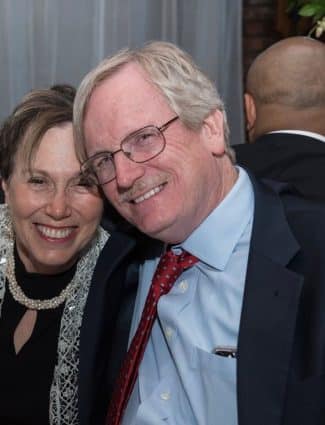
Jan and Richard

Jan’s Dry Humor Warms My Heart

Laughter Is the Best Medicine for Grief

Estimated reading time: 1 minute, 29 seconds
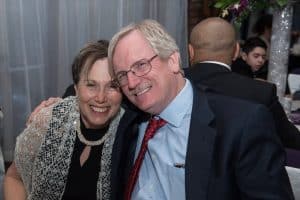
Jan and RichardAs I walked into the kitchen, I called out to Jan, wondering where she was. “Honey, I’m home and could use some help,” I said. Jan appeared from the living room and asked what I needed.

I held up my glasses, explaining that one of the ear temples had come loose. Jan kissed me and offered to drive me to the eye store to get them fixed. During the ride, I shared that my glasses had separated while I was going home, and I worried they might fall apart entirely.

When we arrived at LensCrafters, a young woman approached me, and I showed her the problem. She immediately determined that I needed a screw to fix the issue. As she turned to get one, Jan loudly joked, “If I had known you needed to screw, we could have done that at home.”

I was initially embarrassed, but then I couldn’t help but join in her laughter. We left the store with my glasses fixed and continued to share a laugh about Jan’s funny remark.

Remembering this moment always makes me smile and reminds me of Jan’s sense of humor. Even though she’s no longer with me, I feel her love and warmth close by. Her spirit was infectious, and I am grateful to have shared my life with her.


The Jan Lilien Education Fund sponsors ongoing sustainability and environmental awareness programs. Gifts made this month; I will match dollar-for-dollar. All donations are tax-deductible.

Subscribe

Contact Us

I receive a commission when you buy a book or product using a link on this page. Thank you for supporting Sharing Jan’s Love blog.


Jan’s Sweet Kisses

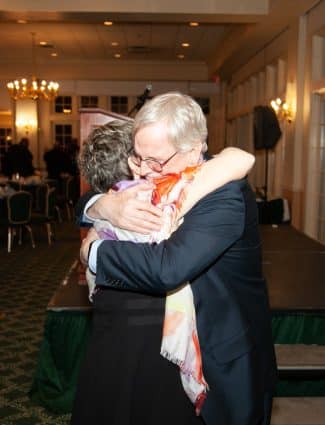
I enjoyed kissing Jan very much! I wish every day I could have just one more kiss from Jan. Out of all the kisses we shared, two are particularly special: the first and the last.

2 comments add your comment

Share your thoughts and ideas

This site uses Akismet to reduce spam. Learn how your comment data is processed.

The Jan Lilien Education Fund!

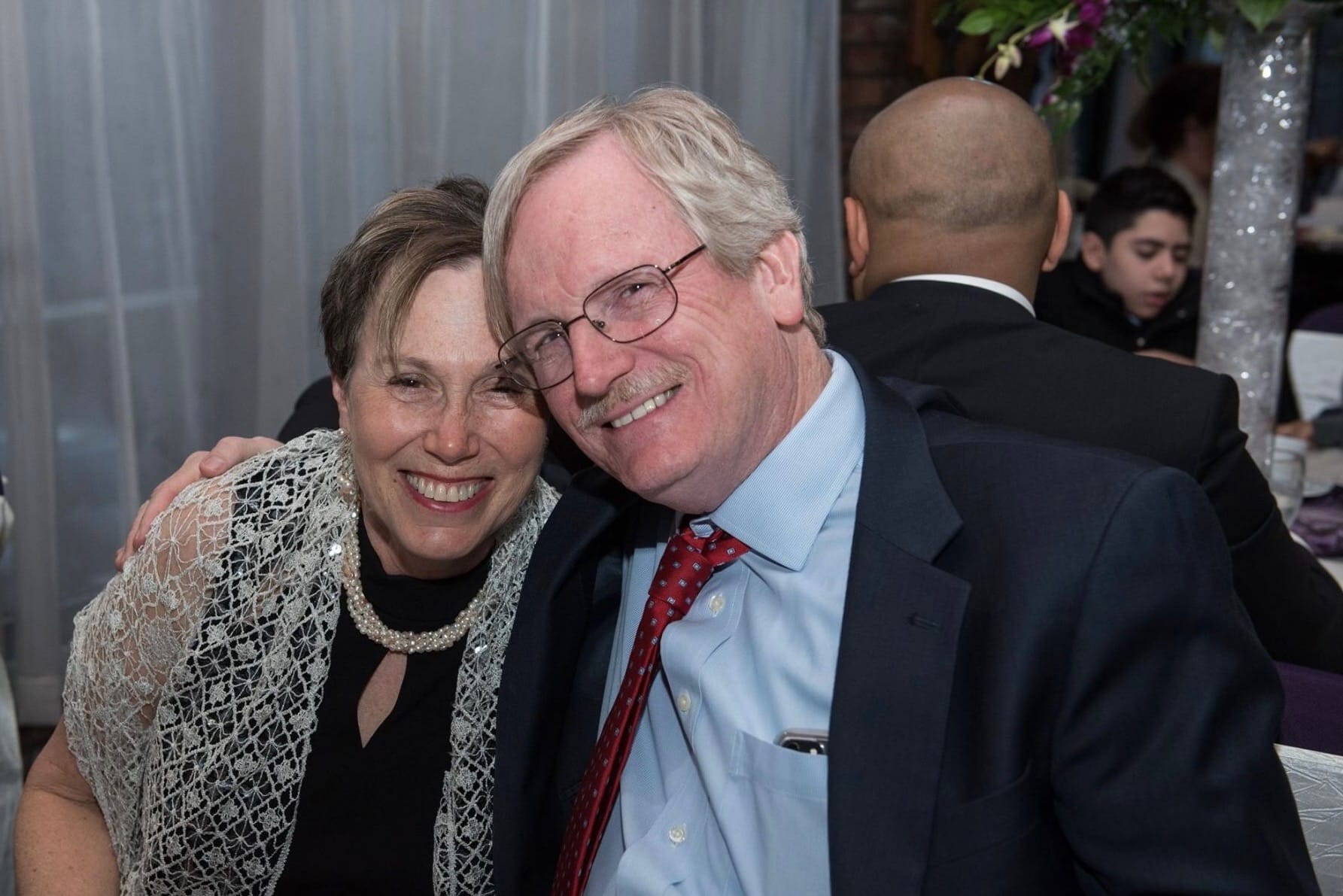
Jan and Richard
×
The Hidden Habits of Genius

Read: September 2019

Get this book

The Hidden Habits of Genius

by Craig Wright

The Hidden Habits of Genius: Beyond Talent, IQ, and Grit―Unlocking the Secrets of Greatness by Craig Wright, Ph.D., I got through my membership in One Day University.

Dr. Wright raises many important questions as he analyses fourteen (14) critical traits of genius. Professor Craig Wright, creator of Yale University’s famous “Genius Course,” explores what we can learn from brilliant minds that have changed the world.

What we often presume about a genius does not match reality. Among other interesting observations, Dr. Wright reminds the reader that Picasso could not pass a fourth-grade math test, and Steve Jobs’s high school GPA was 2.65. He questions why to teach children to behave and play by the rules when transformative geniuses do not.

Examining the lives of transformative individuals ranging from Charles Darwin and Marie Curie to Leonardo Da Vinci and Andy Warhol to Toni Morrison and Elon Musk, Wright identifies more than a dozen drivers of genius, characteristics and patterns of behavior common to great minds throughout history. He argues that genius is about more than intellect and work ethic and that the famed “eureka” moment is a Hollywood fiction. Brilliant insights that change the world are never sudden, but rather, they are the result of unique modes of thinking and lengthy gestation.

I found the book to be a fascinating read and raised more questions for future thought and reading. Professor Wright argues that the habits of mind that produce great thinking and discovery can be actively learned and cultivated. In the book, he explains how. He notes that reading the book will not make you a genius but can “make you more strategic, creative, and successful, and, ultimately, happier.

Subscribe

Contact Us

×
The Rest Is Memory: A Novel

Read: January 2025

Get this book

The Rest Is Memory: A Novel

by Lily Tuck

Today, I dove into “The Rest Is Memory: A Novel” by Lily Tuck, and it’s already leaving a powerful impression. This poignant tale follows a young Catholic girl’s harrowing journey to Auschwitz, woven in a captivating Rashomon-style narrative showcasing Tuck’s brilliance as a storyteller. Esquire has rightly placed it on their list of Best Books for Fall 2024, and I can see why.

In Tuck‘s skilled hands, “The Rest Is Memory” transforms into an unforgettable piece of historical reclamation, breathing life into an innocent soul who has long been remembered only through a haunting triptych of photographs. It’s a journey that promises to linger in my thoughts long after I’ve turned the last page.

In this mesmerizing novel by Lily Tuck, we first glimpse fourteen-year-old Czeslawa riding on the back of a boy’s motorcycle. Tuck imagines Czeslawa’s upbringing in a small Polish village before her world imploded in late 1942. Stripped of her modest belongings, she arrives at Auschwitz shorn and bearing the tattoo number 26947. Shortly after, she is photographed. Three months later, she is dead.

How did this happen to an ordinary Polish citizen? This is the question Tuck grapples with in this haunting narrative, which frames Czeslawa’s story within the tragic context of the six million Poles who perished during the German occupation. A decade before writing The Rest Is Memory“, Tuck read an obituary of the photographer Wilhelm Brasse, who took over 40,000 pictures of Auschwitz prisoners—including three of Czeslawa Kwoka, a Catholic girl from rural southeastern Poland. Tuck cut out these photos and kept them, determined to learn more about Czeslawa. However, she could only gather the barest facts: the village she came from, the transport she was on, that she was accompanied by her mother and neighbors, her tattoo number, and the date of her death. Tuck crafts a remarkable kaleidoscope of imagination from this scant evidence, something only our greatest novelists can achieve.

Susanna Moore described the novel as “Beautifully written, all the while instilling a sense of horror.” Tuck’s language swirls around the reader, yet no word is out of place. The subtly rotating images tumble forth, accelerating as we learn about Czeslawa’s tragic time in Auschwitz, as well as the lives of real individuals, including the brutal Commandant Rudolf Höss, his unconscionable wife Hedwig, psychiatrist and child rescuer Janusz Korczak, and the sharp Polish short story writer Tadeusz Borowski. Although we know Czeslawa’s fate, we must keep turning the pages, thoroughly captivated by Tuck’s nearly otherworldly prose.


When you purchase a book through one of my links, I earn a small commission that helps support my passion for reading. This contribution allows me to buy even more books to share with you, creating an incredible cycle of discovering great reads together! Your support truly makes a difference!


×
Absolution: A Novel

Read: November 2023

Get this book

Absolution: A Novel

by Alice McDermott

I started reading “Absolution: A Novel” by Alice McDermott today. The opening line immediately grabbed my attention: “You have no idea what it was like. For us. The women, I mean.” In most literature about the Vietnam War, American women, particularly wives, have been minor characters. However, in “Absolution,” they take center stage.

The book follows the story of two women, Tricia, a shy newlywed, and Charlene, a practiced corporate spouse and mother of three. They both found themselves in Saigon in 1963, forming a wary alliance. They balance the era’s mandate to be “helpmeets” to their ambitious husbands with their inchoate impulse to “do good” for the people of Vietnam.

Sixty years later, Charlene’s daughter reaches out to Tricia after encountering an aging Vietnam vet. Together, they look back at their time in Saigon, carefully considering that pivotal year and Charlene’s altruistic machinations. They discover how their lives as women on the periphery have been shaped and burdened by the same unintended consequences that followed America’s tragic interference in Southeast Asia.

This virtuosic new novel from Alice McDermott, one of our most observant and affecting writers, explores themes of folly and grace, obligation, sacrifice, and, finally, the quest for absolution in a broken world.


The Jan Lilien Education Fund sponsors ongoing sustainability and environmental awareness programs. Gifts made this month; I will match dollar-for-dollar. All donations are tax-deductible.

Subscribe

Contact Us

I receive a commission when you buy a book or product using a link on this page. Thank you for supporting Sharing Jan’s Love blog.


×
The Fire and the Ore

Read: September 2022

Get this book

The Fire and the Ore

by Olivia Hawker

The Fire and the Ore by Olivia Hawker is a novel set in 1856 when three women—once strangers—come together in unpredictable Utah Territory. Hopeful, desperate, and willful, they’ll allow nothing on earth or Heaven to stand in their way. I have always enjoyed the history of the movement of people across the plains. Tamar, Jane, and Tabitha, along with their shared husband, Thomas Ricks, were real people, and Olivia Hawker compellingly describes them as people living in difficult times.

Olivia Hawker is a descendant of Jane and a former Mormon. She writes eloquently about the unnecessary Utah War (AKA Buchanan’s Blunder) and how the sister-wives grow to love and support each other. Tamar’s sister Patience, although a minor character, wrote a memoir of the time that the author used as a resource.

Reading a compelling historical fiction novel about family, sisterhood, and survival about three women like Jan was an easy choice. It was a page-turner from the first page to the last.

The Washington Post bestselling author of One for the Blackbird, One for the Crow is a compelling novel of family, sisterhood, and survival.

The Goodreads summary provides a good overview,

Following the call of their newfound Mormon faith, Tamar Loader and her family weather a brutal pilgrimage from England to Utah, where Tamar is united with her destined husband, Thomas Ricks. Clinging to a promise for the future, she abides a surprise: Thomas is already wedded to one woman—Tabitha, a local healer—and betrothed to another.

Orphaned by tragedy and stranded in the Salt Lake Valley, Jane Shupe struggles to provide for herself and her younger sister. Out of necessity, with no love lost, she too must bear the trials of a sister-wife. She is no member of the Mormon migration, yet Jane agrees to marry Thomas.

But when the US Army’s invasion brings the rebellious Mormon community to heel, Tamar, Jane, and Tabitha are forced to retreat into the hostile desert wilderness with little in common but the same man—and the resolve to keep themselves and their children alive. What they discover, as one, is redemption, a new definition of family, and a bond stronger than matrimony that is tested like never before.


The Jan Lilien Education Fund sponsors ongoing sustainability and environmental awareness programs. Gifts made this month; I will match dollar-for-dollar. All donations are tax-deductible.

Subscribe

Contact Us

I receive a commission when you buy a book or product using a link on this page. Thank you for supporting Sharing Jan’s Love blog.
×
The Last White Man

Read: August 2022

Get this book

The Last White Man: A Novel

by Mohsin Hamid

The Last White Man by Mohsin Hamid is a story of love, loss, and rediscovery in a time of unsettling change. One morning, Anders, the novel’s protagonist,  wakes to find that his skin has turned dark, his reflection a stranger to him. At first, he tells only Oona, an old friend, newly a lover. Soon, reports of similar occurrences surface across the land.

In Mohsin Hamid’s “lyrical and urgent” prose (O Magazine), The Last White Man powerfully uplifts our capacity for empathy and the transcendence over bigotry, fear, and anger it can achieve.

I highly recommend this book. It was a page-turner that kept me thinking about love, loss, and rediscovery. All three are subjects close to my heart since Jan’s death.

I decided to read the book after hearing an interview with the author on All of It on WNYC.

The Goodreads summary provides a good overview,

One morning, Anders wakes to find that his skin has turned dark, his reflection a stranger to him. At first he tells only Oona, an old friend, newly a lover. Soon, reports of similar occurrences surface across the land. Some see in the transformations the long-dreaded overturning of an established order, to be resisted to a bitter end. In many, like Anders’s father and Oona’s mother, a sense of profound loss wars with profound love. As the bond between Anders and Oona deepens, change takes on a different shading: a chance to see one another, face to face, anew.

Hamid’s The Last White Man invites us to envision a future – our future – that dares to reimagine who we think we are, and how we might yet be together.


The Jan Lilien Education Fund sponsors ongoing sustainability and environmental awareness programs. Gifts made this month; I will match dollar-for-dollar. All donations are tax-deductible.

Subscribe

Contact Us

I receive a commission when you buy a book or product using a link on this page. Thank you for supporting Sharing Jan’s Love blog.
×
The Sorrow Apartments

Read: June 2024

Get this book

The Sorrow Apartments

by Andrea Cohen

Today, I explored “The Sorrow Apartments,” the eighth collection of poems by poet Andrea Cohen. Renowned poet Christian Wiman accurately describes Cohen’s work as a “cumulative force,” showcasing her deep attention, genuine intelligence, and soul. Cohen’s distinctive talents are featured in this collection, complemented by her characteristic sly humor, unwavering conciseness, and surprising moments of profound wisdom.

It’s astonishing how swiftly Cohen transports us:

Bunker

What would I
think, coming

up after
my world

had evaporated?
I’d wish

I were water.

The Sorrow Apartments house a collection of sparse and haunting poetry, each piece a captivating narrative of mystery, grief, and awe. These poems transport us not just across time but also through a spectrum of emotions. Cohen’s unique approach to illumination is evident in “Acapulco,” where an unanticipated companion muses, “as men tend to, / the stars comprising Orion’s belt — / as if it were the lustrous sparks and not / the leveling dark that connects us.” For a poet often deemed unfashionable, Cohen’s work proves that unfashionable can be beautiful.

×