
The True True Story of Raja the Gullible (and His Mother)

Estimated reading time: 2 minutes, 6 seconds

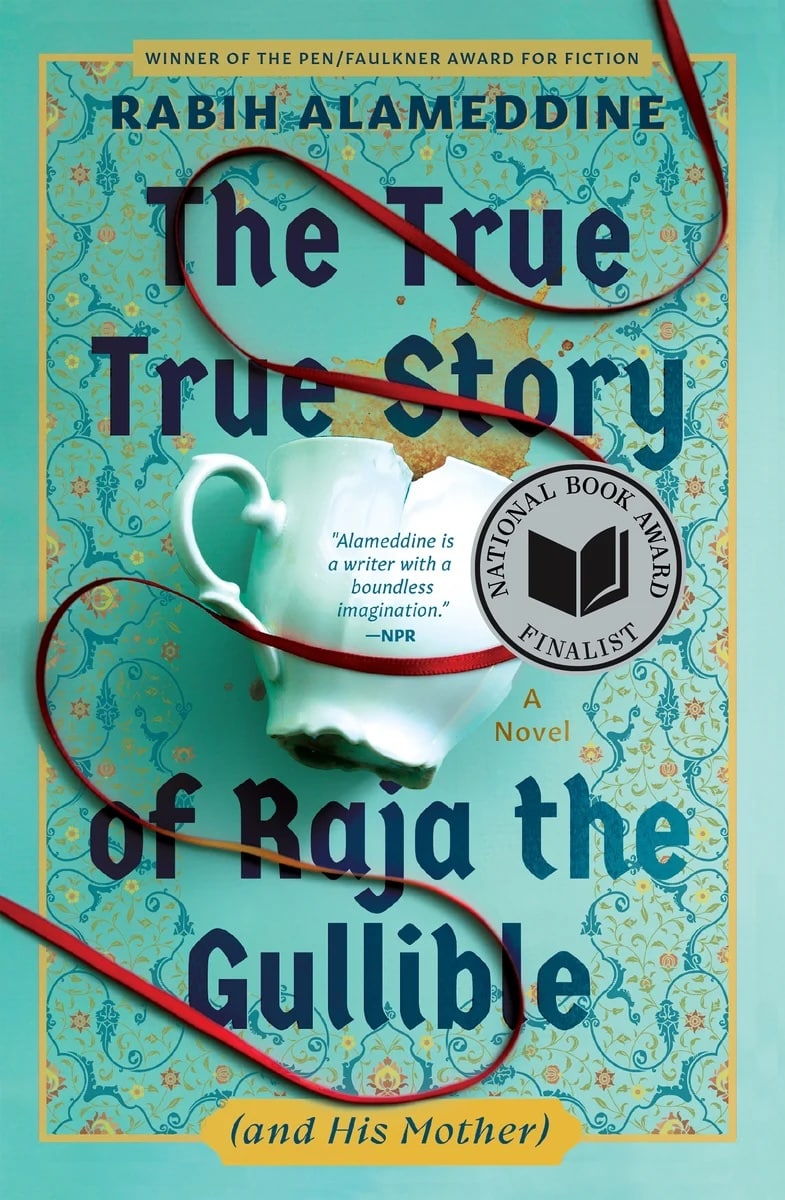
The True True Story of Raja the Gullible (and His Mother)” is a wonderfully unique and vibrant celebration of love. Written by Rabih Alameddine, a National Book Award finalist and winner of the PEN/Faulkner Award for Fiction, “The True True Story of Raja the Gullible (and His Mother)” is a tragicomic love story set in Lebanon. It explores the modern saga of family, memory, and the unbreakable bond between a son and his mother.

In a small apartment in Beirut, sixty-three-year-old Raja and his mother live side by side. A beloved high school philosophy teacher and “the neighborhood homosexual,” Raja enjoys books, meditative walks, order, and solitude. Meanwhile, his octogenarian mother, Zalfa, feels that Raja’s desire for privacy is a personal affront. She demands to know every detail of his work and love life, disregarding his boundaries.

When Raja receives an invitation to an all-expenses-paid writing residency in America, it couldn’t come at a better time. It arrives on the heels of a series of personal and national disasters that have left him longing for peace, away from his mother and the turmoil of Lebanon. However, what initially seems like a stroke of luck soon forces Raja to confront and relive the very disasters and past betrayals he wishes to forget.

Told in Raja’s irresistible, wickedly funny voice, the novel traverses six decades, narrating the unforgettable story of a singular life and its absurdities—a tale of mistakes, self-discovery, trauma, and perhaps even forgiveness.


Rabih Alameddine is the author of several acclaimed works, including the novels “The Wrong End of the Telescope“, “Angel of History“, “An Unnecessary Woman“, “The Hakawati“, “I, the Divine“, and “Koolaids“. He also wrote a collection of stories titled “The Perv” and a nonfiction work called “Comforting Myths”.

Alameddine has received numerous awards for his writing, including the PEN/Faulkner Award for Fiction, and he was a finalist for the National Book Award. In 2019, he was honored with the Dos Passos Prize, received a Lannan Award in 2021, and was awarded the Bill Whitehead Lifetime Achievement Award in 2025.


Discover your next favorite book and dive into a world of curated, exciting reads by purchasing through my links. You’ll have access to a diverse selection of books that I’ve personally vetted to ensure quality and enjoyment. Additionally, by supporting these selections, you’ll help me continue to provide you with more personalized recommendations. I earn a small commission from your purchase, which allows me to buy and share even more books with you. Your support truly makes a difference!


The Jan Lilien Education Fund!

How the Word is Passed

Read: December 2021

Get this book

How the Word Is Passed: A Reckoning with the History of Slavery Across America

by Clint Smith

How the Word Is Passed: A Reckoning with the History of Slavery Across America by Clint Smith. This book was a gift from my son Jon. The New York Times selected How the Word is Passed as one of the best books published this year. Beginning in his hometown of New Orleans, Clint Smith leads the reader on an unforgettable tour of monuments and landmarks—those that are honest about the past and those that are not—that offer an intergenerational story of how slavery has been central in shaping our nation’s collective history, and ourselves.

How the Word is Passed is one of the best books I have read in 2021. I had read an excerpt in The Atlantic on the Whitney Plantation, one of the only former plantations devoted to preserving the experience of the enslaved people whose lives and work sustained it. Like most of us, I had placed the book on my to-read list, where it remained lost in the cobwebs. Fortunately, my son Jon purchased the book for me.

Secondly, the book rekindled my long-lost dream of being an American Studies professor. As soon as Jan and I met, I dropped plans to leave Brooklyn and start graduate school in the fall of 1974. I made that decision primarily because of how much I loved Jan. But it was also partly that I did not have a clear vision of what my life would be like as a professor. The book provided clear examples of people like Yvonne Holden at The Whitney Plantation redefining history to be more accurate and inclusive. I probably could not have done as well as she did, but I can now see that it might have resulted in a career for me that could have been impactful.

Goodreads provides this overview for those who still need to be convinced to read this book.

It is the story of the Monticello Plantation in Virginia, the estate where Thomas Jefferson wrote letters espousing the urgent need for liberty while enslaving over 400 people on the premises. It is the story of the Whitney Plantation, one of the only former plantations devoted to preserving the experience of the enslaved people whose lives and work sustained it. It is the story of Angola Prison in Louisiana, a former plantation named for the country from which most of its enslaved people arrived and which has since become one of the most gruesome maximum-security prisons in the world. And it is the story of Blandford Cemetery, the final resting place of tens of thousands of Confederate soldiers.

In a deeply researched and transporting exploration of the legacy of slavery and its imprint on centuries of American history, How the Word Is Passed illustrates how some of our country’s most essential stories are hidden in plain view-whether in places we might drive by on our way to work, holidays such as Juneteenth, or entire neighborhoods—like downtown Manhattan—on which the brutal history of the trade in enslaved men, women and children has been deeply imprinted.

Informed by scholarship and brought alive by the story of people living today, Clint Smith’s debut work of nonfiction is a landmark work of reflection and insight that offers a new understanding of the hopeful role that memory and history can play in understanding our country.

How the Word is Passed is one of the best books I have read this year and many prior ones. I encourage you to read it and share your comments.

Subscribe

Contact Us

When you buy a book or product using a link on this page, I receive a commission. Thank you for supporting Sharing Jan’s Love blog.

×
The Mango Tree: A Memoir of Fruit, Florida, and Felony

Read: April 2024

Get this book

The Mango Tree

by Annabelle Tometich

Today, I started reading Annabelle Tometich‘s The Mango Tree: A Memoir of Fruit, Florida, and Felony. The Mango Tree is not just a memoir but a profoundly emotional family saga. It takes us through the complexities of Annabelle’s life, from her childhood in a house filled with balikbayan boxes, vegetation, and luscious mangoes to her journey from aspiring medical student to restaurant critic.

It is a tribute to her fellow Filipino Americans, her younger self, and the mango tree symbolizing her family. Above all, it is a heartfelt homage to Annabelle’s mother, Josefina, who carved out a life and a home without whom Annabelle would not be who she is.

When journalist Annabelle Tometich picked up the phone one June morning, she wasn’t expecting a collect call from an inmate at the Lee County Jail. And when she accepts, she certainly isn’t prepared to hear her mother’s voice on the other end of the line. However, explaining the situation to her younger siblings afterward was easy; all she had to say was, “Mom shot at some guy. He was messing with her mangoes.” They immediately understood. Answering the questions of the breaking news reporter—at the same newspaper where Annabelle worked as a restaurant critic––proved more difficult. Annabelle decided to go with a variation of the truth: it was complicated.

Thus commences The Mango Tree, a memoir that deftly weaves a tapestry of a mixed-race Filipina’s life in suburban Florida. Annabelle’s journey is not linear but a series of interconnected stories that delve into her upbringing, her father’s tragic demise, her mother’s longing for her homeland, and her quest for identity.

×
God Shot

Read: December 2021

Get this book

God Shot by Chelsea Bieker

by Chelsea Bieker

God Shot by Chelsea Bieker, one of NPR’s Books We Love from 2020, is about the town of Peaches, California, where drought has settled in for the long term. The area of the Central Valley where fourteen-year-old Lacey May and her alcoholic mother live was once an agricultural paradise. Now it’s an environmental disaster, a place of cracked earth and barren raisin farms.

In their desperation, residents have turned to a cult leader named Pastor Vern for guidance. Everybody is praying for survival through secret “assignments” to bring the rain.

God Shot is an enjoyable read. However, I first found it challenging to accept Pastor Vern’s assignments, especially to Lacey May and her fellow teenage girls. Would people believe in a cult leader and get “assignments” that involve women fully accepting male domination in the twenty-first century? When I had doubts, I would wake up, listen to the news, or read the papers and discover that it is plausible and does happen in our world.

After being god-shot, Lacey May becomes one day at a time feminist as she has to rely on herself and other women who do not accept Pastor Vern’s divine leadership. Slowly but surely, she and her friends find a miracle to help them escape not only the environmental disaster caused by the drought but the moral depravity of Pastor Vern.

Goodreads provides this overview of the God Shot.

Lacey has no reason to doubt the pastor. But then her life explodes in a single unimaginable act of abandonment: her mother, exiled from the community for her sins, leaves Lacey and runs off with a man she barely knows. Abandoned and distraught, Lacey May moves in with her widowed grandma, Cherry, who is more concerned with her taxidermy mouse collection than her own granddaughter. As Lacey May endures the increasingly appalling acts of men who want to write all the rules and begins to uncover the full extent of Pastor Vern’s shocking plan to bring fertility back to the land, she decides she must go on a quest to find her mother no matter what it takes. With her only guidance coming from the romance novels she reads and the unlikely companionship of the women who knew her mother, she must find her own way through unthinkable circumstances.

Possessed of an unstoppable plot and a brilliantly soulful voice, Godshot is a book of grit, humor, and heart, a debut novel about female friendship and resilience, mother loss and motherhood, and seeking salvation in unexpected places. It introduces a writer who gives Flannery O’Connor’s Gothic parables a Californian twist and who emerges with a miracle that is all her own.

I recommend this novel without reservations!

Subscribe

Contact Us

When you buy a book or product using a link on this page, I receive a commission. Thank you for supporting Sharing Jan’s Love blog.

×
We Do Not Part

Read: March 2025

Get this book

We Do Not Part: A Novel

by Han Kang

Today, I explored “We Do Not Part,” the latest novel by Han Kang, the 2024 Nobel Prize in Literature laureate. Translated by the talented e. yaewon and Paige Aniyah Morris, this book offers a remarkable journey. The New York Times has called it Kang’s most revealing work since her acclaimed novel, “The Vegetarian.” What captivates me the most is how it intricately weaves the story of two women’s friendship while shedding light on a hidden chapter of Korean history.

One winter morning, Kyungha receives an urgent message from her friend Inseon, asking her to visit a hospital in Seoul. Inseon has injured herself in an accident and begs Kyungha to return to Jeju Island, where she lives, to save her beloved pet—a white bird named Ama. A snowstorm hits the island when Kyungha arrives. At all costs, she must reach Inseon’s house, but the icy wind and blizzards slow her down as night falls. She wonders if she will arrive in time to save the animal—or even survive the terrible cold that envelops her with every step. Lost in a world of snow, she does not yet suspect the vertiginous plunge into darkness that awaits her at her friend’s house.

Blurring the boundaries between dream and reality, “We Do Not Part” powerfully illuminates a forgotten chapter of Korean history buried for decades, bringing to light the lost voices of the past to prevent them from fading into oblivion. It is both a tribute to enduring friendship and a plea for remembrance. The novel tells a story of profound love in the face of unspeakable violence and celebrates life, however fragile.


Han Kang was born in 1970 in South Korea. She is the author of The Vegetarian, which I have read, and winner of the International Booker Prize,  Human ActsThe White BookGreek Lessons, and We Do Not Part. In 2024, she received the Nobel Prize in Literature.

e. yaewon is based in Korea and translates from and into Korean, including titles by Hwang Jungeun, Deborah Levy, and Samuel Beckett.

Paige Aniyah Morris divides her time between the United States and Korea. Recent translations include works by Pak Kyongni, Ji-min Lee, and Chang Kang-myoung.


When you purchase a book through one of my links, I earn a small commission that helps support my passion for reading. This contribution allows me to buy even more books to share with you, creating an incredible cycle of discovering great reads together! Your support truly makes a difference!

×
Last House: A Novel

Read: May 2024

Get this book

Last House: A Novel

by Jessica Shattuck

I started reading “Last House: A Novel” by Jessica Shattuck today. She is an esteemed New York Times bestselling author known for her work “The Women in the Castle.” This sweeping narrative, perfect for “The Dutch House” and “Great Circle” fans, explores a nation’s rise to power and a family’s complex ties to the resources that shaped their wealth. It also delves into the events that led to their greatest tragedy, a secret that threatens to tear them apart.

In 1953, a World War II veteran turned company lawyer, Nick Taylor, saw oil as the key to the future. He commutes to the city for work and returns to the peaceful suburbs to be with his wife, Bet, a former codebreaker now a housewife, and their two children, Katherine and Harry. Nick, who comes from humble origins, can provide for his family, including their secluded country escape called Last House, thanks to his work for American Oil. Last House, deep in the Vermont mountains, offers the Taylors a retreat from the stresses of modern life. Bet no longer worries about the Russian H-bombs that haunt her dreams, and the children can roam freely in the woods. Last House is a place that seems capable of surviving the end of the world.

1968, a turning point in American history, where the nation teeters on the brink of transformation. The streets pulsate with protestors challenging everything from the Vietnam War to racism and even the country’s reliance on Big Oil. As Katherine enters adulthood, she finds herself caught in the era’s tide, struggling to reconcile her ideals with the privileged upbringing her parents, part of the Greatest Generation, toiled to provide. But when the Movement takes a secure, more radical turn, each member of the Taylor family must face the repercussions of their choices for the causes they believed in. This rich historical backdrop infuses the Taylor family’s narrative with depth and intrigue, leaving us hungry for more about this transformative era.

Last House” spans multiple generations and nearly eighty years, telling the story of one American family during a time of grand ideals and significant downfalls. It explores themes of family dynamics, the impact of wealth, and the societal changes that shaped America. Set against the backdrop of our nation’s history, this emotional tour de force delves deeply into questions of inheritance and what we owe each other. It captures the gravity of time, the double edge of progress, and the hubris of empire to stunning effect.

×
Parable of the Talents

Read: January 2024

Get this book

Parable of the Talents

by Octavia E. Butler

This morning, I completed reading Octavia E. Butler‘s acclaimed post-apocalyptic novel Parable of the Sower and immediately started reading its sequel, Parable of the Talents, initially published in 1998. This second book is even more relevant today than it was back then. The novel’s timely message of hope and resistance in the face of fanaticism is shockingly prescient.

In 2032, Lauren Olamina survived the destruction of her home and family. She envisioned a peaceful community in Northern California, which she established based on her newly founded faith, Earthseed. This new settlement provides a haven for outcasts who face persecution following the election of an ultra-conservative president. The new president pledges to “make America great again,” but the country becomes increasingly divided and dangerous. Lauren’s subversive colony, a minority religious faction led by a young black woman, becomes a target for President Jarret’s oppressive regime characterized by terror and discrimination.

In the future, Asha Vere discovers the journals of her mother, Lauren Olamina, whom she never met. As she delves into her mother’s writings, she grapples with the conflict between Lauren’s responsibilities to her chosen family and her mission to guide humanity toward a brighter tomorrow.


The Jan Lilien Education Fund sponsors ongoing sustainability and environmental awareness programs. Gifts made this month; I will match dollar-for-dollar. All donations are tax-deductible.

Subscribe

Contact Us

I receive a commission when you buy a book or product using a link on this page. Thank you for supporting Sharing Jan’s Love blog.


×