
Jan Believed in Herself and Worked to Empower Women

Seven Years After the Women’s March

Still Marching for Peace, Justice, and Freedom

Estimated reading time: 2 minutes, 21 seconds
Jan Believed in Herself and Worked to Empower Women

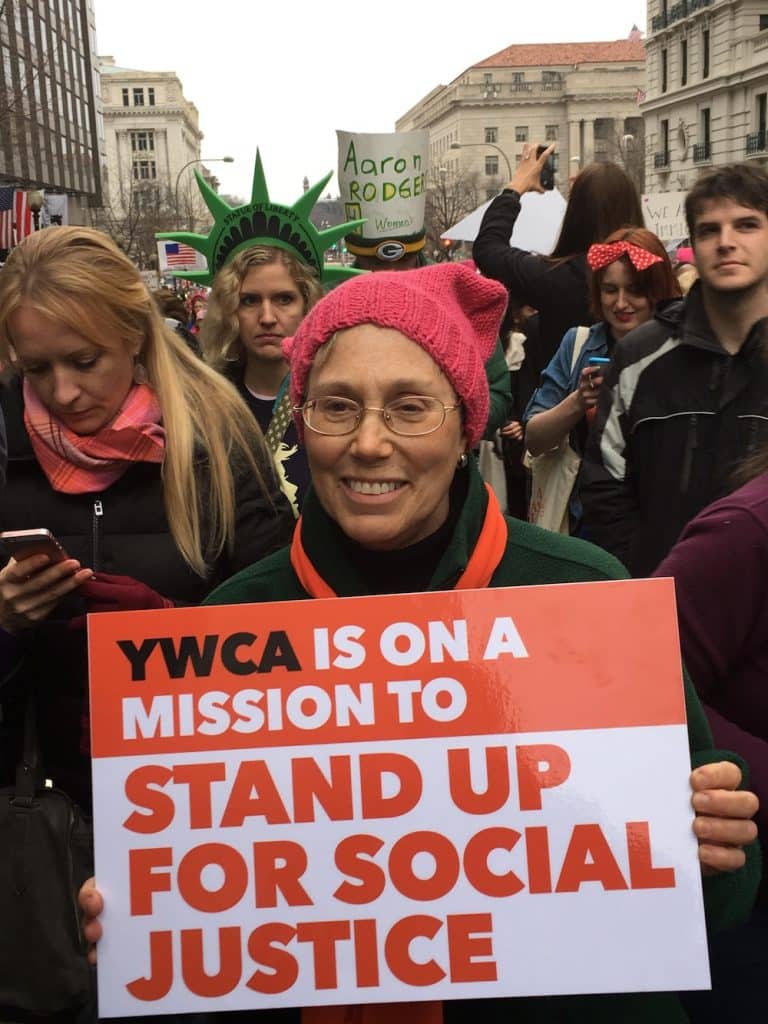
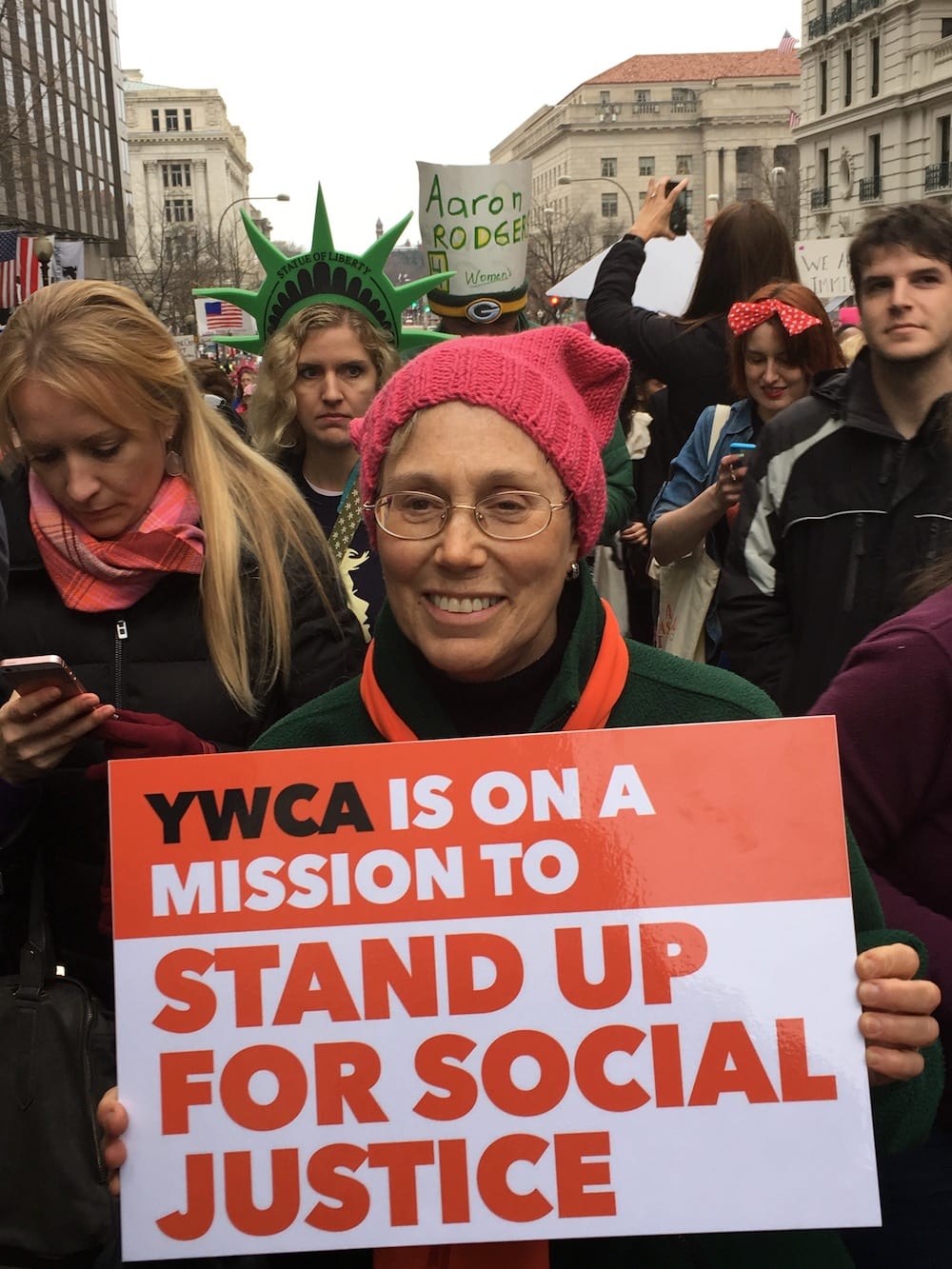
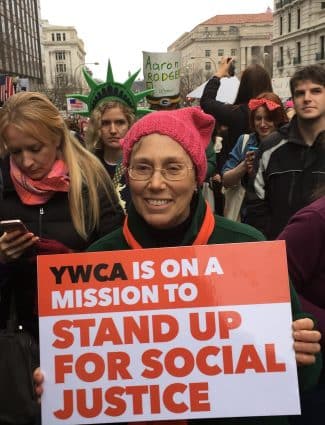
Jan at the Women’s March, January 21, 2017.

My wife, Jan, and I stood in the parking lot, shivering in the cold, waiting for the replacement bus to arrive. We had been up since before dawn, eager to participate in the Women’s March in Washington, DC. But our excitement had been dampened when we discovered the bus we were supposed to take had broken down.

As we stood outside in the cold, waiting for the replacement bus, my wife turned to me, her concern etched on her face. “Honey, you don’t have to come with us,” she said. It’s freezing out here, and we don’t even know if the replacement bus will be any better.”

But I wasn’t about to back down. I put my arms around Jan and pulled her close. “We’ve been in this fight together since we met,” I said, my voice firm. And I won’t let you go to DC alone.”

Jan smiled, relieved and grateful that I was still willing to journey with her. Together, we stood there, shivering in the icy wind, but determined to be a part of history and stand up for our beliefs.

Finally, a new bus arrived, and we climbed aboard. Sitting next to my wife, I couldn’t help but think of all the people who had fought before us for the self-evident freedoms we were still battling to achieve today. Would we ever have a day when we no longer had to march?

Jan, sensing my thoughts, took off her pink “Pussy Hat” and set it aside now that the sun was up and the heat was on. I couldn’t even knit a good hat,” she joked, and we laughed. I leaned over and kissed her, grateful for her strength and resilience in adversity.

Upon our return home seven years ago from the Women’s March, I had high hopes for real change. We must continue to march until everyone is entitled to the same inalienable rights of life, liberty, and the pursuit of happiness. Even though we may face challenges, I draw inspiration from my wife, who was diagnosed with lymphoma three years and seven months after that warm day in January. Although she can’t physically march with me, I carry her in my heart and will keep marching until we live in a beloved community.


The Jan Lilien Education Fund sponsors ongoing sustainability and environmental awareness programs. For gifts made this month, I will match dollar for dollar. All donations are tax-deductible.

Subscribe

Contact Us

I receive a commission when you buy a book or product using a link on this page. Thank you for supporting Sharing Jan’s Love blog.


Peace, Love, and Tranquility for All

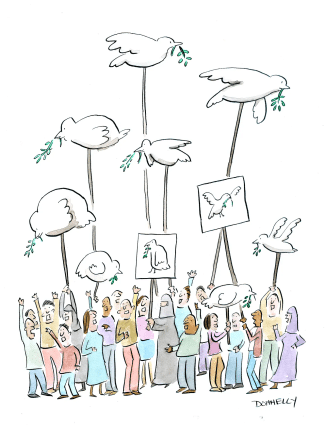
Liza Donnelly's simple but elegant Peace Animation that she created for Cartooning for Peace defines the dreams that inspire us to be the best we can be, not only for ourselves but for our friends, neighbors, and loved ones.

However, there are days when the world crumbles before our eyes.

Yet because of our collective astigmatism, our vision is blurred, and we cannot connect, work together and create a world where we can all find peace, love, and happiness.

My astigmatism blinded me when Jan died and kept me from understanding the magnitude of the gift that Jan's love provided me.

With the clarity of reaching the bottom of my life's journey, I can now see more clearly but have the motivation to change.

Show thread (1)

Parable of the Talents

Still Marching for Peace, Justice, and Freedom

Estimated reading time: 2 minutes, 21 seconds
Parable of the Talents

Parable of the Talents

This morning, I completed reading Octavia E. Butler's acclaimed post-apocalyptic novel, "Parable of the Sower." I immediately started reading its sequel, "Parable of the Talents," initially published in 1998. This second book is even more relevant today than it was back then. The novel's timely message of hope and resistance in the face of fanaticism is shockingly prescient.
Read book review Get this book All books

1 comment add your comment

Share your thoughts and ideas

This site uses Akismet to reduce spam. Learn how your comment data is processed.

The Jan Lilien Education Fund!

Jan Believed in Herself and Worked to Empower Women
×
Parable of the Talents

Read: January 2024

Get this book

Parable of the Talents

by Octavia E. Butler

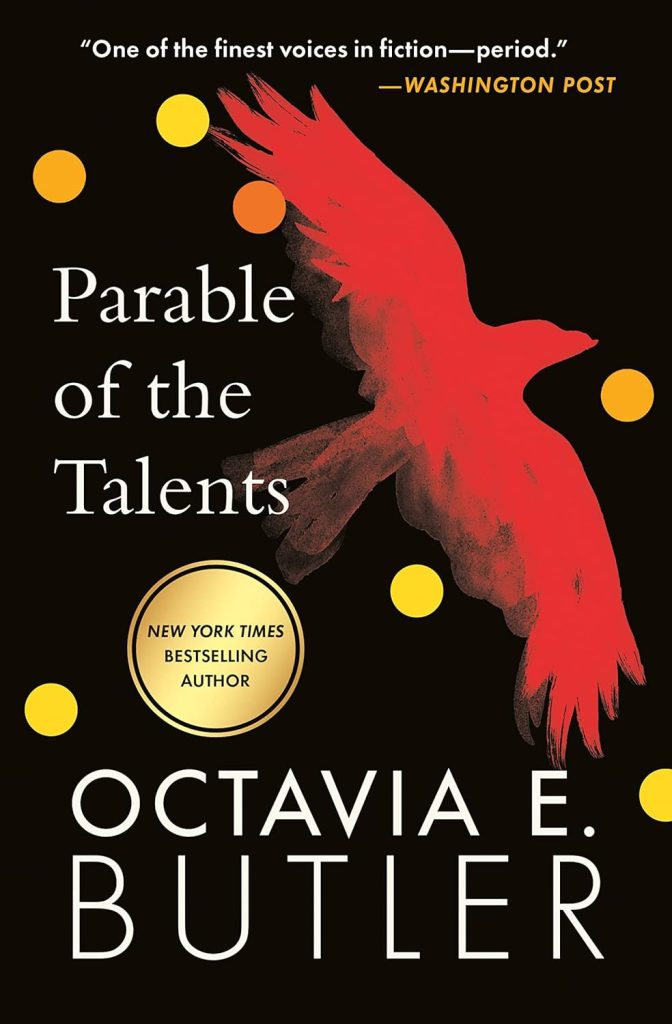
This morning, I completed reading Octavia E. Butler‘s acclaimed post-apocalyptic novel Parable of the Sower and immediately started reading its sequel, Parable of the Talents, initially published in 1998. This second book is even more relevant today than it was back then. The novel’s timely message of hope and resistance in the face of fanaticism is shockingly prescient.

In 2032, Lauren Olamina survived the destruction of her home and family. She envisioned a peaceful community in Northern California, which she established based on her newly founded faith, Earthseed. This new settlement provides a haven for outcasts who face persecution following the election of an ultra-conservative president. The new president pledges to “make America great again,” but the country becomes increasingly divided and dangerous. Lauren’s subversive colony, a minority religious faction led by a young black woman, becomes a target for President Jarret’s oppressive regime characterized by terror and discrimination.

In the future, Asha Vere discovers the journals of her mother, Lauren Olamina, whom she never met. As she delves into her mother’s writings, she grapples with the conflict between Lauren’s responsibilities to her chosen family and her mission to guide humanity toward a brighter tomorrow.


The Jan Lilien Education Fund sponsors ongoing sustainability and environmental awareness programs. Gifts made this month; I will match dollar-for-dollar. All donations are tax-deductible.

Subscribe

Contact Us

I receive a commission when you buy a book or product using a link on this page. Thank you for supporting Sharing Jan’s Love blog.


×
Blue Skies: A Novel

Read: August 2023

Get this book

Blue Skies: A Novel

by T. C. Boyle

I started reading Blue Skies: A Novel by T. C. Boyle today. The book is an eco-thriller with comedic elements. It explores the relationships between humans and their habitats in a world where natural disasters frequently occur, where “the only truism seems to be that things always get worse.

Denied a dog, a baby, and even a faithful fiancé, Cat suddenly craves a snake: a glistening, writhing creature that can be worn like “jewelry, living jewelry” to match her black jeans. But when the budding social media star promptly loses the young “Burmie” she buys from a local pet store, she inadvertently sets a chain of increasingly dire and outrageous events threatening her survival.

Blue Skies follows the tradition of T. C. Boyle’s finest novels, combining high-octane plotting with biting wit and intelligent social commentary. Here Boyle, one of the most inventive voices in contemporary fiction, transports us to water-logged and heat-ravaged coastal America, where Cat and her hapless, nature-loving family—including her eco-warrior parents, Ottilie and Frank; her brother, Cooper, an entomologist; and her frat-boy-turned-husband, Todd—are struggling to adapt to the “new normal,” in which once-in-a-lifetime natural disasters happen once a week and drinking seems to be the only way to cope.

But there’s more than meets the eye to this compulsive family drama. Lurking beneath the bland façade of twenty-first-century Californians and Floridians attempting to preserve normalcy in the face of violent weather perturbations is a caricature of materialist American society that doubles as a prophetic warning about our planet’s future. Blue Skies deftly explores the often volatile relationships between humans and their habitats, from pet bees and cricket-dependent diets to massive species die-offs and pummeling hurricanes, in which “the only truism seems to be that things always get worse.


The Jan Lilien Education Fund sponsors ongoing sustainability and environmental awareness programs. Gifts made this month; I will match dollar-for-dollar. All donations are tax-deductible.

Subscribe

Contact Us

I receive a commission when you buy a book or product using a link on this page. Thank you for supporting Sharing Jan’s Love blog.


×
The Tokyo Suite

Read: April 2025

Get this book

The Tokyo Suite

by Giovana Madalosso

I recently dove into The Tokyo Suite by Giovana Madalosso, expertly translated by Bruna Dantas Lobato. This captivating book represents the English-language debut of one of Brazil’s most thrilling contemporary voices. It intricately unravels the complexities of modern family dynamics, diving deep into the hidden tensions that simmer just beneath the surface of everyday life. Each page draws you in, inviting you to explore the rich tapestry of emotions and experiences that define our relationships.

It’s a seemingly ordinary morning when Maju, a nanny, boards a bus with Cora, the young girl she’s been caring for and disappears. The abduction, an act as impulsive as it is extreme, sets off a series of events that will force each character to confront their deepest fears and desires.

Cora’s mother, Fernanda, is a successful executive who is so engulfed in her crisis that she initially fails to notice her daughter’s disappearance. Her marriage is strained, and she finds solace in an affair, distancing herself further from her family. Meanwhile, her husband, overwhelmed by the complexities of their domestic life, remains emotionally detached. As Maju navigates the streets of São Paulo with Cora, the “white army” of nannies, a term coined by Fernanda, seems to watch her every move, heightening her sense of paranoia and urgency.

Madalosso’s narrative delves deep into the human psyche, examining themes of maternal guilt, societal expectations, and the search for personal identity. Rich and multi-layered, The Tokyo Suite is a poignant and gripping tale that captures the essence of modern urban life and the lengths people will go to reclaim a sense of control and meaning.


Giovana Madalosso is a Brazilian writer and screenwriter born in Curitiba in 1975. She has been a finalist for the Biblioteca Nacional Award and the São Paulo Prize of Literature. The Tokyo Suite is her English-language debut.

Bruna Dantas Lobato is a fiction writer and translator. Her translation of Stênio Gardel‘s The Words That Remain won the 2023 National Book Award for Translated Literature. Her fiction has appeared in The New Yorker,  Guernica, A Public Space, and The Common. Raised in Natal, Brazil, she is an incoming Assistant Professor of English and Creative Writing at Grinnell College.


When you purchase a book through one of my links, I earn a small commission that helps support my passion for reading. This contribution allows me to buy even more books to share with you, creating an incredible cycle of discovering great reads together! Your support truly makes a difference!

Enjoy a limited-time offer of 20% off your next book purchase at Bookshop.org!


×
Victory City: A Novel

Read: February 2023

Get this book

Victory City: A Novel

by Salman Rushdie

Victory City: A Novel by Salman Rushdie is an epic tale of a woman who breathes a fantastical empire into existence, only to be consumed by it over the centuries from the transcendent imagination of Booker Prize-winning, internationally bestselling author Salman Rushdie. It is well written and was a page-turner from page one to the end. I highly recommend this novel and encourage everyone to read it.

Brilliantly styled as a translation of an ancient epic, this is a saga of love, adventure, and myth that is a testament to storytelling’s power. After witnessing her mother’s death, the grief-stricken Pampa Kampana becomes a vessel for the goddess Parvati, who begins to speak out of the girl’s mouth. I was hooked when Pampa Kampana provided the seeds that created Victory City out of thin air.

David Remnick’s interview with Salman Rushdie in The New Yorker provided background I would have missed.

“The first kings of Vijayanagara announced, quite seriously, that they were descended from the moon,” Rushdie said. “So when these kings, Harihara and Bukka, announce that they’re members of the lunar dynasty, they’re associating themselves with those great heroes. It’s like saying, ‘I’ve descended from the same family as Achilles.’ Or Agamemnon. And so I thought, Well, if you could say that, I can say anything.”

Above all, the book is buoyed by the character of Pampa Kampana, who, Rushdie says, “just showed up in my head” and gave him his story, his sense of direction. Rushdie’s pleasure in writing the novel was in “world building” and, at the same time, writing about a character building that world: “It’s me doing it, but it’s also her doing it.” The pleasure is infectious. “Victory City” is an immensely enjoyable novel. It is also an affirmation. At the end, with the great city in ruins, what is left is not the storyteller but her words:

I, Pampa Kampana, am the author of this book.
I have lived to see an empire rise and fall.
How are they remembered now, these kings, these queens?
They exist now only in words . . .
I myself am nothing now. All that remains is this city of words.
Words are the only victors.

The Goodreads summary provides a brief overview,

In the wake of an insignificant battle between two long-forgotten kingdoms in fourteenth-century southern India, a nine-year-old girl has a divine encounter that will change the course of history. After witnessing her mother’s death, the grief-stricken Pampa Kampana becomes a vessel for the goddess Parvati, who begins to speak out of the girl’s mouth. Granting her powers beyond Pampa Kampana’s comprehension, the goddess tells her that she will be instrumental in the rise of a great city called Bisnaga–literally victory city–the wonder of the world.

Over the next two hundred and fifty years, Pampa Kampana’s life becomes deeply interwoven with Bisnaga’s, from its literal sowing out of a bag of magic seeds to its tragic ruination in the most human of ways: the hubris of those in power. Whispering Bisnaga and its citizens into existence, Pampa Kampana attempts to make good on Parvati’s task: giving women equal agency in a patriarchal world. But all stories have a way of getting away from their creator, and Bisnaga is no exception. As years pass, rulers come and go, battles are won and lost, and allegiances shift, the very fabric of Bisnaga becomes an ever more complex tapestry–with Pampa Kampana at its center.


The Jan Lilien Education Fund sponsors ongoing sustainability and environmental awareness programs. Gifts made this month; I will match dollar-for-dollar. All donations are tax-deductible.

Subscribe

Contact Us

I receive a commission when you buy a book or product using a link on this page. Thank you for supporting Sharing Jan’s Love blog.


×
The Singing Word

Read: September 2025

Get this book

The Singing Word

by Walt Hunter

The Singing Word: 168 Years of Atlantic Poetry, edited by Walt Hunter, celebrates the people, land, and spirit of America. This remarkable collection showcases a wide range of contemporary and historical poetry from the 168-year archive of The Atlantic magazine. Since its first issue in 1857, the poetry published in The Atlantic has drawn attention to the nation’s ongoing journey of self-discovery.

The magazine’s verse has featured odes to American leaders and landscapes, laments for the dead, and calls for change, appealing to the enduring ideals of Atlantic readers.

This one-of-a-kind collection selects poems of rousing optimism, clear-eyed realism, and moving lyricism—poems infused with the language of America’s songs, myths, and history, from the Civil War up through the present in three rich parts: National Anthems, Natural Lines, and Personal Mythologies.

Curated by The Atlantic’s Poetry Editor, this anthology features both world-famous poets—from Longfellow to Limón, including Robert Frost, W. S. Merwin, Sylvia Plath, and Adrienne Rich—as well as poets whose work has never before been published outside of the magazine.

Offering readers an essential understanding of American canon and the evolving nation, its poets have yearned to capture—the poetry of The Atlantic is the poetry of America.


Walt Hunter is a professor of twentieth- and twenty-first-century literature and chair of the English department at Case Western Reserve University. He is also the fiction and poetry editor for The Atlantic.


Discover your next favorite book and dive into a world of curated, exciting reads by purchasing through my links. You’ll have access to a diverse selection of books that I’ve personally vetted to ensure quality and enjoyment. Additionally, by supporting these selections, you’ll help me continue to provide you with more personalized recommendations. I earn a small commission from your purchase, which allows me to buy and share even more books with you. Your support truly makes a difference!


×
All the Water in the World

Read: January 2025

Get this book

All the Water in the World

by Eiren Caffall

Today, I began reading “All the Water in the World” by Eiren Caffall. Like Station Eleven, this novel is a literary thriller set partly in New York’s American Museum of Natural History in a flooded future. In the spirit of “From the Mixed-Up Files of Mrs. Basil E. Frankweiler” and “Parable of the Sower,” this adventurous journey offers hope that the most important things—love, work, community, and knowledge—will endure.

All the Water in the World” is narrated by a girl who profoundly appreciates water. In the years following the melting of the glaciers, Nonie, along with her older sister, parents, and their researcher friends, remains in a nearly deserted New York City. They have established a settlement on the roof of the American Museum of Natural History with a strict rule: they may only take from the exhibits in cases of dire need. They hunt and grow their food in Central Park while also working to preserve the collections of human history and science.

When a superstorm breaches the city’s flood walls, Nonie and her family must escape northward along the Hudson River. They carry a book containing records of the lost collections. As they race down the swollen river for safety, they encounter communities that have adapted in various, sometimes frightening, ways to the new reality. Despite the challenges, they are determined to create a new world that honors everything they have saved.

Inspired by the stories of curators in Iraq and Leningrad who worked to protect their collections during wartime, “All the Water in the World” mediates what we strive to preserve from collapse and an adventure filled with danger, storms, and a fight for survival.


When you purchase a book through one of my links, I earn a small commission that helps support my passion for reading. This contribution allows me to buy even more books to share with you, creating an incredible cycle of discovering great reads together! Your support truly makes a difference!


×
Berlin- A Novel

Read: June 2023

Get this book

Berlin: A Novel by Bea Setton

by Bea Setton

I’ve begun reading Berlin: A Novel by Bea Setton. After finishing Kairos, a book set in a divided Berlin, Setton’s debut novel is witty and insightful, with a young woman battling a sense of emptiness who moves to Berlin for a fresh start. However, things go differently than planned.

Daphne, the protagonist, moves to Berlin hoping for a new beginning but deals with more drama than she left behind. She knows she needs to make friends, learn German, and navigate a new way of life. She even expects to spend long nights alone with Nutella and experience the difficulties of online dating in another language. But one night, something unexpected and unnerving happens in her apartment, and Daphne’s life suddenly turns dangerous.

Setton captures the modern female experience with sharp observations and wit, making Berlin a must-read for her generation.


The Jan Lilien Education Fund sponsors ongoing sustainability and environmental awareness programs. Gifts made this month; I will match dollar-for-dollar. All donations are tax-deductible.

Subscribe

Contact Us

I receive a commission when you buy a book or product using a link on this page. Thank you for supporting Sharing Jan’s Love blog.


×