Summer of Global Boiling Arrives

Summer of Global Boiling Arrives

The Time to Take Action is Now!

Estimated reading time: 2 minutes, 28 seconds
Summer of Global Boiling Arrives

We Still Have Time to Act!

I tied my walking shoes and felt the warmth outside my window. Although the extreme weather forecast wasn’t due for another five hours, the heat was already seeping through the glass. Despite the temptation to skip my walk, I grabbed my Shakespeare Theater Hat and headed out the door.

The first half mile felt warmer than usual, but it wasn’t unbearable. The hot, damp breeze was always in front of me, no matter which way I turned. Though, I knew the air would feel like a sauna if I walked all day. However, at 6 am, it was too early for that kind of heat.

When my Apple Watch announced that I had reached halfway to my minimum distance goal of four miles, I accepted that completing my rings would be the only achievement of the day. “Have a nice day, and stay cool,” I said with enough force to cut through the thick air.

As I finished the final ring, I made a mental note to take the quickest path back home. It wasn’t until then that I realized my thighs were throbbing with pain. I never had any muscle soreness after my regular walks, so I was perplexed. It suddenly dawned on me that I had been walking against a strong tide in an estuary, requiring extra effort to keep myself from being carried out to sea.

Standing in the shower, with cold water flushing away the sweat, I remembered a heatwave in 1980. I worked at St. Ignatius Loyola Church in Brooklyn, across from Medgar Evers College. One day, while crossing a street where the asphalt was beginning to melt, I asked Fr. Nick, a retired Jesuit priest, what he thought of the heat. Instead of our usual lighthearted conversation, he responded, “What do you expect? It’s summer.”

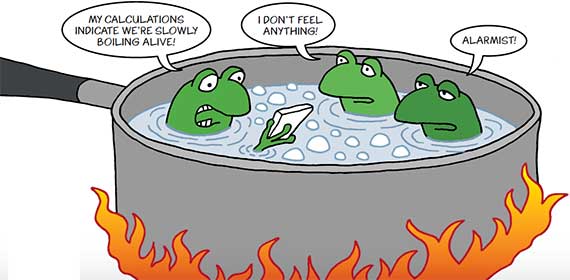
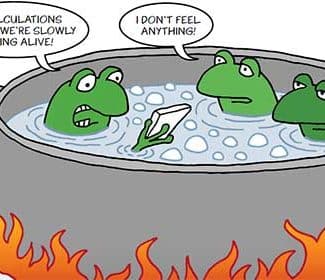
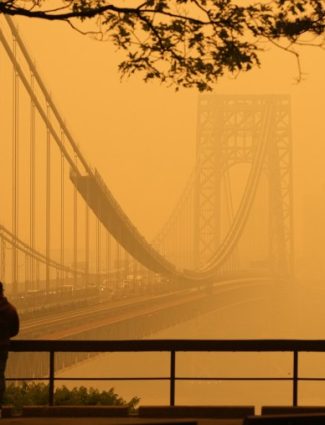
We live in the summer of global boiling! It is a pivotal time for our planet. The extreme heat waves indicate the urgent need for action against human-induced climate change. With over 2,000 high-temperature records shattered in just a month, July is on track to become the hottest month ever recorded. We must come together and take action now. The EPA is accepting feedback on its regulation to limit carbon pollution. Let us unite and make our voices heard by submitting comments to the EPA about the pollution levels in our air, water, and soil. Our collective efforts can make a significant impact on our planet’s future.


The Jan Lilien Education Fund sponsors ongoing sustainability and environmental awareness programs. Gifts made this month; I will match dollar-for-dollar. All donations are tax-deductible.

Subscribe

Contact Us

I receive a commission when you buy a book or product using a link on this page. Thank you for supporting Sharing Jan’s Love blog.


Action Alert: EPA’s Carbon Rule

I recently attended the Power for Purpose Climate Justice event hosted by Temple Sharey Tefilo-Israel and would like to share the materials and action steps. Recent reports indicate that our planet is rapidly changing, and July 3rd marked the hottest day ever recorded on Earth. I feel a sense of urgency to encourage others to take action with me.

Please join me in submitting comments to the EPA about our concerns regarding pollution levels in our air, water, and soil. 

Show thread (2)

Summer of Global Boiling Arrives

Submit Comments on EPA's Carbon Rule

The Time to Take Action is Now!

Estimated reading time: 2 minutes, 28 seconds

Please join me in submitting comments to the EPA about our concerns regarding pollution levels in our air, water, and soil. 

You can even personalize your message by sharing a personal story that can help show the White House why firm limits on climate pollution are necessary. Everyone can participate, including businesses, public leaders, community organizations, and students. 

Please submit your comments today, and we also encourage you to share this valuable information with others and urge them to do the same

The Heat Will Kill You First

The Heat Will Kill You First

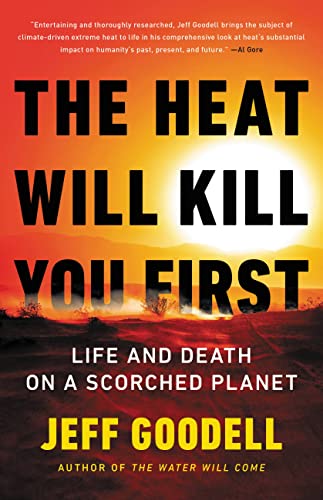
I recently started reading "The Heat Will Kill You First" by Jeff Goodell, which delves into the extreme ways our planet is already changing. The book explores how spring is arriving earlier and fall is arriving later and how this will impact our food supply and disease outbreaks. As I have stated in my Action Alert: EPA’s Carbon Rule, the time to act is now.
Read book review Get this book All books

2 comments add your comment

Share your thoughts and ideas

This site uses Akismet to reduce spam. Learn how your comment data is processed.

The Jan Lilien Education Fund!

Summer of Global Boiling Arrives
×
Summer of Global Boiling Arrives
×
The Heat Will Kill You First

Read: July 2023

Get this book

The Heat Will Kill You First

by Jeff Goodell

I recently started reading “The Heat Will Kill You First” by Jeff Goodell, which delves into the extreme ways our planet is already changing. The book explores how spring is arriving earlier and fall is arriving later and how this will impact our food supply and disease outbreaks. As I have stated in my Action Alert: EPA’s Carbon Rule, the time to act is now.

The book also predicts the consequences of summer days in cities like Chicago and Boston, reaching temperatures as high as 110°F. Goodell explains that heat waves are used only to affect the most vulnerable people, but as they become more intense and familiar, they will affect everyone.

It is becoming increasingly clear that the world is facing a new reality. In California, wildfires are now seasonal, while the Northeast is experiencing less and less snow each winter. Meanwhile, the Arctic and Antarctic ice sheets are melting alarmingly. Heat is the primary threat that is driving all other impacts of the climate crisis. As temperatures rise, it exposes weaknesses in our governments, politics, economy, and values.

The basic science is straightforward: If we stop burning fossil fuels tomorrow, the global temperature will also stop rising. However, if we wait for 50 years to stop burning them, the temperature will continue to rise, making parts of our planet uninhabitable. The responsibility to act is in our hands. The hotter it gets, the more our underlying issues will surface and expand.

Jeff Goodell has been an award-winning journalist in the field of environmental reporting for several decades. His latest book explains how extreme heat will cause significant changes in the world. The book is an excellent blend of scientific insights and on-the-ground storytelling, and Goodell explores some of the most significant questions surrounding the topic. He reveals that extreme heat is a force we have yet to comprehend fully.


The Jan Lilien Education Fund sponsors ongoing sustainability and environmental awareness programs. Gifts made this month; I will match dollar-for-dollar. All donations are tax-deductible.

Subscribe

Contact Us

I receive a commission when you buy a book or product using a link on this page. Thank you for supporting Sharing Jan’s Love blog.


×
How Democracies Die

Read: January 2021

Get this book

How Democracies Die: What History Reveals About Our Future

by Steven Levitsky and Daniel Ziblatt

How Democracies Die: What History Reveals About Our Future by Steven Levitsky and Daniel Ziblatt was on my reading list for almost a year. In late December of last year, I started reading it and was in the final chapter on January 6, 2021. Like many of us, I never in my life expected to see a day like that in our country.

This type of event is one the authors talk about in their book.

According to the overview in GoodReads,

Donald Trump’s presidency has raised a question that many of us never thought we’d be asking: Is our democracy in danger? Harvard professors Steven Levitsky and Daniel Ziblatt have spent more than twenty years studying the breakdown of democracies in Europe and Latin America, and they believe the answer is yes. Democracy no longer ends with a bang–in a revolution or military coup–but with a whimper: the slow, steady weakening of critical institutions, such as the judiciary and the press, and the gradual erosion of long-standing political norms. The good news is that there are several exit ramps on the road to authoritarianism. The bad news is that, by electing Trump, we have already passed the first one.

Drawing on decades of research and a wide range of historical and global examples, from 1930s Europe to contemporary Hungary, Turkey, and Venezuela, to the American South during Jim Crow, Levitsky and Ziblatt show how democracies die–and how ours can be saved.

Our democracy is too valuable for us to have it die. We all need to work to preserve and strengthen it. How Democracies Die is a book that everyone needs to read!

Subscribe

Contact Us

×
Three Summers

Read: February 2025

Get this book

Three Summers: A Novel

by Margarita Liberaki

Today, I began reading Margarita Liberaki‘s Three Summers, translated by Karen Van Dyck. This edition features a detailed introduction by Ms. Van Dyck, in which she shares her experiences meeting Ms. Liberaki and collaborating with her on the translation. The original novel, written in Greek, was titled The Straw Hats, but Ms. Van Dyck felt that this title would not resonate with foreign readers similarly.

Three Summers is the story of three sisters who grew up in the countryside near Athens before the outbreak of the Second World War. The sisters live in a large, old house surrounded by a beautiful garden. The oldest sister, Maria, is adventurous and eager to settle down and start her own family. The middle sister, Infanta, is gorgeous but emotionally distant. Katerina, the narrator, and the youngest sister is dreamy and rebellious.

Throughout three summers, the sisters share and keep secrets, fall in and out of love, and try to understand their parents and other adult figures. They also observe the peculiar behaviors of friends and neighbors while worrying about and discovering their identities. Karen Van Dyck’s translation beautifully captures the light and warmth of this modern Greek classic.

Margarita Liberaki (1919-2001) was born in Athens and raised by her grandparents, who owned the Fexis bookstore and publishing house. In addition to her novel Three Summers, she authored The Other Alexander (1950) and The Mystery (1976). She also wrote several plays, including Candaules’ Wife (1955) and The Danaïds (1956), part of a cycle she called Mythical Theater. Furthermore, she contributed screenplays, such as Jules Dassin’s Phaedra (1962) and Diaspora (1999), which focused on Greek intellectuals in exile in Paris during the junta. Her novel Three Summers is now a standard part of public education in Greece and Cyprus and was adapted into a television miniseries in 1995.

Karen Van Dyck is the Kimon A. Doukas Professor of Modern Greek Literature at Columbia University. Her research focuses on modern Greek literature, diaspora literature, gender studies, and translation. She has edited or co-edited several poetry anthologies, including A Century of Greek Poetry (2004), The Greek Poets: Homer to the Present (2010), and Austerity Measures: The New Greek Poetry (2017) for NYRB Poets. Additionally, her translations have appeared in Brooklyn Rail, Asymptote, and The Baffler.


When you purchase a book through one of my links, I earn a small commission that helps support my passion for reading. This contribution allows me to buy even more books to share with you, creating an incredible cycle of discovering great reads together! Your support truly makes a difference!


×
Flight: A Novel

Read: January 2023

Get this book

Flight: A Novel

by Lynn Steger Strong

Flight: A Novel by Lynn Steger Strong is a novel about family, ambition, precarity, art, and desire, forming a decisive next step from a brilliant chronicler of our time. The book has been on my to-read list for a few months. A New Yorker Best Books of 2022, it seemed like a good start on my 2023 Goodreads Reading challenge. Flight is the first book I read in 2023. Last year I read seventy-four books, and each helped me with my grief journey.

I recommend this novel as it is a page-turner highlighting the difficulty families experience after a loss. As a culture, we are experiencing declining social connections, including within families. Flight is an excellent effort to define the crisis.

Although several possible resolutions to the conflict became clear by the middle of the novel, Ms. Strong told the story so that until the end, it was unclear how or if it would be resolved. In addition, enough unresolved issues remained so that.

The Goodreads summary provides an overview,

It’s December twenty-second and siblings Henry, Kate, and Martin have converged with their spouses on Henry’s house in upstate New York. This is the first Christmas the siblings are without their mother, the first not at their mother’s Florida house. Over the course of the next three days, old resentments and instabilities arise as the siblings, with a gaggle of children afoot, attempt to perform familiar rituals, while also trying to decide what to do with their mother’s house, their sole inheritance. As tensions rise, the whole group is forced to come together unexpectedly when a local mother and daughter need help.

With the urgency and artfulness that cemented her previous novel Want as “a defining novel of our age” (Vulture), Strong once again turns her attention to the structural and systemic failings that are haunting Americans, but also to the ways in which family, friends, and strangers can support each other through the gaps


The Jan Lilien Education Fund sponsors ongoing sustainability and environmental awareness programs. Gifts made this month; I will match dollar-for-dollar. All donations are tax-deductible.

Subscribe

Contact Us

I receive a commission when you buy a book or product using a link on this page. Thank you for supporting Sharing Jan’s Love blog.


×
All the Sinners Bleed- A Novel

Read: June 2023

Get this book

All the Sinners Bleed: A Novel

by S. A. Cosby

Today, I delved into the gripping pages of “All the Sinners Bleed” by S. A. Cosby. This enthralling novel centers around Titus Crown, the first African American sheriff in Charon County, Virginia. Despite the county’s reputation for traditional customs such as moonshine, cornbread, and honeysuckle, Titus, with his FBI expertise, knows that the peace won’t last forever.

On the first anniversary of Titus’s election, a schoolteacher is murdered by an ex-student, and Titus’s deputies take down the perpetrator. As Titus delves deeper into the case, he uncovers a web of horrendous crimes and finds a serial killer lurking in plain sight, haunting Charon’s dirt roads and woodland clearings.

Titus is determined to solve the case, despite its connection to a nearby church, and he harbors a personal secret that haunts him. However, he faces opposition from a far-right group that wants to hold a parade to honor the town’s Confederate past while he tries to solve the issue.

Despite the challenges, Titus remains resolute in his love for Charon and his commitment to finding justice. The collision of religion and hatred cannot deter him from his duty.


S. A. Cosby is a New York Times bestselling writer from southeastern Virginia. He is the author of All the Sinners Bleed, which was on more than forty Best of the Year lists, including Barack Obama’s, as well as Edgar Award finalist Razorblade Tears and Los Angeles Times Book Prize winner Blacktop Wasteland. He has also won the Anthony Award, ITW Thriller Award, Barry Award, Macavity Award, BCALA Award, and Audie Award. He has been longlisted for the ALA Andrew Carnegie Medal for Excellence.


When you purchase a book through one of my links, I earn a small commission that helps support my passion for reading. This contribution allows me to buy even more books to share with you, creating an incredible cycle of discovering great reads together! Your support truly makes a difference!

Enjoy a limited-time offer of 20% off your next book purchase at Bookshop.org!


×
Other People's Fun

Read: November 2025

Get this book

Other People’s Fun

by Harriet Lane

Other People’s Fun” by Harriet Lane is an engaging, thought-provoking novel that explores modern life, including the small lies we tell our neighbors, friends, families, and even ourselves, as well as the distorted reality of social media. Known for her signature blend of creeping unease and keen observation, Lane’s page-turner delves into our deep desire for others to truly see us as we are—and the consequences that arise when that happens.

“I look. I can’t stop looking. That’s the deal, isn’t it? We all know that’s how it works. If someone wants to be seen–and oh, how they want to be seen–then someone has to watch.”

Ruth is alone, unnoticed, and at a loss: her marriage has ended, her daughter is leaving home, and her job is leading nowhere.

But luckily, Sookie is back in her life, the vivid, self-assured Sookie who never spared time for Ruth when they were teenagers, but who now seems to want to be friends. But as Ruth becomes entangled in Sookie’s life, she realizes that everything is not as Instagrammable as Sookie would have her believe. As the truth about Sookie becomes clearer, so too does the choice Ruth will have to make.


Harriet Lane has experience as an editor and staff writer for Tatler and the Observer. She has contributed articles to The Guardian, Vogue, and The New York Times. Additionally, she is the author of two novels, Alys, Always, and Her. Lane resides in North London.


Discover your next favorite book and dive into a world of curated, exciting reads by purchasing through my links. You’ll have access to a diverse selection of books that I’ve personally vetted to ensure quality and enjoyment. Additionally, by supporting these selections, you’ll help me continue to provide you with more personalized recommendations. I earn a small commission from your purchase, which allows me to buy and share even more books with you. Your support truly makes a difference!


×
Palaver

Read: November 2025

Get this book

Palaver: A Novel

by Bryan Washington

Written with subtle humor and warmth, Bryan Washington‘s Palaver weaves together the past and present across Houston, Jamaica, and Japan. This intricate story explores themes of family, love, and the beauty of coexistence. A finalist for the National Book Award for Fiction, this novel is a life-affirming tale about family, healing, and the ways we learn to love, showcasing the talent of the award-winning Bryan Washington.

In Tokyo, a young man works as an English tutor and spends his nights out with friends at a gay bar. He is involved in a sexual relationship with a married man. Although he has formed a chosen family in Japan, he and his mother, who resides in Houston, are estranged from each other. Her preference for his troubled, homophobic brother, Chris, ultimately pushed him to leave home. Then, in the weeks leading up to Christmas—ten years after they last saw each other—his mother arrives uninvited at his doorstep.

With only the son’s cat, Taro, to mediate, the two clash immediately. The mother struggles with memories of her youth in Jamaica and her complicated relationship with her brother, as she attempts to reconcile her good intentions with past mistakes. Meanwhile, the son grapples with the challenge of forgiveness. However, as life takes unexpected turns—leading the mother to form a tentative friendship with a local bistro owner and the son to connect with a new patron at the bar cautiously—they begin to see each other more clearly.

Through shared meals, conversations, and an eventful trip to Nara, both mother and son try to determine where “home” truly is and whether they can find it in one another.


Bryan Washington is the author of the story collection Lot and the novels Memorial and Family Meal. He is a National Book Award 5 Under 35 Honoree. He has won several prestigious awards, including the Dylan Thomas Prize, the NYPL Young Lions Fiction Award, the Ernest J. Gaines Award, two Lambda Literary Awards, and an O. Henry Prize.

Washington has also been a finalist for various awards, such as the National Book Critics Circle Award for Fiction, the Aspen Words Literary Prize, the Center for Fiction First Novel Prize, the Andrew Carnegie Medal of Excellence, and the James Tait Black Prize. The New York Times referred to his writing as among the 25 Most Influential Works of Postwar Queer Literature, and he was a columnist for the New York Times Magazine.

As a frequent contributor to The New Yorker and The New York Times, his writing has appeared in other notable publications, including Granta, The New York Times Magazine, New York, Time, GQ, and Esquire, among others. He lives in Tokyo.


Discover your next favorite book and dive into a world of curated, exciting reads by purchasing through my links. You’ll have access to a diverse selection of books that I’ve personally vetted to ensure quality and enjoyment. Additionally, by supporting these selections, you’ll help me continue to provide you with more personalized recommendations. I earn a small commission from your purchase, which allows me to buy and share even more books with you. Your support truly makes a difference!


×