

Walking is Vital to My Conscientious Resilience!

Embracing the Future, One Step at a Time!

My Conscientious Journey of Daily Resilience!

Estimated reading time: 2 minutes, 1 second

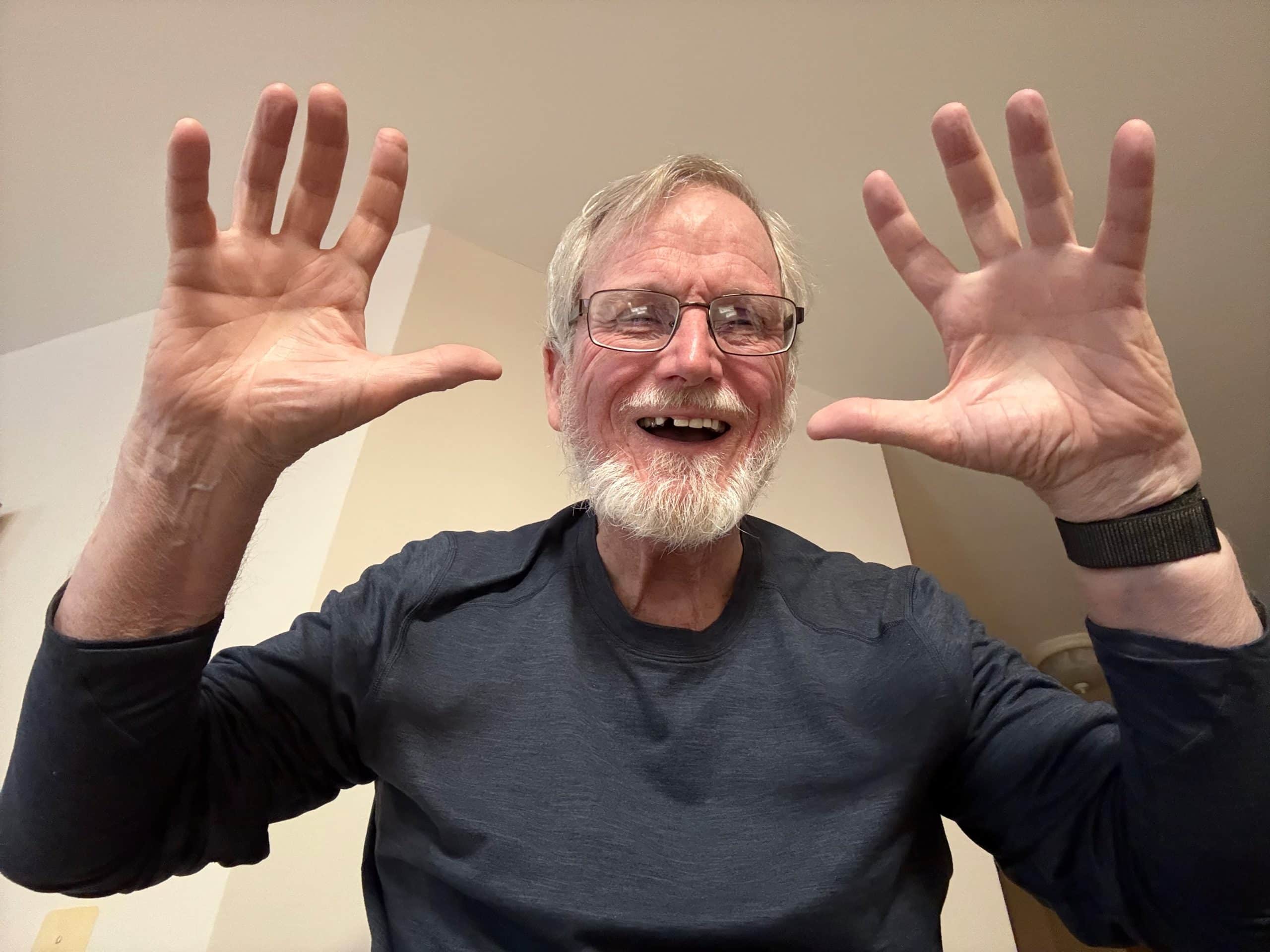
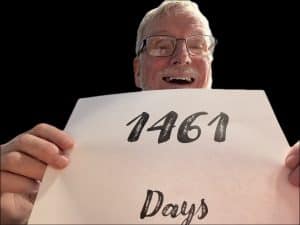
Walking has always been more than just a way to get from one place to another; it’s a profoundly personal journey. Yesterday, May 5, 2025, marked a significant milestone—I celebrated 1,461 consecutive days of walking! Reaching this four-year mark has been nothing short of transformative. It all began the day after my wife’s funeral. What started as a simple decision has blossomed into a conscientious journey of daily resilience.
Embracing the Future, One Step at a Time!The morning after the funeral, I felt like a lost puppy, unsure of how or if I could continue living. I have lost weight, meditated, and made new friends with each step. However, this commitment to walking wasn’t just about weight loss, letting my mind wander, or meeting people. Despite many challenges, it was about finding the strength to live after loss. Walking became my healing journey, leading me to hope and reassurance.

In the first few weeks, my motivation became clear when I realized that Adonai had blessed us with three incredible gifts: ears to listen to, arms to embrace, and feet to walk into the future. These gifts, especially the ability to walk, have taken on profound significance in my life. I have learned to listen before speaking—not just to others but also to my thoughts and feelings—and to pay attention to the world around me. This practice of active listening has allowed me to be more receptive to new ideas and ways of living. I have embraced others more openly and sincerely. With my feet, I have discovered a future I never imagined, filled with new friendships, a healthier body, and a more mindful and purposeful life.

In The Amen Effect: Ancient Wisdom to Heal Our Hearts and Mend Our Broken World, Rabbi Sharon Brous writes, “Knowing that we’re not alone can both heighten our joy and help us endure unimaginable hardship.” Reading her book and walking daily, I have learned to grieve and live, accepting that life encompasses joy and sadness. Now, I live a life filled with meaning and purpose, allowing me to engage fully with life.

Today, at the beginning of my fifth year, I walked. As I took those first steps, I felt a surge of optimism and hope for the future. Will I still be walking in a week, a month, or a year? I plan to continue walking, but I now stand on a solid foundation and am confident I can embrace whatever challenges lie ahead.

Walking is Vital to My Conscientious Resilience!

Walking is essential to my conscientious resilience. After 1,400 days of walking, each step I take honors my wife. During these walks, I allow my mind to wander, discovering the strength and resilience to choose a life filled with meaning and purpose.

Share your thoughts and ideas

This site uses Akismet to reduce spam. Learn how your comment data is processed.

The Jan Lilien Education Fund!

Walking is Vital to My Conscientious Resilience!
×
Prayer to the Invisible

Read: February 2026

Get this book

Prayer to the Invisible

by Diane Frank

Diane Frank, a poet and author of “Prayer to the Invisible,” was a childhood friend of my wife, Jan, in Springfield, NJ. Both were gifted and talented young women who excelled as students and were also musicians, dreamers, and diarists. I met Diane at a poetry reading in NYC, where Jan insisted that we meet her brilliant friend. Diane often referred to Jan as her “Angel.”

In her luminous 9th collection, Prayer to the Invisible, poet Diane Frank fully unmasks her wild and loving imagination. With a river-deep range in subject matter and voice, Frank guides us through terrains both difficult and joyous – her Jewish mother’s love of Christmas carols, a grace-filled visitation from a victim of ethnic violence, a ballerina-in-disguise on public transit, and many transcendent visions from dreams. According to Prartho Sereno, Poet Laureate Emerita of Marin County, California. Author of Starfall in the Temple, “Diane Frank is the wise and wonder-struck, barefoot-dancing companion we all long for in these precarious times.”

Each poem was thought-provoking and a blessing for these uncertain times. The title poem, “Prayer to the Invisible,” was written in memory of Dr. Jerry Rabinowitz, who died during the attack at the Tree of Life Synagogue in Pittsburgh on October 27, 2018. He was a fellow alumnus of Jonathan Dayton Regional High School, as were Diane and my wife. The poem is a moving tribute to Dr. Rabinowitz as its words brought tears to my eyes.

The poem is a moving tribute that brought tears to my eyes for Dr. Rabinowitz, and one stanza echoed how I felt when my wife died.

I carry your spirit on my shoulders
as I walk into the synagogue
where we played music for you,
as I follow an eclipse north
as I walk into a dream.
I write your name in the sky after midnight
in the Leonid meteor showers,
in the penumbra of an eclipse
of the wolf moon.


Diane Frank is a poet and musician, author of nine books of poems, three novels, and a photo memoir of her 400-mile trek in the Nepal Himalayas. Listening to the Enigma Variations: New and Selected Poems won the 2022 Next Generation Indie Book Award for Poetry. She is the editor of three bestselling anthologies: River of Earth and Sky: Poems for the Twenty-First Century; Fog and Light: San Francisco through the Eyes of the Poets Who Live Here; and Pandemic Puzzle Poems. Her first novel, Blackberries in the Dream House, was nominated for the Pulitzer Prize.


Discover your next favorite book and dive into a world of curated, exciting reads by purchasing through my links. You’ll have access to a diverse selection of books I’ve personally vetted for quality and enjoyment. Additionally, by supporting these selections, you’ll help me continue to provide you with more personalized recommendations. I earn a small commission from your purchase, which allows me to buy and share even more books with you. Your support truly makes a difference!


×
Table for Two: Fictions

Read: April 2024

Get this book

Table for Two: Fictions

by Amor Towles

Today, I began reading Amor Towles‘s Table for Two: Fictions.” As a fan of his previous work, “A Gentleman in Moscow,” I was excited to delve into some of his shorter fiction. The book contains six stories from New York City and a novella from Golden Age Hollywood. Table for Two is another captivating addition to Towles’s collection of stylish and transporting fiction written with his signature wit, humor, and sophistication.

The New York stories, set primarily in the year 2000, explore the profound consequences that can result from fleeting encounters and the intricate dynamics of compromise that underpin modern marriages. These narratives are sure to evoke strong emotions and leave a lasting impression.

In the novel “Rules of Civility,” the resilient Evelyn Ross departs from New York City in September 1938, intending to return to her home in Indiana. However, as her train reaches Chicago, where her parents eagerly await her, she spontaneously decides to extend her journey to Los Angeles. “Eve in Hollywood,” narrated from seven different perspectives, reveals how Eve forges a new path for herself and others in a gripping noirish tale that traverses the movie sets, bungalows, and dive bars of Los Angeles.

×
The Singing Word

Read: September 2025

Get this book

The Singing Word

by Walt Hunter

The Singing Word: 168 Years of Atlantic Poetry, edited by Walt Hunter, celebrates the people, land, and spirit of America. This remarkable collection showcases a wide range of contemporary and historical poetry from the 168-year archive of The Atlantic magazine. Since its first issue in 1857, the poetry published in The Atlantic has drawn attention to the nation’s ongoing journey of self-discovery.

The magazine’s verse has featured odes to American leaders and landscapes, laments for the dead, and calls for change, appealing to the enduring ideals of Atlantic readers.

This one-of-a-kind collection selects poems of rousing optimism, clear-eyed realism, and moving lyricism—poems infused with the language of America’s songs, myths, and history, from the Civil War up through the present in three rich parts: National Anthems, Natural Lines, and Personal Mythologies.

Curated by The Atlantic’s Poetry Editor, this anthology features both world-famous poets—from Longfellow to Limón, including Robert Frost, W. S. Merwin, Sylvia Plath, and Adrienne Rich—as well as poets whose work has never before been published outside of the magazine.

Offering readers an essential understanding of American canon and the evolving nation, its poets have yearned to capture—the poetry of The Atlantic is the poetry of America.


Walt Hunter is a professor of twentieth- and twenty-first-century literature and chair of the English department at Case Western Reserve University. He is also the fiction and poetry editor for The Atlantic.


Discover your next favorite book and dive into a world of curated, exciting reads by purchasing through my links. You’ll have access to a diverse selection of books that I’ve personally vetted to ensure quality and enjoyment. Additionally, by supporting these selections, you’ll help me continue to provide you with more personalized recommendations. I earn a small commission from your purchase, which allows me to buy and share even more books with you. Your support truly makes a difference!


×
Corey Fah Does Social Mobility

Read: February 2024

Get this book

Corey Fah Does Social Mobility

by Isabel Waidner

Today, I began reading “Corey Fah Does Social Mobility: A Novel” by Isabel Waidner. The book is about Corey Fah, a writer whose novel has just won the Fictionalization of Social Evils prize. Despite this achievement, the trophy and funds with the award still need to be in reach. The novel celebrates radical queer survival and challenges false notions of success.

Corey, their partner Drew, and their pet spider, Bambi Pavok, embark on a quest to find an elusive trophy with neon-beige color and UFO-like qualities. This journey takes them back to their childhood in the forest and includes a stint on a reality TV show. While facing the horrors of wormholes and time loops, Corey discovers the difference between a prize and a gift in a complex way.

Following the Goldsmiths Prize–winning Sterling Karat Gold, Isabel Waidner’s bold and buoyant new novel is about coming into one’s own, the labor of love, the tendency of history to repeat itself, and what ensues when a large amount of cultural capital is suddenly deposited in a place it has never been before.

×
Booth

Read: January 2023

Get this book

Booth: A Novel

by Karen Joy Fowler

Booth by Karen Joy Fowler was on my to-read list for several months. Booth is an epic and intimate novel about the family behind one of the most infamous figures in American history: John Wilkes Booth. I have always been fascinated by history, especially the Civil War. Booth is a startling portrait of a country in the throes of change and a vivid exploration of the ties that make and break a family. It is the second book I have read this year.

Ms. Fowler struggled with how to write this novel without focusing on the cruelest member of the Booth family. She succeeded, but I sometimes felt confused about the type of book I was reading. Was it historical fiction or a textbook?

In the afterword, she admits that there is more of the story in the children of the siblings of John Wilkes Booth. I wish I knew more about that generation and how they responded to the notoriety. A family tree would have helped as there are many family members.

I recommend Booth as history is a dynamic lesson we must keep studying.

The Goodreads summary provides an overview,

In 1822, a secret family moved into a secret cabin some thirty miles northeast of Baltimore to farm, hide, and bear ten children over the next sixteen years. Junius Booth–breadwinner, celebrated Shakespearean actor, and master of the house in more ways than one–is at once a mesmerizing talent and a man of terrifying instability. One by one, the children arrive, as year by year, the country draws frighteningly closer to the boiling point of secession and civil war.

As the tenor of the world shifts, the Booths emerge from their hidden lives to cement their place as one of the country’s leading theatrical families. But behind the curtains of the many stages they have graced, multiple scandals, family triumphs, and criminal disasters begin to take their toll, and the solemn siblings of John Wilkes Booth are left to reckon with the truth behind the destructively specious promise of an early prophecy.


The Jan Lilien Education Fund sponsors ongoing sustainability and environmental awareness programs. Gifts made this month; I will match dollar-for-dollar. All donations are tax-deductible.

Subscribe

Contact Us

I receive a commission when you buy a book or product using a link on this page. Thank you for supporting Sharing Jan’s Love blog.


×
Interpreter of Maladies

Read: June 2022

Get this book

Interpreter of Maladies

by Jhumpa Lahiri

Interpreter of Maladies by Jhumpa Lahiri is an incredible book. Each short story is a page-turner that I will re-read many times. As Ms. Lahiri writes, “The question of identity is always a difficult one, but especially so for those who are culturally displaced, as immigrants are, or those who grow up in two worlds simultaneously, as is the case for their children.”

Since 2000, Interpreter of Maladies has been on my reading list. For what is a writer, if not an interpreter of maladies? Perhaps, I waited until now so that I would have grief to help guide me thru this collection of short stories. I highly recommend Interpreter of Maladies.

The Goodreads summary provides a concise overview.

Navigating between the Indian traditions they’ve inherited and the baffling new world, the characters in Jhumpa Lahiri’s elegant, touching stories seek love beyond the barriers of culture and generations. In “A Temporary Matter,” published in The New Yorker, a young Indian-American couple faces the heartbreak of a stillborn birth. At the same time, their Boston neighborhood copes with a nightly blackout. In the title story, an interpreter guides an American family through the India of their ancestors and hears an astonishing confession. Lahiri writes with deft cultural insight reminiscent of Anita Desai and a nuanced depth that recalls Mavis Gallant.


Subscribe

Contact Us

I receive a commission when you buy a book or product using a link on this page. Thank you for supporting Sharing Jan’s Love blog.

×