
We the Animals

Estimated reading time: 1 minute, 8 seconds

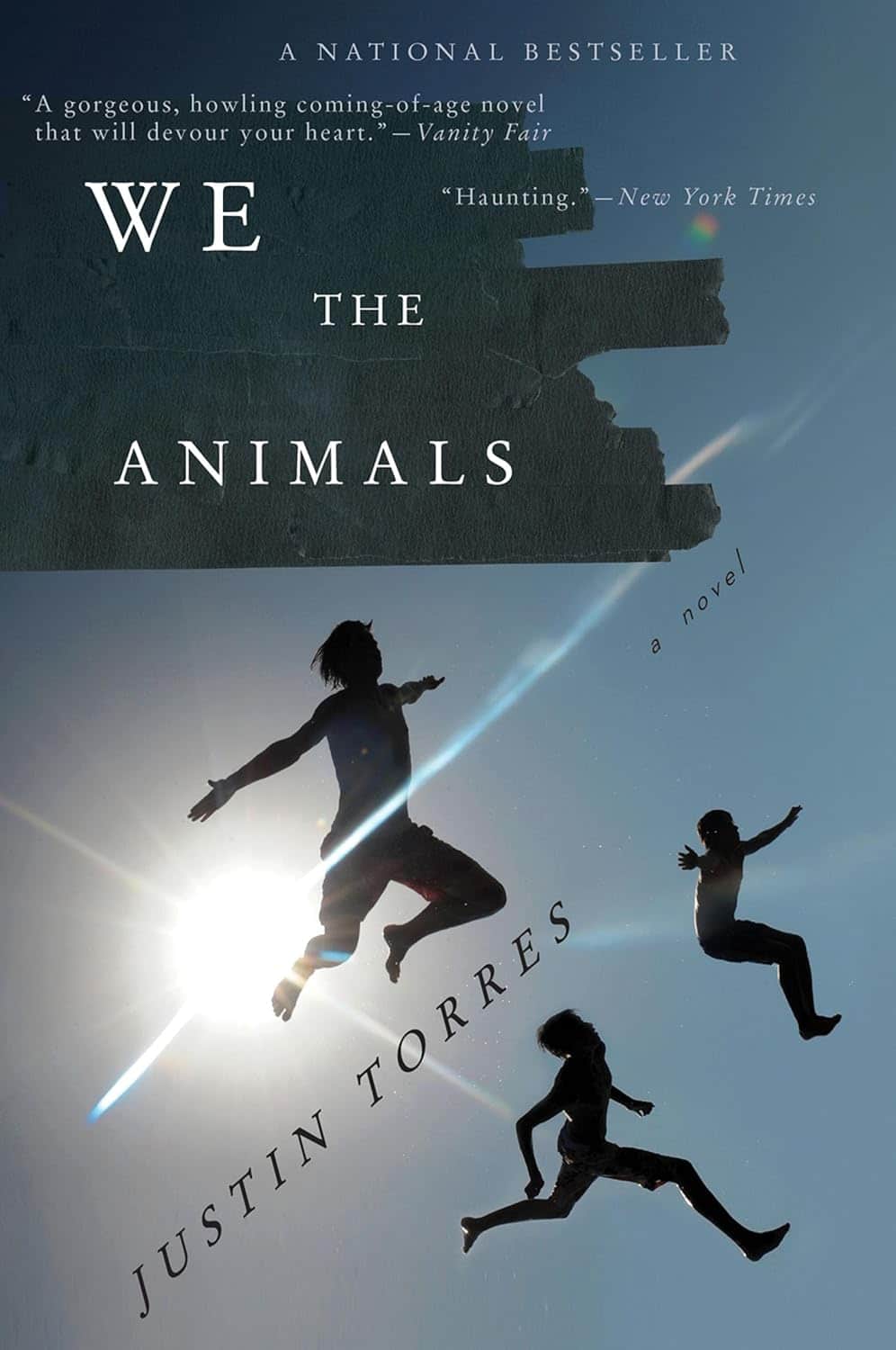
Today, I embarked on the literary journey of We the Animals by Justin Torres. This novel, listed among the New York Times’ 100 Best Books of the Century, is a groundbreaking work of art. The author of Blackouts immerses us in the tumultuous heart of a family, the intense bonds of three brothers, and the mythic impact of this fierce love on the individuals we are destined to become.

The narrative unfolds as three brothers navigate their way through childhood, a journey filled with emotional highs and lows, from playful acts like smashing tomatoes on each other to finding solace in each other’s company during their parents’ conflicts and even tiptoeing around the house as their mother rests after her graveyard shift. Paps and Ma, hailing from Brooklyn—he’s Puerto Rican, she’s white—share a profound and challenging love, shaping and reshaping the family numerous times. Life in this family is intense and all-consuming, filled with disorder, heartache, and the ecstasy of belonging to each other.

From the intense familial unity, a child feels to the profound alienation he endures as he begins to see the world, this beautiful novel doesn’t just tell a coming-of-age story; it reinvents it in a sly and punch-in-the-stomach powerful way. It delves into themes such as love, the meaning of family, and heartache, adding another layer of depth and complexity to the story.

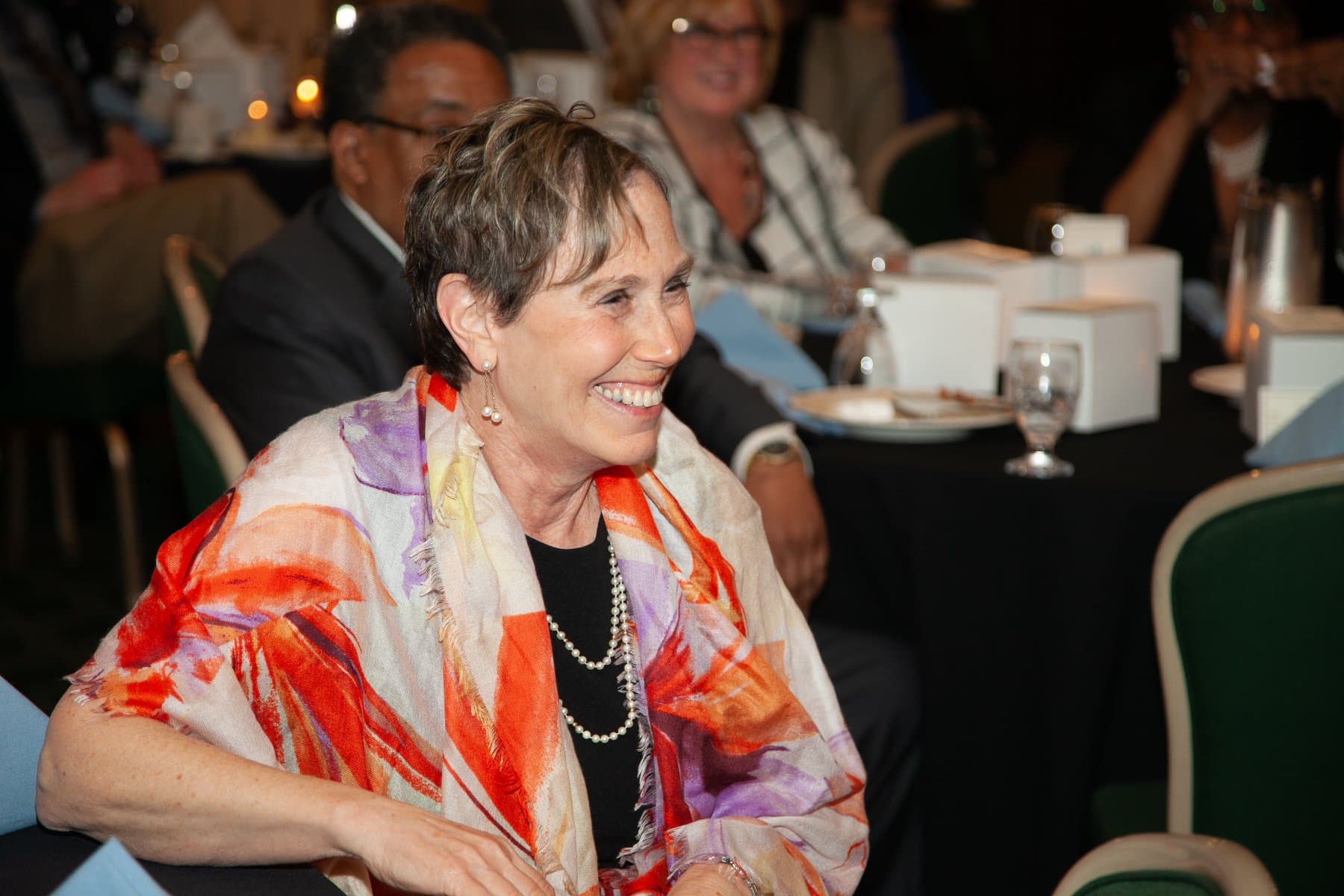
The Jan Lilien Education Fund!

The Brief Wondrous Life of Oscar Wao

Read: August 2024

Get this book

The Brief Wondrous Life of Oscar Wao

by Junot Diaz

Today, I started reading Junot Diaz‘s The Brief Wondrous Life of Oscar Wao, one of The New York Times’ 100 Best Books of the Century. The book also won a Pulitzer Prize. Oscar is a sweet but disastrously overweight ghetto nerd who—from the New Jersey home he shares with his old-world mother and rebellious sister—dreams of becoming the Dominican J.R.R. Tolkien and, most of all, finding love.

But Oscar may never get what he wants. Blame the fukú—a curse that has haunted Oscar’s family for generations, following them on their epic journey from Santo Domingo to the USA. Encapsulating Dominican-American history, The Brief Wondrous Life of Oscar Wao opens our eyes to an astonishing vision of the contemporary American experience. It explores the endless human capacity to persevere—and risk it all—in the name of love.

×
The Rest Is Memory: A Novel

Read: January 2025

Get this book

The Rest Is Memory: A Novel

by Lily Tuck

Today, I dove into “The Rest Is Memory: A Novel” by Lily Tuck, and it’s already leaving a powerful impression. This poignant tale follows a young Catholic girl’s harrowing journey to Auschwitz, woven in a captivating Rashomon-style narrative showcasing Tuck’s brilliance as a storyteller. Esquire has rightly placed it on their list of Best Books for Fall 2024, and I can see why.

In Tuck‘s skilled hands, “The Rest Is Memory” transforms into an unforgettable piece of historical reclamation, breathing life into an innocent soul who has long been remembered only through a haunting triptych of photographs. It’s a journey that promises to linger in my thoughts long after I’ve turned the last page.

In this mesmerizing novel by Lily Tuck, we first glimpse fourteen-year-old Czeslawa riding on the back of a boy’s motorcycle. Tuck imagines Czeslawa’s upbringing in a small Polish village before her world imploded in late 1942. Stripped of her modest belongings, she arrives at Auschwitz shorn and bearing the tattoo number 26947. Shortly after, she is photographed. Three months later, she is dead.

How did this happen to an ordinary Polish citizen? This is the question Tuck grapples with in this haunting narrative, which frames Czeslawa’s story within the tragic context of the six million Poles who perished during the German occupation. A decade before writing The Rest Is Memory“, Tuck read an obituary of the photographer Wilhelm Brasse, who took over 40,000 pictures of Auschwitz prisoners—including three of Czeslawa Kwoka, a Catholic girl from rural southeastern Poland. Tuck cut out these photos and kept them, determined to learn more about Czeslawa. However, she could only gather the barest facts: the village she came from, the transport she was on, that she was accompanied by her mother and neighbors, her tattoo number, and the date of her death. Tuck crafts a remarkable kaleidoscope of imagination from this scant evidence, something only our greatest novelists can achieve.

Susanna Moore described the novel as “Beautifully written, all the while instilling a sense of horror.” Tuck’s language swirls around the reader, yet no word is out of place. The subtly rotating images tumble forth, accelerating as we learn about Czeslawa’s tragic time in Auschwitz, as well as the lives of real individuals, including the brutal Commandant Rudolf Höss, his unconscionable wife Hedwig, psychiatrist and child rescuer Janusz Korczak, and the sharp Polish short story writer Tadeusz Borowski. Although we know Czeslawa’s fate, we must keep turning the pages, thoroughly captivated by Tuck’s nearly otherworldly prose.


When you purchase a book through one of my links, I earn a small commission that helps support my passion for reading. This contribution allows me to buy even more books to share with you, creating an incredible cycle of discovering great reads together! Your support truly makes a difference!


×
The South

Read: August 2025

Get this book

The South: A Novel

by Tash Aw

Tash Aw‘s novel, The South, longlisted for the 2025 Booker Prize, is both expansive and concise, capturing the dynamics of a family navigating change and desire. It explores the intersection of public and private lives with remarkable grace and beauty. This intimate and radiant story follows the deepening relationship between two boys throughout a summer, delving into themes of family, desire, and the legacies we inherit.

When his grandfather passes away, Jay travels south with his family to the property they have inherited—a once-thriving farm that has now fallen into disrepair. The trees are diseased, and the fields have been dry due to months of drought.

Jay’s father, Jack, sends him out to work the land, or what remains of it. During these hot, oppressive days, Jay finds himself increasingly drawn to Chuan, the son of the farm’s manager. The boys are different in almost every way, except for one crucial connection.

As they work in the fields and venture into town, the tension between the boys intensifies. Meanwhile, within the house, the other family members begin to confront their secrets and regrets. Jack, a professor at a struggling local college, reflects on his failures, many of which may have started when he married his student, Sui Ching. Sui Ching strives to keep the family together, though she, too, contemplates what her life could have been. Fong, the farm manager, chooses to ignore the reality of the situation—about Chuan, the deteriorating land, and the global forces that threaten to render their entire way of life obsolete.


Tash Aw is the author of four novels, including We, the Survivors, as well as a memoir about a Chinese-Malaysian family titled Strangers on a Pier. These remarkable works earned their place as finalists for the Los Angeles Times Book Prize, showcasing the incredible talent behind them!

The author has also been honored with several esteemed awards, including the Whitbread, Commonwealth, and O. Henry Awards. Plus, being longlisted for the MAN Booker Prize twice speaks volumes about his skill. It’s exciting to see his fiction translated into 23 languages, sharing his stories with the world!


When you purchase a book through one of my links, I earn a small commission that helps support my passion for reading. This contribution allows me to buy even more books to share with you, creating an incredible cycle of discovering great reads together! Your support truly makes a difference!

Enjoy a limited-time offer of 20% off your next book purchase at Bookshop.org!


×
The Time Traveler's Wife

Read: May 2021

Get this book

The Time Traveler’s Wife

by Audrey Niffenegger

My wife had asked me to read – The Time Traveler’s Wife by Audrey Niffenegger – on several occasions. When we first met, we both liked to read fiction and non-fiction. As we aged, I focused almost exclusively on non-fiction, and she focused on fiction. Since her passing, I have started reading more of both genres. We could now have a book club!

Both Jan and I have always enjoyed books and movies about time travel. If I could travel back in time, there are tens of thousands of days I would love to spend with her again. But time travel is not possible. Or is it? Her spirit returns to me whenever I am paralyzed and encourages me to dust myself off and keep going. Maybe one day we will time travel together!

I enjoyed reading this book, even if it was difficult to keep track of the periods. It is very much the type of time-traveling book that both of us would have liked to read, and it has helped me to imagine a world in which Jan and I will meet again.

But what if it is not time travel as imagined by H. G. Wells. As the Hasidic story foretold, God split our souls at birth and placed one part of my soul in her body and placed the rest into my body. Very few people are lucky enough to find the person who has the other half of their soul, and Jan and I did.

When my life ends, what if God takes a portion of our two souls and places them into new bodies. Each of their souls would include a part of each of us. Those two new people would have to find each other in the future to connect as we did. They might not see each other and forever hunger for true love. Whatever happened, they would not know that they once were very much in love.

Subscribe

Contact Us

×
1944: FDR and the Year That Changed History

Read: October 2019

Get this book

1944: FDR and the Year That Changed History

by Jay Winik

1944: FDR and the Year That Changed History by Jay Winik is a book that I had put off reading several times. When I finally did read it, I could not remember why I had not read it sooner. Had I gone to graduate school and become a professor, it might have been the type of book I might write, and I certainly would have had on my list of books for my classes. 

As The NY Times wrote, “Jay Winik brings to life in gripping detail the year 1944, which determined the outcome of World War II and put more pressure than any other on an ailing yet determined President Roosevelt.” Reading a book about events five years before my birth that transformed the world I live in becomes an easy page-turner.

It was not inevitable that World War II would end as it did or that it would even end well. Nineteen forty-four was a year that could have stymied the Allies and cemented Hitler’s waning power. Instead it saved those democracies – but with a fateful cost. Now, in a superbly told story, Jay Winik, the acclaimed author of April 1865 and The Great Upheaval, captures the epic images and extraordinary history as never before.

1944 witnessed a series of titanic events: FDR at the pinnacle of his wartime leadership as well as his reelection, the planning of Operation Overlord with Churchill and Stalin, the unprecedented D-Day invasion, the liberation of Paris, and the horrific Battle of the Bulge, and the tumultuous conferences that finally shaped the coming peace. But on the way, millions of more lives were still at stake as President Roosevelt was exposed to mounting evidence of the most grotesque crime in history, the Final Solution. Just as the Allies were landing in Normandy, the Nazis were accelerating the killing of millions of European Jews.

Winik shows how escalating pressures fell on an all but dying Roosevelt, whose rapidly deteriorating health was a closely guarded secret. Here then, as with D-Day, was a momentous decision for the president. Was winning the war the best way to rescue the Jews? Was a rescue even possible? Or would it get in the way of defeating Hitler? In a year when even the most audacious undertakings were within the world’s reach, including the liberation of Europe, one challenge – saving Europe’s Jews – seemed to remain beyond Roosevelt’s grasp.

I recommend this book.

Subscribe

Contact Us

×
Nobody Gets Out Alive- Stories

Read: February 2023

Get this book

Nobody Gets Out Alive: Stories

by Leigh Newman

Nobody Gets Out Alive: Stories by Leigh Newman, set in Newman’s home state of Alaska and an exciting virtuosic story collection about women navigating the wilds of a male-dominated society. Nobody Gets Out Alive is a collection of dazzling, courageous stories about women struggling to survive, not just grizzly bears and charging moose but the raw, exhausting legacy of their marriages and families.

There are moments when characters in a story leap off the page and become, for a few moments, our soul mates. Ms. Newman, in each of these memorable stories, engages so fully that each character becomes so alive that I wanted to know more about their lives.

The stores span both the recent past and the founding of Anchorage. I found all of them to be stories I would happily read again. The recent stories highlight the common desire for a freer, more inclusive world for women. A woman forced to sell her home or a new bride testing limits on her return home resonates as themes of the modern world.

The final story is set in 1915 in a railroad camp. The story highlights the founding of Anchorage. As one who likes historical fiction, I was so engaged that I could not take a break. I was not expecting the outspoken heiress would stage an elaborate theatrical to seduce the wife of her husband’s employer.

I may never visit Alaska at my age, but I now know enough to feel I have lived in Seward’s Folly.

I decided to read this book after reading Ms. Newman wrote a review of The Faraway World. Ms. Newman is a skilled writer, and I highly recommend this collection and look forward to reading more of her stories in the future.

The Goodreads summary provides an overview,

In “Howl Palace”—winner of The Paris Review’s Terry Southern Prize, a Best American Short Story, and Pushcart Prize selection—an aging widow struggles with a rogue hunting dog and the memories of her five ex-husbands while selling her house after bankruptcy. In the title story, “Nobody Gets Out Alive,” newly married Katrina visits her hometown of Anchorage. She blows up her wedding reception by flirting with the host and running off with an enormous mastodon tusk.

Alongside stories set in today’s Last Frontier—rife with suburban sprawl, global warming, and opioid addiction—Newman delves into the remote wilderness of the 1970s and 80s, bringing to life young girls and single moms in search of a wilder, more accessible, more adventurous America. The final story takes place in a railroad camp in 1915, where an outspoken heiress stages an elaborate theatrical to seduce the wife of her husband’s employer, revealing how this masterful storyteller is “not only writing unforgettable, brilliantly complex characters, she’s somehow inventing souls” (Kimberly King Parsons, author of Black Light).


The Jan Lilien Education Fund sponsors ongoing sustainability and environmental awareness programs. Gifts made this month; I will match dollar-for-dollar. All donations are tax-deductible.

Subscribe

Contact Us

I receive a commission when you buy a book or product using a link on this page. Thank you for supporting Sharing Jan’s Love blog.


×