
Amor Fati: Accepting My Life as Lived!

Amor Fati: Accepting My Life as Lived!

The Life I Have Lived is the Life I Love!

Estimated reading time: 2 minutes, 58 seconds

A forceful knock on the door reverberated through my ice-cold apartment. Since the break-in the month before, the door had barely closed fully, a constant reminder of the intrusion. As I turned the doorknob, Mark stood in the hallway, flanked by my co-workers who lived in the apartment next door. I had expected them earlier in the evening, and I couldn’t help but wonder why they were all gathered outside my door at this late hour.

“We’re all set to head to the party,” Mark announced without waiting for me to ask why they were there. Glancing at the time, I informed them that it was too late to make it to Inwood. I made a point of reminding them that Sunday marked Earl’s birthday, emphasizing my decision.

As I tried to close the door, a teasing female voice from the hallway tried to coax me out, saying, “Jan personally invited you to her party. Are you afraid you might get lucky tonight?”

A surge of frustration coursed through me, tempting me to shut the door. However, the door’s instability made it difficult to close, so I opted to close it slowly, extending my arm to secure the lock.

As my dedicated readers know, I accompanied them to Jan’s apartment in Inwood on a bone-chilling night. Little did I anticipate that instead of the stroke of luck my neighbor had thought I needed, I stumbled upon the profound experience of true love, and with a single rose, my life was altered.

The trajectory of my life could have diverged drastically had I not embarked on that fateful journey on the L train, ultimately venturing to the northernmost terminus of the A-line. What if I had reconnected with my enigmatic college acquaintance or found myself pursuing academic endeavors in Austin at the esteemed University of Texas? The role of fate in our journey is something worth contemplating.
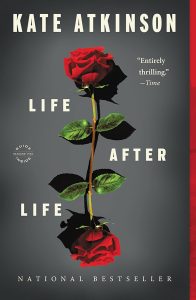
Life After LifeI recently read Kate Atkinson‘s novel Life After Life, which I highly recommend. The book explores an intriguing premise: What if you could live multiple lives until you found the perfect one?

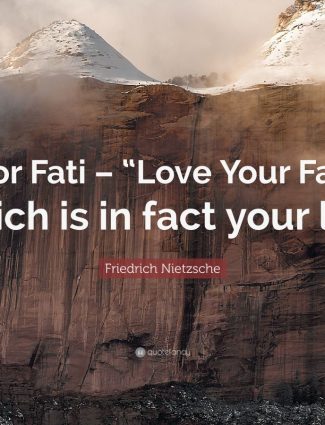
The main character, Ursula, seeks help from a psychiatrist who encourages her to embrace Amor Fati, which roughly translates to ‘love of one’s fate.’ As the story unfolds, Ursula comes to terms with this concept.

It means acceptance. Whatever happens to you, embrace it, the good and the bad equally. Death is just one more thing to be embraced, I suppose.

I read Ursula’s few sentences repeatedly as they resonated with me. It was fate that I made that trip to Inwood and fell in love with Jan. Other alternatives could have occurred that led to a similar outcome, but I have accepted that this was the one that was best for me. As much as I wish she were still alive, fate gave me a grief journey, which has been a great teacher, and I am confident that the painful path has made me a better person today. I have learned to love again but remain unsure if I am lovable. Yet, I am unwilling to forgo that fate might lead me into another era of bliss. Having embraced life after loss, I have learned to live fully, accepting that this is the life fate chose for me. The challenge that will stay with me for the rest of my days and nights is not how good or bad my life was but what I did to make life better. This acceptance of fate is what reassures me that I am on the right path.
Love is a Magical Force!

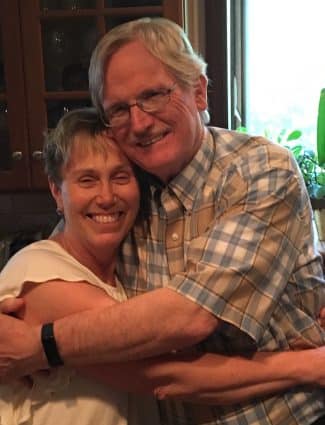
Whenever I fall in love, I do so with all my heart and soul, leaving no room for half-steps. My love is unconditional and knows no boundaries. My wife knew and accepted me for who I am. Together, Jan and I created a legacy for ages to come.

5 comments add your comment

Share your thoughts and ideas

This site uses Akismet to reduce spam. Learn how your comment data is processed.

The Jan Lilien Education Fund!

Amor Fati: Accepting My Life as Lived!
×
American Dirt

Read: September 2021

Get this book

American Dirt

by Jeanine Cummins

American Dirt by Jeanine Cummins is one of the best books I have read this year.

American Dirt is a “cross-genre novel that combines elements of a commercial thriller, literary fiction, suspense, and romance.” American Dirt refers to the land that is the United States of America and to the difficulty undocumented migrants face both before and after crossing the border.

According to SuperSummary,

Lydia Quixano Pérez, a bookstore owner in Acapulco, saves her son Luca from a massacre that wipes out their entire family at a quinceañera cookout. The perpetrators are three sicarios, killers for Los Jardineros, a violent local cartel. Javier Crespo Fuentes, Lydia’s close friend and the jefe of Los Jardineros, ordered the hit in retaliation for an exposé written by Lydia’s husband, a journalist named Sebastián Pérez Delgado. Javier’s murderous rage stems not from the article itself, but from the impact it has on his daughter, Marta, who commits suicide when she learns of her father’s true identity. Lydia and Luca spend the rest of the novel running from Javier’s men, encountering a diverse cast of migrants along the road to the US.

I read the book at the same time that Haitian migrants were being deported at the border. Ms. Cummins writes passionately about the plight of migrants and the difficulties they face as they seek a new life in the US. This book highlighted this to me in ways that I understood intellectually but not emotionally.

Ms. Cummins refers to a sign she saw in Spanish in Tijuana while she was researching this book:

También de este lado hay sueños.

On this side, too, there are dreams.

All of our ancestors were migrants, and they all had dreams of a better life. We need to find a better way to help those who now have goals find a home so that their hopes for a better future can come true.

Subscribe

Contact Us

×
The Rest Is Memory: A Novel

Read: January 2025

Get this book

The Rest Is Memory: A Novel

by Lily Tuck

Today, I dove into “The Rest Is Memory: A Novel” by Lily Tuck, and it’s already leaving a powerful impression. This poignant tale follows a young Catholic girl’s harrowing journey to Auschwitz, woven in a captivating Rashomon-style narrative showcasing Tuck’s brilliance as a storyteller. Esquire has rightly placed it on their list of Best Books for Fall 2024, and I can see why.

In Tuck‘s skilled hands, “The Rest Is Memory” transforms into an unforgettable piece of historical reclamation, breathing life into an innocent soul who has long been remembered only through a haunting triptych of photographs. It’s a journey that promises to linger in my thoughts long after I’ve turned the last page.

In this mesmerizing novel by Lily Tuck, we first glimpse fourteen-year-old Czeslawa riding on the back of a boy’s motorcycle. Tuck imagines Czeslawa’s upbringing in a small Polish village before her world imploded in late 1942. Stripped of her modest belongings, she arrives at Auschwitz shorn and bearing the tattoo number 26947. Shortly after, she is photographed. Three months later, she is dead.

How did this happen to an ordinary Polish citizen? This is the question Tuck grapples with in this haunting narrative, which frames Czeslawa’s story within the tragic context of the six million Poles who perished during the German occupation. A decade before writing The Rest Is Memory“, Tuck read an obituary of the photographer Wilhelm Brasse, who took over 40,000 pictures of Auschwitz prisoners—including three of Czeslawa Kwoka, a Catholic girl from rural southeastern Poland. Tuck cut out these photos and kept them, determined to learn more about Czeslawa. However, she could only gather the barest facts: the village she came from, the transport she was on, that she was accompanied by her mother and neighbors, her tattoo number, and the date of her death. Tuck crafts a remarkable kaleidoscope of imagination from this scant evidence, something only our greatest novelists can achieve.

Susanna Moore described the novel as “Beautifully written, all the while instilling a sense of horror.” Tuck’s language swirls around the reader, yet no word is out of place. The subtly rotating images tumble forth, accelerating as we learn about Czeslawa’s tragic time in Auschwitz, as well as the lives of real individuals, including the brutal Commandant Rudolf Höss, his unconscionable wife Hedwig, psychiatrist and child rescuer Janusz Korczak, and the sharp Polish short story writer Tadeusz Borowski. Although we know Czeslawa’s fate, we must keep turning the pages, thoroughly captivated by Tuck’s nearly otherworldly prose.


When you purchase a book through one of my links, I earn a small commission that helps support my passion for reading. This contribution allows me to buy even more books to share with you, creating an incredible cycle of discovering great reads together! Your support truly makes a difference!


×
Victory City: A Novel

Read: February 2023

Get this book

Victory City: A Novel

by Salman Rushdie

Victory City: A Novel by Salman Rushdie is an epic tale of a woman who breathes a fantastical empire into existence, only to be consumed by it over the centuries from the transcendent imagination of Booker Prize-winning, internationally bestselling author Salman Rushdie. It is well written and was a page-turner from page one to the end. I highly recommend this novel and encourage everyone to read it.

Brilliantly styled as a translation of an ancient epic, this is a saga of love, adventure, and myth that is a testament to storytelling’s power. After witnessing her mother’s death, the grief-stricken Pampa Kampana becomes a vessel for the goddess Parvati, who begins to speak out of the girl’s mouth. I was hooked when Pampa Kampana provided the seeds that created Victory City out of thin air.

David Remnick’s interview with Salman Rushdie in The New Yorker provided background I would have missed.

“The first kings of Vijayanagara announced, quite seriously, that they were descended from the moon,” Rushdie said. “So when these kings, Harihara and Bukka, announce that they’re members of the lunar dynasty, they’re associating themselves with those great heroes. It’s like saying, ‘I’ve descended from the same family as Achilles.’ Or Agamemnon. And so I thought, Well, if you could say that, I can say anything.”

Above all, the book is buoyed by the character of Pampa Kampana, who, Rushdie says, “just showed up in my head” and gave him his story, his sense of direction. Rushdie’s pleasure in writing the novel was in “world building” and, at the same time, writing about a character building that world: “It’s me doing it, but it’s also her doing it.” The pleasure is infectious. “Victory City” is an immensely enjoyable novel. It is also an affirmation. At the end, with the great city in ruins, what is left is not the storyteller but her words:

I, Pampa Kampana, am the author of this book.
I have lived to see an empire rise and fall.
How are they remembered now, these kings, these queens?
They exist now only in words . . .
I myself am nothing now. All that remains is this city of words.
Words are the only victors.

The Goodreads summary provides a brief overview,

In the wake of an insignificant battle between two long-forgotten kingdoms in fourteenth-century southern India, a nine-year-old girl has a divine encounter that will change the course of history. After witnessing her mother’s death, the grief-stricken Pampa Kampana becomes a vessel for the goddess Parvati, who begins to speak out of the girl’s mouth. Granting her powers beyond Pampa Kampana’s comprehension, the goddess tells her that she will be instrumental in the rise of a great city called Bisnaga–literally victory city–the wonder of the world.

Over the next two hundred and fifty years, Pampa Kampana’s life becomes deeply interwoven with Bisnaga’s, from its literal sowing out of a bag of magic seeds to its tragic ruination in the most human of ways: the hubris of those in power. Whispering Bisnaga and its citizens into existence, Pampa Kampana attempts to make good on Parvati’s task: giving women equal agency in a patriarchal world. But all stories have a way of getting away from their creator, and Bisnaga is no exception. As years pass, rulers come and go, battles are won and lost, and allegiances shift, the very fabric of Bisnaga becomes an ever more complex tapestry–with Pampa Kampana at its center.


The Jan Lilien Education Fund sponsors ongoing sustainability and environmental awareness programs. Gifts made this month; I will match dollar-for-dollar. All donations are tax-deductible.

Subscribe

Contact Us

I receive a commission when you buy a book or product using a link on this page. Thank you for supporting Sharing Jan’s Love blog.


×
Corey Fah Does Social Mobility

Read: February 2024

Get this book

Corey Fah Does Social Mobility

by Isabel Waidner

Today, I began reading “Corey Fah Does Social Mobility: A Novel” by Isabel Waidner. The book is about Corey Fah, a writer whose novel has just won the Fictionalization of Social Evils prize. Despite this achievement, the trophy and funds with the award still need to be in reach. The novel celebrates radical queer survival and challenges false notions of success.

Corey, their partner Drew, and their pet spider, Bambi Pavok, embark on a quest to find an elusive trophy with neon-beige color and UFO-like qualities. This journey takes them back to their childhood in the forest and includes a stint on a reality TV show. While facing the horrors of wormholes and time loops, Corey discovers the difference between a prize and a gift in a complex way.

Following the Goldsmiths Prize–winning Sterling Karat Gold, Isabel Waidner’s bold and buoyant new novel is about coming into one’s own, the labor of love, the tendency of history to repeat itself, and what ensues when a large amount of cultural capital is suddenly deposited in a place it has never been before.

×
The Heat Will Kill You First

Read: July 2023

Get this book

The Heat Will Kill You First

by Jeff Goodell

I recently started reading “The Heat Will Kill You First” by Jeff Goodell, which delves into the extreme ways our planet is already changing. The book explores how spring is arriving earlier and fall is arriving later and how this will impact our food supply and disease outbreaks. As I have stated in my Action Alert: EPA’s Carbon Rule, the time to act is now.

The book also predicts the consequences of summer days in cities like Chicago and Boston, reaching temperatures as high as 110°F. Goodell explains that heat waves are used only to affect the most vulnerable people, but as they become more intense and familiar, they will affect everyone.

It is becoming increasingly clear that the world is facing a new reality. In California, wildfires are now seasonal, while the Northeast is experiencing less and less snow each winter. Meanwhile, the Arctic and Antarctic ice sheets are melting alarmingly. Heat is the primary threat that is driving all other impacts of the climate crisis. As temperatures rise, it exposes weaknesses in our governments, politics, economy, and values.

The basic science is straightforward: If we stop burning fossil fuels tomorrow, the global temperature will also stop rising. However, if we wait for 50 years to stop burning them, the temperature will continue to rise, making parts of our planet uninhabitable. The responsibility to act is in our hands. The hotter it gets, the more our underlying issues will surface and expand.

Jeff Goodell has been an award-winning journalist in the field of environmental reporting for several decades. His latest book explains how extreme heat will cause significant changes in the world. The book is an excellent blend of scientific insights and on-the-ground storytelling, and Goodell explores some of the most significant questions surrounding the topic. He reveals that extreme heat is a force we have yet to comprehend fully.


The Jan Lilien Education Fund sponsors ongoing sustainability and environmental awareness programs. Gifts made this month; I will match dollar-for-dollar. All donations are tax-deductible.

Subscribe

Contact Us

I receive a commission when you buy a book or product using a link on this page. Thank you for supporting Sharing Jan’s Love blog.


×
Time of the Child

Read: December 2024

Get this book

Time of the Child

by Niall Williams

Today, I dove into “Time of the Child” by Niall Williams, and I can already tell it will be a journey worth taking. This beautifully crafted novel, penned by the same author who brought us “This Is Happiness,” unfolds during a magical Christmas in the quaint Irish town of Faha. At its heart is a touching story about a father and daughter that beautifully explores the idea that miracles can touch our lives, no matter our beliefs.

As I turned the pages, I thought about how this enchanting tale would evoke love’s profound and transformative power when I light my Hanukkah candles. It promises to be a genuinely uplifting read!

Doctor Jack Troy was born and raised in Faha, but his responsibilities toward the sick and his care for the dying have always set him apart from the town. His eldest daughter, Ronnie, has grown up in her father’s shadow and remains there, having missed one chance at love and declined another marriage proposal from an unsuitable man.

During the Advent season of 1962, as the town prepared for Christmas, Ronnie and Doctor Troy’s lives were turned upside down when a baby arrived on their doorstep. As winter passes, the lives of the father and daughter, their understanding of family, and their roles in the community are changed forever.

Set throughout one December in the same village as Williams’ beloved “This Is Happiness,” “Time of the Child” offers a tender return to Faha for readers familiar with its charms and serves as a heartwarming welcome for new readers exploring it for the first time.


When you purchase a book through one of my links, I earn a small commission that helps support my passion for reading. This contribution allows me to buy even more books to share with you, creating an incredible cycle of discovering great reads together! Your support truly makes a difference!


×