
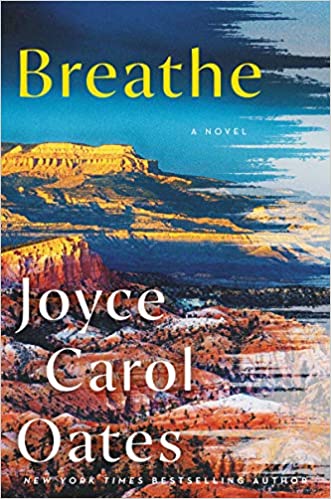
Breathe

Estimated reading time: 3 minutes, 9 seconds

Celebrate JanReading Breathe by Joyce Carol Oates was a book I knew I needed to read once Jan was diagnosed. Although the book might trigger negative memories, I finally read Breathe. It was what I needed to read at this point in my journey.

Ms. Oates wrote the book in 2019 after her husband, Charlie Gross, died. The novel is a story of love, loss, and loneliness, topics that I write about on this blog. I needed to read the book both for my mental health and for the readers of Sharing Jan’s Love.

The protagonist, Michaela, loses her husband while they are on a sabbatical in New Mexico. Her husband, Gerard, writes a book and teaches a class on memories. Jan and I never considered relocating before her illness, but this book convinced me that it would have aggravated my grief journey.

One of the parallels I observed while reading the novel is the similarity between Gerard’s reluctance to let family, friends, and co-workers know of his illness. Jan shared that reluctance in the early days, but I convinced her that the only chance of beating cancer was with the help of family and friends.

This dialogue could easily be one that Jan and I had.

Of course you want to summon his family—his (adult) children—but quickly, he says no.

Still waiting.

But – When?

Just not yet.

He is not an alarmist. (You are the alarmist.)

The novel is written in two parts – The Vigil and the Post-Mortem.

The opening paragraphs set the tone.

A Hand is gripping yours. Warm, dry hand gripping your slippery, humid hand.

Whoever it is urging you – Breathe!

Leaning over you begging you – Breathe!

As one mourning the death of the love of his life, I found several phrases in the book helpful in understanding what I have gone through and will continue to confront.

Among them is grief-vise, which I have written about in this stream.

In the grip of the grief vise, all that you will do, all that you even imagine doing, will require many times more effort.. Hardly daring to breathe for the grief-vise will tighten around your chest, squeezing the very air out of your lungs.

In the early stages of grief, the vise was strangling me. Breathing was impossible, and weeping was constant at times.

Michaela struggles with her grief. Seeing her husband every time she sees a man alone, even if they are older or younger than he was. I know I have felt Jan’s presence and still expect her to walk into our apartment.

Her struggles with a grief counselor and overly helpful friends are an experience I have not had but are familiar to those suffering from losing a loved one.

The last chapters are ones in which time becomes confusing and chaotic. At times, I was uncertain about which were real or imagined. The end, like all good novels, was ambiguous.

These are some of the other phrases I have found useful and will include in posts.

  • If there is no one to love, do we merit existence?
  • Never come to the end of kissing.
  • The first principle of life is; Breathe.
  • Shy in the language of intimacy.
  • As if a life lived with strangers could compensate for the emptiness in your heart.
  • No purpose in your life. No compass.

What you love most, that you will lose. The price of your love is your loss.

I recommend this book to all readers, even those struggling with grief.

Subscribe

Contact Us

When you buy a book or product using a link on this page, I receive a commission. Thank you for supporting Sharing Jan’s Love blog.

The Jan Lilien Education Fund!

Salvation

Read: March 2026

Get this book

Salvation: A Novel

by C. William Lanksfield

Salvation by C. William Lanksfield is a remarkable debut novel that explores profound themes through evocative prose and a compelling plot, all set against the breathtaking yet often intimidating backdrop of the Rocky Mountain West. This emotionally charged Western noir examines father-son relationships, masculinity, and spirituality, centering around a shocking event: the murder of one man’s best friend by another.

A small rural Colorado town is in crisis at the height of winter. Tom Horak has just murdered his best friend, Rust Hawkins. Morris Green, the town’s Lutheran pastor, is experiencing a profound crisis of faith, questioning the very existence of God. And Marshal Thomlison, the local peace officer, looking forward to retirement, is now thrown into the middle of a murder investigation.

Following his violent act, Tom retreats to a cabin in the hills, remembering the events of his hardscrabble childhood—a rural upbringing on a ranch with a distant mother and abusive father.

Pastor Green takes in Rust Hawkins’s son, since the boy has nowhere else to go. Thomlison’s murder investigation acts as a kind of Greek chorus commenting on the various threads of this moving novel: What could cause a man to commit such a violent act? What does this isolated community owe to one another? Can Tom find the peace he is searching for, even with blood on his hands? Can Pastor Green find enough faith in our human condition to help Rust’s orphaned son, and can their growing bond perhaps offer the family life each sorely lacks?


C. William Langsfeld lives in a small town on the Western Slope of Colorado.


Discover your next favorite book and dive into a world of curated, exciting reads by purchasing through my links. You’ll have access to a diverse selection of books I’ve personally vetted for quality and enjoyment. Supporting these selections not only helps me continue to provide you with personalized recommendations but also ensures you have access to meaningful stories that enrich your life. Your support truly makes a difference in helping me share more books and insights with you!


×
Something About Living

Read: November 2024

Get this book

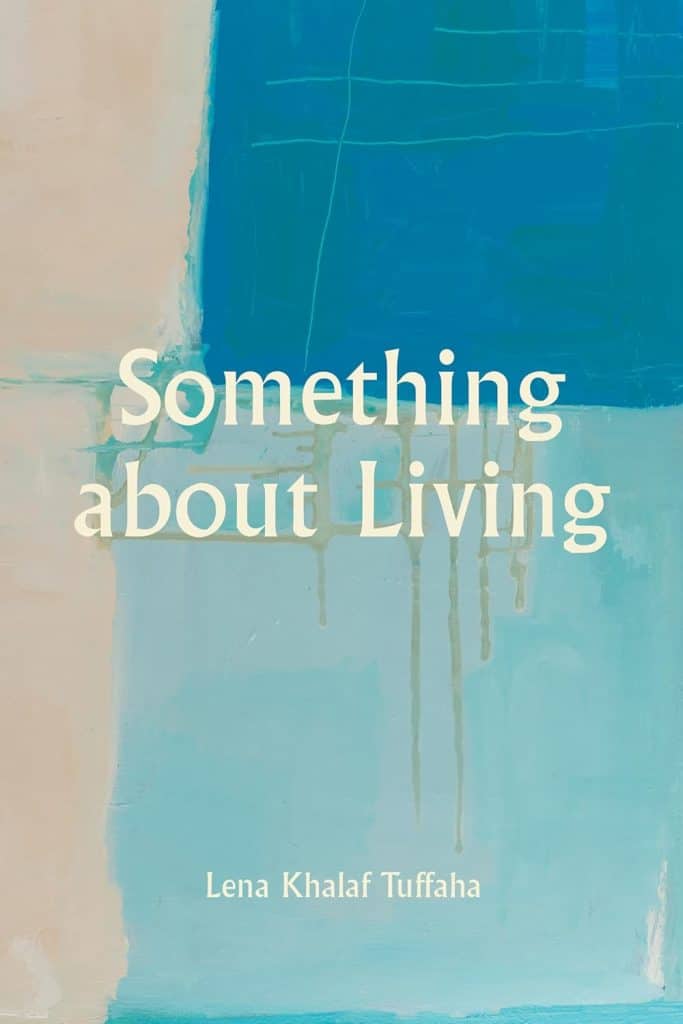
Something About Living

by Lena Khalaf Tuffaha

I recently read “Something About Living” by Lena Khalaf Tuffaha, a poet and essayist whose work resonates deeply. The book of poems won the 2024 National Book Award for Poetry and delved into Palestinian life through the lens of the American language, revealing a legacy of obfuscation and erasure. It questions what happens when language packages ongoing disasters for consumption and disposal.

As a Jew supporting a two-state solution, I initially hesitated to read this collection of poems. However, I was pleasantly surprised by the lyrical beauty of the verses, which explore love not just as an emotion but as a transformative force and “a radical act.” Every poem that genuinely resonated with me. “Something About Living” is a book I highly recommend for its depth and insight!

Ms. Khalaf Tuffaha has an incredible literary repertoire; her previous work, “Water & Salt,” earned the esteemed 2018 Washington State Book Award, while “Kaan & Her Sisters” was a finalist for the Firecracker Award. In addition, “Something About Living” also received the 2022 Akron Prize for Poetry. I’m excited to explore her profound insights and lyrical mastery!

Adrian Matejka, the author of “Somebody Else Sold the World,” has written about “Something About Living,”

“It’s nearly impossible to write poetry that simultaneously holds the human desire for joy and the insistent agitations of protest, but Lena Khalaf Tuffaha‘s gorgeous and wide-ranging new collection Something About Living does just that. Her poems interweave Palestine’s historic suffering, the challenges of living in this world full of violence and ill will, and the gentle delights we embrace to survive that violence. Khalaf Tuffaha’s elegant poems sing the fractured songs of Diaspora while remaining clear-eyed to the cause of the fracturing: the multinational hubris of colonialism and greed. This collection is her witness to our collective unraveling, vowel by vowel, syllable by syllable. “Let the plural be a return of us,” the speaker of “On the Thirtieth Friday We Consider Plurals” says and this plurality is our tenuous humanity and the deep need to hang on to kindness in our communities. In these poems Khalaf Tuffaha reminds us that love isn’t an idea; it is a radical act. Especially for those who, like this poet, travel through the world vigilantly, but steadfastly remain heart first.


When you purchase a book through one of my links, I earn a small commission that helps support my passion for reading. This contribution allows me to buy even more books to share with you, creating an incredible cycle of discovering great reads together! Your support truly makes a difference!


×
Remarkably Bright Creatures

Read: January 2024

Get this book

Remarkably Bright Creatures

by Shelby Van Pelt

Today, I recommended reading “Remarkably Bright Creatures” by Shelby Van Pelt. It’s a charming, witty, and compulsively readable exploration of friendship, reckoning, and hope. The novel traces the unlikely connection of a widow with a giant Pacific octopus, making it perfect for fans of “A Man Called Ove.” Shelby Van Pelt’s debut novel is a gentle reminder that sometimes, looking at the past can help uncover a future that once felt impossible.

The story follows Tova Sullivan, who works the night shift at the Sowell Bay Aquarium after her husband dies. Tova has been coping with loss since her eighteen-year-old son, Erik, mysteriously vanished on a boat in Puget Sound over thirty years ago.

While at the aquarium, Tova becomes acquainted with Marcellus, a grumpy giant Pacific octopus who refuses to cooperate with his human captors. However, Marcellus forms a remarkable friendship with Tova and helps her uncover the truth about her son’s disappearance.

As a detective, Marcellus uses his invertebrate body to deduce what happened when Tova’s son disappeared. Together, they embark on a journey to unearth the truth before it’s too late.


The Jan Lilien Education Fund sponsors ongoing sustainability and environmental awareness programs. Gifts made this month; I will match dollar-for-dollar. All donations are tax-deductible.

Subscribe

Contact Us

I receive a commission when you buy a book or product using a link on this page. Thank you for supporting Sharing Jan’s Love blog.


×
Autobiography of Cotton

Read: February 2026

Get this book

Autobiography of Cotton

by Cristina Rivera Garza

In 1934, a young José Revueltas traveled to Tamaulipas to support the cotton workers’ strike in Estación Camarón, which would later serve as the foundation for his landmark novel, Human Mourning. In her groundbreaking novel Autobiography of Cotton, Cristina Rivera Garza recounts her grandparents’ journey from mining towns to those same cotton fields. Her narrative intersects with Revueltas’s life and offers a vivid and evocative account of the history of cotton cultivation along the Mexico-U.S. border.

Through archival research and personal narrative, Rivera Garza explores how cotton transformed the borderlands by recounting the story of the cotton workers’ strike. She reveals how cycles of deprivation and environmental destruction continue to affect generations. Rivera Garza skillfully creates a new kind of border novel that illustrates how a fragile landscape drastically changed her grandparents’ lives and the territories they helped to develop. In this intimate fictionalization, Autobiography of Cotton offers a rich social history that encompasses agricultural colonization, labor activism, environmental degradation, and cross-border migration.

I recommend “Autobiography of Cotton,” but readers should be patient as the book shifts back and forth in time. Everything becomes clear as you continue reading.


Cristina Rivera Garza is the Pulitzer Prize–winning author of Liliana’s Invincible Summer. A MacArthur Fellow, she is the Hugh Roy and Lillie Cranz Cullen Distinguished Chair and founder of the University of Houston’s PhD in Creative Writing in Spanish.

Christina MacSweeney is the award-winning literary translator of works by Julián Herbert, Valeria Luiselli, and Elvira Navarro. She received the 2024 Sundial Literary Translation Award for her translation of Verónica Gerber Bicecci‘s The Company.


Discover your next favorite book and dive into a world of curated, exciting reads by purchasing through my links. You’ll have access to a diverse selection of books that I’ve personally vetted to ensure quality and enjoyment. Additionally, by supporting these selections, you’ll help me continue to provide you with more personalized recommendations. I earn a small commission from your purchase, which allows me to buy and share even more books with you. Your support truly makes a difference!


×
The Brief Wondrous Life of Oscar Wao

Read: August 2024

Get this book

The Brief Wondrous Life of Oscar Wao

by Junot Diaz

Today, I started reading Junot Diaz‘s The Brief Wondrous Life of Oscar Wao, one of The New York Times’ 100 Best Books of the Century. The book also won a Pulitzer Prize. Oscar is a sweet but disastrously overweight ghetto nerd who—from the New Jersey home he shares with his old-world mother and rebellious sister—dreams of becoming the Dominican J.R.R. Tolkien and, most of all, finding love.

But Oscar may never get what he wants. Blame the fukú—a curse that has haunted Oscar’s family for generations, following them on their epic journey from Santo Domingo to the USA. Encapsulating Dominican-American history, The Brief Wondrous Life of Oscar Wao opens our eyes to an astonishing vision of the contemporary American experience. It explores the endless human capacity to persevere—and risk it all—in the name of love.

×
Death Takes Me

Read: December 2025

Get this book

Death Takes Me: A Novel

by Cristina Rivera Garza

Originally written in Spanish by Cristina Rivera Garza, Death Takes Me is a thrilling masterpiece of literary fiction that turns the traditional crime narrative of gendered violence on its head. As sharp as the cuts on the bodies of the victims, the story unfolds with the dreamlike logic of a surreal experience, transitioning from the police station to a professor’s classroom and through the intricate worlds of Latin American poetry and art. It invites readers to explore the unstable terrains of desire and sexuality.

A city is always a cemetery.

In the narrative, a professor named Cristina Rivera Garza stumbles upon the corpse of a mutilated man in a dark alley and promptly reports it to the police. When shown a crime scene photo, she discovers a stark warning written in tiny print with coral nail polish on the brick wall beside the body: “Beware of me, my love / beware of the silent woman in the desert.”

The professor becomes the primary informant in the case, which is led by a detective who is newly obsessed with poetry and haunted by a list of past failures. But what has the professor truly witnessed? As more bodies of castrated men alongside lines of verse, the detective attempts to decipher the meaning of the poems in hopes of stopping the spreading violence throughout the city.


Cristina Rivera Garza is an acclaimed author known for works such as The Taiga Syndrome and The Iliac Crest. Her memoir, Liliana’s Invincible Summer, won the Pulitzer Prize and was a finalist for the National Book Award. She has received the MacArthur Fellowship and the Sor Juana Inés de la Cruz Prize. Currently, Rivera Garza holds the Hugh Roy and Lillie Cranz Cullen Distinguished Chair and serves as director of the PhD program in Creative Writing in Spanish at the University of Houston.

Sarah Booker is a teacher and a literary translator. Her translations include novels by Mónica Ojeda, Cristina Rivera Garza, and Gabriela Ponce. She is also an associate editor at Southwest Review.

Robin Myers is a poet and translator. Her translations encompass Andrés Neuman’s Bariloche, Claudia Peña Claros’s The Trees, Isabel Zapata’s In Vitro, Eliana Hernández-Pachón’s The Brush, and Cristina Rivera Garza’s The Restless Dead: Necrowriting and Disappropriation.


Discover your next favorite book and dive into a world of curated, exciting reads by purchasing through my links. You’ll have access to a diverse selection of books I’ve personally vetted for quality and enjoyment. Additionally, by supporting these selections, you’ll help me continue to provide you with more personalized recommendations. I earn a small commission from your purchase, which allows me to buy and share even more books with you. Your support truly makes a difference!


×