
Non-fiction
These are the non-fiction books I have read since the beginning of 2019 I have been reading. I like non-fiction but have started reading fiction since the love of my life passed away.
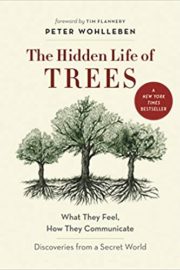
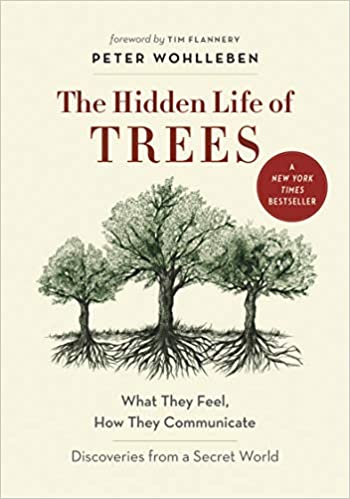
by Peter Wohlleben
The Hidden Life of Trees: What They Feel, How They Communicate ― Discoveries from A Secret World is a book I have wanted but had not had the time to read. In July of this year, when I was still in the early stages of my recovery journey, I talked to a friend of my wife’s (whom I now count as my friend) about our plans to plant a tree in Hanson Park.
As I talked about our plans, my friend suggested I read this book as it would help me understand the importance of trees. I will forever be grateful for her recommendation, as it made me read this book sooner than later.
To read that trees have a social network with more prominent, healthier trees concerned about the smaller, weaker ones. How is it that humans, a supposedly advanced species, have a social network that divides and weakens our community?
Are trees social beings? In The Hidden Life of Trees forester and author Peter Wohlleben convincingly makes the case that, yes, the forest is a social network. He draws on groundbreaking scientific discoveries to describe how trees are like human families: tree parents live together with their children, communicate with them, support them as they grow, share nutrients with those who are sick or struggling, and even warn each other of impending dangers. Wohlleben also shares his deep love of woods and forests, explaining the amazing processes of life, death, and regeneration he has observed in his woodland.
Having read this book, I am more sensitive to trees and have enjoyed my walks more than ever. In addition, when we plant Jan’s tree in Hanson Park, I will now have even more reasons to talk about the importance of trees to Jan, myself, and the community.
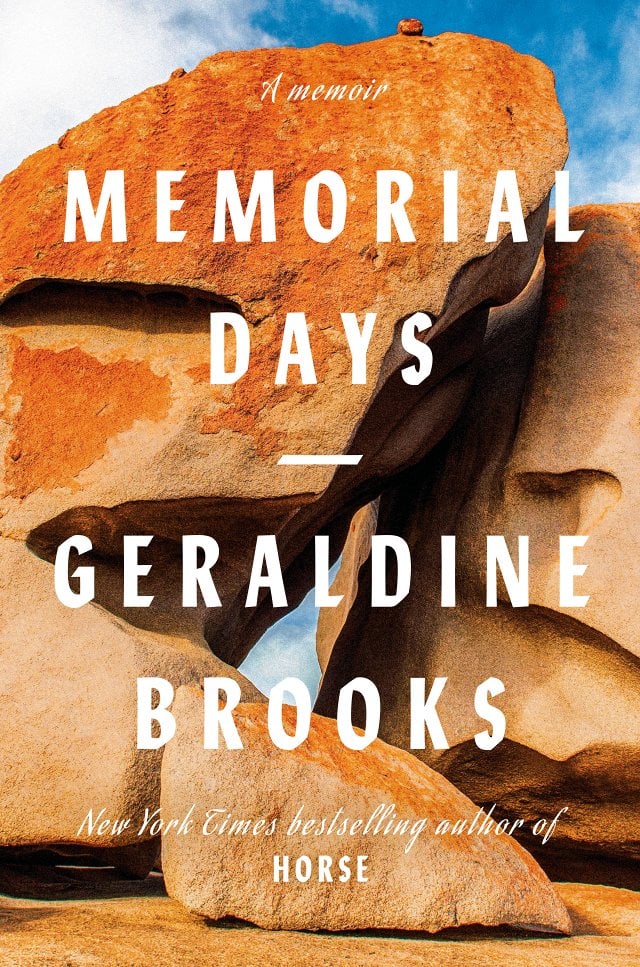
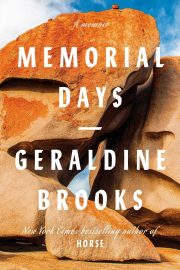
by Geraldine Brooks
Today, I started reading “Memorial Days: A Memoir” by Geraldine Brooks, the bestselling Pulitzer Prize-winning author of “Horse”. In this poignant and beautifully written memoir, she explores sudden loss and the journey toward healing. Why do I choose to read novels and memoirs about loss and grief? Perhaps it’s because, as Martín Prechtel wrote in his book “The Smell of Rain on Dust”, “Grief is praise because it is the natural way love honors what it misses.”
Many cultural and religious traditions expect grieving people to withdraw from the world. In modern life, we frequently encounter bureaucratic obstacles and lengthy to-do lists. This is precisely what happened to Geraldine Brooks when her partner of more than thirty years, Tony Horwitz—just sixty years old and, to her knowledge, vigorous and healthy—collapsed and died on a sidewalk in Washington, D.C.
After spending their early years together in conflict zones as foreign correspondents, Geraldine and Tony settled down to raise two sons on Martha’s Vineyard. They lived a fulfilling life filled with meaningful work, good humor, and tenderness. Geraldine and Tony spent their days writing and evenings cooking family dinners or enjoying sunsets with friends at the beach. Their peaceful existence abruptly ended on Memorial Day 2019 when Geraldine received the dreaded phone call we all fear. The demands of life became immediate and overwhelming, leaving little room for grief. The sudden loss created a profound void in their lives.
Three years later, she booked a flight to a remote island off the coast of Australia to give herself the time to mourn finally. She often spent days alone in a shack on the pristine, rugged coast without seeing another person. It was a space for her to reflect on the various ways cultures grieve and consider which rituals might help her rebuild her life in the wake of Tony’s death.
“Memorial Days,” a spare and profoundly moving memoir, portrays a larger-than-life man and the timeless love between two souls. It exquisitely captures the joy, agony, and mystery of life.
Geraldine Brooks is the author of six novels, including “Horse,” “People of the Book,” “Year of Wonders,” and the Pulitzer Prize-winning “March.” She has also written acclaimed nonfiction works, including “Nine Parts of Desire” and “Foreign Correspondence.” Her books have been translated into more than thirty languages and have sold millions of copies worldwide. Born and raised in Australia, Brooks now divides her time between Sydney and Martha’s Vineyard.
My journey through grief has significantly helped me grow as a person by focusing on conscientious resilience. I make it a point to read and walk daily, engage in worship, and actively participate as a volunteer and a good neighbor in my community. Fourteen hundred days ago, I wasn’t sure if I could continue living or how to move forward. However, by concentrating on strengthening my resilience, I now lead a life filled with meaning and purpose. I choose to look back not on what I lost but on what I have gained.
As my friend Danny said nearly a year ago, “You are an incredible person! You are a new person! A better person! Although Jan is not here physically, she has done so much for you!
My Rabbi, Rav Uri, echoed similar sentiments during his remarks when I received the Rev. Dr. Martin Luther King, Jr. Distinguished Service Award. If their beliefs are true, much of my progress directly results from my conscientious resilience!
When you purchase a book through one of my links, I earn a small commission that helps support my passion for reading. This contribution allows me to buy even more books to share with you, creating an incredible cycle of discovering great reads together! Your support truly makes a difference!
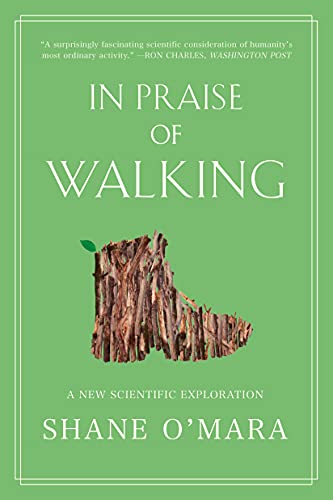
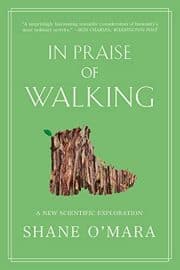
by Shane O'Mara
I recently received a book from my family that combines two interests: walking and reading. The book, “In Praise of Walking” by Shane O’Mara, celebrates the joys, health benefits, and mechanics of walking. It emphasizes the importance of getting out of our chairs and discovering a happier, healthier, more creative self.
One of the most important insights I gained from this book is that walking can lead to mind wandering, focusing on autobiographical memory rather than the immediate environment. This realization helped me accept and appreciate Jan’s love and move forward with her passion.
The book also explores the significance of walking to our human identity. Walking upright has given us many advantages, including the freedom of our hands and minds. Walking has enabled us to spread worldwide and has many benefits for our bodies and minds, such as protecting and repairing organs, aiding digestion, and sharpening our thinking.
Overall, “In Praise of Walking” inspires us to start walking again and recognize its many benefits to our lives and societies.
The Jan Lilien Education Fund sponsors ongoing sustainability and environmental awareness programs. Gifts made this month; I will match dollar-for-dollar. All donations are tax-deductible.
I receive a commission when you buy a book or product using a link on this page. Thank you for supporting Sharing Jan’s Love blog.
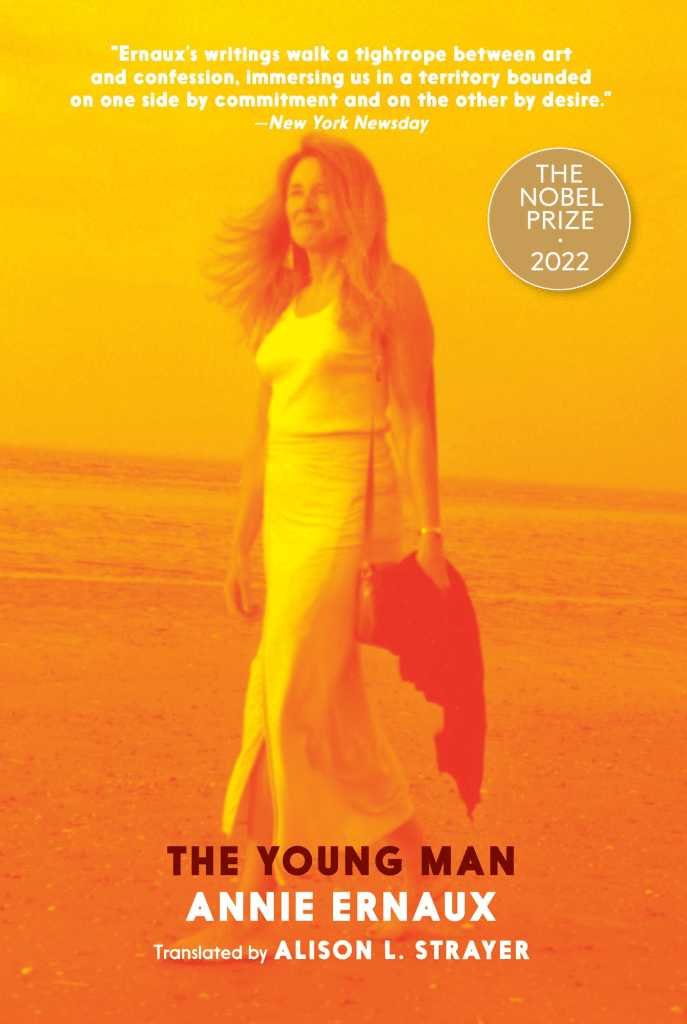
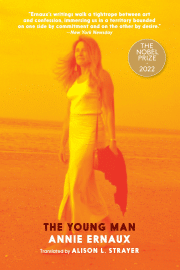
by Annie Ernaux
Annie Ernaux, the winner of the 2022 Nobel Prize in Literature, is the author of “The Young Man,” which chronicles her passionate love affair with A., a man about 30 years her junior, while she was in her fifties. This relationship prompts her to reflect on her own youth while also making her feel ageless, as if she is living her life in reverse.
Amidst talk of having a child together, she feels time running its course, and menopause approaching. The Young Man recalls Ernaux as the “scandalous girl” she once was, but is composed with the mastery and the self-assurance she has achieved across decades of writing. The book was published in France in 2022
Annie Ernaux, the winner of the 2022 Nobel Prize in Literature, is the author of approximately twenty works of fiction and memoir. She received the Prix Renaudot for her book A Man’s Place and the Marguerite Yourcenar Prize for her body of work. Additionally, she has won the International Strega Prize and the French-American Translation Prize and was shortlisted for the Man Booker International Prize for her book The Years. In 2019, Ernaux was awarded the Prix Formentor. She is now recognized as France’s most important literary voice and is the first French woman to win the Nobel Prize in Literature.
Alison L. Strayer is a Canadian writer and translator whose work has been shortlisted for the Governor General’s Award for Literature and Translation, the Grand Prix du livre de Montréal, and the Prix littéraire France-Québec. She currently resides in Paris.
Discover your next favorite book and dive into a world of curated, exciting reads by purchasing through my links. You’ll have access to a diverse selection of books I’ve personally vetted for quality and enjoyment. Supporting these selections not only helps me continue to provide you with personalized recommendations but also ensures you have access to meaningful stories that enrich your life. Your support truly makes a difference in helping me share more books and insights with you!
by Jeff Goodell
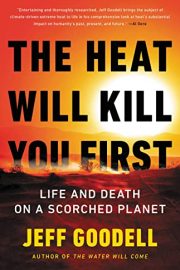
I recently started reading “The Heat Will Kill You First” by Jeff Goodell, which delves into the extreme ways our planet is already changing. The book explores how spring is arriving earlier and fall is arriving later and how this will impact our food supply and disease outbreaks. As I have stated in my Action Alert: EPA’s Carbon Rule, the time to act is now.
The book also predicts the consequences of summer days in cities like Chicago and Boston, reaching temperatures as high as 110°F. Goodell explains that heat waves are used only to affect the most vulnerable people, but as they become more intense and familiar, they will affect everyone.
It is becoming increasingly clear that the world is facing a new reality. In California, wildfires are now seasonal, while the Northeast is experiencing less and less snow each winter. Meanwhile, the Arctic and Antarctic ice sheets are melting alarmingly. Heat is the primary threat that is driving all other impacts of the climate crisis. As temperatures rise, it exposes weaknesses in our governments, politics, economy, and values.
The basic science is straightforward: If we stop burning fossil fuels tomorrow, the global temperature will also stop rising. However, if we wait for 50 years to stop burning them, the temperature will continue to rise, making parts of our planet uninhabitable. The responsibility to act is in our hands. The hotter it gets, the more our underlying issues will surface and expand.
Jeff Goodell has been an award-winning journalist in the field of environmental reporting for several decades. His latest book explains how extreme heat will cause significant changes in the world. The book is an excellent blend of scientific insights and on-the-ground storytelling, and Goodell explores some of the most significant questions surrounding the topic. He reveals that extreme heat is a force we have yet to comprehend fully.
The Jan Lilien Education Fund sponsors ongoing sustainability and environmental awareness programs. Gifts made this month; I will match dollar-for-dollar. All donations are tax-deductible.
I receive a commission when you buy a book or product using a link on this page. Thank you for supporting Sharing Jan’s Love blog.
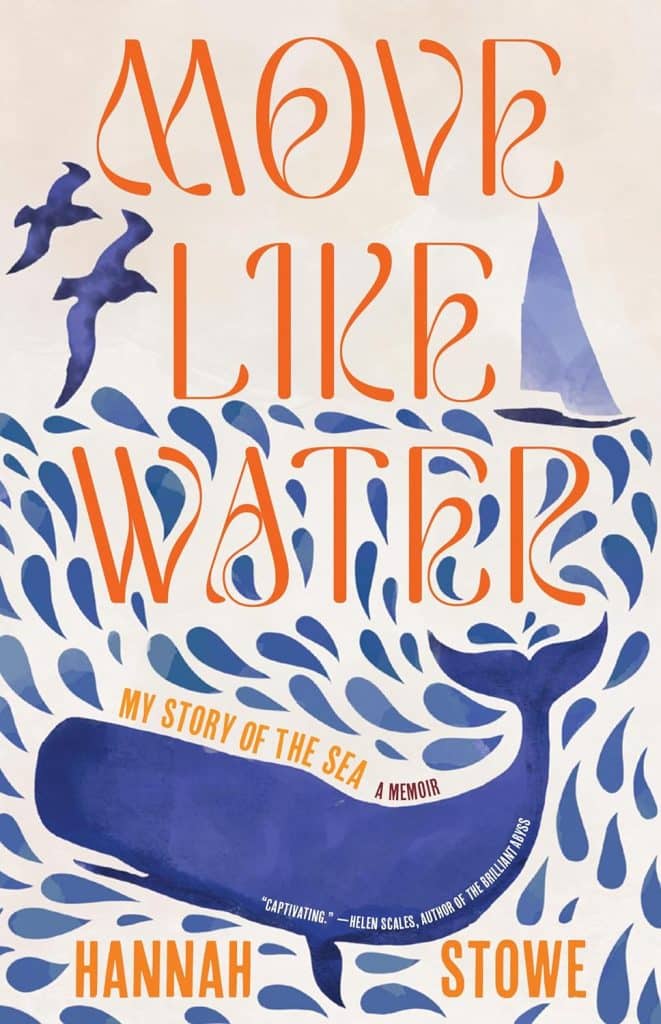
by Hannah Stowe
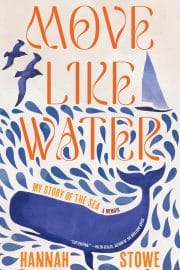
I recently started reading a book called “Move Like Water: My Story of the Sea” by Hannah Stowe. It’s a captivating book that immerses you in a world of water, whales, storms, and starlight, allowing you to experience what it’s like to sail for weeks and live life to a new rhythm.
Hannah Stowe, a marine biologist and sailor in her mid-twenties, grew up on the Pembrokeshire coast of Wales, where she fell asleep to the sound of the lighthouse beam. Drawing upon her experiences sailing tens of thousands of miles in various seas, including the North Sea, North Atlantic, Mediterranean, Celtic Sea, and the Caribbean, she explores the human connection to the wild waters. Stowe ponders why she and others are drawn to life at sea and what we can learn from the water around us.
Stowe intertwines her narrative and illustrations with stories of six keystone marine creatures: the fire crow, sperm whale, wandering albatross, humpback whale, shearwater, and barnacle. Through these stories, she invites readers to fall in love with the sea and its inhabitants and to discover the majesty, wonder, and fragility of the underwater world.
If you enjoy the works of Rachel Carson and Annie Dillard, then “Move Like Water: My Story of the Sea” is a must-read. It’s an inspiring and heartfelt tribute to the sea, a testimony to pursuing and achieving a dream, and an unforgettable introduction to a talented new nature writer.
The Jan Lilien Education Fund sponsors ongoing sustainability and environmental awareness programs. Gifts made this month; I will match dollar-for-dollar. All donations are tax-deductible.
I receive a commission when you buy a book or product using a link on this page. Thank you for supporting Sharing Jan’s Love blog.
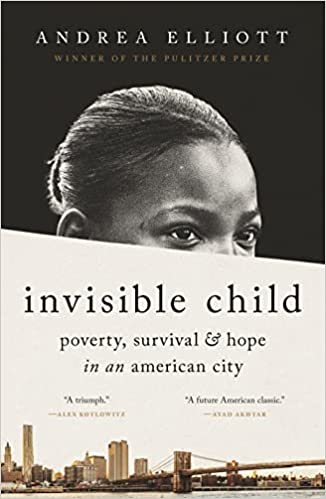
by Andrea Elliott
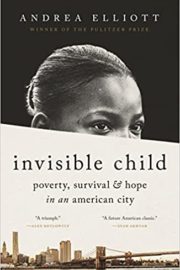
Invisible Child: Poverty, Survival & Hope in an American City by Andrea Elliott was a gift from my son Jon. The New York Times selected “Invisible Child” as one of the best books published this year. It is indeed one of the top books on my all-time list.
GoodReads summary provides a good overview,
The riveting, unforgettable story of a girl whose indomitable spirit is tested by homelessness, poverty, and racism in an unequal America—from Pulitzer Prize-winning journalist Andrea Elliott of The New York Times
Invisible Child follows eight dramatic years in the life of Dasani Coates, a child with imagination as soaring as the skyscrapers near her Brooklyn homeless shelter. Born at the turn of a new century, Dasani is named for the bottled water that comes to symbolize Brooklyn’s gentrification and the shared aspirations of a divided city. As Dasani grows up, moving with her tight-knit family from shelter to shelter, this story goes back to trace the passage of Dasani’s ancestors from slavery to the Great Migration north. When Dasani comes of age, New York City’s homeless crisis explodes as the chasm deepens between rich and poor.
In the shadows of this new Gilded Age, Dasani must lead her seven siblings through a thicket of problems: hunger, parental drug addiction, violence, housing instability, segregated schools, and the constant monitoring of the child-protection system. When, at age thirteen, Dasani enrolls at a boarding school in Pennsylvania, her loyalties are tested like never before. As she learns to “code switch” between the culture she left behind and the norms of her new town, Dasani starts to feel like a stranger in both places. Ultimately, she faces an impossible question: What if leaving poverty means abandoning the family you love?
By turns heartbreaking and revelatory, provocative and inspiring, Invisible Child tells an astonishing story about the power of resilience, the importance of family, and the cost of inequality. Based on nearly a decade of reporting, this book vividly illuminates some of the most critical issues in contemporary America through the life of one remarkable girl.
Jan and I were involved and knew that child poverty and homelessness needed repair. In addition, Jan lived on Washington Park across from Ft. Greene Park in 1974-75. We knew the neighborhood where much of the book’s story takes place.
Before meeting Jan in 1973, I was both a community/tenant organizer and a youth worker. In the latter role, I made weekly hostel trips for eight to ten young boys from East Williamsburg during 1973. The trips were the first the boys had ever been outside of their neighborhood.
Many of them had imaginations like Dasani. They also had her instinct to fight. One of my first tasks was to check for any weapons.
Decades later, when I would see any of them, now adults, they would ask when we were going on another trip. I wish I had met Jan when I made those trips. She would have helped me improve them and document the impact. If I could re-write history, I would have her join me as the second adult on the hostel trips.
After that summer, it was clear my primary skills were as a community/tenant organizer. Over the next few years, my work focused on creating affordable and supportive housing.
Jan and I did meaningful work that made a difference, yet the need for a permanent solution to the crisis remains. The book highlights the crucial role of resilience, the importance of family, and the cost of inequality. As a nation, we cannot undermine those values by breaking up families, impeding resilience, and maintaining racial and economic inequality.
The current debate in Washington over the Build Back Better legislation needs to focus not on how much we spend but on its impact on children and families.
David Brooks, a conservative commentator, has supported these expenditures for what they can do to address this country’s cultural and economic crisis.
These packages say to the struggling parents and the warehouse workers: I see you. Your work has dignity. You are paving your way. You are at the center of our national vision.
This is how you fortify a compelling moral identity, which is what all of us need if we’re going to be able to look in the mirror with self-respect. This is the cultural transformation that good policy can sometimes achieve. Statecraft is soulcraft.
If you can only read one book this year, this is the one to read. Child poverty, homelessness, and inequality impact all of us. Ending child poverty and homelessness will make us a healthier and more inclusive nation. It is time for a compelling moral call to action!
When you buy a book or product using a link on this page, I receive a commission. Thank you for supporting Sharing Jan’s Love blog.
Subscribe to Sharing Jan's Love Newsletter!
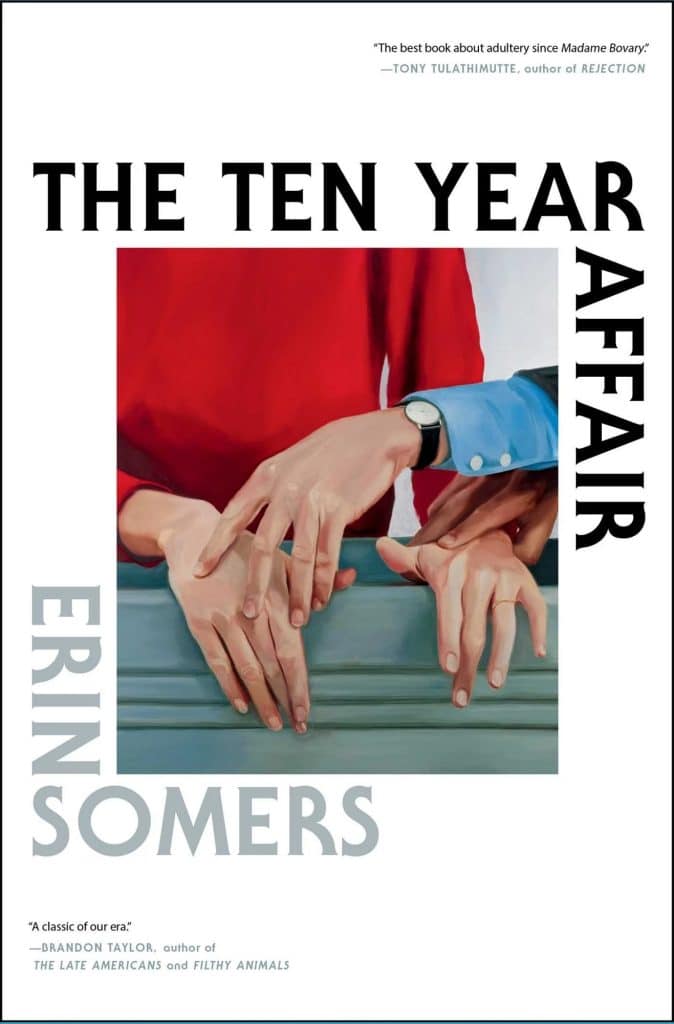
by Erin Somers
“The Ten Year Affair” by Erin Somers is a witty and emotionally charged exploration of marriage, family life, and the paths not taken, ultimately asking: Do we really want our fantasies to come true? This hilariously sharp novel weaves a sliding doors narrative around a chance meeting between two young parents, both happily married (just not to each other), that sparks a will-they-won’t-they romance—perfect for fans of “Big Swiss” and “Acts of Service.”
When Cora meets Sam at a baby group in their small town, the chemistry between them is undeniable. Both are content in their marriages and have two kids, and neither sees themselves as the type to engage in an affair. Yet, their connection deepens, and as their lives intertwine, the romantic tension becomes all-consuming—until their worlds unravel into two parallel timelines. In one, they pursue their feelings; in the other, they resist.
As reality splits, the everyday details of Cora’s life—her unfulfilling marketing job, her daughter’s newfound fascination with the afterlife, and her husband’s obsession with podcasts about the history of rope—gain fresh perspective. The intersecting and diverging timelines blur the boundaries between reality and fantasy, questioning what might have been and what truly matters.
Erin Somers is a reporter and news editor at Publishers Lunch. Her debut novel, “Stay Up with Hugo Best“, was recognized as a Vogue Best Book of the Year in 2019. Her work has appeared in esteemed publications such as The New Yorker, The Paris Review, The New York Times Book Review, The New Republic, New York magazine, The Atlantic, Esquire, GQ, and Best American Short Stories, among others.
Somers has received an Emerging Writer Fellowship from the NYC Center for Fiction, a fellowship from the Millay Colony, and was a finalist for a National Magazine Award in 2020. She resides in New York’s Hudson Valley with her family.
Discover your next favorite book and dive into a world of curated, exciting reads by purchasing through my links. You’ll have access to a diverse selection of books that I’ve personally vetted to ensure quality and enjoyment. Additionally, by supporting these selections, you’ll help me continue to provide you with more personalized recommendations. I earn a small commission from your purchase, which allows me to buy and share even more books with you. Your support truly makes a difference!
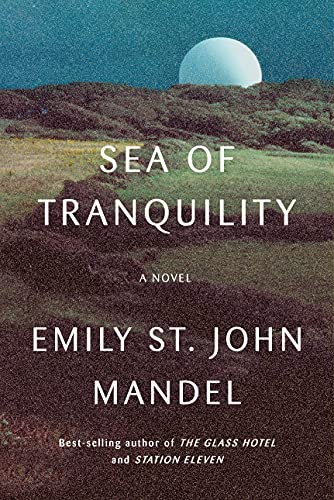
by Emily St. John Mandel
Sea of Tranquility by Emily St. John Mandel has been on my reading list for months. I recommend the book without reservations. Sea of Tranquility is a novel of art, time, love, and plague that takes the reader from Vancouver Island in 1912 to a dark colony on the moon three hundred years later, unfurling a story of humanity across centuries and space. It was a page-turner from page one.
With the delay of Artemis I, I have been thinking a lot about the Sea of Tranquility, the original lunar landing site. Sea of Tranquility reminded me of the days of my youth when we believed that NASA would colonize the moon as it is in the novel.
One of the passages that moved me was when Olive Llewellyn asked, “What if it always is the end of the world.” A second profound passage asks, “A life lived in a simulation is still a life.
The Goodreads summary provides a good overview,
Edwin St. Andrew is eighteen years old when he crosses the Atlantic by steamship, exiled from polite society following an ill-conceived diatribe at a dinner party. He enters the forest, spellbound by the beauty of the Canadian wilderness, and suddenly hears the notes of a violin echoing in an airship terminal—an experience that shocks him to his core.
Two centuries later a famous writer named Olive Llewellyn is on a book tour. She’s traveling all over Earth, but her home is the second moon colony, a place of white stone, spired towers, and artificial beauty. Within the text of Olive’s bestselling pandemic novel lies a strange passage: a man plays his violin for change in the echoing corridor of an airship terminal as the trees of a forest rise around him.
When Gaspery-Jacques Roberts, a detective in the Night City, is hired to investigate an anomaly in the North American wilderness, he uncovers a series of lives upended: The exiled son of an earl driven to madness, a writer trapped far from home as a pandemic ravages Earth, and a childhood friend from the Night City who, like Gaspery himself, has glimpsed the chance to do something extraordinary that will disrupt the timeline of the universe.
The Jan Lilien Education Fund sponsors ongoing sustainability and environmental awareness programs. Gifts made this month; I will match dollar-for-dollar. All donations are tax-deductible.
I receive a commission when you buy a book or product using a link on this page. Thank you for supporting Sharing Jan’s Love blog.
by Giovana Madalosso
I recently dove into The Tokyo Suite by Giovana Madalosso, expertly translated by Bruna Dantas Lobato. This captivating book represents the English-language debut of one of Brazil’s most thrilling contemporary voices. It intricately unravels the complexities of modern family dynamics, diving deep into the hidden tensions that simmer just beneath the surface of everyday life. Each page draws you in, inviting you to explore the rich tapestry of emotions and experiences that define our relationships.
It’s a seemingly ordinary morning when Maju, a nanny, boards a bus with Cora, the young girl she’s been caring for and disappears. The abduction, an act as impulsive as it is extreme, sets off a series of events that will force each character to confront their deepest fears and desires.
Cora’s mother, Fernanda, is a successful executive who is so engulfed in her crisis that she initially fails to notice her daughter’s disappearance. Her marriage is strained, and she finds solace in an affair, distancing herself further from her family. Meanwhile, her husband, overwhelmed by the complexities of their domestic life, remains emotionally detached. As Maju navigates the streets of São Paulo with Cora, the “white army” of nannies, a term coined by Fernanda, seems to watch her every move, heightening her sense of paranoia and urgency.
Madalosso’s narrative delves deep into the human psyche, examining themes of maternal guilt, societal expectations, and the search for personal identity. Rich and multi-layered, The Tokyo Suite is a poignant and gripping tale that captures the essence of modern urban life and the lengths people will go to reclaim a sense of control and meaning.
Giovana Madalosso is a Brazilian writer and screenwriter born in Curitiba in 1975. She has been a finalist for the Biblioteca Nacional Award and the São Paulo Prize of Literature. The Tokyo Suite is her English-language debut.
Bruna Dantas Lobato is a fiction writer and translator. Her translation of Stênio Gardel‘s The Words That Remain won the 2023 National Book Award for Translated Literature. Her fiction has appeared in The New Yorker, Guernica, A Public Space, and The Common. Raised in Natal, Brazil, she is an incoming Assistant Professor of English and Creative Writing at Grinnell College.
When you purchase a book through one of my links, I earn a small commission that helps support my passion for reading. This contribution allows me to buy even more books to share with you, creating an incredible cycle of discovering great reads together! Your support truly makes a difference!
Enjoy a limited-time offer of 20% off your next book purchase at Bookshop.org!
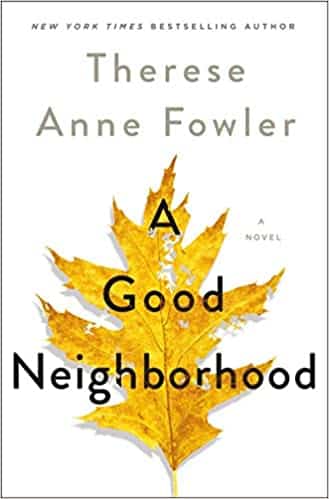
by Therese Anne Fowler
A Good Neighborhood by Therese Anne Fowler is a book that was difficult to put down once I started it. A Good Neighborhood is a “gripping contemporary novel that examines the American dream through the lens of two families living side by side in an idyllic neighborhood, throughout one summer that changes their lives irrevocably.”
I selected the book as it focuses, among other issues, on gentrification and environmental degradation. But to say that is what it is about would be a disservice. It also includes a full range of the social issues of our time.
But with little in common except a property line, these two very different families quickly find themselves at odds: first, over an historic oak tree in Valerie’s yard, and soon after, the blossoming romance between their two teenagers. Told from multiple points of view, A Good Neighborhood asks big questions about life in America today ― what does it mean to be a good neighbor? How do we live alongside each other when we don’t see eye to eye? ― as it explores the effects of class, race, and heartrending star-crossed love in a story that’s as provocative as it is powerful.
Ms. Fowler narrates the book. Greek Chorus. By doing this, she ensures that we are part of the story as much as readers.
We need to find answers to the big questions if we are to be good neighbors.
The effects of class, race, and heartrending star-crossed love make this a must-read book.
I recommend the book to all readers.
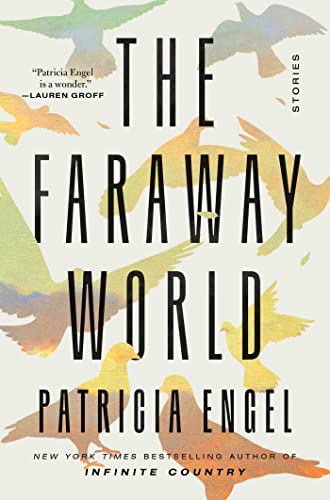
by Patricia Engel
The Faraway World: Stories by Patricia Engel was released six days ago. The Faraway World is an exquisite collection of ten haunting, award-winning short stories set across the Americas and linked by themes of migration, sacrifice, and moral compromise. I highly recommend this collection of short stories. All ten are ones I would read again. As Leigh Newman wrote in her review in the NYTimes, The Faraway World is “a collection about the Latin American diaspora.”
In addition, Leigh Newman described The Faraway World proves that Engel, like one of her characters, is capable of noticing “that between two people, a look reveals more than a fingerprint.” The first story in the collection, “Aida,” is about two twins, one of whom goes missing. Once I read this story, I could not stop until I had read all ten.
The stories are based in Cuba, Colombia, and the US. I know a few NJ settings that gave more meaning to these stories. I felt like I was in Cuba and Colombia, which I had never visited.
NPR interviewed Patricia Engel. She described how she wrote the stories.
They came to me at different points when I was thinking about other things. But of course, they are connected by this – the motivating force for change, desire, and the ever-changing conditions of identity and movements and changing geography and landscape and diaspora. Those are things that I explore in all my writing, and it’s something that I explore in my life. So, of course, it permeates my stories.
The Goodreads summary provides an overview,
Two Colombian ex-pats meet as strangers on the rainy streets of New York City, both burdened with traumatic pasts. In Cuba, a woman discovers her deceased brother’s bones have been stolen, and the love of her life returns from Ecuador for a one-night visit. A cash-strapped couple hustles in Miami to life-altering ends.
The Faraway World is a collection of arresting stories from The New York Times bestselling author of Infinite Country, Patricia Engel, “a gifted storyteller whose writing shines even in the darkest corners” (The Washington Post). Intimate and panoramic, these stories bring to life the liminality of regret, the vibrancy of the community, and the epic deeds and quiet moments of love.
The Jan Lilien Education Fund sponsors ongoing sustainability and environmental awareness programs. Gifts made this month; I will match dollar-for-dollar. All donations are tax-deductible.
I receive a commission when you buy a book or product using a link on this page. Thank you for supporting Sharing Jan’s Love blog.
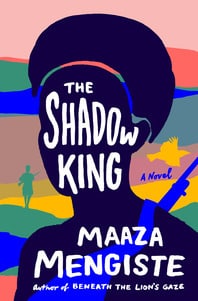
by Maaza Mengiste
The Shadow King: A Novel by Maaza Mengiste is a book happened to offer two often overlooked threads of history. The first is Mussolini’s 1935 invasion of Ethiopia. The second one I am most interested in is the women soldiers who were left out of the historical record. I highly recommend The Shadow King. It is a gorgeously crafted and unputdownable exploration of female power and what it means to be a woman at war.
Hirut and Aster come alive in Maaza Mengiste talented writing. Their struggles to be seen as equal in a society at war is engaging. Hirut’s plan to create a shadow kingpin the absence of Emperor Haile Selassie is one that turns defeat into victory.
Goodreads provides a good overview of the book.
With the threat of Mussolini’s army looming, recently orphaned Hirut struggles to adapt to her new life as a maid in Kidane and his wife Aster’s household. Kidane, an officer in Emperor Haile Selassie’s army, rushes to mobilize his most muscular men before the Italians invaded. His initial kindness to Hirut shifts into flinty cruelty when she resists his advances. Hirut finds herself tumbling into a new world of thefts and violations, betrayals, and overwhelming rage. Meanwhile, Mussolini’s technologically advanced army prepared for an easy victory. Hundreds of thousands of Italians―Jewish photographer Ettore among them―march on Ethiopia seeking adventure.
As the war begins in earnest, Hirut, Aster, and the other women long to do more than care for the wounded and bury the dead. When Emperor Haile Selassie goes into exile and Ethiopia quickly loses hope, Hirut offers a plan to maintain morale. She helps disguise a gentle peasant as the emperor and soon becomes his guard, inspiring other women to take arms against the Italians. But how could she have predicted her war as a prisoner of one of Italy’s most vicious officers, who would force her to pose before Ettore’s camera?
What follows is a gorgeously crafted and unputdownable exploration of female power, with Hirut as the fierce, original, and brilliant voice at its heart. In incandescent, lyrical prose, Maaza Mengiste breathes life into complicated characters on both sides of the battle line, shaping a heartrending, unforgettable exploration of what it means to be a woman at war.
When you buy a book or product using a link on this page, I receive a commission. Thank you for supporting Sharing Jan’s Love blog.