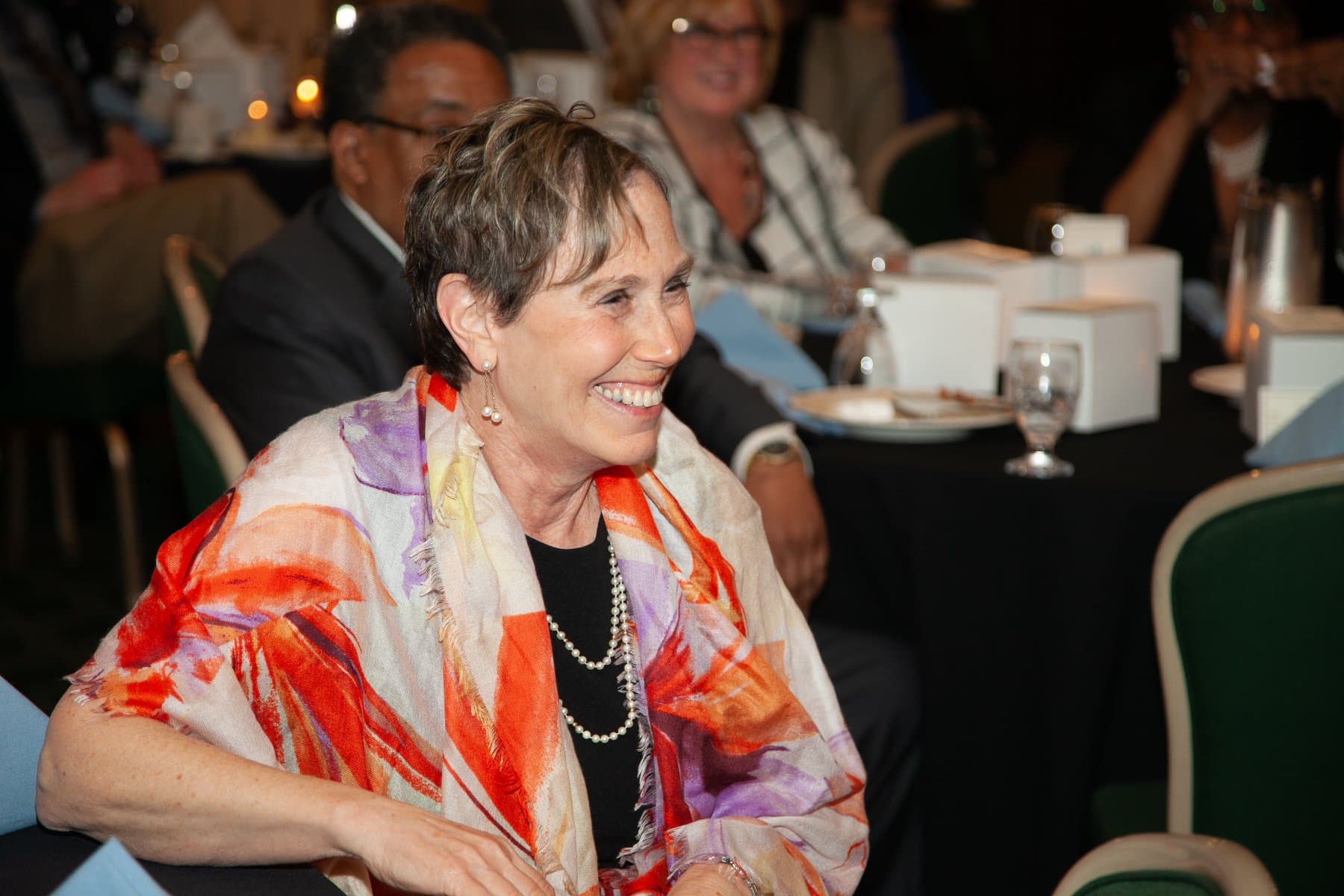

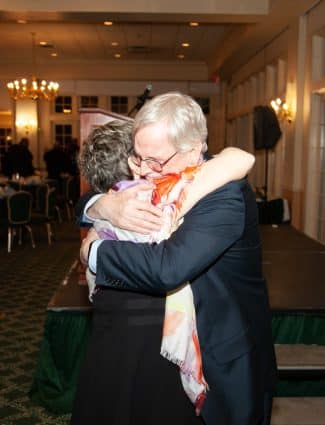
Jan and Richard Hugging

Is Time Illogical?

Estimated reading time: 0 minutes, 22 seconds

Today is fifteen weeks since the funeral. It seems as if just yesterday, I was standing in the rain at Beth Israel Cemetery, greeting friends and family. One hundred five days feels like an eternity since I shoveled the first dirt onto her grave. Yet, as I have written, time is playing a cosmic trick on me.

Subscribe

Contact Us

How Did I Grieve?

If grief has made me a better person, it's because God gave me the ability to listen, embrace, and move forward into the future. Although I miss Jan dearly, I am committed to living with courage, honoring her memory, and being my best father, grandfather, friend, and neighbor.

Show thread (2)

Jan and Richard Hugging

Inequality of Time

Estimated reading time: 0 minutes, 22 seconds

How can the days and nights we were together be less equal than the time since she passed away? What I have learned from my groups is that not only is time relative, it also is illogical. I remember Jan and love every nanosecond we were together. However, the 2,477 weeks and one day we were together is now equal to less than the 15 weeks since she died. How is that possible?

Jan and Richard

Time is Cruel and Unfair

Estimated reading time: 0 minutes, 22 seconds

I remember so much about every day that I shared with Jan. Each was filled with love and affection. With the love of my life, I learned so very much. Not only how to be a husband, father, lover, and best friend, but also how to be there for her when she needed my love and support.

So how is it possible seventeen weeks since she died that 416,200 hours are equal to less than 2,856 hours? It is illogical certainly, but it is also a cruel joke to play on those of us in grief!

10 comments add your comment

Share your thoughts and ideas

This site uses Akismet to reduce spam. Learn how your comment data is processed.

The Jan Lilien Education Fund!

Jan and Richard Hugging
×
Jan and Richard Hugging
×
Jan and Richard
×
A Sovereign People: The Crises of the 1790s and the Birth of American Nationalism

Read: February 2019

Get this book

A Sovereign People: The Crises of the 1790s and the Birth of American Nationalism

by Carol Berkin

A Sovereign People: The Crises of the 1790s and the Birth of American Nationalism by Carol Berkin, Presidential Professor American Colonial and Revolutionary History; Women’s History Professor at Baruch College, focuses on four crises in the first decade. Most historians view these are part of the early partisan debates in America.

Professor Berkin takes a different perspective. She focuses on how the Whiskey Rebellion, the Genet Affair, the XYZ Affair, and the Alien and Sedition Acts helped build nationalism. Despite the partisan divisions, both sides could find solutions that helped America survive its first decade. The failure to resolve anyone of these could have doomed America to failure.

The Federalists – Washington, Hamilton, and Adams – were the leaders of that first decade and managed the successive crisis of sovereignty.

A Sovereign People is one of four books from my first One Day University class.

Subscribe

Contact Us

×
Eastbound

Read: November 2023

Get this book

Eastbound by Maylis De Kerangal

by Maylis De Kerangal

Today, I would like to recommend the book “Eastbound” by Maylis De Kerangal, which has been beautifully translated into English by Jessica Moore. The story revolves around a Russian conscript and a French woman who cross paths on the Trans-Siberian railroad, each trying to escape to the East for different reasons. “Eastbound” is an adventure story that takes you through two vibrant inner worlds.

The book has been listed as one of the five best fiction books 2023 by The New York Times. Maylis De Kerangal has done an excellent job telling the story of two unlikely souls with gorgeously translated, winding sentences that evoke a striking sense of tenderness. The brutality of the surrounding world contrasts sharply with the growing collaboration between the two characters.

As the story progresses, we meet Aliocha, a young Russian conscript who decides to desert the train soon after boarding the Trans-Siberian train with other Russian conscripts. During a midnight smoke in a dark corridor of the train, Aliocha encounters an older French woman, Hélène, for whom he feels an uncanny trust. He urgently asks Hélène, through pantomime and basic Russian, for her help hiding him. They hurry from the filth of his third-class carriage to Hélène’s first-class sleeping car. As Aliocha becomes a hunted deserter, Hélène becomes his accomplice, having her inner landscape of recent memories to contend with.


The Jan Lilien Education Fund sponsors ongoing sustainability and environmental awareness programs. Gifts made this month; I will match dollar-for-dollar. All donations are tax-deductible.

Subscribe

Contact Us

I receive a commission when you buy a book or product using a link on this page. Thank you for supporting Sharing Jan’s Love blog.


×
Victory City: A Novel

Read: February 2023

Get this book

Victory City: A Novel

by Salman Rushdie

Victory City: A Novel by Salman Rushdie is an epic tale of a woman who breathes a fantastical empire into existence, only to be consumed by it over the centuries from the transcendent imagination of Booker Prize-winning, internationally bestselling author Salman Rushdie. It is well written and was a page-turner from page one to the end. I highly recommend this novel and encourage everyone to read it.

Brilliantly styled as a translation of an ancient epic, this is a saga of love, adventure, and myth that is a testament to storytelling’s power. After witnessing her mother’s death, the grief-stricken Pampa Kampana becomes a vessel for the goddess Parvati, who begins to speak out of the girl’s mouth. I was hooked when Pampa Kampana provided the seeds that created Victory City out of thin air.

David Remnick’s interview with Salman Rushdie in The New Yorker provided background I would have missed.

“The first kings of Vijayanagara announced, quite seriously, that they were descended from the moon,” Rushdie said. “So when these kings, Harihara and Bukka, announce that they’re members of the lunar dynasty, they’re associating themselves with those great heroes. It’s like saying, ‘I’ve descended from the same family as Achilles.’ Or Agamemnon. And so I thought, Well, if you could say that, I can say anything.”

Above all, the book is buoyed by the character of Pampa Kampana, who, Rushdie says, “just showed up in my head” and gave him his story, his sense of direction. Rushdie’s pleasure in writing the novel was in “world building” and, at the same time, writing about a character building that world: “It’s me doing it, but it’s also her doing it.” The pleasure is infectious. “Victory City” is an immensely enjoyable novel. It is also an affirmation. At the end, with the great city in ruins, what is left is not the storyteller but her words:

I, Pampa Kampana, am the author of this book.
I have lived to see an empire rise and fall.
How are they remembered now, these kings, these queens?
They exist now only in words . . .
I myself am nothing now. All that remains is this city of words.
Words are the only victors.

The Goodreads summary provides a brief overview,

In the wake of an insignificant battle between two long-forgotten kingdoms in fourteenth-century southern India, a nine-year-old girl has a divine encounter that will change the course of history. After witnessing her mother’s death, the grief-stricken Pampa Kampana becomes a vessel for the goddess Parvati, who begins to speak out of the girl’s mouth. Granting her powers beyond Pampa Kampana’s comprehension, the goddess tells her that she will be instrumental in the rise of a great city called Bisnaga–literally victory city–the wonder of the world.

Over the next two hundred and fifty years, Pampa Kampana’s life becomes deeply interwoven with Bisnaga’s, from its literal sowing out of a bag of magic seeds to its tragic ruination in the most human of ways: the hubris of those in power. Whispering Bisnaga and its citizens into existence, Pampa Kampana attempts to make good on Parvati’s task: giving women equal agency in a patriarchal world. But all stories have a way of getting away from their creator, and Bisnaga is no exception. As years pass, rulers come and go, battles are won and lost, and allegiances shift, the very fabric of Bisnaga becomes an ever more complex tapestry–with Pampa Kampana at its center.


The Jan Lilien Education Fund sponsors ongoing sustainability and environmental awareness programs. Gifts made this month; I will match dollar-for-dollar. All donations are tax-deductible.

Subscribe

Contact Us

I receive a commission when you buy a book or product using a link on this page. Thank you for supporting Sharing Jan’s Love blog.


×
10/7: 100 Human Stories

Read: September 2025

Get this book

10/7: 100 Human Stories

by Lee Yaron

The speaker at the Selichot Service with VAAD at Congregation Beth Israel on September 13, 2025, will be Lee Yaron, the author of 10/7: 100 Human Stories. Yaron is the recipient of the National Jewish Book Awards’ 2024 Jewish Book of the Year and The Natan Fund’s Winter 2025 Notable Book Award. This book provides a definitive account of the 10/7 attacks, sharing the stories of the victims and the communities they called home.

On October 7, 2023—the Sabbath and the final day of the holiday of Sukkot—the Gaza-based terror group Hamas launched an unprecedented assault on the people of Israel. Crashing through the border, attacking from the sea and air, militants indiscriminately massacred civilians in what became one of the worst terror attacks in modern history, and the most lethal day for the Jewish people since the Holocaust.

A radically passionate work of investigative journalism and political critique by acclaimed Haaretz reporter Lee Yaron, 10/7 chronicles the massacre that ignited a war through the stories of more than 100 civilians. These stories are the result of extensive interviews with survivors, bereaved individuals, and first responders in Israel and around the world. The victims run the gamut from left-wing kibbutzniks and Burning Man-esque partiers to radical right-wingers, from Bedouins and Israeli Arabs to Thai and Nepalese guest workers, peace activists, elderly Holocaust survivors, refugees from Ukraine and Russia, pregnant women, and babies.

At a time when people are seeking a deeper understanding of the history of the Israeli-Palestinian conflict and how internal political turmoil in Israel has affected it, they predominantly encounter perspectives from the powerful—from politicians and military officers. 10/7 takes a fresh approach, offering answers through the stories of everyday people, those who lived tenuously on the border with Gaza.

Yaron profiles victims from a wide range of communities—depicting the fullness of their lives, not just their final moments—to honor their memories and reveal the way the attack ripped open Israeli society and put the entire Middle East on the precipice of disaster. Each chapter begins with a portrait of a community, interweaving history with broader political analysis of the Israeli-Palestinian conflict to provide context for the narratives that follow. Ultimately, 10/7 shows that the tragedy is much greater than the violence of the attacks, and in fact extends back through the entire Netanyahu era, which propagated a false image of Israel as a technologically advanced, militarily formidable powerhouse so essential to the region that it could continue to ignore and undermine Palestinian statehood indefinitely.


Lee Yaron has been a journalist with Haaretz, Israel’s oldest and most award-winning newspaper, for nearly a decade. Her investigative reporting has led to the establishment of state-level commissions and the revision of substantial bodies of Israeli policy and law. She is an elected member and representative of the Executive Committee of the Union of Israeli Journalists. She has also written and directed acclaimed theater productions notable for their use of found materials, including official governmental texts, to bring attention to marginalized communities both in Israel and throughout the Middle East. Born in Tel Aviv, Yaron splits her time between her native city and New York.

Joshua Cohen is the author of ten books, including the novels Book of Numbers, Moving Kings, and Witz. Called “a major American writer” by the New York Times and “an extraordinary prose stylist, surely one of the most prodigious at work in American fiction today” by the New Yorker, Cohen was awarded Israel’s 2013 Matanel Prize, and in 2017 was named one of Granta’s Best Young American Novelists. His book, The Netanyahus, won the 2021 National Jewish Book Award for Fiction and the 2022 Pulitzer Prize for Fiction.


Discover your next favorite book and dive into a world of curated, exciting reads by purchasing through my links. You’ll have access to a diverse selection of books that I’ve personally vetted to ensure quality and enjoyment. Additionally, by supporting these selections, you’ll help me continue to provide you with more personalized recommendations. I earn a small commission from your purchase, which allows me to buy and share even more books with you. Your support truly makes a difference!


×
The Rest of Our Lives

Read: January 2026

Get this book

The Rest of Our Lives

by Ben Markovits

The Rest of Our Lives by Ben Markovits is a beautifully crafted, tender, and insightful story that depicts the journey of starting anew. Tom Layward, the protagonist, chooses not to return home after dropping his daughter off at college. This life-affirming road trip novel explores themes of marriage, middle age, and a man confronting a pivotal moment. It was a finalist for the 2025 Booker Prize.

When Tom Layward’s wife had an affair twelve years ago, he resolved to leave her as soon as his youngest child left the nest. Now, while driving his college-bound daughter to Pittsburgh, he remembers his promise to himself. He is also on the run from his own health issues and a forced leave from work.

So, rather than returning to his wife in Westchester, Tom keeps driving west, with the vague plan of visiting people from his past—an old college friend, his ex-girlfriend, his brother, his son—en route, maybe, to California. He’s moving towards a future he hasn’t even envisioned, while he considers his past and the choices he’s made that have brought him to this moment.


Ben Markovits was born and raised in Texas, and later lived in London and Berlin. He studied at Yale University and the University of Oxford. After graduating, he became a professional basketball player in Landshut, Germany, where he played against a young Dirk Nowitzki.

Markovits has authored eleven novels, including Fathers and Daughters, You Don’t Have to Live Like This, and The Sidekick. In addition to his books, he has published essays, stories, poetry, and reviews in notable publications such as The Guardian, Granta, The Paris Review, and The New York Times.

In 2013, Granta recognized him as one of their Best of Young British Novelists. He received the Eccles British Library Writer in Residence Award and the James Tait Black Memorial Prize in 2015. Currently, he lives in London and teaches creative writing at Royal Holloway, University of London.


Discover your next favorite book and dive into a world of curated, exciting reads by purchasing through my links. You’ll have access to a diverse selection of books that I’ve personally vetted to ensure quality and enjoyment. Additionally, by supporting these selections, you’ll help me continue to provide you with more personalized recommendations. I earn a small commission from your purchase, which allows me to buy and share even more books with you. Your support truly makes a difference!


×
Western Lane: A Novel

Read: March 2023

Get this book

Western Lane: A Novel

by Chetna Maroo

Western Lane: A Novel by Chetna Maroo is a taut, enthralling first novel about grief, sisterhood, and a young athlete’s struggle to transcend herself. Western Lane is about three sisters who have lost their mother. Their father is encouraged to provide structure in raising his daughters. Gopi, the narrator, is a squash player, and her father imposes a brutal training regimen. I highly recommend this novel!

The following passage explains the importance of squash to Gopi and how she views the world.

In the court, your mind is not only on the shot you’re about to play and the shot with which your opponent might reply, but on the shots that will follow two, three, four moves ahead. You’re watching your opponent’s position and the game he or she is playing, making calculations. This is how you choose which way to go. Though your mind is following several paths at once, it’s not a splitting but expansion forwards and backward in time, and it happens so quickly that it feels like instinct. Sometimes, you don’t even know you are thinking.

In the first few pages, I wondered what I would have done if I had been a single parent when my sons were young. I do not believe I would have imposed on my sons what Gopi’s father did to her. However, I have found reading and art to be powerful tools to help me cope with grief. I have focused on rituals, structure, and purpose.

The Goodreads summary provides an overview,

Eleven-year-old Gopi has been playing squash since she was old enough to hold a racket. When her mother dies, her father enlists her in a quietly brutal training regimen, and the game becomes her world. Slowly, she grows apart from her sisters. Her life is reduced to the sport, guided by its rhythms: the serve, the volley, the drive, the shot, and its echo.

But on the court, she is not alone. She is with her pa. She is with Ged, a thirteen-year-old boy with formidable talent. She is with the players who have come before her. She is in awe.

An indelible coming-of-age story, Chetna Maroo’s first novel captures the ordinary and annihilates it with beauty. Western Lane is a valentine to innocence, to the closeness of sisterhood, to the strange ways we know ourselves and each other.


The Jan Lilien Education Fund sponsors ongoing sustainability and environmental awareness programs. Gifts made this month; I will match dollar-for-dollar. All donations are tax-deductible.

Subscribe

Contact Us

I receive a commission when you buy a book or product using a link on this page. Thank you for supporting Sharing Jan’s Love blog.


×