Poetry

I have been reading these poetry books since the beginning of 2019. I like non-fiction but have started reading fiction since the love of my life passed away. It would be wonderful to talk to Jan about the novels she wanted me to read, and we could now have a book club!

The Singing Word
Something About Living
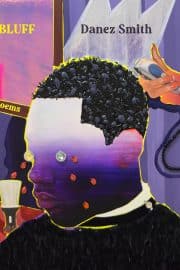
Bluff: Poems
Evergreen
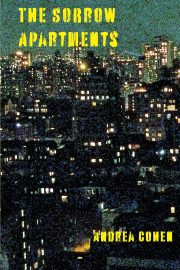
The Sorrow Apartments
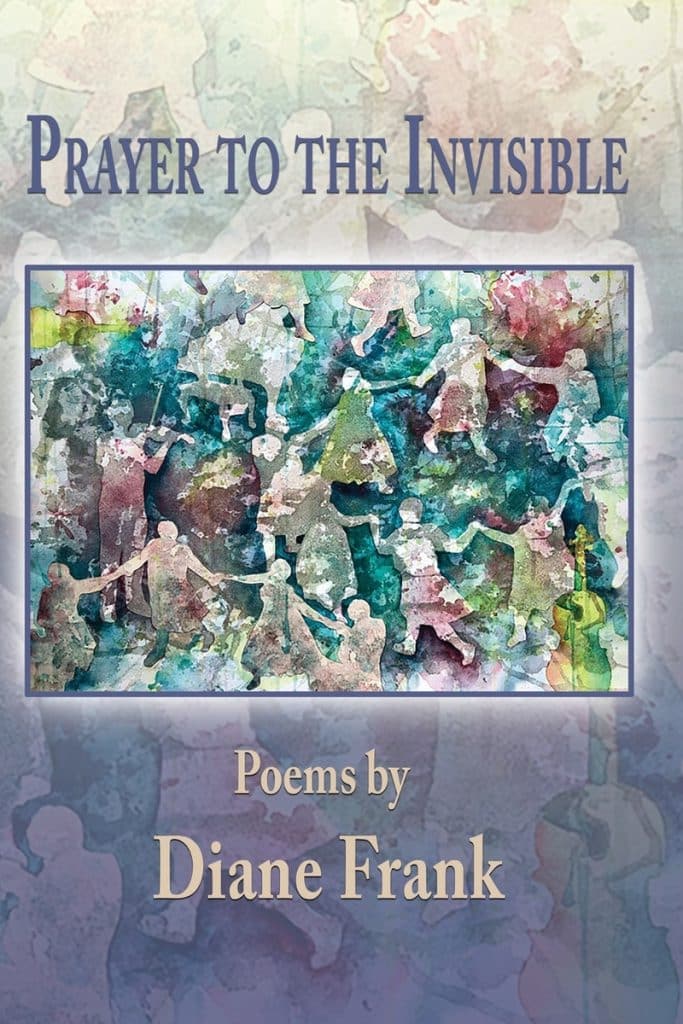
Prayer to the Invisible

The Jan Lilien Education Fund!

The Singing Word

Read: September 2025

Get this book

The Singing Word

by Walt Hunter

The Singing Word: 168 Years of Atlantic Poetry, edited by Walt Hunter, celebrates the people, land, and spirit of America. This remarkable collection showcases a wide range of contemporary and historical poetry from the 168-year archive of The Atlantic magazine. Since its first issue in 1857, the poetry published in The Atlantic has drawn attention to the nation’s ongoing journey of self-discovery.

The magazine’s verse has featured odes to American leaders and landscapes, laments for the dead, and calls for change, appealing to the enduring ideals of Atlantic readers.

This one-of-a-kind collection selects poems of rousing optimism, clear-eyed realism, and moving lyricism—poems infused with the language of America’s songs, myths, and history, from the Civil War up through the present in three rich parts: National Anthems, Natural Lines, and Personal Mythologies.

Curated by The Atlantic’s Poetry Editor, this anthology features both world-famous poets—from Longfellow to Limón, including Robert Frost, W. S. Merwin, Sylvia Plath, and Adrienne Rich—as well as poets whose work has never before been published outside of the magazine.

Offering readers an essential understanding of American canon and the evolving nation, its poets have yearned to capture—the poetry of The Atlantic is the poetry of America.


Walt Hunter is a professor of twentieth- and twenty-first-century literature and chair of the English department at Case Western Reserve University. He is also the fiction and poetry editor for The Atlantic.


Discover your next favorite book and dive into a world of curated, exciting reads by purchasing through my links. You’ll have access to a diverse selection of books that I’ve personally vetted to ensure quality and enjoyment. Additionally, by supporting these selections, you’ll help me continue to provide you with more personalized recommendations. I earn a small commission from your purchase, which allows me to buy and share even more books with you. Your support truly makes a difference!


×
Something About Living

Read: November 2024

Get this book

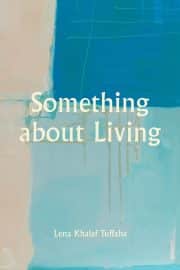
Something About Living

by Lena Khalaf Tuffaha

I recently read “Something About Living” by Lena Khalaf Tuffaha, a poet and essayist whose work resonates deeply. The book of poems won the 2024 National Book Award for Poetry and delved into Palestinian life through the lens of the American language, revealing a legacy of obfuscation and erasure. It questions what happens when language packages ongoing disasters for consumption and disposal.

As a Jew supporting a two-state solution, I initially hesitated to read this collection of poems. However, I was pleasantly surprised by the lyrical beauty of the verses, which explore love not just as an emotion but as a transformative force and “a radical act.” Every poem that genuinely resonated with me. “Something About Living” is a book I highly recommend for its depth and insight!

Ms. Khalaf Tuffaha has an incredible literary repertoire; her previous work, “Water & Salt,” earned the esteemed 2018 Washington State Book Award, while “Kaan & Her Sisters” was a finalist for the Firecracker Award. In addition, “Something About Living” also received the 2022 Akron Prize for Poetry. I’m excited to explore her profound insights and lyrical mastery!

Adrian Matejka, the author of “Somebody Else Sold the World,” has written about “Something About Living,”

“It’s nearly impossible to write poetry that simultaneously holds the human desire for joy and the insistent agitations of protest, but Lena Khalaf Tuffaha‘s gorgeous and wide-ranging new collection Something About Living does just that. Her poems interweave Palestine’s historic suffering, the challenges of living in this world full of violence and ill will, and the gentle delights we embrace to survive that violence. Khalaf Tuffaha’s elegant poems sing the fractured songs of Diaspora while remaining clear-eyed to the cause of the fracturing: the multinational hubris of colonialism and greed. This collection is her witness to our collective unraveling, vowel by vowel, syllable by syllable. “Let the plural be a return of us,” the speaker of “On the Thirtieth Friday We Consider Plurals” says and this plurality is our tenuous humanity and the deep need to hang on to kindness in our communities. In these poems Khalaf Tuffaha reminds us that love isn’t an idea; it is a radical act. Especially for those who, like this poet, travel through the world vigilantly, but steadfastly remain heart first.


When you purchase a book through one of my links, I earn a small commission that helps support my passion for reading. This contribution allows me to buy even more books to share with you, creating an incredible cycle of discovering great reads together! Your support truly makes a difference!


×
Bluff: Poems

Read: December 2024

Get this book

Bluff: Poems

by Danez Smith

Today, I began reading Bluff: Poems by Danez Smith, which was selected as one of The New York Times 100 Notable Books of 2024. This collection emerged after two years of artistic silence, during which the world slowed due to the COVID-19 pandemic, and Minneapolis became the epicenter of protests following the murder of George Floyd. In Bluff, Danez Smith powerfully reflects on their role and responsibilities as a poet and their connection to their hometown of the Twin Cities.

This book addresses the awakening from violence, guilt, shame, and critical pessimism to a sense of wonder, envisioning how we might strive for a new existence in a world that seems to be descending into desolate futures.

Smith infuses these poems with a startling urgency; their questions demand a new language, deep self-scrutiny, and virtuosic textual shapes. A series of ars poetica gives way to “anti-poetica” and “ars America,” implicating poetry in collusion with unchecked capitalism. A photographic collage builds across a sequence, illustrating the consequences of America’s acceptance of mass shootings. Additionally, a brilliant long poem—part map, part annotation, part visual argument—offers the history of Saint Paul’s vibrant Rondo neighborhood before and after officials decided to route an interstate directly through it.

Bluff is a manifesto of artistic resilience, even when time feels fleeting and the places we hold dear—both given and created—are in turmoil. In this powerful collection, Smith turns to honesty, hope, rage, and imagination to envision possible futures.


When you purchase a book through one of my links, I earn a small commission that helps support my passion for reading. This contribution allows me to buy even more books to share with you, creating an incredible cycle of discovering great reads together! Your support truly makes a difference!


×
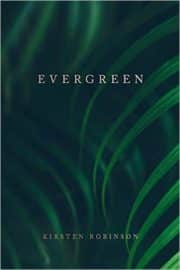
Evergreen

Read: October 2022

Get this book

Evergreen by Kirsten Robinson

by Kirsten Robinson

Evergreen by Kirsten Robinson is a tribute to the enduring resilience of human nature as we cycle through times of light and darkness, much like nature itself. In her debut book, Kirsten Robinson (@NakedWriting) lays her heart bare in a raw, relatable, and inspirational way to describe the journey of growth born out of finding beauty in breakage and love after loss.

Albeit a cliche, the book jumped off the shelf and into my hands when I saw it in Hickory & Hill General Store in Cranford.

This artfully honest collection embodies and expands upon the poetry and prose Robinson began writing under the famous social media pseudonym Naked Writing.

I highly recommend this book and intend to keep it at my bedside for a pick-me-up.

Although I have only started reading the poems, I want to share two that resonated with me.

The first one is on giving thanks.

Give thanks for all
that is good and beautiful;
the gifts you carry
people who lift you up
your big, big love
faith and trust that your life
is unfolding as it should

Give thanks for all
that has been difficult and hard;
trials tribulations tears
tests of self strength fears
all of the unknowns and days
that broke you

Without the darkness
you would not have
learned to appreciate the light

A second one on bravery.

Bravery
is not about standing tall
after you’ve climbed up
the top of a mountain

Bravery
is looking
fear
heartache
rejection
terror
loss
death
in the eye
and saying, “no,
not today”

Bravery
is standing back up
after you’ve been brought down
to your knees


The Jan Lilien Education Fund sponsors ongoing sustainability and environmental awareness programs. Gifts made this month; I will match dollar-for-dollar. All donations are tax-deductible.

Subscribe

Contact Us

I receive a commission when you buy a book or product using a link on this page. Thank you for supporting Sharing Jan’s Love.

×
The Sorrow Apartments

Read: June 2024

Get this book

The Sorrow Apartments

by Andrea Cohen

Today, I explored “The Sorrow Apartments,” the eighth collection of poems by poet Andrea Cohen. Renowned poet Christian Wiman accurately describes Cohen’s work as a “cumulative force,” showcasing her deep attention, genuine intelligence, and soul. Cohen’s distinctive talents are featured in this collection, complemented by her characteristic sly humor, unwavering conciseness, and surprising moments of profound wisdom.

It’s astonishing how swiftly Cohen transports us:

Bunker

What would I
think, coming

up after
my world

had evaporated?
I’d wish

I were water.

The Sorrow Apartments house a collection of sparse and haunting poetry, each piece a captivating narrative of mystery, grief, and awe. These poems transport us not just across time but also through a spectrum of emotions. Cohen’s unique approach to illumination is evident in “Acapulco,” where an unanticipated companion muses, “as men tend to, / the stars comprising Orion’s belt — / as if it were the lustrous sparks and not / the leveling dark that connects us.” For a poet often deemed unfashionable, Cohen’s work proves that unfashionable can be beautiful.

×
Prayer to the Invisible

Read: February 2026

Get this book

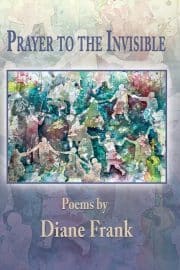
Prayer to the Invisible

by Diane Frank

Diane Frank, a poet and author of “Prayer to the Invisible,” was a childhood friend of my wife, Jan, in Springfield, NJ. Both were gifted and talented young women who excelled as students and were also musicians, dreamers, and diarists. I met Diane at a poetry reading in NYC, where Jan insisted that we meet her brilliant friend. Diane often referred to Jan as her “Angel.”

In her luminous 9th collection, Prayer to the Invisible, poet Diane Frank fully unmasks her wild and loving imagination. With a river-deep range in subject matter and voice, Frank guides us through terrains both difficult and joyous – her Jewish mother’s love of Christmas carols, a grace-filled visitation from a victim of ethnic violence, a ballerina-in-disguise on public transit, and many transcendent visions from dreams. According to Prartho Sereno, Poet Laureate Emerita of Marin County, California. Author of Starfall in the Temple, “Diane Frank is the wise and wonder-struck, barefoot-dancing companion we all long for in these precarious times.”

Each poem was thought-provoking and a blessing for these uncertain times. The title poem, “Prayer to the Invisible,” was written in memory of Dr. Jerry Rabinowitz, who died during the attack at the Tree of Life Synagogue in Pittsburgh on October 27, 2018. He was a fellow alumnus of Jonathan Dayton Regional High School, as were Diane and my wife. The poem is a moving tribute to Dr. Rabinowitz as its words brought tears to my eyes.

The poem is a moving tribute that brought tears to my eyes for Dr. Rabinowitz, and one stanza echoed how I felt when my wife died.

I carry your spirit on my shoulders
as I walk into the synagogue
where we played music for you,
as I follow an eclipse north
as I walk into a dream.
I write your name in the sky after midnight
in the Leonid meteor showers,
in the penumbra of an eclipse
of the wolf moon.


Diane Frank is a poet and musician, author of nine books of poems, three novels, and a photo memoir of her 400-mile trek in the Nepal Himalayas. Listening to the Enigma Variations: New and Selected Poems won the 2022 Next Generation Indie Book Award for Poetry. She is the editor of three bestselling anthologies: River of Earth and Sky: Poems for the Twenty-First Century; Fog and Light: San Francisco through the Eyes of the Poets Who Live Here; and Pandemic Puzzle Poems. Her first novel, Blackberries in the Dream House, was nominated for the Pulitzer Prize.


Discover your next favorite book and dive into a world of curated, exciting reads by purchasing through my links. You’ll have access to a diverse selection of books I’ve personally vetted for quality and enjoyment. Additionally, by supporting these selections, you’ll help me continue to provide you with more personalized recommendations. I earn a small commission from your purchase, which allows me to buy and share even more books with you. Your support truly makes a difference!


×
Parable of the Talents

Read: January 2024

Get this book

Parable of the Talents

by Octavia E. Butler

This morning, I completed reading Octavia E. Butler‘s acclaimed post-apocalyptic novel Parable of the Sower and immediately started reading its sequel, Parable of the Talents, initially published in 1998. This second book is even more relevant today than it was back then. The novel’s timely message of hope and resistance in the face of fanaticism is shockingly prescient.

In 2032, Lauren Olamina survived the destruction of her home and family. She envisioned a peaceful community in Northern California, which she established based on her newly founded faith, Earthseed. This new settlement provides a haven for outcasts who face persecution following the election of an ultra-conservative president. The new president pledges to “make America great again,” but the country becomes increasingly divided and dangerous. Lauren’s subversive colony, a minority religious faction led by a young black woman, becomes a target for President Jarret’s oppressive regime characterized by terror and discrimination.

In the future, Asha Vere discovers the journals of her mother, Lauren Olamina, whom she never met. As she delves into her mother’s writings, she grapples with the conflict between Lauren’s responsibilities to her chosen family and her mission to guide humanity toward a brighter tomorrow.


The Jan Lilien Education Fund sponsors ongoing sustainability and environmental awareness programs. Gifts made this month; I will match dollar-for-dollar. All donations are tax-deductible.

Subscribe

Contact Us

I receive a commission when you buy a book or product using a link on this page. Thank you for supporting Sharing Jan’s Love blog.


×
The Rest Is Memory: A Novel

Read: January 2025

Get this book

The Rest Is Memory: A Novel

by Lily Tuck

Today, I dove into “The Rest Is Memory: A Novel” by Lily Tuck, and it’s already leaving a powerful impression. This poignant tale follows a young Catholic girl’s harrowing journey to Auschwitz, woven in a captivating Rashomon-style narrative showcasing Tuck’s brilliance as a storyteller. Esquire has rightly placed it on their list of Best Books for Fall 2024, and I can see why.

In Tuck‘s skilled hands, “The Rest Is Memory” transforms into an unforgettable piece of historical reclamation, breathing life into an innocent soul who has long been remembered only through a haunting triptych of photographs. It’s a journey that promises to linger in my thoughts long after I’ve turned the last page.

In this mesmerizing novel by Lily Tuck, we first glimpse fourteen-year-old Czeslawa riding on the back of a boy’s motorcycle. Tuck imagines Czeslawa’s upbringing in a small Polish village before her world imploded in late 1942. Stripped of her modest belongings, she arrives at Auschwitz shorn and bearing the tattoo number 26947. Shortly after, she is photographed. Three months later, she is dead.

How did this happen to an ordinary Polish citizen? This is the question Tuck grapples with in this haunting narrative, which frames Czeslawa’s story within the tragic context of the six million Poles who perished during the German occupation. A decade before writing The Rest Is Memory“, Tuck read an obituary of the photographer Wilhelm Brasse, who took over 40,000 pictures of Auschwitz prisoners—including three of Czeslawa Kwoka, a Catholic girl from rural southeastern Poland. Tuck cut out these photos and kept them, determined to learn more about Czeslawa. However, she could only gather the barest facts: the village she came from, the transport she was on, that she was accompanied by her mother and neighbors, her tattoo number, and the date of her death. Tuck crafts a remarkable kaleidoscope of imagination from this scant evidence, something only our greatest novelists can achieve.

Susanna Moore described the novel as “Beautifully written, all the while instilling a sense of horror.” Tuck’s language swirls around the reader, yet no word is out of place. The subtly rotating images tumble forth, accelerating as we learn about Czeslawa’s tragic time in Auschwitz, as well as the lives of real individuals, including the brutal Commandant Rudolf Höss, his unconscionable wife Hedwig, psychiatrist and child rescuer Janusz Korczak, and the sharp Polish short story writer Tadeusz Borowski. Although we know Czeslawa’s fate, we must keep turning the pages, thoroughly captivated by Tuck’s nearly otherworldly prose.


When you purchase a book through one of my links, I earn a small commission that helps support my passion for reading. This contribution allows me to buy even more books to share with you, creating an incredible cycle of discovering great reads together! Your support truly makes a difference!


×
Working

Read: October 2019

Get this book

Working

by Robert A. Caro

Working by Robert A. Caro is a book of evocatively written essays on his life and work. Among the many valuable words of wisdom is his case that one needs to look at every piece of information, not just what we know when we begin. Far too often, people jump to conclusions without having learned all of the facts.

He describes what it was like to interview the mighty Robert Moses and to begin discovering the extent of the political power Moses wielded; the combination of discouragement and exhilaration he felt confronting the vast holdings of the Lyndon B. Johnson Library in Austin, Texas; his encounters with witnesses, including longtime residents wrenchingly displaced by the construction of Moses’ Cross-Bronx Expressway and Lady Bird Johnson acknowledging the beauty and influence of one of LBJ‘s mistresses. He gratefully remembers how, after years of working in solitude, he found a writers’ community at the New York Public Library, and details the ways he goes about planning and composing his books.

Caro recalls the moments at which he came to understand that he wanted to write not just about the men who wielded power but about the people and the politics that were shaped by that power. And he talks about the importance to him of the writing itself, of how he tries to infuse it with a sense of place and mood to bring characters and situations to life on the page. Taken together, these reminiscences–some previously published, some written expressly for this book–bring into focus the passion, the wry self-deprecation, and the integrity with which this brilliant historian has always approached his work.

I found this one of the best books I have read and recommend it to all readers.

Subscribe

Contact Us

×
The Antidote

Read: October 2025

Get this book

The Antidote: A Novel

by Karen Russell

Karen Russell‘s The Antidote, a finalist in the fiction category for the 2025 National Book Award, serves as a profound reckoning with a nation’s tendency to forget. It addresses the settler amnesia and deliberate omissions that have been passed down through generations, revealing not only horrors but also shimmering possibilities. The Antidote resonates with urgent warnings about our current climate emergency, prompting readers to reflect on what might have been and what is still possible.

The Antidote opens on Black Sunday, as a historic dust storm ravages the fictional town of Uz, Nebraska. But Uz is already collapsing—not just under the weight of the Great Depression and the Dust Bowl drought but beneath its own violent histories.

The Antidote follows a “Prairie Witch,” whose body serves as a bank vault for peoples’ memories and secrets; a Polish wheat farmer who learns how quickly a hoarded blessing can become a curse; his orphan niece, a basketball star and witch’s apprentice in furious flight from her grief; a voluble scarecrow; and a New Deal photographer whose time-traveling camera threatens to reveal both the town’s secrets and its fate.


Karen Russell is the author of six fiction books, including the New York Times bestsellers Swamplandia! and Vampires in the Lemon Grove. She is a MacArthur Fellow, a Guggenheim Fellow, and a Pulitzer Prize finalist.

She has received two National Magazine Awards for Fiction, the Shirley Jackson Award, the 2023 Bottari Lattes Grinzane Prize, and the 2024 Mary McCarthy Prize, and was selected for the National Book Foundation’s 5 Under 35 award and The New Yorker’s 20 Under 40 list (she is now decisively over forty).

She serves on the board of Street Books, a mobile library for people living outdoors. Born and raised in Miami, Florida, she lives in Portland, Oregon, with her husband, son, and daughter.


Discover your next favorite book and dive into a world of curated, exciting reads by purchasing through my links. You’ll have access to a diverse selection of books that I’ve personally vetted to ensure quality and enjoyment. Additionally, by supporting these selections, you’ll help me continue to provide you with more personalized recommendations. I earn a small commission from your purchase, which allows me to buy and share even more books with you. Your support truly makes a difference!


×
Never Forget Our People Were Always Free

Read: March 2024

Get this book

Never Forget Our People Were Always Free

by Ben Jealous

Today, I started reading “Never Forget Our People Were Always Free: A Parable of American Healing” by Ben Jealous, the Executive Director of the Sierra Club. The book highlights how the path to healing America’s broken heart begins with each of us having the courage to heal ourselves. According to Mr. Jealous, it would be transformative if every American treated each other as cousins.

Ben Jealous is the son of parents who had to leave Maryland because their cross-racial marriage was illegal.

I briefly met Ben Jealous last May when I went to Washington with the Religious Action Center of Reform Judaism‘s Day of Action. When I saw Mr. Jealous speaking at Temple Emanu-El in neighboring Westfield, I immediately signed up to attend in person. He is an inspiration as an advocate for the environment, civil rights, and the healing of America’s broken heart.

His lively, courageous, and empathetic storytelling calls on every American to look past deeply cut divisions and recognize that we are all in the same boat now. Along the way, Jealous grapples with hidden American mysteries, including:

  • Why do white men die from suicide more often than black men die from murder?
  • How did racial profiling kill an American president?
  • What happens when a Ku Klux Klansman wrestles with what Jesus said?
  • How did Dave Chappelle know the DC Snipers were Black?
  • Why shouldn’t the civil rights movement give up on rednecks?
  • When is what we have collectively forgotten about race more important than what we know?
  • What do the most indecipherable things our elders say tell us about ourselves?

The book Never Forget Our People Were Always Free is told through parables. It features intimate glimpses of political and faith leaders such as Jack Kemp, Stacey Abrams, and the late Archbishop Desmond Tutu. The book also highlights unlikely heroes such as a retired constable, a female pirate from Madagascar, a long-lost Irishman, a death row inmate, and a man with a Confederate flag over his heart.

Never Forget Our People Were Always Free offers readers hope that America’s oldest wounds can heal and her oldest divisions can be overcome.

Although I have only read a handful of pages of the book, I highly recommend it!

×
The Immortal Irishman

Read: October 2019

Get this book

The Immortal Irishman

by Timothy Egan


The Immortal Irishman: The Irish Revolutionary Who Became an American Hero by Timothy Egan is a book I started reading as The Worst Hard Timesincluded the first fifty pages.

I often only read a few pages and then return the book to the e-library. The Immortal Irishman was not the case, and I could not stop reading and borrowed the book immediately.

I had never heard of Thomas Francis Meagher or his life in Ireland or America. The story was fascinating, unique, and essential.

The Irish-American story, with all its twists and triumphs, is told through the improbable life of one man. A dashing young orator during the Great Famine of the 1840s, in which a million of his Irish countrymen died, Thomas Francis Meagher led a failed uprising against British rule, for which he was banished to a Tasmanian prison colony. He escaped and six months later was heralded in the streets of New York – the revolutionary hero, back from the dead, at the dawn of the great Irish immigration to America.

Meagher’s rebirth in America included his leading the newly formed Irish Brigade from New York in many of the fiercest battles of the Civil War – Bull Run, Antietam, Fredericksburg. Twice shot from his horse while leading charges, left for dead in the Virginia mud, Meagher’s dream was that Irish-American troops, seasoned by war, would return to Ireland and liberate their homeland from British rule.

The hero’s last chapter, as territorial governor of Montana, was a romantic quest for a true home in the far frontier. His death has long been a mystery to which Egan brings haunting, colorful new evidence.

I recommend this book.

Subscribe

Contact Us

×