Sliding Doors

Estimated reading time: 3 minutes, 54 seconds
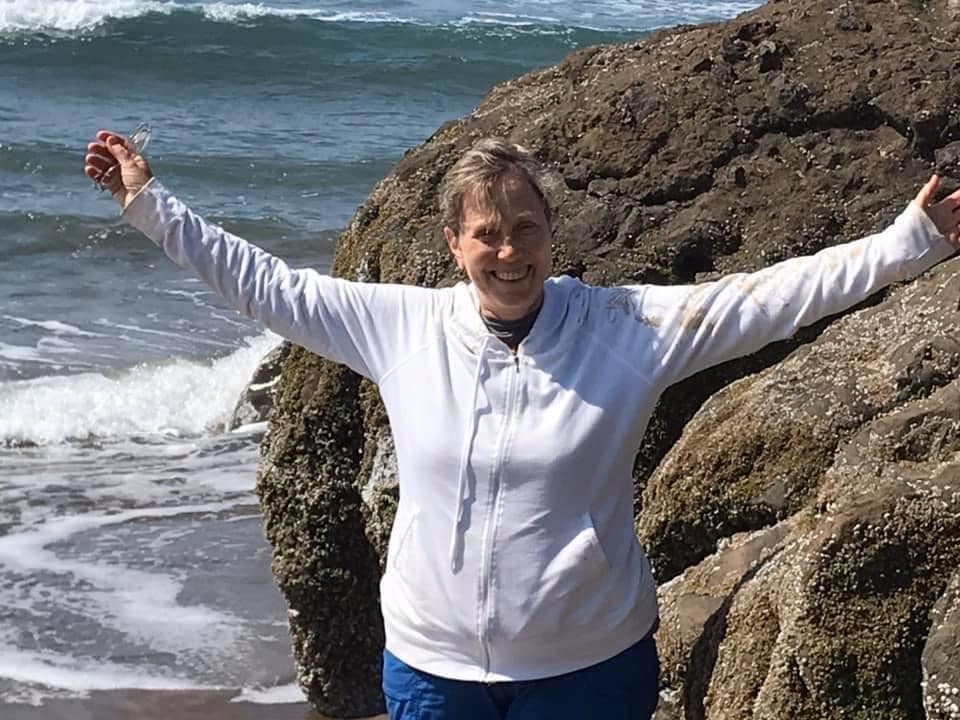
Jan Has a Blood Cancer

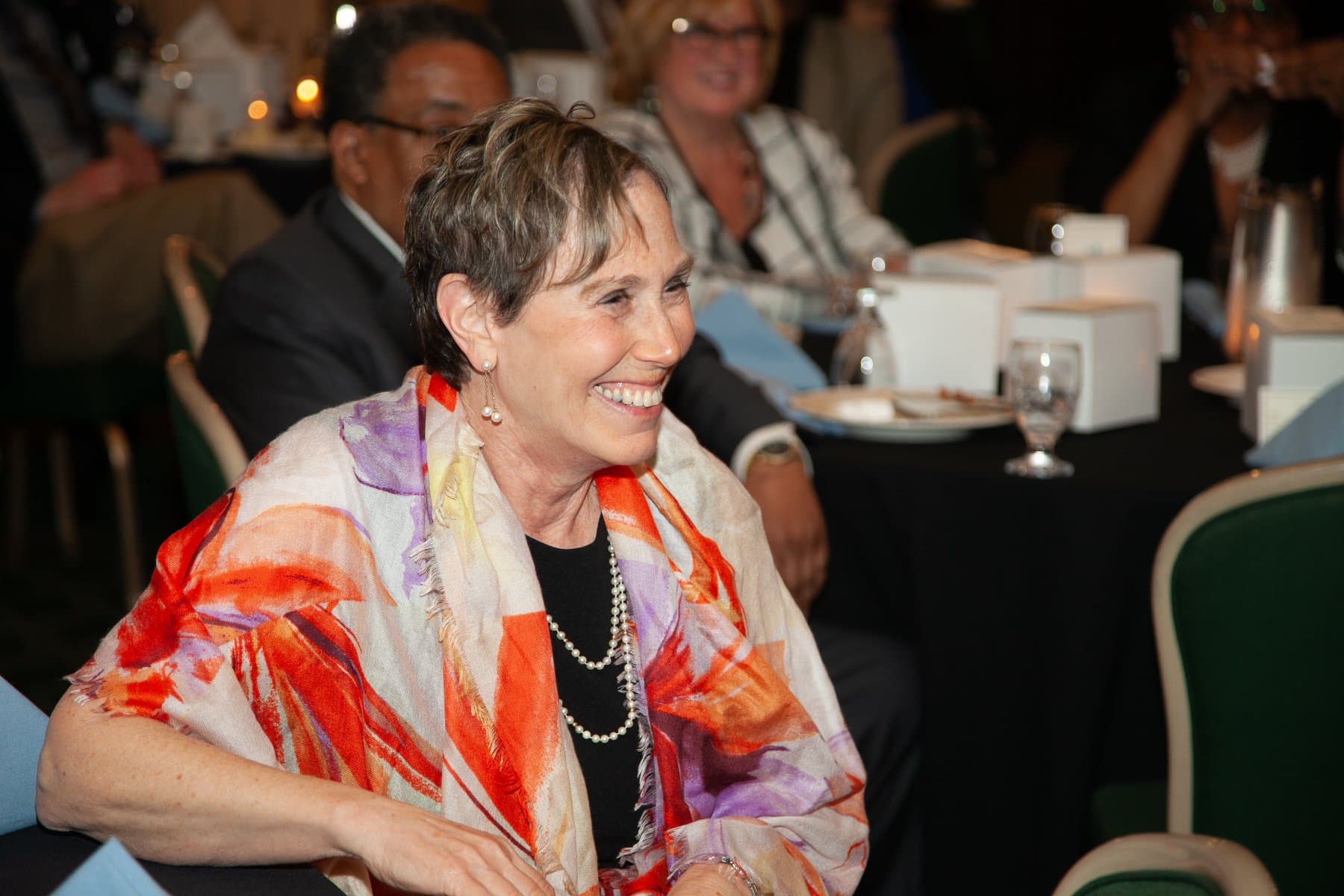
The sliding doors opened and closed as if by magic. No one entered, and no one exited. Our bodies were in the penumbra of the beam for the door’s automatic opening apparatus. Jan and I stood like frozen figurines in front of the Carol G. Simon Cancer Center threshold, and I squeezed her hand and whispered how much I loved her. 

I don’t have cancer,” she said. “Why am I here?”

My nervousness was difficult to hide as my voice attempted to reassure her that we were only going into the cancer center to meet with a doctor who could help us understand why her blood results were so low.

Slowly we moved forward and over the threshold into the center. Like most first-time visitors, we went to the wrong check-in desk. We turned right and found the correct one, and I said my wife was here to see Dr. Saksena.
After processing the medical and personal information, we found adjacent chairs in the waiting room. They called her name before I could speak, and I got up to go with her, but they told me to wait. I held Jan’s hand and wanted to reassure her I loved her and that this was one more step in getting an answer so that she could regain her health.

She has to get blood work first, and then we will call you to join her.

I paced around the waiting room not to get my hourly steps but to keep myself busy. I had not done this when our children were born, as I was next to her all the time. I heard them call my name and almost ran to the door to join her. I held her hand as we walked down a short hallway and into an examination room. 

Dr. Rujuta Saksena was very professional, personable, and knowledgeable. After asking Jan a few questions about her work, life, and interests, she explained that she was both an oncologist and a hematologist. 

She explained that she had examined Jan’s blood and did not have a definitive answer to the cause of the low blood counts. However, she said that it was a blood cancer and that they would know more, including the type of cancer and how to treat it, after further analysis.

I started to cry, and Jan began to shut down and hold her emotions inside of her. Dr. Saksena handed me tissues and reassured us that we need not be concerned as we still needed to determine the type of cancer. She stressed we found cancer early enough that it was very likely treatable.

We exited the room after a few questions and scheduled a follow-up appointment. We discovered it had rained when we left the center, and steam rose from the street. Without an umbrella, we stood under the awning and waited for the last drops to fall.
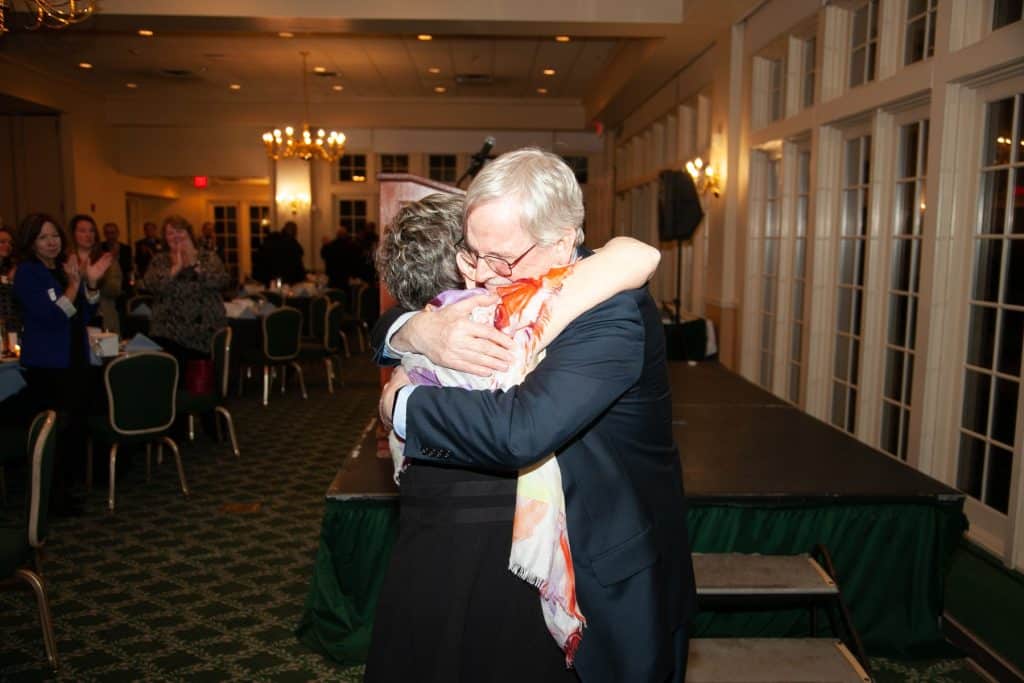
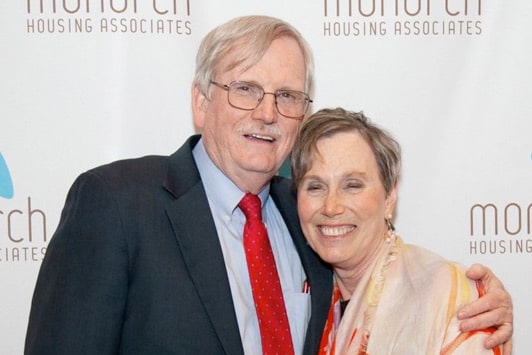
Jan and Richard Hugging
Jan and Richard hugging

I pulled her toward me and hugged her tightly. “We are going to be OK, dear,” I said. I know I should not have cried, but I could not help it.

Jan started talking about her favorite role in life, being a bulldozer. “That’s how I will manage this,” she said. I could feel her pulling away and bottling up her feelings and emotions inside of her.

This time, that will not work,” I said. We will need all the support and help we can get.

She kept repeating her mantra. It’s worked every other time, and it will work this time.

We talked without resolving anything. We agreed to keep talking. 

That is how Jan’s nineteen-month cancer journey began precisely two years ago today. Until the end, I showered her with love and encouraged her to accept help from family and friends.

Despite my tears, I was confident she would be OK then. We had an excellent medical team and would soon have a treatment plan. Loving and taking care of her was a commitment I made to Jan not only on the day we married but every day from the day we met

Taking on the caregiver’s constantly changing role, I committed to doing these tasks better than ever. I am not sure if I was a good caregiver, but I know that the love, care, and support I provided helped my wife during the most challenging days of her life. Two years later, I know I did the best I could as a caregiver.

I miss her and always will. Love never dies!


Subscribe
Contact Us
Creative Commons License

This work is licensed under a Creative Commons Attribution-NonCommercial 4.0 International License.

8 comments add your comment

Share your thoughts and ideas

This site uses Akismet to reduce spam. Learn how your comment data is processed.

Previous Post:

Next Post:

The Jan Lilien Education Fund!

O Beautiful A Novel

Read: March 2023

Get this book

O Beautiful: A Novel

by Jung Yun

O Beautiful: A Novel by Jung Yun, the critically acclaimed author of Shelter, has written an unflinching portrayal of a woman trying to come to terms with the ghosts of her past and the tortured realities of a deeply divided America. With spare and graceful prose, O Beautiful presents an immersive portrait of a community rife with tensions, competing interests, and one woman’s attempts to reconcile her anger with her love of beautiful but troubled land. I highly recommend O Beautiful!

I finished reading O Beautiful on International Women’s Day. It might have been coincidental, but in my humble opinion, it was the perfect book to read on this important day. Ms. Yun has written a novel that touches on the intersectionality of the core issues of our divided land. The misogyny, the racism, and the impact of capitalism out of control are all related and are affecting the quality of life in the early twenty-first century.

Elinor Hanson, the protagonist, is so vividly written that she jumps off the page and becomes someone we know as a family member. When she returned home to write about the Bakken oil boom in North Dakota, I felt I had known her all my life. Unfortunately, the novel ended when she finally understood the issues and was in touch with her anger. I wish it would have continued so that the problems might have been addressed. Despite this, I highly recommend this novel.

O Beautiful is the twenty-first book I have read this year! My goal was twenty-three.

The Goodreads summary provides an overview,

Elinor Hanson, a forty-something former model, struggles to reinvent herself as a freelance writer when she receives an unexpected assignment. Her mentor from grad school offers her a chance to write for a prestigious magazine about the Bakken oil boom in North Dakota.

Elinor grew up near the Bakken, raised by an overbearing father and a distant Korean mother who met and married when he was stationed overseas. After decades from home, Elinor returns to a landscape she hardly recognizes, overrun by tens of thousands of newcomers.

Surrounded by roughnecks seeking their fortunes in oil and long-time residents worried about their changing community, Elinor experiences a profound sense of alienation and grief. She rages at the unrelenting male gaze, the locals who still see her as a foreigner, and the memories of her family’s estrangement after her mother decided to escape her unhappy marriage, leaving Elinor and her sister behind.

The longer she pursues this potentially career-altering assignment, the more her past intertwines with the story she’s trying to tell, revealing disturbing new realities that will forever change her and how she looks at the world.


The Jan Lilien Education Fund sponsors ongoing sustainability and environmental awareness programs. Gifts made this month; I will match dollar-for-dollar. All donations are tax-deductible.

Subscribe

Contact Us

I receive a commission when you buy a book or product using a link on this page. Thank you for supporting Sharing Jan’s Love blog.


×
The Letter Carrier

Read: July 2025

Get this book

The Letter Carrier: A Novel

by Francesca Giannone

In the bestselling novel that has captivated readers in Italy, The Letter Carrier by Francesca Giannone depicts a small town in southern Italy that reflects the experiences of many others. It portrays the lives of women and men—husbands and wives, fathers and sons, mothers and daughters—as they strive to navigate the world while remaining true to their hearts. The Letter Carrier explores the universal theme of connection and examines the consequences that arise when those connections occur at the wrong time.

Salento, Italy, June 1934: A coach stops in the main square of Lizzanello, a tight-knit village where everyone knows each other. A couple gets off: The man, Carlo, a Southerner, is happy to be back home after a long time away; the woman, Anna—his wife—is a Northerner. Carlo’s brother is there to meet them, and he, along with everyone else, can’t help but notice that Anna is as beautiful as a Greek statue.

But Anna is not like the other wives. She doesn’t gossip or attend church. She reads books no one else has ever heard of, exploring ideas that some find threatening. She even wears pants, just like a man, and thinks a woman should have rights, just like a man.

There aren’t many options for a woman with Anna’s sensibilities, so when she learns that the post office is hiring, she leaps at the opportunity. A female letter carrier? It is unthinkable! But Anna passes the postal exam and soon becomes the invisible thread connecting the town as she delivers letters between clandestine lovers, families waiting to hear news of loved ones away at war, and even helps those who can’t read.

Letters connect people, conveying both information and emotion. But for some in Lizzanello, letters are too little and too late.


Francesca Giannone holds a degree in communication science and studied at the CSC, the oldest film school in Europe, located in Rome. She has published several short stories in literary magazines, both in print and online. Currently, Giannone resides in Milan, but her heart remains in her hometown of Lizzanello, a seaside town in the Salento region of Italy. She hopes to return there to live one day.


Elettra Pauletto translated The Letter Carrier. After earning her MFA from Columbia University, she has split her time between writing about her experiences in Africa—specifically in the Democratic Republic of the Congo, Rwanda, and Senegal—and translating fiction and nonfiction works from Italian and French into English. In both her writing and translations, she heavily relies on her background as a former political risk analyst who covered Sub-Saharan Africa, the Middle East, and Europe.


When you purchase a book through one of my links, I earn a small commission that helps support my passion for reading. This contribution allows me to buy even more books to share with you, creating an incredible cycle of discovering great reads together! Your support truly makes a difference!

Enjoy a limited-time offer of 20% off your next book purchase at Bookshop.org!


×

Read: April 2026

Get this book

The Future Is Peace

by Aziz Abu Sarah and Maoz Inon

The Future Is Peace: A Shared Journey Across the Holy Land” explores the experiences of two lifelong peace activists, Aziz Abu Sarah and Maoz Inon, who serve as guides in Israel and Palestine. Both have personally endured loss due to the ongoing conflict. They lead readers on a profound and transformative journey through this sacred yet tumultuous land, revealing the historical, political, and personal narratives that both divide and connect their communities and peoples.

We do not see ourselves as Palestinians and Israelis, or as Jews and Arabs, but as human beings who believe in fostering a culture of dialogue, a culture of forgiveness, and a culture of peace. To those who see only division lines, we say: If you must divide us, let it be as those who believe in peace and equality and those who don’t… yet.”

Palestinian Aziz Abu Sarah and Maoz Inon forged a bond of brotherhood when the world expected them to be enemies. Both have lost family to the conflict. Both have known the bitterness of righteous anger. Yet, they chose a different path.

In The Future Is Peace, Sarah and Inon take readers on a transformative weeklong journey across a sacred and bloodstained land. Facing competing narratives, they explore how compassion and unity can pull humanity back from the precipice of blind hatred. Throughout their travels, they have been asked again and again: In the face of so much loss, how can we ever find hope? Their answer is always the same. One cannot find hope. We must create it.

This book is a rebuttal to a broken world and a bold challenge to the belief that more violence can ever bring security. Told with unflinching honesty, their story is proof that peace is not a naive dream, but a courageous choice—for reconciliation to heal the wounds of revenge, for partnerships to change a destiny of war, and for empathy to save us from drowning in sorrow.

Pairing unapologetic candor with inspirational prose, Sarah and Inon are sending an urgent message: the people have the power to make change. Peace is inevitable. For Palestinians, for Israelis, and for the world that awaits their example, it is not just possible—it is the future.


Aziz Abu Sarah serves as Co-CEO of InterAct International, a nonprofit organization dedicated to promoting peace in the Middle East. He is a peacebuilder, entrepreneur, National Geographic Explorer, TED Fellow, and a respected speaker and trainer in conflict resolution and responsible travel.

Aziz is also the co-founder of MEJDI Tours, a travel company aiming to transform tourism into a powerful tool for citizen diplomacy. He has received numerous accolades, including awards from the United Nations, the Institute of International Education, and the Explorers Club.

Recognized as one of the world’s 500 most influential Muslims by the Royal Islamic Strategic Studies Center in Jordan, Aziz has contributed opinion pieces to prominent publications such as The New York Times, The Washington Post, Al-Quds, and Haaretz.

Maoz Inon is the Co-CEO of InterAct International, a nonprofit organization dedicated to promoting peace in the Middle East. He is a peace activist from Israel and an entrepreneur. In recognition of his efforts, he has received the prestigious Franco-German Human Rights Prize and the Shared Living Award from Abraham Initiatives.

He has spoken before audiences on Capitol Hill, at universities across the United States, and in the European Parliament. Additionally, Inon has contributed articles to various publications, including The Washington Post, Al Jazeera, and Haaretz.

He has also founded several initiatives aimed at fostering peace in Israel and the Middle East, including the Jesus Trail, Fauzi Azar Inn, and the Abraham Hostel & Tour brands.


Discover your next favorite book and dive into a world of curated, exciting reads by purchasing through my links. You’ll have access to a diverse selection of books I’ve personally vetted for quality and enjoyment. Supporting these selections not only helps me continue to provide you with personalized recommendations but also ensures you have access to meaningful stories that enrich your life. Your support truly makes a difference in helping me share more books and insights with you!


×
Small Things Like These

Read: July 2024

Get this book

Small Things Like These

by Claire Keegan

Today, I read “Small Things Like These” by Claire Keegan, one of the New York Times’s 100 Best Books of the 21st Century, and the seventeenth book I have read from that list. “Small Things Like These” is award-winning author Claire Keegan‘s landmark new novel, a tale of one man’s courage and a remarkable portrait of love and family.

The story is set in 1985 in a small Irish town. During the weeks leading up to Christmas, Bill Furlong, a coal merchant and family man, faces his busiest season. Early one morning, while delivering an order to the local convent, Bill makes a discovery that forces him to confront his past and the complicit silences of a town controlled by the church.

I found this short but well-written novel very impactful. The following quote explains the powerful impact of the need for meaning and purpose in our lives, as Furlong walks in the snow after taking action to bring home a young girl from a Magdalen laundry. How often can we ignore the small things like these and still look ourselves in the mirror?

“As they carried on along and met more people Furlong did and did not know, he found himself asking was there any point in being alive without helping one another? Was it possible to carry on along through all the years, the decades, through an entire life, without once being brave enough to go against what was there and yet call yourself a Christian, and face yourself in the mirror?”

As an international bestseller, ‘Small Things Like These‘ is a profoundly moving story of hope and quiet heroism. It’s a narrative that will make you admire the characters and stir your empathy, all crafted by one of our most critically acclaimed and iconic writers. The characters in the story are so relatable that you will feel understood and deeply invested in their journey.


Discover your next favorite book and dive into a world of curated, exciting reads by purchasing through my links. You’ll have access to a diverse selection of books that I’ve personally vetted to ensure quality and enjoyment. Supporting these selections not only helps me continue providing you with personalized recommendations but also ensures you get access to meaningful stories that enrich your life. Your support truly makes a difference in helping me share more books and insights with you!


×
Corey Fah Does Social Mobility

Read: February 2024

Get this book

Corey Fah Does Social Mobility

by Isabel Waidner

Today, I began reading “Corey Fah Does Social Mobility: A Novel” by Isabel Waidner. The book is about Corey Fah, a writer whose novel has just won the Fictionalization of Social Evils prize. Despite this achievement, the trophy and funds with the award still need to be in reach. The novel celebrates radical queer survival and challenges false notions of success.

Corey, their partner Drew, and their pet spider, Bambi Pavok, embark on a quest to find an elusive trophy with neon-beige color and UFO-like qualities. This journey takes them back to their childhood in the forest and includes a stint on a reality TV show. While facing the horrors of wormholes and time loops, Corey discovers the difference between a prize and a gift in a complex way.

Following the Goldsmiths Prize–winning Sterling Karat Gold, Isabel Waidner’s bold and buoyant new novel is about coming into one’s own, the labor of love, the tendency of history to repeat itself, and what ensues when a large amount of cultural capital is suddenly deposited in a place it has never been before.

×
Three Strong Women

Read: August 2022

Three Strong Women

by Marie NDiaye

Three Strong Women by Marie NDiaye is a novel that focuses on three women who say no. Winner of the coveted Prix Goncourt, the first by a black woman, Marie NDiaye, creates a luminous narrative triptych as harrowing as beautiful. With lyrical intensity, Marie NDiaye masterfully evokes the relentless denial of dignity, to say nothing of happiness, in these lives caught between Africa and Europe. I highly recommend this novel.

John Fletcher translated the Kindle version.

The Goodreads summary provides an overview,

This is the story of three women who say no: Norah, a French-born lawyer who finds herself in Senegal, summoned by her estranged, tyrannical father to save another victim of his paternity; Fanta, who leaves a modest but contented life as a teacher in Dakar to follow her white boyfriend back to France, where his delusional depression and sense of failure poison everything; and Khady, an impoverished widow put out by her husband’s family with nothing but the name of a distant cousin (the Fanta above) who lives in France, a place Khady can scarcely conceive of but toward which she must now take desperate flight.

With lyrical intensity, Marie NDiaye masterfully evokes the relentless denial of dignity, to say nothing of happiness, in these lives caught between Africa and Europe. We see with stunning emotional exactitude how ordinary women discover unimagined reserves of strength, even as their humanity is chipped away. Three Strong Women admits to an immigrant experience rarely, if ever, examined in fiction, but even more into the depths of the suffering heart.


The Jan Lilien Education Fund sponsors ongoing sustainability and environmental awareness programs. Gifts made this month are matched dollar-for-dollar. All donations are tax-deductible.

Subscribe

Contact Us

I receive a commission when you buy a book or product using a link on this page. Thank you for supporting Sharing Jan’s Love blog.

×

Discover more from Sharing Jan’s Love

Subscribe now to keep reading and get access to the full archive.

Continue reading