
Jan’s Sweet Kisses

Estimated reading time: 3 minutes, 48 seconds
Every Kiss With Jan Was Memorable!

Kissing Jan was a joy! Each kiss was memorable, but two were very special. These were the first and the last ones. Every day, I wish upon a star and pray that I might have one more kiss from Jan. Alas, it is impossible. But memories of those kisses are so real I can taste their sweetness.


The First Kiss – November 11, 1973

Richard, we are leaving,” said Mark, my co-worker and friend. His voice came through loud and clear into the pod that had surrounded Jan and me since we arrived at her party. I thought Jan and I were alone and not at a noisy party until Mark spoke. We talked and laughed and truly enjoyed each other’s company.

I was between a rock and a hard place. I knew I should leave with my friends, but I also wanted to stay with Jan. I was afraid if I left, Jan and I might not meet again. I did not even have her phone number or know her last name.
When I arrived at the party, Jan asked, “Why didn’t you call me?” I told her I did not have her number and wondered why she had not called me. Jan took her wine glass and poured wine on my head, and I poured beer on her head.

We laughed and began a one-on-one conversation. I knew then that I had met the woman I would marry. Later she told me she knew I was the one when I entered the party.

When Mark told me they were leaving, I was not thinking about the next five minutes; my thoughts were on the next five weeks, five months, five years, and more, that Jan and I could live together and love each other.

I wanted to kiss her so she knew how I felt, but I was unsure if she would let me. 

I only needed two fingers to count the number of women I had kissed. Years ago, the number of brushoffs had exceeded the total of all my fingers and toes.

I was worried that Jan had a boyfriend, and he might be at the party, and perhaps all she wanted was a friend to have a few laughs and pour wine on their head. 

I saw my three friends from East Williamsburg gather their coats. The time to decide was now.

“I will meet you in the subway in a minute,” I said half-heartedly.

I rose slightly from my chair and leaned over toward her. I decided a kiss on her forehead would be safe. However, I kissed the top of her head. She smiled and lifted her head, and I kissed her forehead. She looked up and smiled at me. Our lips embraced, and we kissed for the first time. It was the sweetest kiss in the universe.

I never made it back to East Williamsburg that night. 

The Last Kiss – May 3, 2021

Jan had been home since April 10 for hospice care. On May 3, I woke up and went downstairs for breakfast. I walked to the hospital bed and leaned over to kiss her forehead. I had always given her a good morning kiss for forty-eight years, and today was no different.

As I approached her lips, I said, “I love you!” Her voice was weak, but she responded clearly and without reservation, “I love you too!” We kissed. It was another sweet kiss with the love of my life, and I had no idea at that moment that it would be our last kiss.

I told her I would take the recycling and get the morning papers.

When I returned, I said, “Hello, my love!”

I had a light breakfast, and I went over to the bed. Standing by Jan, I realized that she had passed away.

Tears filled my eyes and rolled down my cheeks. My beard was soaking wet as if I had just showered.

I love her and miss her so very much! It was a blessing to be loved by her.


Sharing Jan’s Love Because Love Never Dies!


Subscribe
Contact Us
Creative Commons License

This work is licensed under a Creative Commons Attribution-NonCommercial 4.0 International License.

18 comments add your comment

Share your thoughts and ideas

This site uses Akismet to reduce spam. Learn how your comment data is processed.

The Jan Lilien Education Fund!

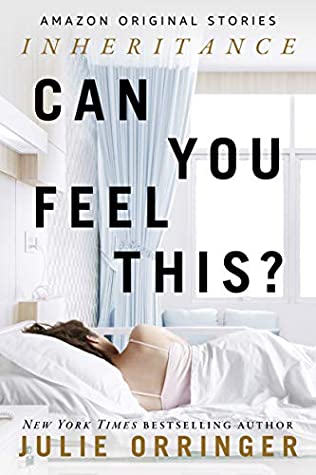
Can You Feel This?

Read: January 2023

Get this book

Can You Feel This?

by Julie Orringer

Today I read Can You Feel This? by Julie Orringer. This short story rekindled so many memories. In the chaos of a maternity ward, memories of tragedy and grief come flooding back for an anxious mother-to-be as she struggles to balance her child’s needs with her healing. Although Jan and I did not have the shadows of tragedy and grief when our sons were born, this short story was more than a page-turner. Can You Feel This? reminded me of the power of the love Jan and I shared.

When our second son was born, we almost had him at home or in the as we waited too long. In Can, You Feel This? , that was not the case. Both children had two loving parents but also grandparents.

When Jan had the first of several hospitalizations, she was in the hospital where her mother died. Jan told me her feelings, and I comforted her, but I could not fully comprehend her angst.

Can You Feel This? is part of Inheritance, a collection of five stories about secrets, unspoken desires, and dangerous revelations between loved ones. Each Inheritance piece can be read or listened to in a single setting. By yourself, behind closed doors, or shared with someone you trust. This is the second one in the series I have read. The previous one was Everything That my Mother Taught Me.

The Goodreads summary provides an overview,

Rushed into an emergency cesarean section, a woman finds herself in the same hospital where her suicidal mother died. She’s buried the trauma of her mother’s last hours—and also the dread that she might be just as vulnerable to breaking. As the new mother relives one crisis in the midst of another, prize-winning author Julie Orringer turns the joyous event of birth into a harrowing, poignant short story.


The Jan Lilien Education Fund sponsors ongoing sustainability and environmental awareness programs. Gifts made this month; I will match dollar-for-dollar. All donations are tax-deductible.

Subscribe

Contact Us

I receive a commission when you buy a book or product using a link on this page. Thank you for supporting Sharing Jan’s Love blog.


×
Sing, Unburied, Sing

Read: October 2024

Get this book

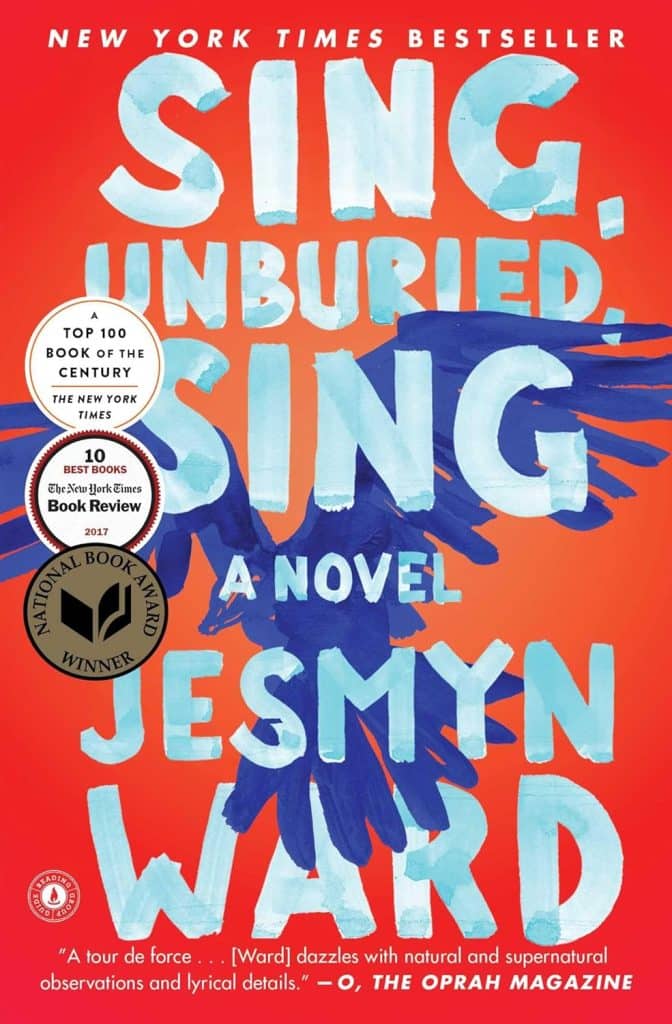
Sing, Unburied, Sing

by Jesmyn Ward

I started reading Jesmyn Ward‘s novel Sing, Unburied, Sing today. The New York Times selected it as one of the best books of the 21st century and awarded it the National Book Award. According to The New York Times, Jesmyn Ward‘s historic second National Book Award winner is “perfectly poised for the moment.” It’s an intimate portrait of three generations of a family and an epic tale of hope and struggle.

Jojo is thirteen years old and is trying to understand what it means to be a man. He has several father figures to learn from, including his Black grandfather, Pop. However, Jojo’s understanding is complicated by other men in his life: his absent White father, Michael, who is being released from prison; his absent White grandfather, Big Joseph, who refuses to acknowledge him; and the memories of his deceased uncle, Given, who died as a teenager.

His mother, Leonie, is inconsistent in her and her toddler daughter’s lives. She is a flawed mother in constant conflict with herself and those around her. She is Black, and her children’s father is White. She wants to be a better mother but struggles to prioritize her children over her own needs, particularly her drug use. Tormented and comforted by visions of her deceased brother, which only come to her when she’s high, Leonie is embattled in ways that reflect the harsh reality of her circumstances.

When their father is released from prison, Leonie takes her kids and a friend in her car and drives north to Mississippi and Parchman Farm, the State Penitentiary. At Parchman, there is another thirteen-year-old boy, the ghost of a deceased inmate who carries the ugly history of the South with him in his wanderings. With his supernatural presence, this ghostly figure also has something to teach Jojo about fathers and sons, legacies, violence, and love.

Described as a majestic and unforgettable family story, ‘Sing, Unburied, Sing‘ is rich with Ward‘s distinctive, lyrical language. As noted by The Philadelphia Inquirer, her unique narrative style takes readers on ‘an odyssey through rural Mississippi’s past and present.’

×
We Are All the Same in the Dark

Read: January 2023

Get this book

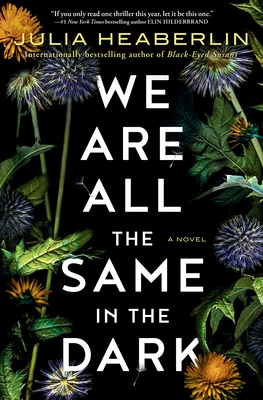
We Are All the Same in the Dark

by Julia Heaberlin

We Are All the Same in the Dark by Julia Heaberlin is a novel I highly recommend and wish I had read earlier. The title summarizes the reality of all humans, that in the dark we are all the same. Disabilities do not define us, just as being a widow does not define who I am. In this twisty psychological thriller, Julia Heaberlin paints two unforgettable portraits of a woman and a girl who redefine perceptions of physical beauty and strength. Her novel has helped me redefine my grief.

I have been a widow for almost twenty-one months. After a trauma of that magnitude, it is easier to let the widowed state define me. But I am more than just a widow! But I am a father, grandfather, friend, neighbor, advocate, and more. Reading We Are All the Same in the Dark helped me embrace myself and not wallow in widowhood.

The novel begins with the discovery of a girl abandoned by the side of the road who threatens to unearth the long-buried secrets of a Texas town’s legendary cold case. In the first section, I was still determining if I wanted to continue. Once I read about Odette Tucker and Angel, it became a page-turner. 

This line from Odette given to Angelica, aka Angel, summarizes the characteristics that each of us should live by.

Tender. Resilient. Strong. Resourceful. Kind. Empathetic.—Six words Marshall Tucker wrote on a piece of paper to describe his daughter, Odette.

As a mensch-in-training, I will strive to live by those six words.

We are truly all the same in the dark.

We Are All the Same in the Dark is the ninth book I read this year.

The Goodreads summary provides an overview,

It’s been a decade since Trumanell Branson disappeared, leaving only a bloody handprint behind. Her pretty face still hangs like a watchful queen on the posters on the walls of the town’s Baptist church, the police station, and the high school. They all promise the same thing: We will find you. Meanwhile, her brother, Wyatt, lives as a pariah in the desolation of the old family house, cleared of wrongdoing by the police but tried and sentenced in the court of public opinion and a new documentary about the crime.

When Wyatt finds a lost girl dumped in a field of dandelions, making silent wishes, he believes she is a sign. The town’s youngest cop, Odette Tucker, believes she is a catalyst that will ignite a seething town still waiting for its missing girl to come home. But Odette can’t look away. She shares a wound that won’t close with the mute, one-eyed mystery girl. And she is haunted by her history with the missing Tru.

Desperate to solve both cases, Odette fights to save the lost girl in the present and to dig up the shocking truth about a fateful night in the past–the night her friend disappeared. This night inspired her to become a cop, the night that wrote them all a role in the town’s dark, violent mythology.


The Jan Lilien Education Fund sponsors ongoing sustainability and environmental awareness programs. Gifts made this month; I will match dollar-for-dollar. All donations are tax-deductible.

Subscribe

Contact Us

I receive a commission when you buy a book or product using a link on this page. Thank you for supporting Sharing Jan’s Love blog.


×
How to Read a Book: A Novel

Read: May 2024

Get this book

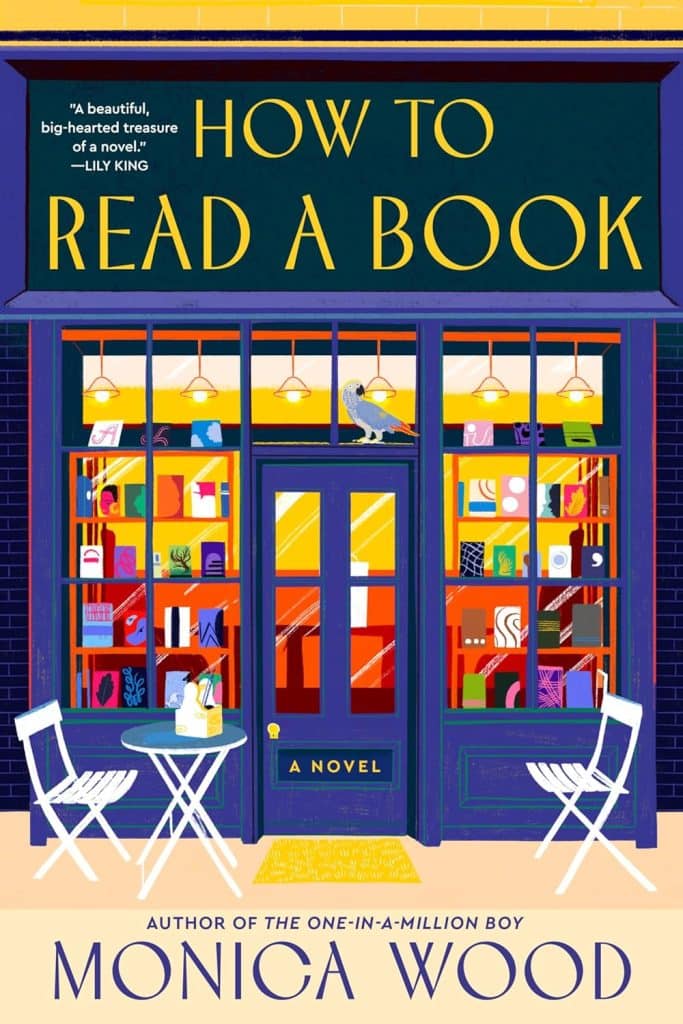
How to Read a Book: A Novel

by Monica Wood

I started reading Monica Wood‘s “How to Read a Book: A Novel” today. It’s a heartfelt and uplifting story about a chance encounter at a bookstore—the novel delves into themes of redemption, unlikely friendships, and the life-changing power of sharing stories. With Monica Wood’s characteristic heart, wit, grace, and understanding, the novel illuminates the decisions that shape a life and the kindnesses that make life meaningful.

The story revolves around three characters: Violet Powell, a twenty-two-year-old from rural Abbott Falls, Maine, who is being released from prison after serving twenty-two months for a drunk-driving crash that killed a local kindergarten teacher; Harriet Larson, a retired English teacher who runs the prison book club and is facing the prospect of an empty nest; and Frank Daigle, a retired machinist who is struggling to come to terms with the complexities of his marriage to the woman Violet killed.

Their lives unexpectedly intersect one morning in a bookstore in Portland, Maine. Violet buys the novel she read in the prison book club before her release, Harriet selects the following title for the remaining women, and Frank fulfills his duties as the store handyman. Their encounters set off a chain of events that will profoundly change them.

How to Read a Book is a candid and hopeful story about releasing guilt, embracing second chances, and the profound impact of books on our lives.

×
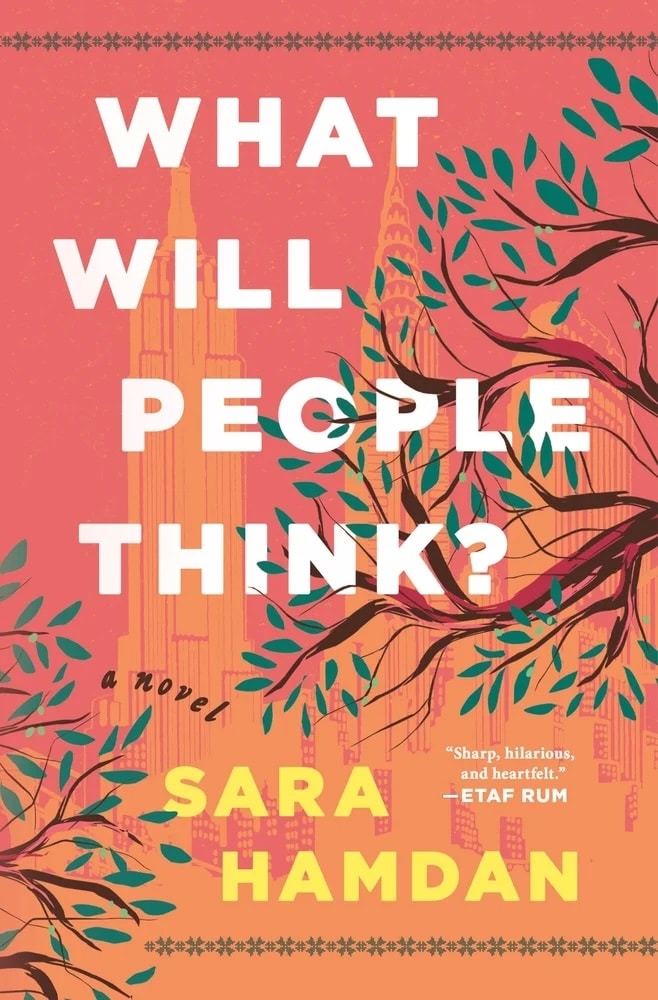
What Will People Think?

Read: June 2025

Get this book

What Will People Think?

by Sara Hamdan

If you’re in the mood for a book that’s equal parts hilarious and heartwarming, look no further than “What Will People Think?” by Sara Hamdan. This captivating tale takes readers on a journey of self-discovery, inviting them to explore the hidden facets of their identity. With its poignant exploration of love in all its many forms, the novel masterfully shows how these connections can truly transform us and inspire personal growth, leaving you inspired and uplifted.

Mia Almas, like many of us, has a secret. By day, she works as a media fact-checker—a role that her conservative Arab grandparents approve of. But by night, she performs at comedy clubs across New York City. Her grandparents’ approval is a significant part of her life, and it’s this conflict between their expectations and her true self that adds depth to her story.

As Mia pursues a forbidden romance with her boss, her standup gets better and bolder, leading to a surprising spotlight that exposes her secret gig. Horrified and worried that her rebellious act could mean significant consequences for her reserved Palestinian-American family, Mia frantically dives into damage control. However, all of her efforts to retreat from the spotlight reveal a family scandal from the 1940s that could alter everything, adding unexpected twists to her story.

As a hopeless romantic, I found this charming story to be an irresistible page-turner that will leave you both laughing and reflecting long after you’ve turned the last page.


Sara Hamdan, a Berkeley and Columbia graduate, is a former Merrill Lynch banker, New York Times journalist, and editor at Google. After winning a Netflix short story award, she received the First Chapter: Emirates Literature Foundation Seddiqi First Chapter Writers’ Fellowship for her debut novel, What Will People Think? Sara is Palestinian American, raised in Greece, and has called Dubai home for twenty years. When she’s not typing away on her laptop, she loves to spend time at the beach with her husband and two kids.


When you purchase a book through one of my links, I earn a small commission that helps support my passion for reading. This contribution allows me to buy even more books to share with you, creating an incredible cycle of discovering great reads together! Your support truly makes a difference!

Enjoy a limited-time offer of 20% off your next book purchase at Bookshop.org!


×
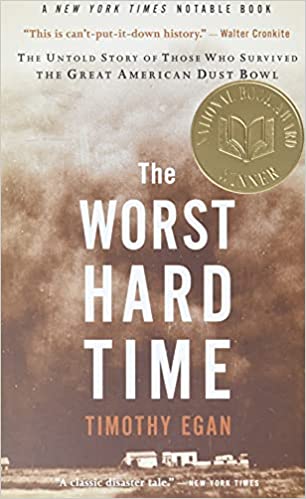
The Worst Hard Time

Read: September 2019

Get this book

The Worst Hard Time

by Timothy Egan

The Worst Hard Time: The Untold Story of Those Who Survived the Great American Dust Bowl by Timothy Egan was initially a book I selected from the e-library because nothing else I wanted to read was available. Once I started reading the book, I could not put it down.

Now that we have had the warmest summer since 1936 during the dust bowl, the book has even more meaning.

According to The New York Times,

The dust storms that terrorized the High Plains in the darkest years of the Depression were like nothing ever seen before or since. Timothy Egan’s critically acclaimed account rescues this iconic chapter of American history from the shadows in a tour de force of historical reportage. Following a dozen families and their communities through the rise and fall of the region, Egan tells of their desperate attempts to carry on through blinding black dust blizzards, crop failure, and the death of loved ones. Brilliantly capturing the terrifying drama of catastrophe, Egan does equal justice to the human characters who become his heroes, “the stoic, long-suffering men and women whose lives he opens up with urgency and respect.”

With the likelihood of more ecological catastrophes in the immediate future, this is a book I highly recommend.

Subscribe

Contact Us

×

Discover more from Sharing Jan’s Love

Subscribe now to keep reading and get access to the full archive.

Continue reading