New Book: American Bulk

Essays on Excess

Estimated reading time: 0 minutes, 0 seconds
American Bulk

American Bulk

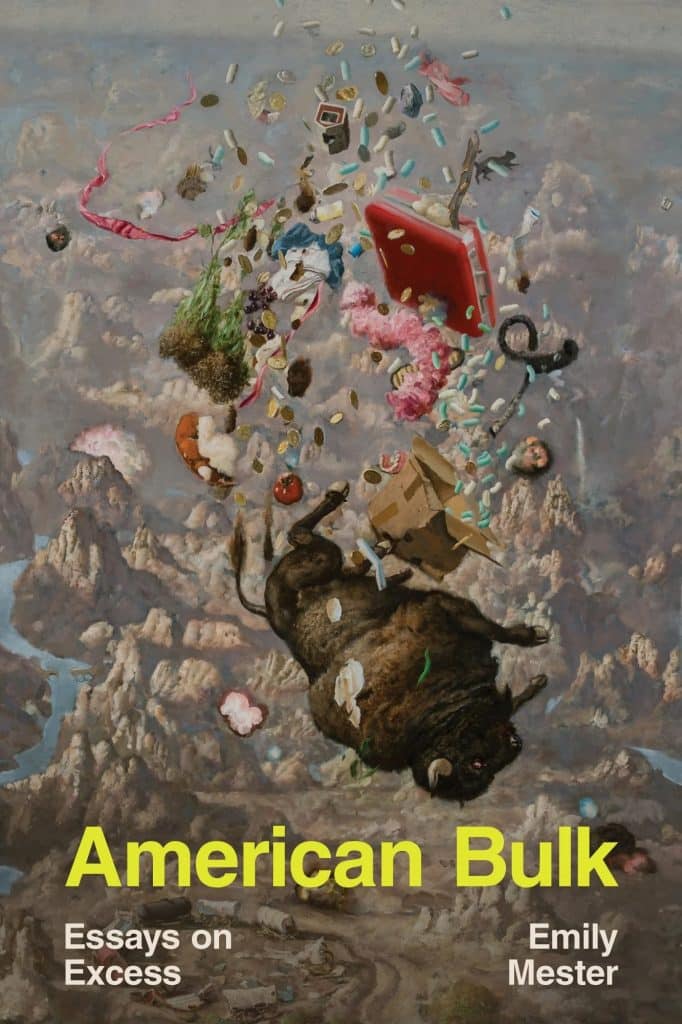
In a series of deeply personal essays, Emily Mester's "American Bulk" examines how the things we buy, eat, accumulate, and discard become integral parts of our lives. We often guiltily watch Amazon boxes pile up on the porch, sift through countless reviews to find the perfect product, and crave the familiar comfort of a chain restaurant. With humor and sharp insight, Mester reflects on the joys and anxieties of Costco trips, how a seasonal job at Ulta Beauty taught her the subtle art of sales, and what it means to feel "mall sad."

Read book review Get this book All books

The Jan Lilien Education Fund!

American Bulk

Read: February 2026

Get this book

American Bulk: Essays on Excess

by Emily Mester

In a series of deeply personal essays, Emily Mester‘s “American Bulk” examines how the things we buy, eat, accumulate, and discard become integral parts of our lives. We often guiltily watch Amazon boxes pile up on the porch, sift through countless reviews to find the perfect product, and crave the familiar comfort of a chain restaurant. With humor and sharp insight, Mester reflects on the joys and anxieties of Costco trips, how a seasonal job at Ulta Beauty taught her the subtle art of sales, and what it means to feel “mall sad.”

In a nuanced exploration of diet culture and body image, Mester shares her experience at a fat camp during her teenage summer and the unexpected sense of liberation she discovered there. Finally, she travels to Storm Lake, Iowa, to confront her grandmother’s abandoned hoard, unraveling the dysfunction at the heart of her family’s obsession with material possessions. American Bulk introduces readers to an impressive new literary voice from the American heartland, urging us to view consumption not with guilt, but with grace and empathy.


Emily Mester is a writer from the suburban Midwest, where her family shopped at Costco every Sunday. She earned an MFA in nonfiction from the University of Iowa, where she received the Prairie Lights Nonfiction Prize. Currently, she resides in New York.


Discover your next favorite book and dive into a world of curated, exciting reads by purchasing through my links. You’ll have access to a diverse selection of books that I’ve personally vetted to ensure quality and enjoyment. Additionally, by supporting these selections, you’ll help me continue to provide you with more personalized recommendations. I earn a small commission from your purchase, which allows me to buy and share even more books with you. Your support truly makes a difference!


×
The Annual Banquet of the Gravediggers' Guild

Read: January 2024

Get this book

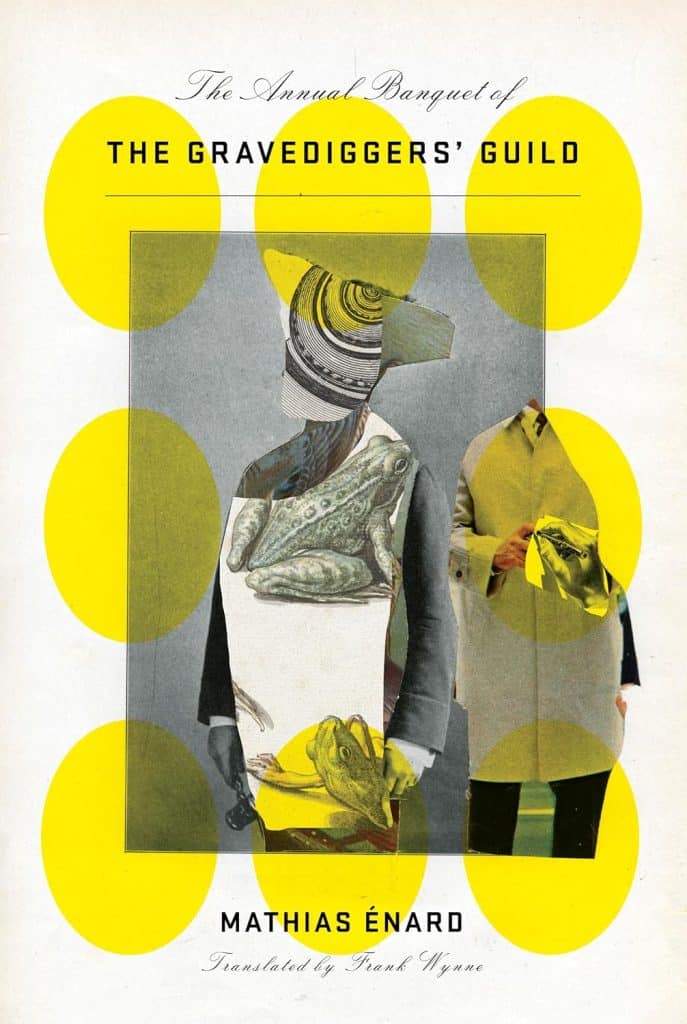
The Annual Banquet of the Gravediggers’ Guild

by Mathias Énard

Today, I started reading “The Annual Banquet of the Gravediggers’ Guild” by Mathias Énard. The book has been translated into English by Frank Wynne. This novel is full of Mathias Énard‘s characteristic humor and extensive knowledge. It is a lively book where the boundaries between past and present are constantly blurred, set against a backdrop of excess reminiscent of Rabelais’ writing.

David Mazon, an anthropology student, moves from Paris to La Pierre-Saint-Christophe, a village in the marshlands of western France, to research his thesis on contemporary agrarian life. He is determined to understand the essence of the local culture and spends his time scurrying around on his moped to interview the residents.

David must be made aware of the extraordinary events in an ordinary location. This place, where wars and revolutions once occurred, is now a dancefloor for Death. When something dies, its soul is recycled by the Wheel of Life and thrown back into the world as a microbe, human, or wild animal – sometimes in the past and sometimes in the future. Once a year, Death and the living agree to a temporary truce, during which gravediggers indulge in a three-day feast filled with food, drink, and conversation.

Mathias Énard’s novel, The Annual Banquet of the Gravediggers’ Guild, is a riotous and exciting comic masterpiece that won the prestigious Prix Goncourt award. The novel is set in the French countryside and is filled with Énard’s characteristic wit and encyclopedic brilliance. Against a backdrop of excess, the story blurs the lines between past and present, creating a Rabelaisian world of chaos and humor.


The Jan Lilien Education Fund sponsors ongoing sustainability and environmental awareness programs. Gifts made this month; I will match dollar-for-dollar. All donations are tax-deductible.

Subscribe

Contact Us

I receive a commission when you buy a book or product using a link on this page. Thank you for supporting Sharing Jan’s Love blog.


×
When We Cease to Understand the World

Read: September 2024

Get this book

When We Cease to Understand the World

by Benjamín Labatut

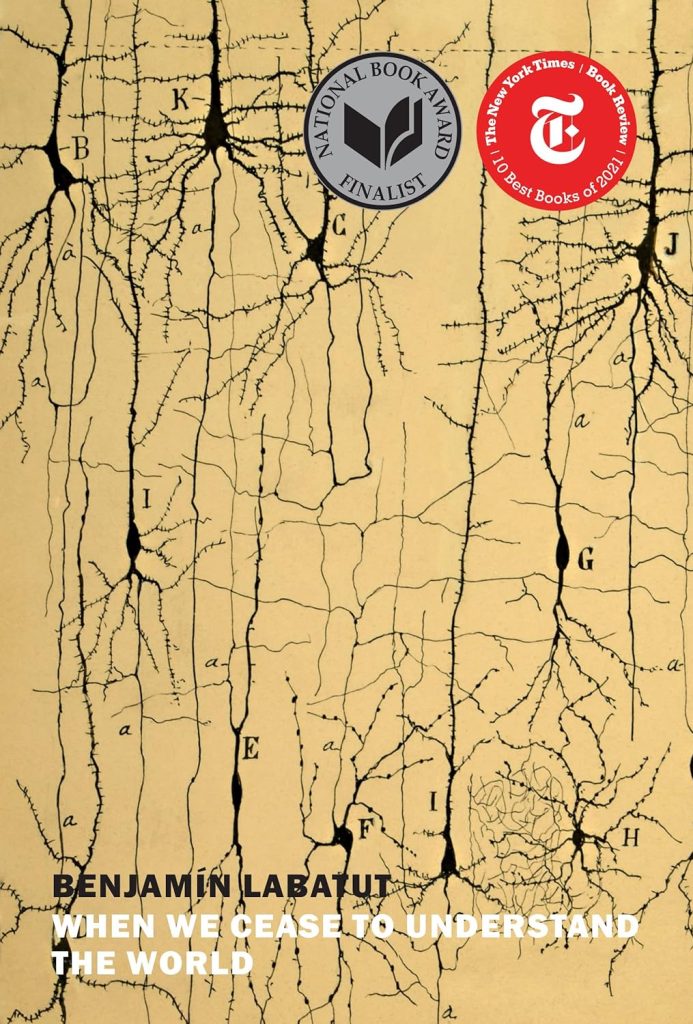
Today, I began reading When We Cease to Understand the World by Benjamín Labatut, translated by Adrian Nathan West. This book, listed on The New York Times 100 Best Books of the 21st Century, promises to be thought-provoking as it delves into the intricate connections between scientific and mathematical discovery, madness, and destruction.

In a world where scientific advancements often involve ethical dilemmas and societal implications, this book offers a unique perspective on the lives of scientists who have shaped our understanding of the world. Fritz Haber, Alexander Grothendieck, Werner Heisenberg, and Erwin Schrödinger are some of the luminaries whose troubled lives Benjamín Labatut deeply explores in his fictional examination. Labatut shows how these scientists and thinkers grappled with profound questions of existence, experiencing strokes of unparalleled genius, alienating friends and lovers, and descending into isolation and insanity. Their discoveries, some of which significantly improved human life, while others led to chaos and unimaginable suffering, continue to shape our world.

With a breakneck pace and a wealth of disturbing detail, Labatut uses fiction’s imaginative resources to tell the stories of the scientists and mathematicians who expanded our notions of the possible.

×
Death Takes Me

Read: December 2025

Get this book

Death Takes Me: A Novel

by Cristina Rivera Garza

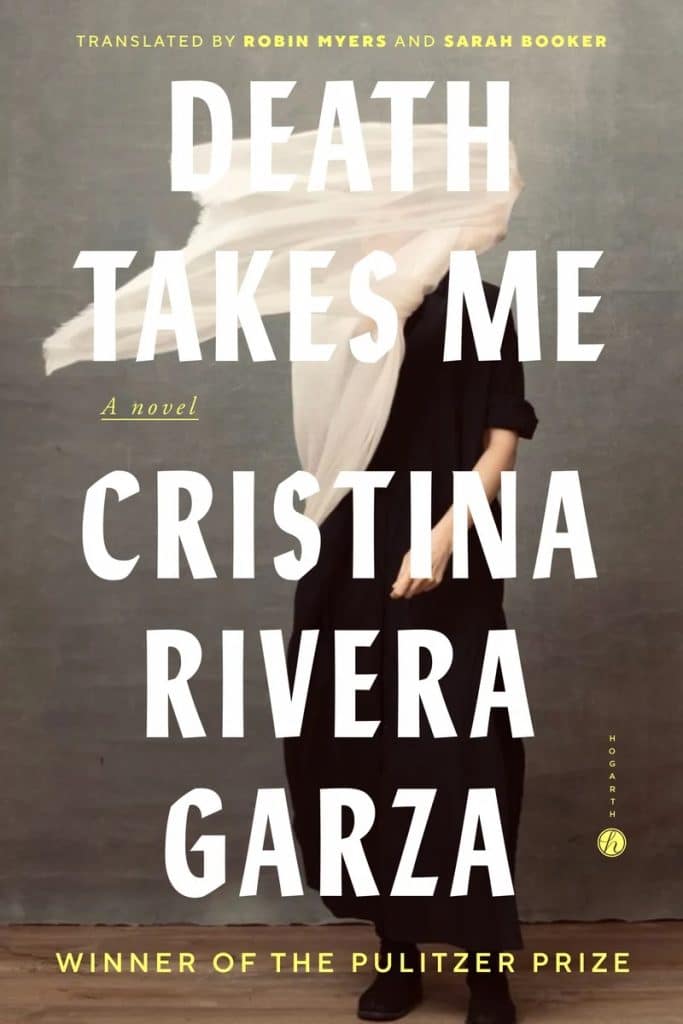
Originally written in Spanish by Cristina Rivera Garza, Death Takes Me is a thrilling masterpiece of literary fiction that turns the traditional crime narrative of gendered violence on its head. As sharp as the cuts on the bodies of the victims, the story unfolds with the dreamlike logic of a surreal experience, transitioning from the police station to a professor’s classroom and through the intricate worlds of Latin American poetry and art. It invites readers to explore the unstable terrains of desire and sexuality.

A city is always a cemetery.

In the narrative, a professor named Cristina Rivera Garza stumbles upon the corpse of a mutilated man in a dark alley and promptly reports it to the police. When shown a crime scene photo, she discovers a stark warning written in tiny print with coral nail polish on the brick wall beside the body: “Beware of me, my love / beware of the silent woman in the desert.”

The professor becomes the primary informant in the case, which is led by a detective who is newly obsessed with poetry and haunted by a list of past failures. But what has the professor truly witnessed? As more bodies of castrated men alongside lines of verse, the detective attempts to decipher the meaning of the poems in hopes of stopping the spreading violence throughout the city.


Cristina Rivera Garza is an acclaimed author known for works such as The Taiga Syndrome and The Iliac Crest. Her memoir, Liliana’s Invincible Summer, won the Pulitzer Prize and was a finalist for the National Book Award. She has received the MacArthur Fellowship and the Sor Juana Inés de la Cruz Prize. Currently, Rivera Garza holds the Hugh Roy and Lillie Cranz Cullen Distinguished Chair and serves as director of the PhD program in Creative Writing in Spanish at the University of Houston.

Sarah Booker is a teacher and a literary translator. Her translations include novels by Mónica Ojeda, Cristina Rivera Garza, and Gabriela Ponce. She is also an associate editor at Southwest Review.

Robin Myers is a poet and translator. Her translations encompass Andrés Neuman’s Bariloche, Claudia Peña Claros’s The Trees, Isabel Zapata’s In Vitro, Eliana Hernández-Pachón’s The Brush, and Cristina Rivera Garza’s The Restless Dead: Necrowriting and Disappropriation.


Discover your next favorite book and dive into a world of curated, exciting reads by purchasing through my links. You’ll have access to a diverse selection of books I’ve personally vetted for quality and enjoyment. Additionally, by supporting these selections, you’ll help me continue to provide you with more personalized recommendations. I earn a small commission from your purchase, which allows me to buy and share even more books with you. Your support truly makes a difference!


×
What We Can Know

Read: September 2025

Get this book

What We Can Know: A Novel

by Ian McEwan

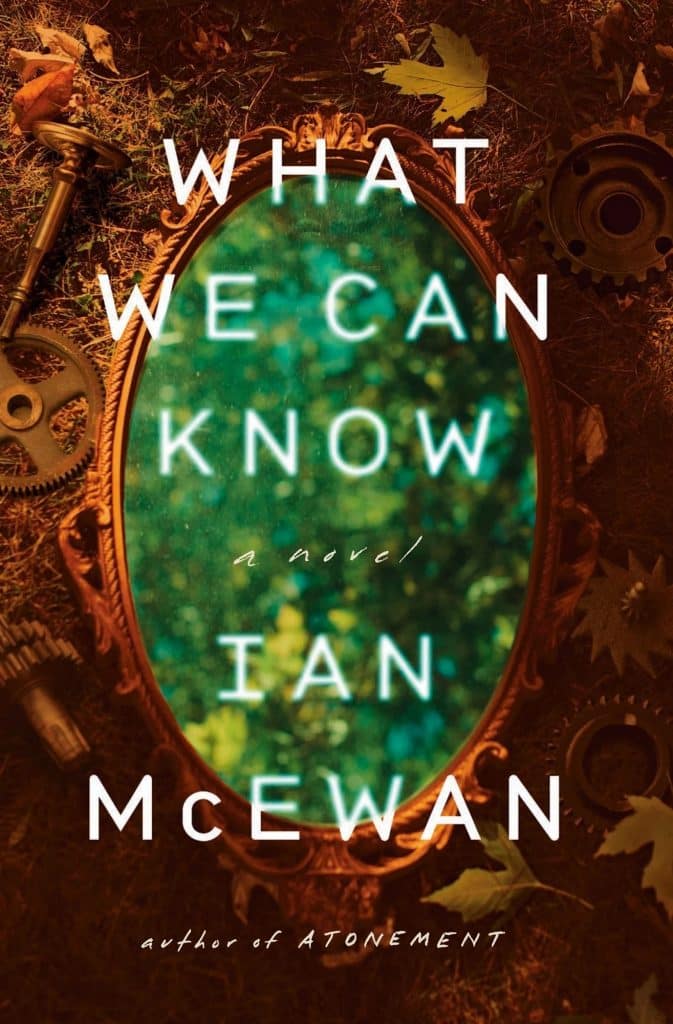
“What We Can Know” by Ian McEwan, the critically acclaimed author of nineteen novels and two short story collections, is a remarkable work of fiction and a love story that celebrates both individuals and the words they leave behind. This literary detective story reclaims the present from our sense of impending catastrophe and envisions a future world where not everything is lost.

In 2014, during a dinner for close friends and colleagues, renowned poet Francis Blundy honored his wife’s birthday by reading aloud a new poem dedicated to her, titled “A Corona for Vivien.” As the guests enjoy a delicious meal and drink plenty of wine, little do they know that people will speculate about the meaning of this poem for generations to come. A copy of the poem was never published, and it remains an enduring mystery.

Fast forward to 2119: over one hundred years in the future, rising seas following a catastrophic nuclear accident have submerged much of the Western world. The survivors tormented by the memory of the vibrant world research the world that once existed. In the waterlogged south of what was once England, Thomas Metcalfe, a lonely scholar and researcher, longs for the early twenty-first century as he searches for the elusive poem “A Corona for Vivien.”

Thomas reflects on how wild and full of risk their lives were, captivated by the freedoms and possibilities of human life at its zenith. When he stumbles upon a clue that may lead to the poem’s discovery, he uncovers a story of entangled loves and a brutal crime that shatters his assumptions about people he thought he knew intimately.


Ian McEwan is a critically acclaimed author known for his nineteen novels and two short story collections. His first published work, a collection of short stories titled “First Love, Last Rites,” won the Somerset Maugham Award.

His notable novels include “The Child in Time,” which won the Whitbread Novel of the Year Award in 1987; “The Cement Garden“; “Enduring Love;” “Amsterdam;” which won the Booker Prize in 1998; “Atonement;” “Saturday;” “On Chesil Beach;” “Solar;” “Sweet Tooth;” “The Children Act;” “Nutshell;” and “Machines Like Me,” which became a number-one bestseller.

Several of his works, including “Atonement,” “Enduring Love,” “The Children Act;,” and “On Chesil Beach,” have been adapted into films.


Discover your next favorite book and dive into a world of curated, exciting reads by purchasing through my links. You’ll have access to a diverse selection of books that I’ve personally vetted to ensure quality and enjoyment. Additionally, by supporting these selections, you’ll help me continue to provide you with more personalized recommendations. I earn a small commission from your purchase, which allows me to buy and share even more books with you. Your support truly makes a difference!


×
Aftermirth

Read: August 2022

Get this book

Aftermirth by Hillary Jordan

by Hillary Jordan

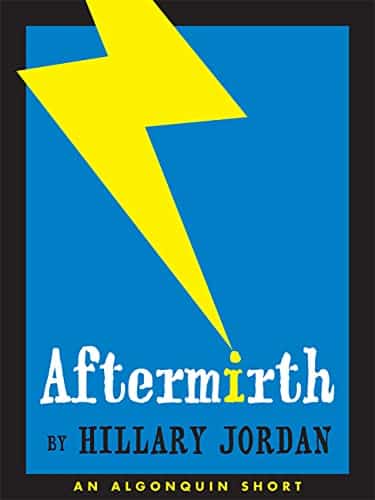
Aftermirth by Hillary Jordan is a book about grief as the two protagonists take a road trip that is a darkly funny journey of healing that takes them deep into the heart of their suffering and others, and then beyond it, to a place of peace and laughter. I had just finished reading When She Woke by Ms. Jordan and having enjoyed that book, reading a second one by the same author seemed reasonable.

When I selected this short novel to read, I questioned if it was a good choice for me.

I found it easier to read and, in some ways, helpful. It was like meeting fellow widows from my Zoom grief groups in person at Camp Widow. The ability to laugh about our loss and cry openly is essential to meeting fellow benefits.

Michael Larssen, the narrator, raised a question I have not and still do not want to consider. What if I am still alive, Jan was a great love but is not the love of my life?

“You can’t know that he was the love of your life, and do you know why? Because guess what, you aren’t dead yet. You may feel dead right now, and believe me I’ve been there, but the fact is, until you’re lying under a tombstone of your own you can’t be sure about anything. You could prick your finger on one of your roses tomorrow, and as you’re climbing the stairs to get a Band-Aid, you trip over one of the pugs and tumble to your death. Or you could meet a man in the checkout line at the grocery store–hell, you could meet a woman even and fall madly in love with her and end up with six kids and twenty grandkids. Michael looks over at Elena, then back at George. You just don’t know, George. That’s the thing. None of us does.”— Aftermirth (Kindle Single) by Hillary Jordan

Despite my anxiety about considering this disturbing question, I highly recommend Aftermirth by Hillary Jordan.

The Goodreads summary provides an overview.

I stopped being funny the day my wife was electrocuted by her underwire bra.” So begins “Aftermirth,” a dark comedy that explores the absurdity of death through the eyes of thirty-one-year-old comedian, writer, and actor Michael Larssen. What is funny to the rest of the world is devastating to Michael, who loves his wife deeply, exceptionally her bright, rippling, abandoned laughter, which captivated him from the first time he heard it. In the aftermath of her death, he loses his sense of humor and his career.

Then, after two years of mourning her, he sees an article in the paper about a factory worker named Julio Santiago who fell into a giant vat of dough and was kneaded to death. For reasons Michael doesn’t understand, he decides to go to the man’s wake. There he meets and bonds with Julio’s twenty-nine-year-old daughter Elena, a law student who is reeling from her father’s unexpected and preposterous death.

Three months later, she calls him out of the blue and suggests that the two of them drive to North Carolina to speak with another survivor like themselves Elena has found on the Internet. Their road trip is a darkly funny journey of healing that takes them deep into the heart of their grief and others and then beyond it to a place of peace and laughter.


The Jan Lilien Education Fund sponsors ongoing sustainability and environmental awareness programs. All donations are tax-deductible.

Subscribe

Contact Us

I receive a commission when you buy a book or product using a link on this page. Thank you for supporting Sharing Jan’s Love blog.

×
Hurricane Season

Read: September 2024

Get this book

Hurricane Season

by Fernanda Melchor

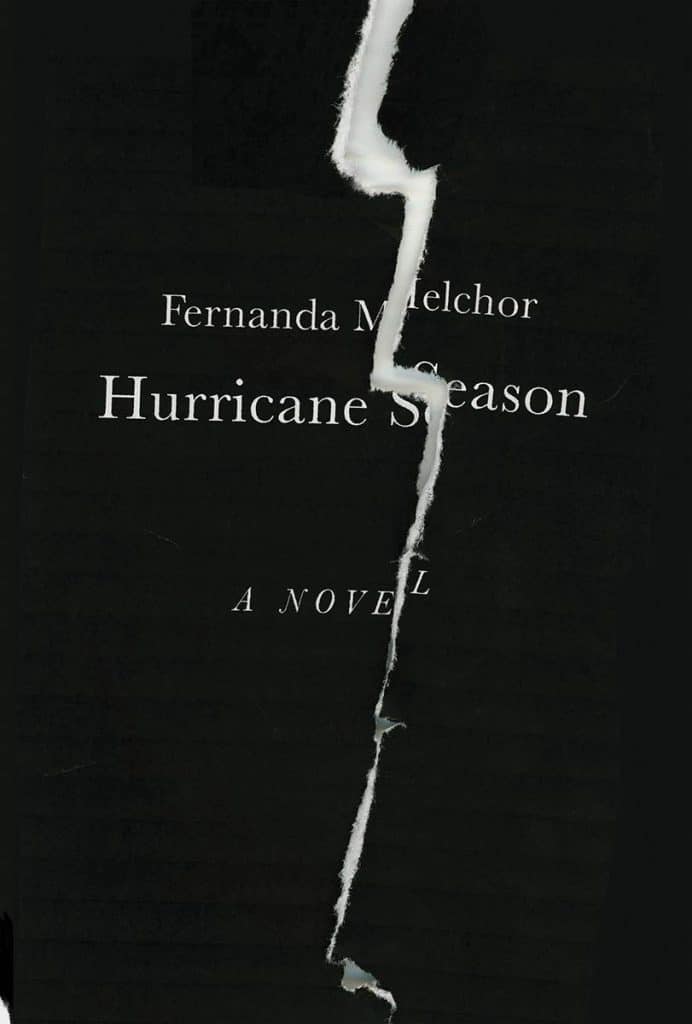
‘Hurricane Season‘ by Fernanda Melchor, translated by Sophie Hughes, is a literary gem acknowledged by the New York Times as one of the 100 Best Books of the 21st Century. The story opens with the discovery of a dead witch in a village, leading to an investigation into her murder. As the novel unfolds, it offers a unique perspective on the lives of the villagers, each narrating the story from their point of view.

This unique portrayal of the characters, each with flaws and virtues, uncovers new details and acts of depravity. Despite the characters being seen as irredeemable, Melchor extracts some shred of humanity from them, creating a lasting portrait of a doomed Mexican village. This deep connection to Mexican culture is a significant aspect of the novel that will surely resonate with readers interested in this topic.

“Hurricane Season” draws significant literary inspiration from Roberto Bolaño‘s “2666” and Faulkner‘s novels. Like these works, it is set in a world filled with mythology and actual violence that seeps into the surroundings, creating a connection that makes it more terrifying the deeper you explore it.

×