
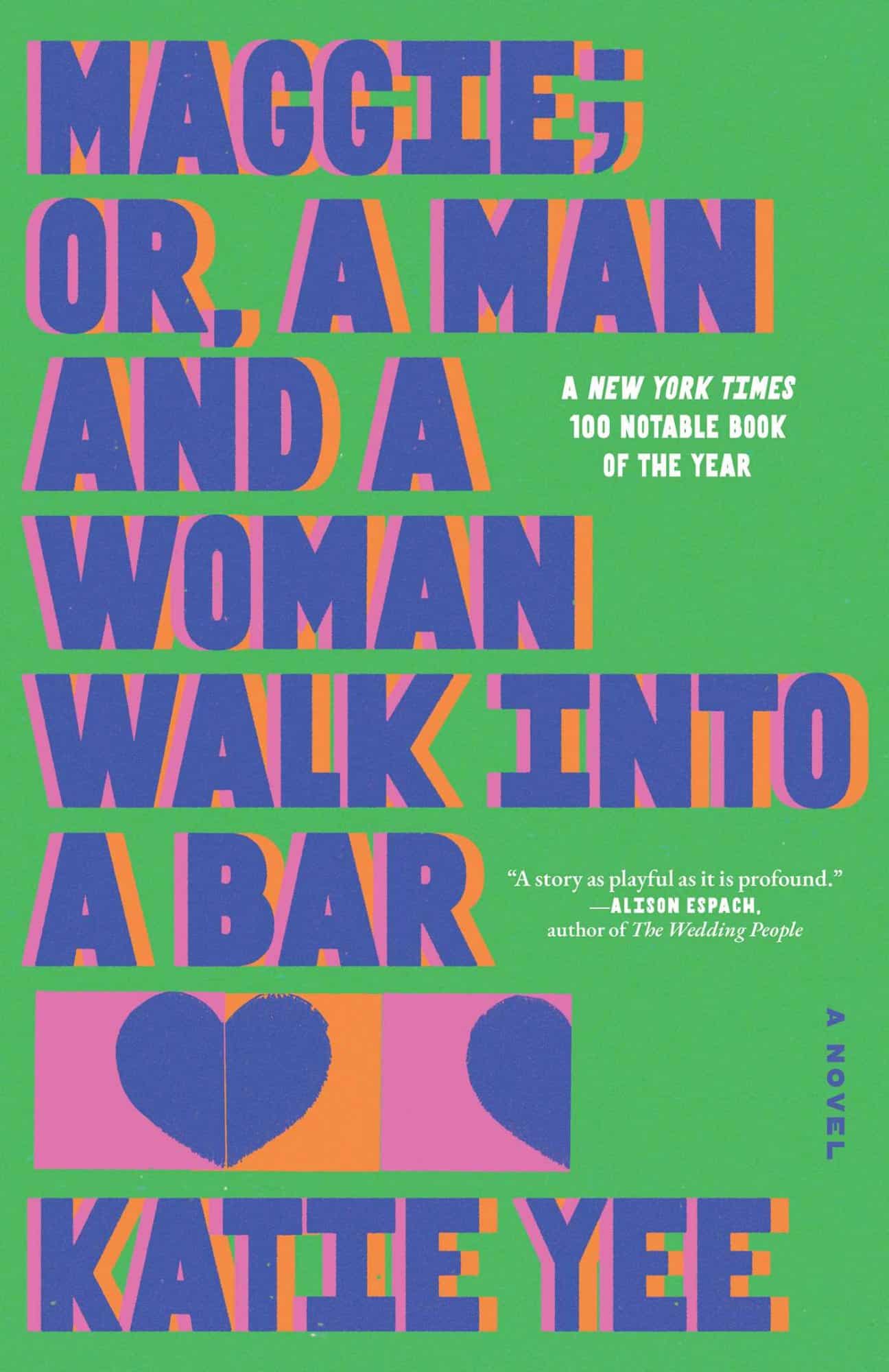
Maggie, or A Man and a Woman Walk Into a Bar

Estimated reading time: 2 minutes, 1 second

In the style of Jenny Offill and inspired by Nora Ephron‘s humorous and poignant writing on heartbreak and womanhood, “Maggie, or A Man and a Woman Walk Into a Bar” by Katie Yee is a masterclass in transforming personal tragedy into bold comedy. This debut novel has been recognized as a New York Times Notable Book and in Time’s list of 100 Must-Read Books of 2025, along with features in many other publications.

A man and a woman walk into a restaurant. The woman expects a lovely night filled with endless plates of samosas. Instead, she finds out her husband is having an affair with a woman named Maggie.

A short while after, her chest starts to ache. She walks into an examination room, where she finds out the pain in her breast isn’t just heartbreak—it’s cancer. She decides to call the tumor Maggie.

Unfolding in fragments over the following months, Maggie, or a Man and a Woman Walk Into a Bar follows the narrator as she embarks on a journey of grief, healing, and reclamation. She starts talking to Maggie (the tumor), getting acquainted with her body’s new inhabitant. She overgenerously creates a “Guide to My Husband: A User’s Manual” for Maggie (the other woman), hoping to ease the process of discovering her ex-husband’s whims and quirks. She turns her children’s bedtime stories into retellings of Chinese folklore passed down by her mother, in an attempt to help them fall in love with their shared culture—and perhaps save herself in the process.


Katie Yee is a writer based in Brooklyn. She has received fellowships from the Center for Fiction, the Asian American Writers’ Workshop, and Kundiman. Her work has been published in the Los Angeles Review of Books, No Tokens, The Believer, Washington Square Review, Triangle House, Epiphany, and Literary Hub. During the day, she works at the Brooklyn Museum, and at night, she writes—often under the watchful eye of her judgmental rescue dog, Ollie.


Discover your next favorite book and dive into a world of curated, exciting reads by purchasing through my links. You’ll have access to a diverse selection of books that I’ve personally vetted to ensure quality and enjoyment. Additionally, by supporting these selections, you’ll help me continue to provide you with more personalized recommendations. I earn a small commission from your purchase, which allows me to buy and share even more books with you. Your support truly makes a difference!


The Jan Lilien Education Fund!

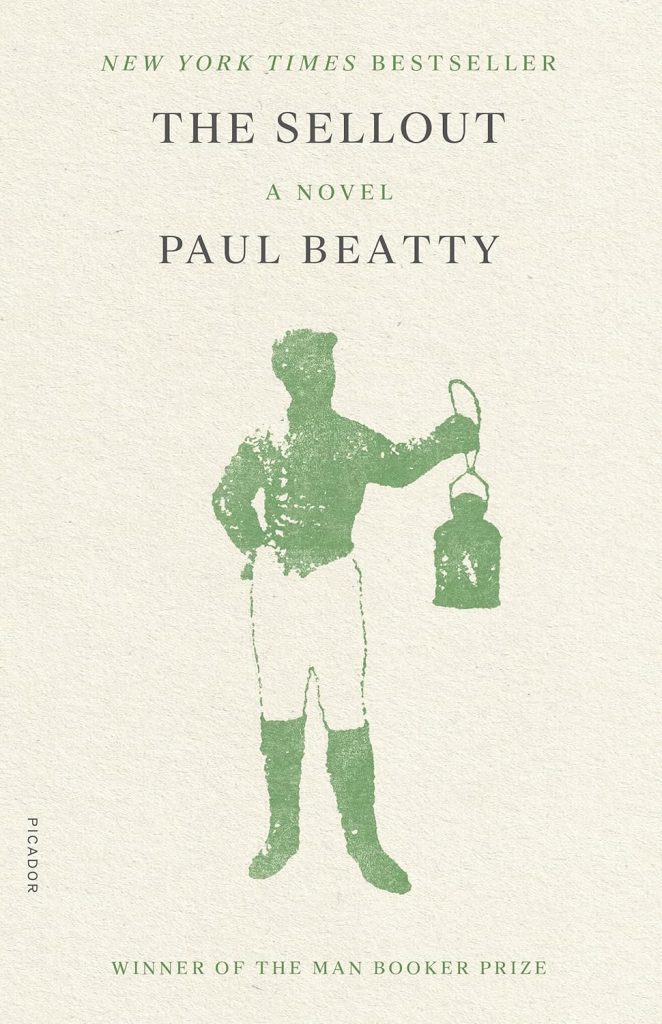
The Sellout: A Novel

Read: August 2024

Get this book

The Sellout: A Novel

by Paul Beatty

Today, I embarked on the unique narrative journey of The Sellout: A Novel by Paul Beatty. This biting satire, which revolves around a young man’s isolated upbringing and the race trial that takes him to the Supreme Court, is a testament to Paul Beatty‘s comic genius. The Sellout, a part of The New York Times’ 100 Best Books of the Century, is a must-read for those who appreciate a distinct narrative style.

The Sellout is a bold and thought-provoking work that challenges the sacred tenets of the United States Constitution, urban life, and the civil rights movement. It also explores the father-son relationship and the pursuit of racial equality, symbolized by the black Chinese restaurant. This social commentary is a vital aspect of The Sellout, making it a relevant and engaging read for those interested in contemporary issues.

Born in the “agrarian ghetto” of Dickens—on the southern outskirts of Los Angeles—the narrator of The Sellout resigns himself to the fate of lower-middle-class Californians: “I’d die in the same bedroom I’d grown up in, looking up at the cracks in the stucco ceiling that’s been there since ’68 quake.”

Raised by a single father, a controversial sociologist, he spent his childhood as the subject of racially charged psychological studies. Despite these challenges, he believes his father’s pioneering work will result in a memoir that will solve his family’s financial woes. But when his father is killed in a police shoot-out, he realizes there never was a memoir. All that’s left is the bill for a drive-thru funeral.

Fuelled by this deceit and the general disrepair of his hometown, the narrator sets out to right another wrong: Dickens has been removed from the map to save California from further embarrassment. Enlisting the help of the town’s most famous resident—the last surviving Little Rascal, Hominy Jenkins—he initiates the most outrageous action conceivable: reinstating slavery and segregating the local high school, which lands him in the Supreme Court. His determination to fight injustice is a powerful force that drives the narrative forward.

×
Neighbors and Other Stories

Read: February 2024

Get this book

Neighbors and Other Stories

by Diane Oliver

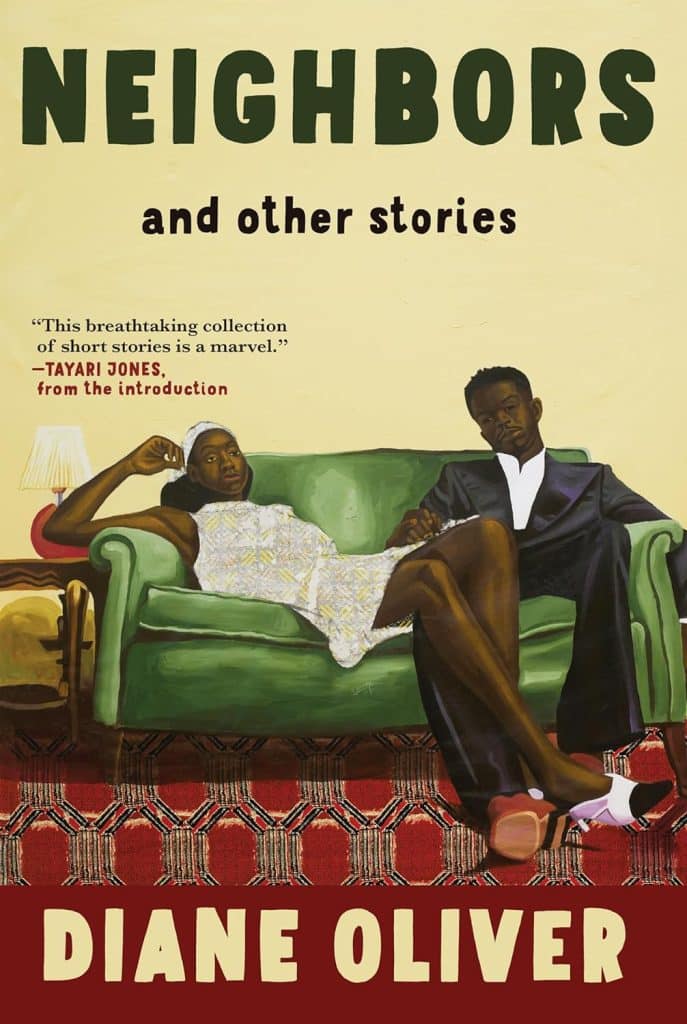
Today, I began reading Diane Oliver‘s Neighbors and Other Stories. It’s a powerful and eerie debut collection of stories that portrays the struggles of different characters as they face the everyday dangers of racism during the Jim Crow era. The book features an introduction by Tayari Jones.

Diane Oliver is an important yet often overlooked figure in African American literature of the 20th century. She was a gifted writer, ahead of her time, whose talent was cut short by her untimely death at 22 in 1966. Nevertheless, she left behind a remarkable collection of crisply written and often chilling tales that delve into race and racism in America during the 1950s and 60s. Oliver’s insightful stories remain relevant today; this is the only existing collection of her works. She has rightfully earned her place in the literary canon as a masterful storyteller.

The passage below describes several short stories with different themes. The first story, “The Closet on the Top Floor,” tells the story of Winifred, the first Black student in a newly integrated college. In this story, Winifred begins to disappear, creating a nightmarish scenario. The second story is titled “Mint Juleps not Served Here.” It’s about a couple who live deep in a forest with their son. They will go to bloody lengths to protect him from any danger. The third story, “Spiders Cry without Tears,” features a couple named Meg and Walt. They must confront prejudices and strains of interracial and extramarital love. Finally, the last story is the titular one, and it’s a high-tension narrative that follows a nervous older sister the night before her younger brother is set to desegregate his school.

These are powerful and personal depictions of African American families‘ everyday struggles and moments of distress, illustrating how they utilize their abilities to overcome challenges. “Neighbors” is an enthralling compilation and a valuable historical and social document, displaying the remarkable literary skills of a previously overlooked author.

×
When We Cease to Understand the World

Read: September 2024

Get this book

When We Cease to Understand the World

by Benjamín Labatut

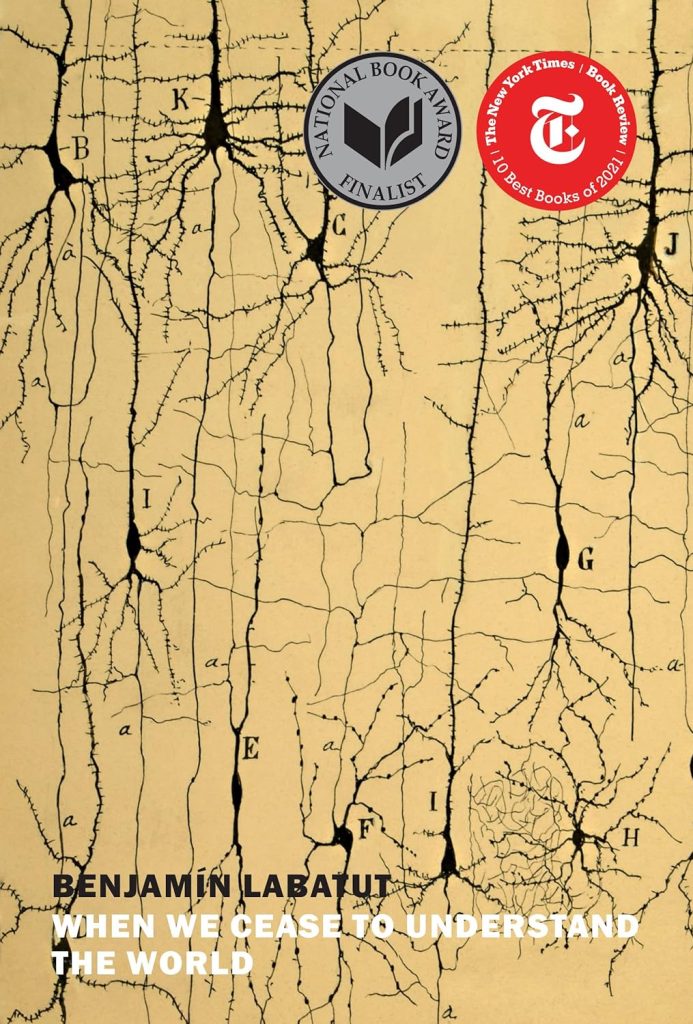
Today, I began reading When We Cease to Understand the World by Benjamín Labatut, translated by Adrian Nathan West. This book, listed on The New York Times 100 Best Books of the 21st Century, promises to be thought-provoking as it delves into the intricate connections between scientific and mathematical discovery, madness, and destruction.

In a world where scientific advancements often involve ethical dilemmas and societal implications, this book offers a unique perspective on the lives of scientists who have shaped our understanding of the world. Fritz Haber, Alexander Grothendieck, Werner Heisenberg, and Erwin Schrödinger are some of the luminaries whose troubled lives Benjamín Labatut deeply explores in his fictional examination. Labatut shows how these scientists and thinkers grappled with profound questions of existence, experiencing strokes of unparalleled genius, alienating friends and lovers, and descending into isolation and insanity. Their discoveries, some of which significantly improved human life, while others led to chaos and unimaginable suffering, continue to shape our world.

With a breakneck pace and a wealth of disturbing detail, Labatut uses fiction’s imaginative resources to tell the stories of the scientists and mathematicians who expanded our notions of the possible.

×
Kala: A Novel

Read: June 2024

Get this book

Kala: A Novel

by Colin Walsh

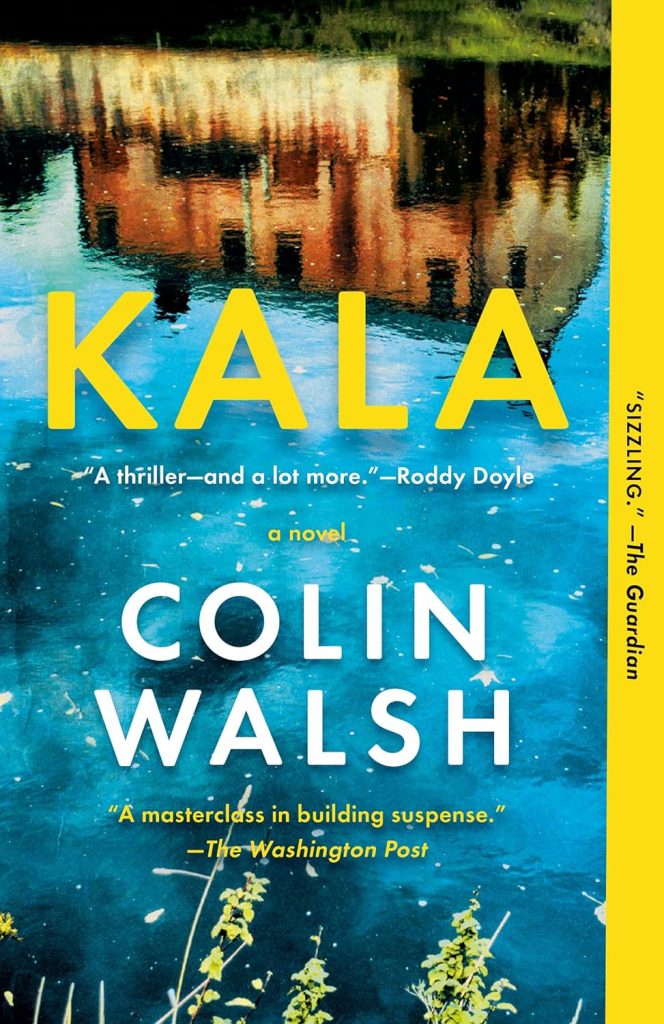
Today, I started reading “Kala: A Novel” by Colin Walsh, a gripping literary page-turner from a rising Irish talent. Former friends, estranged for twenty years, reckon with the terrifying events of the summer that changed their lives. Three old friends are reunited in the seaside town of Kinlough, on Ireland’s west coast, for the first time in years.

Helen, Joe, and Mush were part of an original group of six inseparable teenagers in the summer of 2003, with motherless, reckless Kala Lanann as their group’s white-hot center. Soon after that summer’s peak, Kala disappeared without a trace.

Now it’s fifteen years later:

  • Helen has reluctantly returned to Ireland for her father’s wedding.
  • Joe is a world-famous musician who is newly back in town.
  • Mush has never left, too scared to venture beyond the counter of his mother’s café.

But human remains are discovered in the woods. Two more girls have gone missing. As past and present begin to collide, the estranged friends are forced to confront their involvement in the events that led to Kala’s disappearance.

Against the backdrop of a town suffocating on its secrets, in a story that builds from a smolder to a stunning climax, Kala brilliantly examines the sometimes brutal costs of belonging and the battle in the human heart between vengeance and forgiveness, despair and redemption.

×
20 Under 40

Read: January 2019

Get this book

20 Under 40 Fiction

by Various Writers Under 40

Short Stories that Will Define the Future of American Letters

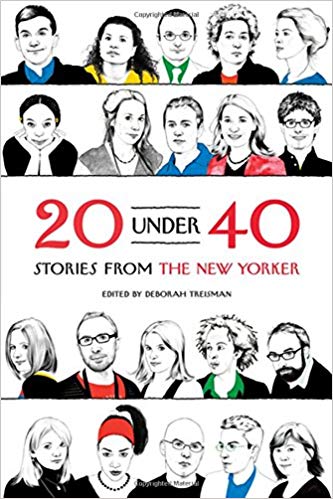
The New Yorker’s collection of short stories – 20 Under 40 – is a collection of twenty writers “whose work will help define the future of American letters.”

Some of these I had read in The New Yorker and others I had missed. Either way, they were a pleasure to read.

As The New Yorker wrote,

The range of voices is extraordinary. There is the lyrical realism of Nell Freudenberger, Philipp Meyer, C. E. Morgan, and Salvatore Scibona; the satirical comedy of Joshua Ferris and Gary Shteyngart; and the genre-bending tales of Jonathan Safran Foer, Nicole Krauss, and Téa Obreht. David Bezmozgis and Dinaw Mengestu offer clear-eyed portraits of immigration and identity; Sarah Shun-lien Bynum, ZZ Packer, and Wells Tower offer voice-driven, idiosyncratic narratives. Then there are the haunting sociopolitical stories of Chimamanda Ngozi Adichie, Daniel Alarcón, and Yiyun Li, and the metaphysical fantasies of Chris Adrian, Rivka Galchen, and Karen Russell.

Each of these writers reminds us why we read. And each is aiming for greatness: fighting to get and to hold our attention in a culture that is flooded with words, sounds, and pictures; fighting to surprise, to entertain, to teach, and to move not only us but generations of readers to come. A landmark collection, 20 Under 40 stands as a testament to the vitality of fiction today.

I recommend this collection of short stories.

Subscribe

Contact Us

×
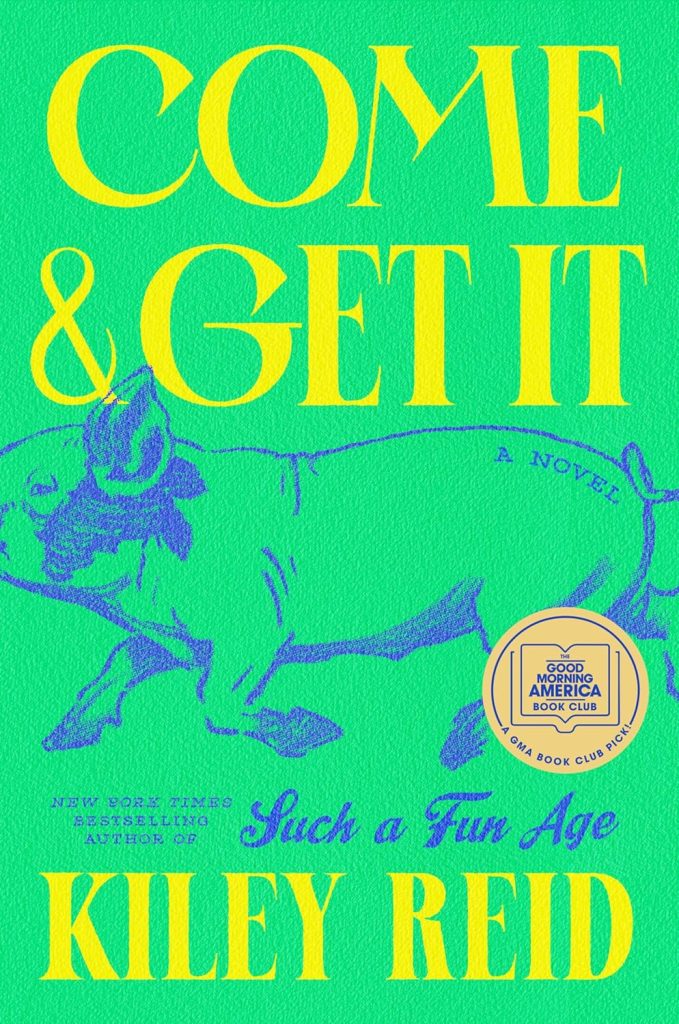
Come and Get It

Read: February 2024

Get this book

Come and Get It

by Kiley Reid

I recently started reading “Come and Get It” by Kiley Reid, a celebrated New York Times bestselling author known for her book Such a Fun Age. The novel is about a senior resident assistant named Millie Cousins, who, in 2017, attended the University of Arkansas. Millie aspires to graduate, get a job, and buy a house.

She is offered an unusual opportunity by Agatha Paul, a visiting professor and writer, which she accepts. Unfortunately, Strange new friends, dorm pranks, and illicit behavior undermine Millie’s ambition.

Overall, “Come and Get It” is a gripping story about desire, consumption, and recklessness. It explores themes of money, indiscretion, and bad behavior through Millie’s eyes. The novel is highly anticipated, given that Kiley Reid is an acclaimed and award-winning author.

×