
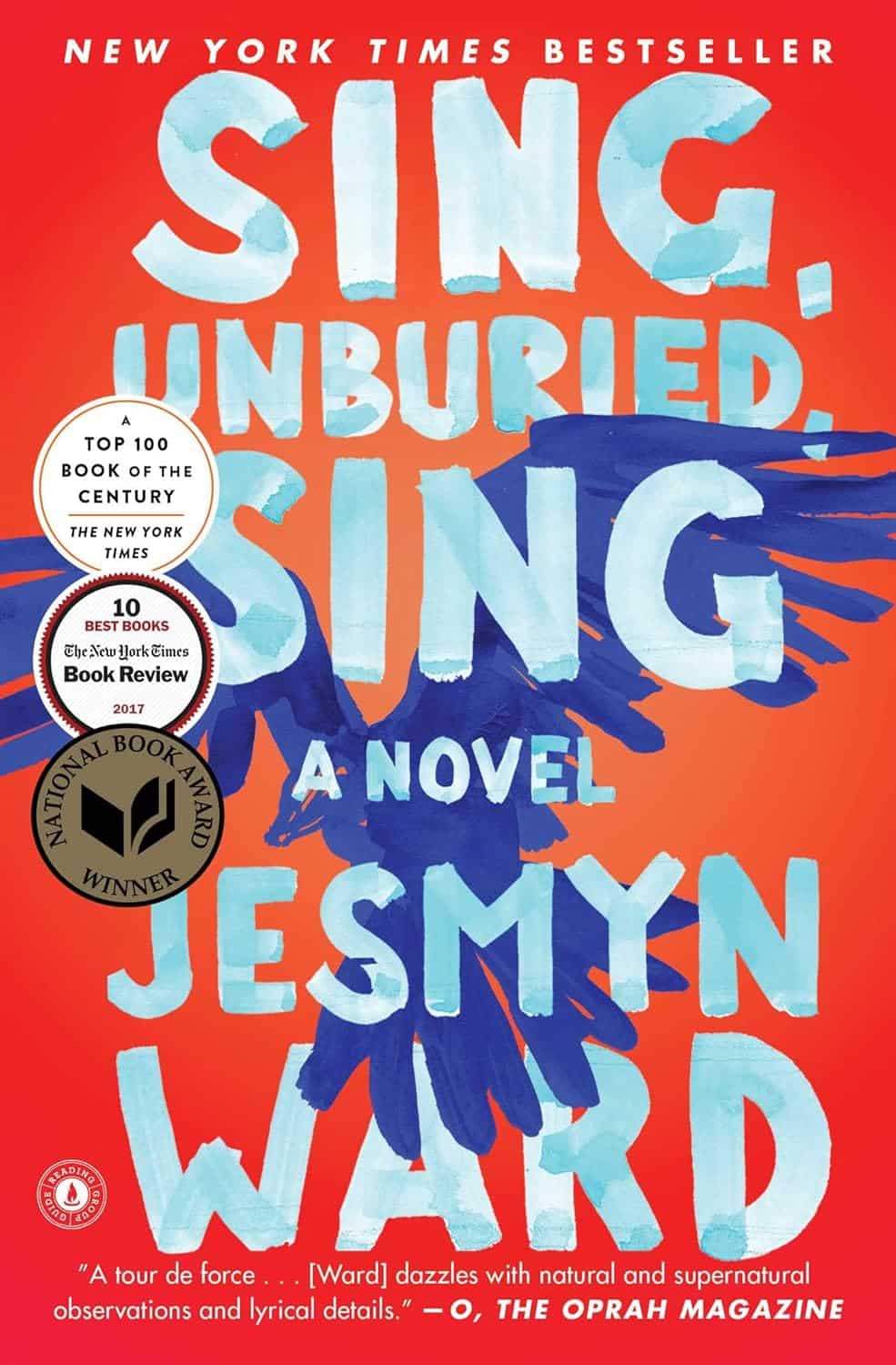
Sing, Unburied, Sing

Estimated reading time: 1 minute, 44 seconds

I started reading Jesmyn Ward‘s novel Sing, Unburied, Sing today. The New York Times selected it as one of the best books of the 21st century and awarded it the National Book Award. According to The New York Times, Jesmyn Ward‘s historic second National Book Award winner is “perfectly poised for the moment.” It’s an intimate portrait of three generations of a family and an epic tale of hope and struggle.

Jojo is thirteen years old and is trying to understand what it means to be a man. He has several father figures to learn from, including his Black grandfather, Pop. However, Jojo’s understanding is complicated by other men in his life: his absent White father, Michael, who is being released from prison; his absent White grandfather, Big Joseph, who refuses to acknowledge him; and the memories of his deceased uncle, Given, who died as a teenager.

His mother, Leonie, is inconsistent in her and her toddler daughter’s lives. She is a flawed mother in constant conflict with herself and those around her. She is Black, and her children’s father is White. She wants to be a better mother but struggles to prioritize her children over her own needs, particularly her drug use. Tormented and comforted by visions of her deceased brother, which only come to her when she’s high, Leonie is embattled in ways that reflect the harsh reality of her circumstances.

When their father is released from prison, Leonie takes her kids and a friend in her car and drives north to Mississippi and Parchman Farm, the State Penitentiary. At Parchman, there is another thirteen-year-old boy, the ghost of a deceased inmate who carries the ugly history of the South with him in his wanderings. With his supernatural presence, this ghostly figure also has something to teach Jojo about fathers and sons, legacies, violence, and love.

Described as a majestic and unforgettable family story, ‘Sing, Unburied, Sing‘ is rich with Ward‘s distinctive, lyrical language. As noted by The Philadelphia Inquirer, her unique narrative style takes readers on ‘an odyssey through rural Mississippi’s past and present.’

The Jan Lilien Education Fund!

The Searcher: A Novel

Read: March 2024

Get this book

The Searcher: A Novel

by Tana French

Today, I started reading Tana French‘s The Searcher: A Novel. Last week, I read The Hunter by the same author. I should have read The Searcher first, as it is the prequel to The Hunter, but reading in reverse order helped my enjoyment. Despite knowing some of the suspenseful twists and turns the story would take, I found it a page-turner.

The story follows Cal Hooper, a retired Chicago police officer who seeks a fresh start in a tranquil Irish village. However, when a local boy approaches him to investigate his missing brother, Cal discovers that the town has its share of dark secrets. The book raises thought-provoking questions about distinguishing right from wrong in a complicated world and what we risk when making that decision.

Tana French is a highly acclaimed crime novelist who skillfully creates a captivating and suspenseful atmosphere throughout the book.

×
The Antidote

Read: October 2025

Get this book

The Antidote: A Novel

by Karen Russell

Karen Russell‘s The Antidote, a finalist in the fiction category for the 2025 National Book Award, serves as a profound reckoning with a nation’s tendency to forget. It addresses the settler amnesia and deliberate omissions that have been passed down through generations, revealing not only horrors but also shimmering possibilities. The Antidote resonates with urgent warnings about our current climate emergency, prompting readers to reflect on what might have been and what is still possible.

The Antidote opens on Black Sunday, as a historic dust storm ravages the fictional town of Uz, Nebraska. But Uz is already collapsing—not just under the weight of the Great Depression and the Dust Bowl drought but beneath its own violent histories.

The Antidote follows a “Prairie Witch,” whose body serves as a bank vault for peoples’ memories and secrets; a Polish wheat farmer who learns how quickly a hoarded blessing can become a curse; his orphan niece, a basketball star and witch’s apprentice in furious flight from her grief; a voluble scarecrow; and a New Deal photographer whose time-traveling camera threatens to reveal both the town’s secrets and its fate.


Karen Russell is the author of six fiction books, including the New York Times bestsellers Swamplandia! and Vampires in the Lemon Grove. She is a MacArthur Fellow, a Guggenheim Fellow, and a Pulitzer Prize finalist.

She has received two National Magazine Awards for Fiction, the Shirley Jackson Award, the 2023 Bottari Lattes Grinzane Prize, and the 2024 Mary McCarthy Prize, and was selected for the National Book Foundation’s 5 Under 35 award and The New Yorker’s 20 Under 40 list (she is now decisively over forty).

She serves on the board of Street Books, a mobile library for people living outdoors. Born and raised in Miami, Florida, she lives in Portland, Oregon, with her husband, son, and daughter.


Discover your next favorite book and dive into a world of curated, exciting reads by purchasing through my links. You’ll have access to a diverse selection of books that I’ve personally vetted to ensure quality and enjoyment. Additionally, by supporting these selections, you’ll help me continue to provide you with more personalized recommendations. I earn a small commission from your purchase, which allows me to buy and share even more books with you. Your support truly makes a difference!


×
Nobody Gets Out Alive- Stories

Read: February 2023

Get this book

Nobody Gets Out Alive: Stories

by Leigh Newman

Nobody Gets Out Alive: Stories by Leigh Newman, set in Newman’s home state of Alaska and an exciting virtuosic story collection about women navigating the wilds of a male-dominated society. Nobody Gets Out Alive is a collection of dazzling, courageous stories about women struggling to survive, not just grizzly bears and charging moose but the raw, exhausting legacy of their marriages and families.

There are moments when characters in a story leap off the page and become, for a few moments, our soul mates. Ms. Newman, in each of these memorable stories, engages so fully that each character becomes so alive that I wanted to know more about their lives.

The stores span both the recent past and the founding of Anchorage. I found all of them to be stories I would happily read again. The recent stories highlight the common desire for a freer, more inclusive world for women. A woman forced to sell her home or a new bride testing limits on her return home resonates as themes of the modern world.

The final story is set in 1915 in a railroad camp. The story highlights the founding of Anchorage. As one who likes historical fiction, I was so engaged that I could not take a break. I was not expecting the outspoken heiress would stage an elaborate theatrical to seduce the wife of her husband’s employer.

I may never visit Alaska at my age, but I now know enough to feel I have lived in Seward’s Folly.

I decided to read this book after reading Ms. Newman wrote a review of The Faraway World. Ms. Newman is a skilled writer, and I highly recommend this collection and look forward to reading more of her stories in the future.

The Goodreads summary provides an overview,

In “Howl Palace”—winner of The Paris Review’s Terry Southern Prize, a Best American Short Story, and Pushcart Prize selection—an aging widow struggles with a rogue hunting dog and the memories of her five ex-husbands while selling her house after bankruptcy. In the title story, “Nobody Gets Out Alive,” newly married Katrina visits her hometown of Anchorage. She blows up her wedding reception by flirting with the host and running off with an enormous mastodon tusk.

Alongside stories set in today’s Last Frontier—rife with suburban sprawl, global warming, and opioid addiction—Newman delves into the remote wilderness of the 1970s and 80s, bringing to life young girls and single moms in search of a wilder, more accessible, more adventurous America. The final story takes place in a railroad camp in 1915, where an outspoken heiress stages an elaborate theatrical to seduce the wife of her husband’s employer, revealing how this masterful storyteller is “not only writing unforgettable, brilliantly complex characters, she’s somehow inventing souls” (Kimberly King Parsons, author of Black Light).


The Jan Lilien Education Fund sponsors ongoing sustainability and environmental awareness programs. Gifts made this month; I will match dollar-for-dollar. All donations are tax-deductible.

Subscribe

Contact Us

I receive a commission when you buy a book or product using a link on this page. Thank you for supporting Sharing Jan’s Love blog.


×
Never Let Me Go

Read: August 2024

Get this book

Never Let Me Go

by Kazuo Ishiguro

I started reading “Never Let Me Go” by Nobel Prize winner Kazuo Ishiguro today. This novel, listed among The New York Times 100 Best Books of the Century, has also received critical acclaim for its unique narrative and thought-provoking themes. Written by the acclaimed and bestselling author of “The Remains of the Day,” it’s described as “a Gothic tour de force” with an extraordinary twist—a moving, suspenseful, beautifully atmospheric modern classic.

The story unfolds at Hailsham, an enigmatic and exclusive boarding school in the English countryside. The central characters, Kathy, Ruth, and Tommy navigate through mercurial cliques and mysterious rules. Teachers constantly remind the students of their specialness, adding an element of suspense and intrigue to the narrative.

As young adults, Kathy, Ruth, and Tommy reunite, prompting Kathy to reflect on their shared past and understand what makes them unique. The novel explores themes of identity and humanity, delving into the emotional depth of their lives, making it a genuinely thought-provoking journey that readers can deeply connect with.

×
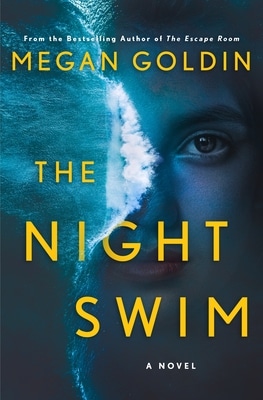
The Night Swim

Read: January 2022

Get this book

The Night Swim

by Megan Goldin

The Night Swim by Megan Goldin is a book that I thought would be different from the last two books – Sarah’s Key and Send for Me – that I had read. Both of those were directly or indirectly about the Holocaust. I often selected this book from the e-library based on reviews and reading the sample section.

The Night Swim was a page-turner, but it also was about numerous social issues that Jan ad I had spent our lives working to resolve.

Among these are male violence and its impact directly and indirectly on women. Rachel Krall, a podcaster, spoke about how male violence had impacted her. Two of the other female characters were either a victim or the sister of a victim. Having spent my life trying not to exhibit male violence, I was reminded while reading his novel of how painful it can be and the impact of micro-aggressions.

I knew that the author had done her research when I realized that. Ms. Goldin set the story in Neapolis, a fictional town on the outer banks of North Carolina. Neapolis, which in Latin means “New Town,” is also the old Roman name for the biblical city of Sheechem, where the rape of Dinah took place.

I missed the role of the Nightingale as it appears more as a background piece and not a primary role. Of course, this is a subtle reference by the author to Greek mythology and the rape of Philomela by her sisters’ husband. Her assailant cut out her tongue to prevent her from speaking of the crime. She was turned into a nightingale to escape. That is why female nightingales cannot sing. The one in the novel never sings and is rescued by Rachel at the end of the book.

Rachel narrates two sections of the novel, first with her on-the-ground work at the trial and second with her podcasts.

Hannah’s narrative is initially only in letters and then emails.

This format helped move the story along and make the story unfold in unique ways.

The following is a summary from Goodreads.

After the first season of her true-crime podcast became an overnight sensation and set an innocent man free, Rachel Krall is now a household name―and the last hope for thousands of people seeking justice. But she’s used to being recognized for her voice, not her face. Which makes it all the more unsettling when she finds a note on her car windshield, addressed to her, begging for help.

The small town of Neapolis is being torn apart by a devastating rape trial. The town’s golden boy, a swimmer, destined for Olympic greatness, has been accused of raping a high school student, the beloved granddaughter of the police chief. Under pressure to make Season Three a success, Rachel throws herself into interviewing and investigating―but the mysterious letters keep showing up in unexpected places. Someone is following her, and she won’t stop until Rachel finds out what happened to her sister twenty-five years ago. Officially, Jenny Stills tragically drowned, but the letters insist she was murdered―and when Rachel starts asking questions, nobody seems to want to answer. The past and present start to collide as Rachel uncovers startling connections between the two cases that will change the course of the trial and the lives of everyone involved.

Electrifying and propulsive, The Night Swim asks: What is the price of a reputation? Can a small town ever right the wrongs of its past? And what happened to Jenny?

I highly recommend this novel and look forward to reading more of Ms. Goldin’s work.

×
Brooklyn Crime Novel: A Novel

Read: October 2023

Brooklyn Crime Novel: A Novel

by Jonathan Lethem

I recently recommended reading “Brooklyn Crime Novel: A Novel” by Jonathan Lethem. The story is set in 1970s Brooklyn, where a daily ritual occurs on the streets. This ritual involves exchanging money, surrendering belongings, and asserting power. Violence is promised everywhere and becomes a currency itself.

Regardless of race, the street is like a stage in the shadows for the children. In the background, other players hide, including parents, cops, renovators, landlords, those who write the headlines, histories, and laws, and those who award this neighborhood its name.

Although the rules seem apparent initially, in memory’s prism, the roles of criminals and victims may appear to trade places. The voices of the past rise and gather as if in harmony, then war with one another. A street may seem to crack open and reveal what lies behind its shimmering facade. None who lived through it are ever permitted to forget.

Jonathan Lethem has written this story with kaleidoscopic verve and delirious wit, making it a breathtaking tour de force by a writer at the top of his powers. He has crafted an epic interrogation of how we fashion stories to contain the uncontainable: our remorse at the world we’ve made. He is known as “one of America’s greatest storytellers” by the Washington Post.


The Jan Lilien Education Fund sponsors ongoing sustainability and environmental awareness programs. Gifts made this month; I will match dollar-for-dollar. All donations are tax-deductible.

Subscribe

Contact Us

I receive a commission when you buy a book or product using a link on this page. Thank you for supporting Sharing Jan’s Love blog.


×