Jan’s Wedding Ring

Estimated reading time: 8 minutes, 11 seconds
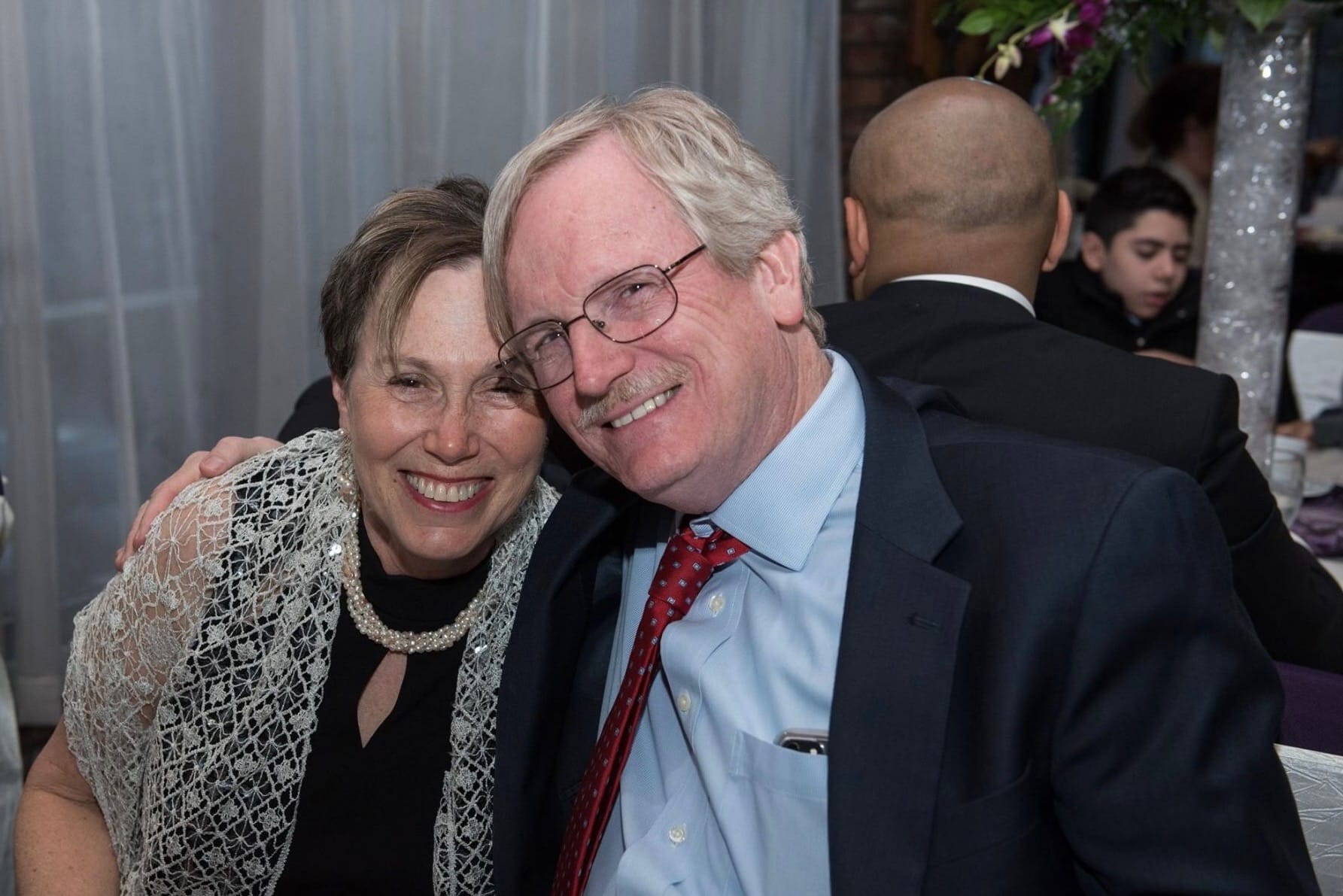
Jan and I Still Wear Our Wedding Rings Because Love Never Dies

“I want my wedding ring,” Jan said as tears poured down her face. Less than an hour before her heartfelt request, the doctors had told her that there was nothing left that they could do for her, and she would be coming home for hospice care. According to the medical team, she only had a few weeks to live. 

I took a deep breath and said, “I will make sure you have the ring before coming home.”

At that moment, I had no idea if that was possible, but I knew we only had three days to complete it.

Our son Jon went to the jewelers and got the tool to measure her ring finger on Thursday, and Martin Jewelers had hers and a minor adjustment to mine completed by Friday morning.
Our Wedding Rings

“Will you wear a wedding ring,” Jan asked me while we looked at them in a small jewelry store in East Williamsburg. I’ve never seen you wear any rings or jewelry.” “I love you so much and want to be your husband more than anything in the world,” I exclaimed. “I will wear it day and night until the end!”

We kissed as the clerk looked down at the rings. 

Jan and I never had engagement rings and had to pay for our wedding. I was unemployed, and she would soon lose her job. Thus, our choices were minimal.

“How about these rings,” said the clerk.

The wedding rings were elementary gold bands with overlapping hearts. As we looked at them, Jan and I smiled at each other and knew these were the ones for us. 

“Honey, our hearts are bound forever, and the rings have enough hearts to share our love with family, friends, and the community,” I said. 

We decided to buy them without looking at any others. Jan had a credit card, which I did not, and she quickly took care of the payment. 

After the wedding, many people would not consider them symbols of our marriage if they looked at our rings. Where are the diamonds? Are you sure you are married?

But we always appreciated our rings, symbolically conveying our marriage‘s uniqueness and importance. 

Although rings, even those made of gold, are merely metal and cannot speak if ours could talk, they would shout from the rooftop – I love you, Jan! I love you, Richard! We love the world!

Richard Without His Wedding Ring

“Please, please do not take off my wedding ring,” I pleaded with the unseen nurse. After a car accident, I was on a spinal board in the emergency room. The nurse kept repeating that she had to remove the ring as my fingers were swelling. I feared not that I had a spinal injury but that she might lose my wedding band. I was crying so much that my words were unintelligible. 

After eighteen years of marriage, the nurse tightly twisted the ring on my finger. 

Please, no,” I screamed one last time

The nurse stopped as someone came into the room. 

“Sweetheart, how are you,” Jan said as she walked into the treatment room.

Now that Jan was with me, I was OK with the nurse removing my wedding band. It hurt a lot as she twisted it over my knuckle. As soon as it was off, the nurse gave it to Jan, who put it in her purse. 

Jan stayed with me while they did tests to determine if I had no spinal injuries. When the test results were available, the doctor spoke with us. “There is no spinal damage, but you have a dislocated thumb, and we will need to put on a cast.” 

My hand had to be in a cast for ten days. Since Jan married me, that was the only time I did not wear the ring she gave me. Although no one could tell if I was wearing my wedding ring under the cast, I knew I was not. 

“Don’t worry, honey, I know you love me even if your left finger is without the ring,” Jan reassured me.


Next Page

Pages: 1 2 3

14 comments add your comment

  1. This is beautiful; thanks for sharing. Each page brought a new round of tears of appreciation for the love that the two of you shared.

Share your thoughts and ideas

This site uses Akismet to reduce spam. Learn how your comment data is processed.

Previous Post:

Next Post:

The Jan Lilien Education Fund!

Atmosphere

Read: June 2025

Get this book

Atmosphere: A Love Story

by Taylor Jenkins Reid

Exciting, fast-paced, and emotionally charged, Atmosphere showcases Taylor Jenkins Reid at her finest: transporting readers to iconic times and places, creating complex protagonists, and narrating a passionate and uplifting story about the transformative power of love—this time among the stars. The book also explores themes of ambition, friendship, and the unknown, making it a compelling read for those interested in contemporary fiction and the exploration of space.

Joan Goodwin’s fascination with the stars has been a lifelong passion. As a thoughtful and reserved professor of physics and astronomy at Rice University and a devoted aunt to her precocious niece, Frances, Joan’s life is content. However, her world is turned upside down when she stumbles upon an advertisement seeking the first women scientists to join NASA’s space shuttle program. Suddenly, Joan is filled with a burning desire to be among the select few to venture into space.

Selected from a pool of thousands of applicants in the summer of 1980, Joan begins training at Houston’s Johnson Space Center alongside an exceptional group of fellow candidates: Top Gun pilot Hank Redmond and scientist John Griffin, who are kind and easygoing even when the stakes are highest; mission specialist Lydia Danes, who has worked too hard to play nice; warmhearted Donna Fitzgerald, who is navigating her secrets; and Vanessa Ford, the magnetic and mysterious aeronautical engineer, who can fix any engine and fly any plane.

As the new astronauts forge unlikely friendships and prepare for their first flights, Joan discovers a passion and a love she never thought possible. In this new light, Joan begins to question everything she thinks she knows about her place in the observable universe.

Then, in December 1984, on mission STS-LR9, everything took a dramatic turn in an instant.


Taylor Jenkins Reid is the #1 New York Times bestselling author of nine novels, including Carrie Soto Is Back, Malibu Rising, Daisy Jones & The Six, and The Seven Husbands of Evelyn Hugo. She lives in Los Angeles with her husband and their daughter.


When you purchase a book through one of my links, I earn a small commission that helps support my passion for reading. This contribution allows me to buy even more books to share with you, creating an incredible cycle of discovering great reads together! Your support truly makes a difference!

Enjoy a limited-time offer of 20% off your next book purchase at Bookshop.org!


×
How the Word is Passed

Read: December 2021

Get this book

How the Word Is Passed: A Reckoning with the History of Slavery Across America

by Clint Smith

How the Word Is Passed: A Reckoning with the History of Slavery Across America by Clint Smith. This book was a gift from my son Jon. The New York Times selected How the Word is Passed as one of the best books published this year. Beginning in his hometown of New Orleans, Clint Smith leads the reader on an unforgettable tour of monuments and landmarks—those that are honest about the past and those that are not—that offer an intergenerational story of how slavery has been central in shaping our nation’s collective history, and ourselves.

How the Word is Passed is one of the best books I have read in 2021. I had read an excerpt in The Atlantic on the Whitney Plantation, one of the only former plantations devoted to preserving the experience of the enslaved people whose lives and work sustained it. Like most of us, I had placed the book on my to-read list, where it remained lost in the cobwebs. Fortunately, my son Jon purchased the book for me.

Secondly, the book rekindled my long-lost dream of being an American Studies professor. As soon as Jan and I met, I dropped plans to leave Brooklyn and start graduate school in the fall of 1974. I made that decision primarily because of how much I loved Jan. But it was also partly that I did not have a clear vision of what my life would be like as a professor. The book provided clear examples of people like Yvonne Holden at The Whitney Plantation redefining history to be more accurate and inclusive. I probably could not have done as well as she did, but I can now see that it might have resulted in a career for me that could have been impactful.

Goodreads provides this overview for those who still need to be convinced to read this book.

It is the story of the Monticello Plantation in Virginia, the estate where Thomas Jefferson wrote letters espousing the urgent need for liberty while enslaving over 400 people on the premises. It is the story of the Whitney Plantation, one of the only former plantations devoted to preserving the experience of the enslaved people whose lives and work sustained it. It is the story of Angola Prison in Louisiana, a former plantation named for the country from which most of its enslaved people arrived and which has since become one of the most gruesome maximum-security prisons in the world. And it is the story of Blandford Cemetery, the final resting place of tens of thousands of Confederate soldiers.

In a deeply researched and transporting exploration of the legacy of slavery and its imprint on centuries of American history, How the Word Is Passed illustrates how some of our country’s most essential stories are hidden in plain view-whether in places we might drive by on our way to work, holidays such as Juneteenth, or entire neighborhoods—like downtown Manhattan—on which the brutal history of the trade in enslaved men, women and children has been deeply imprinted.

Informed by scholarship and brought alive by the story of people living today, Clint Smith’s debut work of nonfiction is a landmark work of reflection and insight that offers a new understanding of the hopeful role that memory and history can play in understanding our country.

How the Word is Passed is one of the best books I have read this year and many prior ones. I encourage you to read it and share your comments.

Subscribe

Contact Us

When you buy a book or product using a link on this page, I receive a commission. Thank you for supporting Sharing Jan’s Love blog.

×
The Book of V

Read: October 2021

Get this book

The Book of V

by Anna Solomon

The Book of V by Anna Solomon is a book that I may not have read at another time in my life, and I did find it to be a book that I could not stop reading.

Goodreads summarizes its plot.

Anna Solomon’s kaleidoscopic novel intertwines the lives of a Brooklyn mother in 2016, a senator’s wife in 1970s Washington, D.C., and the Bible’s Queen Esther, whose stories of sex, power and desire overlap and ultimately converge—showing how women’s roles have and have not changed over thousands of years.

Being Jewish, I knew the story of Queen Esther, although this version added new layers of the story that I did not know. The book’s illumination that women’s roles have not changed over thousands of years was something I knew but did not fully understand.

The three characters are very vivid and weave a story that is worth reading.

Lily is a mother and a daughter. And a second wife. And a writer, maybe? Or she was going to be, before she had children. Now, in her rented Brooklyn apartment, she’s grappling with her sexual and intellectual desires while also trying to manage her roles as a mother and a wife.

Vivian Barr seems to be the perfect political wife, dedicated to helping her charismatic and ambitious husband find success in Watergate-era Washington D.C. But one night he demands a humiliating favor, and her refusal to obey changes the course of her life—along with the lives of others.

Esther is a fiercely independent young woman in ancient Persia, where she and her uncle’s tribe live a tenuous existence outside the palace walls. When an innocent mistake results in devastating consequences for her people, she is offered up as a sacrifice to please the king, in the hopes that she will save them all.

I recommend this book.

Subscribe

Contact Us

×
1944: FDR and the Year That Changed History

Read: October 2019

Get this book

1944: FDR and the Year That Changed History

by Jay Winik

1944: FDR and the Year That Changed History by Jay Winik is a book that I had put off reading several times. When I finally did read it, I could not remember why I had not read it sooner. Had I gone to graduate school and become a professor, it might have been the type of book I might write, and I certainly would have had on my list of books for my classes. 

As The NY Times wrote, “Jay Winik brings to life in gripping detail the year 1944, which determined the outcome of World War II and put more pressure than any other on an ailing yet determined President Roosevelt.” Reading a book about events five years before my birth that transformed the world I live in becomes an easy page-turner.

It was not inevitable that World War II would end as it did or that it would even end well. Nineteen forty-four was a year that could have stymied the Allies and cemented Hitler’s waning power. Instead it saved those democracies – but with a fateful cost. Now, in a superbly told story, Jay Winik, the acclaimed author of April 1865 and The Great Upheaval, captures the epic images and extraordinary history as never before.

1944 witnessed a series of titanic events: FDR at the pinnacle of his wartime leadership as well as his reelection, the planning of Operation Overlord with Churchill and Stalin, the unprecedented D-Day invasion, the liberation of Paris, and the horrific Battle of the Bulge, and the tumultuous conferences that finally shaped the coming peace. But on the way, millions of more lives were still at stake as President Roosevelt was exposed to mounting evidence of the most grotesque crime in history, the Final Solution. Just as the Allies were landing in Normandy, the Nazis were accelerating the killing of millions of European Jews.

Winik shows how escalating pressures fell on an all but dying Roosevelt, whose rapidly deteriorating health was a closely guarded secret. Here then, as with D-Day, was a momentous decision for the president. Was winning the war the best way to rescue the Jews? Was a rescue even possible? Or would it get in the way of defeating Hitler? In a year when even the most audacious undertakings were within the world’s reach, including the liberation of Europe, one challenge – saving Europe’s Jews – seemed to remain beyond Roosevelt’s grasp.

I recommend this book.

Subscribe

Contact Us

×
How to Commit a Postcolonial Murder

Read: January 2026

Get this book

How to Commit a Postcolonial Murder

by Nina McConigley

How to Commit a Postcolonial Murder” by Nina McConigley is a bold, inventive, and fiercely original debut novel. The story begins with the death of an uncle and features his tween niece’s private confession to the reader—she and her sister are responsible for his death, and they blame the British. The New York Times has listed it as one of “The Novels Everyone Will Be Talking About in 2026.”

Summer, 1986. The Creel sisters, Georgie Ayyar, and Agatha Krishna, welcome their aunt, uncle, and young cousin—newly arrived from India—into their house in rural Wyoming, where they’ll all live together. Because this is what families do, that is, until the sisters decide that it’s time for their uncle to die.

According to Georgie, the British are to blame. And to understand why, you need to hear her story. She details the violence hiding in their house and history, her once-unshakeable bond with Agatha Krishna, and her understanding of herself as an Indian-American in the heart of the West. Her account is, at every turn, cheeky, unflinching, and infectiously inflected with the trappings of teendom, including the magazine quizzes that help her make sense of her life. At its heart, the tale she weaves is:

a)    a vivid portrait of an extended family
b)    a moving story of sisterhood
c)    a playful ode to the 80s
d)    a murder mystery (of sorts)
e)    an unexpected and unwaveringly powerful meditation on history and language, trauma and healing, and the meaning of independence

Or maybe it’s really:

f)      all of the above.


Nina McConigley is the author of the story collection Cowboys and East Indians, which won the PEN Open Book Award and the High Plains Book Award. She has received grants and fellowships from the National Endowment for the Arts (NEA), the Radcliffe Institute, the Bread Loaf Writers’ Conference, the Vermont Studio Center, and the Sewanee Writers’ Conference.

McConigley was awarded the Wyoming Arts Council’s Frank Nelson Doubleday Memorial Writing Award and was a finalist for a National Magazine Award for her columns in High Country News. Her work has appeared in several prominent publications, including The New York Times, Orion, O: The Oprah Magazine, and The Virginia Quarterly Review.

Born in Singapore and raised in Wyoming, she currently resides in Colorado.


Discover your next favorite book and dive into a world of curated, exciting reads by purchasing through my links. You’ll have access to a diverse selection of books I’ve personally vetted for quality and enjoyment. Additionally, by supporting these selections, you’ll help me continue to provide you with more personalized recommendations. I earn a small commission from your purchase, which allows me to buy and share even more books with you. Your support truly makes a difference!


×
An Assassin in Utopia: The True Story of a Nineteenth-Century Sex Cult and a President's Murder

Read: February 2023

Get this book

An Assassin in Utopia

by Susan Wels

An Assassin in Utopia: The True Story of a Nineteenth-Century Sex Cult and a President’s Murder by Susan Wels is a true crime odyssey that explores a forgotten, astonishing chapter of American history, leading the reader from a free-love community in upstate New York to the shocking assassination of President James Garfield. I had read about this historical period in several other books, most recently Civil War by Other Means.

Susan Wels has written an excellent historical overview of a period we often overlook. I highly recommend An Assassin in Utopia: The True Story of a Nineteenth-Century Sex Cult and a President’s Murder.

The Oneida Community, even though it was the most successful utopian community, is often overlooked. Ms. Wels connects the dots and places the experiment in the center of a transitional period. It is not merely the connection between Charles Julius Guitea and his assassination of President James Garfield, albeit a brutal crime, that shook America to its core, but all of the other linkages. These include “John Humphrey Noyes; his idol, the eccentric newspaper publisher Horace Greeley (founder of the New Yorker and the New York Tribune).”

She also resurrects the importance of the Wormely Compromise and the African-American family that was an instrumental part of public society.

I have found fiction to be something I enjoy, but I knew it was time for a non-fiction book to balance my reading. The New York Times and other publications highly rated An Assassin in Utopia.

The Goodreads summary provides an overview,

It was heaven on earth—and, some whispered, the devil’s garden.

Thousands came by trains and carriages to see this new Eden, carved from hundreds of acres of wild woodland. They marveled at orchards bursting with fruit, thick herds of Ayrshire cattle and Cotswold sheep, and whizzing mills. They gaped at the people who lived in this place—especially the women, with their queer cropped hair and shamelessly short skirts. The men and women of this strange outpost worked and slept together—without sin, they claimed.

From 1848 to 1881, a small utopian colony in upstate New York—the Oneida Community—was known for its shocking sexual practices, from open marriage and free love to the sexual training of young boys by older women. And in 1881, a one-time member of the Oneida Community—Charles Julius Guiteau—assassinated President James Garfield in a brutal crime that shook America to its core.

An Assassin in Utopia is the first book that weaves together these explosive stories in a tale of utopian experiments, political machinations, and murder. This deeply researched narrative—by bestselling author Susan Wels—tells the true, interlocking stories of the Oneida Community and its radical founder, John Humphrey Noyes; his idol, the eccentric newspaper publisher Horace Greeley (founder of the New Yorker and the New York Tribune); and the gloomy, indecisive President James Garfield—who was assassinated after his first six months in office.

Juxtaposed to their stories is the odd tale of Garfield’s assassin, the demented Charles Julius Guiteau, who was connected to all of them in extraordinary, surprising ways.

Against a vivid backdrop of ambition, hucksterism, epidemics, and spectacle, the book’s interwoven stories fuse together in the climactic murder of President Garfield in 1881—at the same time as the Oneida Community collapsed.

Colorful and compelling, An Assassin in Utopia is a page-turning odyssey through America’s nineteenth-century cultural and political landscape.


The Jan Lilien Education Fund sponsors ongoing sustainability and environmental awareness programs. Gifts made this month; I will match dollar-for-dollar. All donations are tax-deductible.

Subscribe

Contact Us

I receive a commission when you buy a book or product using a link on this page. Thank you for supporting Sharing Jan’s Love blog.


×

Discover more from Sharing Jan’s Love

Subscribe now to keep reading and get access to the full archive.

Continue reading