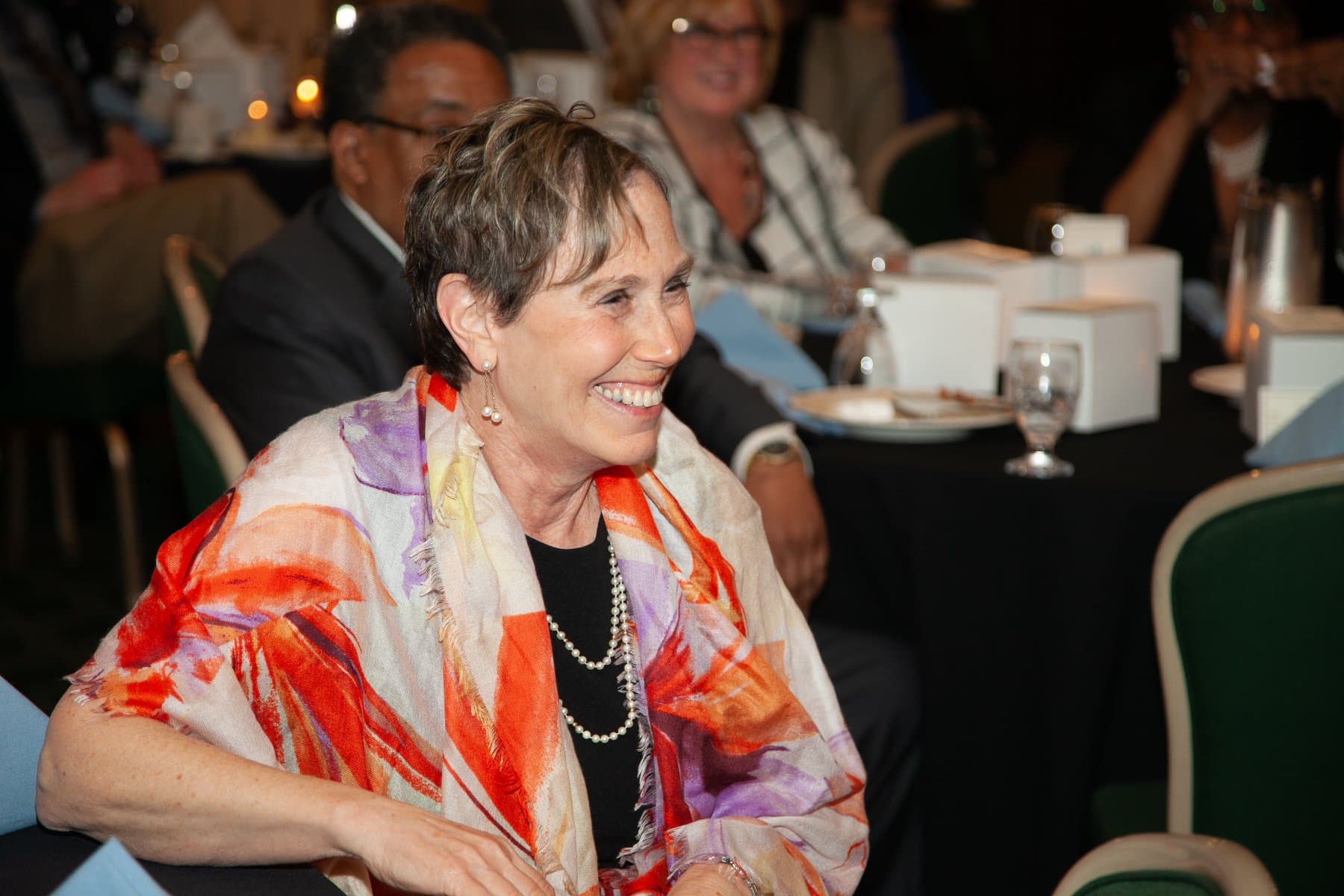


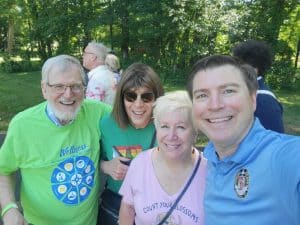
Jan and Richard Walking

After 42 Months: Dancing to My Rhythm!

Shifting the Clocks Doesn't Affect the Rhythm!

Estimated reading time: 2 minutes, 45 seconds

As I slipped into slumber, the clock’s hour hand danced backward, and two a.m. transformed into one a.m., as if time had decided to trick us. This peculiar shift reminded me how we’ve grown accustomed to the biannual ritual of changing our clocks, just as we accept the comforting predictability of Monday following Sunday. When I finally awoke, feeling refreshed and revitalized, I stepped outside into the crisp morning air for a two-hour walk that stretched over six miles. The world around me was awakening, too, filled with the soft glow of dawn, and I was eager to meet my friends Ana and Hugo for a much-anticipated breakfast, where we would share laughter and stories to brighten our day.

Spending time with good friends brings me joy almost as much as seeing my grandchildren. After leaving Toast, we made plans for a pedicure, enjoyed a walk, and chatted for a few minutes on a day when the chill had faded and the sunshine warmed the air. Once I arrived home, I started doing laundry and finalized my shopping list. Then, an email notification caught my attention: “It’s November 3rd, and Early Voting Ends Today.” I was okay with the end of early voting since I preferred to wait and cast my vote on Election Day.
However, the date of November 3rd stopped me in my tracks. Forty-two months ago, my wife passed away. I don’t think about that day often, but since my second grandchild, Wes, was born sixteen months to the day after his grandmother died, I have celebrated the third of each month to honor his birthday. Today, instead of dwelling on the pain of my loss, my mind focused on how far I have come. Despite losing a tooth last month and feeling anxious about aging, I have practiced conscientious reliance. I do this by walking, reading, worshiping, volunteering, and striving to be the best version of myself.

In the early stages of grief, time often felt like it was standing still. Even after coming to terms with the reality of my wife’s absence, I had moments where I believed I could revisit the joyous highlights of our beautiful life together. The birth of Wes was a turning point for me; it made me realize how important it was to embrace a future without her, not just for myself but for my family, friends, and community. As Thomas Cahill beautifully put it in “The Gifts of the Jews,” recognizing the linearity of time is one of the most profound gifts we have received.

Let us celebrate this beautiful journey through time, where every change is a note in the grand composition of our lives—a reminder that, whether the pace is fast or slow, each moment offers a chance to dance to our rhythm. Each step I take moves me further into an unknown future. While I genuinely wish my wife could be here to share this journey with me, I understand that I must face each day without her. Three and a half years later, I have found the strength to laugh, to love again, and to regain my belief in myself, even as I carry her memory with me.
Grief’s Lesson: Serving and Blessing the Living!

I have noticed various changes within me sparked by the transformative power of grief. It's a testament to the resilience of the human spirit and the potential for positive change.

Share your thoughts and ideas

This site uses Akismet to reduce spam. Learn how your comment data is processed.

The Jan Lilien Education Fund!

Jan and Richard Walking
×
The Rest Is Memory: A Novel

Read: January 2025

Get this book

The Rest Is Memory: A Novel

by Lily Tuck

Today, I dove into “The Rest Is Memory: A Novel” by Lily Tuck, and it’s already leaving a powerful impression. This poignant tale follows a young Catholic girl’s harrowing journey to Auschwitz, woven in a captivating Rashomon-style narrative showcasing Tuck’s brilliance as a storyteller. Esquire has rightly placed it on their list of Best Books for Fall 2024, and I can see why.

In Tuck‘s skilled hands, “The Rest Is Memory” transforms into an unforgettable piece of historical reclamation, breathing life into an innocent soul who has long been remembered only through a haunting triptych of photographs. It’s a journey that promises to linger in my thoughts long after I’ve turned the last page.

In this mesmerizing novel by Lily Tuck, we first glimpse fourteen-year-old Czeslawa riding on the back of a boy’s motorcycle. Tuck imagines Czeslawa’s upbringing in a small Polish village before her world imploded in late 1942. Stripped of her modest belongings, she arrives at Auschwitz shorn and bearing the tattoo number 26947. Shortly after, she is photographed. Three months later, she is dead.

How did this happen to an ordinary Polish citizen? This is the question Tuck grapples with in this haunting narrative, which frames Czeslawa’s story within the tragic context of the six million Poles who perished during the German occupation. A decade before writing The Rest Is Memory“, Tuck read an obituary of the photographer Wilhelm Brasse, who took over 40,000 pictures of Auschwitz prisoners—including three of Czeslawa Kwoka, a Catholic girl from rural southeastern Poland. Tuck cut out these photos and kept them, determined to learn more about Czeslawa. However, she could only gather the barest facts: the village she came from, the transport she was on, that she was accompanied by her mother and neighbors, her tattoo number, and the date of her death. Tuck crafts a remarkable kaleidoscope of imagination from this scant evidence, something only our greatest novelists can achieve.

Susanna Moore described the novel as “Beautifully written, all the while instilling a sense of horror.” Tuck’s language swirls around the reader, yet no word is out of place. The subtly rotating images tumble forth, accelerating as we learn about Czeslawa’s tragic time in Auschwitz, as well as the lives of real individuals, including the brutal Commandant Rudolf Höss, his unconscionable wife Hedwig, psychiatrist and child rescuer Janusz Korczak, and the sharp Polish short story writer Tadeusz Borowski. Although we know Czeslawa’s fate, we must keep turning the pages, thoroughly captivated by Tuck’s nearly otherworldly prose.


When you purchase a book through one of my links, I earn a small commission that helps support my passion for reading. This contribution allows me to buy even more books to share with you, creating an incredible cycle of discovering great reads together! Your support truly makes a difference!


×
Roses, in the Mouth of a Lion

Read: January 2023

Get this book

Roses, in the Mouth of a Lion

by Bushra Rehman

Roses, in the Mouth of a Lion by Bushra Rehman is a book I encouraged friends to read before I finished reading it. I highly recommend this page-turner novel, which is punctuated by both joy and loss, full of ’80s music and beloved books. Roses, in the Mouth of a Lion is a must-read coming-of-age story of Razia Mirza, a girl struggling to reconcile her heritage and faith with her desire to be true to herself.

Razia Mirza, the protagonist, leaps off the page or screen. Bushra Rehman describes Corona with prose that is vibrant and clear-eyed. When I lived in Brooklyn, I had, on a few occasions, meetings in Corona a decade before the novel’s setting. Reading the book made me remember that time and place and understand intuitively the world that Razia was struggling to reconcile.

Razia’s choice between her heart and her family is one I will not reveal. However, the novel defines the conflicts between the Pakistani-American community and the love that Razia and Anglea experience in clear prose, and the reader can easily accept various resolutions.

The choice that Rasia makes left me desiring to know what happens next. I have added Bushra Rehman to my favorite authors and plan to read more of her novels.

I had this novel on my list for the last month but could not get to it until now. I wish I had read it sooner. It is the eighth book I have read in 2023.

The Goodreads summary provides an overview,

Razia Mirza grows up amid the wild grape vines and backyard sunflowers of Corona, Queens, with her best friend, Saima, by her side. Razia’s heart is broken when a family rift drives the girls apart. She finds solace in Taslima, a new girl in her close-knit Pakistani-American community. They embark on a series of small rebellions: listening to scandalous music, wearing miniskirts, and cutting school to explore the city.

When Razia is accepted to Stuyvesant, a prestigious high school in Manhattan, the gulf between the person she is and the daughter her parents want her to be, widens. At Stuyvesant, Razia meets Angela and is attracted to her in a way that blossoms into a new understanding. When an Aunty discovers their relationship in the community, Razia must choose between her family and her future.


The Jan Lilien Education Fund sponsors ongoing sustainability and environmental awareness programs. Gifts made this month; I will match dollar-for-dollar. All donations are tax-deductible.

Subscribe

Contact Us

I receive a commission when you buy a book or product using a link on this page. Thank you for supporting Sharing Jan’s Love blog.


×

Read: May 2026

Get this book

The Ending Writes Itself

by V.E. Schwab and Cat Clarke

The Ending Writes Itself” is a captivating debut mystery by Evelyn Clarke, masterfully created by Cat Clarke and V.E. Schwab. Stephen King has described it as “a contender for the best mystery of 2026. The book features an abundance of beloved mystery tropes and wonderfully evokes the charm of Agatha Christie.” In this story, six authors are on a private island, where they have seventy-two hours to write an ending that will change their lives.

Arthur Fletch, one of the world’s bestselling novelists, is a reclusive genius known for his iconic protagonists and fiendish twists. When six struggling authors are invited to spend a weekend on his private Scottish island, they arrive to discover a shocking secret: Arthur Fletch is dead . . . and his last book is unfinished.

Desperate to publish the novel, Fletch’s agent and editor have summoned these writers in the hope that one of them will imagine a worthy ending for this final book. To sweeten the deal, they are offering an irresistible prize: in addition to ghost-writing the last chapter––for a mind-boggling sum––they will also help the lucky writer successfully re-launch their own career, guaranteeing future bestsellers. The catch: the writers have just seventy-two hours to finish Fletch’s magnum opus.

It’s the perfect plot. All it needs is a killer ending.


On an unusually warm evening in Edinburgh, Scotland (contrary to the cliché of a dark and stormy night), New York Times bestselling author V.E. Schwab proposed a bold idea to her longtime friend and screenwriter, Cat Clarke: that they should write a book together.

V.E. Schwab had already made a significant name for herself, having written more than twenty books, including the Shades of Magic series, The Invisible Life of Addie LaRue, and Bury Our Bones in the Midnight Soil. She had previously vowed never to co-write a novel, especially one outside the realm of fantasy.

Meanwhile, Cat Clarke, who had experienced a tumultuous career as an editor and had authored several young adult novels, including Girlhood and Entangled, had left the publishing industry for the even more unpredictable world of film, swearing she would never return to writing books. However, fate—and an irresistible idea—turned them both into liars that night.

As they transitioned from tea to something stronger, Evelyn Clarke was born.


Discover your next favorite book and dive into a world of curated, exciting reads by purchasing through my links. You’ll have access to a diverse selection of books I’ve personally vetted for quality and enjoyment. Supporting these selections not only helps me continue to provide you with personalized recommendations but also ensures you have access to meaningful stories that enrich your life. Your support truly makes a difference in helping me share more books and insights with you!


×
The Immortal Irishman

Read: October 2019

Get this book

The Immortal Irishman

by Timothy Egan


The Immortal Irishman: The Irish Revolutionary Who Became an American Hero by Timothy Egan is a book I started reading as The Worst Hard Timesincluded the first fifty pages.

I often only read a few pages and then return the book to the e-library. The Immortal Irishman was not the case, and I could not stop reading and borrowed the book immediately.

I had never heard of Thomas Francis Meagher or his life in Ireland or America. The story was fascinating, unique, and essential.

The Irish-American story, with all its twists and triumphs, is told through the improbable life of one man. A dashing young orator during the Great Famine of the 1840s, in which a million of his Irish countrymen died, Thomas Francis Meagher led a failed uprising against British rule, for which he was banished to a Tasmanian prison colony. He escaped and six months later was heralded in the streets of New York – the revolutionary hero, back from the dead, at the dawn of the great Irish immigration to America.

Meagher’s rebirth in America included his leading the newly formed Irish Brigade from New York in many of the fiercest battles of the Civil War – Bull Run, Antietam, Fredericksburg. Twice shot from his horse while leading charges, left for dead in the Virginia mud, Meagher’s dream was that Irish-American troops, seasoned by war, would return to Ireland and liberate their homeland from British rule.

The hero’s last chapter, as territorial governor of Montana, was a romantic quest for a true home in the far frontier. His death has long been a mystery to which Egan brings haunting, colorful new evidence.

I recommend this book.

Subscribe

Contact Us

×
A Sovereign People: The Crises of the 1790s and the Birth of American Nationalism

Read: February 2019

Get this book

A Sovereign People: The Crises of the 1790s and the Birth of American Nationalism

by Carol Berkin

A Sovereign People: The Crises of the 1790s and the Birth of American Nationalism by Carol Berkin, Presidential Professor American Colonial and Revolutionary History; Women’s History Professor at Baruch College, focuses on four crises in the first decade. Most historians view these are part of the early partisan debates in America.

Professor Berkin takes a different perspective. She focuses on how the Whiskey Rebellion, the Genet Affair, the XYZ Affair, and the Alien and Sedition Acts helped build nationalism. Despite the partisan divisions, both sides could find solutions that helped America survive its first decade. The failure to resolve anyone of these could have doomed America to failure.

The Federalists – Washington, Hamilton, and Adams – were the leaders of that first decade and managed the successive crisis of sovereignty.

A Sovereign People is one of four books from my first One Day University class.

Subscribe

Contact Us

×
How to Read a Book: A Novel

Read: May 2024

Get this book

How to Read a Book: A Novel

by Monica Wood

I started reading Monica Wood‘s “How to Read a Book: A Novel” today. It’s a heartfelt and uplifting story about a chance encounter at a bookstore—the novel delves into themes of redemption, unlikely friendships, and the life-changing power of sharing stories. With Monica Wood’s characteristic heart, wit, grace, and understanding, the novel illuminates the decisions that shape a life and the kindnesses that make life meaningful.

The story revolves around three characters: Violet Powell, a twenty-two-year-old from rural Abbott Falls, Maine, who is being released from prison after serving twenty-two months for a drunk-driving crash that killed a local kindergarten teacher; Harriet Larson, a retired English teacher who runs the prison book club and is facing the prospect of an empty nest; and Frank Daigle, a retired machinist who is struggling to come to terms with the complexities of his marriage to the woman Violet killed.

Their lives unexpectedly intersect one morning in a bookstore in Portland, Maine. Violet buys the novel she read in the prison book club before her release, Harriet selects the following title for the remaining women, and Frank fulfills his duties as the store handyman. Their encounters set off a chain of events that will profoundly change them.

How to Read a Book is a candid and hopeful story about releasing guilt, embracing second chances, and the profound impact of books on our lives.

×