
Understanding Time: Is It Eternalism or Presentism?

Understanding Time: Is It Eternalism or Presentism?

In the Present Moment, I Choose to See and Hear Others

Estimated reading time: 2 minutes, 46 seconds

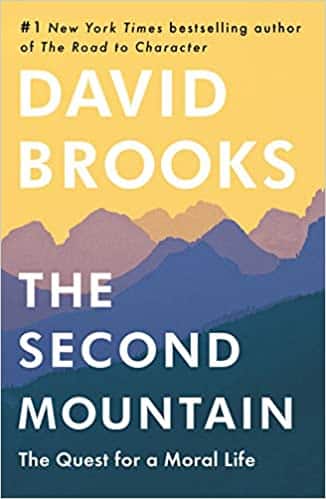
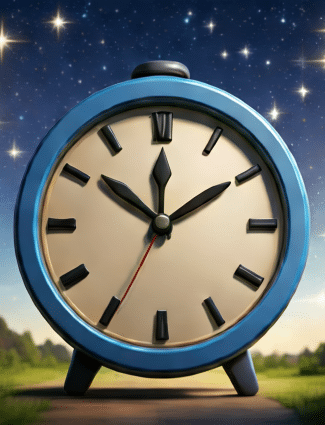
As the end of October approaches, my morning walks either begin in darkness or I wait for the first rays of sunlight to peek above the treetops. In just over three days, thanks to Benjamin Franklin’s concept of moving morning daylight to the evening in the summer, it will be darker at night, allowing for sunnier morning walks. While I may benefit temporarily from the semi-annual clock change, I wish we could spend less time adjusting the clocks and more time contemplating the meaning of life and how to make the most of the time we have.
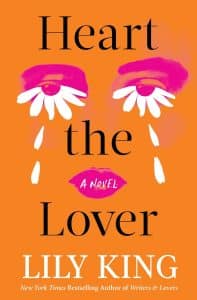
Heart the LoverFinding meaning in life has always been a priority for me. Regular readers know that I attribute my survival after loss to discovering purpose through faith, community, volunteering, walking, reading, and striving to be the best version of myself. Being human, I leave the determination of my success to others.

In my view, time is non-linear and therefore difficult to quantify. Last week, I read “Heart the Lover” by Lily King, and the narrator, Jordan, struggles with the concepts of the past, present, and future. Specifically, she mentions:

“Eternalism is the belief that everything that is, has been, and will be exists right now and forever, all at once. Presentism is the belief that only what exists in the present exists at all. Nothing before and nothing after. No exceptions,” muses Jordan in “Heart the Lover.”

I do not find either perspective entirely satisfying. Eternalism, often referred to as the Block Universe theory, posits that the past, present, and future are all equally real and hold equal importance. According to this view, the universe is a unified entity that spans both space and time. In this scenario, are our lives predetermined? If we had complete knowledge of the world, could we predict future events? Would it be possible because specific, consistently applicable underlying laws govern occurrences in the universe?

On the other hand, presentism, also known as the Growing Block Universe theory, asserts that only present events truly exist. According to this idea, the future has not yet occurred and remains undetermined, while the past has departed but still influences the present.

I find this viewpoint more comfortable, as I agree with William Faulkner’s statement: “The past is never dead. It’s not even past. All of us labor in webs spun long before we were born—webs of heredity and environment, of desire and consequence, of history and eternity.”
The Amen EffectAccepting that the past is an integral part of us explains the complexity of time and how we live in the only day we are guaranteed to have. Too many of us, knowing that the present is all that exists, focus on the short term rather than on how our lives shape the future.

Having found meaning after loss, I take comfort in the thought that, as Rabbi Uri Allen shared during the High Holidays, our shadow represents our effort to bring God into the world.

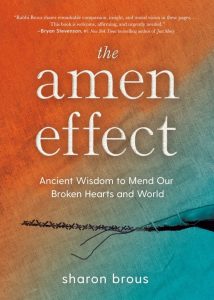
For me, in the present moment, to see and hear others as Rabbi Sharon Brous defines the word “Amen” in “The Amen Effect” is essential. Not only does this allow me to bring the holy into my day-to-day life, but it also enables me to shape the future, one day and one person at a time.

Let me know your thoughts.

Amen.
The Amen Effect is a Book for Our Moment!

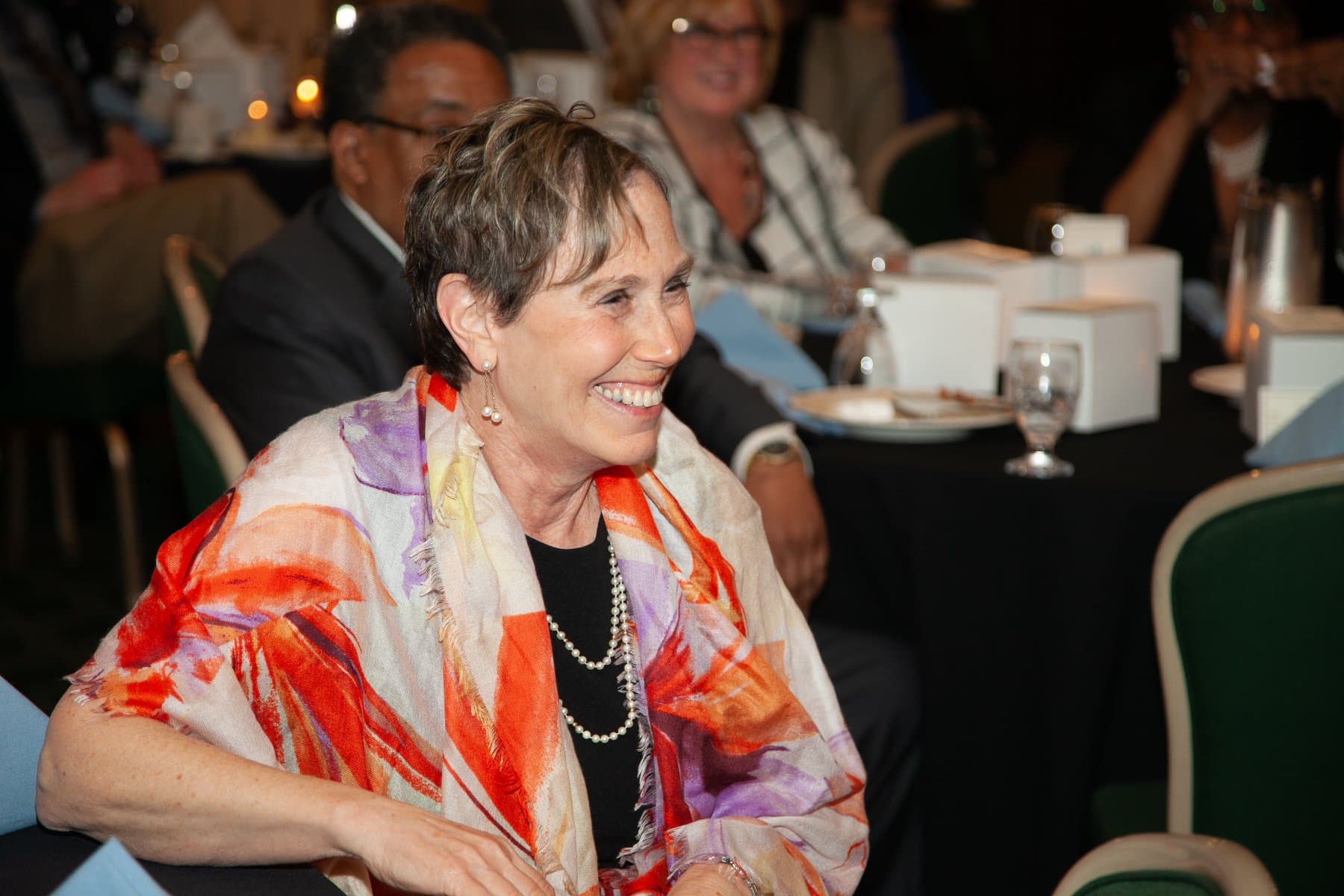
On Tuesday, March 18th, I attended the Kol Tzedek Speakers Series at Temple Emanu-El in Westfield. I was captivated by an inspiring presentation from Rabbi Sharon Brous, the author of "The Amen Effect: Ancient Wisdom to Heal Our Hearts and Mend Our Broken World." From the moment she spoke her first words, my eyes brimmed with tears, a testament to the deep emotional connection she stirred within me.

The Jan Lilien Education Fund!

Understanding Time: Is It Eternalism or Presentism?
×
The Rest of Our Lives

Read: January 2026

Get this book

The Rest of Our Lives

by Ben Markovits

The Rest of Our Lives by Ben Markovits is a beautifully crafted, tender, and insightful story that depicts the journey of starting anew. Tom Layward, the protagonist, chooses not to return home after dropping his daughter off at college. This life-affirming road trip novel explores themes of marriage, middle age, and a man confronting a pivotal moment. It was a finalist for the 2025 Booker Prize.

When Tom Layward’s wife had an affair twelve years ago, he resolved to leave her as soon as his youngest child left the nest. Now, while driving his college-bound daughter to Pittsburgh, he remembers his promise to himself. He is also on the run from his own health issues and a forced leave from work.

So, rather than returning to his wife in Westchester, Tom keeps driving west, with the vague plan of visiting people from his past—an old college friend, his ex-girlfriend, his brother, his son—en route, maybe, to California. He’s moving towards a future he hasn’t even envisioned, while he considers his past and the choices he’s made that have brought him to this moment.


Ben Markovits was born and raised in Texas, and later lived in London and Berlin. He studied at Yale University and the University of Oxford. After graduating, he became a professional basketball player in Landshut, Germany, where he played against a young Dirk Nowitzki.

Markovits has authored eleven novels, including Fathers and Daughters, You Don’t Have to Live Like This, and The Sidekick. In addition to his books, he has published essays, stories, poetry, and reviews in notable publications such as The Guardian, Granta, The Paris Review, and The New York Times.

In 2013, Granta recognized him as one of their Best of Young British Novelists. He received the Eccles British Library Writer in Residence Award and the James Tait Black Memorial Prize in 2015. Currently, he lives in London and teaches creative writing at Royal Holloway, University of London.


Discover your next favorite book and dive into a world of curated, exciting reads by purchasing through my links. You’ll have access to a diverse selection of books that I’ve personally vetted to ensure quality and enjoyment. Additionally, by supporting these selections, you’ll help me continue to provide you with more personalized recommendations. I earn a small commission from your purchase, which allows me to buy and share even more books with you. Your support truly makes a difference!


×
An Assassin in Utopia: The True Story of a Nineteenth-Century Sex Cult and a President's Murder

Read: February 2023

Get this book

An Assassin in Utopia

by Susan Wels

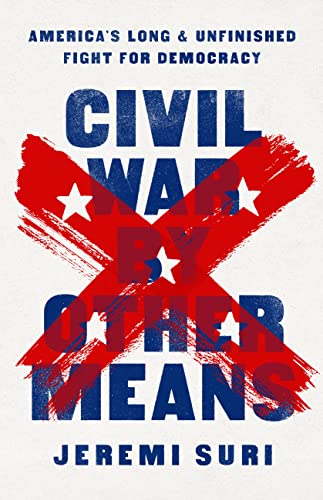
An Assassin in Utopia: The True Story of a Nineteenth-Century Sex Cult and a President’s Murder by Susan Wels is a true crime odyssey that explores a forgotten, astonishing chapter of American history, leading the reader from a free-love community in upstate New York to the shocking assassination of President James Garfield. I had read about this historical period in several other books, most recently Civil War by Other Means.

Susan Wels has written an excellent historical overview of a period we often overlook. I highly recommend An Assassin in Utopia: The True Story of a Nineteenth-Century Sex Cult and a President’s Murder.

The Oneida Community, even though it was the most successful utopian community, is often overlooked. Ms. Wels connects the dots and places the experiment in the center of a transitional period. It is not merely the connection between Charles Julius Guitea and his assassination of President James Garfield, albeit a brutal crime, that shook America to its core, but all of the other linkages. These include “John Humphrey Noyes; his idol, the eccentric newspaper publisher Horace Greeley (founder of the New Yorker and the New York Tribune).”

She also resurrects the importance of the Wormely Compromise and the African-American family that was an instrumental part of public society.

I have found fiction to be something I enjoy, but I knew it was time for a non-fiction book to balance my reading. The New York Times and other publications highly rated An Assassin in Utopia.

The Goodreads summary provides an overview,

It was heaven on earth—and, some whispered, the devil’s garden.

Thousands came by trains and carriages to see this new Eden, carved from hundreds of acres of wild woodland. They marveled at orchards bursting with fruit, thick herds of Ayrshire cattle and Cotswold sheep, and whizzing mills. They gaped at the people who lived in this place—especially the women, with their queer cropped hair and shamelessly short skirts. The men and women of this strange outpost worked and slept together—without sin, they claimed.

From 1848 to 1881, a small utopian colony in upstate New York—the Oneida Community—was known for its shocking sexual practices, from open marriage and free love to the sexual training of young boys by older women. And in 1881, a one-time member of the Oneida Community—Charles Julius Guiteau—assassinated President James Garfield in a brutal crime that shook America to its core.

An Assassin in Utopia is the first book that weaves together these explosive stories in a tale of utopian experiments, political machinations, and murder. This deeply researched narrative—by bestselling author Susan Wels—tells the true, interlocking stories of the Oneida Community and its radical founder, John Humphrey Noyes; his idol, the eccentric newspaper publisher Horace Greeley (founder of the New Yorker and the New York Tribune); and the gloomy, indecisive President James Garfield—who was assassinated after his first six months in office.

Juxtaposed to their stories is the odd tale of Garfield’s assassin, the demented Charles Julius Guiteau, who was connected to all of them in extraordinary, surprising ways.

Against a vivid backdrop of ambition, hucksterism, epidemics, and spectacle, the book’s interwoven stories fuse together in the climactic murder of President Garfield in 1881—at the same time as the Oneida Community collapsed.

Colorful and compelling, An Assassin in Utopia is a page-turning odyssey through America’s nineteenth-century cultural and political landscape.


The Jan Lilien Education Fund sponsors ongoing sustainability and environmental awareness programs. Gifts made this month; I will match dollar-for-dollar. All donations are tax-deductible.

Subscribe

Contact Us

I receive a commission when you buy a book or product using a link on this page. Thank you for supporting Sharing Jan’s Love blog.


×
The Hunter: A Novel

Read: March 2024

Get this book

The Hunter: A Novel

by Tana French

Today, I began reading “The Hunter: A Novel” by Tana French, often called the Queen of Irish crime fiction. The story takes place in a small village in the West of Ireland during a hot summer. Two men arrive, one returning home and the other seeking riches. However, one of them is also seeking death.

Cal Hooper is a retired Chicago police officer who moved to rural Ireland for a peaceful life. He has built a relationship with a local woman named Lena and has been mentoring Trey Reddy, a troubled teenager on a better path. But when Trey’s long-lost father returns, accompanied by an English millionaire and a plan to find gold in the townland, everything they have built is threatened. Cal and Lena are willing to do whatever it takes to protect Trey, but Trey is not interested in protection. What she wants is revenge.

This novel, written by the acclaimed author described by The New York Times as “in a class by herself,” tells a nuanced and atmospheric tale about what we are willing to do for our loved ones, what we will do for revenge, and what we may have to sacrifice when the two collide.

×
How to Read a Book: A Novel

Read: May 2024

Get this book

How to Read a Book: A Novel

by Monica Wood

I started reading Monica Wood‘s “How to Read a Book: A Novel” today. It’s a heartfelt and uplifting story about a chance encounter at a bookstore—the novel delves into themes of redemption, unlikely friendships, and the life-changing power of sharing stories. With Monica Wood’s characteristic heart, wit, grace, and understanding, the novel illuminates the decisions that shape a life and the kindnesses that make life meaningful.

The story revolves around three characters: Violet Powell, a twenty-two-year-old from rural Abbott Falls, Maine, who is being released from prison after serving twenty-two months for a drunk-driving crash that killed a local kindergarten teacher; Harriet Larson, a retired English teacher who runs the prison book club and is facing the prospect of an empty nest; and Frank Daigle, a retired machinist who is struggling to come to terms with the complexities of his marriage to the woman Violet killed.

Their lives unexpectedly intersect one morning in a bookstore in Portland, Maine. Violet buys the novel she read in the prison book club before her release, Harriet selects the following title for the remaining women, and Frank fulfills his duties as the store handyman. Their encounters set off a chain of events that will profoundly change them.

How to Read a Book is a candid and hopeful story about releasing guilt, embracing second chances, and the profound impact of books on our lives.

×
Tenth of December: Stories

Read: July 2024

Get this book

Tenth of December: Stories

by George Saunders

One of the most important and blazingly original writers of his generation, George Saunders, is an undisputed master of the short story. The Tenth of December is his most honest, accessible, and moving collection yet. It is one of the New York Times’ 100 Best Books of the Century. The book is structured as a collection of short stories, each offering a unique and compelling narrative.

In the taut opener, “Victory Lap,” a boy witnesses the attempted abduction of the girl next door and is faced with a harrowing choice: Does he ignore what he sees or override years of smothering advice from his parents and act?

In “Home,” a combat-damaged soldier moves back in with his mother and struggles to reconcile the world he left behind with the one he has returned to.

In the title story, a stunning meditation on imagination, memory, and loss, a middle-aged cancer patient walks into the woods to commit suicide, only to encounter a troubled young boy who, throughout a fateful morning, gives the dying man a final chance to recall who he is.

An unfortunate, deluded owner of an antique store; two mothers struggling to do the right thing; a teenage girl whose idealism is challenged by a brutal brush with reality; a man tormented by a series of pharmaceutical experiments that force him to lust, to love, to kill—the unforgettable characters that populate the pages of Tenth of December are vividly and lovingly infused with Saunders’s signature blend of exuberant prose, deep humanity, and stylistic innovation.

Writing brilliantly and profoundly about class, sex, love, loss, work, despair, and war, Saunders cuts to the core of the contemporary experience. These stories take on the big questions and explore the fault lines of our morality, delving into what makes us suitable and what makes us human. They are not just stories but profound explorations that will stimulate your intellect and make you ponder.

Unsettling, insightful, and hilarious, the stories in Tenth of December—through their manic energy, their focus on what is redeemable in human beings, and their generosity of spirit—not only entertain and delight but also fulfill Chekhov’s dictum that art should “prepare us for tenderness.” The humor in these stories will keep you entertained and laughing, even as they delve into profound themes.


George Saunders is the author of thirteen books, including the novel Lincoln in the Bardo, which won the Booker Prize, and five collections of stories, including Tenth of December, which was a finalist for the National Book Award, and the recent collection Liberation Day (selected by former President Obama as one of his ten favorite books of 2022).

Three of Saunders’s books—Pastoralia, Tenth of December, and Lincoln in the Bardo—were chosen for The New York Times’s list of the 100 Best Books of the 21st Century. Saunders hosts the popular Story Club on Substack, which grew out of his book, A Swim in a Pond in the Rain. In 2013, he was named one of Time’s 100 Most Influential People. He teaches in the creative writing program at Syracuse University.


When you purchase a book through one of my links, I earn a small commission that helps support my passion for reading. This contribution allows me to buy even more books to share with you, creating an incredible cycle of discovering great reads together! Your support truly makes a difference!


×
Lone Women

Read: March 2023

Lone Women: A Novel

by Victor LaValle

As an amateur historian, I have always enjoyed historical fiction, especially when It helps us redefine the past to be more accurate. Lone Women: A Novel by Victor LaValle is a haunting new vision of the American West from the award-winning author of The Changeling. Blue skies, empty land—and enough room to hide away a horrifying secret. Or is there? I recommend this book.

When I began reading this novel, I was unsure where it was going or what might be hidden in the steamer trunk. I was unaware of this story and found this book a well-written account of forgotten history that must be told and shared with all readers. Stay the course as Lone Women: A Novel reveals the secrets in the Trunk and the fantastic story of lone women who lived in and prospered in the old West.

Lone Women is the twenty-fifth book I have read in 2023. Although I have surpassed my reading goal, I will continue to read.

The Goodreads summary provides an overview,

Adelaide Henry carries an enormous steamer trunk with her wherever she goes. It’s locked at all times. Because when the trunk is opened, people around her start to disappear…

The year is 1914, and Adelaide is in trouble. Her secret sin killed her parents and forced her to flee her hometown of Redondo, California, in a hellfire rush, ready to make her way to Montana as a homesteader. Dragging the trunk with her at every stop, she will be one of the “lone women” taking advantage of the government’s offer of free land for those who can cultivate it—except Adelaide isn’t alone. And the secret she’s tried so desperately to lock away might be the only thing keeping her alive.

Told in Victor LaValle’s signature style, blending historical fiction, shimmering prose, and inventive horror, Lone Women is the gripping story of a woman desperate to bury her past—and a portrait of early twentieth-century America as you’ve never seen.


The Jan Lilien Education Fund sponsors ongoing sustainability and environmental awareness programs. Gifts made this month; I will match dollar-for-dollar. All donations are tax-deductible.

Subscribe

Contact Us

I receive a commission when you buy a book or product using a link on this page. Thank you for supporting Sharing Jan’s Love blog.


×