
Walking for 1097 Days

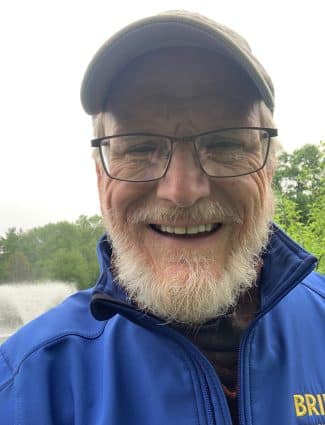
Smiling Despite a Misty Drizzle

Can a Simple Act of Kindness Change the World?

Estimated reading time: 2 minutes, 11 seconds

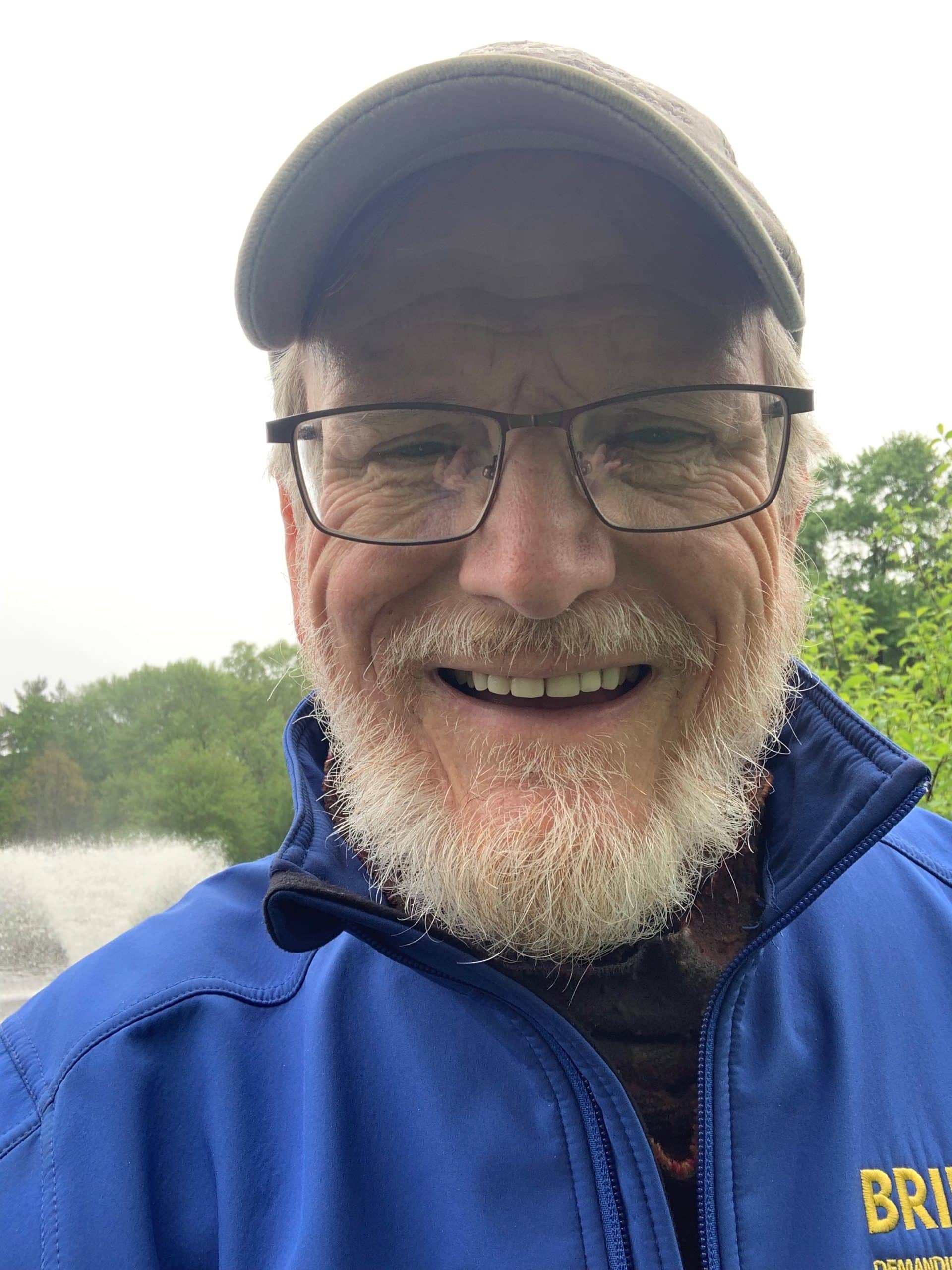
As I was nearing the 7.7-mile mark close to my apartment building, I strolled past the Greatest Brothers Barbershop on Alden Street. I noticed the owner sitting comfortably in the barber chair through the window. As I passed by, he flashed a warm smile as I waved at him. Giving him a friendly wave, I started to finish my walk. However, I couldn’t resist opening the door to exchange greetings. Once inside, he reiterated how much my smile brightened his day. Despite my initial reluctance to accept the compliment, he remained insistent as we shook hands and reiterated how much my smile meant to him.
As I ascended the staircase to the third floor of Apartment 3B, I tried to understand the profound impact of a simple act of kindness. It baffled me how an average individual like me, who had grappled with the profound loss of his dear wife, could wield such influence just by extending a warm wave and offering genuine well-wishes during my routine strolls. I was sure that the solution to this enigma would gradually unfold, akin to the unfurling petals of a blossoming rose.

In just two short days, two women who frequently walk their dogs together now greet me with the warmth and familiarity of old friends. However, these encounters with the barber and the dog walkers were just the beginning of something greater. In the wake of grief that had almost claimed my last breath, I had transformed into someone recognized and lauded by friends, neighbors, and fellow travelers on life’s winding path, all because of my simple acts of kindness. This transformation, this recognition, is a testament to personal growth and the power of empathy. It’s a journey we all share, and it’s a journey that connects us all. Shouldn’t we treat each other like cherished family members, given that we are cousins on this shared life journey?

Upon stepping into my home, I summoned Siri to play WNYC-FM and settled down with a copy of The New York Times. As I ate my breakfast, I mulled over the barber’s conversation, trying to comprehend his words. I pondered how I could have brightened and improved his day, but no clear solutions were presented. While tidying up after breakfast, it struck me that there might not be a definitive answer, except that grief has been a great teacher. It has taught me life’s most crucial lesson – serving and blessing the living. This realization and understanding are a beacon of light in the darkness, guiding our actions and reflecting our humanity.
Grief’s Lesson: Serving and Blessing the Living!

I have noticed various changes within me sparked by the transformative power of grief. It's a testament to the resilience of the human spirit and the potential for positive change.

10 comments add your comment

Share your thoughts and ideas

This site uses Akismet to reduce spam. Learn how your comment data is processed.

The Jan Lilien Education Fund!

Walking for 1097 Days
×
Autocracy, Inc.: The Dictators Who Want to Run the World

Read: January 2025

Get this book

Autocracy, Inc.

by Anne Applebaum

Today, I plunged into the captivating world of “Autocracy, Inc.: The Dictators Who Want to Run the World” by Anne Applebaum. I listened to an engaging discussion between her and the Executive Director of the YIVO Institute for Jewish Research, Jonathan Brent. Their insights left me eager for more, and I couldn’t resist making this book my next read. I’m thrilled to dive deeper into her thought-provoking perspective!

This compelling New York Times bestseller by the Pulitzer Prize-winning author paints a chilling picture of how autocratic regimes join forces to erode democracy globally. Applebaum sheds light on this pressing issue and offers insights on how we can unite to fight back.

We think we know what an autocratic state looks like: An all-powerful leader is at the top. He controls the police. The police threaten the people with violence. There are evil collaborators and maybe some brave dissidents.

But in the 21st century, that bears little resemblance to reality. Nowadays, autocracies are underpinned not by one dictator but by sophisticated networks composed of kleptocratic financial structures, surveillance technologies, and professional propagandists, all of which operate across multiple regimes, from China to Russia to Iran. Corrupt companies in one country do business with corrupt companies in another. The police in one country can arm and train the police in another, and propagandists share resources and themes, pounding home the same messages about the weakness of democracy and the evil of America.

International condemnation and economic sanctions cannot move the autocrats. Even popular opposition movements, from Venezuela to Hong Kong to Moscow, don’t stand a chance. The members of Autocracy, Inc. aren’t linked by a unifying ideology, like communism, but rather by a common desire for power, wealth, and impunity. In this urgent treatise, which evokes George Kennan’s essay calling for “containment” of the Soviet Union, Anne Applebaum calls for the democracies to reorient their policies to fight a new threat fundamentally.


In the video, Jonathan Brent asks Anne Applebaum to read the last paragraph of “Autocracy, Inc.: The Dictators Who Want to Run the World.”

There is no liberal world order anymore, and the aspiration to create one no longer seems real. But there are liberal societies, open and free countries that offer a better chance for people to live useful lives than closed dictatorships do. They are hardly perfect. Those that exist have deep flaws, profound divisions, and terrible historical scars. But that’s all the more reason to defend and protect them. So few of them have existed across human history; so many have existed for a short time and then failed. They can be destroyed from the outside and from the inside, too, by division and demagogues. Or they can be saved. But only if those of us who live in them are willing to make the effort to save them.

After finishing Autocracy, Inc.: The Dictators Who Want to Run the World,” this closing paragraph should be a call to action. Failure to respond to the challenge will doom our future to an unacceptable one. I recommend this book and encourage people to read it, discuss its contents, and take action to save our collective future.


When you purchase a book through one of my links, I earn a small commission that helps support my passion for reading. This contribution allows me to buy even more books to share with you, creating an incredible cycle of discovering great reads together! Your support truly makes a difference!


×
People Collide: A Novel

Read: October 2023

Get this book

People Collide: A Novel

by Isle McElroy

Today, I started reading “People Collide” by Isle McElroy. The book is about a gender-bending, body-switching story that explores the themes of marriage, identity, and sex. “People Collide” is a profound exploration of ambition, sacrifice, desire, and loss. The book sheds a refreshing light on themes of love, sexuality, and the truth of who we are.

The protagonist, Eli, lives with his wife, Elizabeth, in a cramped apartment in Bulgaria. One day, Eli wakes up to find that he has switched bodies with Elizabeth, who has disappeared without a trace. The story follows Eli’s journey across Europe and America to find his missing wife while he learns to exist in her body.

As Eli comes closer to finding Elizabeth, he begins to question the effect of their metamorphosis on their relationship. He wonders how long he can keep up the illusion of living as someone else. Will their marriage wither away entirely in each other’s bodies? Or will this transformation be the key to making their marriage thrive?


The Jan Lilien Education Fund sponsors ongoing sustainability and environmental awareness programs. Gifts made this month; I will match dollar-for-dollar. All donations are tax-deductible.

Subscribe

Contact Us

I receive a commission when you buy a book or product using a link on this page. Thank you for supporting Sharing Jan’s Love blog.


×
A Love Story from the End of the World

Read: January 2026

Get this book

A Love Story from the End of the World

by Juhea Kim

Juhea Kim, the acclaimed author of Beasts of a Little Land and City of Night Birds, presents an exquisite collection of stories that explores the delicate balance between humans and the natural world. With the clear-eyed reverence of Richard Powers and the sparkling sincerity of George Saunders, her first story collection, A Love Story from the End of the World, offers a breathtaking view of our fractured world—and our broken hearts. Through its passionate narrative, the collection serves as a poignant reminder that, as humans, we are nothing without nature.

Spanning multiple locales and time periods, and rendered in fine detail and vivid color, this transportive collection illustrates what it means to live as human inhabitants of our singular, miraculous planet.

Lyrical, at times hilarious, and always heartfelt, each of these ten stories reflects individual choices in the face of “man-made” apocalypses. In a near-future Seoul, where air pollution has become so severe that a translucent biodome has covered the city, a civil engineer responsible for its upkeep considers an arranged marriage. A painter, disenchanted with New York City, travels to the South of France and becomes romantically involved with an entrepreneur who claims to have invented a new color. Meanwhile, on an island where the Indian and Pacific Oceans converge, and where foreign countries have dumped their waste, causing a landfill mountain to form, a local boy facing daily hardships gains internet fame for his K-pop-inspired dances.


Juhea Kim is the author of the novel Beasts of a Little Land, which was a finalist for the Dayton Literary Peace Prize and the winner of the Yasnaya Polyana Literary Award, Russia’s most significant annual award in literature. It has been translated into many languages and is for television. She is also the author of City of Night Birds, which was a Reese’s Book Club pick.

A graduate of Princeton University, her writing has been published in Granta, the Times Literary Supplement, the Independent, Zyzzyva, Guernica<, and other outlets. She is an advocate for wildlife conservation, animal rights, and education and aid in Africa. Born in Korea and raised in Portland, Oregon, Kim now lives in London.


Discover your next favorite book and dive into a world of curated, exciting reads by purchasing through my links. You’ll have access to a diverse selection of books that I’ve personally vetted to ensure quality and enjoyment. Additionally, by supporting these selections, you’ll help me continue to provide you with more personalized recommendations. I earn a small commission from your purchase, which allows me to buy and share even more books with you. Your support truly makes a difference!


×
Sun City

Read: February 2025

Get this book

Sun City by Tove Jansson

by Tove Jansson

Today, I began reading “Sun City” by Tove Jansson, translated by Thomas Teal. I found this book mentioned in Maya Chung‘s review in The Atlantic’s Book Briefings, and as an older man, it seemed like the perfect choice for me. In “The Summer Book” and “The True Deceiver,” as well as in her many short stories, Tove Jansson consistently explores the everyday lives of older adults.

She portrays them not as a separate group but as fully fleshed individuals who experience the same jealousies, desires, and joys as any other demographic. It’s no wonder that in her travels through America in the 1970s, she became fascinated with what was then a particularly American institution, the retirement home, where older people lived in their tightly knit worlds.

In Sun City, Jansson depicts these worlds in a group portrait of residents and employees at the Berkeley Arms in St. Petersburg, Florida. As the narrative moves from character to character, the characters move through an America riven by cultural divides, facing the death of its dream. The Berkeley Arms’s newest resident finds a place among the rocking chairs and endless chatter on the veranda while other residents long for past glories, mourning their losses and killing time. Meanwhile, one of their attendants, Bounty Joe, is eagerly awaiting a letter, or even just a postcard, alerting him to the imminent return of Jesus Christ. Nobody’s normal anymore,” the bartender says, “not the old geezers and not the newborn kids.”


When you purchase a book through one of my links, I earn a small commission that helps support my passion for reading. This contribution allows me to buy even more books to share with you, creating an incredible cycle of discovering great reads together! Your support truly makes a difference!


×
American Dirt

Read: September 2021

Get this book

American Dirt

by Jeanine Cummins

American Dirt by Jeanine Cummins is one of the best books I have read this year.

American Dirt is a “cross-genre novel that combines elements of a commercial thriller, literary fiction, suspense, and romance.” American Dirt refers to the land that is the United States of America and to the difficulty undocumented migrants face both before and after crossing the border.

According to SuperSummary,

Lydia Quixano Pérez, a bookstore owner in Acapulco, saves her son Luca from a massacre that wipes out their entire family at a quinceañera cookout. The perpetrators are three sicarios, killers for Los Jardineros, a violent local cartel. Javier Crespo Fuentes, Lydia’s close friend and the jefe of Los Jardineros, ordered the hit in retaliation for an exposé written by Lydia’s husband, a journalist named Sebastián Pérez Delgado. Javier’s murderous rage stems not from the article itself, but from the impact it has on his daughter, Marta, who commits suicide when she learns of her father’s true identity. Lydia and Luca spend the rest of the novel running from Javier’s men, encountering a diverse cast of migrants along the road to the US.

I read the book at the same time that Haitian migrants were being deported at the border. Ms. Cummins writes passionately about the plight of migrants and the difficulties they face as they seek a new life in the US. This book highlighted this to me in ways that I understood intellectually but not emotionally.

Ms. Cummins refers to a sign she saw in Spanish in Tijuana while she was researching this book:

También de este lado hay sueños.

On this side, too, there are dreams.

All of our ancestors were migrants, and they all had dreams of a better life. We need to find a better way to help those who now have goals find a home so that their hopes for a better future can come true.

Subscribe

Contact Us

×
When We Cease to Understand the World

Read: September 2024

Get this book

When We Cease to Understand the World

by Benjamín Labatut

Today, I began reading When We Cease to Understand the World by Benjamín Labatut, translated by Adrian Nathan West. This book, listed on The New York Times 100 Best Books of the 21st Century, promises to be thought-provoking as it delves into the intricate connections between scientific and mathematical discovery, madness, and destruction.

In a world where scientific advancements often involve ethical dilemmas and societal implications, this book offers a unique perspective on the lives of scientists who have shaped our understanding of the world. Fritz Haber, Alexander Grothendieck, Werner Heisenberg, and Erwin Schrödinger are some of the luminaries whose troubled lives Benjamín Labatut deeply explores in his fictional examination. Labatut shows how these scientists and thinkers grappled with profound questions of existence, experiencing strokes of unparalleled genius, alienating friends and lovers, and descending into isolation and insanity. Their discoveries, some of which significantly improved human life, while others led to chaos and unimaginable suffering, continue to shape our world.

With a breakneck pace and a wealth of disturbing detail, Labatut uses fiction’s imaginative resources to tell the stories of the scientists and mathematicians who expanded our notions of the possible.

×