
My Apolytus Moment

Estimated reading time: 21 minutes, 12 seconds
Solo At the Flower Show – June 2021

“Richard, I want you to go to the Flower Show in June,” Jan insisted. We already have tickets and hotel reservations.” As her caregiver during the final moments of her life, I was consumed with her care and had little time to ponder my plans for early June. I would nod and agree, but deep down, I knew I might be unable to make it. Fortunately, Mike and Elyssa offered to accompany me, which kept Jan from bringing it up again.
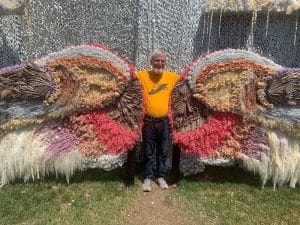
After Jan’s passing, the first five weeks went by in a blur. I attempted to coordinate plans with Mike and Elyssa but was unsuccessful. The week before the Flower Show, I accepted I might have to go alone, which was OK. However, we faced a fierce heatwave with high temperatures and humidity that soared to the upper 90s. Though I still wanted to go to the Flower Show, the scorching weather made me rethink my decision. But then, to make matters worse, my apartment’s air conditioner condenser stopped working, and the interior of my apartment felt as hot as the streets outside.

“Sorry to inform you, Mr. Brown, that I won’t be able to arrange for a new condenser until Monday or Tuesday. Moreover, the installation process might take a day or two,” Kevin’s voice was apologetic as he conveyed the news. The announcement was disheartening, and I felt a wave of disappointment wash over me, like the plants in my apartment that had started to wilt. 

However, to my surprise, Kevin’s kindness shone through as he offered me a temporary window unit for my bedroom. It was a much-needed reprieve from the sweltering heat, but only for one room. Plus, it was noisier than the central AC. As we talked, I told Kevin I was attending the Flower Show on June 7th and 8th. I had already booked a hotel for those days and bought tickets for Tuesday afternoon, the 7th. I expressed my concern to Kevin that I might not be around on Monday or Tuesday to receive the new condenser. 

Kevin reassured me that my absence wouldn’t be a problem, as he had a master key. He put my worries to rest, and I felt grateful to have such a helpful and reliable person.

I gathered a few items for a two-night stay. I mistakenly thought the Prius belonged to my wife as I started the car and drove out of the Miln Street parking lot. I managed to avoid most of the traffic, except for the time it took to transfer from the Parkway to the Turnpike. I drove in solitude until I arrived at The Marriott Courtyard Philadelphia South at the Navy Yard, where I was relieved to have made reservations in January. The desk clerk informed me that no rooms were available, but I was grateful for my early planning. I handed over my credit card and driver’s license and requested just one key.

My room was tastefully designed and had all the necessary amenities. Before dinner, I unpacked and read a few chapters of Celestial Navigation by Anne Tyler, which my wife had recommended. The novel’s protagonist, Jeremy Pauling, who had never left home, suffered from a personal tragedy. Though I was far from making a drastic choice never to leave my house, I found the book to be a compelling reminder of the importance of embracing life’s many adventures.

After a restless night, I got up early for a walk. I was excited about attending the Flower Show in the afternoon, but my iPhone buzzed with news that it was closed for the afternoon session. Severe thunderstorms in the next few hours were the reason. I read for an hour or two as the rain pounded the windows. Mid-afternoon, the rain stopped, and the sun breached the clouds. Could the Flower Show open now that the rain was over?

I laced my walking shoes and headed to FDR Park. As I approached the entrance, I met several people who had made the same choice. It is still closed,” I told them as I reached the gate before them. While we complained about being unable to see the show, two high school championship baseball games were underway in the park. One of the women opined, “If they can play ball, why can’t we see the flowers?

I wished them the best as I left the park and walked on Broad Street by the baseball stadium and other sports facilities. If I went two blocks to the stadium entrance and turned right, I could find the hotel and see more of the neighborhood. As I turned, I looked over my shoulder and saw thick black thunderheads racing towards me. I walked as fast as I could, but the derecho unleashed its rain faster than my feet could run. Despite being soaked to the bone, I laughed aloud as if Jan were next to me, “Honey, I did it again!”

Once I had peeled off my wet clothes and changed, I went to dinner at the hotel. While waiting for my dinner, I did not think about how I would be unable to attend this year’s Flower Show but how much Jan liked flowers and gardens. After giving her a final kiss, I accepted that she was not returning. My sons and I briefly discussed planting trees in one of their yards. I shook my head as the staff delivered my crab cake dinner. “Is the dinner OK?” he asked. Yes, I said, probably louder than necessary. Planting a tree, maybe more, is what I needed to do to keep Jan’s memory alive and prove that love never dies! I pulled out my iPhone and scanned the calendar. Jan’s birthday in 2022 was on a Sunday. Perfect!

Blood, Sweat, Tears, and Treasure – April 2024

On April 7, 2024, Temple Sha’arey Shalom and Hanson Park organized a Mitzvah Day, open to the Cranford community and aimed at cleaning up the park. Despite being a small congregation, the event was a grand success. As I walked towards the park, memories flooded in, reminding me of the day I decided to create Jan’s Memorial Garden in Hanson Park.

It all started when I returned from a rained-out Flower Show and decided to stroll through Hanson Park. As I approached the triangle, I thought it would be the perfect spot to plant a tree in honor of Jan. Although I knew it was impossible, I hoped for a sign from her.
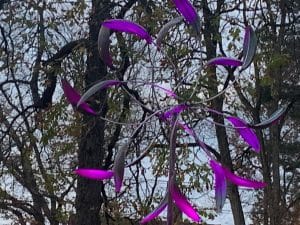
As I was taking a walk, something magical happened. The rain ceased, the clouds parted, and the sunlight filled only the park while the downpour impacted the rest of the area. It was strange that only the park remained dry. I always believed that Jan and I shared a portion of each other’s souls, and that part of my soul vanished with Jan when she passed away. While standing in Hanson Park, I could feel Jan’s spirit with me, soaking wet, and I knew then that creating Jan’s Memorial Garden was the right thing to do. I felt her presence with me through my journey of grief. Standing next to the triangle, I felt Jan’s presence with me, and it seemed like she had sent me a message of approval. When I got home, I immediately emailed Ellen to express my desire to plant a tree in Hanson Park.

On Mitzvah Day, when I arrived at Hanson Park around noon, I saw a young mother with her kids enjoying the park. When she saw volunteers cleaning the park, she kindly offered to help and volunteered her and her children’s assistance.

As she was preparing to leave, Ellen, the park’s president, asked if the volunteer was a park member and had received the Arbor Day flyer. Unfortunately, the volunteer had not received the flyer, nor was she a park member. I immediately offered to walk her to the registration table to ensure she received the flyer and the membership form. When I handed her the flyer, she appeared overjoyed and shared how much she loved the park.

She said, “One day, I was here, and we were standing by the bench behind you, and a Robin flew over and sat down. My kids were amazed that it did not fly away. I read the inscription. When I got home, I googled Jan Lilien and was impressed by what her husband had done and wrote about her.

Her words touched my heart, and tears welled in my throat. She paused and looked at me for a moment. Oh, are you Jan’s husband?” I replied firmly and confidently, “Yes, that’s correct.

The woman spoke gently, her eyes filled with warmth and admiration as she looked at me. I never had the chance to meet Jan in person, but your heartfelt inscription and writings have made me feel as if I knew her all along,” she said. She embraced me warmly. What you’ve done to honor her memory is truly remarkable. The memorial garden you’ve created is a breathtaking and magical place unlike any other.

I heard her words, and they warmed my heart. It reminded me of a significant truth – that love never dies. The warmth I felt in my heart was overwhelming, and it made me realize that even the simplest gestures can significantly impact someone’s life. This moment is something I will cherish forever, as it gave me hope for a better tomorrow.

Despite the blood, sweat, tears, and treasure it cost to build Jan’s Memorial Garden, I knew it was worth every penny. Having a purpose to help me in my grief journey was paying dividends I dreamed of but never imagined would happen. This moment will stay with me forever, giving me hope for a better tomorrow.

Pages: 1 2 3 4

29 comments add your comment

Share your thoughts and ideas

This site uses Akismet to reduce spam. Learn how your comment data is processed.

Previous Post:

Next Post:

The Jan Lilien Education Fund!

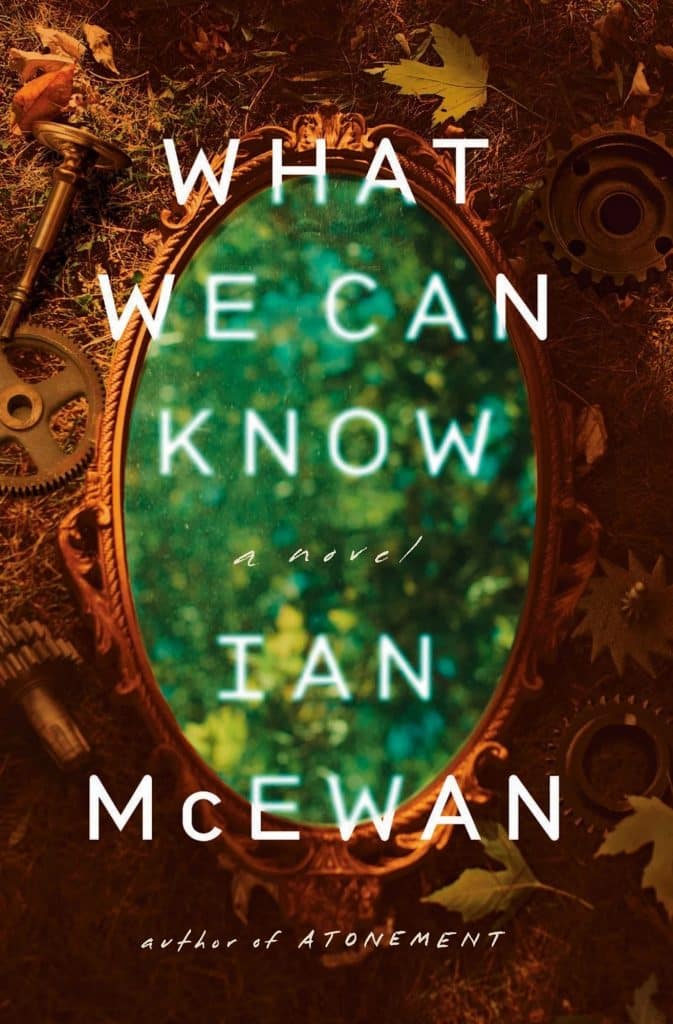
What We Can Know

Read: September 2025

Get this book

What We Can Know: A Novel

by Ian McEwan

What We Can Know” by Ian McEwan, the critically acclaimed author of nineteen novels and two short story collections, is a remarkable work of fiction and a love story that celebrates both individuals and the words they leave behind. This literary detective story reclaims the present from our sense of impending catastrophe and envisions a future world where not everything is lost.

In 2014, during a dinner for close friends and colleagues, renowned poet Francis Blundy honored his wife’s birthday by reading aloud a new poem dedicated to her, titled “A Corona for Vivien.” As the guests enjoy a delicious meal and drink plenty of wine, little do they know that people will speculate about the meaning of this poem for generations to come. A copy of the poem was never published, and it remains an enduring mystery.

Fast forward to 2119: over one hundred years in the future, rising seas following a catastrophic nuclear accident have submerged much of the Western world. The survivors tormented by the memory of the vibrant world research the world that once existed. In the waterlogged south of what was once England, Thomas Metcalfe, a lonely scholar and researcher, longs for the early twenty-first century as he searches for the elusive poem “A Corona for Vivien.”

Thomas reflects on how wild and full of risk their lives were, captivated by the freedoms and possibilities of human life at its zenith. When he stumbles upon a clue that may lead to the poem’s discovery, he uncovers a story of entangled loves and a brutal crime that shatters his assumptions about people he thought he knew intimately.


Ian McEwan is a critically acclaimed author known for his nineteen novels and two short story collections. His first published work, a collection of short stories titled “First Love, Last Rites,” won the Somerset Maugham Award.

His notable novels include “The Child in Time,” which won the Whitbread Novel of the Year Award in 1987; “The Cement Garden“; “Enduring Love;” “Amsterdam;” which won the Booker Prize in 1998; “Atonement;” “Saturday;” “On Chesil Beach;” “Solar;” “Sweet Tooth;” “The Children Act;” “Nutshell;” and “Machines Like Me,” which became a number-one bestseller.

Several of his works, including “Atonement,” “Enduring Love,” “The Children Act;,” and “On Chesil Beach,” have been adapted into films.


Discover your next favorite book and dive into a world of curated, exciting reads by purchasing through my links. You’ll have access to a diverse selection of books that I’ve personally vetted to ensure quality and enjoyment. Additionally, by supporting these selections, you’ll help me continue to provide you with more personalized recommendations. I earn a small commission from your purchase, which allows me to buy and share even more books with you. Your support truly makes a difference!


×
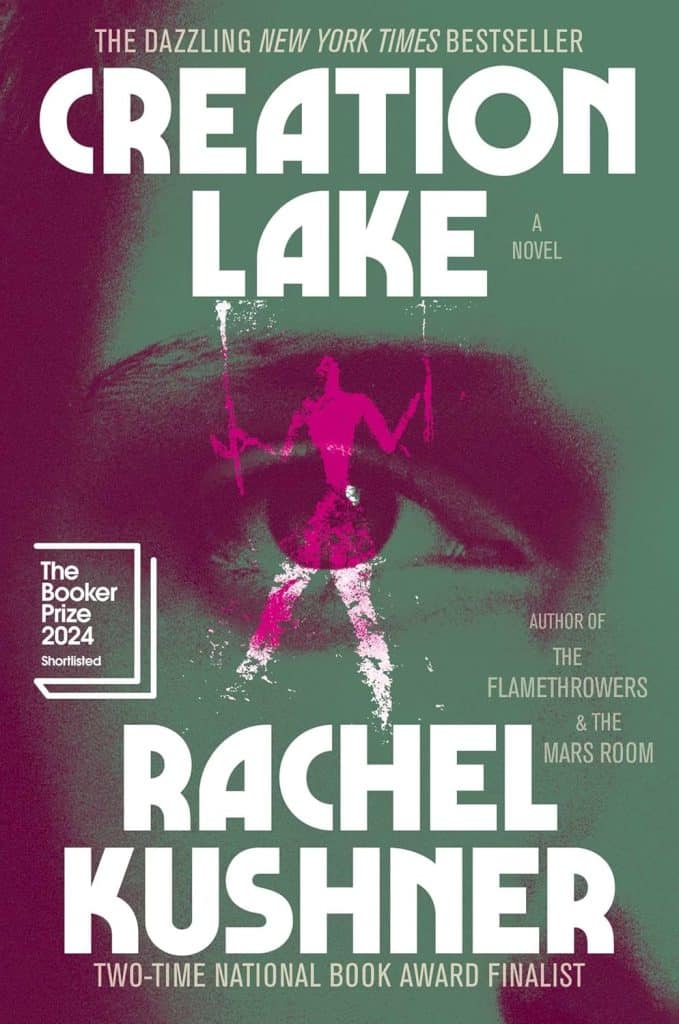
Creation Lake: A Novel

Read: November 2024

Get this book

Creation Lake: A Novel

by Rachel Kushner

Today, I started reading Creation Lake: A Novel by Rachel Kushner, a two-time finalist for the Booker Prize and the National Book Award. This novel follows a seductive and cunning American woman who infiltrates an anarchist collective in France. It is a gripping page-turner filled with dark humor. Creation Lake is Kushner‘s finest achievement—a work of high art, comedy, and unforgettable pleasure.

The story revolves around a secret agent, a thirty-four-year-old American woman who employs ruthless tactics and possesses striking beauty. She is sent to carry out covert operations in France. The narrator introduces herself as “Sadie Smith” when she arrives at a rural commune of French subversives, whom she is secretly monitoring, and to her lover, Lucien, a young and well-to-do Parisian whom she meets by so-called “cold bump”—making him believe their encounter was accidental. Like everyone else she targets, Lucien is helpful to her and ultimately manipulated by her. Sadie operates with strategy and deception, following instructions from her “contacts”—shadowy figures in business and government. Initially, these contacts want her to provoke reactions. As the story progresses, their demands become more complex.

In this region filled with ancient farms and prehistoric caves, Sadie becomes captivated by a mysterious figure named Bruno Lacombe. Bruno mentors young activists who believe that the path to emancipation lies not in revolt but in a return to the ancient past. Just as Sadie thinks she is the seductress and puppet master of those she surveils, Bruno enchants her with his ingenious counter-histories, poignant laments, and tragic narrative.

In brief, striking sections, Rachel Kushner‘s interpretation of “noir” is taut and dazzling.


When you purchase a book through one of my links, I earn a small commission that helps support my passion for reading. This contribution allows me to buy even more books to share with you, creating an incredible cycle of discovering great reads together! Your support truly makes a difference!


×
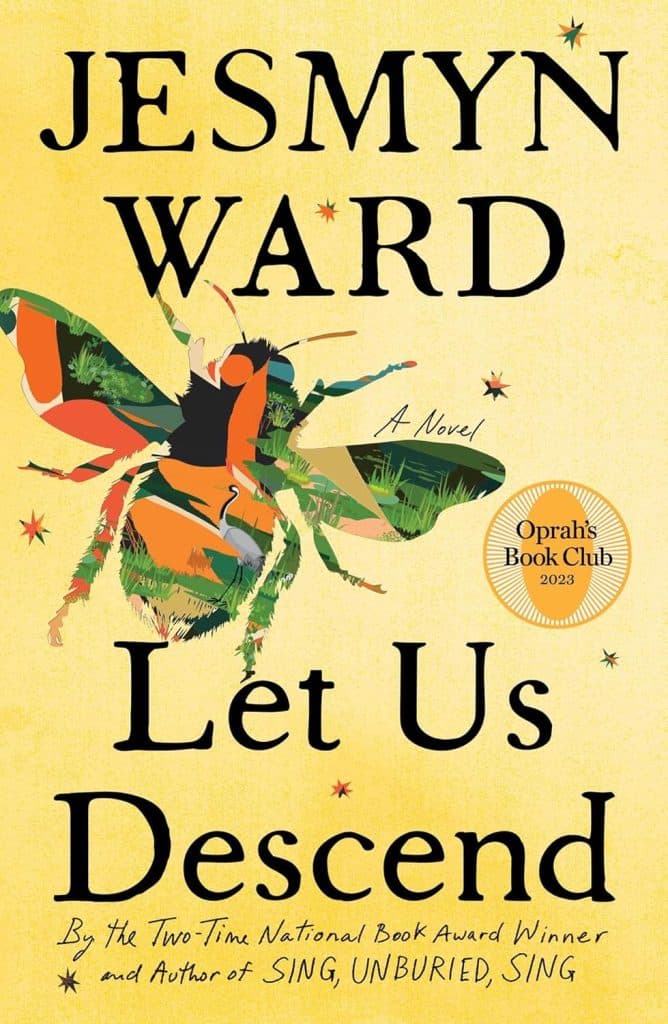
Let Us Descend: A Novel

Read: November 2023

Get this book

Let Us Descend: A Novel

by Jesmyn Ward

Today, I started reading Let Us Descend: A Novel by Jesmyn Ward. She is a two-time National Book Award winner, the youngest winner of the Library of Congress Prize for American Fiction, and a MacArthur Fellow. The book is a haunting masterpiece that is sure to become an instant classic. It tells the story of an enslaved girl in the years before the Civil War.

The book’s title is from Dante Alighieri’s Inferno: “‘Let us descend,’ the poet now began, ‘and enter this blind world.” Let Us Descend is a reimagining of American slavery, beautifully rendered yet heart-wrenching. The novel takes us on a journey from the rice fields of the Carolinas to the slave markets of New Orleans and into the fearsome heart of a Louisiana sugar plantation.

Annis is the reader’s guide through this hellscape, sold south by the white enslaver who fathered her. As Annis struggles through the miles-long march, she turns inward, seeking comfort from memories of her mother and stories of her African warrior grandmother. Throughout the journey, she opens herself to a world beyond this world, one teeming with spirits: of earth and water, of myth and history, spirits who nurture and give, and those who manipulate and take. While Ward leads readers through the descent, this, her fourth novel, is ultimately a story of rebirth and reclamation.

Let Us Descend is a magnificent novel that inscribes Black American grief and joy in the very land of the American South. Ward’s writing takes you through the rich but unforgiving forests, swamps, and rivers of the South, making this novel a masterwork for the ages.


The Jan Lilien Education Fund sponsors ongoing sustainability and environmental awareness programs. Gifts made this month; I will match dollar-for-dollar. All donations are tax-deductible.

Subscribe

Contact Us

I receive a commission when you buy a book or product using a link on this page. Thank you for supporting Sharing Jan’s Love blog.


×
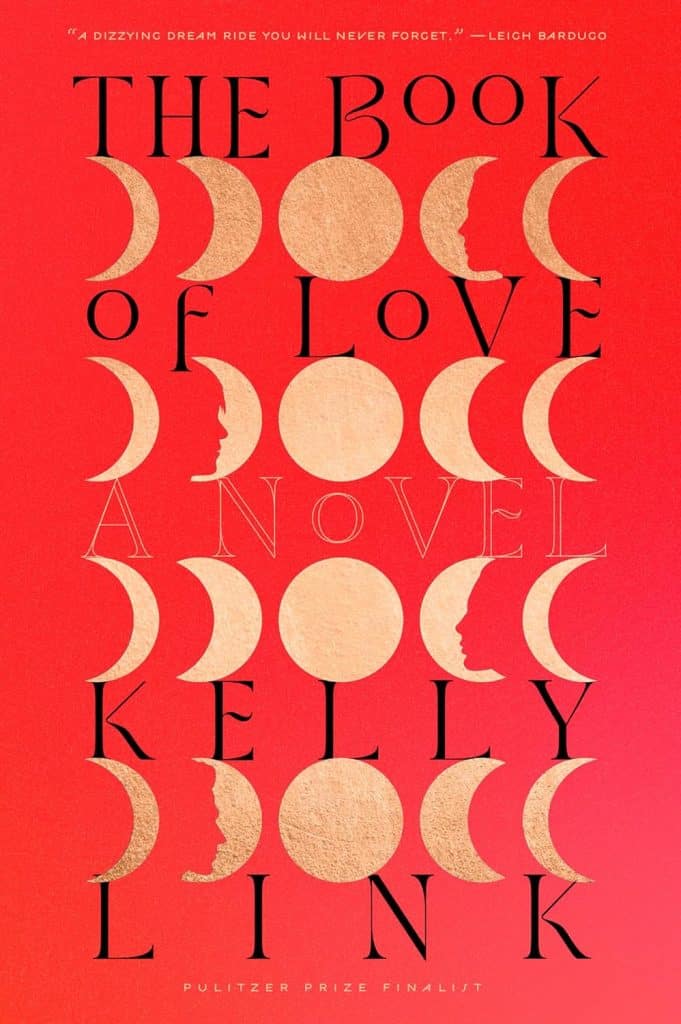
The Book of Love: A Novel

Read: March 2024

Get this book

The Book of Love: A Novel

by Kelly Link

I started reading “The Book of Love: A Novel” by Kelly Link today. The book showcases her exceptional writing skills, where she channels different forms of love, including friendships, romance, and family ties, with her trademark compassion, wit, and literary prowess. Readers can expect to experience joy, a little terror, and an affirmation that love endures despite challenges.

The story revolves around Laura, Daniel, and Mo, who mysteriously vanished from their hometown in Lovesend, Massachusetts, and were presumed dead. However, almost a year later, they find themselves in a high school classroom with their unremarkable music teacher. The teacher seems to know why they disappeared and what brought them back. They agree to undertake magical tasks to reclaim their lives, allowing them to return to their families and friends, but they can’t reveal where they’ve been. The tasks would lead to winners and losers.

Their resurrection attracts the attention of other supernatural beings with their agendas, which puts the community in danger and chaos. As Laura, Daniel, and Mo try to piece their lives together, and Laura’s sister Susannah tries to make sense of what she remembers, they must solve the mystery of their deaths to prevent a looming disaster.

The story takes place in Lovesend, where readers will experience love and loss, laughter and dread, magic, karaoke, and some delicious pizza.

×
How the Word is Passed

Read: December 2021

Get this book

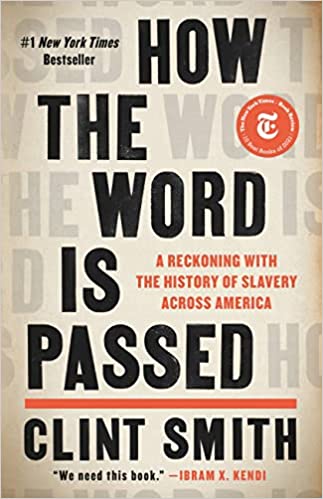
How the Word Is Passed: A Reckoning with the History of Slavery Across America

by Clint Smith

How the Word Is Passed: A Reckoning with the History of Slavery Across America by Clint Smith. This book was a gift from my son Jon. The New York Times selected How the Word is Passed as one of the best books published this year. Beginning in his hometown of New Orleans, Clint Smith leads the reader on an unforgettable tour of monuments and landmarks—those that are honest about the past and those that are not—that offer an intergenerational story of how slavery has been central in shaping our nation’s collective history, and ourselves.

How the Word is Passed is one of the best books I have read in 2021. I had read an excerpt in The Atlantic on the Whitney Plantation, one of the only former plantations devoted to preserving the experience of the enslaved people whose lives and work sustained it. Like most of us, I had placed the book on my to-read list, where it remained lost in the cobwebs. Fortunately, my son Jon purchased the book for me.

Secondly, the book rekindled my long-lost dream of being an American Studies professor. As soon as Jan and I met, I dropped plans to leave Brooklyn and start graduate school in the fall of 1974. I made that decision primarily because of how much I loved Jan. But it was also partly that I did not have a clear vision of what my life would be like as a professor. The book provided clear examples of people like Yvonne Holden at The Whitney Plantation redefining history to be more accurate and inclusive. I probably could not have done as well as she did, but I can now see that it might have resulted in a career for me that could have been impactful.

Goodreads provides this overview for those who still need to be convinced to read this book.

It is the story of the Monticello Plantation in Virginia, the estate where Thomas Jefferson wrote letters espousing the urgent need for liberty while enslaving over 400 people on the premises. It is the story of the Whitney Plantation, one of the only former plantations devoted to preserving the experience of the enslaved people whose lives and work sustained it. It is the story of Angola Prison in Louisiana, a former plantation named for the country from which most of its enslaved people arrived and which has since become one of the most gruesome maximum-security prisons in the world. And it is the story of Blandford Cemetery, the final resting place of tens of thousands of Confederate soldiers.

In a deeply researched and transporting exploration of the legacy of slavery and its imprint on centuries of American history, How the Word Is Passed illustrates how some of our country’s most essential stories are hidden in plain view-whether in places we might drive by on our way to work, holidays such as Juneteenth, or entire neighborhoods—like downtown Manhattan—on which the brutal history of the trade in enslaved men, women and children has been deeply imprinted.

Informed by scholarship and brought alive by the story of people living today, Clint Smith’s debut work of nonfiction is a landmark work of reflection and insight that offers a new understanding of the hopeful role that memory and history can play in understanding our country.

How the Word is Passed is one of the best books I have read this year and many prior ones. I encourage you to read it and share your comments.

Subscribe

Contact Us

When you buy a book or product using a link on this page, I receive a commission. Thank you for supporting Sharing Jan’s Love blog.

×
Where Reasons End

Read: June 2025

Get this book

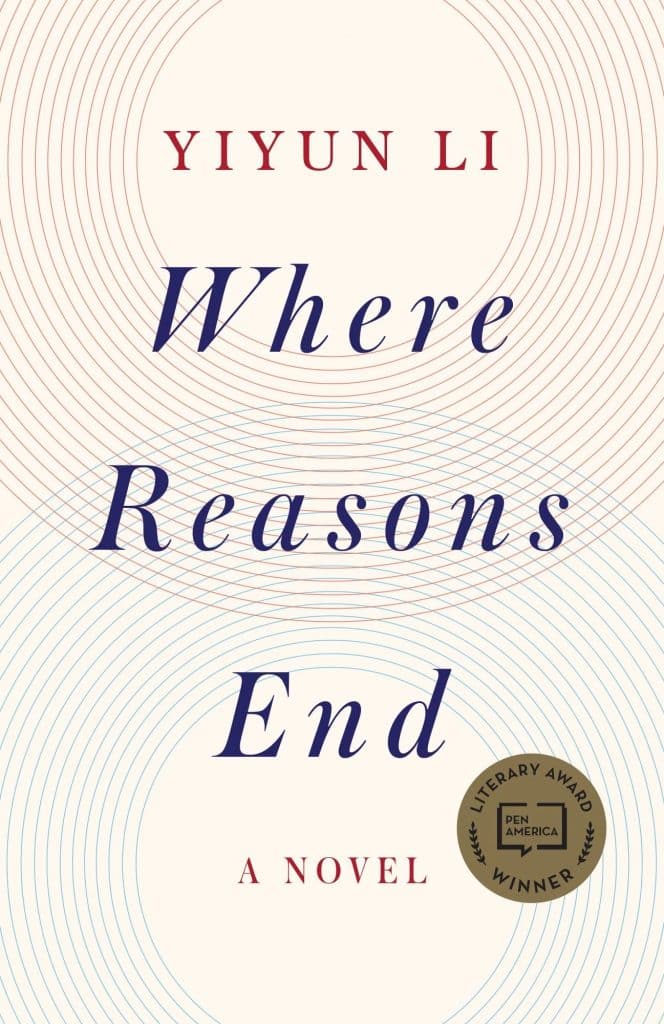
Where Reasons End

by Yiyun Li

Yiyun Li, grappling with life’s deepest sorrows, invites readers into a poignant conversation between a mother and child in a timeless world.  Where Reasons End, composed in the aftermath of the loss of her son, ventures into the liminal space between life and death. Here, mother and child engage in conversations untethered from past images and narratives, a profoundly moving portrayal of the love and complexity of their relationship.

The narrator of Where Reasons End shares a profound insight, saying, “I clung to one delusion with all my might: We once gave Nikolai a life of flesh and blood; and I’m recreating it, this time through words.” This emotional journey of recreating a life through words is a central theme that resonates throughout the novel.

With a unique blend of originality, precision, and poise, Where Reasons End immerses readers in a world of intimacy, inescapable pain, and fierce love. The novel’s emotional impact is profound, leaving a lasting impression on those who delve into its pages.


Yiyun Li, a prolific author, has penned six works of fiction—Must I Go, Where Reasons End, Kinder Than Solitude, A Thousand Years of Good Prayers, The Vagrants, and Gold Boy, Emerald Girl—and the memoir Dear Friend, from My Life I Write to You in Your Life.

Her literary prowess has been recognized with numerous awards, including a PEN/Hemingway Award, a PEN/Jean Stein Book Award, a MacArthur Foundation fellowship, and a Windham-Campbell Prize.

She was also featured in The New Yorker’s 20 Under 40 fiction issue. Her work, which has been published in The New Yorker, A Public Space, The Best American Short Stories, and The O. Henry Prize Stories, among other publications, is a testament to her literary excellence.

Currently, she imparts her knowledge at Princeton University and resides in Princeton, New Jersey.


When you purchase a book through one of my links, I earn a small commission that helps support my passion for reading. This contribution allows me to buy even more books to share with you, creating an incredible cycle of discovering great reads together! Your support truly makes a difference!

Enjoy a limited-time offer of 20% off your next book purchase at Bookshop.org!


×

Discover more from Sharing Jan’s Love

Subscribe now to keep reading and get access to the full archive.

Continue reading