
Return of Five O'Clock Shadows

Return of Five O’Clock Shadows

It is Icy Cold, But the Sunshine Lasts Longer!

Estimated reading time: 1 minute, 50 seconds

Return of Five O'Clock Shadows

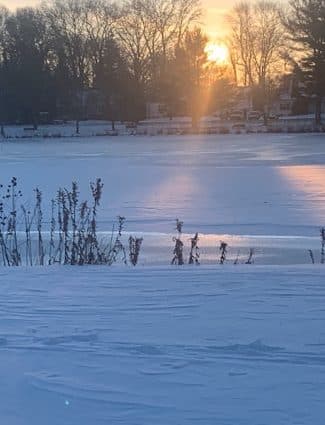
The cold weather has penetrated my bones as I walk towards an uncleared part of my daily route. The snow beneath my boots is crystalized and makes a crunching sound as I turn left from North Avenue onto the trail alongside the Rahway River. A year before my marriage, Jan and I had walked in Ft. Greene Park, which felt like a moment reminiscent of the novel Dr. Zhivago. However, as much as I wish this moment was more like the novel, the only sound is the crunching echo of my boots. As I stroll through the icy terrain, I keep my balance and move forward. Some path sections have cleared halfway to North Union, but the shadows make it difficult for me to navigate.

The long winter month of January has plunged me into the depths of seasonal affective disorder (SAD) once again. The pervasive cold lingers despite the sun’s valiant attempts to brighten the day. As I go about my daily routine, I must tread carefully along the icy paths, determined to fulfill my fitness goals by closing the exercise and calorie rings.

As I climb the stairs towards the third floor, I unwrap The New York Times from its blue plastic cover. It’s January 20, 2024, a year from the next presidential inauguration. The uncertain future of who will be sworn in makes me feel anxious. However, a piece of information suddenly pops up in my mind, giving me a glimmer of hope. Today is the day when the sun will set below the horizon at 5 pm in my backyard. It may not instantly become warmer, but it’s a positive sign that encourages me to believe in a future of warmer weather and longer, dancing shadows in the evening.


The Jan Lilien Education Fund sponsors ongoing sustainability and environmental awareness programs. Gifts made this month; I will match dollar-for-dollar. All donations are tax-deductible.

Subscribe

Contact Us

I receive a commission when you buy a book or product using a link on this page. Thank you for supporting Sharing Jan’s Love blog.


Frozen Steps on a Windy Day

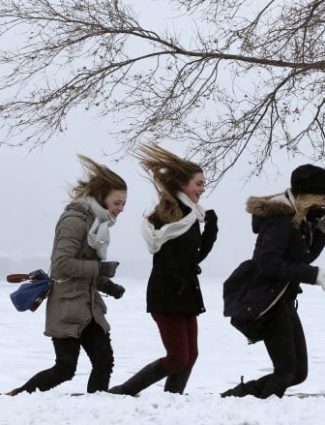
"You earned a double ribbon today," my friend Cindy said as she slowed down to walk with her dog Henry next to me.

"Why, two ribbons," I asked as the brutal winds chopped my words into tiny ice pellets.

"One for walking daily and the second for walking in frigid weather."

I nodded and reminded myself I was walking for physical and mental health, not ribbons.

"The lake isn't frozen."

"Climate change," she responded.

Show thread (1)

Words Frozen in My Mouth!

It is Icy Cold, But the Sunshine Lasts Longer!

Estimated reading time: 1 minute, 50 seconds
Words Frozen in My Mouth!

Until this January, I wrote at least two memories of my life with Jan each month. I have shared many of those in the Sharing Jans Love newsletter each month.

There are still stories in the recesses of my mind, but like that first experience with the TRS-80, the words do not flow from my mind to the paper.

Some might think of this as classic writer's block, and at times I concur.

But I am still an amateur wordsmith; the stories I have written were not merely memories but a story that flowed directly onto the page.

Albeit long-form memories are obstructed, I still write shorter streams of consciousness. Most are about how I am doing now.

5 comments add your comment

Share your thoughts and ideas

This site uses Akismet to reduce spam. Learn how your comment data is processed.

The Jan Lilien Education Fund!

Return of Five O'Clock Shadows
×
Yellowface

Read: June 2023

Get this book

Yellowface: A Novel

by R.F. Kuang

I began reading Yellowface, a novel by R.F. Kuang, today. The storyline has been captivating as I scroll through the pages on my Kindle App. The book explores important themes such as cultural diversity, racism, the negative impact of cultural appropriation, and the alienation caused by social media. I find the protagonist, June Hayward, relatable and enjoyable to read about while experiencing Yellowface on my Kindle App.

June and Athena were both talented writers, but Athena’s success overshadowed June’s. After Athena’s sudden death, June rashly steals her completed manuscript, a groundbreaking novel about the Chinese laborers who contributed to World War I. June edits the book and takes credit for it, even going so far as to change her name and ethnicity for marketing purposes. She believes the story deserves to be told, regardless of who tells it.

As June’s book becomes a bestseller, she is haunted by the guilt of stealing Athena’s work. Her secret becomes harder to keep as evidence of her theft surfaces. June must confront her actions and decide how far she will go to protect her newfound success.


The Jan Lilien Education Fund sponsors ongoing sustainability and environmental awareness programs. Gifts made this month; I will match dollar-for-dollar. All donations are tax-deductible.

Subscribe

Contact Us

I receive a commission when you buy a book or product using a link on this page. Thank you for supporting Sharing Jan’s Love blog.


×
Neighbors and Other Stories

Read: February 2024

Get this book

Neighbors and Other Stories

by Diane Oliver

Today, I began reading Diane Oliver‘s Neighbors and Other Stories. It’s a powerful and eerie debut collection of stories that portrays the struggles of different characters as they face the everyday dangers of racism during the Jim Crow era. The book features an introduction by Tayari Jones.

Diane Oliver is an important yet often overlooked figure in African American literature of the 20th century. She was a gifted writer, ahead of her time, whose talent was cut short by her untimely death at 22 in 1966. Nevertheless, she left behind a remarkable collection of crisply written and often chilling tales that delve into race and racism in America during the 1950s and 60s. Oliver’s insightful stories remain relevant today; this is the only existing collection of her works. She has rightfully earned her place in the literary canon as a masterful storyteller.

The passage below describes several short stories with different themes. The first story, “The Closet on the Top Floor,” tells the story of Winifred, the first Black student in a newly integrated college. In this story, Winifred begins to disappear, creating a nightmarish scenario. The second story is titled “Mint Juleps not Served Here.” It’s about a couple who live deep in a forest with their son. They will go to bloody lengths to protect him from any danger. The third story, “Spiders Cry without Tears,” features a couple named Meg and Walt. They must confront prejudices and strains of interracial and extramarital love. Finally, the last story is the titular one, and it’s a high-tension narrative that follows a nervous older sister the night before her younger brother is set to desegregate his school.

These are powerful and personal depictions of African American families everyday struggles and moments of distress, illustrating how they utilize their abilities to overcome challenges. “Neighbors” is an enthralling compilation and a valuable historical and social document, displaying the remarkable literary skills of a previously overlooked author.

×
The Hidden Habits of Genius

Read: September 2019

Get this book

The Hidden Habits of Genius

by Craig Wright

The Hidden Habits of Genius: Beyond Talent, IQ, and Grit―Unlocking the Secrets of Greatness by Craig Wright, Ph.D., I got through my membership in One Day University.

Dr. Wright raises many important questions as he analyses fourteen (14) critical traits of genius. Professor Craig Wright, creator of Yale University’s famous “Genius Course,” explores what we can learn from brilliant minds that have changed the world.

What we often presume about a genius does not match reality. Among other interesting observations, Dr. Wright reminds the reader that Picasso could not pass a fourth-grade math test, and Steve Jobs’s high school GPA was 2.65. He questions why to teach children to behave and play by the rules when transformative geniuses do not.

Examining the lives of transformative individuals ranging from Charles Darwin and Marie Curie to Leonardo Da Vinci and Andy Warhol to Toni Morrison and Elon Musk, Wright identifies more than a dozen drivers of genius, characteristics and patterns of behavior common to great minds throughout history. He argues that genius is about more than intellect and work ethic and that the famed “eureka” moment is a Hollywood fiction. Brilliant insights that change the world are never sudden, but rather, they are the result of unique modes of thinking and lengthy gestation.

I found the book to be a fascinating read and raised more questions for future thought and reading. Professor Wright argues that the habits of mind that produce great thinking and discovery can be actively learned and cultivated. In the book, he explains how. He notes that reading the book will not make you a genius but can “make you more strategic, creative, and successful, and, ultimately, happier.

Subscribe

Contact Us

×
The School for Good Mothers

Read: February 2023

Get this book

The School for Good Mothers

by Jessamine Chan

The School for Good Mothers by Jessamine Chan is a searing page-turner that is also a transgressive novel of ideas about the perils of “perfect” upper-middle-class parenting; the violence enacted upon women by both the state and, at times, one another; the systems that separate families; and the boundlessness of love, The School for Good Mothers introduces, in Frida, an everywoman for the ages.

Although it has been forty-two years since I became a parent, I still remember the anxiety of being a father. What if I could not be a good dad? Fortunately, I never had a bad like Frida. or lived in an age where parents would be sent to “a Big Brother-like institution that measures the success or failure of a mother’s devotion.”

Reading The School for Good Mothers was a reminder that solutions like this are possible unless we are willing to invest in families so that the skills and support are there to resolve any issues in the home. As a widow, I found Frida’s inner dialogue comparable to the early stages of my grief journey—the total isolation and fear of failing dominated my first months of mourning.

The School for Good Mothers had been on my book list since the middle of last year. I recommend it without reservations! Jan would have already read it, and we would be debating its fine points.

The Goodreads summary provides an overview,

In this taut and explosive debut novel, one lapse in judgement lands a young mother in a government reform program where custody of her child hangs in the balance.

Frida Liu is struggling. She doesn’t have a career worthy of her Chinese immigrant parents’ sacrifices. She can’t persuade her husband, Gust, to give up his wellness-obsessed younger mistress. Only with Harriet, their cherubic daughter, does Frida finally attain the perfection expected of her. Harriet may be all she has, but she is just enough.

Until Frida has a very bad day.

The state has its eyes on mothers like Frida. The ones who check their phones, letting their children get injured on the playground; who let their children walk home alone. Because of one moment of poor judgment, a host of government officials will now determine if Frida is a candidate for a Big Brother-like institution that measures the success or failure of a mother’s devotion.

Faced with the possibility of losing Harriet, Frida must prove that a bad mother can be redeemed. That she can learn to be good.

Using dark wit to explore the pains and joys of the deepest ties that bind us, Chan has written a modern literary classic.


The Jan Lilien Education Fund sponsors ongoing sustainability and environmental awareness programs. Gifts made this month; I will match dollar-for-dollar. All donations are tax-deductible.

Subscribe

Contact Us

I receive a commission when you buy a book or product using a link on this page. Thank you for supporting Sharing Jan’s Love blog.


×
Seascraper

Read: November 2025

Get this book

Seascraper: A Novel

by Benjamin Wood

Haunting, timeless, and stunningly atmospheric, Seascraper by Benjamin Wood explores the story of a young man whose quiet existence is dramatically altered in just one day. His circumstances confine him, yet he yearns for a sense of fulfillment that extends far beyond the world he knows. The novel has been longlisted for the 2025 Booker Prize.

Twenty-year-old Thomas Flett lives a slow, deliberate life with his mother in Longferry, Northern England, working his grandpa’s trade as a shanker. He rises early to take his horse and cart to the drizzly shore to scrape for shrimp, and spends the afternoon selling his wares, trying to wash away the salt and sea-scum, pining for his neighbor, Joan Wyeth, and playing songs on his guitar. At heart, he is a folk musician, but this remains a private dream.

Then a mysterious American arrives in town and enlists Thomas’s help in finding a perfect location for his next movie. Though skeptical at first, Thomas learns to trust the stranger, Edgar, and, shaken from the drudgery of his days by the promise of Hollywood glamour, begins to see a different future for himself. But how much of what Edgar claims is true, and how far can his inspiration carry Thomas?


Benjamin Wood was born in 1981 and grew up in Merseyside. Seascraper is his fifth novel. His previous works were shortlisted for the Costa First Novel Award, the Commonwealth Book Prize, the Sunday Times Young Writer of the Year Award, the RSL Encore Award, the CWA Gold Dagger Award, and the European Union Prize for Literature. In 2014, he won France’s Prix du Roman Fnac.

He is a senior lecturer in creative writing at King’s College, London, and lives in Surrey with his wife and sons.


Discover your next favorite book and dive into a world of curated, exciting reads by purchasing through my links. You’ll have access to a diverse selection of books that I’ve personally vetted to ensure quality and enjoyment. Additionally, by supporting these selections, you’ll help me continue to provide you with more personalized recommendations. I earn a small commission from your purchase, which allows me to buy and share even more books with you. Your support truly makes a difference!


×
Three Summers

Read: February 2025

Get this book

Three Summers: A Novel

by Margarita Liberaki

Today, I began reading Margarita Liberaki‘s Three Summers, translated by Karen Van Dyck. This edition features a detailed introduction by Ms. Van Dyck, in which she shares her experiences meeting Ms. Liberaki and collaborating with her on the translation. The original novel, written in Greek, was titled The Straw Hats, but Ms. Van Dyck felt that this title would not resonate with foreign readers similarly.

Three Summers is the story of three sisters who grew up in the countryside near Athens before the outbreak of the Second World War. The sisters live in a large, old house surrounded by a beautiful garden. The oldest sister, Maria, is adventurous and eager to settle down and start her own family. The middle sister, Infanta, is gorgeous but emotionally distant. Katerina, the narrator, and the youngest sister is dreamy and rebellious.

Throughout three summers, the sisters share and keep secrets, fall in and out of love, and try to understand their parents and other adult figures. They also observe the peculiar behaviors of friends and neighbors while worrying about and discovering their identities. Karen Van Dyck’s translation beautifully captures the light and warmth of this modern Greek classic.

Margarita Liberaki (1919-2001) was born in Athens and raised by her grandparents, who owned the Fexis bookstore and publishing house. In addition to her novel Three Summers, she authored The Other Alexander (1950) and The Mystery (1976). She also wrote several plays, including Candaules’ Wife (1955) and The Danaïds (1956), part of a cycle she called Mythical Theater. Furthermore, she contributed screenplays, such as Jules Dassin’s Phaedra (1962) and Diaspora (1999), which focused on Greek intellectuals in exile in Paris during the junta. Her novel Three Summers is now a standard part of public education in Greece and Cyprus and was adapted into a television miniseries in 1995.

Karen Van Dyck is the Kimon A. Doukas Professor of Modern Greek Literature at Columbia University. Her research focuses on modern Greek literature, diaspora literature, gender studies, and translation. She has edited or co-edited several poetry anthologies, including A Century of Greek Poetry (2004), The Greek Poets: Homer to the Present (2010), and Austerity Measures: The New Greek Poetry (2017) for NYRB Poets. Additionally, her translations have appeared in Brooklyn Rail, Asymptote, and The Baffler.


When you purchase a book through one of my links, I earn a small commission that helps support my passion for reading. This contribution allows me to buy even more books to share with you, creating an incredible cycle of discovering great reads together! Your support truly makes a difference!


×