
Hanson Park Conservancy

Rubber Ducky Race

Estimated reading time: 0 minutes, 50 seconds

The Hanson Park Conservancy’s Rubber Ducky Race was today. The living memorial in Hanson Park is coming together! Although it will not be complete by Jan’s birthday, we can and will hold a dedication/groundbreaking at 2 pm on April 24, 2022.

We will have one bench by the picnic area closest to the triangular garden and the second by the river. We agreed to use funds above the amount needed for the two benches to create the Jan Lilien Education Fund. This Fund, a testament to our commitment to education, will allow the Conservancy to offer impactful and regular educational programs.


The Jan Lilien Education Fund sponsors ongoing sustainability and environmental awareness programs. Gifts made this month; I will match dollar-for-dollar. All donations are tax-deductible.

Subscribe

Contact Us

I receive a commission when you buy a book or product using a link on this page. Thank you for supporting Sharing Jan’s Love.
Jan’s Memorial Garden

Working with the Hanson Park Conservancy, we have taken significant steps in building Jan's Memorial Triangle Garden at Hanson Park including installing the Wind Sculpture.

Share your thoughts and ideas

This site uses Akismet to reduce spam. Learn how your comment data is processed.

The Jan Lilien Education Fund!

Hanson Park Conservancy
×
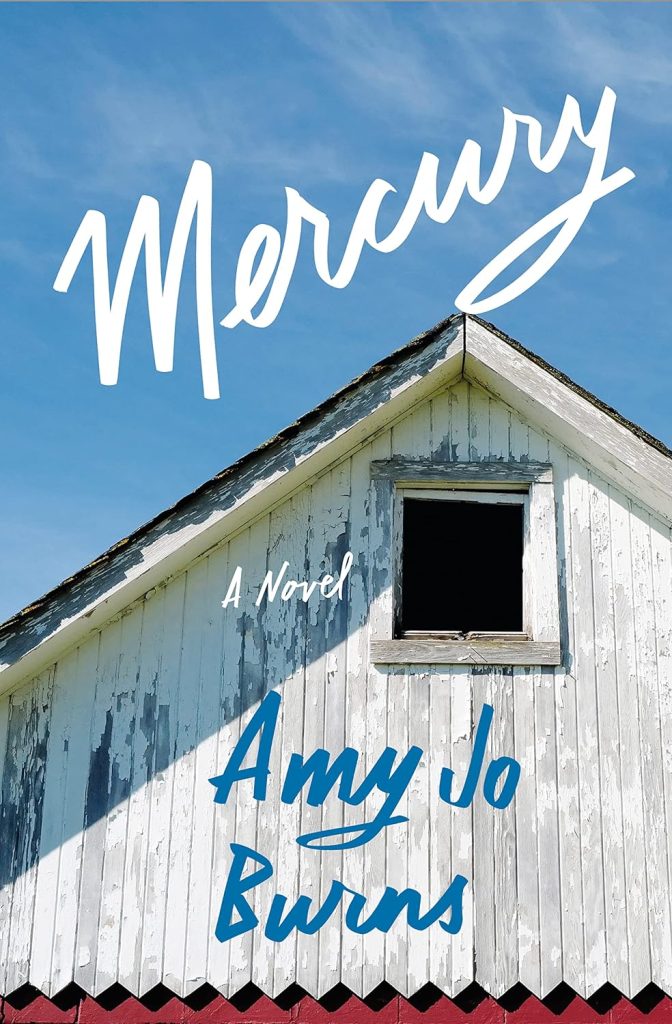
Mercury: A Novel

Read: January 2024

Get this book

Mercury: A Novel

by Amy Jo Burns

Today, I started reading Mercury: A Novel about a roofing family. The family’s bond of loyalty is tested when they uncover a long-hidden secret at the heart of their blue-collar town. The book is written by Amy Jo Burns, the author of the critically acclaimed novel Shiner, which I read and enjoyed in 2022. I highly recommend it.

The story is set in 1990, and it follows the journey of a seventeen-year-old girl named Marley West, who arrives in the river valley town of Mercury, Pennsylvania. She is a loner who is looking for a place to belong. The first thing she sees when she gets to town is three men standing on a rooftop, and they soon become her whole world.

Marley becomes a young wife to one of the Joseph brothers, The One Who Got Away to another, and an adopted mother to all of them. Marley guides these unruly men as their mother fades away and their roofing business crumbles under the weight of their unwieldy father’s inflated ego. Years later, an eerie discovery in the church attic causes old wounds to resurface, and suddenly, the family’s survival hangs in the balance.

With Marley as their guide, the Joseph brothers must decide whether they can save the family they’ve always known or build something more substantial in its place.


The Jan Lilien Education Fund sponsors ongoing sustainability and environmental awareness programs. Regarding gifts made this month, I will match dollar for dollar. All donations are tax-deductible.

Subscribe

Contact Us

I receive a commission when you buy a book or product using a link on this page. Thank you for supporting Sharing Jan’s Love blog.


×
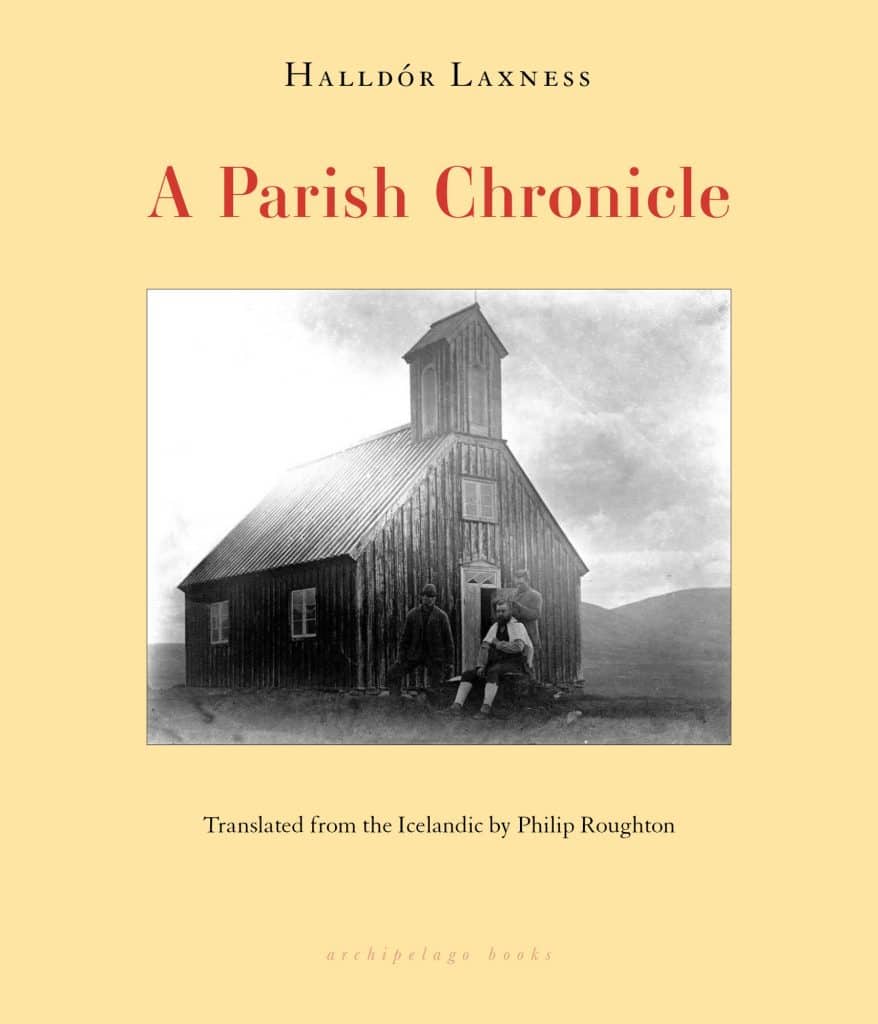
A Parish Chronicle

Read: February 2026

Get this book

A Parish Chronicle

by Halldór Laxness

In “A Parish Chronicle,” celebrated novelist Halldór Laxness weaves an essayistic tale about the unlikely miracles that keep a church—destined to disappear time and again—rooted on the same hillside. Laxness explores the minutiae of history, from the location of the ancient burial mound of national hero Egill Skallagrímsson to the end of the 19th century, where weak-sighted Ólafur and boisterous farmhand Gunna each play unexpected roles in the parish’s enduring survival.

1882. In the still of morning, Ólafur sharpens his scythe on the bone-dry pavestones that separate his farmhouse from the rest of Mosfell Valley, where life revolves around sheep. The sound of his hammer rings out like a high-pitched bell over the tussocky fields. Across the valley, perched on a hill that receives more sunshine than others, stands Mosfell Church. Nearby, the parish priest’s maid Gunna pours her “slosh,” a weak cup of coffee. Further afield in Reykjavík (“down south” as the locals say), the general assembly decides to revisit an old plan to cut costs by consolidating small parishes and calls for the demolition of Mosfell. Yet today a church stands on that same hillside—its sharp steeple silhouetted against the clouds, its crown bell hanging to the left of the altar.

This intimate tribute to life in Laxness‘s home valley also offers a thoughtful commentary on how the peculiarities of certain individuals can shape history. “A Parish Chronicle” is rich with life and detail.


Halldór Laxness (1902-1998) is the undisputed master of modern Icelandic fiction. He was awarded the Nobel Prize in Literature in 1955, “for his vivid epic power which has renewed the great narrative art of Iceland.” His body of work includes novels, essays, poems, plays, stories, and memoirs: more than sixty books in all. His works available in English include Independent People, The Fish Can Sing, World Light, Under the Glacier, Iceland’s Bell, and Paradise Reclaimed.

Philip Roughton has translated the work of Halldór Laxness, Jón Kalman Stefánsson, Kristín Marja Baldursdóttir, and many others. He has twice been awarded the American-Scandinavian Foundation Translation Prize for his renderings of Halldór Laxness‘s work, in 2001 for Iceland’s Bell and in 2015 for Wayward Heroes. He also received the 2016 Oxford-Weidenfeld Prize for his translation of Jón Kalman Stefánsson’s The Heart of Man. He lives in Iceland. Translator Residence: Akureyri, Iceland

Salvatore Scibona is the recipient of a Mildred and Harold Strauss Living Award from the American Academy of Arts and Letters. His first novel, The End, was a finalist for the National Book Award and winner of the Young Lions Fiction Award. His second novel, The Volunteer, was called a “masterpiece” by the New York Times and won the Ohioana Book Award. His books have been translated into ten languages. His work has won a Guggenheim Fellowship, a Pushcart Prize, an O. Henry Award, and a Whiting Award, and the New Yorker named him one of its “20 Under 40” fiction writers. He is the Sue Ann and John Weinberg Director of the Cullman Center for Scholars and Writers at the New York Public Library.


Discover your next favorite book and dive into a world of curated, exciting reads by purchasing through my links. You’ll have access to a diverse selection of books I’ve personally vetted for quality and enjoyment. Additionally, by supporting these selections, you’ll help me continue to provide you with more personalized recommendations. I earn a small commission from your purchase, which allows me to buy and share even more books with you. Your support truly makes a difference!


×
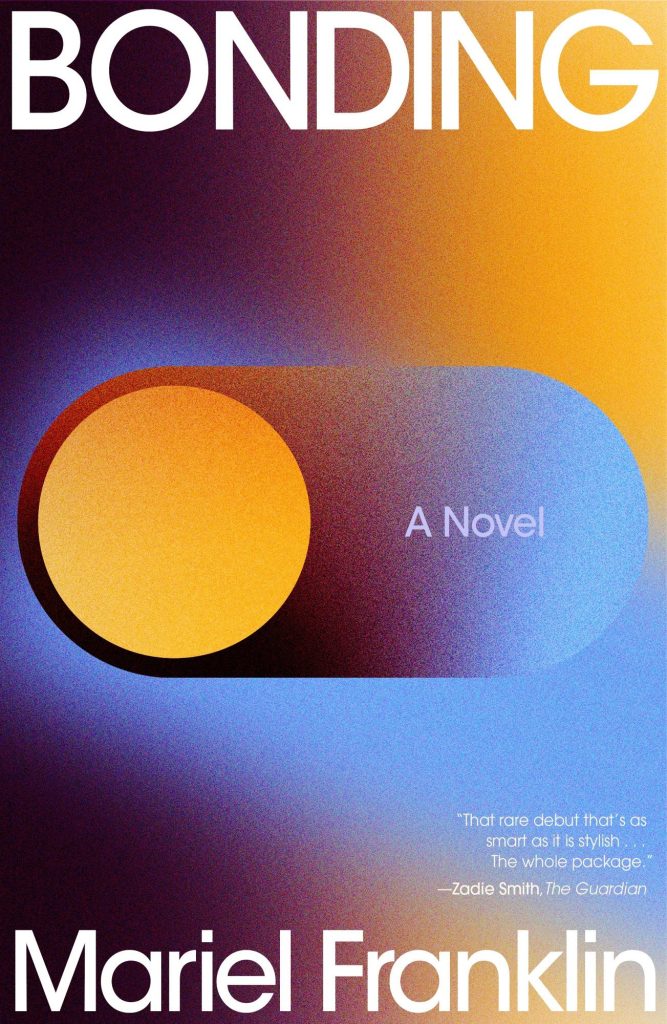
Bonding

Read: July 2025

Get this book

Bonding: A Novel

by Mariel Franklin

Mariel Franklin‘s debut novel, “Bonding,” is electrifying, sharp, and darkly humorous. It delves into the intersections of sex, technology, and pharmaceuticals in our digitally-driven world. The protagonist, Mary, is weary from a constant cycle of casual relationships and unstable jobs. After facing yet another career setback, she decides to escape to Ibiza.

There, at a party, she meets Tom, a brilliant chemist on the verge of launching a drug made to cure the anxieties of modern life.

Back in London after a heady trip, Mary runs into her volatile and driven sort-of-ex Lara, who has channeled her ambitions into an innovative dating app designed to revolutionize the industry.

When Mary begins working for Lara and falling for Tom, tech and pharma collide with shocking consequences, forcing her to question what love and success mean in a world that is hurtling out of control. A searing, elegiac satire of the way we live and work, Mariel Franklin‘s perceptive and unnerving Bonding heralds the arrival of a blazing new talent.


Mariel Franklin lives and works in London. She has an MA in English from Edinburgh University and later went on to study fine art at Goldsmiths. After graduating, she spent several years working in data administration in the tech industry. Bonding is her first novel.


When you purchase a book through one of my links, I earn a small commission that helps support my passion for reading. This contribution allows me to buy even more books to share with you, creating an incredible cycle of discovering great reads together! Your support truly makes a difference!

Enjoy a limited-time offer of 20% off your next book purchase at Bookshop.org!


×
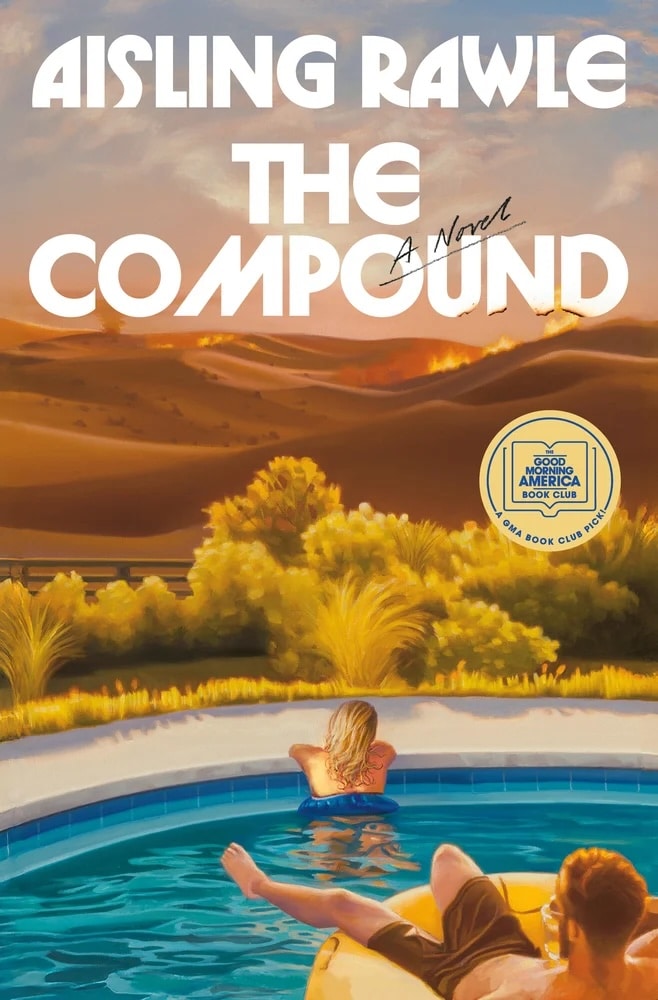
The Compound

Read: July 2025

Get this book

The Compound: A Novel

by Aisling Rawle

Addictive and prescient, The Compound by Aisling Rawle, is an explosive debut from a prominent new voice in fiction. This gripping novel, set in a remote desert compound, will linger in your mind long after the game ends. It’s a story of survival, competition, and the human spirit, making it a must-read for any fiction enthusiast. Lily—a bored, beautiful twenty-something—wakes up on The Compound, alongside nineteen other contestants competing on a massively popular reality show.

For Lily to emerge victorious, she must outlast her housemates and stay in The Compound the longest. Her journey is filled with challenges, from competing for luxury rewards like champagne and lipstick to securing communal necessities for their new home, including food, appliances, and even a front door.


Aisling Rawle was born in 1998 and raised in County Leitrim in the West of Ireland. She now lives in Dublin. The Compound is her first book.


When you purchase a book through one of my links, I earn a small commission that helps support my passion for reading. This contribution allows me to buy even more books to share with you, creating an incredible cycle of discovering great reads together! Your support truly makes a difference!

Enjoy a limited-time offer of 20% off your next book purchase at Bookshop.org!


×
Heartwood

Read: April 2025

Get this book

Heartwood: A Novel

by Amity Gaige

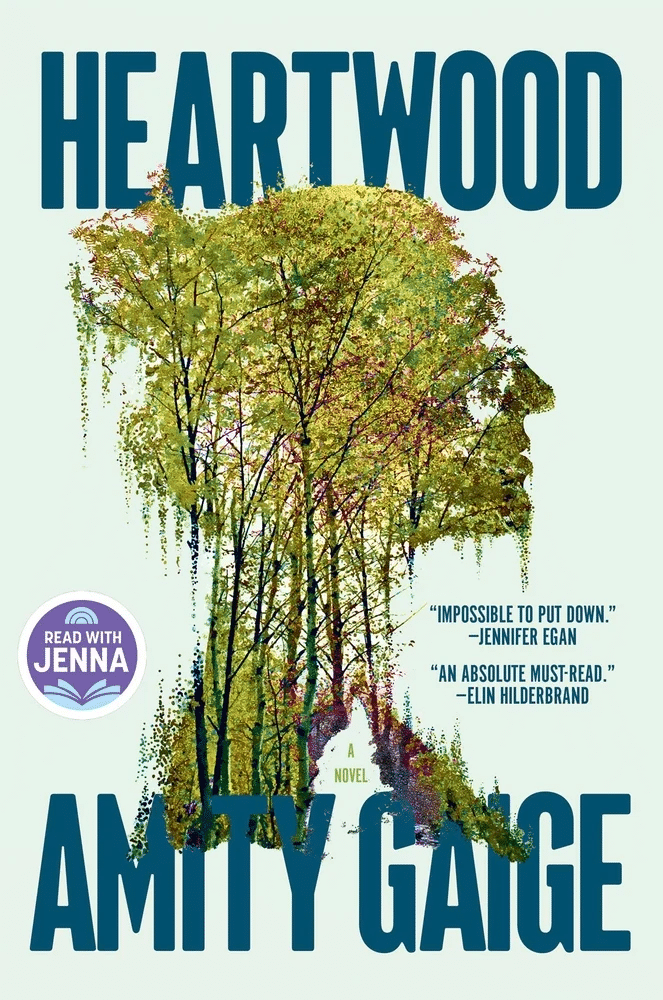
Today, I embarked on the journey of Heartwood by Amity Gaige. This novel unfolds a gripping narrative as a search and rescue team races against time to find an experienced hiker who mysteriously disappears on the Appalachian Trail in Maine. The suspense of the search for Valerie is palpable, drawing you into the story with great literary ambition and love at its core.

In the heart of the Maine woods, an experienced Appalachian Trail hiker goes missing. She is forty-two-year-old Valerie Gillis, who has vanished 200 miles from her final destination. Alone in the wilderness, Valerie’s emotional struggle is palpable as she pours her thoughts into fractured, poetic letters to her mother, battling the elements and struggling to keep hoping.

At the heart of the investigation is Beverly, the determined Maine State Game Warden tasked with finding Valerie, who leads the search on the ground. Meanwhile, Lena, a seventy-six-year-old birdwatcher in a Connecticut retirement community, becomes an unexpected armchair detective. What’s unique about this narrative is that a puzzle emerges between these compelling narratives, intensifying the frantic search, as Valerie’s disappearance may not be accidental.

Heartwood is a “gem of a thousand facets—suspenseful, transporting, tender, and ultimately soul-mending” (Megan Majumdar, New York Times bestselling author of A Burning). It tells the story of a lost hiker’s odyssey and is a moving rendering of each character’s interior journey. The mystery inspires more significant questions about how we get lost and how we are found.


Amity Gaige is the author of four previous novels: O My Darling, The Folded World, Schroder, Sea Wife, a 2020 New York Times Notable Book, and a Mark Twain American Voice Award finalist. Schroder was also a New York Times Notable Book and the best book of 2013 according to The Washington Post and The Wall Street Journal, and was shortlisted for the UK’s Folio Prize in 2014. Her work has been translated into eighteen languages. In 2018, Amity was awarded a Guggenheim Fellowship in Fiction. She lives with her family in West Hartford, Connecticut, and teaches creative writing at Yale.


When you purchase a book through one of my links, I earn a small commission that helps support my passion for reading. This contribution allows me to buy even more books to share with you, creating an incredible cycle of discovering great reads together! Your support truly makes a difference!

Enjoy a limited-time offer of 20% off your next book purchase at Bookshop.org!


×
Invisible Child

Read: December 2021

Get this book

Invisible Child: Poverty, Survival & Hope in an American City

by Andrea Elliott

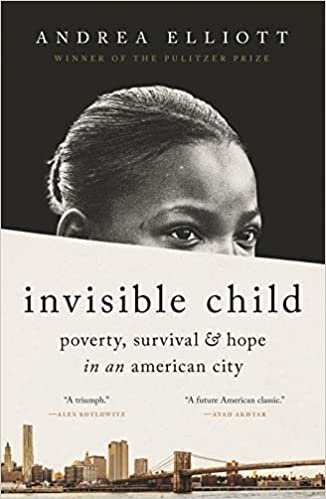
Invisible Child: Poverty, Survival & Hope in an American City by Andrea Elliott was a gift from my son Jon. The New York Times selected “Invisible Child” as one of the best books published this year. It is indeed one of the top books on my all-time list.

GoodReads summary provides a good overview,

The riveting, unforgettable story of a girl whose indomitable spirit is tested by homelessness, poverty, and racism in an unequal America—from Pulitzer Prize-winning journalist Andrea Elliott of The New York Times

Invisible Child follows eight dramatic years in the life of Dasani Coates, a child with imagination as soaring as the skyscrapers near her Brooklyn homeless shelter. Born at the turn of a new century, Dasani is named for the bottled water that comes to symbolize Brooklyn’s gentrification and the shared aspirations of a divided city. As Dasani grows up, moving with her tight-knit family from shelter to shelter, this story goes back to trace the passage of Dasani’s ancestors from slavery to the Great Migration north. When Dasani comes of age, New York City’s homeless crisis explodes as the chasm deepens between rich and poor.

In the shadows of this new Gilded Age, Dasani must lead her seven siblings through a thicket of problems: hunger, parental drug addiction, violence, housing instability, segregated schools, and the constant monitoring of the child-protection system. When, at age thirteen, Dasani enrolls at a boarding school in Pennsylvania, her loyalties are tested like never before. As she learns to “code switch” between the culture she left behind and the norms of her new town, Dasani starts to feel like a stranger in both places. Ultimately, she faces an impossible question: What if leaving poverty means abandoning the family you love?

By turns heartbreaking and revelatory, provocative and inspiring, Invisible Child tells an astonishing story about the power of resilience, the importance of family, and the cost of inequality. Based on nearly a decade of reporting, this book vividly illuminates some of the most critical issues in contemporary America through the life of one remarkable girl.

Jan and I were involved and knew that child poverty and homelessness needed repair. In addition, Jan lived on Washington Park across from Ft. Greene Park in 1974-75. We knew the neighborhood where much of the book’s story takes place. 

Before meeting Jan in 1973, I was both a community/tenant organizer and a youth worker. In the latter role, I made weekly hostel trips for eight to ten young boys from East Williamsburg during 1973. The trips were the first the boys had ever been outside of their neighborhood.

Many of them had imaginations like Dasani. They also had her instinct to fight. One of my first tasks was to check for any weapons.

Decades later, when I would see any of them, now adults, they would ask when we were going on another trip. I wish I had met Jan when I made those trips. She would have helped me improve them and document the impact. If I could re-write history, I would have her join me as the second adult on the hostel trips.

After that summer, it was clear my primary skills were as a community/tenant organizer. Over the next few years, my work focused on creating affordable and supportive housing.

Jan and I did meaningful work that made a difference, yet the need for a permanent solution to the crisis remains. The book highlights the crucial role of resilience, the importance of family, and the cost of inequality. As a nation, we cannot undermine those values by breaking up families, impeding resilience, and maintaining racial and economic inequality. 

The current debate in Washington over the Build Back Better legislation needs to focus not on how much we spend but on its impact on children and families. 

David Brooks, a conservative commentator, has supported these expenditures for what they can do to address this country’s cultural and economic crisis. 

These packages say to the struggling parents and the warehouse workers: I see you. Your work has dignity. You are paving your way. You are at the center of our national vision.

This is how you fortify a compelling moral identity, which is what all of us need if we’re going to be able to look in the mirror with self-respect. This is the cultural transformation that good policy can sometimes achieve. Statecraft is soulcraft.

If you can only read one book this year, this is the one to read. Child poverty, homelessness, and inequality impact all of us. Ending child poverty and homelessness will make us a healthier and more inclusive nation. It is time for a compelling moral call to action!

Subscribe

Contact Us

When you buy a book or product using a link on this page, I receive a commission. Thank you for supporting Sharing Jan’s Love blog.

×