
Walking is Vital to My Conscientious Resilience!

Estimated reading time: 16 minutes, 47 seconds
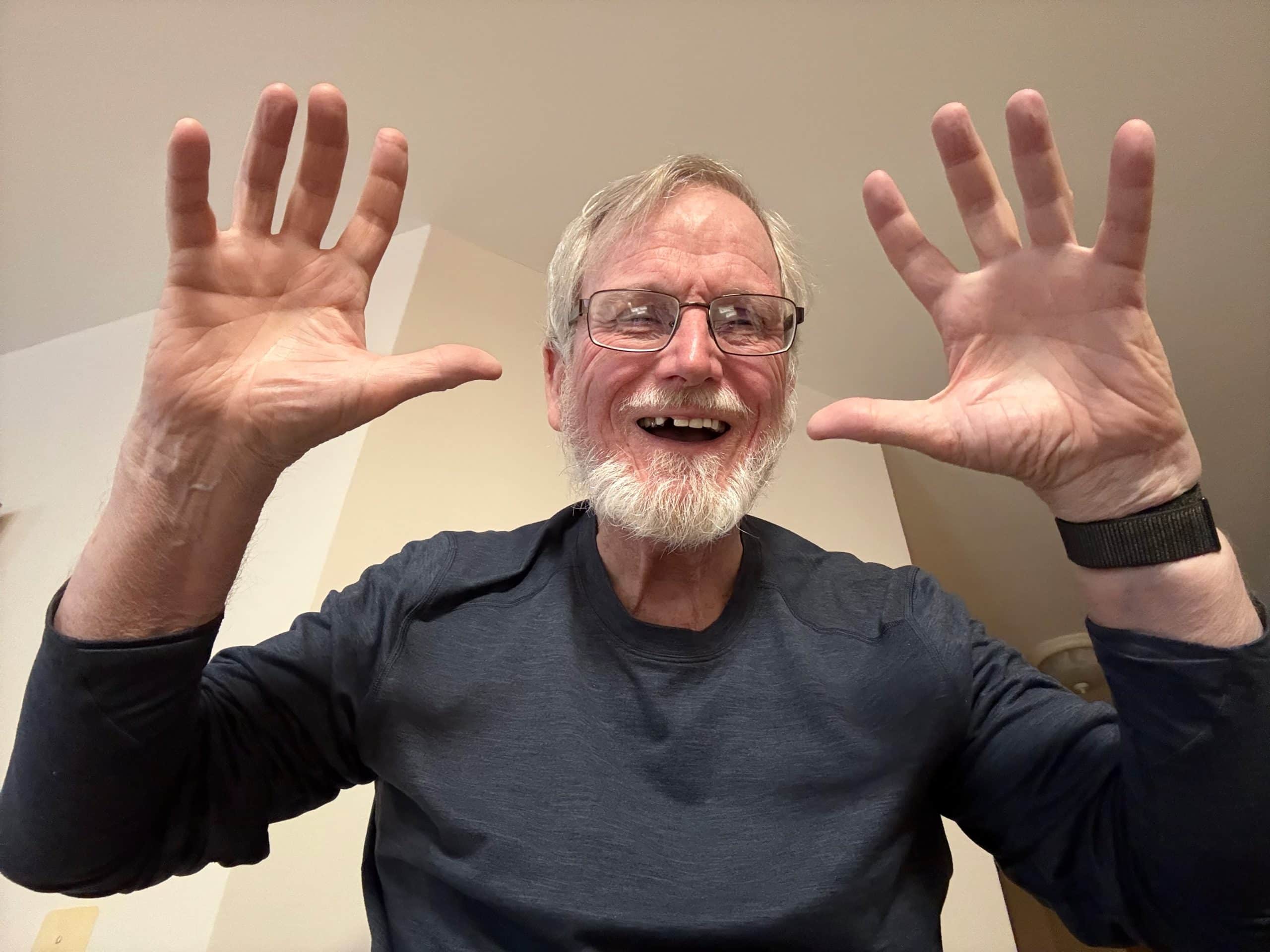
Walking 1,400 days without a Break is a Testament to the Human Spirit!

What led me to start walking? The answer is simple yet profoundly moving: it was the morning after my wife’s funeral. I felt like a lost soul, wandering through life without purpose or hope. Fast-forward to today, March 5, 2025—I’ve just completed my 1,400th consecutive day of walking. This milestone signifies my conscientious resilience journey, the emotional and physical strength I’ve gained,
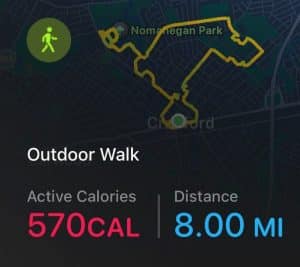
Day 1400

These days, I no longer feel adrift. Each step I take is not just a step but a purposeful stride that nurtures and guides me toward a renewed meaning in life. On my walk today, the possibility of fresh rain was in the air, and the humid air hugged me like a damp blanket. My wandering mind made me ponder a more intriguing question: What inspires me to walk daily? My initial answer would be the sense of purpose, the feeling of moving forward that keeps me going, which I hope can inspire you to find your purpose in your journey.

A runner jogs past me on my right, and I wonder if they are training for the 2028 LA Olympics. Not likely, I whisper. My head nods only for myself, as I admit that they would never add a category for older athletes who walk daily. I can’t help but wonder—if they did, would I qualify to compete for a gold medal? Probably not! I can still tackle long distances at my age, but my pace has slowed to under three miles per hour. Can I hold my own against seasoned competitors? As I exit Nomahegan Park and head home, a fascinating thought fuels my determination, adding a new dimension to my walking journey.

When I first embarked on my current walking journey, I found myself teetering on the brink of obesity. It was a daunting realization, but I was determined to make a change. Though I’ve shed forty-five pounds since then, a few stubborn handfuls of excess weight cling to me like old friends, proving resistant to my relentless attempts to bid them farewell. These pounds, a reminder of the physical toll of grief, have been a constant challenge, but they also serve as a testament to my perseverance and resilience. Walking has not only helped me shed weight, each step has improved my cardiovascular health, strengthened my muscles, and boosted my overall fitness, contributing to my increased resilience in the face of grief and age.

Each solitary walk has become a sanctuary for my mind, sweeping away the cobwebs left by almost seventy-six years of life. Yet, every morning brings fresh webs to unwrap in the empty corners of my memory, reminding me that there’s always more to explore and discover. In these moments, I find comfort and solace, a respite from the chaos of life. Walking provides a time for me to reflect, process my emotions, and find peace amidst the storm clouds of life in my eighth decade.

The question of why I continue to walk remains a mystery. Can I accept that I walk without a specific purpose? Join me as I delve deeper into my motivations. Your insights and feedback could help me unravel the reasons behind my daily walks. Let’s continue this exploration together, as my walking journey is far from over. I invite you to share your reflections and be part of this journey with me.


Pages: 1 2 3 4 5 6

10 comments add your comment

  1. As you know, I am walking because of you. I am currently at day 55 of 100. Once I reach day 75, I plan to change my goal to walk 150 days.

    I am excited by that goal because when I arrive at 150 days, I will have walked 10% of the days that you will have walked and it will be my one chance to have such alignment. I am excited!

    So, why am I walking? I am walking because having a concrete goal of walking 100 days gives me reason not to quit. I am guessing that you start your walk each day for a similar reason. It gives you a reason not to quit, to keep going.

    Once I begin my walk the reasons change and are different from day to day. However, the sense of accomplishment of having “walked today” is always there and my guess is that you likely walk for those endorphins too.

    Thank you for inspiring me!

    -Mark-

    • Mark, I want to express my gratitude for your friendship and support. It will be an honor to celebrate when you reach 150 days, and I’m currently at 1,410 days and counting.

      I walk to enjoy the endorphins, but like you, each day I walk gives me one more reason not to quit. Some days my body protests, but once I start, the pain disappears, and I find myself in moments of tranquility with nature and life.

      If I’ve inspired you to walk, you have encouraged me to live life fully after loss in countless ways.

      I will always be grateful to have you as a friend.

Share your thoughts and ideas

This site uses Akismet to reduce spam. Learn how your comment data is processed.

The Jan Lilien Education Fund!

Berlin- A Novel

Read: June 2023

Get this book

Berlin: A Novel by Bea Setton

by Bea Setton

I’ve begun reading Berlin: A Novel by Bea Setton. After finishing Kairos, a book set in a divided Berlin, Setton’s debut novel is witty and insightful, with a young woman battling a sense of emptiness who moves to Berlin for a fresh start. However, things go differently than planned.

Daphne, the protagonist, moves to Berlin hoping for a new beginning but deals with more drama than she left behind. She knows she needs to make friends, learn German, and navigate a new way of life. She even expects to spend long nights alone with Nutella and experience the difficulties of online dating in another language. But one night, something unexpected and unnerving happens in her apartment, and Daphne’s life suddenly turns dangerous.

Setton captures the modern female experience with sharp observations and wit, making Berlin a must-read for her generation.


The Jan Lilien Education Fund sponsors ongoing sustainability and environmental awareness programs. Gifts made this month; I will match dollar-for-dollar. All donations are tax-deductible.

Subscribe

Contact Us

I receive a commission when you buy a book or product using a link on this page. Thank you for supporting Sharing Jan’s Love blog.


×
Grief Is the Thing with Feathers

Read: May 2026

Get this book

Grief Is the Thing with Feathers

Max Porter‘s extraordinary debut, “Grief Is the Thing with Feathers,” is a unique blend of novella, polyphonic fable, and essay about grief. Combining compassion with a bold writing style, it delivers a powerful impact. Filled with sharp humor and deep insights, this haunting and original work introduces an important new talent. The book will be released as a major motion picture titled “The Thing with Feathers,” starring Benedict Cumberbatch.

Here he is, husband and father, scruffy romantic, a shambolic scholar–a man adrift in the wake of his wife’s sudden, accidental death. And there are his two sons, who, like him, struggle in their London apartment to face the unbearable sadness that has engulfed them. The father imagines a future of well-meaning visitors and emptiness, while the boys wander, savage and unsupervised.

In this moment of violent despair, they are visited by Crow–antagonist, trickster, goad, protector, therapist, and babysitter. This self-described “sentimental bird,” at once wild and tender, who “finds humans dull except in grief,” threatens to stay with the wounded family until they no longer need him. As weeks turn to months and the pain of loss lessens with the balm of memories, Crow’s efforts are rewarded, and the little unit of three begins to recover: Dad resumes his book about the poet Ted Hughes; the boys get on with it, grow up.


Max Porter is a publishing professional who lives in South London with his wife and children. “Grief Is the Thing with Feathers” is his debut book.


Discover your next favorite book and dive into a world of curated, exciting reads by purchasing through my links. You’ll have access to a diverse selection of books I’ve personally vetted for quality and enjoyment. Supporting these selections not only helps me continue to provide you with personalized recommendations but also ensures you have access to meaningful stories that enrich your life. Your support truly makes a difference in helping me share more books and insights with you!


×
Good and Evil and Other Stories

Read: September 2025

Get this book

Good and Evil and Other Stories

by Samanta Schweblin

Good and Evil and Other Stories” by Samanta Schweblin, translated by Megan McDowell, explores characters who find themselves at a point of no return, captivated by the impending tragedy surrounding them. Vulnerable and deeply human, they become ensnared in moments when the uncanny intrudes upon their lives. Some characters transform, others find themselves isolated, and many oscillate between feelings of guilt and tenderness. All are driven by uncertainty.

Schweblin’s prose employs tension and truth to create a literary universe where the monsters of everyday life come so close that we can almost feel their breath. Her writing evokes both awe and discomfort, placing readers in a state of alarm while transporting them to a world that is both recognizable and strange.


Samanta Schweblin won the 2022 National Book Award for Translated Literature for her story collection Seven Empty Houses. Her debut novel, Fever Dream, was shortlisted for the International Booker Prize, while her book, Little Eyes, and her story collection, Mouthful of Birds, have both been longlisted for the same prize. Her books have been translated into over forty languages, and her stories have appeared in prestigious English publications, including The New Yorker, The Paris Review, Granta, and Harper’s Magazine. Originally from Buenos Aires, Schweblin currently lives in Berlin.

Megan McDowell is the recipient of a 2020 Award in Literature from the American Academy of Arts and Letters and has been short- or longlisted four times for the International Booker Prize. She resides in Santiago, Chile.


Discover your next favorite book and dive into a world of curated, exciting reads by purchasing through my links. You’ll have access to a diverse selection of books that I’ve personally vetted to ensure quality and enjoyment. Additionally, by supporting these selections, you’ll help me continue to provide you with more personalized recommendations. I earn a small commission from your purchase, which allows me to buy and share even more books with you. Your support truly makes a difference!


×
The Field of Blood: Violence in Congress and the Road to Civil War

Read: March 2019

Get this book

The Field of Blood

by Joanne B. Freeman

The Field of Blood: Violence in Congress and the Road to Civil War by Joanne B. Freeman, Professor of History and American Studies at Yale University, is a must-read in our hyper-partisan times. The partisanship and divisiveness of the period before the Civil War have many parallels to our time, and the difference is the violence of the Civil War era. Professor Freeman recovers the long-lost story of physical violence on the floor of the U.S. Congress.

She can do this by first source materials from Benjamin Brown French. He was never elected to office but was an acquaintance of twelve consecutive presidents, from Andrew Jackson to Ulysses S. Grant. In addition, he maintained a diary for forty years that highlighted the violence and his and the nation’s political transformation.

During much of this period, he was the Clerk in the House.  His diary documents the violence that did not get covered by the press. Legislative sessions included mortal threats, canings, flipped desks, and all-out slugfests. When debate broke down, members of Congress drew pistols and waved Bowie knives. One representative even killed another in a duel. Many were beaten and bullied in an attempt to intimidate them into compliance, particularly on the issue of slavery.

The Field of Blood is one of four books I purchased after my first One Day University class.

Subscribe

Contact Us

×
Never Forget Our People Were Always Free

Read: March 2024

Get this book

Never Forget Our People Were Always Free

by Ben Jealous

Today, I started reading “Never Forget Our People Were Always Free: A Parable of American Healing” by Ben Jealous, the Executive Director of the Sierra Club. The book highlights how the path to healing America’s broken heart begins with each of us having the courage to heal ourselves. According to Mr. Jealous, it would be transformative if every American treated each other as cousins.

Ben Jealous is the son of parents who had to leave Maryland because their cross-racial marriage was illegal.

I briefly met Ben Jealous last May when I went to Washington with the Religious Action Center of Reform Judaism‘s Day of Action. When I saw Mr. Jealous speaking at Temple Emanu-El in neighboring Westfield, I immediately signed up to attend in person. He is an inspiration as an advocate for the environment, civil rights, and the healing of America’s broken heart.

His lively, courageous, and empathetic storytelling calls on every American to look past deeply cut divisions and recognize that we are all in the same boat now. Along the way, Jealous grapples with hidden American mysteries, including:

  • Why do white men die from suicide more often than black men die from murder?
  • How did racial profiling kill an American president?
  • What happens when a Ku Klux Klansman wrestles with what Jesus said?
  • How did Dave Chappelle know the DC Snipers were Black?
  • Why shouldn’t the civil rights movement give up on rednecks?
  • When is what we have collectively forgotten about race more important than what we know?
  • What do the most indecipherable things our elders say tell us about ourselves?

The book Never Forget Our People Were Always Free is told through parables. It features intimate glimpses of political and faith leaders such as Jack Kemp, Stacey Abrams, and the late Archbishop Desmond Tutu. The book also highlights unlikely heroes such as a retired constable, a female pirate from Madagascar, a long-lost Irishman, a death row inmate, and a man with a Confederate flag over his heart.

Never Forget Our People Were Always Free offers readers hope that America’s oldest wounds can heal and her oldest divisions can be overcome.

Although I have only read a handful of pages of the book, I highly recommend it!

×
Parable of the Sower.

Read: January 2024

Get this book

Parable of the Sower

by Octavia E. Butler

Today, I started reading Octavia E. Butler‘s acclaimed post-apocalyptic novel, “Parable of the Sower.” The book depicts a world in which global climate change and economic crises have led to social chaos, particularly in California. The state is plagued by dangers such as pervasive water shortages and masses of vagabonds who are willing to do whatever it takes to survive.

The novel provides a message of hope even in a gloomy environment. It tells the story of Lauren Olamina, a fifteen-year-old girl who lives with her preacher father, family, and neighbors in a gated community. They are protected from the chaos happening around them. However, in a society where everyone is at risk, Lauren suffers from hyperempathy, a condition that makes her highly sensitive to the emotions of others.

Lauren is a young girl who is wise beyond her years and acutely aware of the dangers that her community refuses to acknowledge. She must speak up to protect her loved ones from the impending disasters that could otherwise harm them. However, her fight for survival leads to something much bigger—the emergence of a new faith and a profound insight into humanity’s destiny.


The Jan Lilien Education Fund sponsors ongoing sustainability and environmental awareness programs. Gifts made this month; I will match dollar-for-dollar. All donations are tax-deductible.

Subscribe

Contact Us

I receive a commission when you buy a book or product using a link on this page. Thank you for supporting Sharing Jan’s Love blog.


×

Discover more from Sharing Jan’s Love

Subscribe now to keep reading and get access to the full archive.

Continue reading