

These Feet Were Made for Walking

Frozen in the Darkest Hour of the Night

When Does a Recurring Daydeam Become Real?

Estimated reading time: 3 minutes, 12 seconds

Upon regaining consciousness, I was disoriented, trying to piece together my surroundings. The room was dimly lit and confined, making it difficult to discern my location or the time of day. I became aware of the chill as I lay on the cold tile floor and noticed my nudity. Struggling to lift my head, I realized I was in a bathroom, but the details of how I arrived there and which bathroom I was in eluded me.

The dry sensation in my mouth was like the parched breath of a desert breeze. I felt the urge to call out the names of my wife and sons, hoping they would assist me in getting to my feet. Thoughts of the words took shape in my mind, but despite my sincere efforts to speak loud enough for them to hear, no sound escaped my lips. It was as if the letters were silently materializing and drifting into the room, resembling ethereal Scrabble tiles.

Instinctively, I raised my left arm to look at my watch, but my wrist was bare. My back spasmed as I realized that if I had an Apple Watch, it would be on the charger on the kitchen counter of my apartment where I lived alone. Realizing no one was on the other side of the bathroom door disheartened me, but I wished I could open it and get my Apple Watch to ask for help. Whom would I call?

I struggled to hoist myself up from the cool, smooth, tiled floor, using my elbows for support. My wife had always teased me about my nonexistent butt. She wasn’t entirely wrong, but now it feels like the small size hindered my ability to lift myself off the floor. My buttocks, I am sure, are frozen to the tiles. It felt like an eternity before I raised just a few inches. My legs attempted to move, but they had fallen into REM sleep, unable to provide the needed support. Crawling on all fours, I slowly dragged myself towards the right-hand door. As I approached, I realized it didn’t lead to the exit; instead, it opened to the space where the furnace and water heater were in the bathroom of Apartment 3B.

Sliding on my knees, I made it to the other door. Now, I saw my Apple Watch and iPhone in the charging station. I crossed the short distance and grabbed both devices, swaying more than standing. I held onto the bedroom door frame and then the nightstand as I crawled into bed without pulling back the sheets.
SunsetWas it real or just a dream? The memory felt vivid as if I had lived it rather than imagined it. As my alarm chimed at 5:30, I sluggishly rose from my bed, filled with uncertainty but resolved to begin my morning routine. It was a sad, overcast day, the air thick with moisture and the sky shrouded in darkness. Despite the gloomy atmosphere, I pressed on, one deliberate step at a time. I aimed to close all my activity rings and complete a demanding five-mile walk while contemplating how many more days I could sustain this routine.

After walking daily for 1213 days, I have been fortunate to enjoy good health and strength, allowing me to engage in walks and indulge in reading, writing, and volunteer work. While survival is crucial, I’ve realized that simply existing isn’t sufficient. I’ve yearned for the difficulties I face to fade away and have eagerly awaited the day when I can confidently step into the future as the sun rises, accompanied by someone to share the moment with. However, despite this desire, I have accepted that I will always live alone. There may come a time when even a short walk to the bathroom becomes a challenging task. Nevertheless, new opportunities will present themselves, and I will wholeheartedly embrace them.
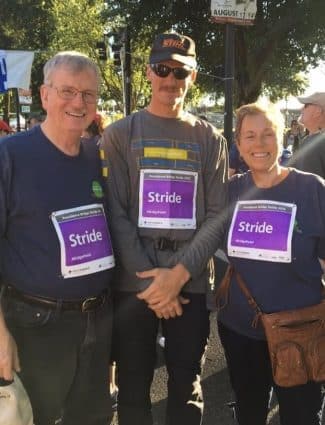
Twelve Hundred Days

I promise not to accept aging gracefully but to face it with an unwavering determination to make the most of the opportunities in my life. I will listen attentively, embrace wholeheartedly, and courageously step into the future!

4 comments add your comment

Share your thoughts and ideas

This site uses Akismet to reduce spam. Learn how your comment data is processed.

The Jan Lilien Education Fund!

These Feet Were Made for Walking
×
Bel Canto

Read: August 2024

Get this book

Bel Canto

by Ann Patchett

Today, I began my journey into the enchanting world of “Bel Canto” by Ann Patchett. This captivating novel delves into the realms of love, opera, and the remarkable ways people forge connections across cultural divides during moments of adversity. The New York Times has recognized it as one of the 100 Best Books of the Century.

At the home of the country’s vice president in South America, a lavish birthday party is underway in honor of the powerful businessman Mr. Hosokawa. The evening is perfect, with Roxanne Coss, opera’s most revered soprano, enchanting the international guests with her singing. However, this idyllic scene is shattered when a group of armed terrorists seizes the entire party. Yet, what initially seems like a nightmare gradually transforms into a moment of unexpected beauty and love. The hostages and captors form bonds that transcend their differences, turning strangers into compatriots, intimate friends, and even lovers, a testament to the resilience of the human spirit and the unexpected beauty that can emerge from the most dire situations.

Ann Patchett’s  Bel Canto is a captivating novel that weaves a story of strength and frailty, love and imprisonment, and an inspiring tale of transcendent romance. Her lyrical prose and vivid imagination bring to life a world where love and opera are unifying forces in a crisis. It’s a story that will keep you turning the pages, eager to uncover its secrets and a testament to Patchett’s captivating storytelling that will leave you spellbound. No wonder the New York Times included it on its list of the 100 Best Books of the Century.

Patchett’s beautiful writing and vivid imagination make Bel Canto a compelling tale that explores themes of strength, vulnerability, love, and confinement and ultimately tells an inspiring story of transcendent romance.

Bel Canto differs from Tom Lake by Ann Patchett, which I read nearly a year ago. Tom Lake is a novel that beautifully explores family, love, and coming of age. Patchett once again proves herself as one of America’s finest writers in both books.

×
Flashlight

Read: August 2025

Get this book

Flashlight: A Novel

by Susan Choi

A monumental new novel by National Book Award winner Susan Choi, Flashlight spans decades and continents in a captivating and emotional exploration of family, loss, memory, and the ways we are influenced by what remains hidden. Longlisted for the 2025 Booker Prize, the novel follows the journey of a father’s disappearance over time, across nations, and within the realm of memory. This work comes from the author of Trust Exercise.

On a summer night, Louisa and her father take a walk along the breakwater. Her father is carrying a flashlight, but he cannot swim. Later, Louisa is found on the beach, soaked to the skin and barely alive. Her father is missing. She is only ten years old.

Louisa is the only child of parents who have distanced themselves from their pasts. Her father, Serk, is Korean but was born and raised in Japan. He lost touch with his family after they embraced the promises of postwar Pyongyang and relocated to North Korea. Her American mother, Anne, is estranged from her Midwestern family due to a reckless adventure in her youth. Then there’s Tobias, Anne’s illegitimate son, whose unexpected return will have profound consequences.

For now, it is just Anne and Louisa—Louisa and Anne—adrift and facing the challenges of everyday life in the aftermath of their immense loss. Bound together yet estranged, they struggle to cope with their shared grief and attempt to move forward. However, they cannot escape the haunting memories of that fateful night. What happened to Louisa’s father?

With shifting perspectives across time and character, and repeatedly revisiting that night by the sea, Flashlight explores the shockwaves of one family’s tragedy while also engaging with the invisible currents of history.


Susan Choi is the author of Trust Exercise, which won the National Book Award for fiction. She has also written the novels The Foreign Student, American Woman, A Person of Interest, and My Education.

Choi has received several prestigious awards, including the Asian American Literary Award for fiction, the PEN/W. G. Sebald Award, a Lambda Literary Award, and the Sunday Times Audible Short Story Award. Additionally, she has been awarded fellowships from the National Endowment for the Arts and the Guggenheim Foundation.

Currently, she teaches in the Writing Seminars at Johns Hopkins University and resides in Brooklyn, New York.


When you purchase a book through one of my links, I earn a small commission that helps support my passion for reading. This contribution allows me to buy even more books to share with you, creating an incredible cycle of discovering great reads together! Your support truly makes a difference!

Enjoy a limited-time offer of 20% off your next book purchase at Bookshop.org!


×
Grand Rapids: A Novel

Read: January 2026

Get this book

Grand Rapids: A Novel

by Natasha Stagg

Natasha Stagg‘s “Grand Rapids” is a coming-of-age story set in the Michigan suburbs in the early 2000s. Alexander Calder’s public sculpture, “La Grande Vitesse”, installed alongside the Grand River in downtown Grand Rapids, has become a symbol of the city. Tess moved there from Ypsilanti, Michigan, in 2001—the same year her mother passed away, marking the beginning of a time when everything felt like it was moving in slow motion for her.

Thrust into adolescence nearly rudderless, fifteen-year-old Tess is intoxicated, angsty, and sexually awake. A decade later, inspired by diary entries and TV reruns, she remembers this summer in the suburbs as the one that redefined her. Its echoes of death are frozen in time, like the waves represented in Calder’s sculpture or the concrete steps leading down to the churning river. She sees Grand Rapids as a collection of architecture and emblems, another home to which she cannot return.


Natasha Stagg is the author of Surveys: A Novel (2016), Sleeveless: Fashion, Image, Media, New York 2011–2019 (2019), and Artless: Stories 2019–2023 (2023). She lives in New York City.


Discover your next favorite book and dive into a world of curated, exciting reads by purchasing through my links. You’ll have access to a diverse selection of books that I’ve personally vetted to ensure quality and enjoyment. Additionally, by supporting these selections, you’ll help me continue to provide you with more personalized recommendations. I earn a small commission from your purchase, which allows me to buy and share even more books with you. Your support truly makes a difference!


×
The Emperor of Gladness

Read: May 2025

Get this book

The Emperor of Gladness

by Ocean Vuong

In “The Emperor of Gladness,” Ocean Vuong explores the interconnected themes of history, memory, and time, revealing how love, labor, and loneliness are the foundation of American life. At its core, the narrative presents a courageous epic that examines what it means to live on the margins of society and confront the wounds that affect our shared humanity. It highlights the lengths we are willing to go to grasp one of life’s most fleeting gifts: a second chance.

One late summer evening in the post-industrial town of East Gladness, Connecticut, nineteen-year-old Hai stands on the edge of a bridge in pelting rain, ready to jump, when he hears someone shout across the river. The voice belongs to Grazina, an elderly widow succumbing to dementia, who convinces him to take another path. Bereft and out of options, he quickly becomes her caretaker. Over the year, the unlikely pair develops a life-altering bond, one built on empathy, spiritual reckoning, and heartbreak, with the power to transform Hai’s relationship with himself, his family, and a community on the brink.

Hallmarks of Ocean Vuong‘s writing—formal innovation, syntactic dexterity, and the ability to twin grit with grace through tenderness—are on full display in this story.


Ocean Vuong is the author of the critically acclaimed poetry collections Night Sky with Exit Wounds and Time Is a Mother, as well as the New York Times bestselling novel On Earth We’re Briefly Gorgeous. A recipient of the MacArthur Fellowship and the American Book Award, he once worked as a fast-food server, which inspired The Emperor of Gladness. Born in Saigon, Vietnam, he currently splits his time between Northampton, Massachusetts, and New York City.


When you purchase a book through one of my links, I earn a small commission that helps support my passion for reading. This contribution allows me to buy even more books to share with you, creating an incredible cycle of discovering great reads together! Your support truly makes a difference!


×
There Is No Place for Us

Read: April 2025

Get this book

There Is No Place for Us

by Brian Goldstone

Today, I delved into There Is No Place for Us by Brian Goldstone, a poignant exploration of America’s escalating homelessness crisis. Goldstone’s examination of the issue’s scale, root causes, and consequences is a wake-up call, passionately arguing that housing must be recognized as a fundamental human right. His compelling narrative demands our immediate attention and action.

The phrase “the working homeless” serves as a stark reminder of the urgency of America’s homelessness crisis. In a country where hard work and determination are expected to lead to success, it is scandalous that individuals with full-time jobs struggle to maintain stable housing. Rising rents, low wages, and insufficient tenant rights have contributed to this alarming trend. Families are facing homelessness not due to a failing economy but because of a thriving one.

In his compelling and thoroughly researched book, Brian Goldstone explores the lives of five families in Atlanta. Maurice and Natalia attempt to rebuild their lives in the country’s “Black Mecca” after being priced out of Washington, D.C. Kara aspires to become an entrepreneur while working at a public hospital. Britt has secured a much-coveted housing voucher. Michelle is studying to become a social worker. Celeste works tirelessly at her warehouse job while battling ovarian cancer. Each of these individuals strives to provide a decent life for their children. Yet, one by one, they find themselves among the nation’s working homeless, demonstrating their resilience and the system’s failures.

Through intimate, novelistic portrayals, Goldstone exposes the human cost of this crisis, following parents and their children as they sleep in cars or squalid extended-stay hotel rooms, then head to their jobs and schools the next day. These are the nation’s hidden homeless—people often omitted from official statistics—showing that overflowing shelters and street encampments represent only the most visible aspects of a much larger problem.


Brian Goldstone is a journalist whose long-form reporting and essays have appeared in The New York Times, Harper’s Magazine, The New Republic, The California Sunday Magazine, and Jacobin, among other publications. He has a PhD in anthropology from Duke University and was a Mellon Research Fellow at Columbia University. In 2021, he was a National Fellow at New America. He lives in Atlanta with his family.


When you purchase a book through one of my links, I earn a small commission that helps support my passion for reading. This contribution allows me to buy even more books to share with you, creating an incredible cycle of discovering great reads together! Your support truly makes a difference!

Enjoy a limited-time offer of 20% off your next book purchase at Bookshop.org!


×
The Hero of This Book: A Novel

Read: November 2022

Get this book

The Hero of This Book: A Novel

by Elizabeth McCracken

The Hero of This Book: A Novel by Elizabeth McCracken is a searing examination of grief and renewal and a deeply felt relationship between a child and her parents. It is not a memoir but a remembrance of those we have lost. Ten months after her mother’s death, the narrator of The Hero of This Book takes a trip to London. The city was a favorite of her mother’s, and as the narrator wanders the streets, she reflects on her mother’s life and their relationship.

Thoughts of the past meld with questions of the future: Back in New England, the family home is now up for sale, its considerable contents already winnowed.

The following quote resonated with me.

I’ve always hated the notion, in life or in fiction, that the human personality is a puzzle to be solved, that we are a single flashback away from understanding why this person is cruel to her children, why that man has a dreamy, downcast look. A human being is not a lock and the past is not a key.

I highly recommend this book.

The Goodreads summary provides an overview,

The woman, a writer, recalls all that made her complicated mother extraordinary–her brilliant wit, her generosity, her unbelievable obstinacy, her sheer will to seize life despite physical difficulties–and finds herself wondering how her mother had endured. Even though she wants to respect her mother’s nearly pathological sense of privacy, the woman must come to terms with whether making a chronicle of this remarkable life constitutes an act of love or betrayal.

The Hero of This Book is a searing examination of grief and renewal and a deeply felt relationship between a child and her parents. What begins as a question of filial devotion ultimately becomes a lesson in what it means to write. At once comic and heartbreaking, with prose that delights at every turn, this is a novel of such piercing love and tenderness that we are reminded that art is what remains when all else falls away.


The Jan Lilien Education Fund sponsors ongoing sustainability and environmental awareness programs. Gifts made this month; I will match dollar-for-dollar. All donations are tax-deductible.

Subscribe

Contact Us

I receive a commission when you buy a book or product using a link on this page. Thank you for supporting Sharing Jan’s Love blog.

×