Being the Change I Need

Estimated reading time: 7 minutes, 16 seconds
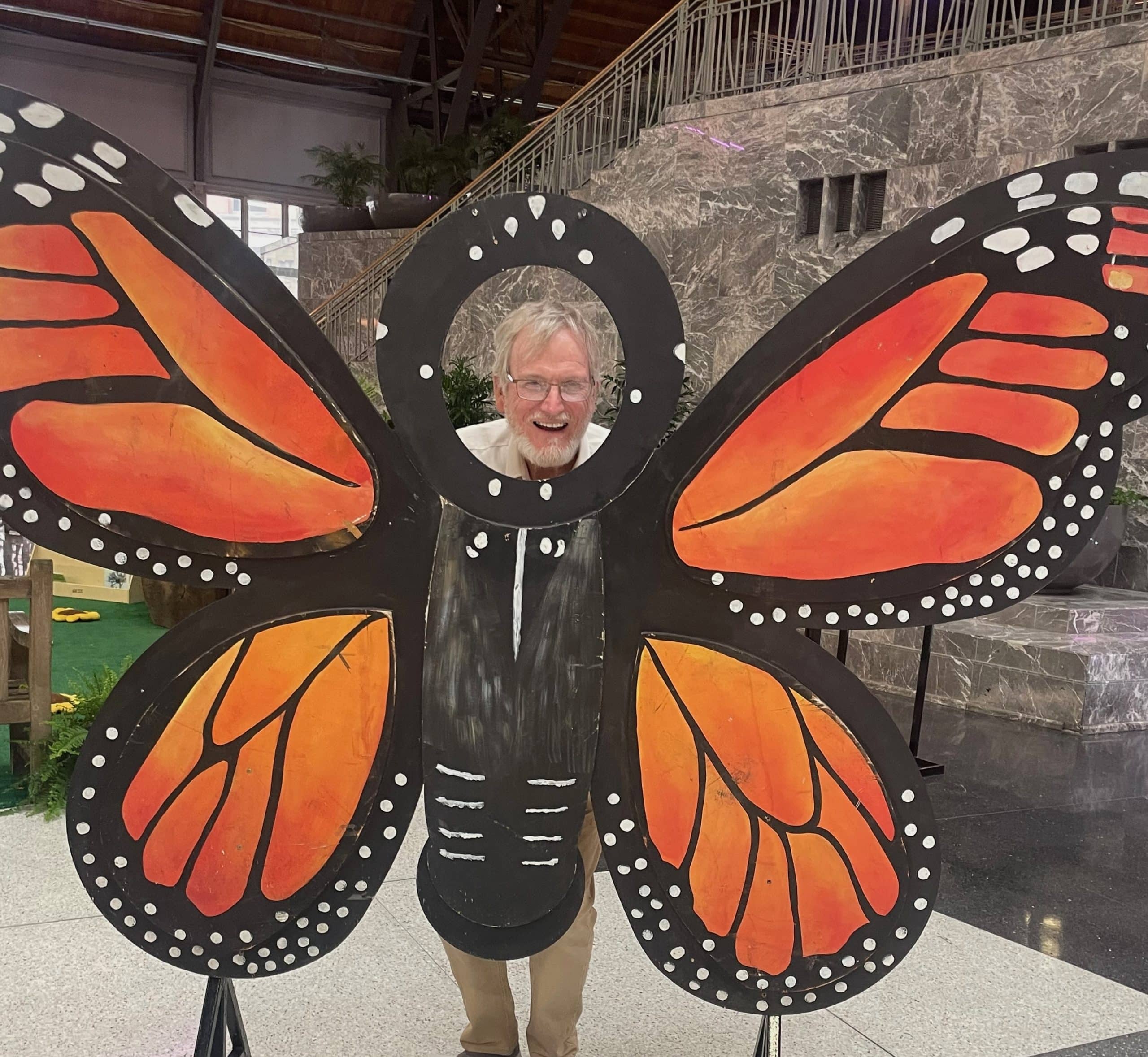
One Day At a Time,
I Am Becoming the
Best Version of Myself

During a dinner in Philadelphia, the night before the Flower Show, my good friend Hugo noticed a significant change in me. He remarked that over the past three years, since the loss of my wife, Jan, I had changed. Intrigued, I asked him to elaborate. Hugo explained that during the first year after Jan’s death, I would break down in tears at any mention of her. But he had noticed my improvement since then, as I appeared more relaxed and content. I agreed, acknowledging the progress I had made. Then, with the wisdom of an old man, I said, “We often seek positive change in times of loss. To make it happen, we must be willing to become the change we desire.”

During my conversation with Hugo, I shared how people often told me and other widows that our lives would become a “new normal” after losing our loved ones. However, life is a constant stream of ups and downs, with or without such a significant loss. Najwa Zebian‘s thoughts on change are very insightful in this regard, as change is an inevitable part of life, and we are constantly evolving and adapting to new situations.
Sitting at the restaurant table, I ask Hugo, “Should we split a dessert?” The waiter returns and, regretfully, informs us that the two options we were considering are no longer available. We settle on an alternate selection and continue our conversation.

After taking a sip of water, I cleared my throat and shared a personal insight. I explained that throughout my Life, I have always been someone who wears their heart on their sleeve. Stoicism is not a trait that defines me. If I were to hide my emotions, I would not be the same person I am today.

Being honest about my feelings is crucial to who I am and aspire to become. It allows me to connect with others more deeply, empathize with their experiences, and create meaningful relationships.

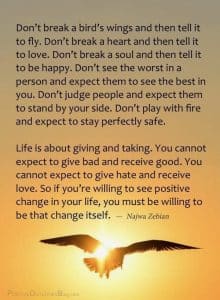
As Hugo and I waited eagerly for our dessert, the waiter returned with an apologetic smile. He regretfully informed us they had run out of dessert for the night. We couldn’t help but laugh at the absurdity of the situation. “Do they have bananas?” Despite our disappointment, we knew there was no point in getting upset over something as trivial as dessert. At that moment, I was reminded of a powerful quote by Najwa Zebian:

Life is about giving and taking. You cannot expect to give bad and receive good. You cannot expect to give hate and receive love. So, if you’re willing to see positive change in your life, you must be willing to be that change itself.”

Najwa Zebian

Have I Changed?

The morning of the Flower Show was chilly and crisp, but it didn’t deter me from waking up at 5:30 am with a sense of purpose. For the past 1042 days, I have walked every morning, no matter the weather, ever since my wife passed away. During my walk, I took the time to let my thoughts wander and reflect on the changes I have been through over the last few years. Without the distraction of music or podcasts, I could focus on my innermost thoughts and realize that I have changed and will continue to change.
As I approached the Liberty Bell, I suddenly realized that my friend Hugo’s observation was correct—my tears had become less frequent. Nowadays, when tears well up in my eyes, they are usually brought on by positive memories or unrelated matters.

I have documented my thoughts as an initial step to determine if I have genuinely transformed or am pretending to be myself. These thoughts are raw and unpolished, without any editing.

Throughout the past three years, I have developed daily walking, reading, and writing habits, which have kept me engaged and focused even when I felt like staying in bed all day. These habits have played a crucial role in helping me to overcome my grief and stay on course.

Before my wife passed away, she expressed concern that I would be alone for the rest of my life. Her words made me realize that I needed to expand my social circle and try to meet new people. Today, three years later, I have more friends than I did before, and I have become closer to people I knew before my wife’s death. They have been a great support system for me in my time of need.

I have also positively impacted my community through hard work, dedication, and financial contributions. One of my proudest achievements has been the creation of Jan’s Memorial Garden in Hanson Park. It’s a beautiful space that provides comfort and solace to visitors. As the Board Chair for Bridges, I am committed to supporting their mission to end homelessness. After leaving my job five months before my wife’s lymphoma diagnosis, I thought my days of actively working on causes I care about were over. However, I remained patient and open to new opportunities, eventually leading me to work with Hanson Park, Bridges, and other groups.

Attending Friday night services at Temple Sha’arey Shalom has been a surprising but rewarding experience. These services have done wonders for my faith and have provided me with a sense of renewal and peace. The spiritual leaders of the temple have challenged me to think in new ways, which has helped me to release the painful memories that once haunted me and embrace the tranquility of Shabbat.

Standing alongside others in mourning and sharing the names of those who need healing has been a humbling and rewarding experience. But what’s been particularly valuable to me is the Oneg, where I can connect with others, learn from them, and support them. All in all, attending these services has been an incredibly enriching and fulfilling experience for me.

Pages: 1 2

6 comments add your comment

Share your thoughts and ideas

This site uses Akismet to reduce spam. Learn how your comment data is processed.

Previous Post:

Next Post:

The Jan Lilien Education Fund!

Invisible Child

Read: December 2021

Get this book

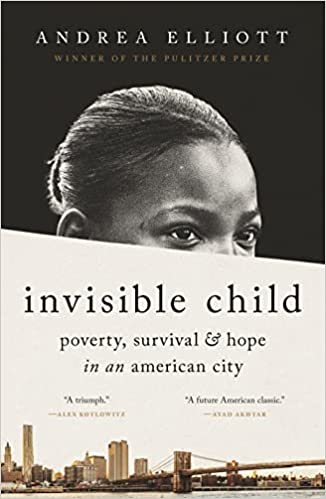
Invisible Child: Poverty, Survival & Hope in an American City

by Andrea Elliott

Invisible Child: Poverty, Survival & Hope in an American City by Andrea Elliott was a gift from my son Jon. The New York Times selected “Invisible Child” as one of the best books published this year. It is indeed one of the top books on my all-time list.

GoodReads summary provides a good overview,

The riveting, unforgettable story of a girl whose indomitable spirit is tested by homelessness, poverty, and racism in an unequal America—from Pulitzer Prize-winning journalist Andrea Elliott of The New York Times

Invisible Child follows eight dramatic years in the life of Dasani Coates, a child with imagination as soaring as the skyscrapers near her Brooklyn homeless shelter. Born at the turn of a new century, Dasani is named for the bottled water that comes to symbolize Brooklyn’s gentrification and the shared aspirations of a divided city. As Dasani grows up, moving with her tight-knit family from shelter to shelter, this story goes back to trace the passage of Dasani’s ancestors from slavery to the Great Migration north. When Dasani comes of age, New York City’s homeless crisis explodes as the chasm deepens between rich and poor.

In the shadows of this new Gilded Age, Dasani must lead her seven siblings through a thicket of problems: hunger, parental drug addiction, violence, housing instability, segregated schools, and the constant monitoring of the child-protection system. When, at age thirteen, Dasani enrolls at a boarding school in Pennsylvania, her loyalties are tested like never before. As she learns to “code switch” between the culture she left behind and the norms of her new town, Dasani starts to feel like a stranger in both places. Ultimately, she faces an impossible question: What if leaving poverty means abandoning the family you love?

By turns heartbreaking and revelatory, provocative and inspiring, Invisible Child tells an astonishing story about the power of resilience, the importance of family, and the cost of inequality. Based on nearly a decade of reporting, this book vividly illuminates some of the most critical issues in contemporary America through the life of one remarkable girl.

Jan and I were involved and knew that child poverty and homelessness needed repair. In addition, Jan lived on Washington Park across from Ft. Greene Park in 1974-75. We knew the neighborhood where much of the book’s story takes place. 

Before meeting Jan in 1973, I was both a community/tenant organizer and a youth worker. In the latter role, I made weekly hostel trips for eight to ten young boys from East Williamsburg during 1973. The trips were the first the boys had ever been outside of their neighborhood.

Many of them had imaginations like Dasani. They also had her instinct to fight. One of my first tasks was to check for any weapons.

Decades later, when I would see any of them, now adults, they would ask when we were going on another trip. I wish I had met Jan when I made those trips. She would have helped me improve them and document the impact. If I could re-write history, I would have her join me as the second adult on the hostel trips.

After that summer, it was clear my primary skills were as a community/tenant organizer. Over the next few years, my work focused on creating affordable and supportive housing.

Jan and I did meaningful work that made a difference, yet the need for a permanent solution to the crisis remains. The book highlights the crucial role of resilience, the importance of family, and the cost of inequality. As a nation, we cannot undermine those values by breaking up families, impeding resilience, and maintaining racial and economic inequality. 

The current debate in Washington over the Build Back Better legislation needs to focus not on how much we spend but on its impact on children and families

David Brooks, a conservative commentator, has supported these expenditures for what they can do to address this country’s cultural and economic crisis. 

These packages say to the struggling parents and the warehouse workers: I see you. Your work has dignity. You are paving your way. You are at the center of our national vision.

This is how you fortify a compelling moral identity, which is what all of us need if we’re going to be able to look in the mirror with self-respect. This is the cultural transformation that good policy can sometimes achieve. Statecraft is soulcraft.

If you can only read one book this year, this is the one to read. Child poverty, homelessness, and inequality impact all of us. Ending child poverty and homelessness will make us a healthier and more inclusive nation. It is time for a compelling moral call to action!

Subscribe

Contact Us

When you buy a book or product using a link on this page, I receive a commission. Thank you for supporting Sharing Jan’s Love blog.

×
The Hero of This Book: A Novel

Read: November 2022

Get this book

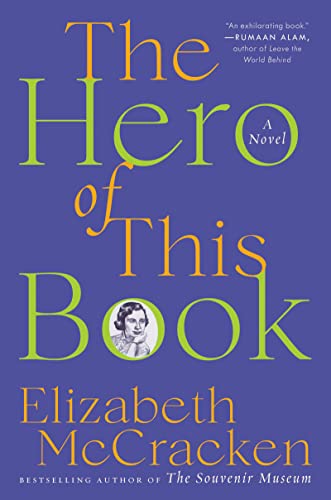
The Hero of This Book: A Novel

by Elizabeth McCracken

The Hero of This Book: A Novel by Elizabeth McCracken is a searing examination of grief and renewal and a deeply felt relationship between a child and her parents. It is not a memoir but a remembrance of those we have lost. Ten months after her mother’s death, the narrator of The Hero of This Book takes a trip to London. The city was a favorite of her mother’s, and as the narrator wanders the streets, she reflects on her mother’s life and their relationship.

Thoughts of the past meld with questions of the future: Back in New England, the family home is now up for sale, its considerable contents already winnowed.

The following quote resonated with me.

I’ve always hated the notion, in life or in fiction, that the human personality is a puzzle to be solved, that we are a single flashback away from understanding why this person is cruel to her children, why that man has a dreamy, downcast look. A human being is not a lock and the past is not a key.

I highly recommend this book.

The Goodreads summary provides an overview,

The woman, a writer, recalls all that made her complicated mother extraordinary–her brilliant wit, her generosity, her unbelievable obstinacy, her sheer will to seize life despite physical difficulties–and finds herself wondering how her mother had endured. Even though she wants to respect her mother’s nearly pathological sense of privacy, the woman must come to terms with whether making a chronicle of this remarkable life constitutes an act of love or betrayal.

The Hero of This Book is a searing examination of grief and renewal and a deeply felt relationship between a child and her parents. What begins as a question of filial devotion ultimately becomes a lesson in what it means to write. At once comic and heartbreaking, with prose that delights at every turn, this is a novel of such piercing love and tenderness that we are reminded that art is what remains when all else falls away.


The Jan Lilien Education Fund sponsors ongoing sustainability and environmental awareness programs. Gifts made this month; I will match dollar-for-dollar. All donations are tax-deductible.

Subscribe

Contact Us

I receive a commission when you buy a book or product using a link on this page. Thank you for supporting Sharing Jan’s Love blog.

×
The New Wilderness

Read: October 2021

Get this book

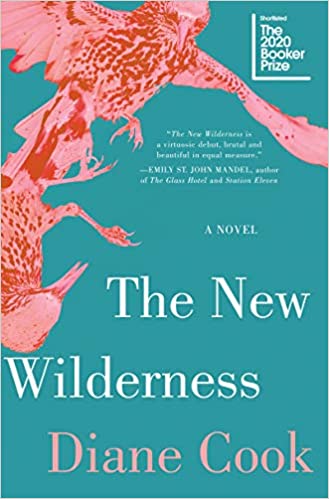
The New Wilderness

by Diane Cook

The New Wilderness by Diane Cook. The New Wilderness is a timely book and one that resonated with me. When Jan and I met in 1973, it was a revolutionary time with movements encouraging communes and returning to the farm. Neither Jan nor I were interested in living in a commune. Reading this book helped reassure me that we made the correct choice.

The summary of the book is:

Margaret Atwood meets Miranda July in this wildly imaginative debut novel of a mother’s battle to save her daughter in a world ravaged by climate change; A prescient and suspenseful book from the author of the acclaimed story collection, Man V. Nature.

Bea’s five-year-old daughter, Agnes, is slowly wasting away, consumed by the smog and pollution of the overdeveloped metropolis that most of the population now calls home. If they stay in the city, Agnes will die. There is only one alternative: the Wilderness State, the last swath of untouched, protected land, where people have always been forbidden. Until now.

Bea, Agnes, and eighteen others volunteer to live in the Wilderness State, guinea pigs in an experiment to see if humans can exist in nature without destroying it. Living as nomadic hunter-gatherers, they slowly and painfully learn to survive in an unpredictable, dangerous land, bickering and battling for power and control as they betray and save one another. But as Agnes embraces the wild freedom of this new existence, Bea realizes that saving her daughter’s life means losing her in a different way. The farther they get from civilization, the more their bond is tested in astonishing and heartbreaking ways.

At once a blazing lament of our contempt for nature and a deeply humane portrayal of motherhood and what it means to be human, The New Wilderness is an extraordinary novel from a one-of-a-kind literary force.

When I finished this book, I read Pompeii Still Has Buried Secrets by  in The New Yorker. It reminded me of all of the threats to civilization that we face, who will be Pliny the Younger to be “the only surviving eyewitness account of the disaster.” Fleeing our cities for the wilderness is no longer an option!

Subscribe

Contact Us

When you buy a book or product using a link on this page, I receive a commission. Thank you for supporting Sharing Jan’s Love blog.

×
The Rest of Our Lives

Read: January 2026

Get this book

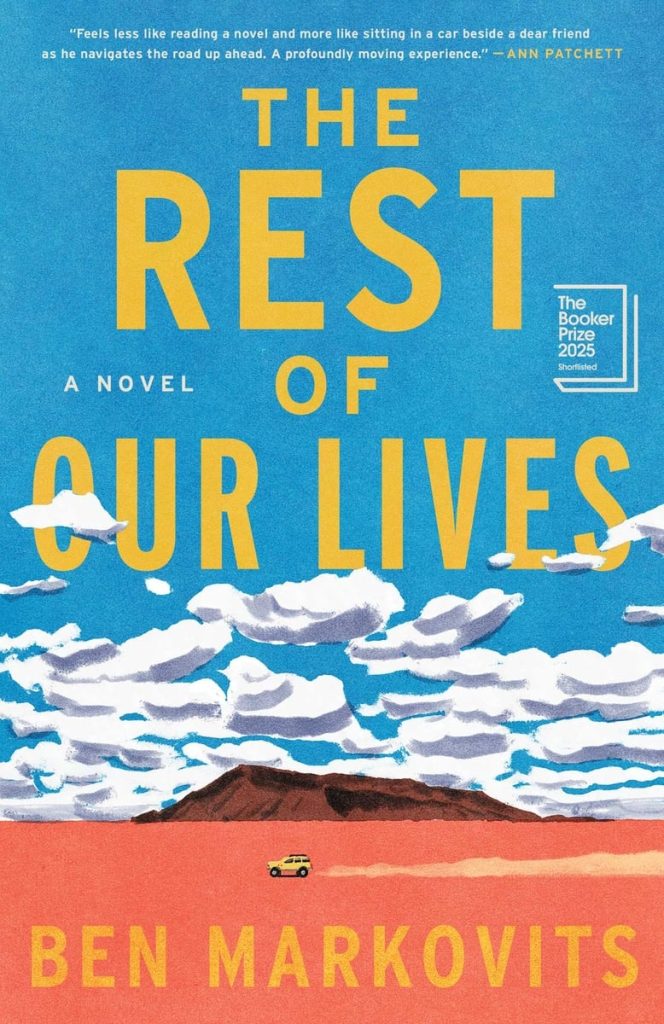
The Rest of Our Lives

by Ben Markovits

The Rest of Our Lives by Ben Markovits is a beautifully crafted, tender, and insightful story that depicts the journey of starting anew. Tom Layward, the protagonist, chooses not to return home after dropping his daughter off at college. This life-affirming road trip novel explores themes of marriage, middle age, and a man confronting a pivotal moment. It was a finalist for the 2025 Booker Prize.

When Tom Layward’s wife had an affair twelve years ago, he resolved to leave her as soon as his youngest child left the nest. Now, while driving his college-bound daughter to Pittsburgh, he remembers his promise to himself. He is also on the run from his own health issues and a forced leave from work.

So, rather than returning to his wife in Westchester, Tom keeps driving west, with the vague plan of visiting people from his past—an old college friend, his ex-girlfriend, his brother, his son—en route, maybe, to California. He’s moving towards a future he hasn’t even envisioned, while he considers his past and the choices he’s made that have brought him to this moment.


Ben Markovits was born and raised in Texas, and later lived in London and Berlin. He studied at Yale University and the University of Oxford. After graduating, he became a professional basketball player in Landshut, Germany, where he played against a young Dirk Nowitzki.

Markovits has authored eleven novels, including Fathers and Daughters, You Don’t Have to Live Like This, and The Sidekick. In addition to his books, he has published essays, stories, poetry, and reviews in notable publications such as The Guardian, Granta, The Paris Review, and The New York Times.

In 2013, Granta recognized him as one of their Best of Young British Novelists. He received the Eccles British Library Writer in Residence Award and the James Tait Black Memorial Prize in 2015. Currently, he lives in London and teaches creative writing at Royal Holloway, University of London.


Discover your next favorite book and dive into a world of curated, exciting reads by purchasing through my links. You’ll have access to a diverse selection of books that I’ve personally vetted to ensure quality and enjoyment. Additionally, by supporting these selections, you’ll help me continue to provide you with more personalized recommendations. I earn a small commission from your purchase, which allows me to buy and share even more books with you. Your support truly makes a difference!


×
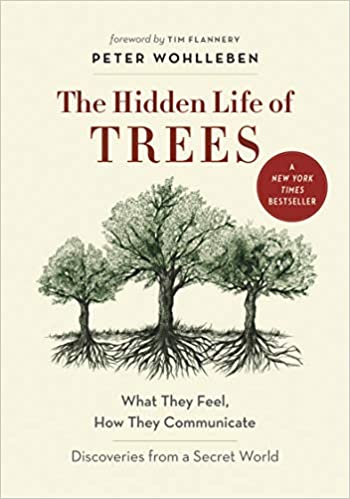
The Hidden Life of Trees

Read: August 2021

Get this book

The Hidden Life of Trees

by Peter Wohlleben

The Hidden Life of Trees: What They Feel, How They Communicate ― Discoveries from A Secret World is a book I have wanted but had not had the time to read. In July of this year, when I was still in the early stages of my recovery journey, I talked to a friend of my wife’s (whom I now count as my friend) about our plans to plant a tree in Hanson Park.

As I talked about our plans, my friend suggested I read this book as it would help me understand the importance of trees. I will forever be grateful for her recommendation, as it made me read this book sooner than later.

To read that trees have a social network with more prominent, healthier trees concerned about the smaller, weaker ones. How is it that humans, a supposedly advanced species, have a social network that divides and weakens our community?

Are trees social beings? In The Hidden Life of Trees forester and author Peter Wohlleben convincingly makes the case that, yes, the forest is a social network. He draws on groundbreaking scientific discoveries to describe how trees are like human families: tree parents live together with their children, communicate with them, support them as they grow, share nutrients with those who are sick or struggling, and even warn each other of impending dangers. Wohlleben also shares his deep love of woods and forests, explaining the amazing processes of life, death, and regeneration he has observed in his woodland.

Having read this book, I am more sensitive to trees and have enjoyed my walks more than ever. In addition, when we plant Jan’s tree in Hanson Park, I will now have even more reasons to talk about the importance of trees to Jan, myself, and the community.

Subscribe

Contact Us

×
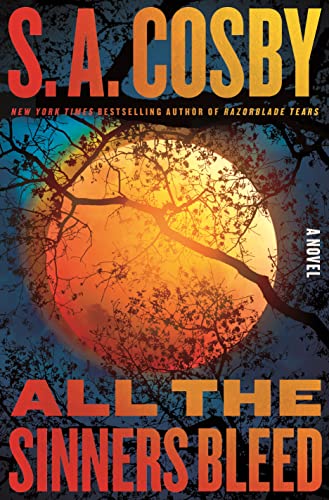
All the Sinners Bleed- A Novel

Read: June 2023

Get this book

All the Sinners Bleed: A Novel

by S. A. Cosby

Today, I delved into the gripping pages of “All the Sinners Bleed” by S. A. Cosby. This enthralling novel centers around Titus Crown, the first African American sheriff in Charon County, Virginia. Despite the county’s reputation for traditional customs such as moonshine, cornbread, and honeysuckle, Titus, with his FBI expertise, knows that the peace won’t last forever.

On the first anniversary of Titus’s election, a schoolteacher is murdered by an ex-student, and Titus’s deputies take down the perpetrator. As Titus delves deeper into the case, he uncovers a web of horrendous crimes and finds a serial killer lurking in plain sight, haunting Charon’s dirt roads and woodland clearings.

Titus is determined to solve the case, despite its connection to a nearby church, and he harbors a personal secret that haunts him. However, he faces opposition from a far-right group that wants to hold a parade to honor the town’s Confederate past while he tries to solve the issue.

Despite the challenges, Titus remains resolute in his love for Charon and his commitment to finding justice. The collision of religion and hatred cannot deter him from his duty.


S. A. Cosby is a New York Times bestselling writer from southeastern Virginia. He is the author of All the Sinners Bleed, which was on more than forty Best of the Year lists, including Barack Obama’s, as well as Edgar Award finalist Razorblade Tears and Los Angeles Times Book Prize winner Blacktop Wasteland. He has also won the Anthony Award, ITW Thriller Award, Barry Award, Macavity Award, BCALA Award, and Audie Award. He has been longlisted for the ALA Andrew Carnegie Medal for Excellence.


When you purchase a book through one of my links, I earn a small commission that helps support my passion for reading. This contribution allows me to buy even more books to share with you, creating an incredible cycle of discovering great reads together! Your support truly makes a difference!

Enjoy a limited-time offer of 20% off your next book purchase at Bookshop.org!


×

Discover more from Sharing Jan’s Love

Subscribe now to keep reading and get access to the full archive.

Continue reading