
Clear: A Novel

Estimated reading time: 0 minutes, 54 seconds

Today, I started reading “Clear: A Novel” by Carys Davies. It’s a stunning and exquisite novel written by an award-winning author. The story follows John, a Scottish minister who is sent to a remote island off the coast of Scotland to evict the last remaining inhabitant, Ivar. However, Ivar is unwilling to leave, and John’s wife, Mary, has severe misgivings about the task.

Shortly after arriving on the island, John falls off a cliff and is badly injured. Ivar finds him and takes him home, where he tends to his wounds. John and Ivar understand each other despite the language barrier and the fragile connection that forms.

The story takes place in the 1840s, during the Scottish Clearances, a period of forced evictions that saw many rural communities lose their homes. The novel explores the differences and connections between people, the impact of history on our beliefs, and the resilience of the human spirit.

“Clear” is a moving, unpredictable, sensitive, and spellbinding novel. It is a profound and pleasurable read that will stay with you long after you finish the last page.

The Jan Lilien Education Fund!

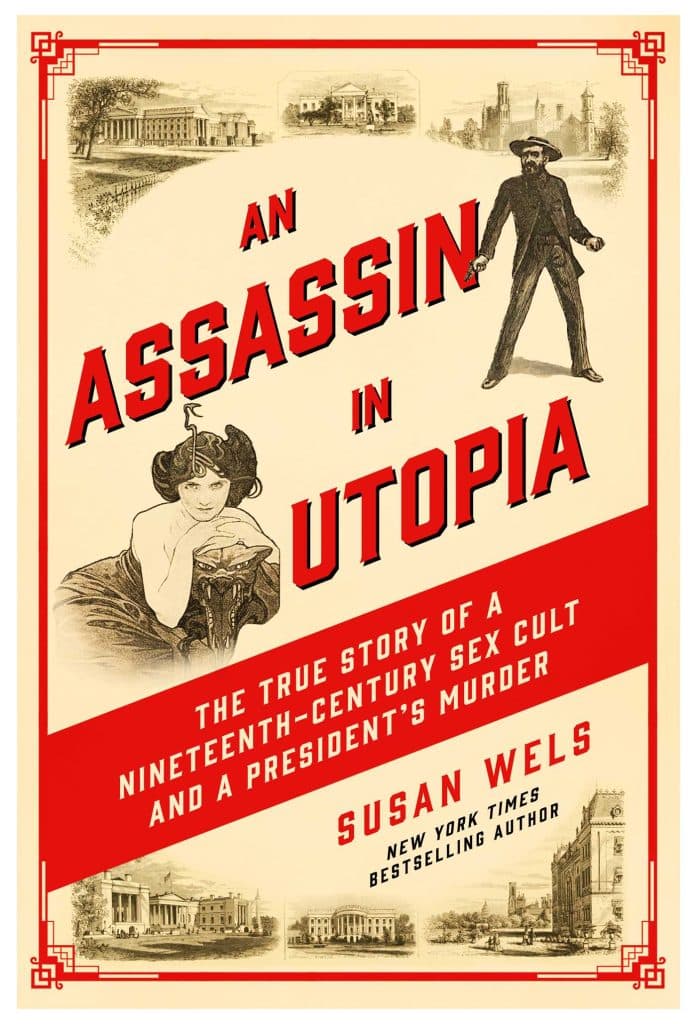
An Assassin in Utopia: The True Story of a Nineteenth-Century Sex Cult and a President's Murder

Read: February 2023

Get this book

An Assassin in Utopia

by Susan Wels

An Assassin in Utopia: The True Story of a Nineteenth-Century Sex Cult and a President’s Murder by Susan Wels is a true crime odyssey that explores a forgotten, astonishing chapter of American history, leading the reader from a free-love community in upstate New York to the shocking assassination of President James Garfield. I had read about this historical period in several other books, most recently Civil War by Other Means.

Susan Wels has written an excellent historical overview of a period we often overlook. I highly recommend An Assassin in Utopia: The True Story of a Nineteenth-Century Sex Cult and a President’s Murder.

The Oneida Community, even though it was the most successful utopian community, is often overlooked. Ms. Wels connects the dots and places the experiment in the center of a transitional period. It is not merely the connection between Charles Julius Guitea and his assassination of President James Garfield, albeit a brutal crime, that shook America to its core, but all of the other linkages. These include “John Humphrey Noyes; his idol, the eccentric newspaper publisher Horace Greeley (founder of the New Yorker and the New York Tribune).”

She also resurrects the importance of the Wormely Compromise and the African-American family that was an instrumental part of public society.

I have found fiction to be something I enjoy, but I knew it was time for a non-fiction book to balance my reading. The New York Times and other publications highly rated An Assassin in Utopia.

The Goodreads summary provides an overview,

It was heaven on earth—and, some whispered, the devil’s garden.

Thousands came by trains and carriages to see this new Eden, carved from hundreds of acres of wild woodland. They marveled at orchards bursting with fruit, thick herds of Ayrshire cattle and Cotswold sheep, and whizzing mills. They gaped at the people who lived in this place—especially the women, with their queer cropped hair and shamelessly short skirts. The men and women of this strange outpost worked and slept together—without sin, they claimed.

From 1848 to 1881, a small utopian colony in upstate New York—the Oneida Community—was known for its shocking sexual practices, from open marriage and free love to the sexual training of young boys by older women. And in 1881, a one-time member of the Oneida Community—Charles Julius Guiteau—assassinated President James Garfield in a brutal crime that shook America to its core.

An Assassin in Utopia is the first book that weaves together these explosive stories in a tale of utopian experiments, political machinations, and murder. This deeply researched narrative—by bestselling author Susan Wels—tells the true, interlocking stories of the Oneida Community and its radical founder, John Humphrey Noyes; his idol, the eccentric newspaper publisher Horace Greeley (founder of the New Yorker and the New York Tribune); and the gloomy, indecisive President James Garfield—who was assassinated after his first six months in office.

Juxtaposed to their stories is the odd tale of Garfield’s assassin, the demented Charles Julius Guiteau, who was connected to all of them in extraordinary, surprising ways.

Against a vivid backdrop of ambition, hucksterism, epidemics, and spectacle, the book’s interwoven stories fuse together in the climactic murder of President Garfield in 1881—at the same time as the Oneida Community collapsed.

Colorful and compelling, An Assassin in Utopia is a page-turning odyssey through America’s nineteenth-century cultural and political landscape.


The Jan Lilien Education Fund sponsors ongoing sustainability and environmental awareness programs. Gifts made this month; I will match dollar-for-dollar. All donations are tax-deductible.

Subscribe

Contact Us

I receive a commission when you buy a book or product using a link on this page. Thank you for supporting Sharing Jan’s Love blog.


×
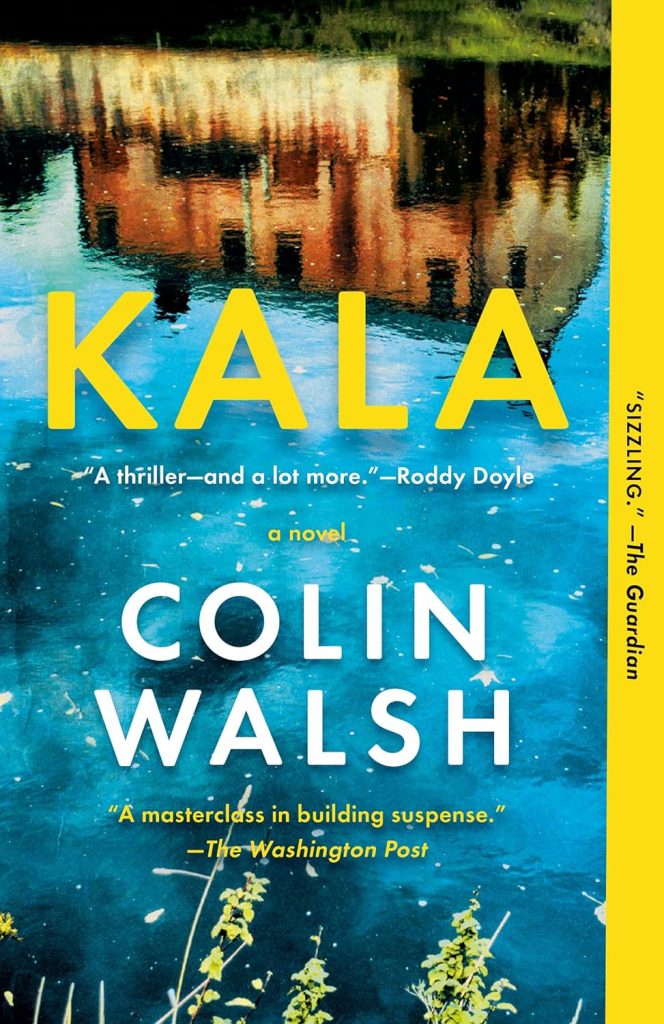
Kala: A Novel

Read: June 2024

Get this book

Kala: A Novel

by Colin Walsh

Today, I started reading “Kala: A Novel” by Colin Walsh, a gripping literary page-turner from a rising Irish talent. Former friends, estranged for twenty years, reckon with the terrifying events of the summer that changed their lives. Three old friends are reunited in the seaside town of Kinlough, on Ireland’s west coast, for the first time in years.

Helen, Joe, and Mush were part of an original group of six inseparable teenagers in the summer of 2003, with motherless, reckless Kala Lanann as their group’s white-hot center. Soon after that summer’s peak, Kala disappeared without a trace.

Now it’s fifteen years later:

  • Helen has reluctantly returned to Ireland for her father’s wedding.
  • Joe is a world-famous musician who is newly back in town.
  • Mush has never left, too scared to venture beyond the counter of his mother’s café.

But human remains are discovered in the woods. Two more girls have gone missing. As past and present begin to collide, the estranged friends are forced to confront their involvement in the events that led to Kala’s disappearance.

Against the backdrop of a town suffocating on its secrets, in a story that builds from a smolder to a stunning climax, Kala brilliantly examines the sometimes brutal costs of belonging and the battle in the human heart between vengeance and forgiveness, despair and redemption.

×
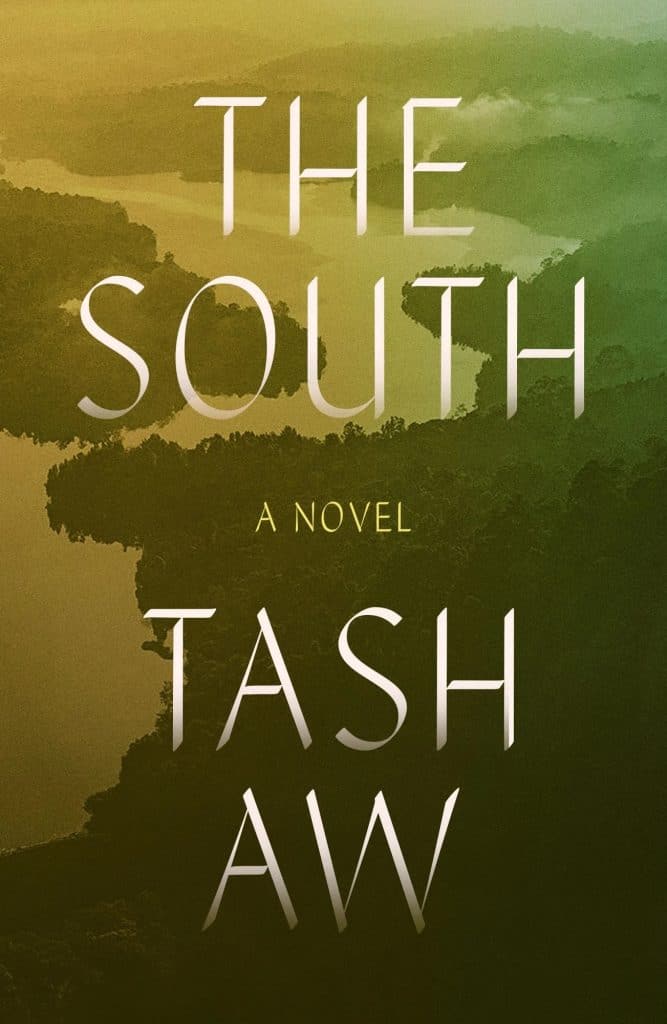
The South

Read: August 2025

Get this book

The South: A Novel

by Tash Aw

Tash Aw‘s novel, The South, longlisted for the 2025 Booker Prize, is both expansive and concise, capturing the dynamics of a family navigating change and desire. It explores the intersection of public and private lives with remarkable grace and beauty. This intimate and radiant story follows the deepening relationship between two boys throughout a summer, delving into themes of family, desire, and the legacies we inherit.

When his grandfather passes away, Jay travels south with his family to the property they have inherited—a once-thriving farm that has now fallen into disrepair. The trees are diseased, and the fields have been dry due to months of drought.

Jay’s father, Jack, sends him out to work the land, or what remains of it. During these hot, oppressive days, Jay finds himself increasingly drawn to Chuan, the son of the farm’s manager. The boys are different in almost every way, except for one crucial connection.

As they work in the fields and venture into town, the tension between the boys intensifies. Meanwhile, within the house, the other family members begin to confront their secrets and regrets. Jack, a professor at a struggling local college, reflects on his failures, many of which may have started when he married his student, Sui Ching. Sui Ching strives to keep the family together, though she, too, contemplates what her life could have been. Fong, the farm manager, chooses to ignore the reality of the situation—about Chuan, the deteriorating land, and the global forces that threaten to render their entire way of life obsolete.


Tash Aw is the author of four novels, including We, the Survivors, as well as a memoir about a Chinese-Malaysian family titled Strangers on a Pier. These remarkable works earned their place as finalists for the Los Angeles Times Book Prize, showcasing the incredible talent behind them!

The author has also been honored with several esteemed awards, including the Whitbread, Commonwealth, and O. Henry Awards. Plus, being longlisted for the MAN Booker Prize twice speaks volumes about his skill. It’s exciting to see his fiction translated into 23 languages, sharing his stories with the world!


When you purchase a book through one of my links, I earn a small commission that helps support my passion for reading. This contribution allows me to buy even more books to share with you, creating an incredible cycle of discovering great reads together! Your support truly makes a difference!

Enjoy a limited-time offer of 20% off your next book purchase at Bookshop.org!


×
Cloud Atlas: A Novel

Read: September 2024

Get this book

Cloud Atlas: A Novel

by David Mitchell

Today, I started reading Cloud Atlas: A Novel by David Mitchell, one of The New York Times’ 100 Best Books of the 21st Century. Cloud Atlas begins in 1850 with Adam Ewing, an American notary, voyaging from the Chatham Isles to his home in California. Ewing is befriended by a physician, Dr. Goose, who begins treating him for a rare species of brain parasite.

The novel careens, with dazzling virtuosity, to Belgium in 1931, the West Coast in the 1970s, an inglorious present-day England, a Korean superstate of the near future where neo-capitalism has run amok, and, finally, a postapocalyptic Iron Age Hawaii in the last days of history. But the story doesn’t end even there. What sets Cloud Atlas apart is its unique narrative structure, which boomerangs back through centuries and space, returning by the same route, in reverse, to its starting point. This journey reveals how the disparate characters connect, how their fates intertwine, and how their souls drift across time like clouds across the sky.

As wild as a video game, as mysterious as a Zen koan, Cloud Atlas is an unforgettable tour de force that, like its incomparable author, has transcended its cult classic status to become a worldwide phenomenon. The novel’s diverse settings and cultures, from 1850 Chatham Isles to a postapocalyptic Iron Age Hawaii, appeal to readers across the globe, offering a rich and varied reading experience.

×
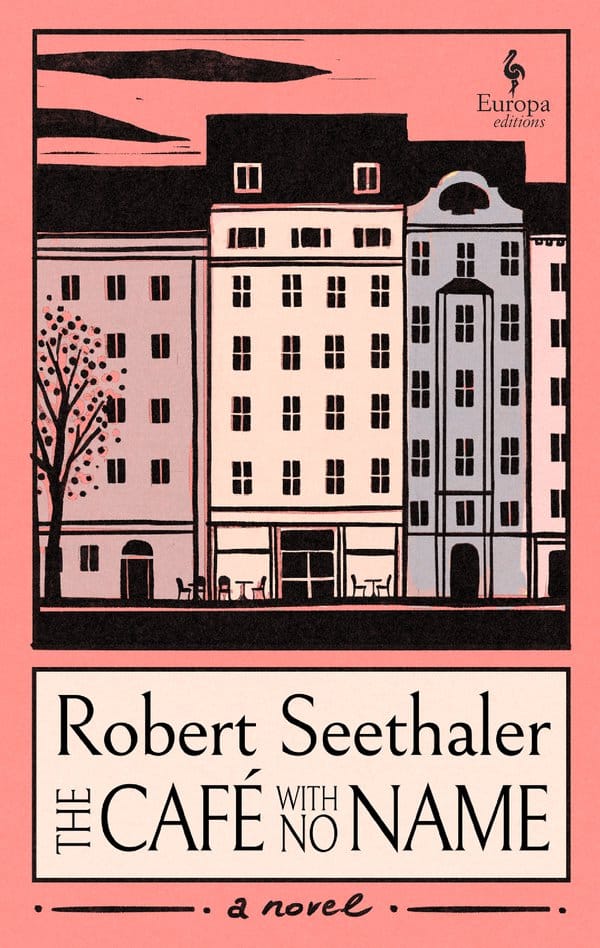
The Café with No Name

Read: May 2025

Get this book

The Café with No Name

by Robert Seethaler

Today, I started reading The Café with No Name by Robert Seethaler, translated by Katy Derbyshire. It’s a vibrant story of love, companionship, and renewal in 1960s Vienna. With warm prose and tender humor, Seethaler has created a delightful parable about human existence, brought to life by unforgettable characters and a rich tapestry of narratives.

In the summer of 1966, Robert Simon was in his early thirties and had a dream. Raised in a home for war orphans, he has grown into a warm-hearted, hard-working, and determined man. When the former owners of the corner café in Carmelite Market Square close the business, Robert sees an opportunity to realize his dream.

The café, dark and dilapidated, is located in an impoverished neighborhood of the Austrian capital. However, a new energy is beginning to fill the air, signaling a desire for renewal. In the newspapers that fishmongers use to wrap char and trout from the Danube, one can read about the great things to come, heralding a bright future emerging from the shadows of the past.

Inspired by this optimism, Robert refurbishes the café. His efforts pay off as customers arrive, drawn to a congenial space where they can gather, talk, read, or sit and reflect. Each visitor brings their passion, friendship, loss, and heartache stories. Some search for companionship, while others long for love or a place to feel understood. As the city transforms, Robert’s café becomes a haven—a refuge from which to observe life, mourn, and rejoice.


Robert Seethaler was born in Vienna in 1966 and is the author of eight novels. In 2017, he was a finalist for the Man Booker International Prize with A Whole Life (FSG, 2016). He also works as an actor, most recently in Paolo Sorrentino’s Youth. He lives in Berlin.

Katy Derbyshire translates contemporary German writers, including Christa Wolf, Heike Geissler, and Olga Grjasnowa. Her translation of Clemens Meyer‘s While We Were Dreaming was longlisted for the 2023 International Booker Prize. She was born in London and has been based in Berlin for over twenty years.


When you purchase a book through one of my links, I earn a small commission that helps support my passion for reading. This contribution allows me to buy even more books to share with you, creating an incredible cycle of discovering great reads together! Your support truly makes a difference!

Enjoy a limited-time offer of 20% off your next book purchase at Bookshop.org!


×
The Singing Word

Read: September 2025

Get this book

The Singing Word

by Walt Hunter

The Singing Word: 168 Years of Atlantic Poetry, edited by Walt Hunter, celebrates the people, land, and spirit of America. This remarkable collection showcases a wide range of contemporary and historical poetry from the 168-year archive of The Atlantic magazine. Since its first issue in 1857, the poetry published in The Atlantic has drawn attention to the nation’s ongoing journey of self-discovery.

The magazine’s verse has featured odes to American leaders and landscapes, laments for the dead, and calls for change, appealing to the enduring ideals of Atlantic readers.

This one-of-a-kind collection selects poems of rousing optimism, clear-eyed realism, and moving lyricism—poems infused with the language of America’s songs, myths, and history, from the Civil War up through the present in three rich parts: National Anthems, Natural Lines, and Personal Mythologies.

Curated by The Atlantic’s Poetry Editor, this anthology features both world-famous poets—from Longfellow to Limón, including Robert Frost, W. S. Merwin, Sylvia Plath, and Adrienne Rich—as well as poets whose work has never before been published outside of the magazine.

Offering readers an essential understanding of American canon and the evolving nation, its poets have yearned to capture—the poetry of The Atlantic is the poetry of America.


Walt Hunter is a professor of twentieth- and twenty-first-century literature and chair of the English department at Case Western Reserve University. He is also the fiction and poetry editor for The Atlantic.


Discover your next favorite book and dive into a world of curated, exciting reads by purchasing through my links. You’ll have access to a diverse selection of books that I’ve personally vetted to ensure quality and enjoyment. Additionally, by supporting these selections, you’ll help me continue to provide you with more personalized recommendations. I earn a small commission from your purchase, which allows me to buy and share even more books with you. Your support truly makes a difference!


×