Richard W. Brown

Stream of Consciousness!

My random thoughts on Jan, love, grief, life, and all things considered.

1239 Posts Likes
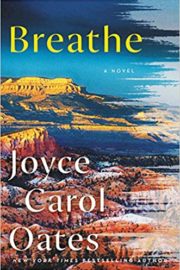
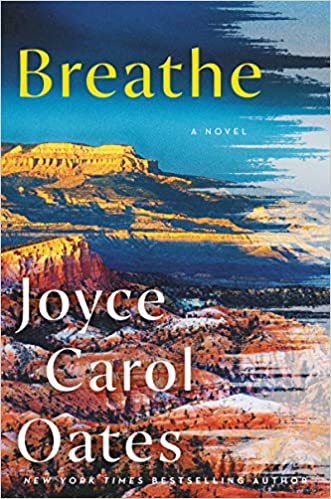
Breathe

Breathe

Reading Breathe by Joyce Carol Oates was a book I knew I needed to read once Jan was diagnosed. Despite the possibility that the book would trigger negative memories, I finally read Breathe. It was what I needed to read at this point in my journey. Ms. Oates wrote the book in 2019 after her husband, Charlie Gross, died. The novel is a story of love, loss, and loneliness. These are topics that I write about on this blog.

Read book review Get this book All books

Jan and Richard Walking

Walking With Jan!

I walk long distances alone, but I genuinely miss my walks with Jan. On the day we met, we walked several miles to acquaint ourselves with the person we loved.

Today, I remember the short, slow walks to Temple for the High Holidays and the lesson from the Baal Shem Tov that we read every year.

Your fellow human being is a mirror for you. If there is love and compassion in your soul, you will see the goodness in others.

I am and always will be surrouned by Jan’s love, compassion, and goodness every day of my life.

Subscribe

Contact Us

Yom Kippur

Fasting Alone

Tonight begins Yom Kippur. When Jan was alive, she often would tell me I shouldn’t fast as I was not born Jewish. However, I had fasted before I met her for various causes. Would she be surprised that I attend services every Friday night and during the High Holidays?

I have committed to attending every Friday night service for the first year since her death, as Judaism is now my faith.

Both faith and rituals are important to me, and they help me on my journey of love as I sail from the Island of Grief back to the Community of Love.

Subscribe

Contact Us

Fast Eating

Fast Eating

Recently, I have noticed that I devour my meals, even though I have never been a fan of fast food. I miss having my dear companion, Jan, by my side during mealtimes.

I rushed through my meals and cleaned up more efficiently without Jan. Unfortunately, I am left with nothing but the lonely hours of the night as my companion.

Eating alone makes me feel rushed and unfulfilled, as if I am trying to finish my meal as quickly as possible without taking the time to savor it.. Despite being able to care for myself, eating alone makes me uneasy.


The Jan Lilien Education Fund sponsors ongoing sustainability and environmental awareness programs. Gifts made this month; I will match dollar-for-dollar. All donations are tax-deductible.

Subscribe

Contact Us

I receive a commission when you buy a book or product using a link on this page. Thank you for supporting Sharing Jan’s Love blog.


Flowers for Jan

Visiting the Cemetery

Yesterday, I went to the cemetery for the High Holidays, the first time I did the visit without Jan. In the past, I could hold her hand, hug her when her body language indicated she needed one, and give her a kiss when we were leaving.

The High Holidays have helped me to think more clearly, and having cast out my sins that I may or may not have committed against the love of my life allowed for a franker discussion.

Love never dies!

Subscribe

Contact Us

The Jan Lilien Education Fund!

Breathe

Read: September 2021

Get this book

Breathe

by Joyce Carol Oates

Celebrate JanReading Breathe by Joyce Carol Oates was a book I knew I needed to read once Jan was diagnosed. Although the book might trigger negative memories, I finally read Breathe. It was what I needed to read at this point in my journey.

Ms. Oates wrote the book in 2019 after her husband, Charlie Gross, died. The novel is a story of love, loss, and loneliness, topics that I write about on this blog. I needed to read the book both for my mental health and for the readers of Sharing Jan’s Love.

The protagonist, Michaela, loses her husband while they are on a sabbatical in New Mexico. Her husband, Gerard, writes a book and teaches a class on memories. Jan and I never considered relocating before her illness, but this book convinced me that it would have aggravated my grief journey.

One of the parallels I observed while reading the novel is the similarity between Gerard’s reluctance to let family, friends, and co-workers know of his illness. Jan shared that reluctance in the early days, but I convinced her that the only chance of beating cancer was with the help of family and friends.

This dialogue could easily be one that Jan and I had.

Of course you want to summon his family—his (adult) children—but quickly, he says no.

Still waiting.

But – When?

Just not yet.

He is not an alarmist. (You are the alarmist.)

The novel is written in two parts – The Vigil and the Post-Mortem.

The opening paragraphs set the tone.

A Hand is gripping yours. Warm, dry hand gripping your slippery, humid hand.

Whoever it is urging you – Breathe!

Leaning over you begging you – Breathe!

As one mourning the death of the love of his life, I found several phrases in the book helpful in understanding what I have gone through and will continue to confront.

Among them is grief-vise, which I have written about in this stream.

In the grip of the grief vise, all that you will do, all that you even imagine doing, will require many times more effort.. Hardly daring to breathe for the grief-vise will tighten around your chest, squeezing the very air out of your lungs.

In the early stages of grief, the vise was strangling me. Breathing was impossible, and weeping was constant at times.

Michaela struggles with her grief. Seeing her husband every time she sees a man alone, even if they are older or younger than he was. I know I have felt Jan’s presence and still expect her to walk into our apartment.

Her struggles with a grief counselor and overly helpful friends are an experience I have not had but are familiar to those suffering from losing a loved one.

The last chapters are ones in which time becomes confusing and chaotic. At times, I was uncertain about which were real or imagined. The end, like all good novels, was ambiguous.

These are some of the other phrases I have found useful and will include in posts.

  • If there is no one to love, do we merit existence?
  • Never come to the end of kissing.
  • The first principle of life is; Breathe.
  • Shy in the language of intimacy.
  • As if a life lived with strangers could compensate for the emptiness in your heart.
  • No purpose in your life. No compass.

What you love most, that you will lose. The price of your love is your loss.

I recommend this book to all readers, even those struggling with grief.

Subscribe

Contact Us

When you buy a book or product using a link on this page, I receive a commission. Thank you for supporting Sharing Jan’s Love blog.

×
Jan and Richard Walking
×
Yom Kippur
×
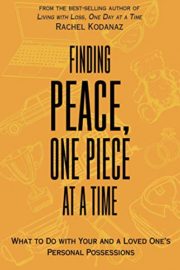
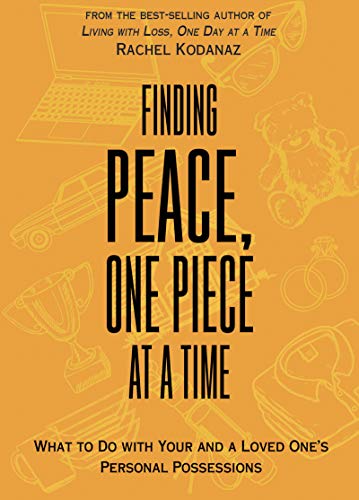
Finding Peace, One Piece at a Time

Read: September 2021

Get this book

Finding Peace, One Piece at a Time

by Rachel Blythe Kodanaz

Finding Peace, One Piece at a Time by Rachel Blythe Kodanaz is a book I wish I had long before Jan died. It provides helpful information on maintaining an organized lifestyle and handling a loved one’s possessions.

Having lost almost everything I had except for the clothes on my back after a house fire in 1972, I thought I had adopted a view that possessions were not significant. With Jan’s death, the truth is that she and I had collected essential possessions, and now it was my responsibility to decide what to do with them.

Rachel’s book is a practical guide, offering a comprehensive understanding of the significance of possessions and a step-by-step plan to manage them. Chapter 3, in particular, is a treasure trove of practical advice, focusing on Building Your Game Plan: The Ten Essentials and covering all the crucial topics – triggers, building a team, and creating a timeline, among others.

Magic of the Six Piles is a well-designed plan that will help most of us confront the possessions of our loved ones. The piles are:

  1. Keep
  2. Share
  3. Donate
  4. Sell
  5. Dispose
  6. Ponder

Having absorbed the book’s wisdom, I am ready to transition from contemplation to action. This is how I sort my wife’s possessions into six piles. I am optimistic that it will also help me streamline my possessions, making books my trusted company more accessible for my sons.

Ms. Kodanaz has presented at my bereavement groups and has been an inspiration. She has also encouraged me to write about my love for Jan in a journal.

Subscribe

Contact Us

×
Fast Eating
×
Flowers for Jan
×
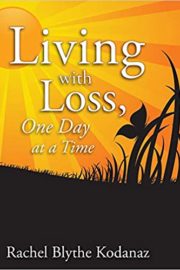
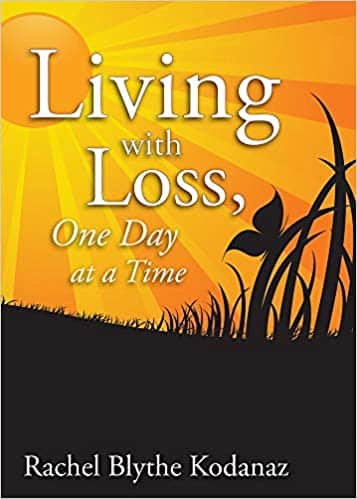
Living With Loss, One Day at a Time

Read: September 2021

Get this book

Living With Loss, One Day at a Time

by Rachel Blythe Kodanaz

Living With Loss, One Day at a Time by Rachel Blythe Kodanaz is the book I would recommend for anyone beginning or in the early stages of grief. It should be on the griever’s nightstand so they can start and end their day with reading.

Ms. Kodanaz has presented at my bereavement groups and has been an inspiration. She encouraged me not only to continue writing but also to share my thoughts publicly.

Usually, I only write a review once I have finished the book. However, this is a collection of thoughts for each day of the journey. Over the first weekend, I read up to the number of days since my wife died. Now I will read the daily message each day. When I get to the end of the year, I will start over.

There are many essential gems in the daily readings. The one for Day 9, Love Never Dies, jumped off the page due to my writings on the same theme.

Love Never Dies. Your loved one has passed away, but the love you shared has not died. The memories you created, the connection you built together, and your affection toward one another will live forever.

Embrace the love and cherish the memories, as they will always be a part of you remain in your heart.

There are at least a dozen others that I have earmarked for future streams or even the basis of future posts.

Subscribe

Contact Us

×
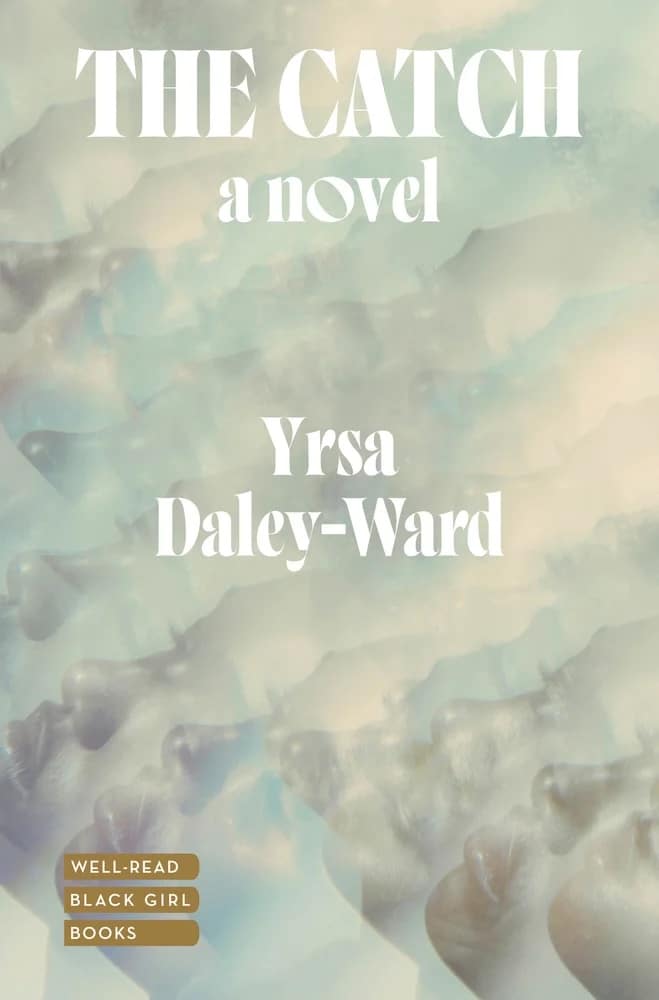
The Catch

Read: June 2025

Get this book

The Catch: A Novel

by Yrsa Daley-Ward

In “The Catch,” her captivating debut novel, Yrsa Daley-Ward creates a vibrant multiverse that delves into the complexities of daughterhood and mother-want. She explores the sacrifices women often make in their pursuit of self-actualization. The result is a remarkable novel that boldly poses the question: “How can it ever be a crime to choose yourself?”

Twin sisters Clara and Dempsey have always struggled to connect, their familial bond severed after their mother vanished into the Thames. As infants, they were adopted by different families: Clara went to live with a successful, upper-class couple, while a distant and unaffectionate city councilor took in Dempsey. As adults, the sisters have settled into a comfortable estrangement until Clara spots a woman on the streets of London who looks exactly like their mother. The twist? This version of Serene appears ageless and has lived a childless life — the very life she might have had if the girls had never been born.

As with most things, Clara and Dempsey cannot agree on the strange appearance of this woman. Clara, a celebrity author with a penchant for excessive drinking and one-night stands, is eager to welcome the confident and temperamental Serene into her home. In contrast, reclusive Dempsey, who makes a modest living doing menial data entry work from her apartment, is suspicious of the entire situation, believing it to be a cunning scheme by a con woman.

As the sisters clash over this stranger who increasingly intrudes into their lives, they hurtle toward a confrontation that threatens their very existence, ultimately forcing them to face their shared past together.


Yrsa Daley-Ward is a poet, writer, and actress. She is the author of The How, bone, and The Terrible, for which she won the PEN Ackerley Prize. She lives in Los Angeles.


When you purchase a book through one of my links, I earn a small commission that helps support my passion for reading. This contribution allows me to buy even more books to share with you, creating an incredible cycle of discovering great reads together! Your support truly makes a difference!

Enjoy a limited-time offer of 20% off your next book purchase at Bookshop.org!


×
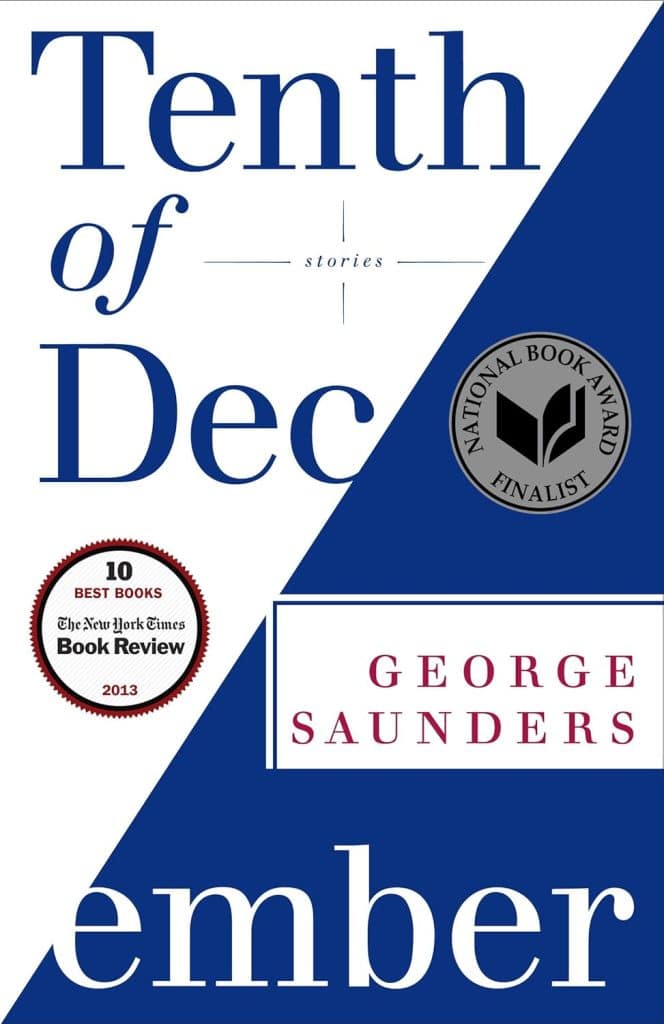
Tenth of December: Stories

Read: July 2024

Get this book

Tenth of December: Stories

by George Saunders

One of the most important and blazingly original writers of his generation, George Saunders, is an undisputed master of the short story. The Tenth of December is his most honest, accessible, and moving collection yet. It is one of the New York Times’ 100 Best Books of the Century. The book is structured as a collection of short stories, each offering a unique and compelling narrative.

In the taut opener, “Victory Lap,” a boy witnesses the attempted abduction of the girl next door and is faced with a harrowing choice: Does he ignore what he sees or override years of smothering advice from his parents and act?

In “Home,” a combat-damaged soldier moves back in with his mother and struggles to reconcile the world he left behind with the one he has returned to.

In the title story, a stunning meditation on imagination, memory, and loss, a middle-aged cancer patient walks into the woods to commit suicide, only to encounter a troubled young boy who, throughout a fateful morning, gives the dying man a final chance to recall who he is.

An unfortunate, deluded owner of an antique store; two mothers struggling to do the right thing; a teenage girl whose idealism is challenged by a brutal brush with reality; a man tormented by a series of pharmaceutical experiments that force him to lust, to love, to kill—the unforgettable characters that populate the pages of Tenth of December are vividly and lovingly infused with Saunders’s signature blend of exuberant prose, deep humanity, and stylistic innovation.

Writing brilliantly and profoundly about class, sex, love, loss, work, despair, and war, Saunders cuts to the core of the contemporary experience. These stories take on the big questions and explore the fault lines of our morality, delving into what makes us suitable and what makes us human. They are not just stories but profound explorations that will stimulate your intellect and make you ponder.

Unsettling, insightful, and hilarious, the stories in Tenth of December—through their manic energy, their focus on what is redeemable in human beings, and their generosity of spirit—not only entertain and delight but also fulfill Chekhov’s dictum that art should “prepare us for tenderness.” The humor in these stories will keep you entertained and laughing, even as they delve into profound themes.


George Saunders is the author of thirteen books, including the novel Lincoln in the Bardo, which won the Booker Prize, and five collections of stories, including Tenth of December, which was a finalist for the National Book Award, and the recent collection Liberation Day (selected by former President Obama as one of his ten favorite books of 2022).

Three of Saunders’s books—Pastoralia, Tenth of December, and Lincoln in the Bardo—were chosen for The New York Times’s list of the 100 Best Books of the 21st Century. Saunders hosts the popular Story Club on Substack, which grew out of his book, A Swim in a Pond in the Rain. In 2013, he was named one of Time’s 100 Most Influential People. He teaches in the creative writing program at Syracuse University.


When you purchase a book through one of my links, I earn a small commission that helps support my passion for reading. This contribution allows me to buy even more books to share with you, creating an incredible cycle of discovering great reads together! Your support truly makes a difference!


×
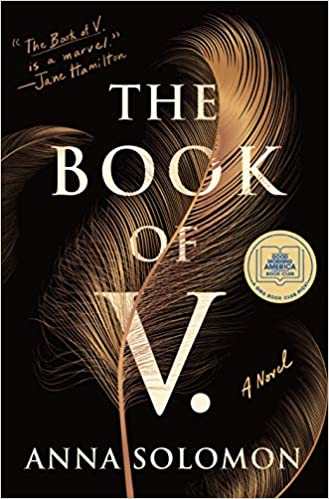
The Book of V

Read: October 2021

Get this book

The Book of V

by Anna Solomon

The Book of V by Anna Solomon is a book that I may not have read at another time in my life, and I did find it to be a book that I could not stop reading.

Goodreads summarizes its plot.

Anna Solomon’s kaleidoscopic novel intertwines the lives of a Brooklyn mother in 2016, a senator’s wife in 1970s Washington, D.C., and the Bible’s Queen Esther, whose stories of sex, power and desire overlap and ultimately converge—showing how women’s roles have and have not changed over thousands of years.

Being Jewish, I knew the story of Queen Esther, although this version added new layers of the story that I did not know. The book’s illumination that women’s roles have not changed over thousands of years was something I knew but did not fully understand.

The three characters are very vivid and weave a story that is worth reading.

Lily is a mother and a daughter. And a second wife. And a writer, maybe? Or she was going to be, before she had children. Now, in her rented Brooklyn apartment, she’s grappling with her sexual and intellectual desires while also trying to manage her roles as a mother and a wife.

Vivian Barr seems to be the perfect political wife, dedicated to helping her charismatic and ambitious husband find success in Watergate-era Washington D.C. But one night he demands a humiliating favor, and her refusal to obey changes the course of her life—along with the lives of others.

Esther is a fiercely independent young woman in ancient Persia, where she and her uncle’s tribe live a tenuous existence outside the palace walls. When an innocent mistake results in devastating consequences for her people, she is offered up as a sacrifice to please the king, in the hopes that she will save them all.

I recommend this book.

Subscribe

Contact Us

×
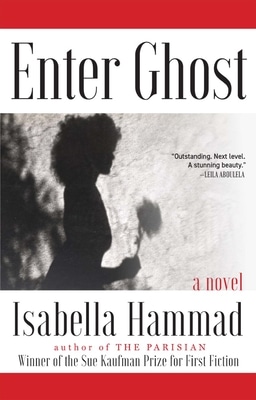
Enter Ghost

Read: May 2023

Enter Ghost: A Novel

by Isabella Hammad

Isabella Hammad‘s highly anticipated novel, Enter Ghost, takes readers on a unique journey through modern-day Palestine, exploring themes of displacement, diaspora, and the unbreakable bonds of family and shared resistance. Hammad’s passionate and thoughtful writing brings to life a timely and unforgettable story, shedding light on the struggles of artistry under occupation.

The novel follows Sonia Nasir, an actress who returns to Haifa after years away from her family’s homeland to visit her sister, Haneen. However, this is no ordinary trip for Sonia, as it marks her first visit since the second intifada and the deaths of her grandparents. Still recovering from a disastrous love affair and a dissolute marriage, Sonia finds her relationship with Palestine to be fragile, both bone-deep and new.

As opening night approaches, a troupe of Palestinian actors faces numerous violent obstacles. Sonia meets Mariam, a local director who ropes her into a production of Hamlet on the West Bank. She rehearses Gertrude’s lines in classical Arabic and spends more time in Ramallah than in Haifa, working alongside a group of dedicated men from all over historic Palestine. Despite their competing egos and priorities, each group member is united in their desire to bring Shakespeare to that side of the wall. Amidst it all, Sonia has the daunting yet exhilarating possibility of finding a new self in her ancestral home.


The Jan Lilien Education Fund sponsors ongoing sustainability and environmental awareness programs. Gifts made this month; I will match dollar-for-dollar. All donations are tax-deductible.

Subscribe

Contact Us

I receive a commission when you buy a book or product using a link on this page. Thank you for supporting Sharing Jan’s Love blog.


×
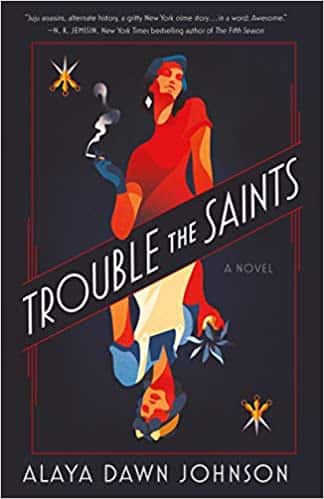
Trouble the Saints

Read: January 2022

Get this book

Trouble the Saints

by Alaya Dawn Johnson

Trouble the Saints by Alaya Dawn Johnson is one of NPR’s Books We Love from 2020. The dangerous magic of The Night Circus meets the powerful historical exploration of The Underground Railroad in this timely and unsettling novel, set against the darkly glamorous backdrop of New York City at the dawn of WWII. Amidst the whir of city life, a girl from Harlem is drawn into the glittering underworld of Manhattan, where she’s hired to use her knives to strike fear amongst its most dangerous denizens.

The book is written in three sections with different protagonists and voices. Phyllis, or Pea as her friends call her, is a black assassin for a white mob boss narrates the first section of the book. Her saint’s hands are the ability to use knives to commit murder. She can also pass as white as Phyllis, but she is a black woman from Harlem as Pea. The section she narrates is difficult at first to follow as she attempts to deal with the consequences of her actions. Can the past ever be the past?

Dev, Indian and Phyllis’s lover, narrates the second section. He is an undercover cop who protects her and helps her free herself from the mob boss. This section is located in the Hudson Valley and highlights the tensions before the war between whites and non-whites.

The third protagonist, Tamara, narrates this section. The war separates Phyllis and Dev. Phyllis is pregnant, and Dev and Tamara’s love interest are serving in the military. This section brings together the threads and reminds us that the past is never the past.

As Goodreads summarizes the book,

But the ghosts from her past are always by her side—and history has appeared on her doorstep to threaten the people she loves most.

Can one woman ever sacrifice enough to save an entire community?

Trouble the Saints is a dazzling, daring novel—a magical love story, a compelling chronicle of interracial tension, and an altogether brilliant and deeply American saga.

I recommend this book and encourage all readers to read it to the end.

Subscribe

Contact Us

When you buy a book or product using a link on this page, I receive a commission. Thank you for supporting Sharing Jan’s Love blog.

×
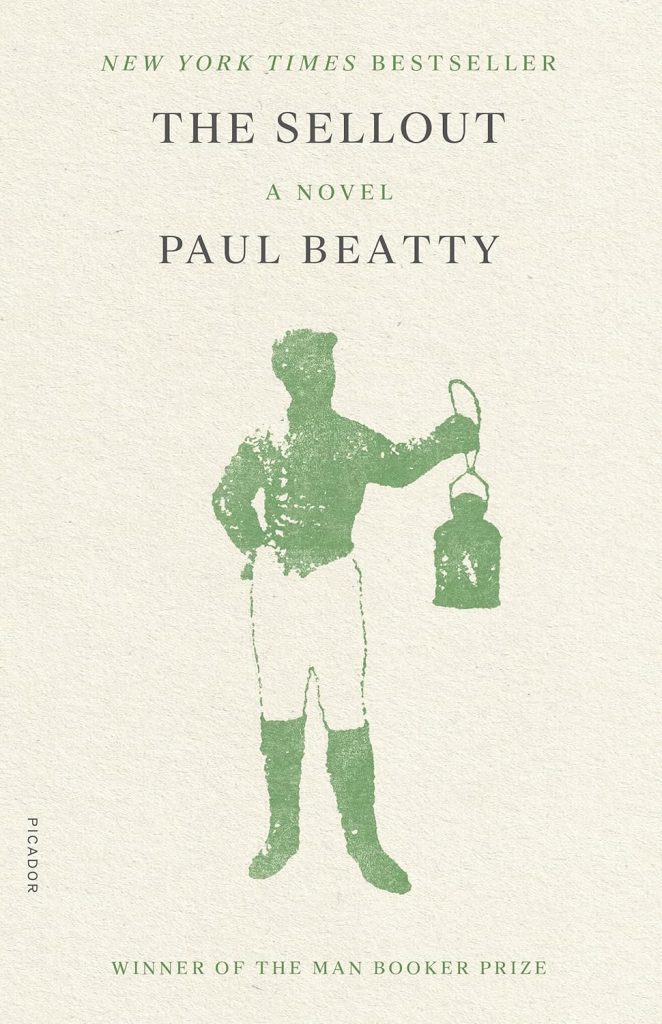
The Sellout: A Novel

Read: August 2024

Get this book

The Sellout: A Novel

by Paul Beatty

Today, I embarked on the unique narrative journey of The Sellout: A Novel by Paul Beatty. This biting satire, which revolves around a young man’s isolated upbringing and the race trial that takes him to the Supreme Court, is a testament to Paul Beatty‘s comic genius. The Sellout, a part of The New York Times’ 100 Best Books of the Century, is a must-read for those who appreciate a distinct narrative style.

The Sellout is a bold and thought-provoking work that challenges the sacred tenets of the United States Constitution, urban life, and the civil rights movement. It also explores the father-son relationship and the pursuit of racial equality, symbolized by the black Chinese restaurant. This social commentary is a vital aspect of The Sellout, making it a relevant and engaging read for those interested in contemporary issues.

Born in the “agrarian ghetto” of Dickens—on the southern outskirts of Los Angeles—the narrator of The Sellout resigns himself to the fate of lower-middle-class Californians: “I’d die in the same bedroom I’d grown up in, looking up at the cracks in the stucco ceiling that’s been there since ’68 quake.”

Raised by a single father, a controversial sociologist, he spent his childhood as the subject of racially charged psychological studies. Despite these challenges, he believes his father’s pioneering work will result in a memoir that will solve his family’s financial woes. But when his father is killed in a police shoot-out, he realizes there never was a memoir. All that’s left is the bill for a drive-thru funeral.

Fuelled by this deceit and the general disrepair of his hometown, the narrator sets out to right another wrong: Dickens has been removed from the map to save California from further embarrassment. Enlisting the help of the town’s most famous resident—the last surviving Little Rascal, Hominy Jenkins—he initiates the most outrageous action conceivable: reinstating slavery and segregating the local high school, which lands him in the Supreme Court. His determination to fight injustice is a powerful force that drives the narrative forward.

×