
What Kind of Paradise: A Novel

Estimated reading time: 2 minutes, 11 seconds

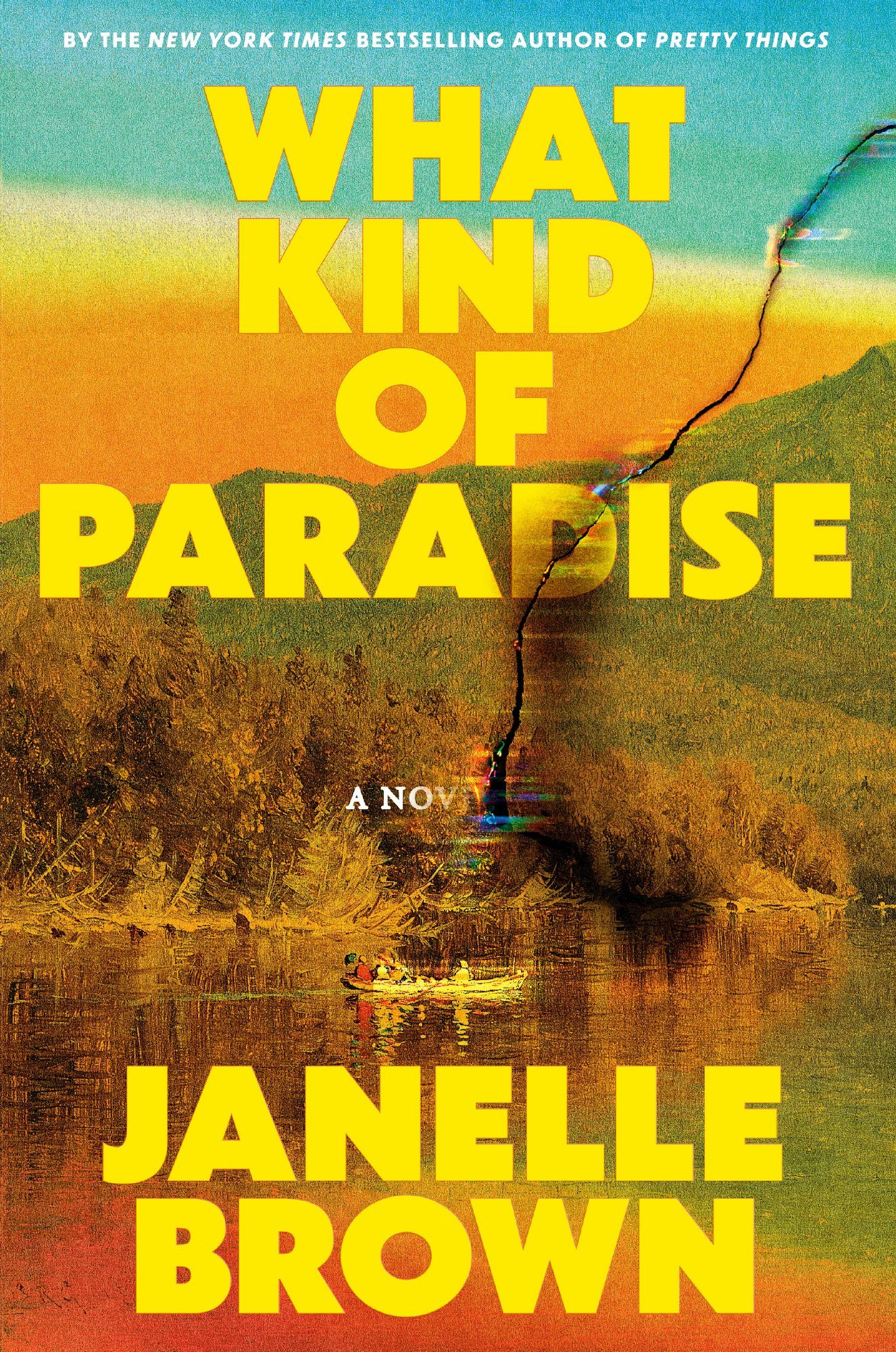
What Kind of Paradise is a captivating and suspenseful novel by bestselling author Janelle Brown. It follows a young woman on her quest to understand self-identity. The story boldly explores complex themes, including the relationships between parents and children, the balance between nature and technology, the tension between innocence and knowledge, the losses we experience in our past, and our aspirations for the future.

This unforgettable narrative delves into what shapes us as individuals. The first thing you have to understand is that my father was my entire world, says Jane, the narrator.

Growing up in an isolated cabin in Montana in the mid-1990s, Jane knows only the world that she and her father live in: the woodstove that heats their home, the vegetable garden where they try to eke out a subsistence, the books of nineteenth-century philosophy that her father gives her to read instead of going to school. Her father is elusive about their pasts, giving Jane little beyond the fact that they once lived in the Bay Area and that her mother died in a car accident, the crash propelling him to move Jane off the grid to raise her in a Walden-esque utopia.

As Jane becomes a teenager, she begins to push against the boundaries of her restricted world. She begs to accompany her father on his occasional trips away from the cabin. But when Jane realizes that her devotion to her father has made her an accomplice to a horrific crime, she flees Montana to the only place she knows to look for answers about her mysterious past and her mother’s death: San Francisco. It is a city amid a seismic change, where her quest to understand herself will force her to reckon with both the possibilities and the perils of the fledgling internet, and where she will come to question everything she values.


Janelle Brown is the New York Times bestselling author of I’ll Be You, Pretty Things, Watch Me Disappear, All We Ever Wanted Was Everything, and This Is Where We Live. An essayist and journalist, she has written for Vogue, The New York Times, Elle, Wired, Self, Los Angeles Times, Salon, and more. She lives in Los Angeles with her husband and their two children.


When you purchase a book through one of my links, I earn a small commission that helps support my passion for reading. This contribution allows me to buy even more books to share with you, creating an incredible cycle of discovering great reads together! Your support truly makes a difference!

Enjoy a limited-time offer of 20% off your next book purchase at Bookshop.org!


The Jan Lilien Education Fund!

How the Word is Passed

Read: December 2021

Get this book

How the Word Is Passed: A Reckoning with the History of Slavery Across America

by Clint Smith

How the Word Is Passed: A Reckoning with the History of Slavery Across America by Clint Smith. This book was a gift from my son Jon. The New York Times selected How the Word is Passed as one of the best books published this year. Beginning in his hometown of New Orleans, Clint Smith leads the reader on an unforgettable tour of monuments and landmarks—those that are honest about the past and those that are not—that offer an intergenerational story of how slavery has been central in shaping our nation’s collective history, and ourselves.

How the Word is Passed is one of the best books I have read in 2021. I had read an excerpt in The Atlantic on the Whitney Plantation, one of the only former plantations devoted to preserving the experience of the enslaved people whose lives and work sustained it. Like most of us, I had placed the book on my to-read list, where it remained lost in the cobwebs. Fortunately, my son Jon purchased the book for me.

Secondly, the book rekindled my long-lost dream of being an American Studies professor. As soon as Jan and I met, I dropped plans to leave Brooklyn and start graduate school in the fall of 1974. I made that decision primarily because of how much I loved Jan. But it was also partly that I did not have a clear vision of what my life would be like as a professor. The book provided clear examples of people like Yvonne Holden at The Whitney Plantation redefining history to be more accurate and inclusive. I probably could not have done as well as she did, but I can now see that it might have resulted in a career for me that could have been impactful.

Goodreads provides this overview for those who still need to be convinced to read this book.

It is the story of the Monticello Plantation in Virginia, the estate where Thomas Jefferson wrote letters espousing the urgent need for liberty while enslaving over 400 people on the premises. It is the story of the Whitney Plantation, one of the only former plantations devoted to preserving the experience of the enslaved people whose lives and work sustained it. It is the story of Angola Prison in Louisiana, a former plantation named for the country from which most of its enslaved people arrived and which has since become one of the most gruesome maximum-security prisons in the world. And it is the story of Blandford Cemetery, the final resting place of tens of thousands of Confederate soldiers.

In a deeply researched and transporting exploration of the legacy of slavery and its imprint on centuries of American history, How the Word Is Passed illustrates how some of our country’s most essential stories are hidden in plain view-whether in places we might drive by on our way to work, holidays such as Juneteenth, or entire neighborhoods—like downtown Manhattan—on which the brutal history of the trade in enslaved men, women and children has been deeply imprinted.

Informed by scholarship and brought alive by the story of people living today, Clint Smith’s debut work of nonfiction is a landmark work of reflection and insight that offers a new understanding of the hopeful role that memory and history can play in understanding our country.

How the Word is Passed is one of the best books I have read this year and many prior ones. I encourage you to read it and share your comments.

Subscribe

Contact Us

When you buy a book or product using a link on this page, I receive a commission. Thank you for supporting Sharing Jan’s Love blog.

×
The Hidden Life of Trees

Read: August 2021

Get this book

The Hidden Life of Trees

by Peter Wohlleben

The Hidden Life of Trees: What They Feel, How They Communicate ― Discoveries from A Secret World is a book I have wanted but had not had the time to read. In July of this year, when I was still in the early stages of my recovery journey, I talked to a friend of my wife’s (whom I now count as my friend) about our plans to plant a tree in Hanson Park.

As I talked about our plans, my friend suggested I read this book as it would help me understand the importance of trees. I will forever be grateful for her recommendation, as it made me read this book sooner than later.

To read that trees have a social network with more prominent, healthier trees concerned about the smaller, weaker ones. How is it that humans, a supposedly advanced species, have a social network that divides and weakens our community?

Are trees social beings? In The Hidden Life of Trees forester and author Peter Wohlleben convincingly makes the case that, yes, the forest is a social network. He draws on groundbreaking scientific discoveries to describe how trees are like human families: tree parents live together with their children, communicate with them, support them as they grow, share nutrients with those who are sick or struggling, and even warn each other of impending dangers. Wohlleben also shares his deep love of woods and forests, explaining the amazing processes of life, death, and regeneration he has observed in his woodland.

Having read this book, I am more sensitive to trees and have enjoyed my walks more than ever. In addition, when we plant Jan’s tree in Hanson Park, I will now have even more reasons to talk about the importance of trees to Jan, myself, and the community.

Subscribe

Contact Us

×
Evergreen

Read: October 2022

Get this book

Evergreen by Kirsten Robinson

by Kirsten Robinson

Evergreen by Kirsten Robinson is a tribute to the enduring resilience of human nature as we cycle through times of light and darkness, much like nature itself. In her debut book, Kirsten Robinson (@NakedWriting) lays her heart bare in a raw, relatable, and inspirational way to describe the journey of growth born out of finding beauty in breakage and love after loss.

Albeit a cliche, the book jumped off the shelf and into my hands when I saw it in Hickory & Hill General Store in Cranford.

This artfully honest collection embodies and expands upon the poetry and prose Robinson began writing under the famous social media pseudonym Naked Writing.

I highly recommend this book and intend to keep it at my bedside for a pick-me-up.

Although I have only started reading the poems, I want to share two that resonated with me.

The first one is on giving thanks.

Give thanks for all
that is good and beautiful;
the gifts you carry
people who lift you up
your big, big love
faith and trust that your life
is unfolding as it should

Give thanks for all
that has been difficult and hard;
trials tribulations tears
tests of self strength fears
all of the unknowns and days
that broke you

Without the darkness
you would not have
learned to appreciate the light

A second one on bravery.

Bravery
is not about standing tall
after you’ve climbed up
the top of a mountain

Bravery
is looking
fear
heartache
rejection
terror
loss
death
in the eye
and saying, “no,
not today”

Bravery
is standing back up
after you’ve been brought down
to your knees


The Jan Lilien Education Fund sponsors ongoing sustainability and environmental awareness programs. Gifts made this month; I will match dollar-for-dollar. All donations are tax-deductible.

Subscribe

Contact Us

I receive a commission when you buy a book or product using a link on this page. Thank you for supporting Sharing Jan’s Love.

×
The Worst Hard Time

Read: September 2019

Get this book

The Worst Hard Time

by Timothy Egan

The Worst Hard Time: The Untold Story of Those Who Survived the Great American Dust Bowl by Timothy Egan was initially a book I selected from the e-library because nothing else I wanted to read was available. Once I started reading the book, I could not put it down.

Now that we have had the warmest summer since 1936 during the dust bowl, the book has even more meaning.

According to The New York Times,

The dust storms that terrorized the High Plains in the darkest years of the Depression were like nothing ever seen before or since. Timothy Egan’s critically acclaimed account rescues this iconic chapter of American history from the shadows in a tour de force of historical reportage. Following a dozen families and their communities through the rise and fall of the region, Egan tells of their desperate attempts to carry on through blinding black dust blizzards, crop failure, and the death of loved ones. Brilliantly capturing the terrifying drama of catastrophe, Egan does equal justice to the human characters who become his heroes, “the stoic, long-suffering men and women whose lives he opens up with urgency and respect.”

With the likelihood of more ecological catastrophes in the immediate future, this is a book I highly recommend.

Subscribe

Contact Us

×
Kala: A Novel

Read: June 2024

Get this book

Kala: A Novel

by Colin Walsh

Today, I started reading “Kala: A Novel” by Colin Walsh, a gripping literary page-turner from a rising Irish talent. Former friends, estranged for twenty years, reckon with the terrifying events of the summer that changed their lives. Three old friends are reunited in the seaside town of Kinlough, on Ireland’s west coast, for the first time in years.

Helen, Joe, and Mush were part of an original group of six inseparable teenagers in the summer of 2003, with motherless, reckless Kala Lanann as their group’s white-hot center. Soon after that summer’s peak, Kala disappeared without a trace.

Now it’s fifteen years later:

  • Helen has reluctantly returned to Ireland for her father’s wedding.
  • Joe is a world-famous musician who is newly back in town.
  • Mush has never left, too scared to venture beyond the counter of his mother’s café.

But human remains are discovered in the woods. Two more girls have gone missing. As past and present begin to collide, the estranged friends are forced to confront their involvement in the events that led to Kala’s disappearance.

Against the backdrop of a town suffocating on its secrets, in a story that builds from a smolder to a stunning climax, Kala brilliantly examines the sometimes brutal costs of belonging and the battle in the human heart between vengeance and forgiveness, despair and redemption.

×
We Do Not Part

Read: March 2025

Get this book

We Do Not Part: A Novel

by Han Kang

Today, I explored “We Do Not Part,” the latest novel by Han Kang, the 2024 Nobel Prize in Literature laureate. Translated by the talented e. yaewon and Paige Aniyah Morris, this book offers a remarkable journey. The New York Times has called it Kang’s most revealing work since her acclaimed novel, “The Vegetarian.” What captivates me the most is how it intricately weaves the story of two women’s friendship while shedding light on a hidden chapter of Korean history.

One winter morning, Kyungha receives an urgent message from her friend Inseon, asking her to visit a hospital in Seoul. Inseon has injured herself in an accident and begs Kyungha to return to Jeju Island, where she lives, to save her beloved pet—a white bird named Ama. A snowstorm hits the island when Kyungha arrives. At all costs, she must reach Inseon’s house, but the icy wind and blizzards slow her down as night falls. She wonders if she will arrive in time to save the animal—or even survive the terrible cold that envelops her with every step. Lost in a world of snow, she does not yet suspect the vertiginous plunge into darkness that awaits her at her friend’s house.

Blurring the boundaries between dream and reality, “We Do Not Part” powerfully illuminates a forgotten chapter of Korean history buried for decades, bringing to light the lost voices of the past to prevent them from fading into oblivion. It is both a tribute to enduring friendship and a plea for remembrance. The novel tells a story of profound love in the face of unspeakable violence and celebrates life, however fragile.


Han Kang was born in 1970 in South Korea. She is the author of The Vegetarian, which I have read, and winner of the International Booker Prize,  Human ActsThe White BookGreek Lessons, and We Do Not Part. In 2024, she received the Nobel Prize in Literature.

e. yaewon is based in Korea and translates from and into Korean, including titles by Hwang Jungeun, Deborah Levy, and Samuel Beckett.

Paige Aniyah Morris divides her time between the United States and Korea. Recent translations include works by Pak Kyongni, Ji-min Lee, and Chang Kang-myoung.


When you purchase a book through one of my links, I earn a small commission that helps support my passion for reading. This contribution allows me to buy even more books to share with you, creating an incredible cycle of discovering great reads together! Your support truly makes a difference!


×