
Grief-Vise Loosens its Hold on Me!

Estimated reading time: 0 minutes, 44 seconds

One of Joyce Carol Oates‘s phrases in Breathe that I found helpful is the grief-vise.

In the grip of the grief-vise: all that you will do, all that you even imagine doing, will require many times more effort.

Hardly daring to breathe for the grief-vise will tighten around your chest, squeezing the very air out of your lungs.

In the early stages of grief, the vise was strangling me. Breathing was impossible, and weeping was constant at times.

I will never be entirely free of the grief vise, but I can now manage my life and keep the grief vise from dominating me.

Celebrate Jan

Subscribe

Contact Us

When you buy a book or product using a link on this page, I receive a commission. Thank you for supporting Sharing Jan’s Love blog.

Breathe

Breathe

Reading Breathe by Joyce Carol Oates was a book I knew I needed to read once Jan was diagnosed. Despite the possibility that the book would trigger negative memories, I finally read Breathe. It was what I needed to read at this point in my journey. Ms. Oates wrote the book in 2019 after her husband, Charlie Gross, died. The novel is a story of love, loss, and loneliness. These are topics that I write about on this blog.

Read book review Get this book All books

Share your thoughts and ideas

This site uses Akismet to reduce spam. Learn how your comment data is processed.

The Jan Lilien Education Fund!

Breathe

Read: September 2021

Get this book

Breathe

by Joyce Carol Oates

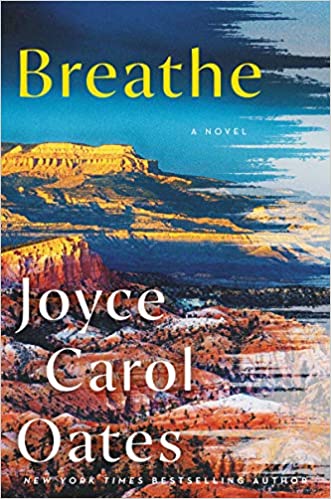
Celebrate JanReading Breathe by Joyce Carol Oates was a book I knew I needed to read once Jan was diagnosed. Although the book might trigger negative memories, I finally read Breathe. It was what I needed to read at this point in my journey.

Ms. Oates wrote the book in 2019 after her husband, Charlie Gross, died. The novel is a story of love, loss, and loneliness, topics that I write about on this blog. I needed to read the book both for my mental health and for the readers of Sharing Jan’s Love.

The protagonist, Michaela, loses her husband while they are on a sabbatical in New Mexico. Her husband, Gerard, writes a book and teaches a class on memories. Jan and I never considered relocating before her illness, but this book convinced me that it would have aggravated my grief journey.

One of the parallels I observed while reading the novel is the similarity between Gerard’s reluctance to let family, friends, and co-workers know of his illness. Jan shared that reluctance in the early days, but I convinced her that the only chance of beating cancer was with the help of family and friends.

This dialogue could easily be one that Jan and I had.

Of course you want to summon his family—his (adult) children—but quickly, he says no.

Still waiting.

But – When?

Just not yet.

He is not an alarmist. (You are the alarmist.)

The novel is written in two parts – The Vigil and the Post-Mortem.

The opening paragraphs set the tone.

A Hand is gripping yours. Warm, dry hand gripping your slippery, humid hand.

Whoever it is urging you – Breathe!

Leaning over you begging you – Breathe!

As one mourning the death of the love of his life, I found several phrases in the book helpful in understanding what I have gone through and will continue to confront.

Among them is grief-vise, which I have written about in this stream.

In the grip of the grief vise, all that you will do, all that you even imagine doing, will require many times more effort.. Hardly daring to breathe for the grief-vise will tighten around your chest, squeezing the very air out of your lungs.

In the early stages of grief, the vise was strangling me. Breathing was impossible, and weeping was constant at times.

Michaela struggles with her grief. Seeing her husband every time she sees a man alone, even if they are older or younger than he was. I know I have felt Jan’s presence and still expect her to walk into our apartment.

Her struggles with a grief counselor and overly helpful friends are an experience I have not had but are familiar to those suffering from losing a loved one.

The last chapters are ones in which time becomes confusing and chaotic. At times, I was uncertain about which were real or imagined. The end, like all good novels, was ambiguous.

These are some of the other phrases I have found useful and will include in posts.

  • If there is no one to love, do we merit existence?
  • Never come to the end of kissing.
  • The first principle of life is; Breathe.
  • Shy in the language of intimacy.
  • As if a life lived with strangers could compensate for the emptiness in your heart.
  • No purpose in your life. No compass.

What you love most, that you will lose. The price of your love is your loss.

I recommend this book to all readers, even those struggling with grief.

Subscribe

Contact Us

When you buy a book or product using a link on this page, I receive a commission. Thank you for supporting Sharing Jan’s Love blog.
×
×
Creation Lake: A Novel

Read: November 2024

Get this book

Creation Lake: A Novel

by Rachel Kushner

Today, I started reading Creation Lake: A Novel by Rachel Kushner, a two-time finalist for the Booker Prize and the National Book Award. This novel follows a seductive and cunning American woman who infiltrates an anarchist collective in France. It is a gripping page-turner filled with dark humor. Creation Lake is Kushner‘s finest achievement—a work of high art, comedy, and unforgettable pleasure.

The story revolves around a secret agent, a thirty-four-year-old American woman who employs ruthless tactics and possesses striking beauty. She is sent to carry out covert operations in France. The narrator introduces herself as “Sadie Smith” when she arrives at a rural commune of French subversives, whom she is secretly monitoring, and to her lover, Lucien, a young and well-to-do Parisian whom she meets by so-called “cold bump”—making him believe their encounter was accidental. Like everyone else she targets, Lucien is helpful to her and ultimately manipulated by her. Sadie operates with strategy and deception, following instructions from her “contacts”—shadowy figures in business and government. Initially, these contacts want her to provoke reactions. As the story progresses, their demands become more complex.

In this region filled with ancient farms and prehistoric caves, Sadie becomes captivated by a mysterious figure named Bruno Lacombe. Bruno mentors young activists who believe that the path to emancipation lies not in revolt but in a return to the ancient past. Just as Sadie thinks she is the seductress and puppet master of those she surveils, Bruno enchants her with his ingenious counter-histories, poignant laments, and tragic narrative.

In brief, striking sections, Rachel Kushner‘s interpretation of “noir” is taut and dazzling.


When you purchase a book through one of my links, I earn a small commission that helps support my passion for reading. This contribution allows me to buy even more books to share with you, creating an incredible cycle of discovering great reads together! Your support truly makes a difference!


×
Vanishing World

Read: April 2025

Get this book

Vanishing World

by Sayaka Murata

Today, I began reading Sayaka Murata‘s Vanishing World, translated by Ginny Tapley Takemori. This novel, from the author of the bestselling literary sensations Convenience Store Woman and Earthlings, presents a surprising and highly imaginative story set in an alternate version of Japan where sexual relations between married couples have disappeared, and all children are conceived through artificial insemination.

Sayaka Murata has established herself as a remarkable observer of society’s peculiarities, delving into our contemporary world with bizarre and unsettling insights. Her portrayals of a contentedly unmarried retail worker in Convenience Store Woman and a young woman who believes she is an alien in Earthlings have resonated with millions of readers globally. In Vanishing World, Murata takes her vision to a bold new level, envisioning an alternative Japan where attitudes toward sex and procreation diverge significantly from our own.

As a girl, Amane is horrified to learn that her parents “copulated” to conceive her rather than using artificial insemination, which became the norm in the mid-twentieth century. She seeks to escape what she perceives as her mother’s indoctrination into this peculiar “system.” Despite her efforts, Amane’s attractions to both anime characters and real people carry an undeniable sexual weight.

As an adult in a suitably sexless marriage—where sex between married couples is regarded as taboo, akin to incest—Amane and her husband, Saku, decide to relocate to a mysterious new town called Experiment City, or Paradise-Eden. In this community, all children are raised collectively, and every person is considered a mother to all children. Men are beginning to experience pregnancy through artificial wombs that exist outside their bodies, resembling balloons, and children are nameless, referred to simply as “Kodomo-chan.” Will this new world finally cleanse Amane of her strangeness?


Sayaka Murata is the author of several books, including Convenience Store Woman, which won the Akutagawa Prize, Earthlings, and Life Ceremony. Freeman has recognized her as a “Future of New Writing” author, and Vogue Japan has honored her as a Woman of the Year.

Ginny Tapley Takemori has translated works from more than a dozen Japanese writers, including Ryu Murakami. She resides at the foot of a mountain in Eastern Japan.


When you purchase a book through one of my links, I earn a small commission that helps support my passion for reading. This contribution allows me to buy even more books to share with you, creating an incredible cycle of discovering great reads together! Your support truly makes a difference!

Enjoy a limited-time offer of 20% off your next book purchase at Bookshop.org!


×
The Secret Hours

Read: January 2024

Get this book

The Secret Hours

by Mick Herron

Today, I started reading “The Secret Hours” by Mick Herron, a gripping spy thriller about a disastrous MI5 mission in Cold War Berlin. This book is a must-read for fans of “Slow Horses.” “The Secret Hours” is a standalone spy thriller that is both unnerving and poignant yet also has laugh-out-loud moments. It is the breathtaking secret history that Slough House fans have been waiting for.

Two years ago, a hostile prime minister launched the Monochrome inquiry, which aimed to investigate “historical over-reaching” by the British Secret Service. Griselda Fleet and Malcolm Kyle, two civil servants seconded to the project, were given unfettered access to all confidential information in the Service archives to ferret any hint of misconduct by any MI5 officer.

However, MI5’s formidable First Desk did not become Britain’s top spy by accident, and she has successfully thwarted the inquiry at every turn. The administration that created Monochrome has been ousted, and the investigation is a total bust. Griselda and Malcolm are stuck watching as the pounding London rain washes away their career prospects.

On the eve of Monochrome’s shuttering, an MI5 case file appears without explanation. It is the buried history of a classified operation in 1994 Berlin, which ended in tragedy and scandal, whose cover-up has rewritten thirty years of Service history.


The Jan Lilien Education Fund sponsors ongoing sustainability and environmental awareness programs. Regarding gifts made this month, I will match dollar for dollar. All donations are tax-deductible.

Subscribe

Contact Us

I receive a commission when you buy a book or product using a link on this page. Thank you for supporting Sharing Jan’s Love blog.


×
The Letter Carrier

Read: July 2025

Get this book

The Letter Carrier: A Novel

by Francesca Giannone

In the bestselling novel that has captivated readers in Italy, The Letter Carrier by Francesca Giannone depicts a small town in southern Italy that reflects the experiences of many others. It portrays the lives of women and men—husbands and wives, fathers and sons, mothers and daughters—as they strive to navigate the world while remaining true to their hearts. The Letter Carrier explores the universal theme of connection and examines the consequences that arise when those connections occur at the wrong time.

Salento, Italy, June 1934: A coach stops in the main square of Lizzanello, a tight-knit village where everyone knows each other. A couple gets off: The man, Carlo, a Southerner, is happy to be back home after a long time away; the woman, Anna—his wife—is a Northerner. Carlo’s brother is there to meet them, and he, along with everyone else, can’t help but notice that Anna is as beautiful as a Greek statue.

But Anna is not like the other wives. She doesn’t gossip or attend church. She reads books no one else has ever heard of, exploring ideas that some find threatening. She even wears pants, just like a man, and thinks a woman should have rights, just like a man.

There aren’t many options for a woman with Anna’s sensibilities, so when she learns that the post office is hiring, she leaps at the opportunity. A female letter carrier? It is unthinkable! But Anna passes the postal exam and soon becomes the invisible thread connecting the town as she delivers letters between clandestine lovers, families waiting to hear news of loved ones away at war, and even helps those who can’t read.

Letters connect people, conveying both information and emotion. But for some in Lizzanello, letters are too little and too late.


Francesca Giannone holds a degree in communication science and studied at the CSC, the oldest film school in Europe, located in Rome. She has published several short stories in literary magazines, both in print and online. Currently, Giannone resides in Milan, but her heart remains in her hometown of Lizzanello, a seaside town in the Salento region of Italy. She hopes to return there to live one day.


Elettra Pauletto translated The Letter Carrier. After earning her MFA from Columbia University, she has split her time between writing about her experiences in Africa—specifically in the Democratic Republic of the Congo, Rwanda, and Senegal—and translating fiction and nonfiction works from Italian and French into English. In both her writing and translations, she heavily relies on her background as a former political risk analyst who covered Sub-Saharan Africa, the Middle East, and Europe.


When you purchase a book through one of my links, I earn a small commission that helps support my passion for reading. This contribution allows me to buy even more books to share with you, creating an incredible cycle of discovering great reads together! Your support truly makes a difference!

Enjoy a limited-time offer of 20% off your next book purchase at Bookshop.org!


×
My Brilliant Friend

Read: July 2024

Get this book

My Brilliant Friend

by Elena Ferrante

Today, I delved into Elena Ferrante‘s captivating novel My Brilliant Friend. This acclaimed book hailed as the #1 Book of the 21st Century by the New York Times, weaves a timeless tale of the enduring bond between two women from Naples. With its rich character development and evocative historical setting, it stands alongside other character-driven works of literary fiction.

Beginning in the 1950s in a poor but vibrant neighborhood on the outskirts of Naples, Elena Ferrante’s four-volume story spans almost sixty years. The main characters, the fiery and unforgettable Lila and the bookish narrator, Elena, are bound by an enduring friendship that withstands the test of time and life’s challenges. This first novel in the series follows Lila and Elena from their fateful meeting as ten-year-olds through their school years and adolescence, evoking a sense of enduring connection and emotional resonance.

Through the lives of these two women, Ferrante weaves a compelling narrative of a neighborhood, a city, and a country undergoing profound transformation. These societal changes, in turn, also reshape the relationship between the two women, adding a rich layer of historical and cultural context to the story. This context will enrich your reading experience and provide a deeper understanding of the characters and their journey.

×
The Annual Banquet of the Gravediggers' Guild

Read: January 2024

Get this book

The Annual Banquet of the Gravediggers’ Guild

by Mathias Énard

Today, I started reading “The Annual Banquet of the Gravediggers’ Guild” by Mathias Énard. The book has been translated into English by Frank Wynne. This novel is full of Mathias Énard‘s characteristic humor and extensive knowledge. It is a lively book where the boundaries between past and present are constantly blurred, set against a backdrop of excess reminiscent of Rabelais’ writing.

David Mazon, an anthropology student, moves from Paris to La Pierre-Saint-Christophe, a village in the marshlands of western France, to research his thesis on contemporary agrarian life. He is determined to understand the essence of the local culture and spends his time scurrying around on his moped to interview the residents.

David must be made aware of the extraordinary events in an ordinary location. This place, where wars and revolutions once occurred, is now a dancefloor for Death. When something dies, its soul is recycled by the Wheel of Life and thrown back into the world as a microbe, human, or wild animal – sometimes in the past and sometimes in the future. Once a year, Death and the living agree to a temporary truce, during which gravediggers indulge in a three-day feast filled with food, drink, and conversation.

Mathias Énard’s novel, The Annual Banquet of the Gravediggers’ Guild, is a riotous and exciting comic masterpiece that won the prestigious Prix Goncourt award. The novel is set in the French countryside and is filled with Énard’s characteristic wit and encyclopedic brilliance. Against a backdrop of excess, the story blurs the lines between past and present, creating a Rabelaisian world of chaos and humor.


The Jan Lilien Education Fund sponsors ongoing sustainability and environmental awareness programs. Gifts made this month; I will match dollar-for-dollar. All donations are tax-deductible.

Subscribe

Contact Us

I receive a commission when you buy a book or product using a link on this page. Thank you for supporting Sharing Jan’s Love blog.


×