
You’ve Got Friends!

Estimated reading time: 2 minutes, 42 seconds
Beautiful the 
Carole King Musical

As we raced into the darkness below the Hudson, I held her hand and kissed her lightly on her lips. We had planned this weekend trip before knowing Jan had blood cancer, and that news was still the elephant in the room.

Two years ago today, we made this weekend excursion to New York. When we planned the trip, all we were concerned about was recovery from the first cataract surgery, and now we knew that the love of my life also had blood cancer.

My fears were minor compared to those she was bottling up inside her. We knew our journey of love was entering a new epoch, but neither of us knew what the future held for us. All we knew for sure was that our love would grow stronger despite our challenges.

We had reserved a room at a Marriott on 41st and Fifth Avenue by the main library and Bryant Park. Leaving Penn Station, we took a cab to the hotel as the walk would be too much for her. Jan’s eyes were wide open as she looked at the city we both loved.

Since it opened, Jan had wanted to see the Beautiful the Carole King Musical. Life had consumed our time and delayed our plans to see the musical, and now we had tickets in the orchestra for one of the last performances. 

Carole King Tapestry

Her joy was contagious as we walked into the theatre, and it bubbled over like a freshly opened bottle of Champagne. Her happiness became my joy.

The performance was not just beautiful but also unique. Hearing Jan quietly singing along to the music made me want to cry tears of happiness openly. 

When you’re down and troubled,
And you need some love and care,
And nothing, nothing is going right
Close your eyes and think of me,
And soon I will be there
To brighten up even your darkest night.

You just call out my name
And you know wherever I am
I’ll come running to see you again
Winter, spring, summer or fall
All you have to do is call
And I’ll be there
You’ve got a friend

Carole King

“I will always be there for you!” I told her.  

But I also wanted to remind her that we had many friends together and separately that she and I could reach out to for help. I told her, “We cannot defeat cancer alone, and we can only do it by working together with our family and friends.” The only way we could survive whatever type of blood cancer she had was with the love and support of family and friends.

My love for Jan had never been as strong as it was that evening with a tapestry of Carole King songs in our hearts. Jan and I floated in the air as our guardian angels surrounded us with love and support on our return to the hotel. 

Sharing Jan’s Love Because Love Never Dies! 


Have you ever wanted to know how I met Jan?


Subscribe
Contact Us
Creative Commons License

This work is licensed under a Creative Commons Attribution-NonCommercial 4.0 International License.

3 comments add your comment

Share your thoughts and ideas

This site uses Akismet to reduce spam. Learn how your comment data is processed.

Previous Post:

Next Post:

The Jan Lilien Education Fund!

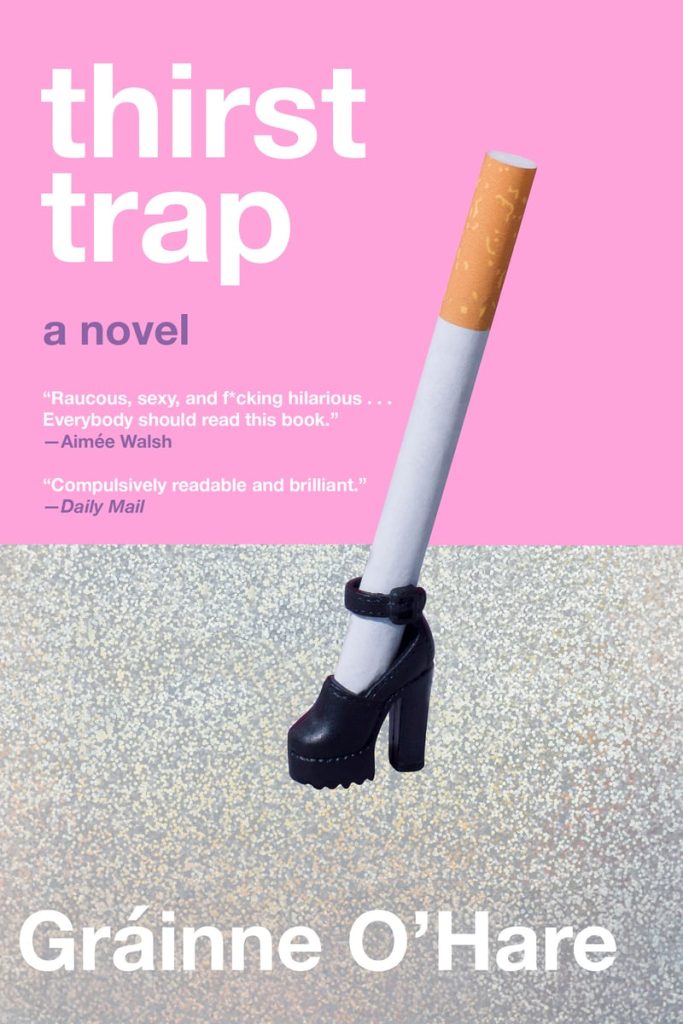
Thirst Trap

Read: November 2025

Get this book

Thirst Trap: A Novel

by Gráinne O'Hare

Filled with heart and humor, Thirst Trap by Gráinne O’Hare is a lively celebration of friendship, embracing uncertainty, and indulging in “just one more round” before heading home. This sharply funny novel explores the challenges of being in your late 20s as you approach 30, questioning when you will tire of morning hangovers, dead-end entry-level jobs, and late nights at bars. This friend group is about to discover the answer.

Sometimes friends hold you together.
Sometimes they’re why you’re falling apart.

Harley, Róise, and Maggie have been friends for a long time. They met in primary school years ago, and they are still together, spending their nights on the sticky dance floors of Belfast’s grungiest pubs. Each woman is navigating her own challenges—entry-level jobs, messy romantic entanglements, and late nights—but they always find their way back to each other and to the ramshackle house they share. Amidst the familiar chaos, the three are still grieving their fourth housemate, whose room remains untouched, with the weight of their last big fight lingering heavily over them.

The girls’ house has witnessed the highs and lows of their roaring twenties—raucous parties, surprising (and sometimes regrettable) hook-ups, and hellish hangovers. However, as they approach thirty, their home begins to crumble around them, and the cracks in their friendship become harder to ignore. In the midst of the wreckage, they must decide whether their friendship will survive into a new decade or if growing up sometimes means letting go.


Gráinne O’Hare is a writer from Belfast based in Newcastle upon Tyne. She received a Northern Debut Award for Fiction from New Writing North and was awarded funding by the Arts Council for the development and completion of her first novel. She has also been shortlisted for the Francis MacManus Short Story Competition and the Bridport Prize, and came in the top three of the Benedict Kiely Short Story Competition.

She is a media sub-editor for Criticks reviews of the British Society for Eighteenth-Century Studies and holds a PhD in eighteenth-century women’s life-writing from Newcastle University.


Discover your next favorite book and dive into a world of curated, exciting reads by purchasing through my links. You’ll have access to a diverse selection of books that I’ve personally vetted to ensure quality and enjoyment. Additionally, by supporting these selections, you’ll help me continue to provide you with more personalized recommendations. I earn a small commission from your purchase, which allows me to buy and share even more books with you. Your support truly makes a difference!


×
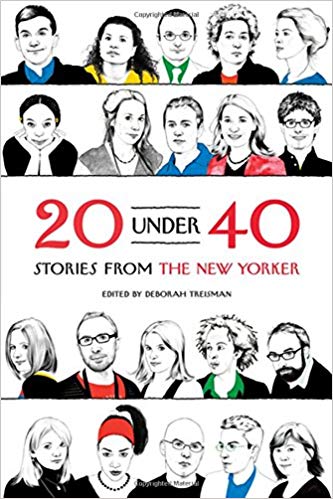
20 Under 40

Read: January 2019

Get this book

20 Under 40 Fiction

by Various Writers Under 40

Short Stories that Will Define the Future of American Letters

The New Yorker’s collection of short stories – 20 Under 40 – is a collection of twenty writers “whose work will help define the future of American letters.”

Some of these I had read in The New Yorker and others I had missed. Either way, they were a pleasure to read.

As The New Yorker wrote,

The range of voices is extraordinary. There is the lyrical realism of Nell Freudenberger, Philipp Meyer, C. E. Morgan, and Salvatore Scibona; the satirical comedy of Joshua Ferris and Gary Shteyngart; and the genre-bending tales of Jonathan Safran Foer, Nicole Krauss, and Téa Obreht. David Bezmozgis and Dinaw Mengestu offer clear-eyed portraits of immigration and identity; Sarah Shun-lien Bynum, ZZ Packer, and Wells Tower offer voice-driven, idiosyncratic narratives. Then there are the haunting sociopolitical stories of Chimamanda Ngozi Adichie, Daniel Alarcón, and Yiyun Li, and the metaphysical fantasies of Chris Adrian, Rivka Galchen, and Karen Russell.

Each of these writers reminds us why we read. And each is aiming for greatness: fighting to get and to hold our attention in a culture that is flooded with words, sounds, and pictures; fighting to surprise, to entertain, to teach, and to move not only us but generations of readers to come. A landmark collection, 20 Under 40 stands as a testament to the vitality of fiction today.

I recommend this collection of short stories.

Subscribe

Contact Us

×
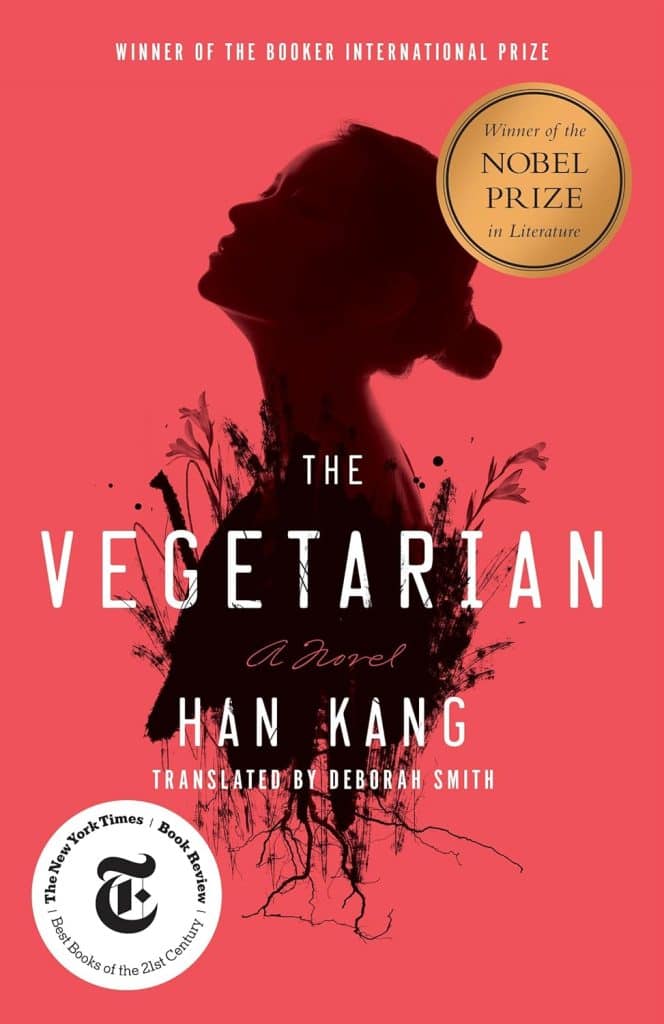
The Vegetarian: A Novel

Read: October 2024

Get this book

The Vegetarian: A Novel

by Han Kang

Today, I started reading The Vegetarian: A Novel by Han Kang, Winner of the 2024 Nobel Prize in Literature. The novel also won The International Booker Prize and is one of The New York Times’s 100 Best Books of the 21st Century. Celebrated by critics worldwide, The Vegetarian is a darkly allegorical, Kafka-esque tale of power, obsession, and one woman’s struggle to break free from the violence both without and within her.

Before the nightmares began, Yeong-hye and her husband lived an ordinary, controlled life. But the dreams—invasive images of blood and brutality—torture her, driving Yeong-hye to purge her mind and renounce eating meat altogether. It’s a small act of independence, but it interrupts her marriage and sets into motion an increasingly grotesque chain of events at home.

As her husband, her brother-in-law, and her sister each fight to reassert their control, Yeong-hye obsessively defends the choice that’s become sacred to her. Soon, their attempts turn desperate, subjecting first her mind and then her body to ever more intrusive and perverse violations, sending Yeong-hye spiraling into a dangerous, bizarre estrangement, not only from those closest to her but also from herself.


Han Kang was born in 1970 in South Korea. She is the author of The Vegetarian, which I have read, and winner of the International Booker Prize,  Human Acts, The White Book, Greek Lessons, and We Do Not Part. In 2024, she received the Nobel Prize in Literature.


When you purchase a book through one of my links, I earn a small commission that helps support my passion for reading. This contribution allows me to buy even more books to share with you, creating an incredible cycle of discovering great reads together! Your support truly makes a difference!


×
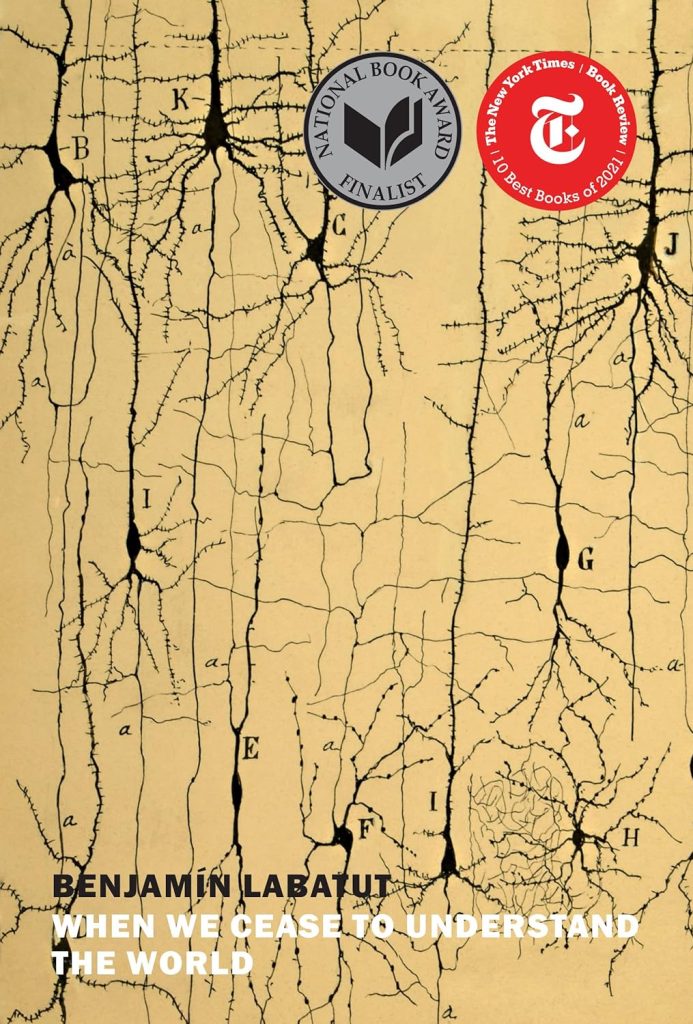
When We Cease to Understand the World

Read: September 2024

Get this book

When We Cease to Understand the World

by Benjamín Labatut

Today, I began reading When We Cease to Understand the World by Benjamín Labatut, translated by Adrian Nathan West. This book, listed on The New York Times 100 Best Books of the 21st Century, promises to be thought-provoking as it delves into the intricate connections between scientific and mathematical discovery, madness, and destruction.

In a world where scientific advancements often involve ethical dilemmas and societal implications, this book offers a unique perspective on the lives of scientists who have shaped our understanding of the world. Fritz Haber, Alexander Grothendieck, Werner Heisenberg, and Erwin Schrödinger are some of the luminaries whose troubled lives Benjamín Labatut deeply explores in his fictional examination. Labatut shows how these scientists and thinkers grappled with profound questions of existence, experiencing strokes of unparalleled genius, alienating friends and lovers, and descending into isolation and insanity. Their discoveries, some of which significantly improved human life, while others led to chaos and unimaginable suffering, continue to shape our world.

With a breakneck pace and a wealth of disturbing detail, Labatut uses fiction’s imaginative resources to tell the stories of the scientists and mathematicians who expanded our notions of the possible.

×
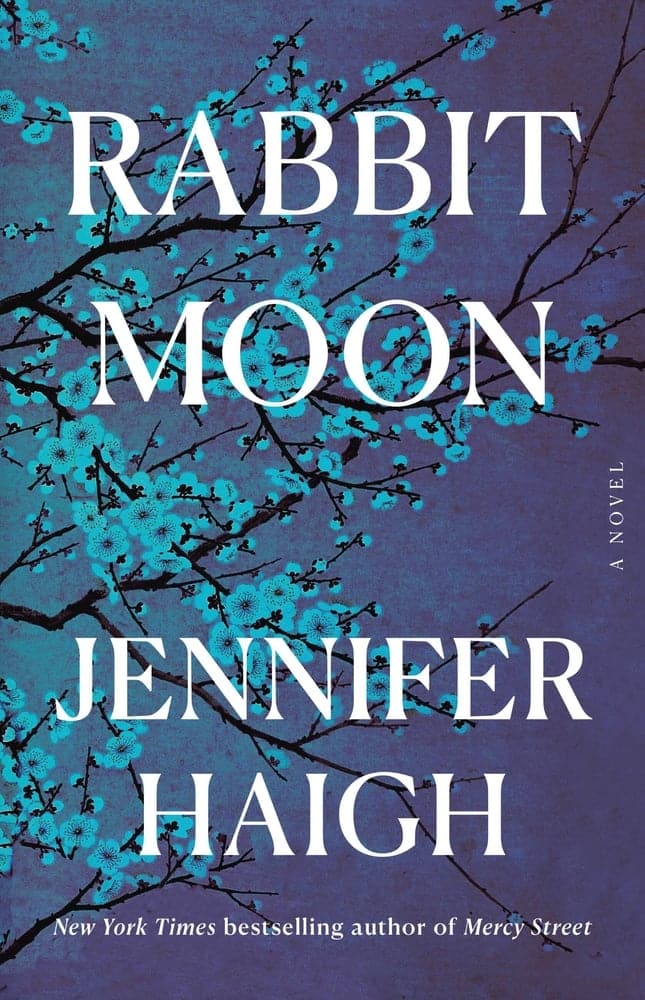
Rabbit Moon

Read: April 2025

Get this book

Rabbit Moon: A Novel

by Jennifer Haigh

Today, I dove into Jennifer Haigh‘s gripping new release, Rabbit Moon. Set against the vibrant backdrop of Shanghai, this tense and riveting drama unravels the complexities of a fractured American family. It explores hidden secrets and the unbreakable bond between two sisters. Ms. Haigh, the New York Times bestselling author of Mercy Street, which I read last year, weaves a tale that promises to keep readers on the edge of their seats.

Four years after their bitter divorce, Claire and Aaron Litvak receive a phone call that no parent is prepared for: their 22-year-old daughter Lindsey, who is teaching English in China during her college gap year, has been critically injured in a hit-and-run accident. As they wait at her bedside in a Shanghai hospital, they hold onto hope for the best while preparing for the worst.

The accident exposes a deeper rift within the family: it brings to light the shocking events that ended the Litvaks’ marriage and turned Lindsey against them. Estranged from her parents, Lindsey has confided only in her younger sister, Grace, who was adopted from China as an infant. As Claire and Aaron navigate the bustling, cosmopolitan atmosphere of Shanghai—the newly prosperous “miracle city”—they face unsettling questions about Lindsey’s life there, where nothing is as it seems.

With her trademark psychological insight, Jennifer Haigh crafts a taut and suspenseful story about the enduring ties of marriage that divorce cannot sever and the legendary red thread that connects two sisters across time and space. Ms. Haigh again demonstrates that she is, as The New York Times describes her, “an expertly nuanced storyteller…her work is gripping, real, and immersive.”


Jennifer Haigh is the author of seven best-selling, critically acclaimed works of fiction. Her first, Mrs. Kimble, won the PEN Hemingway Award for debut fiction. Her latest, Mercy Street, was named a Best Book of 2022 by the New Yorker and won the Mark Twain American Voice in Literature Award. A Guggenheim fellow and Iowa Writers’ Workshop graduate, she lives in Boston.


When you purchase a book through one of my links, I earn a small commission that helps support my passion for reading. This contribution allows me to buy even more books to share with you, creating an incredible cycle of discovering great reads together! Your support truly makes a difference!


×
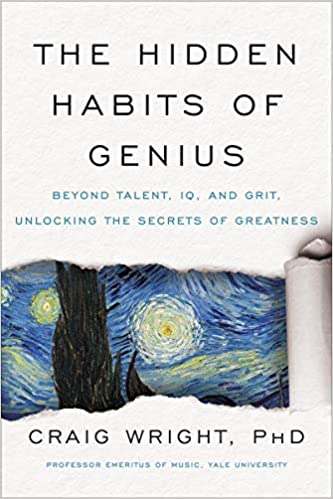
The Hidden Habits of Genius

Read: September 2019

Get this book

The Hidden Habits of Genius

by Craig Wright

The Hidden Habits of Genius: Beyond Talent, IQ, and Grit―Unlocking the Secrets of Greatness by Craig Wright, Ph.D., I got through my membership in One Day University.

Dr. Wright raises many important questions as he analyses fourteen (14) critical traits of genius. Professor Craig Wright, creator of Yale University’s famous “Genius Course,” explores what we can learn from brilliant minds that have changed the world.

What we often presume about a genius does not match reality. Among other interesting observations, Dr. Wright reminds the reader that Picasso could not pass a fourth-grade math test, and Steve Jobs’s high school GPA was 2.65. He questions why to teach children to behave and play by the rules when transformative geniuses do not.

Examining the lives of transformative individuals ranging from Charles Darwin and Marie Curie to Leonardo Da Vinci and Andy Warhol to Toni Morrison and Elon Musk, Wright identifies more than a dozen drivers of genius, characteristics and patterns of behavior common to great minds throughout history. He argues that genius is about more than intellect and work ethic and that the famed “eureka” moment is a Hollywood fiction. Brilliant insights that change the world are never sudden, but rather, they are the result of unique modes of thinking and lengthy gestation.

I found the book to be a fascinating read and raised more questions for future thought and reading. Professor Wright argues that the habits of mind that produce great thinking and discovery can be actively learned and cultivated. In the book, he explains how. He notes that reading the book will not make you a genius but can “make you more strategic, creative, and successful, and, ultimately, happier.

Subscribe

Contact Us

×

Discover more from Sharing Jan’s Love

Subscribe now to keep reading and get access to the full archive.

Continue reading