
Fiction
I have been reading these fiction books since the beginning of 2019. I like non-fiction but have started reading fiction since the love of my life passed away.
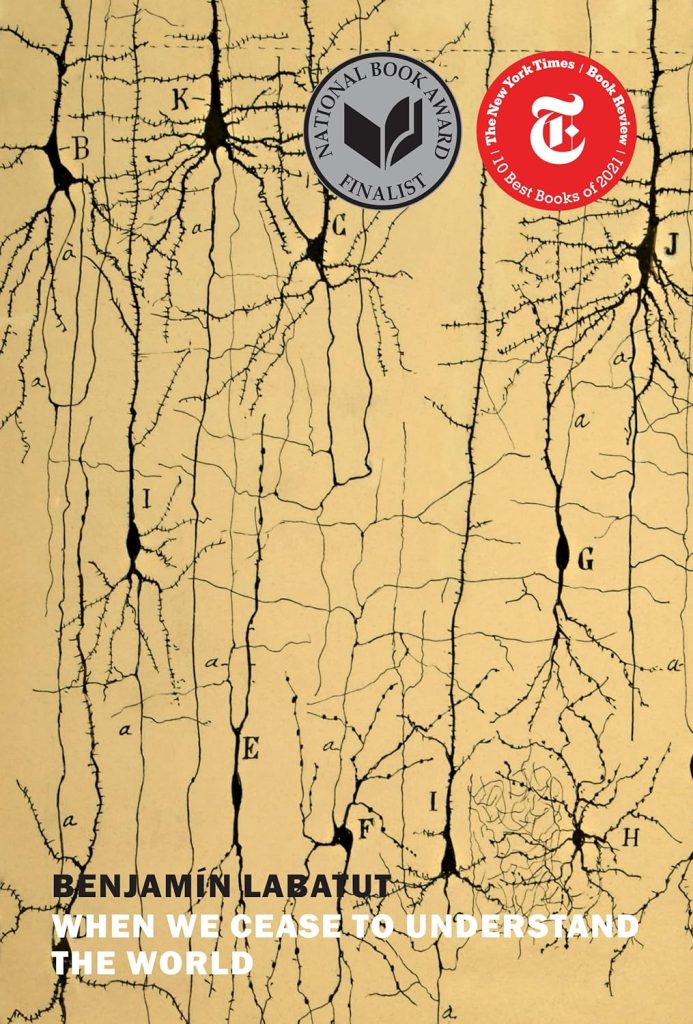
by Benjamín Labatut
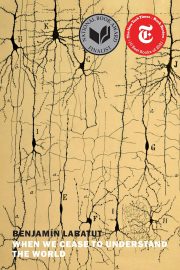
Today, I began reading When We Cease to Understand the World by Benjamín Labatut, translated by Adrian Nathan West. This book, listed on The New York Times 100 Best Books of the 21st Century, promises to be thought-provoking as it delves into the intricate connections between scientific and mathematical discovery, madness, and destruction.
In a world where scientific advancements often involve ethical dilemmas and societal implications, this book offers a unique perspective on the lives of scientists who have shaped our understanding of the world. Fritz Haber, Alexander Grothendieck, Werner Heisenberg, and Erwin Schrödinger are some of the luminaries whose troubled lives Benjamín Labatut deeply explores in his fictional examination. Labatut shows how these scientists and thinkers grappled with profound questions of existence, experiencing strokes of unparalleled genius, alienating friends and lovers, and descending into isolation and insanity. Their discoveries, some of which significantly improved human life, while others led to chaos and unimaginable suffering, continue to shape our world.
With a breakneck pace and a wealth of disturbing detail, Labatut uses fiction’s imaginative resources to tell the stories of the scientists and mathematicians who expanded our notions of the possible.
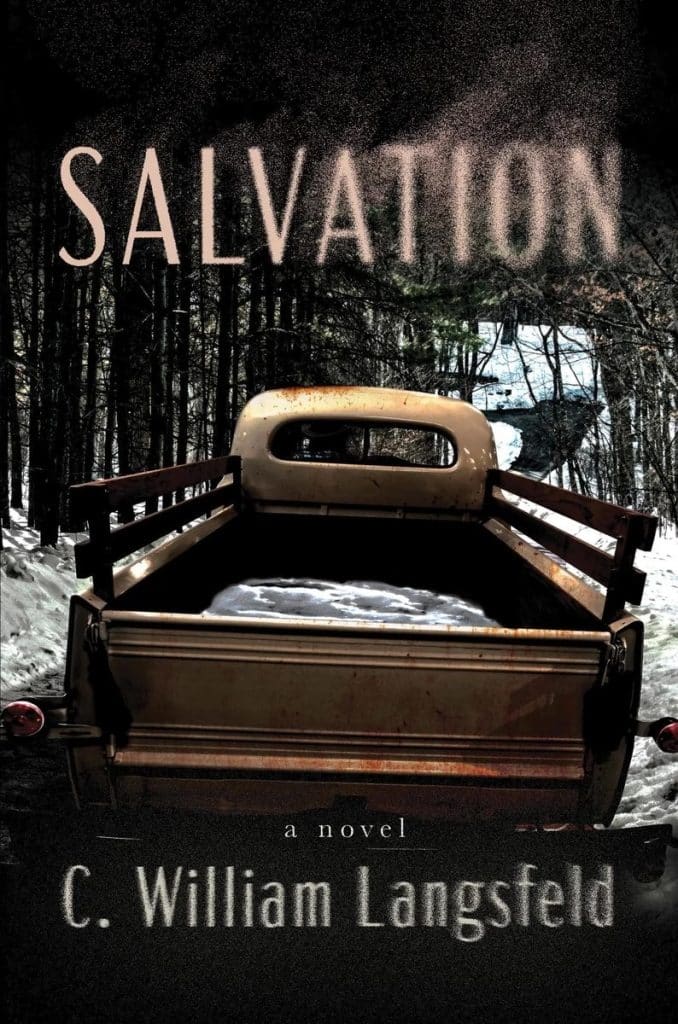
by C. William Lanksfield
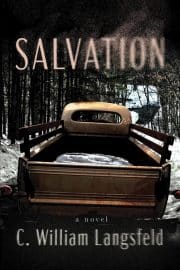
Salvation by C. William Lanksfield is a remarkable debut novel that explores profound themes through evocative prose and a compelling plot, all set against the breathtaking yet often intimidating backdrop of the Rocky Mountain West. This emotionally charged Western noir examines father-son relationships, masculinity, and spirituality, centering around a shocking event: the murder of one man’s best friend by another.
A small rural Colorado town is in crisis at the height of winter. Tom Horak has just murdered his best friend, Rust Hawkins. Morris Green, the town’s Lutheran pastor, is experiencing a profound crisis of faith, questioning the very existence of God. And Marshal Thomlison, the local peace officer, looking forward to retirement, is now thrown into the middle of a murder investigation.
Following his violent act, Tom retreats to a cabin in the hills, remembering the events of his hardscrabble childhood—a rural upbringing on a ranch with a distant mother and abusive father.
Pastor Green takes in Rust Hawkins’s son, since the boy has nowhere else to go. Thomlison’s murder investigation acts as a kind of Greek chorus commenting on the various threads of this moving novel: What could cause a man to commit such a violent act? What does this isolated community owe to one another? Can Tom find the peace he is searching for, even with blood on his hands? Can Pastor Green find enough faith in our human condition to help Rust’s orphaned son, and can their growing bond perhaps offer the family life each sorely lacks?
C. William Langsfeld lives in a small town on the Western Slope of Colorado.
Discover your next favorite book and dive into a world of curated, exciting reads by purchasing through my links. You’ll have access to a diverse selection of books I’ve personally vetted for quality and enjoyment. Supporting these selections not only helps me continue to provide you with personalized recommendations but also ensures you have access to meaningful stories that enrich your life. Your support truly makes a difference in helping me share more books and insights with you!
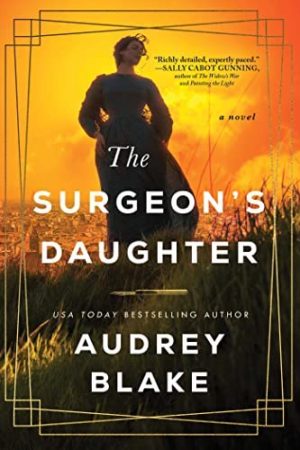
by Audrey Blake
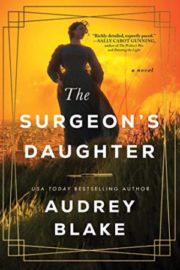
I did something I had not done in decades. After finishing the Big Library Read of 2022, The Girl in His Shadow, by Audrey Blake, I immediately started reading the sequel, The Surgeon’s Daughter. The protagonist, Nora Beady, was such a strong female lead that I could not wait to find out what happened next. In the sequel, Nora Beady, the only female student at a prestigious medical school in Bologna, is a rarity. Nora’s tenacity and passion reminded me of Jan, the love of my life.
In the 19th century, women were supposed to remain at home and raise children, so her unconventional, indelicate ambitions to become a licensed surgeon offended the men around her.
Ms. Blake has a split personality— because she is the creative alter ego of writing duo Jaima Fixsen and Regina Sirois, two authors who met as finalists of a writing contest and have been writing together happily ever since.
The pen name – Audrey Blake – was in response to the publishers recommending a more straightforward author’s name. Regina’s daughter is named Audrey, and Jaima’s son is Blake.
The Surgeon’s Daughter is the forty-fourth book I have read this year and the ninety-ninth since the beginning of 2019. My Goodreads goal for 2022 was twenty-two books.
The Goodreads summary provides an overview.
Under constant scrutiny, Nora’s successes are taken for granted; her mistakes used as proof that women aren’t suited to the field.
Everything changes when she allies herself with Magdalena Morenco, the sole female doctor on-staff. Together the two women develop new techniques to improve a groundbreaking surgery: the Cesarean section. It’s a highly dangerous procedure and the research is grueling, but even worse is the vitriolic response from men. Most don’t trust the findings of women, and many can choose to deny their wives medical care.
Already facing resistance on all sides, Nora is shaken when she meets a patient who will die without the surgery. If the procedure is successful, her work could change the world. But a failure could cost everything: precious lives, Nora’s career, and the role women will be allowed to play in medicine.
The Jan Lilien Education Fund sponsors ongoing sustainability and environmental awareness programs. All donations are tax-deductible.
I receive a commission when you buy a book or product using a link on this page. Thank you for supporting Sharing Jan’s Love blog.
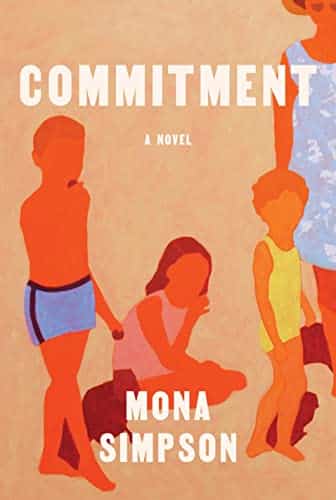
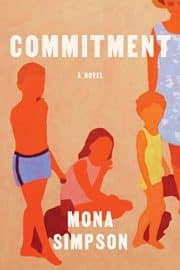
by Mona Simpson
The novel Commitment by Mona Simpson delves into the complexities of family and duty when a parent falls ill. It sheds light on the significant impact of untreated mental health crises and highlights the under-appreciated role of friends in shaping the lives of children left to their own devices.
A hardworking single mother, Diane Aziz falls into a deep depression after dropping off her oldest son, Walter, at college. Despite her struggles, her closest friend is vital in keeping the family together and their mother’s dreams alive.
This is a story of one family’s struggle to navigate the crisis of their lives, a struggle that may resonate with many readers. Walter discovers a newfound passion for architecture, but financial struggles threaten his academic pursuits. Meanwhile, Lina fights to attend an Ivy League school, and Donny, the youngest sibling, battles a dangerous drug addiction.
As someone with different personal experiences, I still found Commitment to affirm the importance of biological and chosen families.
The Jan Lilien Education Fund sponsors ongoing sustainability and environmental awareness programs. Gifts made this month; I will match dollar-for-dollar. All donations are tax-deductible.
I receive a commission when you buy a book or product using a link on this page. Thank you for supporting Sharing Jan’s Love blog.
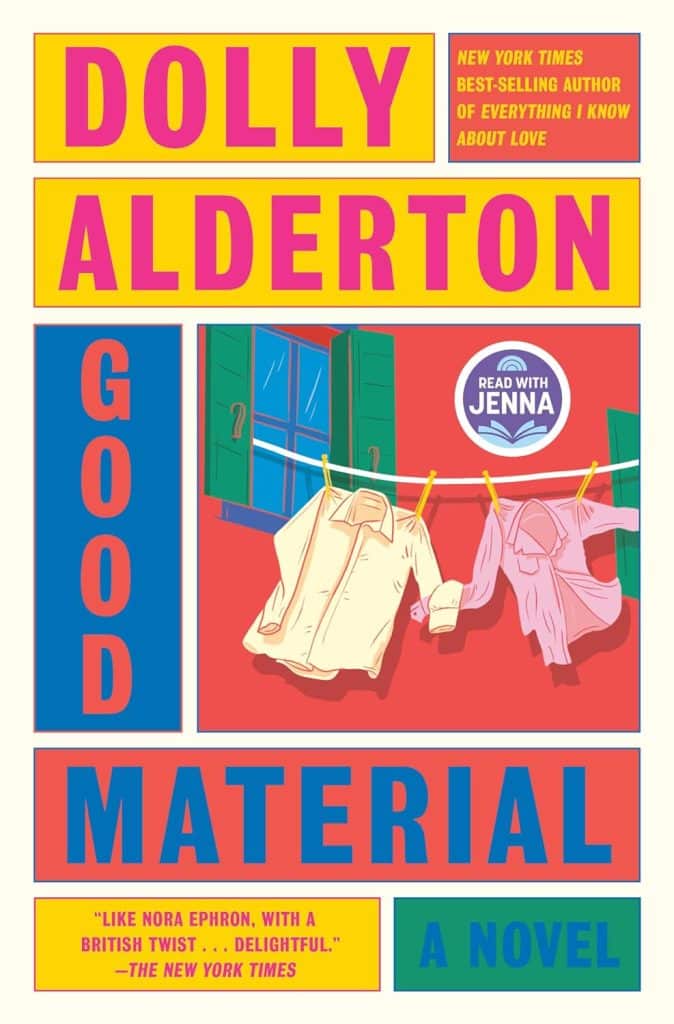
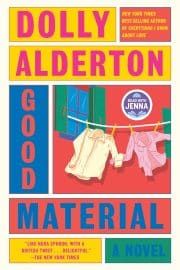
by Dolly Alderton
Today, I started reading “Good Material: A Novel” by Dolly Alderton, the bestselling author of “Ghosts” and “Everything I Know About Love.” This book has been listed as one of The New York Times 100 Notable Books of 2024 and is among their 10 Best Books of 2024. So far, I have read three of the top five fiction books of 2024: “All Fours,” “James,” and “Martyr!.” I plan to read the fifth book, “You Dreamed of Empires,” next.
“Good Material” has received widespread acclaim for exploring heartbreak, friendship, and the various ways to cope with these experiences.
Andy loves Jen. Jen loved Andy. And he can’t work out why she stopped.
Now he is. . .
Without a home
Waiting for his stand-up career to take off
Wondering why everyone else around him seemed to have grown up while he wasn’t looking
Set adrift in the sea of heartbreak, Andy clings to the idea of solving the puzzle of his ruined relationship. Because if he can find the answer, Jen may find her way back to him. But Andy still has much to learn, not least his ex-girlfriend’s side of the story…
In this sharply funny and exquisitely relatable story of romantic disaster and friendship, Dolly Alderton offers up a love story with two endings, demonstrating again why she is one of the most exciting writers today and the authentic voice of a generation. Her writing feels like a conversation with a close friend, making you feel understood and seen.
When you purchase a book through one of my links, I earn a small commission that helps support my passion for reading. This contribution allows me to buy even more books to share with you, creating an incredible cycle of discovering great reads together! Your support truly makes a difference!
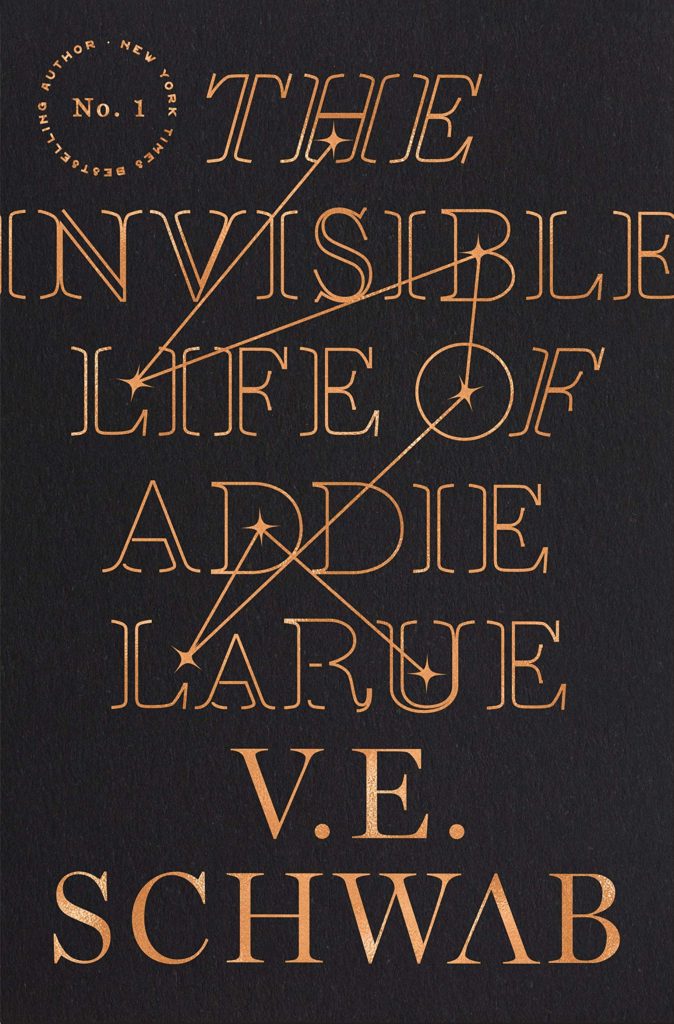
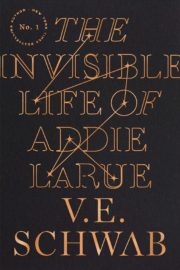
by V.E. Schwab
The Invisible Life of Addie LaRue by V.E. Schwab is a page-turner, and one of the rare books I have read that I wish had not ended. On the last page, I wanted Addie’s story to continue now that she had modified her deal with the dark side to save Henry Strauss. It was not that I wished Addie and Henry to reunite; it was to see how Addie’s life with Luc would continue. I recommend this book without any reservations!
Both Jan and I have always enjoyed books and movies about time travel. One of the first books I read after Jan died was The Time Traveler’s Wife, and now I am reading another time-travel book. If I could travel back in time, I would love to spend tens of thousands of days with her again.
But time travel is not possible. Or is it? Her spirit returns to me whenever I am paralyzed, encouraging me to dust myself off and keep going. Maybe one day we will travel together!
The Goodreads summary includes an overview.
France, 1714: in a moment of desperation, a young woman makes a Faustian bargain to live forever and is cursed to be forgotten by everyone she meets.
Thus begins the extraordinary life of Addie LaRue and a dazzling adventure that will play out across centuries and continents, across history and art, as a young woman learns how far she will go to leave her mark on the world.
But everything changes when, after nearly 300 years, Addie stumbles across a young man in a hidden bookstore, and he remembers her name.
I receive a commission when you buy a book or product using a link on this page. Thank you for supporting Sharing Jan’s Love blog.
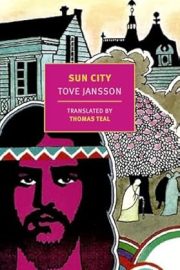
by Tove Jansson
Today, I began reading “Sun City” by Tove Jansson, translated by Thomas Teal. I found this book mentioned in Maya Chung‘s review in The Atlantic’s Book Briefings, and as an older man, it seemed like the perfect choice for me. In “The Summer Book” and “The True Deceiver,” as well as in her many short stories, Tove Jansson consistently explores the everyday lives of older adults.
She portrays them not as a separate group but as fully fleshed individuals who experience the same jealousies, desires, and joys as any other demographic. It’s no wonder that in her travels through America in the 1970s, she became fascinated with what was then a particularly American institution, the retirement home, where older people lived in their tightly knit worlds.
In Sun City, Jansson depicts these worlds in a group portrait of residents and employees at the Berkeley Arms in St. Petersburg, Florida. As the narrative moves from character to character, the characters move through an America riven by cultural divides, facing the death of its dream. The Berkeley Arms’s newest resident finds a place among the rocking chairs and endless chatter on the veranda while other residents long for past glories, mourning their losses and killing time. Meanwhile, one of their attendants, Bounty Joe, is eagerly awaiting a letter, or even just a postcard, alerting him to the imminent return of Jesus Christ. Nobody’s normal anymore,” the bartender says, “not the old geezers and not the newborn kids.”
When you purchase a book through one of my links, I earn a small commission that helps support my passion for reading. This contribution allows me to buy even more books to share with you, creating an incredible cycle of discovering great reads together! Your support truly makes a difference!
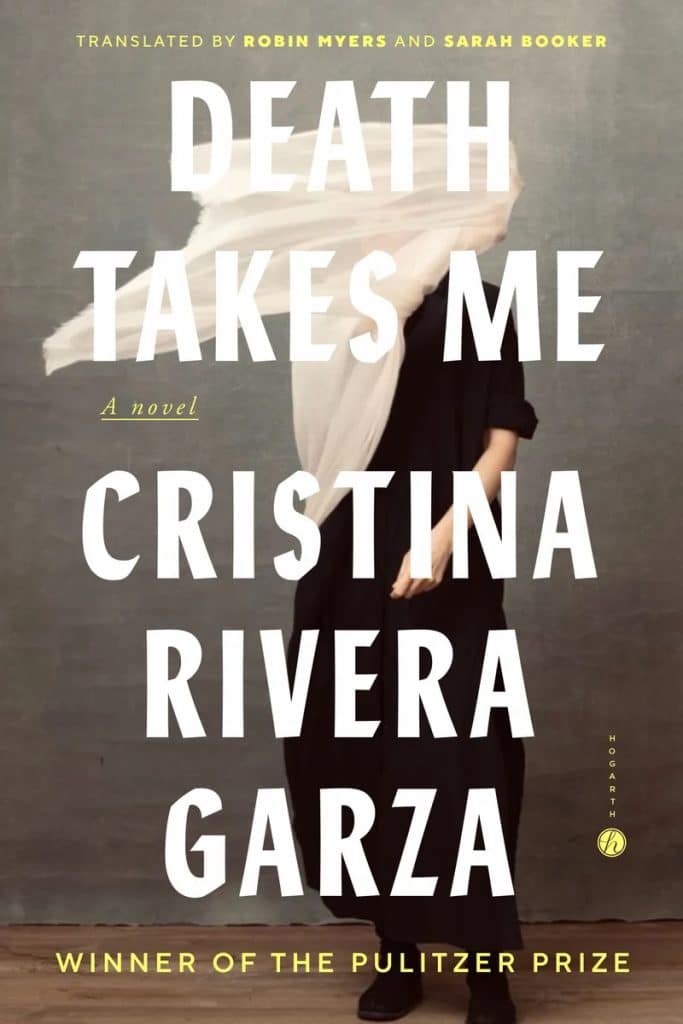
by Cristina Rivera Garza
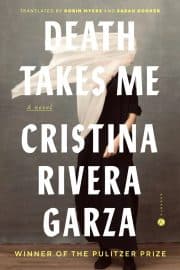
Originally written in Spanish by Cristina Rivera Garza, Death Takes Me is a thrilling masterpiece of literary fiction that turns the traditional crime narrative of gendered violence on its head. As sharp as the cuts on the bodies of the victims, the story unfolds with the dreamlike logic of a surreal experience, transitioning from the police station to a professor’s classroom and through the intricate worlds of Latin American poetry and art. It invites readers to explore the unstable terrains of desire and sexuality.
A city is always a cemetery.
In the narrative, a professor named Cristina Rivera Garza stumbles upon the corpse of a mutilated man in a dark alley and promptly reports it to the police. When shown a crime scene photo, she discovers a stark warning written in tiny print with coral nail polish on the brick wall beside the body: “Beware of me, my love / beware of the silent woman in the desert.”
The professor becomes the primary informant in the case, which is led by a detective who is newly obsessed with poetry and haunted by a list of past failures. But what has the professor truly witnessed? As more bodies of castrated men alongside lines of verse, the detective attempts to decipher the meaning of the poems in hopes of stopping the spreading violence throughout the city.
Cristina Rivera Garza is an acclaimed author known for works such as The Taiga Syndrome and The Iliac Crest. Her memoir, Liliana’s Invincible Summer, won the Pulitzer Prize and was a finalist for the National Book Award. She has received the MacArthur Fellowship and the Sor Juana Inés de la Cruz Prize. Currently, Rivera Garza holds the Hugh Roy and Lillie Cranz Cullen Distinguished Chair and serves as director of the PhD program in Creative Writing in Spanish at the University of Houston.
Sarah Booker is a teacher and a literary translator. Her translations include novels by Mónica Ojeda, Cristina Rivera Garza, and Gabriela Ponce. She is also an associate editor at Southwest Review.
Robin Myers is a poet and translator. Her translations encompass Andrés Neuman’s Bariloche, Claudia Peña Claros’s The Trees, Isabel Zapata’s In Vitro, Eliana Hernández-Pachón’s The Brush, and Cristina Rivera Garza’s The Restless Dead: Necrowriting and Disappropriation.
Discover your next favorite book and dive into a world of curated, exciting reads by purchasing through my links. You’ll have access to a diverse selection of books I’ve personally vetted for quality and enjoyment. Additionally, by supporting these selections, you’ll help me continue to provide you with more personalized recommendations. I earn a small commission from your purchase, which allows me to buy and share even more books with you. Your support truly makes a difference!
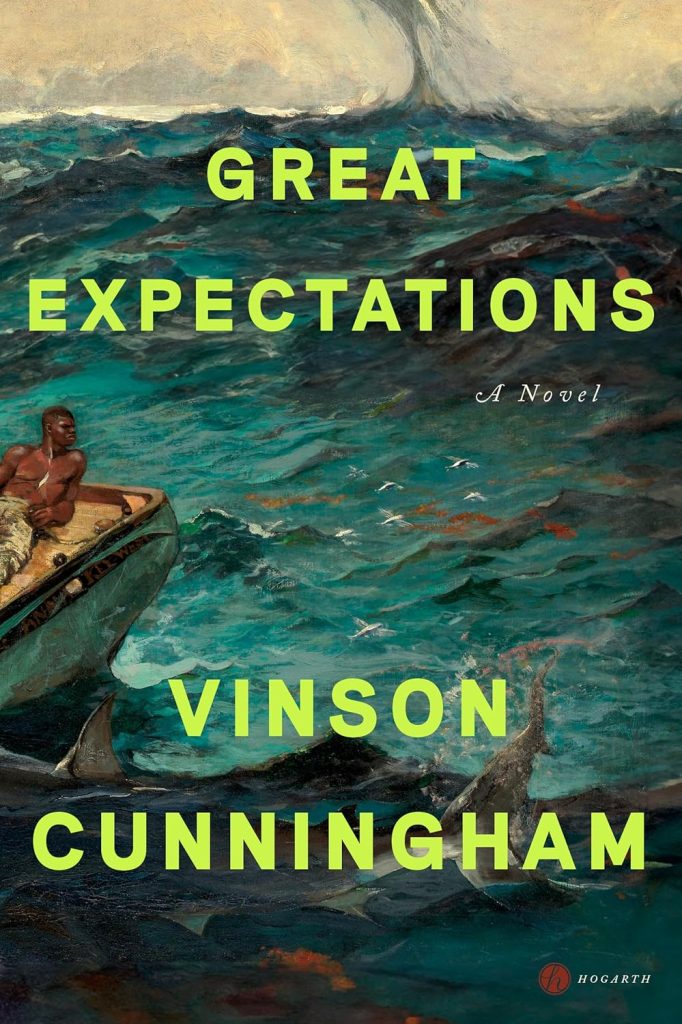
by Vinson Cunningham
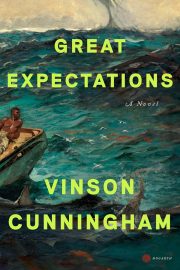
Today, I began reading “Great Expectations: A Novel” by Vinson Cunningham, a staff writer and theatre critic at The New Yorker. David, the protagonist, had seen the Senator speak a few times before my life got caught up, however distantly, with his. Still, the first time I can remember paying real attention was when he delivered the speech announcing his run for the Presidency.
Upon hearing the Senator from Illinois speak, David experiences conflicting emotions. He is fascinated by the Senator’s idealistic language yet ponders the balance between maintaining solid beliefs and making the necessary compromises to become America’s first Black president.
The book Great Expectations narrates David’s experience working for eighteen months on a Senator’s presidential campaign. During his journey, David encounters diverse individuals who raise questions about history, art, race, religion, and fatherhood. These inquiries prompt David to introspect his life and identity as a young Black man and father living in America.
Meditating on politics, religion, family, and coming-of-age, Great Expectations is a novel of ideas and emotional resonance, introducing a prominent new writer.
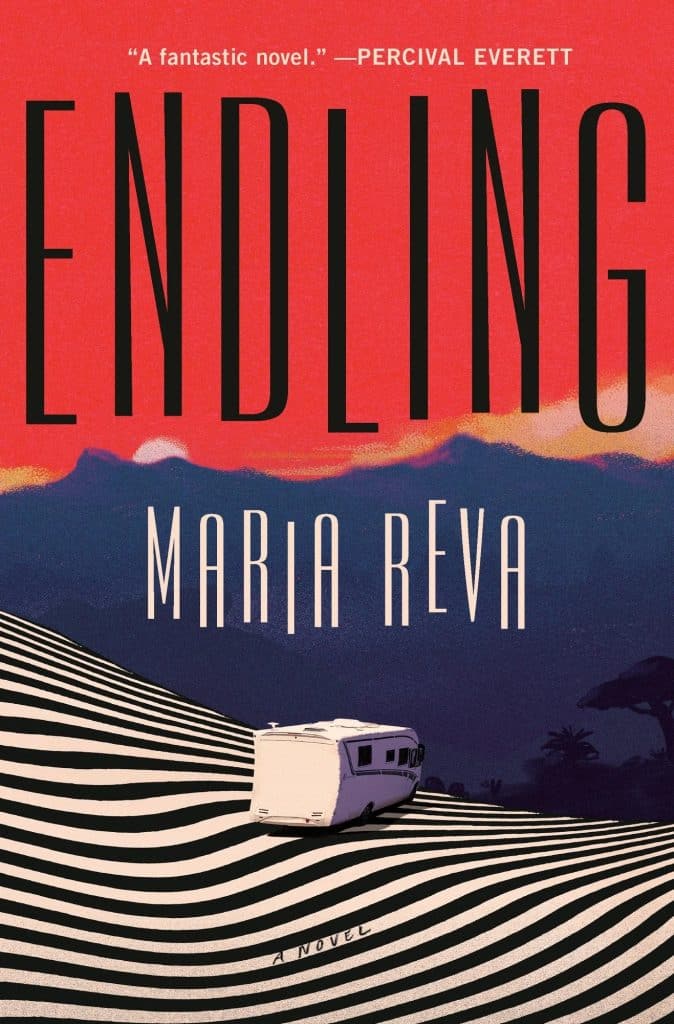
by Maria Reva
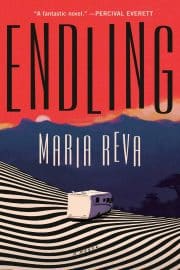
“Endling” by Maria Reva, a novel of exceptional literary merit, has been longlisted for the 2024 Booker Prize. Set in Ukraine, the story follows an eccentric scientist who breeds rare snails and two sisters pretending to be part of the marriage industry in their quest to find their activist mother. As Russia invades, they embark on a wild journey that involves kidnapped bachelors and the last of its kind snail. This darkly comic novel delves into themes of survival, love, and hope in times of increasing darkness.
In Ukraine in 2022, Yeva is a loner and a daring scientist who lives outside her mob country. She traverses the country’s forests and valleys, attempting to breed rare snails, though her efforts often fail. Meanwhile, her relatives pressured her not to settle down and start a family. What they don’t realize is that Yeva is already dating multiple men—not for love, but to fund her work—entertaining Westerners who come to Ukraine on guided romance tours believing they’ll find docile brides untainted by feminism and modernity.
Nastia and her sister, Solomiya, are also caught up in the booming marriage industry. They pose as a hopeful bride and her translator while secretly searching for their missing mother, who disappeared after years of fierce activism against the romance tours.
Together, they embark on a journey across hundreds of miles, joined by three angry women, a truckload of kidnapped bachelors, and Lefty, a rare snail with one last chance to perpetuate his species. However, their plans come to a sudden halt when Russia invades.
In a strikingly ambitious and profoundly moving metafictive narrative, Endling masterfully balances horror and family, drawing on Reva’s own experiences as a Ukrainian expat navigating her family’s struggle for survival during wartime. As fiction and reality converge on the page, Reva explores the harsh truths of war: What stories must we tell ourselves to survive? How do we maintain our routines amid military occupation? And for those watching from abroad: Can our sense of normalcy and security ever be restored, or have they always been a fragile illusion?
Endling is a tour de force from an author who weaves a story of love, loss, humor, and devastation that only she can tell.
Maria Reva was born in Ukraine and raised in Canada. She holds an MFA from the Michener Center at the University of Texas. Her fiction has been published in The Atlantic, McSweeney’s, and Best American Short Stories, among others, and has won a National Magazine Award. Additionally, she works as an opera librettist.
When you purchase a book through one of my links, I earn a small commission that helps support my passion for reading. This contribution allows me to buy even more books to share with you, creating an incredible cycle of discovering great reads together! Your support truly makes a difference!
Enjoy a limited-time offer of 20% off your next book purchase at Bookshop.org!
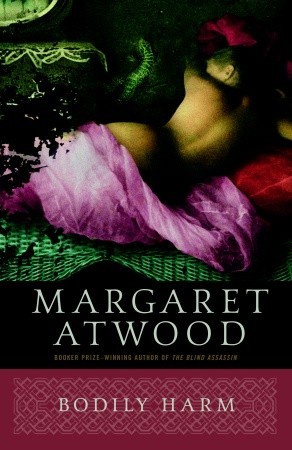
by Margaret Atwood
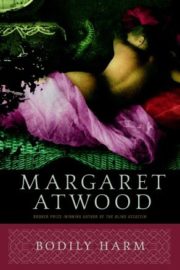
Bodily Harm by Margaret Atwood is one of the books I picked up from our bookshelf in the first few months after Jan’s death. Being someone who has always fantasized about being a journalist, I found it very interesting.
A powerfully and brilliantly crafted novel, Bodily Harm is the story of Rennie Wilford, a young journalist whose life has begun to shatter around the edges. Rennie flies to the Caribbean to recuperate, and on the tiny island of St. Antoine she is confronted by a world where her rules for survival no longer apply. By turns comic, satiric, relentless, and terrifying, Margaret Atwood’s Bodily Harm is ultimately an exploration of the lust for power, both sexual and political, and the need for compassion that goes beyond what we ordinarily mean by love.
Bodily Harm may be the bleakest book that Ms. Atwood has written. One of her common themes is “the violence that human beings inflict on one another and their isolation in an uncaring world. It holds out some hope in the form of compassion to be shared by those who are victims of bodily harm in any form. The novel suggests that every person falls into this category. All are victims. There is no exemption, no escape for anyone.”
I recommend this book.
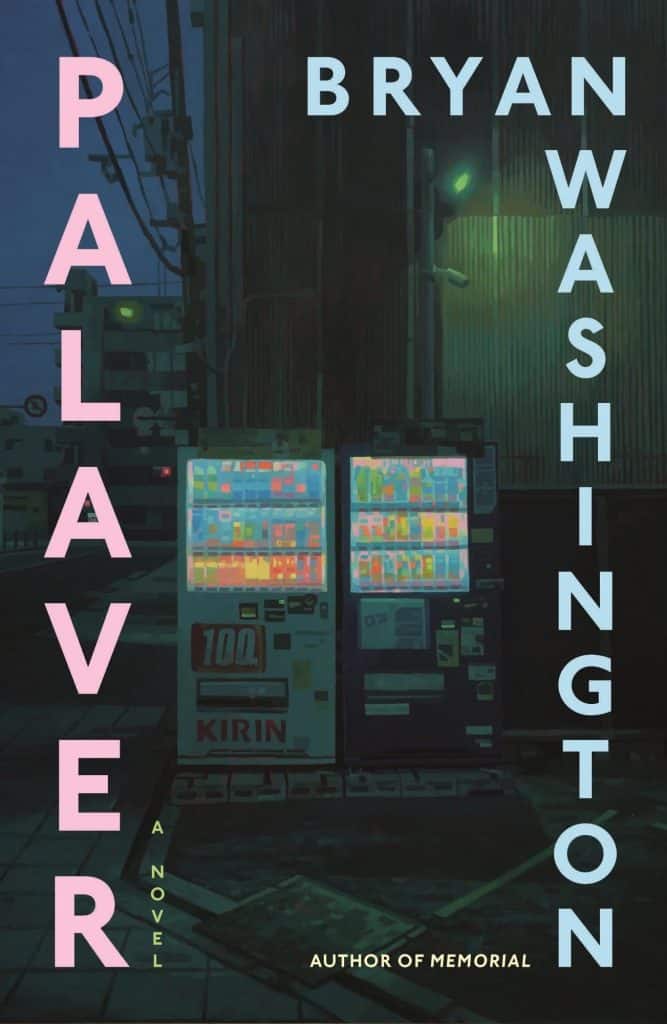
by Bryan Washington
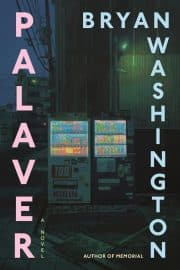
Written with subtle humor and warmth, Bryan Washington‘s Palaver weaves together the past and present across Houston, Jamaica, and Japan. This intricate story explores themes of family, love, and the beauty of coexistence. A finalist for the National Book Award for Fiction, this novel is a life-affirming tale about family, healing, and the ways we learn to love, showcasing the talent of the award-winning Bryan Washington.
In Tokyo, a young man works as an English tutor and spends his nights out with friends at a gay bar. He is involved in a sexual relationship with a married man. Although he has formed a chosen family in Japan, he and his mother, who resides in Houston, are estranged from each other. Her preference for his troubled, homophobic brother, Chris, ultimately pushed him to leave home. Then, in the weeks leading up to Christmas—ten years after they last saw each other—his mother arrives uninvited at his doorstep.
With only the son’s cat, Taro, to mediate, the two clash immediately. The mother struggles with memories of her youth in Jamaica and her complicated relationship with her brother, as she attempts to reconcile her good intentions with past mistakes. Meanwhile, the son grapples with the challenge of forgiveness. However, as life takes unexpected turns—leading the mother to form a tentative friendship with a local bistro owner and the son to connect with a new patron at the bar cautiously—they begin to see each other more clearly.
Through shared meals, conversations, and an eventful trip to Nara, both mother and son try to determine where “home” truly is and whether they can find it in one another.
Bryan Washington is the author of the story collection Lot and the novels Memorial and Family Meal. He is a National Book Award 5 Under 35 Honoree. He has won several prestigious awards, including the Dylan Thomas Prize, the NYPL Young Lions Fiction Award, the Ernest J. Gaines Award, two Lambda Literary Awards, and an O. Henry Prize.
Washington has also been a finalist for various awards, such as the National Book Critics Circle Award for Fiction, the Aspen Words Literary Prize, the Center for Fiction First Novel Prize, the Andrew Carnegie Medal of Excellence, and the James Tait Black Prize. The New York Times referred to his writing as among the 25 Most Influential Works of Postwar Queer Literature, and he was a columnist for the New York Times Magazine.
As a frequent contributor to The New Yorker and The New York Times, his writing has appeared in other notable publications, including Granta, The New York Times Magazine, New York, Time, GQ, and Esquire, among others. He lives in Tokyo.
Discover your next favorite book and dive into a world of curated, exciting reads by purchasing through my links. You’ll have access to a diverse selection of books that I’ve personally vetted to ensure quality and enjoyment. Additionally, by supporting these selections, you’ll help me continue to provide you with more personalized recommendations. I earn a small commission from your purchase, which allows me to buy and share even more books with you. Your support truly makes a difference!
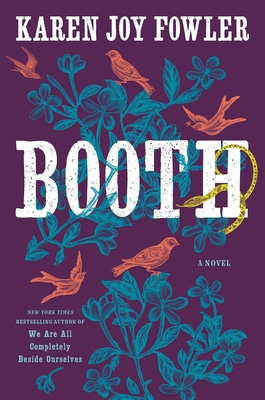
by Karen Joy Fowler
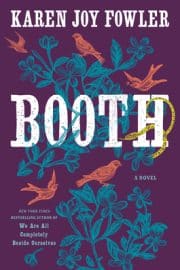
Booth by Karen Joy Fowler was on my to-read list for several months. Booth is an epic and intimate novel about the family behind one of the most infamous figures in American history: John Wilkes Booth. I have always been fascinated by history, especially the Civil War. Booth is a startling portrait of a country in the throes of change and a vivid exploration of the ties that make and break a family. It is the second book I have read this year.
Ms. Fowler struggled with how to write this novel without focusing on the cruelest member of the Booth family. She succeeded, but I sometimes felt confused about the type of book I was reading. Was it historical fiction or a textbook?
In the afterword, she admits that there is more of the story in the children of the siblings of John Wilkes Booth. I wish I knew more about that generation and how they responded to the notoriety. A family tree would have helped as there are many family members.
I recommend Booth as history is a dynamic lesson we must keep studying.
The Goodreads summary provides an overview,
In 1822, a secret family moved into a secret cabin some thirty miles northeast of Baltimore to farm, hide, and bear ten children over the next sixteen years. Junius Booth–breadwinner, celebrated Shakespearean actor, and master of the house in more ways than one–is at once a mesmerizing talent and a man of terrifying instability. One by one, the children arrive, as year by year, the country draws frighteningly closer to the boiling point of secession and civil war.
As the tenor of the world shifts, the Booths emerge from their hidden lives to cement their place as one of the country’s leading theatrical families. But behind the curtains of the many stages they have graced, multiple scandals, family triumphs, and criminal disasters begin to take their toll, and the solemn siblings of John Wilkes Booth are left to reckon with the truth behind the destructively specious promise of an early prophecy.
The Jan Lilien Education Fund sponsors ongoing sustainability and environmental awareness programs. Gifts made this month; I will match dollar-for-dollar. All donations are tax-deductible.
I receive a commission when you buy a book or product using a link on this page. Thank you for supporting Sharing Jan’s Love blog.
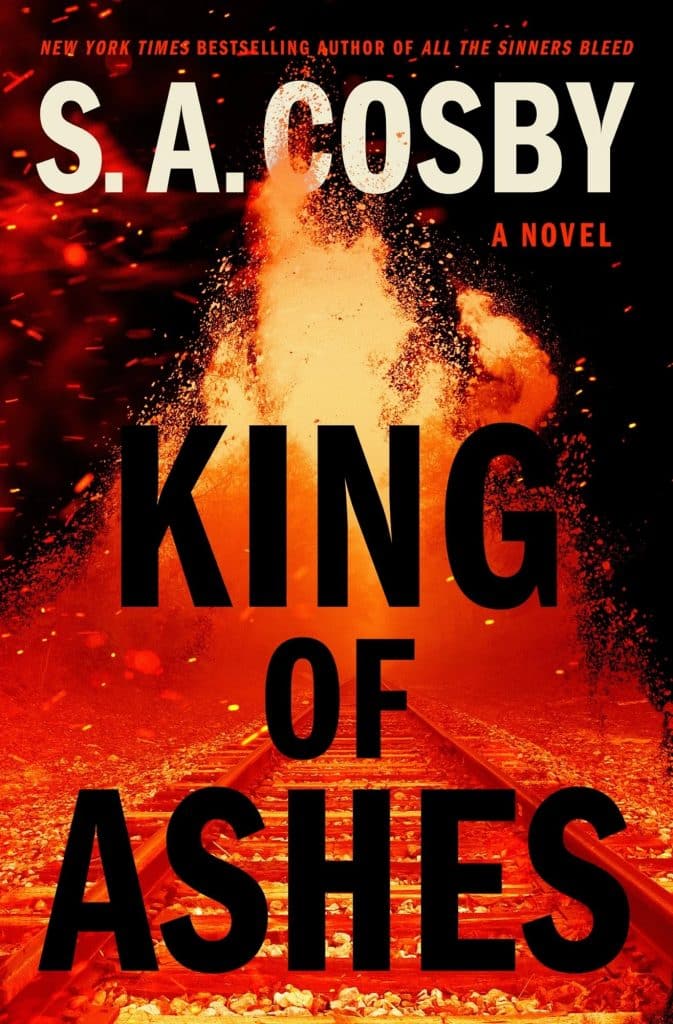
by S. A. Cosby
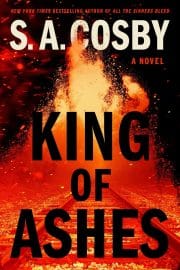
Today, as heavy thunderstorms rumbled outside and flash flood warnings loomed, I dove into “King of Ashes,” a gripping Southern crime saga that draws inspiration from “The Godfather.” Written by the acclaimed New York Times bestselling author S. A. Cosby, this novel was a long-awaited treat for me. I read “All the Sinners Bleed” nearly two years ago and have been itching for Cosby’s next masterpiece ever since.
As I turned the pages, the opening paragraphs immediately pulled me in and confirmed that the wait was worthwhile. The summoning of eldest son Roman Carruthers’ home after his father’s car accident not only sets the stage for a gripping plot but also resonates with the universal theme of family. He finds his younger brother, Dante, in debt to dangerous criminals and his sister, Neveah, exhausted from holding the family—and the family business—together. Neveah and their father, who run the Carruthers Crematorium in the run-down central Virginia town of Jefferson Run, see death up close every day. But mortality draws even closer when it becomes clear that the crash that landed their father in a coma was no accident, and Dante’s recklessness has placed them all in real danger.
Roman, a financial whiz with a knack for numbers and a talent for making his clients wealthy, has some money to help his brother out of trouble. But in his work with wannabe tough guys, he’s forgotten that there are real gangsters out there. As his bargaining chips go up in smoke, Roman realizes that he has only one thing left to offer to save his brother: himself and his own particular set of financial skills.
Roman begins his work for the criminals while Neveah tries to uncover the long-ago mystery of what happened to their mother, who disappeared under mysterious or suspicious circumstances when they were teenagers. But Roman is far less of a pushover than the gangsters realize. He is willing to do anything to save his family. Anything.
Because everything burns.
S. A. Cosby is a New York Times bestselling writer from southeastern Virginia. He is the author of All the Sinners Bleed, which was on more than forty Best of the Year lists, including Barack Obama’s, as well as Edgar Award finalist Razorblade Tears and Los Angeles Times Book Prize winner Blacktop Wasteland. He has also won the Anthony Award, ITW Thriller Award, Barry Award, Macavity Award, BCALA Award, and Audie Award. He has been longlisted for the ALA Andrew Carnegie Medal for Excellence.
When you purchase a book through one of my links, I earn a small commission that helps support my passion for reading. This contribution allows me to buy even more books to share with you, creating an incredible cycle of discovering great reads together! Your support truly makes a difference!
Enjoy a limited-time offer of 20% off your next book purchase at Bookshop.org!
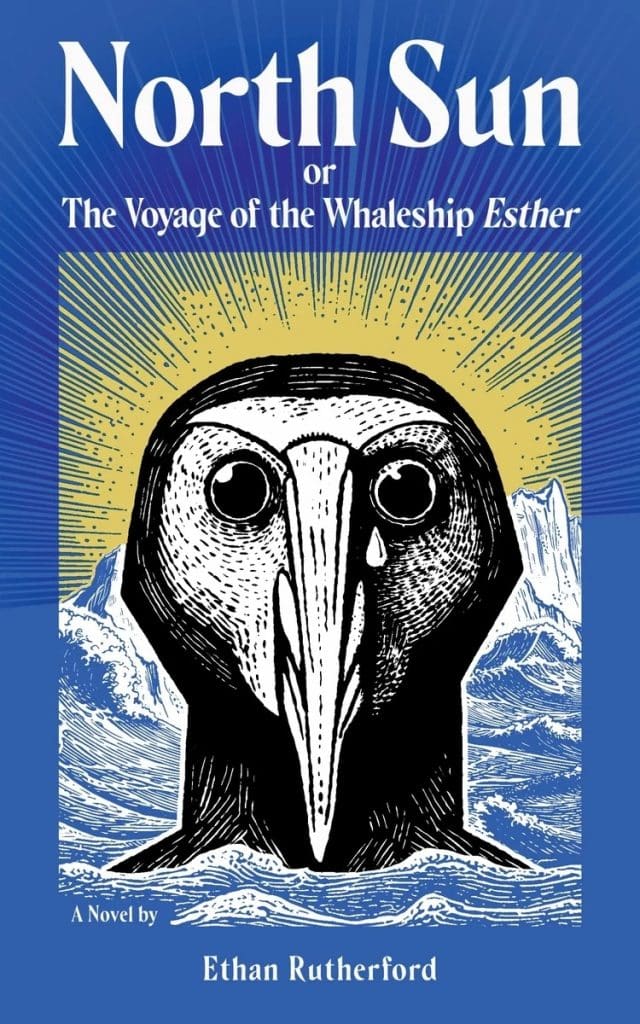
by Ethan Rutherford
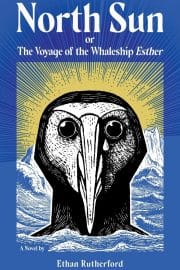
“North Sun: Or, the Voyage of the Whaleship Esther” by Ethan Rutherford is a finalist for the fiction category of the 2025 National Book Award. With one foot firmly planted in the traditional sea-voyage narrative, and another in a blazing mythos of its own, this debut novel looks unsparingly at the cost of environmental exploitation and predation, and in doing so feverishly sings not only of the past, but to the present and future as well.
Setting out from New Bedford in 1878, the crew of the Esther is confident the sea will be theirs: in addition to cruising the Pacific for whales, they intend to hunt the teeming northern grounds before the ice closes. But as they sail to their final destination in the Chukchi Sea, where their captain Arnold Lovejoy has an urgent directive of his own to attend to, their encounters with the natural world become more brutal, harrowing, ghostly, and strange.
Ethan Rutherford‘s fiction has appeared in BOMB, Tin House, Electric Literature, Ploughshares, One Story, American Short Fiction, Conjunctions, and The Best American Short Stories. He is the author of two story collections–Farthest South (Deep Vellum, 2020) and The Peripatetic Coffin and Other Stories (Ecco, 2013)–and for these works has been named a finalist for the Los Angeles Times Art Seidenbaum Award for First Fiction, a finalist for the John Leonard Prize and CLMP’s Firecracker Award, received honorable mention for the PEN/Hemingway Award, was a Barnes & Noble Discover Great New Writers selection, and was the winner of a Minnesota Book Award.
Born in Seattle, Washington, he received his MFA in Creative Writing from the University of Minnesota and now teaches Creative Writing at Trinity College. He lives in Hartford, Connecticut, with his wife and two children.
Discover your next favorite book and dive into a world of curated, exciting reads by purchasing through my links. You’ll have access to a diverse selection of books that I’ve personally vetted to ensure quality and enjoyment. Additionally, by supporting these selections, you’ll help me continue to provide you with more personalized recommendations. I earn a small commission from your purchase, which allows me to buy and share even more books with you. Your support truly makes a difference!
Read: September 2023
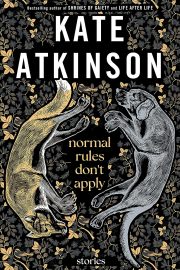
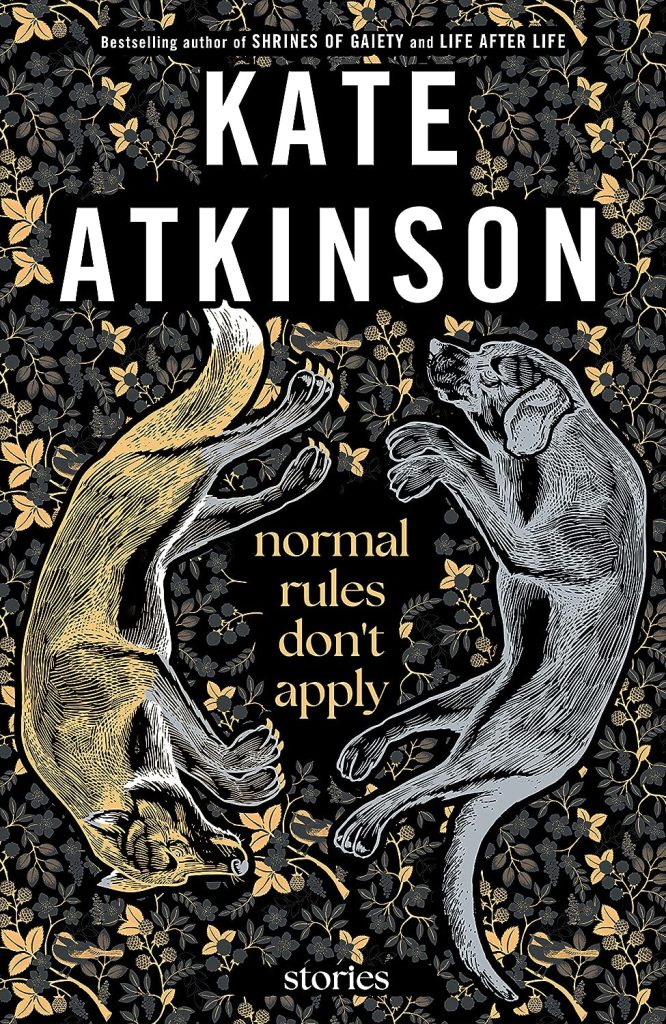
by Kate Atkinson
Today, I commended reading Normal Rules Don’t Apply: Stories by Kate Atkinson, is a dazzling collection of eleven interconnected stories from the bestselling, award-winning author of Shrines of Gaiety and Life After Life, with everything that readers love about her novels—the inventiveness, the verbal felicity, the sharp observations on human nature, and the deeply satisfying emotional wallop.
Nothing is quite as it seems in this collection of eleven dazzling stories. We meet a queen who makes a bargain she cannot keep, a secretary who watches over the life she has just left, and a man who bets on a horse that may—or may not—have spoken to him. Everything that readers love about the novels of Kate Atkinson is here—the inventiveness, the verbal felicity, the sharp observations on human nature, and the deeply satisfying emotional wallop.
A startling and funny feast for the imagination, these stories conjure a multiverse of subtly connected worlds while illuminating the webs of chance and connection among us all.
The Jan Lilien Education Fund sponsors ongoing sustainability and environmental awareness programs. Gifts made this month; I will match dollar-for-dollar. All donations are tax-deductible.
I receive a commission when you buy a book or product using a link on this page. Thank you for supporting Sharing Jan’s Love blog.
Read: May 2023
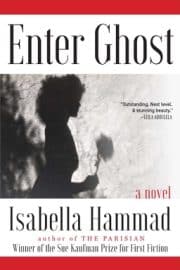
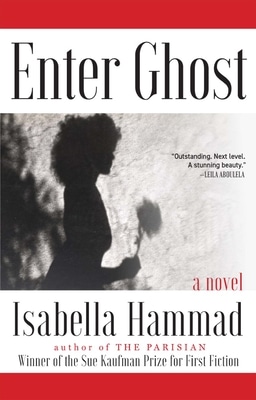
by Isabella Hammad
Isabella Hammad‘s highly anticipated novel, Enter Ghost, takes readers on a unique journey through modern-day Palestine, exploring themes of displacement, diaspora, and the unbreakable bonds of family and shared resistance. Hammad’s passionate and thoughtful writing brings to life a timely and unforgettable story, shedding light on the struggles of artistry under occupation.
The novel follows Sonia Nasir, an actress who returns to Haifa after years away from her family’s homeland to visit her sister, Haneen. However, this is no ordinary trip for Sonia, as it marks her first visit since the second intifada and the deaths of her grandparents. Still recovering from a disastrous love affair and a dissolute marriage, Sonia finds her relationship with Palestine to be fragile, both bone-deep and new.
As opening night approaches, a troupe of Palestinian actors faces numerous violent obstacles. Sonia meets Mariam, a local director who ropes her into a production of Hamlet on the West Bank. She rehearses Gertrude’s lines in classical Arabic and spends more time in Ramallah than in Haifa, working alongside a group of dedicated men from all over historic Palestine. Despite their competing egos and priorities, each group member is united in their desire to bring Shakespeare to that side of the wall. Amidst it all, Sonia has the daunting yet exhilarating possibility of finding a new self in her ancestral home.
The Jan Lilien Education Fund sponsors ongoing sustainability and environmental awareness programs. Gifts made this month; I will match dollar-for-dollar. All donations are tax-deductible.
I receive a commission when you buy a book or product using a link on this page. Thank you for supporting Sharing Jan’s Love blog.
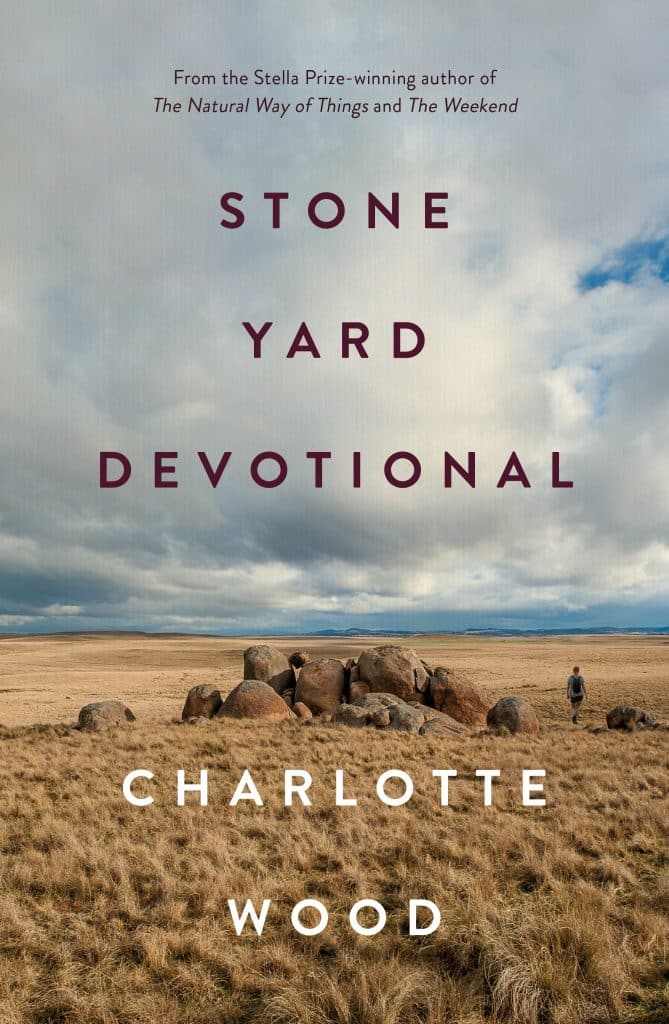
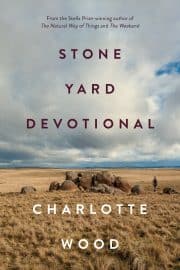
by Charlotte Wood
Today, I dove into Charlotte Wood‘s captivating novel, “Stone Yard Devotional.” I couldn’t resist picking it up after discovering a glowing review by Joumana Khatib. She expressed her fondness for the book in the New York Times Book Review Newsletter, saying, “I’m still so enamored of Charlotte Wood’s novel.” It’s impressive that this work was a finalist for the Booker Prize last year! I’m eager to read the book to determine if it is a “love story,” as Ms. Khatib believes.
Burnt out and needing a retreat, a middle-aged woman leaves Sydney to return to her childhood home, taking refuge in a small religious community hidden away on the stark plains of rural Australia. She does not believe in God and is unfamiliar with the concept of prayer, finding herself living this strange, reclusive existence almost by accident.
However, her secluded life is disrupted by three significant events. First, a terrible mouse plague marks a new battle against the growing infestation daily. Second, the skeletal remains of a sister who disappeared decades ago and was presumed murdered return. Finally, a troubling visitor brings her further into her past.
Meditative, moving, and finely observed, “Stone Yard Devotional” is a seminal novel from a writer of rare power. It explores the meaning of retreating from the world, forgiveness’s true nature, and grief‘s lasting effects on the human soul.
When you purchase a book through one of my links, I earn a small commission that helps support my passion for reading. This contribution allows me to buy even more books to share with you, creating an incredible cycle of discovering great reads together! Your support truly makes a difference!
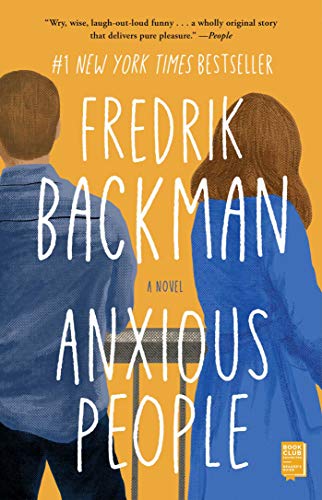
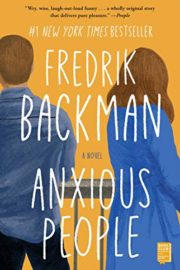
by Fredrik Backman
Anxious People by Fredrik Backman, a poignant comedy about a crime that never occurred. A would-be bank robber disappears into thin air, and eight highly anxious strangers find they have more in common than they ever imagined. Anxious People is a novel that Jan and I would have both enjoyed reading. It jumped off the e-book shelf while looking for a new book to read.
Although Anxious People is a humorous comedy, it is really about the enduring power of friendship, forgiveness and hope, which are the key to our survival as individuals, couples and communities. It is the core of what made the love that Jan and I shared special and unique, but it is also what I gain from my participation in my various grief groups as well as Friday night Shabbat services.
I highly recommend this book.
The Goodreads summary provides an overview.
Viewing an apartment usually doesn’t turn into a life-or-death situation. Still, this particular open house becomes just that when a failed bank robber bursts in and takes everyone in the apartment hostage. As the pressure mounts, the eight strangers slowly open up to one another and reveal long-hidden truths.
First is Zara, a wealthy bank director who has been too busy to care about anyone else until tragedy changed her life. Now, she’s obsessed with visiting open houses to see how ordinary people live—perhaps, setting an old wrong to the right. Then there’s Roger and Anna-Lena, an Ikea-addicted retired couple who are on a never-ending hunt for fixer-uppers to hide the fact that they don’t know how to fix their failing marriage. Julia and Ro are a young lesbian couple and soon-to-be parents who are nervous about their chances for a successful life together since they can’t agree on anything. And there’s Estelle, an eighty-year-old woman who has lived long enough to be unimpressed by a masked bank robber waving a gun. And despite the story she tells them all, Estelle hasn’t come to the apartment to view it for her daughter, and her husband isn’t outside parking the car.
As police surround the premises and television channels broadcast the hostage situation live, the tension mounts, and even deeper secrets are slowly revealed. Before long, the robber must decide which is the terrifying prospect: going out to face the police or staying in the apartment with this group of impossible people.
Rich with Fredrik Backman’s “pitch-perfect dialogue and an unparalleled understanding of human nature” (Shelf Awareness), Anxious People’s whimsical plot serves up unforgettable insights into the human condition and a gentle reminder to be compassionate to all the anxious people we encounter every day.
When you buy a book or product using a link on this page, I receive a commission. Thank you for supporting Sharing Jan’s Love blog.
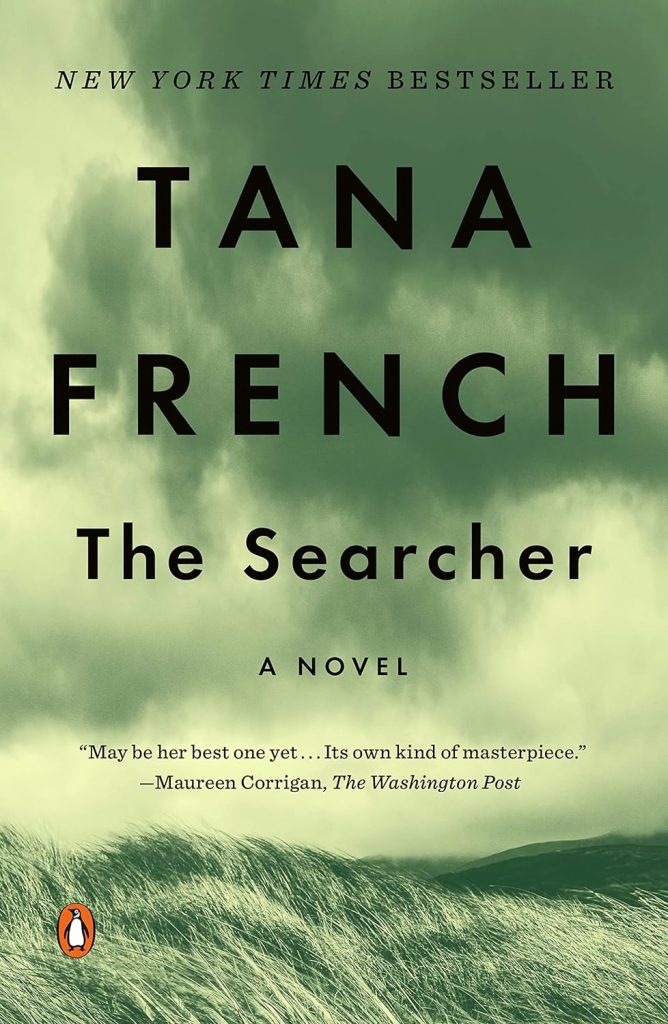
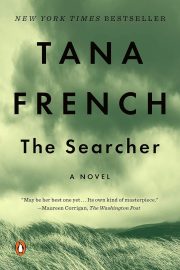
by Tana French
Today, I started reading Tana French‘s The Searcher: A Novel. Last week, I read The Hunter by the same author. I should have read The Searcher first, as it is the prequel to The Hunter, but reading in reverse order helped my enjoyment. Despite knowing some of the suspenseful twists and turns the story would take, I found it a page-turner.
The story follows Cal Hooper, a retired Chicago police officer who seeks a fresh start in a tranquil Irish village. However, when a local boy approaches him to investigate his missing brother, Cal discovers that the town has its share of dark secrets. The book raises thought-provoking questions about distinguishing right from wrong in a complicated world and what we risk when making that decision.
Tana French is a highly acclaimed crime novelist who skillfully creates a captivating and suspenseful atmosphere throughout the book.
Subscribe to Sharing Jan's Love Newsletter!
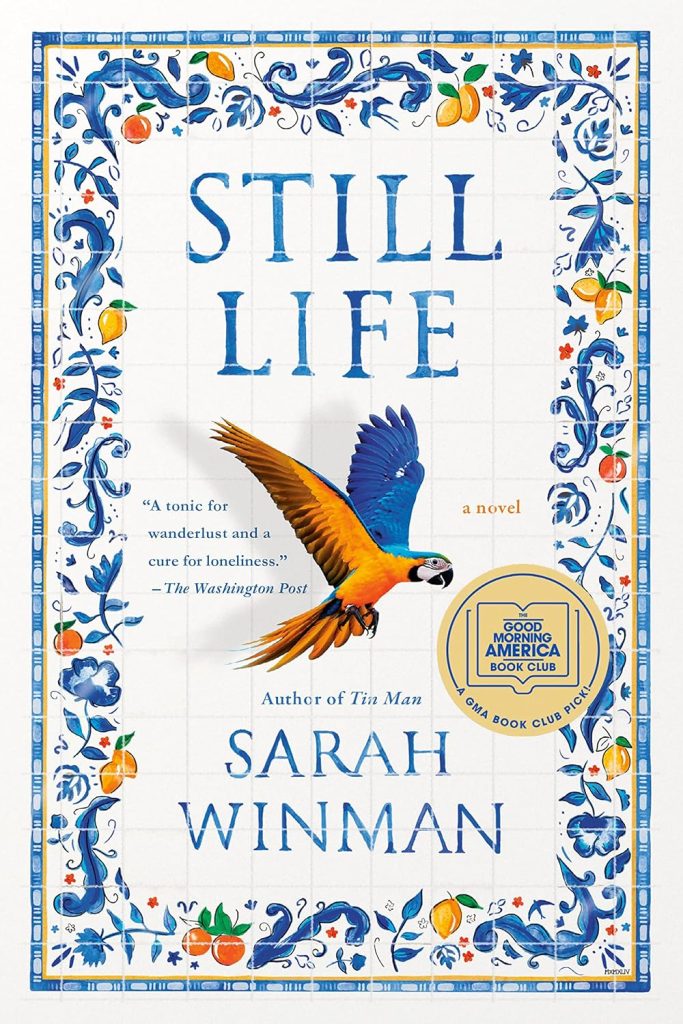
by Sarah Winman
I began reading “Still Life,” a GMA Book Club pick by Sarah Winman. This captivating and bighearted novel weaves a rich tapestry of stories about people connected by love, war, art, flood, and the ghost of E.M. Forster. Kristen V. Brown, in The Atlantic Magazine’s Culture Survey, describes “Still Life” as the best novel she has recently read and considers it the best nonfiction work.
In Tuscany in 1944, as Allied troops advance and bombs fall around deserted villages, a young English soldier, Ulysses Temper, finds himself in the wine cellar of an abandoned villa. There, he encounters Evelyn Skinner, a middle-aged art historian who has come to Italy to salvage paintings from the ruins and recall long-forgotten memories of her youth. In each other, Ulysses and Evelyn find a kindred spirit amidst the rubble of war-torn Italy and set off on a course of events that will shape Ulysses’s life for the next four decades.
As Ulysses returns home to London, reimmersing himself in his crew at The Stoat and Parot—a motley mix of pub crawlers and eccentrics—he carries his time in Italy. And when an unexpected inheritance brings him back to where it all began, Ulysses knows better than to tempt fate and returns to the Tuscan hills.
With beautiful prose, extraordinary tenderness, and bursts of humor and light, Still Life is a sweeping portrait of unforgettable individuals who come together to make a family and a deeply drawn celebration of beauty and love in all its forms.
When you purchase a book through one of my links, I earn a small commission that helps support my passion for reading. This contribution allows me to buy even more books to share with you, creating an incredible cycle of discovering great reads together! Your support truly makes a difference!
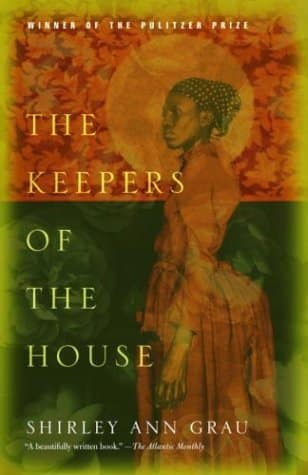
by Shirley Ann Grau
The Keepers of the House by Shirley Ann Grau is a book that I read a portion of for a college class, but for reasons that I cannot now remember never got around to reading it from cover to cover. In the early stages of grief, I found a copy in our bookshelf and said, let me read it now. It was a decision that I did not regret.
Having grown up in the American South, the book resonated with me, as did the sections I read fifty years ago. It’s a many-layered indictment of racism and rage that is as terrifying as it is wise.
As someone who likes history and values the importance of place, the book’s focus on the continued ownership of the same land since the early 1800s by the Howland’s provided a broad historical perspective. Abigail Howland has learned many important family legacies, but not all.
However, when William’s, her grandfather, relationship with Margaret Carmichael, a black housekeeper, is revealed to the community, the racism and fury boil over. Abigail chooses to get even with the town her family built by punishing them.
The Keepers of the House is a book that I wish I had read in its entirety half a century ago. Having read it now, I recommend it to all who care about life and community.
by Julia Heaberlin
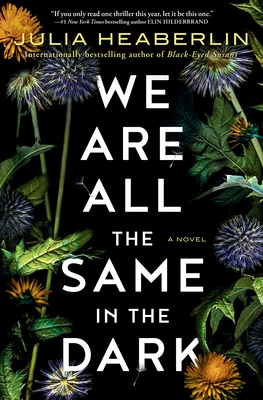
We Are All the Same in the Dark by Julia Heaberlin is a novel I highly recommend and wish I had read earlier. The title summarizes the reality of all humans, that in the dark we are all the same. Disabilities do not define us, just as being a widow does not define who I am. In this twisty psychological thriller, Julia Heaberlin paints two unforgettable portraits of a woman and a girl who redefine perceptions of physical beauty and strength. Her novel has helped me redefine my grief.
I have been a widow for almost twenty-one months. After a trauma of that magnitude, it is easier to let the widowed state define me. But I am more than just a widow! But I am a father, grandfather, friend, neighbor, advocate, and more. Reading We Are All the Same in the Dark helped me embrace myself and not wallow in widowhood.
The novel begins with the discovery of a girl abandoned by the side of the road who threatens to unearth the long-buried secrets of a Texas town’s legendary cold case. In the first section, I was still determining if I wanted to continue. Once I read about Odette Tucker and Angel, it became a page-turner.
This line from Odette given to Angelica, aka Angel, summarizes the characteristics that each of us should live by.
Tender. Resilient. Strong. Resourceful. Kind. Empathetic.—Six words Marshall Tucker wrote on a piece of paper to describe his daughter, Odette.
As a mensch-in-training, I will strive to live by those six words.
We are truly all the same in the dark.
We Are All the Same in the Dark is the ninth book I read this year.
The Goodreads summary provides an overview,
It’s been a decade since Trumanell Branson disappeared, leaving only a bloody handprint behind. Her pretty face still hangs like a watchful queen on the posters on the walls of the town’s Baptist church, the police station, and the high school. They all promise the same thing: We will find you. Meanwhile, her brother, Wyatt, lives as a pariah in the desolation of the old family house, cleared of wrongdoing by the police but tried and sentenced in the court of public opinion and a new documentary about the crime.
When Wyatt finds a lost girl dumped in a field of dandelions, making silent wishes, he believes she is a sign. The town’s youngest cop, Odette Tucker, believes she is a catalyst that will ignite a seething town still waiting for its missing girl to come home. But Odette can’t look away. She shares a wound that won’t close with the mute, one-eyed mystery girl. And she is haunted by her history with the missing Tru.
Desperate to solve both cases, Odette fights to save the lost girl in the present and to dig up the shocking truth about a fateful night in the past–the night her friend disappeared. This night inspired her to become a cop, the night that wrote them all a role in the town’s dark, violent mythology.
The Jan Lilien Education Fund sponsors ongoing sustainability and environmental awareness programs. Gifts made this month; I will match dollar-for-dollar. All donations are tax-deductible.
I receive a commission when you buy a book or product using a link on this page. Thank you for supporting Sharing Jan’s Love blog.
by Marilynne Robinson
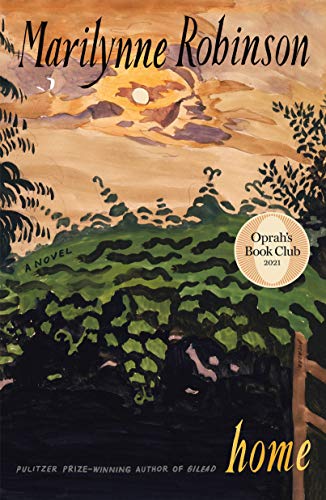
Home: A Novel by Marilynne Robinson is a moving and healing book about families, family secrets, the passing of the generations, love, death, and faith. Robinson’s most significant work is an unforgettable embodiment of the most profound and universal emotions. Although I have not read the other novels in this series, I plan to add them to my list. I highly recommend this book.
It is a moving and healing book about families, family secrets, the passing of generations, love, death, and faith. With the loss of the love of my life ten months ago, these are topics that I have spent time thinking about. Ms. Robinson’s powerful writing weaved a story that I could not stop reading.
Again, I highly recommend this novel.
This is the Goodreads summary.
Hundreds of thousands were enthralled by the luminous voice of John Ames in Gilead Marilynne Robinson’s Pulitzer Prize-winning novel. Home is an entirely independent, deeply affecting novel that takes place concurrently in the same locale, this time in the household of Reverend Robert Boughton, Ames’s closest friend.
Glory Boughton, aged thirty-eight, has returned to Gilead to care for her dying father. Soon her brother, Jack—the prodigal son of the family, gone for twenty years—comes home too, looking for refuge and trying to make peace with a past littered with tormenting trouble and pain.
Jack is one of the great characters in recent literature. A bad boy from childhood, an alcoholic who cannot hold a job, he is perpetually at odds with his surroundings and with his traditionalist father, though he remains Boughton’s most beloved child. Brilliant, lovable, and wayward, Jack forges an intense bond with Glory and engages painfully with Ames, his godfather and namesake.
Home is a moving and healing book about families, family secrets, the passing of the generations, love, death, and faith. Robinson’s most significant work is an unforgettable embodiment of the most profound and universal emotions.
When you buy a book or product using a link on this page, I receive a commission. Thank you for supporting Sharing Jan’s Love blog.
by Barbara Kingsolver
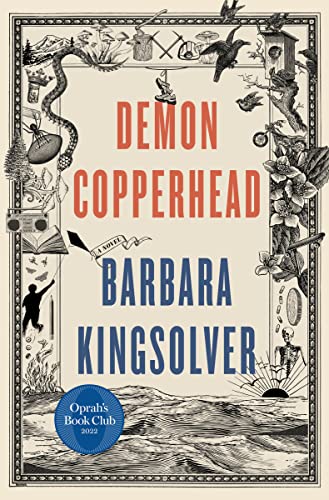
Demon Copperhead: A Novel by Barbara Kingsolver is a must-read page-turner! Set in the mountains of southern Appalachia, this is the story of a boy born to a teenage single mother in a single-wide trailer, with no assets beyond his dead father’s good looks and copper-colored hair, a caustic wit, and a fierce talent for survival. Demon Copperhead speaks for a new generation of lost boys and all those born into beautiful, cursed places they can’t imagine leaving behind.
With more knowledge about the devastation of an economy that works for a few and the opioid crisis, I felt as if I was reading about people I knew. Although the book focuses on the impact on boys, it also details the devastation that girls experience.
If Jan had read Demon Copperhead, she would have encouraged me to read it. It reminds us of the work we must do to repair the world.
As a widow, it was a reminder of the long road that we must all take even after we have hit bottom.
WNYC’s All of it hosted an interview with Barbara Kingsolver in which she speaks about Demon Copperhead and her writing.
Demon Copperhead is one of the NYTimes’ top five fiction books of 2022. I have read three of them, The Candy House, The Furrows, and Checkout 19.
The Goodreads summary provides an overview.
In a plot that never pauses for breath, relayed in his unsparing voice, he braves the modern perils of foster care, child labor, derelict schools, athletic success, addiction, disastrous loves, and crushing losses. Through all of it, he reckons with his invisibility in a popular culture where even the superheroes have abandoned rural people in favor of cities.
Many generations ago, Charles Dickens wrote David Copperfield from his experience as a survivor of institutional poverty and its damage to children in his society. Those problems have yet to be solved in ours. Dickens is not a prerequisite for readers of this novel, but he provided its inspiration. In transposing a Victorian epic novel to the contemporary American South, Barbara Kingsolver enlists Dickens’ anger and compassion and, above all, his faith in the transformative powers of a good story. Demon Copperhead speaks for a new generation of lost boys and all those born into beautiful, cursed places they can’t imagine leaving behind.
The Jan Lilien Education Fund sponsors ongoing sustainability and environmental awareness programs. Gifts made this month; I will match dollar-for-dollar. All donations are tax-deductible.
I receive a commission when you buy a book or product using a link on this page. Thank you for supporting Sharing Jan’s Love blog.
by Diana Evans
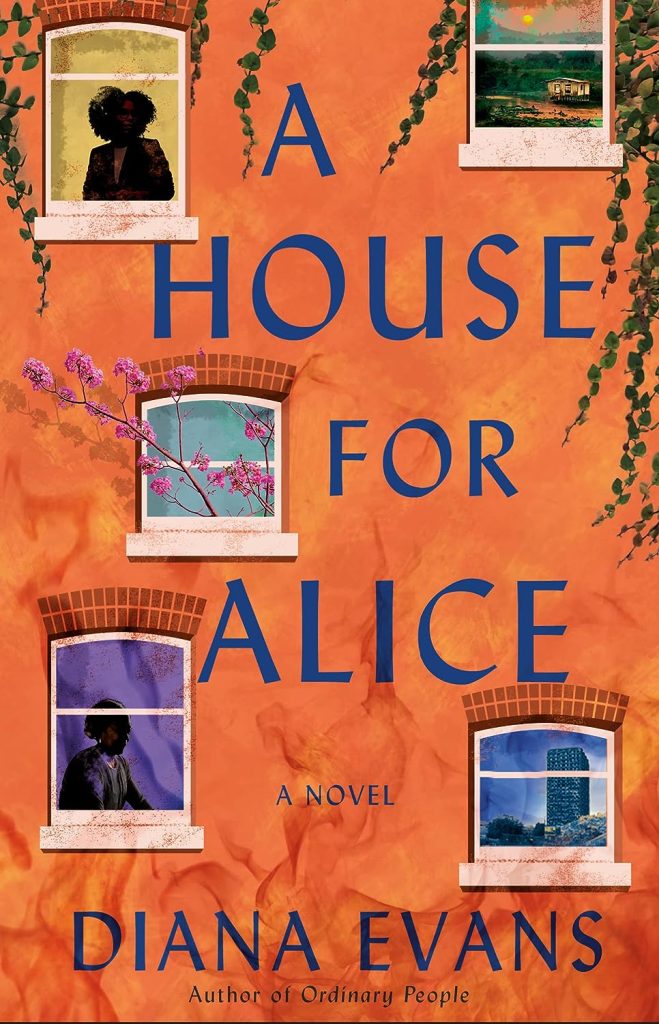
I just started reading A House for Alice: A Novel by Diana Evans. The story is set against a complicated political backdrop but is filled with hope, humor, and humanity. A House for Alice explores the scars of grief and betrayal across generations and reveals the secrets we keep from our loved ones.
The novel opens with two tragedies that occur in London. The first is the Grenfell Tower fire, which took many lives. The second is the death of Cornelius Winston Pitt, a family patriarch who dies alone. A House for Alice is a beautiful and poignant story about a family of women shaken by loss and searching for closure.
The family matriarch, Alice, has lived in England for fifty years but longs to spend her remaining years in her homeland, Nigeria. Her three daughters are divided on the matter. The youngest daughter, Melissa, is also struggling with the aftermath of her failed relationship. The family’s foundational pillars of trust, love, and cultural identity begin to weaken as they navigate these difficult times.
The Jan Lilien Education Fund sponsors ongoing sustainability and environmental awareness programs. Gifts made this month; I will match dollar-for-dollar. All donations are tax-deductible.
I receive a commission when you buy a book or product using a link on this page. Thank you for supporting Sharing Jan’s Love blog.