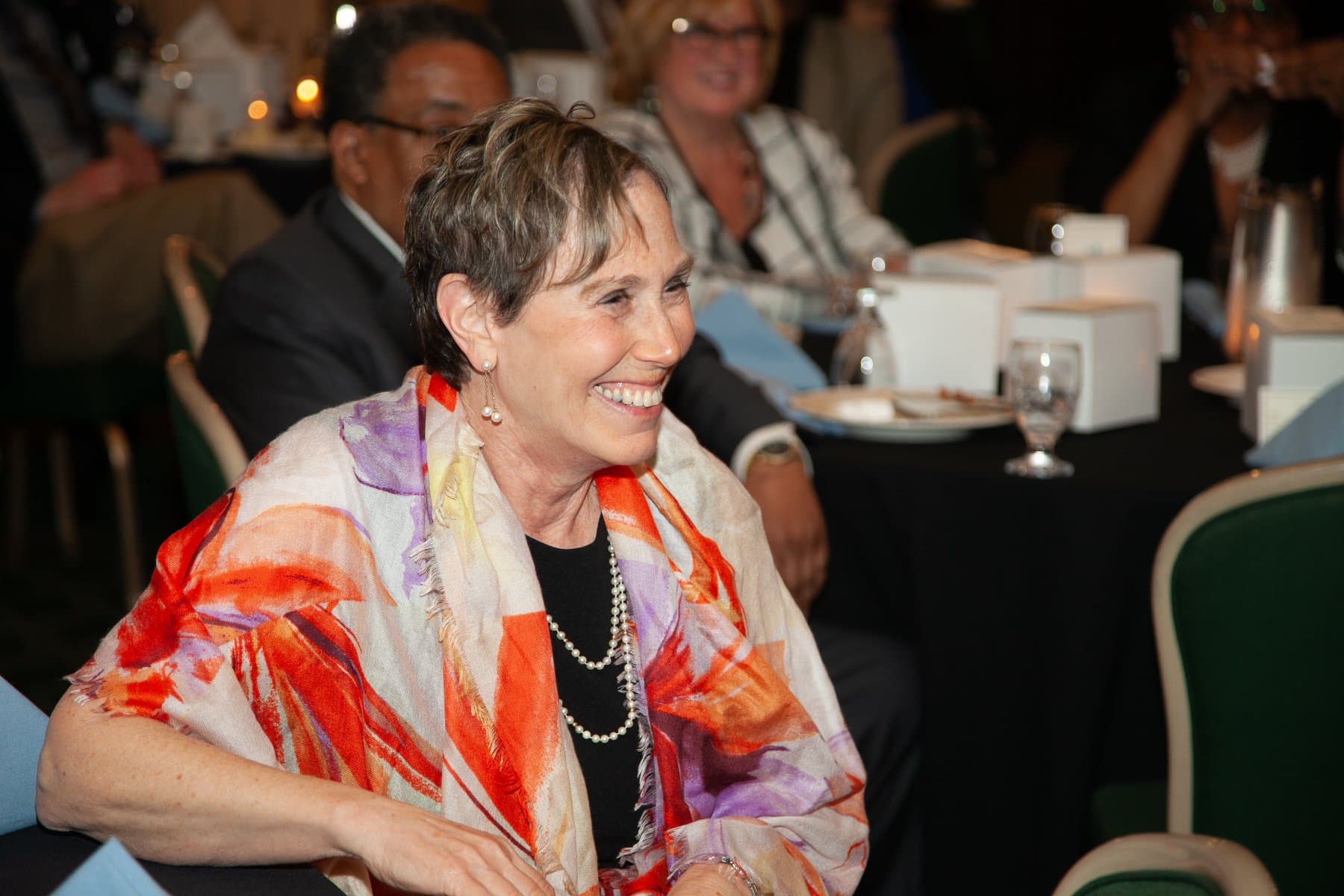


Jan Lilien and Richard Brown, Wedding Day, August 9, 1975

Widow Time is Non-Linear

Memories Are No Longer Chronological

Estimated reading time: 2 minutes, 48 seconds
Since Jan died almost two years ago, I have written about my grief journey but have only discussed it with a few people. Many but not all of these were fellow widows.

If the death of my parents was like “losing the bookend to a row of books,” as Rebecca Makkai described it in I Have Some Questions for You, Jan’s death was the collapse of the entire bookcase.

Have I been lonely? Devastated? In crisis?

The answer is yes to these questions and dozens more that I have experienced on my grief journey.

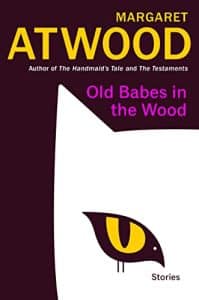
Reading Widow, a short story by Margaret Atwood in Old Babes in the Wood, reminded me of how I felt when Jan died and why I have defined my path to healing and recovery.

Nell, the protagonist in Widow, is writing a letter to a friend she will never send because it speaks to the harsh reality that grief imposes upon us.

Margaret Atwood writes,

Have I gone into the dark tunnel, dressed in mourning black with gloves and a veil, and come out the other end, all cheery and wearing bright colors and loaded for bear?

No. Because it’s not a tunnel. There isn’t any other end. Time has ceased to be linear, with life events and memories in a chronological row, like beads on a string. It’s the strangest feeling, or experience, or rearrangement. I’m not sure I can explain it to you.

As much as it might have appeared that I was in a dark tunnel after Jan died, I was not and am not now. There is indeed no defined end to the grief journey.

We all must learn how to live without our loved ones. The pathway I have chosen may not work for anyone else.

Because of how time-warped, Nell was confident that “Tig isn’t exactly gone.

Atwood speaks the same way I feel when I say that Jan is still with me,

You’d jump immediately to ghosts, or delusional states on my part, or dementia, but none of those would apply. You will understand it later, perhaps, this warping or folding of time. In some parts of this refolded time, Tig still exists, as much as he ever did.

When I write about how Jan and I met and married, I think the same way Nell feels about Tig. Jan is not exactly gone, and I know she is still with me and always will be with me.

Grief has been an outstanding teacher, and it has taught me to live life fully.

By living fully, I know I am not only doing what Jan wanted me to do, but if we were to meet now, she would see someone she could love, not someone so drained by a loss that they are an empty shell.

Have I chosen wisely?


The Jan Lilien Education Fund sponsors ongoing sustainability and environmental awareness programs. Gifts made this month; I will match dollar-for-dollar. All donations are tax-deductible.

Subscribe

Contact Us

I receive a commission when you buy a book or product using a link on this page. Thank you for supporting Sharing Jan’s Love blog.



Bringing Jan With Me!

Although I focused on what I had lost in the initial hours and days after Jan died, the only way forward was to focus on what I gained, not what I lost.

My addition calculation begins with Merrit Malloy's poem Epitaph, which was read at Jan's funeral and will be a part of mine.

Love doesn't die, People do. So, when all that's left of me Is love, Give me away.

2 comments add your comment

  1. Grieving is the hardest part of life, but our family would love us to continue our lives!! As you said, Jan wanted you to keep going and going!!

    • Thanks, Hugo. Love never dies, but those who survive must continue to live and share the love with others. Jan and I liked Merrit Malloy’s Epitaph, and that poem commands me to give her away when all that was left of Jan was her love!

Share your thoughts and ideas

This site uses Akismet to reduce spam. Learn how your comment data is processed.

The Jan Lilien Education Fund!

Jan Lilien and Richard Brown, Wedding Day, August 9, 1975
×
The Sorrow Apartments

Read: June 2024

Get this book

The Sorrow Apartments

by Andrea Cohen

Today, I explored “The Sorrow Apartments,” the eighth collection of poems by poet Andrea Cohen. Renowned poet Christian Wiman accurately describes Cohen’s work as a “cumulative force,” showcasing her deep attention, genuine intelligence, and soul. Cohen’s distinctive talents are featured in this collection, complemented by her characteristic sly humor, unwavering conciseness, and surprising moments of profound wisdom.

It’s astonishing how swiftly Cohen transports us:

Bunker

What would I
think, coming

up after
my world

had evaporated?
I’d wish

I were water.

The Sorrow Apartments house a collection of sparse and haunting poetry, each piece a captivating narrative of mystery, grief, and awe. These poems transport us not just across time but also through a spectrum of emotions. Cohen’s unique approach to illumination is evident in “Acapulco,” where an unanticipated companion muses, “as men tend to, / the stars comprising Orion’s belt — / as if it were the lustrous sparks and not / the leveling dark that connects us.” For a poet often deemed unfashionable, Cohen’s work proves that unfashionable can be beautiful.

×
My Brilliant Friend

Read: July 2024

Get this book

My Brilliant Friend

by Elena Ferrante

Today, I delved into Elena Ferrante‘s captivating novel My Brilliant Friend. This acclaimed book hailed as the #1 Book of the 21st Century by the New York Times, weaves a timeless tale of the enduring bond between two women from Naples. With its rich character development and evocative historical setting, it stands alongside other character-driven works of literary fiction.

Beginning in the 1950s in a poor but vibrant neighborhood on the outskirts of Naples, Elena Ferrante’s four-volume story spans almost sixty years. The main characters, the fiery and unforgettable Lila and the bookish narrator, Elena, are bound by an enduring friendship that withstands the test of time and life’s challenges. This first novel in the series follows Lila and Elena from their fateful meeting as ten-year-olds through their school years and adolescence, evoking a sense of enduring connection and emotional resonance.

Through the lives of these two women, Ferrante weaves a compelling narrative of a neighborhood, a city, and a country undergoing profound transformation. These societal changes, in turn, also reshape the relationship between the two women, adding a rich layer of historical and cultural context to the story. This context will enrich your reading experience and provide a deeper understanding of the characters and their journey.

×
How the Word is Passed

Read: December 2021

Get this book

How the Word Is Passed: A Reckoning with the History of Slavery Across America

by Clint Smith

How the Word Is Passed: A Reckoning with the History of Slavery Across America by Clint Smith. This book was a gift from my son Jon. The New York Times selected How the Word is Passed as one of the best books published this year. Beginning in his hometown of New Orleans, Clint Smith leads the reader on an unforgettable tour of monuments and landmarks—those that are honest about the past and those that are not—that offer an intergenerational story of how slavery has been central in shaping our nation’s collective history, and ourselves.

How the Word is Passed is one of the best books I have read in 2021. I had read an excerpt in The Atlantic on the Whitney Plantation, one of the only former plantations devoted to preserving the experience of the enslaved people whose lives and work sustained it. Like most of us, I had placed the book on my to-read list, where it remained lost in the cobwebs. Fortunately, my son Jon purchased the book for me.

Secondly, the book rekindled my long-lost dream of being an American Studies professor. As soon as Jan and I met, I dropped plans to leave Brooklyn and start graduate school in the fall of 1974. I made that decision primarily because of how much I loved Jan. But it was also partly that I did not have a clear vision of what my life would be like as a professor. The book provided clear examples of people like Yvonne Holden at The Whitney Plantation redefining history to be more accurate and inclusive. I probably could not have done as well as she did, but I can now see that it might have resulted in a career for me that could have been impactful.

Goodreads provides this overview for those who still need to be convinced to read this book.

It is the story of the Monticello Plantation in Virginia, the estate where Thomas Jefferson wrote letters espousing the urgent need for liberty while enslaving over 400 people on the premises. It is the story of the Whitney Plantation, one of the only former plantations devoted to preserving the experience of the enslaved people whose lives and work sustained it. It is the story of Angola Prison in Louisiana, a former plantation named for the country from which most of its enslaved people arrived and which has since become one of the most gruesome maximum-security prisons in the world. And it is the story of Blandford Cemetery, the final resting place of tens of thousands of Confederate soldiers.

In a deeply researched and transporting exploration of the legacy of slavery and its imprint on centuries of American history, How the Word Is Passed illustrates how some of our country’s most essential stories are hidden in plain view-whether in places we might drive by on our way to work, holidays such as Juneteenth, or entire neighborhoods—like downtown Manhattan—on which the brutal history of the trade in enslaved men, women and children has been deeply imprinted.

Informed by scholarship and brought alive by the story of people living today, Clint Smith’s debut work of nonfiction is a landmark work of reflection and insight that offers a new understanding of the hopeful role that memory and history can play in understanding our country.

How the Word is Passed is one of the best books I have read this year and many prior ones. I encourage you to read it and share your comments.

Subscribe

Contact Us

When you buy a book or product using a link on this page, I receive a commission. Thank you for supporting Sharing Jan’s Love blog.

×
A Seperation

Read: January 2022

Get this book

A Separation: A Novel

by Katie Kitamura

A Separation by Katie Kitamura is about a young woman who has agreed with her faithless husband: it’s time for them to separate. All I could think about from the opening page until I finished the book was how Jan and I, despite one messy period, never dealt with infidelity or separation. Our love was pure as the driven snow. The subject matter would typically not have interested me enough to read the book. However, it is written in a hypnotic manner that mesmerizes the reader into turning the next page.

I highly recommend this book.

Goodreads provides an overview.

As she begins her new life, she gets word that Christopher has gone missing in a remote region in the rugged south of Greece; she reluctantly agrees to look for him, still keeping their split to herself. As her search comes to a shocking breaking point, she discovers she understands less than she thought she did about her relationship and the man she used to love. In her heart, she’s not even sure if she wants to find him.  For the moment, it’s a private matter, a secret between the two of them.

Adrift in the wild landscape, she traces the disintegration of their relationship and discovers she understands less than she thought about the man she used to love.

A story of intimacy and infidelity, A Separation is about the gulf that divides us from the lives of others and the narratives we create for ourselves. As the narrator reflects upon her love for a man who may never have been what he appeared, Kitamura propels us into the experience of a woman on the brink of catastrophe. A Separation is a riveting stylistic masterpiece of absence and presence that will leave the reader astonished and transfixed.

In closing, I highly recommend this book.

Subscribe

Contact Us

When you buy a book or product using a link on this page, I receive a commission. Thank you for supporting Sharing Jan’s Love blog.

×
Interpreter of Maladies

Read: June 2022

Get this book

Interpreter of Maladies

by Jhumpa Lahiri

Interpreter of Maladies by Jhumpa Lahiri is an incredible book. Each short story is a page-turner that I will re-read many times. As Ms. Lahiri writes, “The question of identity is always a difficult one, but especially so for those who are culturally displaced, as immigrants are, or those who grow up in two worlds simultaneously, as is the case for their children.”

Since 2000, Interpreter of Maladies has been on my reading list. For what is a writer, if not an interpreter of maladies? Perhaps, I waited until now so that I would have grief to help guide me thru this collection of short stories. I highly recommend Interpreter of Maladies.

The Goodreads summary provides a concise overview.

Navigating between the Indian traditions they’ve inherited and the baffling new world, the characters in Jhumpa Lahiri’s elegant, touching stories seek love beyond the barriers of culture and generations. In “A Temporary Matter,” published in The New Yorker, a young Indian-American couple faces the heartbreak of a stillborn birth. At the same time, their Boston neighborhood copes with a nightly blackout. In the title story, an interpreter guides an American family through the India of their ancestors and hears an astonishing confession. Lahiri writes with deft cultural insight reminiscent of Anita Desai and a nuanced depth that recalls Mavis Gallant.


Subscribe

Contact Us

I receive a commission when you buy a book or product using a link on this page. Thank you for supporting Sharing Jan’s Love blog.

×
Autocracy, Inc.: The Dictators Who Want to Run the World

Read: January 2025

Get this book

Autocracy, Inc.

by Anne Applebaum

Today, I plunged into the captivating world of “Autocracy, Inc.: The Dictators Who Want to Run the World” by Anne Applebaum. I listened to an engaging discussion between her and the Executive Director of the YIVO Institute for Jewish Research, Jonathan Brent. Their insights left me eager for more, and I couldn’t resist making this book my next read. I’m thrilled to dive deeper into her thought-provoking perspective!

This compelling New York Times bestseller by the Pulitzer Prize-winning author paints a chilling picture of how autocratic regimes join forces to erode democracy globally. Applebaum sheds light on this pressing issue and offers insights on how we can unite to fight back.

We think we know what an autocratic state looks like: An all-powerful leader is at the top. He controls the police. The police threaten the people with violence. There are evil collaborators and maybe some brave dissidents.

But in the 21st century, that bears little resemblance to reality. Nowadays, autocracies are underpinned not by one dictator but by sophisticated networks composed of kleptocratic financial structures, surveillance technologies, and professional propagandists, all of which operate across multiple regimes, from China to Russia to Iran. Corrupt companies in one country do business with corrupt companies in another. The police in one country can arm and train the police in another, and propagandists share resources and themes, pounding home the same messages about the weakness of democracy and the evil of America.

International condemnation and economic sanctions cannot move the autocrats. Even popular opposition movements, from Venezuela to Hong Kong to Moscow, don’t stand a chance. The members of Autocracy, Inc. aren’t linked by a unifying ideology, like communism, but rather by a common desire for power, wealth, and impunity. In this urgent treatise, which evokes George Kennan’s essay calling for “containment” of the Soviet Union, Anne Applebaum calls for the democracies to reorient their policies to fight a new threat fundamentally.


In the video, Jonathan Brent asks Anne Applebaum to read the last paragraph of “Autocracy, Inc.: The Dictators Who Want to Run the World.”

There is no liberal world order anymore, and the aspiration to create one no longer seems real. But there are liberal societies, open and free countries that offer a better chance for people to live useful lives than closed dictatorships do. They are hardly perfect. Those that exist have deep flaws, profound divisions, and terrible historical scars. But that’s all the more reason to defend and protect them. So few of them have existed across human history; so many have existed for a short time and then failed. They can be destroyed from the outside and from the inside, too, by division and demagogues. Or they can be saved. But only if those of us who live in them are willing to make the effort to save them.

After finishing Autocracy, Inc.: The Dictators Who Want to Run the World,” this closing paragraph should be a call to action. Failure to respond to the challenge will doom our future to an unacceptable one. I recommend this book and encourage people to read it, discuss its contents, and take action to save our collective future.


When you purchase a book through one of my links, I earn a small commission that helps support my passion for reading. This contribution allows me to buy even more books to share with you, creating an incredible cycle of discovering great reads together! Your support truly makes a difference!


×