
Why Did the Birds Not Go South?

Why Did the Birds Not Go South?

Our Feathered Friends are Warning Us to Act on Climate Change

Estimated reading time: 0 minutes, 47 seconds
Why Did the Birds Not Go South?

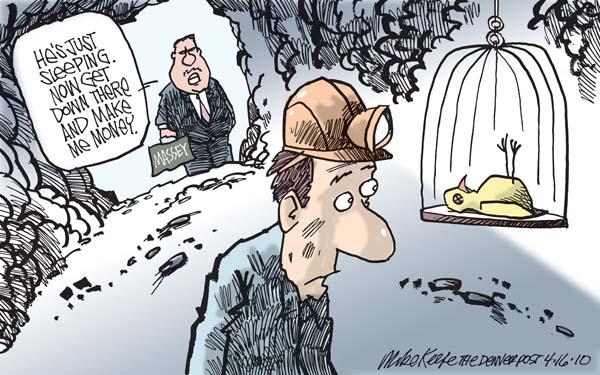
During my regular walk in Nomehegin Park, I crossed the five-mile mark and came across Peter, a familiar face with a keen interest in weather patterns. Although he is not a certified meteorologist, we often discuss the weather. As we walked and talked, Peter drew my attention to the sound of Robins chirping in the nearby trees. I was puzzled because it was still early February, and Robins are known to migrate to warmer regions during the winter. I expressed my confusion to Peter, who told me that some migratory birds did not migrate this year. He further highlighted that birds better understand the climate than humans, and we should pay more attention to their patterns. Peter referred to those who often make derogatory comments about birds having tiny brains. As we concluded our conversation on a warm and sunny morning, we both concurred that birds are an essential indicator of climate change and should be treated respectfully.

Time to Take Action On Climate Change

Despite the polluted air and the small red sun that was barely visible due to thick clouds from the forest fires in Canada, I had just finished my morning walk.

Show thread (1)

Why Did the Birds Not Go South?

The Fingerprints on Chile’s Fires and California Floods

Our Feathered Friends are Warning Us to Act on Climate Change

Estimated reading time: 0 minutes, 47 seconds

“Both the floods and the fires reflect the extreme weather risks brought on by a dangerous cocktail of global warming, which is principally caused by the burning of fossil fuels, and this year’s El Niño, a cyclical weather phenomenon characterized by an overheated Pacific Ocean near the Equator.”

Please read the full article.

Share your thoughts and ideas

This site uses Akismet to reduce spam. Learn how your comment data is processed.

The Jan Lilien Education Fund!

Why Did the Birds Not Go South?
×
Why Did the Birds Not Go South?
×
Judaism Is About Love

Read: October 2024

Get this book

Judaism Is About Love

by Rabbi Shai Held

Today, I embarked on a transformative journey with Rabbi Shai Held’s book, “Judaism Is About Love.Rav Uri‘s mention of this book during this year’s Yom Kippur service at Temple Sha’arey Shalom sparked a profound connection to the Divine, as echoed in my writings “Love Can Conquer Even Death” and “High Holiday Meditation Cleanses My Soul.” Rabbi Held’s book, which focuses on love, meaning, purpose, and faith, has guided my quest to become the best version of myself.

“Judaism Is About Love” is a beacon of understanding, offering a profound and groundbreaking perspective on Jewish life. It challenges a long-standing misinterpretation that has shaped the Western narrative: Christianity is the religion of love, while Judaism is the religion of law. Rabbi Shai Held, a leading Jewish thinker in America, passionately argues for correcting this misconception. He asserts that love is not just a part of Judaism but a fundamental aspect, thus reclaiming the heart of the Jewish tradition.

With a unique blend of intellectual rigor, respect for tradition, and a vibrant Judaism, Held’s aim is clear: to reclaim Judaism in its authentic form. He illustrates that love is the foundation of the true Jewish faith, influencing our unique perspectives on injustice, protest, grace, family life, responsibilities toward neighbors and enemies, and chosenness.

Judaism Is About Love” is a work of ambition and revelation. It serves as a beacon, illuminating the true essence of Judaism. More than just a book, it is an act of restoration from within, reclaiming the authentic form of Judaism.


When you purchase a book through one of my links, I earn a small commission that helps support my passion for reading. This contribution allows me to buy even more books to share with you, creating an incredible cycle of discovering great reads together! Your support truly makes a difference!


×
Thrust: A Novel

Read: August 2022

Get this book

Thrust: A Novel

by Lidia Yuknavitch

Thrust: A Novel by Lidia Yuknavitch is a book I recommend without reservations. The protagonist of Thrust is Laisve, a motherless girl from the late 21st century who is learning her power as a carrier, a person who can harness the power of meaningful objects to carry her through time. The book begins with the construction of the Statue of Liberty, and Laisve, with the gifts of a carrier, travels through water and time to rescue vulnerable figures from the margins of history.

The novel also focuses on rising waters and an encroaching police state endangering Laisve’s life and family. As a reader who likes historical fiction and time travel, Thrust: A Novel by Lidia Yuknavitch proved to be a page-turner.

The full GoodReads summary provides an overview of this book published on June 28, 2022,

Lidia Yuknavitch has an unmatched gift for capturing stories of people on the margins–vulnerable humans leading lives of challenge and transcendence. Now, Yuknavitch offers an imaginative masterpiece: the story of Laisve, a motherless girl from the late 21st century who is learning her power as a carrier, a person who can harness the power of meaningful objects to carry her through time.

Sifting through the detritus of a fallen city known as the Brook, she discovers a talisman that will mysteriously connect her with a series of characters from the past two centuries: a French sculptor, a woman of the American underworld, a dictator’s daughter, an accused murderer; and a squad of laborers at work on a national monument. Through intricately braided storylines, Laisve must dodge enforcement raids, find her way to the present day, and finally, to the early days of her poor country, to forge a connection that might save their lives–and their shared dream of freedom.

Thrust will leave no reader unchanged, a dazzling novel of body, spirit, and survival.


The Jan Lilien Education Fund sponsors ongoing sustainability and environmental awareness programs. Gifts made this month are matched dollar-for-dollar. All donations are tax-deductible.

Subscribe

Contact Us

I receive a commission when you buy a book or product using a link on this page. Thank you for supporting Sharing Jan’s Love blog.

×
The Emperor of Gladness

Read: May 2025

Get this book

The Emperor of Gladness

by Ocean Vuong

In “The Emperor of Gladness,” Ocean Vuong explores the interconnected themes of history, memory, and time, revealing how love, labor, and loneliness are the foundation of American life. At its core, the narrative presents a courageous epic that examines what it means to live on the margins of society and confront the wounds that affect our shared humanity. It highlights the lengths we are willing to go to grasp one of life’s most fleeting gifts: a second chance.

One late summer evening in the post-industrial town of East Gladness, Connecticut, nineteen-year-old Hai stands on the edge of a bridge in pelting rain, ready to jump, when he hears someone shout across the river. The voice belongs to Grazina, an elderly widow succumbing to dementia, who convinces him to take another path. Bereft and out of options, he quickly becomes her caretaker. Over the year, the unlikely pair develops a life-altering bond, one built on empathy, spiritual reckoning, and heartbreak, with the power to transform Hai’s relationship with himself, his family, and a community on the brink.

Hallmarks of Ocean Vuong‘s writing—formal innovation, syntactic dexterity, and the ability to twin grit with grace through tenderness—are on full display in this story.


Ocean Vuong is the author of the critically acclaimed poetry collections Night Sky with Exit Wounds and Time Is a Mother, as well as the New York Times bestselling novel On Earth We’re Briefly Gorgeous. A recipient of the MacArthur Fellowship and the American Book Award, he once worked as a fast-food server, which inspired The Emperor of Gladness. Born in Saigon, Vietnam, he currently splits his time between Northampton, Massachusetts, and New York City.


When you purchase a book through one of my links, I earn a small commission that helps support my passion for reading. This contribution allows me to buy even more books to share with you, creating an incredible cycle of discovering great reads together! Your support truly makes a difference!


×
The Compound

Read: July 2025

Get this book

The Compound: A Novel

by Aisling Rawle

Addictive and prescient, The Compound by Aisling Rawle, is an explosive debut from a prominent new voice in fiction. This gripping novel, set in a remote desert compound, will linger in your mind long after the game ends. It’s a story of survival, competition, and the human spirit, making it a must-read for any fiction enthusiast. Lily—a bored, beautiful twenty-something—wakes up on The Compound, alongside nineteen other contestants competing on a massively popular reality show.

For Lily to emerge victorious, she must outlast her housemates and stay in The Compound the longest. Her journey is filled with challenges, from competing for luxury rewards like champagne and lipstick to securing communal necessities for their new home, including food, appliances, and even a front door.


Aisling Rawle was born in 1998 and raised in County Leitrim in the West of Ireland. She now lives in Dublin. The Compound is her first book.


When you purchase a book through one of my links, I earn a small commission that helps support my passion for reading. This contribution allows me to buy even more books to share with you, creating an incredible cycle of discovering great reads together! Your support truly makes a difference!

Enjoy a limited-time offer of 20% off your next book purchase at Bookshop.org!


×
Lincoln in the Bardo: A Novel

Read: August 2024

Get this book

Lincoln in the Bardo: A Novel

by George Saunders

My journey with “Lincoln in the Bardo: A Novel” by George Saunders began with recognition as one of The New York Times’ 100 Best Books of the Century. As I turned its pages, I was immersed in its profound exploration of living and loving in the face of inevitable endings. The book, which struck a personal chord with me after a loss, is a testament to Saunders’ storytelling prowess and a must-read for those interested in Abraham Lincoln.

February 1862. The Civil War is less than one year old. The fighting has begun in earnest, and the nation has already realized it is in for a long, bloody struggle. Meanwhile, President Lincoln’s beloved eleven-year-old son, Willie, lies upstairs in the White House, gravely ill. In a matter of days, despite predictions of a recovery, Willie dies and is laid to rest in a Georgetown cemetery. “My poor boy, he was too good for this earth,” the president says at the time. “God has called him home.” Newspapers report that a grief-stricken Lincoln returns, alone, to the crypt several times to hold his boy’s body.

From a seed of historical truth, George Saunders weaves an unforgettable tale of familial love and loss that transcends its realistic, historical framework. The story takes a daring leap into a realm that is hilarious and terrifyingly supernatural. Willie Lincoln’s journey in a strange purgatory, where ghosts mingle, gripe, commiserate, quarrel, and enact bizarre acts of penance, is a testament to Saunders’ imaginative prowess. The monumental struggle over young Willie’s soul in this transitional state, known as the bardo in the Tibetan tradition, is a narrative that will leave you spellbound.

Lincoln in the Bardo is an astonishing feat of imagination and a bold step forward from one of his generation’s most important and influential writers. Formally daring, generous in spirit, and deeply concerned with matters of the heart, it is a testament to fiction’s ability to speak honestly and powerfully about the things that matter to us. Saunders has invented a thrilling new form that deploys a kaleidoscopic, theatrical panorama of voices to ask a timeless, profound question: How do we live and love when we know everything we love must end?


George Saunders is the author of thirteen books, including the novel Lincoln in the Bardo, which won the Booker Prize, and five collections of stories, including Tenth of December, which was a finalist for the National Book Award, and the recent collection Liberation Day (selected by former President Obama as one of his ten favorite books of 2022).

Three of Saunders’s books—Pastoralia, Tenth of December, and Lincoln in the Bardo—were chosen for The New York Times’s list of the 100 Best Books of the 21st Century. Saunders hosts the popular Story Club on Substack, which grew out of his book, A Swim in a Pond in the Rain. In 2013, he was named one of Time’s 100 Most Influential People. He teaches in the creative writing program at Syracuse University.


Discover your next favorite book and dive into a world of curated, exciting reads by purchasing through my links. You’ll have access to a diverse selection of books that I’ve personally vetted to ensure quality and enjoyment. Additionally, by supporting these selections, you’ll help me continue to provide you with more personalized recommendations. I earn a small commission from your purchase, which allows me to buy and share even more books with you. Your support truly makes a difference!


×
How the Word is Passed

Read: December 2021

Get this book

How the Word Is Passed: A Reckoning with the History of Slavery Across America

by Clint Smith

How the Word Is Passed: A Reckoning with the History of Slavery Across America by Clint Smith. This book was a gift from my son Jon. The New York Times selected How the Word is Passed as one of the best books published this year. Beginning in his hometown of New Orleans, Clint Smith leads the reader on an unforgettable tour of monuments and landmarks—those that are honest about the past and those that are not—that offer an intergenerational story of how slavery has been central in shaping our nation’s collective history, and ourselves.

How the Word is Passed is one of the best books I have read in 2021. I had read an excerpt in The Atlantic on the Whitney Plantation, one of the only former plantations devoted to preserving the experience of the enslaved people whose lives and work sustained it. Like most of us, I had placed the book on my to-read list, where it remained lost in the cobwebs. Fortunately, my son Jon purchased the book for me.

Secondly, the book rekindled my long-lost dream of being an American Studies professor. As soon as Jan and I met, I dropped plans to leave Brooklyn and start graduate school in the fall of 1974. I made that decision primarily because of how much I loved Jan. But it was also partly that I did not have a clear vision of what my life would be like as a professor. The book provided clear examples of people like Yvonne Holden at The Whitney Plantation redefining history to be more accurate and inclusive. I probably could not have done as well as she did, but I can now see that it might have resulted in a career for me that could have been impactful.

Goodreads provides this overview for those who still need to be convinced to read this book.

It is the story of the Monticello Plantation in Virginia, the estate where Thomas Jefferson wrote letters espousing the urgent need for liberty while enslaving over 400 people on the premises. It is the story of the Whitney Plantation, one of the only former plantations devoted to preserving the experience of the enslaved people whose lives and work sustained it. It is the story of Angola Prison in Louisiana, a former plantation named for the country from which most of its enslaved people arrived and which has since become one of the most gruesome maximum-security prisons in the world. And it is the story of Blandford Cemetery, the final resting place of tens of thousands of Confederate soldiers.

In a deeply researched and transporting exploration of the legacy of slavery and its imprint on centuries of American history, How the Word Is Passed illustrates how some of our country’s most essential stories are hidden in plain view-whether in places we might drive by on our way to work, holidays such as Juneteenth, or entire neighborhoods—like downtown Manhattan—on which the brutal history of the trade in enslaved men, women and children has been deeply imprinted.

Informed by scholarship and brought alive by the story of people living today, Clint Smith’s debut work of nonfiction is a landmark work of reflection and insight that offers a new understanding of the hopeful role that memory and history can play in understanding our country.

How the Word is Passed is one of the best books I have read this year and many prior ones. I encourage you to read it and share your comments.

Subscribe

Contact Us

When you buy a book or product using a link on this page, I receive a commission. Thank you for supporting Sharing Jan’s Love blog.

×