
Jan’s Wedding Ring

Estimated reading time: 8 minutes, 11 seconds
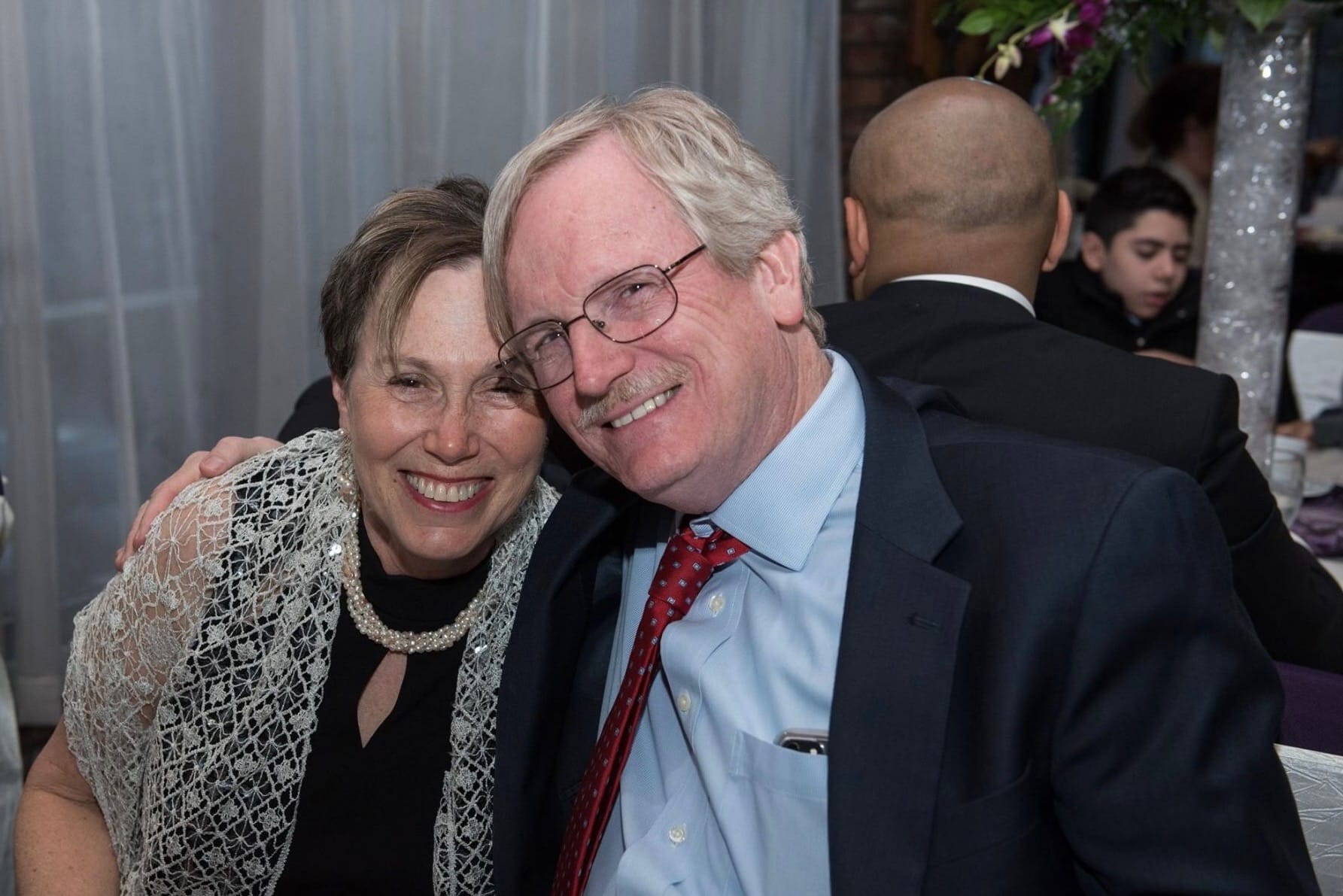
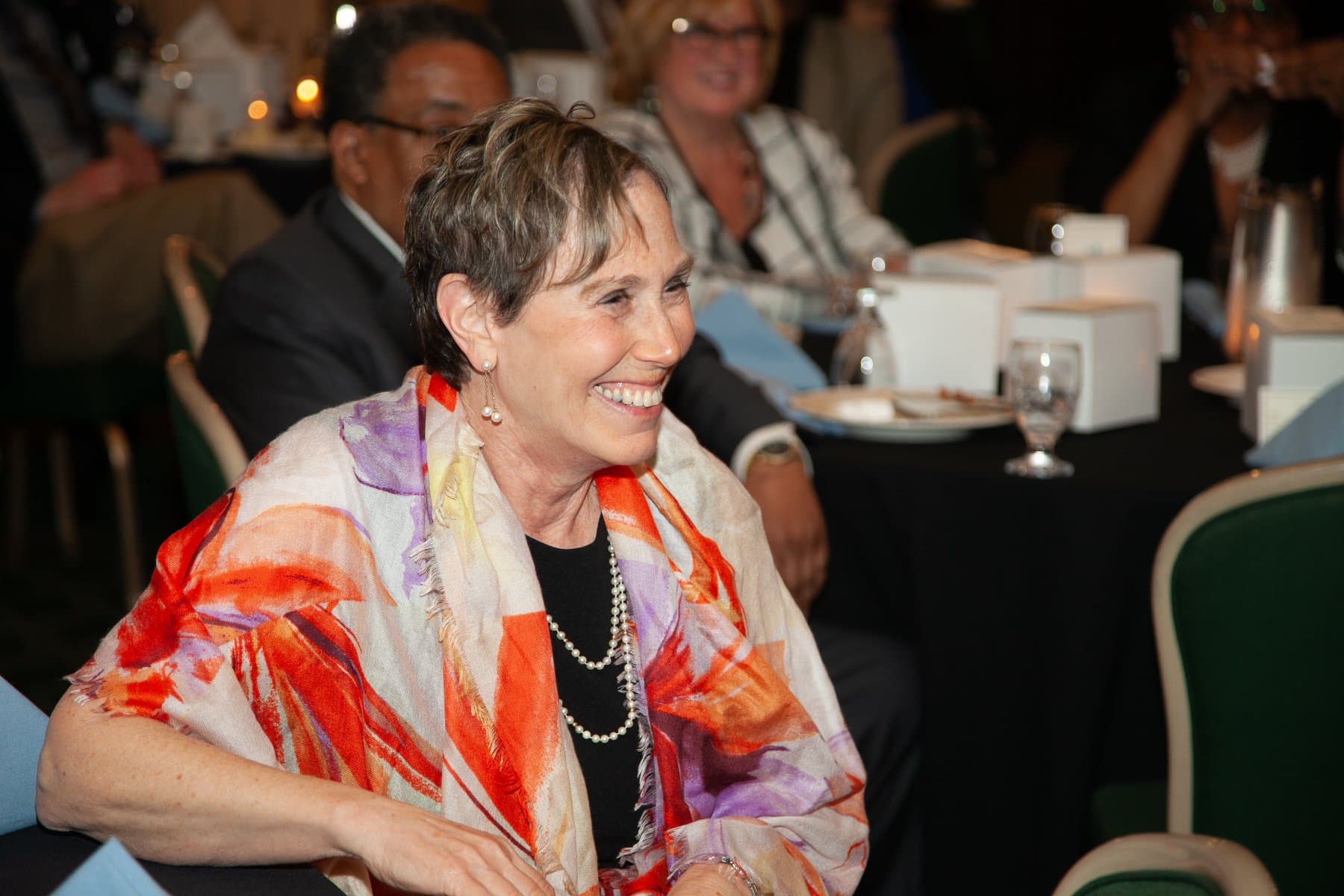
Jan and I Still Wear Our Wedding Rings Because Love Never Dies

“I want my wedding ring,” Jan said as tears poured down her face. Less than an hour before her heartfelt request, the doctors had told her that there was nothing left that they could do for her, and she would be coming home for hospice care. According to the medical team, she only had a few weeks to live. 

I took a deep breath and said, “I will make sure you have the ring before coming home.”

At that moment, I had no idea if that was possible, but I knew we only had three days to complete it.

Our son Jon went to the jewelers and got the tool to measure her ring finger on Thursday, and Martin Jewelers had hers and a minor adjustment to mine completed by Friday morning.
Our Wedding Rings

“Will you wear a wedding ring,” Jan asked me while we looked at them in a small jewelry store in East Williamsburg. I’ve never seen you wear any rings or jewelry.” “I love you so much and want to be your husband more than anything in the world,” I exclaimed. “I will wear it day and night until the end!”

We kissed as the clerk looked down at the rings. 

Jan and I never had engagement rings and had to pay for our wedding. I was unemployed, and she would soon lose her job. Thus, our choices were minimal.

“How about these rings,” said the clerk.

The wedding rings were elementary gold bands with overlapping hearts. As we looked at them, Jan and I smiled at each other and knew these were the ones for us. 

“Honey, our hearts are bound forever, and the rings have enough hearts to share our love with family, friends, and the community,” I said. 

We decided to buy them without looking at any others. Jan had a credit card, which I did not, and she quickly took care of the payment. 

After the wedding, many people would not consider them symbols of our marriage if they looked at our rings. Where are the diamonds? Are you sure you are married?

But we always appreciated our rings, symbolically conveying our marriage‘s uniqueness and importance. 

Although rings, even those made of gold, are merely metal and cannot speak if ours could talk, they would shout from the rooftop – I love you, Jan! I love you, Richard! We love the world!

Richard Without His Wedding Ring

“Please, please do not take off my wedding ring,” I pleaded with the unseen nurse. After a car accident, I was on a spinal board in the emergency room. The nurse kept repeating that she had to remove the ring as my fingers were swelling. I feared not that I had a spinal injury but that she might lose my wedding band. I was crying so much that my words were unintelligible. 

After eighteen years of marriage, the nurse tightly twisted the ring on my finger. 

Please, no,” I screamed one last time

The nurse stopped as someone came into the room. 

“Sweetheart, how are you,” Jan said as she walked into the treatment room.

Now that Jan was with me, I was OK with the nurse removing my wedding band. It hurt a lot as she twisted it over my knuckle. As soon as it was off, the nurse gave it to Jan, who put it in her purse. 

Jan stayed with me while they did tests to determine if I had no spinal injuries. When the test results were available, the doctor spoke with us. “There is no spinal damage, but you have a dislocated thumb, and we will need to put on a cast.” 

My hand had to be in a cast for ten days. Since Jan married me, that was the only time I did not wear the ring she gave me. Although no one could tell if I was wearing my wedding ring under the cast, I knew I was not. 

“Don’t worry, honey, I know you love me even if your left finger is without the ring,” Jan reassured me.


Next Page

Pages: 1 2 3

14 comments add your comment

  1. This is beautiful; thanks for sharing. Each page brought a new round of tears of appreciation for the love that the two of you shared.

Leave a Reply to Mark AnnettCancel reply

This site uses Akismet to reduce spam. Learn how your comment data is processed.

Previous Post:

Next Post:

The Jan Lilien Education Fund!

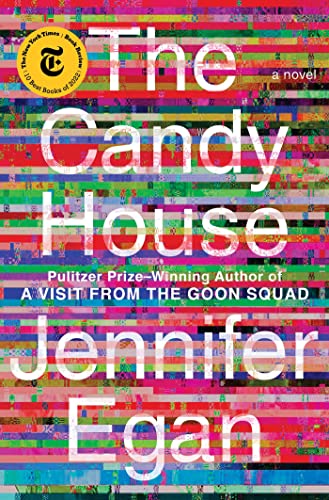
The Candy House

Read: December 2022

Get this book

The Candy House: A Novel

by Jennifer Egan

The Candy House: A Novel by Jennifer Egan focuses on a new technology that allows you access to every memory you’ve ever had and to share your memories in exchange for access to the memories of others—it has seduced multitudes. According to the NYTimes, “this is minimalist maximalism. As a widow, I live in a world of memories, but I would not want them shared as they are in The Candy House. “It’s as if Egan compressed a big 19th-century novel onto a flash drive.”

Of course, I am not able to access my unconscious memories. Albeit in an amateur way, I write down some of my memories as they remind me of the power of the love that Jan and I shared. For example, the essay when I met Jan rekindles the memory and attempts to tell the story the way it happened, not how some would like it to be remembered.

The Candy House is one of the NYTimes’ top five fiction books of 2022. I have read two of them, The Furrows and Checkout 19. Initially, I was overwhelmed by the multitude of characters and was confused. By the novel’s middle, their interconnectedness helped me understand its real meaning. In the end, Egan delivers a fierce and exhilarating testament to the tenacity and transcendence of human longing for authentic connection, love, family, privacy, and redemption. As a widow, authenticity Is what I need to heal.

The Candy House is the seventieth (70) book I have read this year. 

The Goodreads summary provides an overview.

It’s 2010. Staggeringly successful and brilliant tech entrepreneur Bix Bouton is desperate for a new idea. He’s forty, with four kids, and restless when he stumbles into a conversation with mostly Columbia professors, one of whom is experimenting with downloading or “externalizing” memory. Within a decade, Bix’s new technology, Own Your Unconscious—that allows you access to every memory you’ve ever had and to share every memory in exchange for access to the memories of others—has seduced multitudes. But not everyone.

In spellbinding linked narratives, Egan spins out the consequences of Own Your Unconscious through the lives of multiple characters whose paths intersect over several decades. Egan introduces these characters in an astonishing array of styles—from omniscient to first person plural to a duet of voices, an epistolary chapter, and a chapter of tweets. In the world of Egan’s spectacular imagination, there are “counters” who track and exploit desires and “eluders” who understand the price of taking a bite of the Candy House.

Intellectually dazzling and extraordinarily moving, The Candy House is a bold, brilliant imagining of a world that is moments away. With a focus on social media, gaming, and alternate worlds, you can almost experience moving among dimensions in a role-playing game.​ Egan delivers a fierce and exhilarating testament to the tenacity and transcendence of human longing for real connection, love, family, privacy, and redemption.


The Jan Lilien Education Fund sponsors ongoing sustainability and environmental awareness programs. Gifts made this month; I will match dollar-for-dollar. All donations are tax-deductible.

Subscribe

Contact Us

I receive a commission when you buy a book or product using a link on this page. Thank you for supporting Sharing Jan’s Love blog.


×
Bodily Harm

Read: June 2021

Get this book

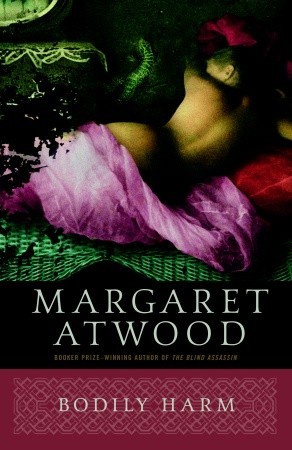
Bodily Harm

by Margaret Atwood

Bodily Harm by Margaret Atwood is one of the books I picked up from our bookshelf in the first few months after Jan’s death. Being someone who has always fantasized about being a journalist, I found it very interesting.

A powerfully and brilliantly crafted novel, Bodily Harm is the story of Rennie Wilford, a young journalist whose life has begun to shatter around the edges.  Rennie flies to the Caribbean to recuperate, and on the tiny island of St. Antoine she is confronted by a world where her rules for survival no longer apply.  By turns comic, satiric, relentless, and terrifying, Margaret Atwood’s Bodily Harm is ultimately an exploration of the lust for power, both sexual and political, and the need for compassion that goes beyond what we ordinarily mean by love.

Bodily Harm may be the bleakest book that Ms. Atwood has written. One of her common themes is “the violence that human beings inflict on one another and their isolation in an uncaring world. It holds out some hope in the form of compassion to be shared by those who are victims of bodily harm in any form. The novel suggests that every person falls into this category. All are victims. There is no exemption, no escape for anyone.”

I recommend this book.

Subscribe

Contact Us

×
Stony The Road

Read: October 2019

Get this book

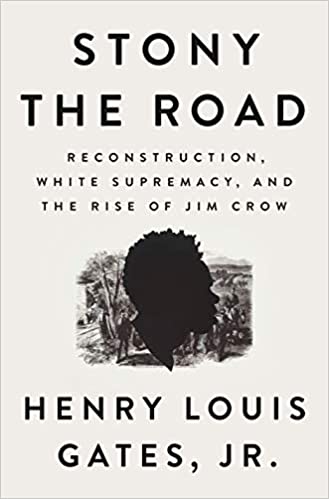
Stony the Road

by Henry Louis Gates Jr

Stony the Road: Reconstruction, White Supremacy, and the Rise of Jim Crow by Henry Louis Gates Jr. is a must-read book, especially with white nationalism on the rise.

I read this book when Jan began her chemotherapy. Although the book’s subject – the retreat from reconstruction – was one I studied in college, at times, I found it hard to focus on the material and my wife’s health at the same time. I stayed on the stony road as it is a subject we need to understand if we are going to correct the past failures.

As The New York Times wrote,

Henry Louis Gates Jr.’s “Stony the Road: Reconstruction, White Supremacy, and the Rise of Jim Crow,” an indispensable guide to the making of our times, addresses 2017’s mystifications. The book sets the Obama era beside Reconstruction and the Trump era beside the white supremacist terrorism of Redemption, the period beginning in 1877 during which Reconstruction’s nascent, biracial democracy was largely dismantled. Gates juxtaposes the optimism of Reconstruction, the despair of Redemption, and the promise of the New Negro movement — the effort by black Americans, starting around the turn of the 20th century, to craft a counternarrative to white supremacy. In doing so, “Stony the Road” presents a bracing alternative to Trump-era white nationalism.

Growing up in the Jim Crow south, I was well aware of white nationalism. This book is an essential read if we are going to make America a multi-racial democracy.

Subscribe

Contact Us

×
Working

Read: October 2019

Get this book

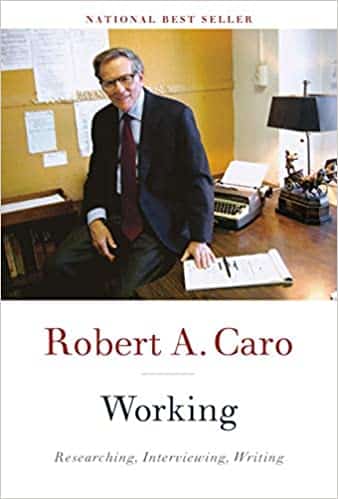
Working

by Robert A. Caro

Working by Robert A. Caro is a book of evocatively written essays on his life and work. Among the many valuable words of wisdom is his case that one needs to look at every piece of information, not just what we know when we begin. Far too often, people jump to conclusions without having learned all of the facts.

He describes what it was like to interview the mighty Robert Moses and to begin discovering the extent of the political power Moses wielded; the combination of discouragement and exhilaration he felt confronting the vast holdings of the Lyndon B. Johnson Library in Austin, Texas; his encounters with witnesses, including longtime residents wrenchingly displaced by the construction of Moses’ Cross-Bronx Expressway and Lady Bird Johnson acknowledging the beauty and influence of one of LBJ‘s mistresses. He gratefully remembers how, after years of working in solitude, he found a writers’ community at the New York Public Library, and details the ways he goes about planning and composing his books.

Caro recalls the moments at which he came to understand that he wanted to write not just about the men who wielded power but about the people and the politics that were shaped by that power. And he talks about the importance to him of the writing itself, of how he tries to infuse it with a sense of place and mood to bring characters and situations to life on the page. Taken together, these reminiscences–some previously published, some written expressly for this book–bring into focus the passion, the wry self-deprecation, and the integrity with which this brilliant historian has always approached his work.

I found this one of the best books I have read and recommend it to all readers.

Subscribe

Contact Us

×
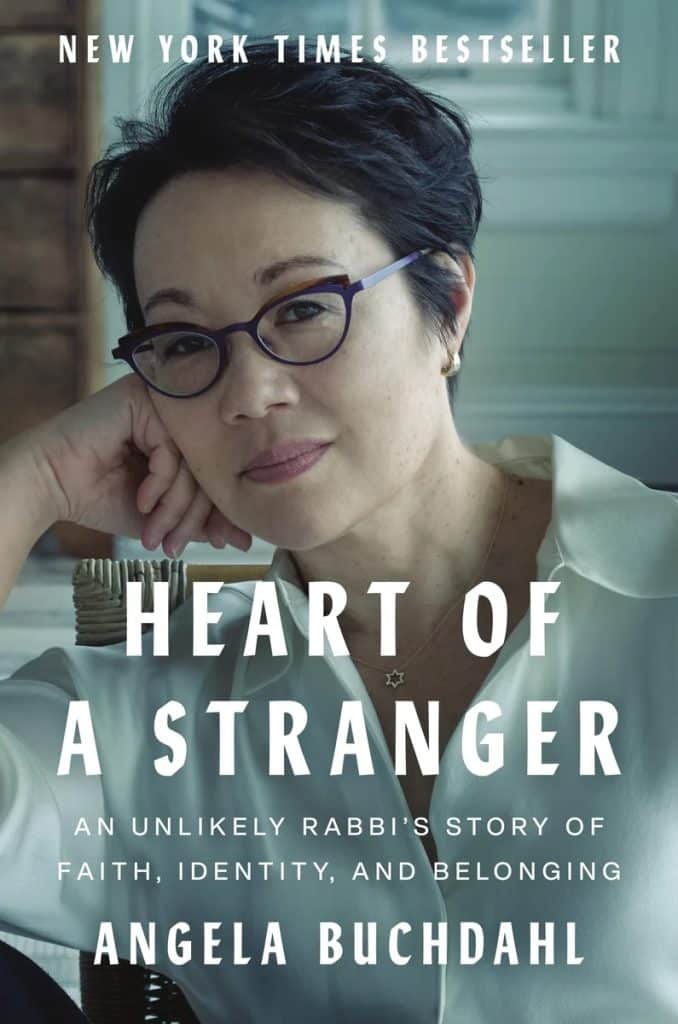
Heart of a Stranger

Read: February 2026

Get this book

Heart of a Stranger

by Rabbi Angela Warnick Buchdahl

In “Heart of a Stranger,” Angela Buchdahl shares her journey from feeling like an outsider to becoming an officiant. She describes her transformation from estrangement to belonging, ultimately emerging with a deep conviction that we are all connected to a larger whole and purpose. Her book serves as both a memoir and a spiritual guide for everyday living, addressing a need that many of us experience today. As the first Asian American ordained as a rabbi, she offers a compelling account of her evolution into one of the world’s most respected religious leaders.

Angela Buchdahl was born in Seoul, the daughter of a Korean Buddhist mother and Jewish American father. Profoundly spiritual from a young age, by sixteen, she felt the first stirrings to become a rabbi. Despite the naysayers and periods of self-doubt—Would a mixed-race woman ever be seen as authentically Jewish or chosen to lead a congregation?—she stayed the course, which took her first to Yale, then to rabbinical school, and finally to the pulpit of one of the largest, most influential congregations in the world.

Today, Angela Buchdahl inspires Jews and non-Jews alike with her invigorating, joyful approach to worship and her belief in the power of faith, gratitude, and responsibility for one another, regardless of religion. She does not shy away from difficult topics, from racism within the Jewish community and the sexism she confronted when she aspired to the top job, to rising antisemitism today. Buchdahl teaches how these challenges, which can make one feel like a stranger, can ultimately be the source of our greatest empathy and strength.

While reading this book, I experienced a revival and deepening of my faith. “Heart of a Stranger,” “Man’s Search for Meaning,” “Judaism is About Love,” “Hostage,” and “The Amen Effect” are all cherished titles that I will reference and reread for years to come.


Angela Buchdahl is the first Asian American rabbi. She serves as the Senior Rabbi of Central Synagogue in New York City, the first woman to lead this flagship congregation in its 185-year history. Under her leadership, Central has grown into one of the largest synagogues in the world, with live-stream viewers in more than 100 countries. She has led prayers in the White House for two U.S. presidents and has been featured on national news outlets, including Today, NPR, and The Wall Street Journal, to discuss the day’s moral issues.

Rabbi Buchdahl and her husband live in New York City and have three children.


Discover your next favorite book and dive into a world of curated, exciting reads by purchasing through my links. You’ll have access to a diverse selection of books that I’ve personally vetted to ensure quality and enjoyment. Additionally, by supporting these selections, you’ll help me continue to provide you with more personalized recommendations. I earn a small commission from your purchase, which allows me to buy and share even more books with you. Your support truly makes a difference!


×
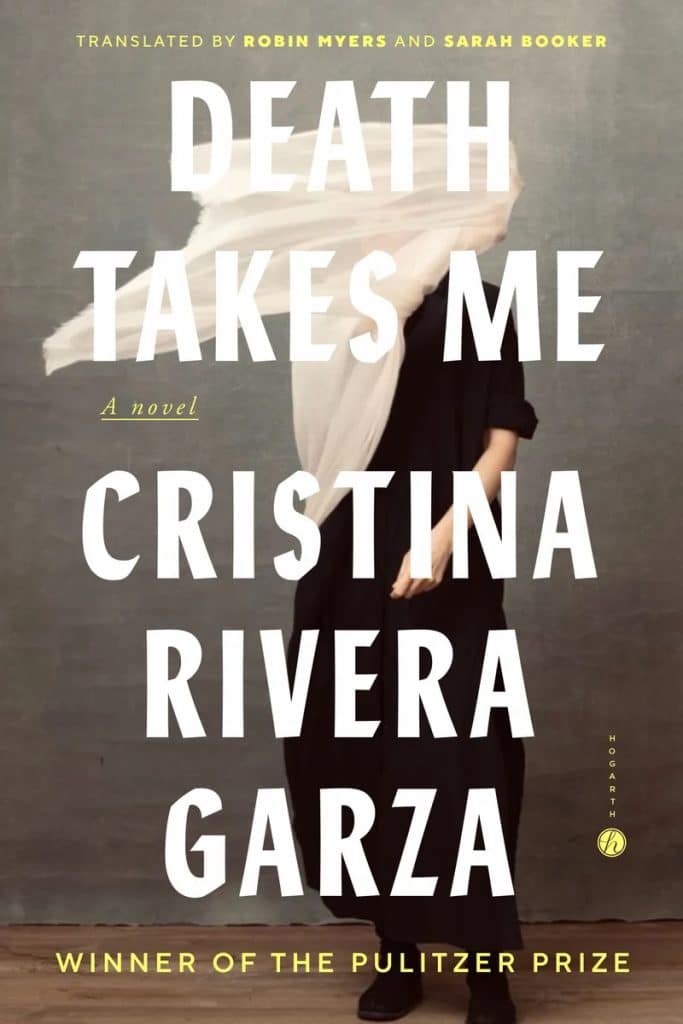
Death Takes Me

Read: December 2025

Get this book

Death Takes Me: A Novel

by Cristina Rivera Garza

Originally written in Spanish by Cristina Rivera Garza, Death Takes Me is a thrilling masterpiece of literary fiction that turns the traditional crime narrative of gendered violence on its head. As sharp as the cuts on the bodies of the victims, the story unfolds with the dreamlike logic of a surreal experience, transitioning from the police station to a professor’s classroom and through the intricate worlds of Latin American poetry and art. It invites readers to explore the unstable terrains of desire and sexuality.

A city is always a cemetery.

In the narrative, a professor named Cristina Rivera Garza stumbles upon the corpse of a mutilated man in a dark alley and promptly reports it to the police. When shown a crime scene photo, she discovers a stark warning written in tiny print with coral nail polish on the brick wall beside the body: “Beware of me, my love / beware of the silent woman in the desert.”

The professor becomes the primary informant in the case, which is led by a detective who is newly obsessed with poetry and haunted by a list of past failures. But what has the professor truly witnessed? As more bodies of castrated men alongside lines of verse, the detective attempts to decipher the meaning of the poems in hopes of stopping the spreading violence throughout the city.


Cristina Rivera Garza is an acclaimed author known for works such as The Taiga Syndrome and The Iliac Crest. Her memoir, Liliana’s Invincible Summer, won the Pulitzer Prize and was a finalist for the National Book Award. She has received the MacArthur Fellowship and the Sor Juana Inés de la Cruz Prize. Currently, Rivera Garza holds the Hugh Roy and Lillie Cranz Cullen Distinguished Chair and serves as director of the PhD program in Creative Writing in Spanish at the University of Houston.

Sarah Booker is a teacher and a literary translator. Her translations include novels by Mónica Ojeda, Cristina Rivera Garza, and Gabriela Ponce. She is also an associate editor at Southwest Review.

Robin Myers is a poet and translator. Her translations encompass Andrés Neuman’s Bariloche, Claudia Peña Claros’s The Trees, Isabel Zapata’s In Vitro, Eliana Hernández-Pachón’s The Brush, and Cristina Rivera Garza’s The Restless Dead: Necrowriting and Disappropriation.


Discover your next favorite book and dive into a world of curated, exciting reads by purchasing through my links. You’ll have access to a diverse selection of books I’ve personally vetted for quality and enjoyment. Additionally, by supporting these selections, you’ll help me continue to provide you with more personalized recommendations. I earn a small commission from your purchase, which allows me to buy and share even more books with you. Your support truly makes a difference!


×

Discover more from Sharing Jan’s Love

Subscribe now to keep reading and get access to the full archive.

Continue reading