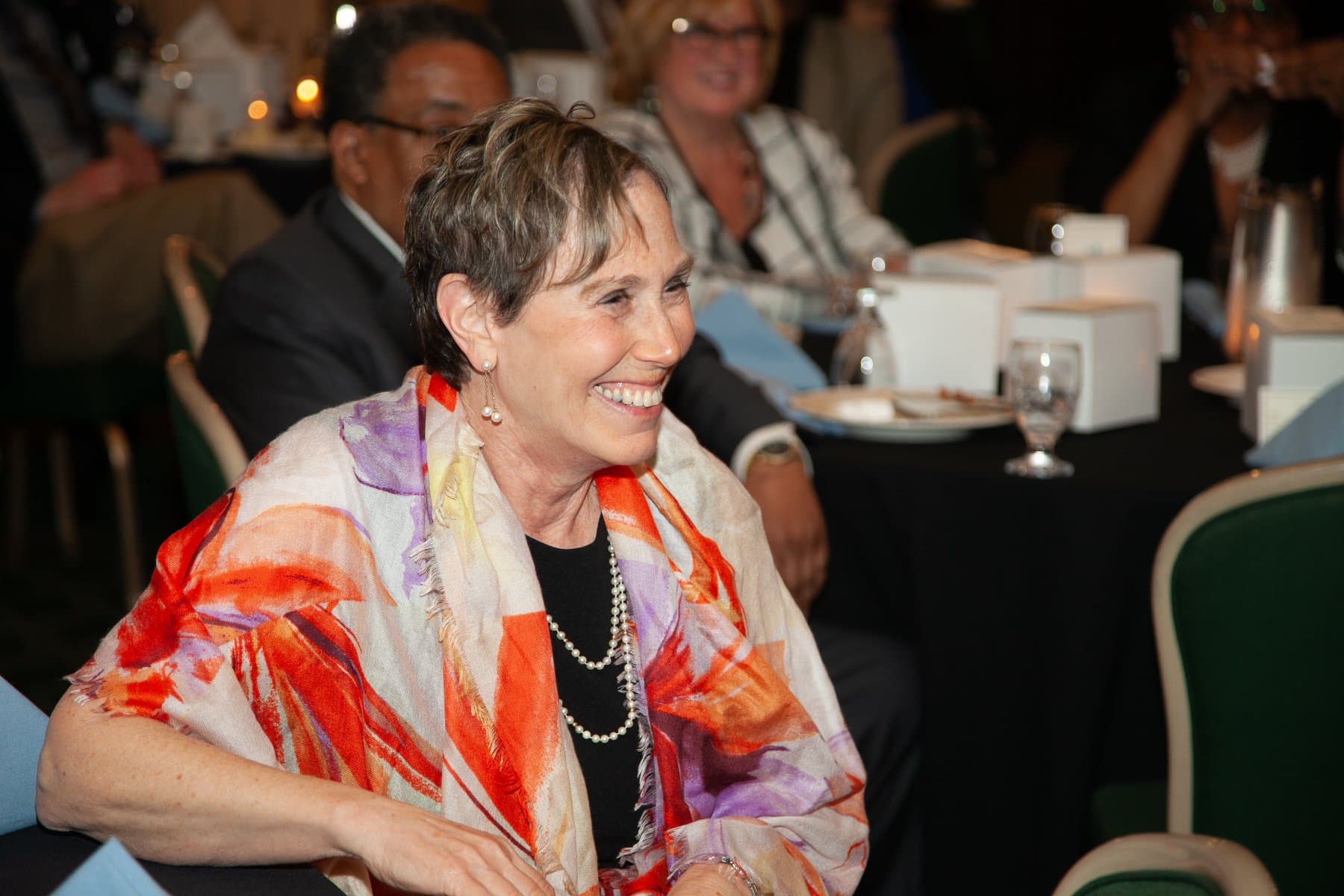

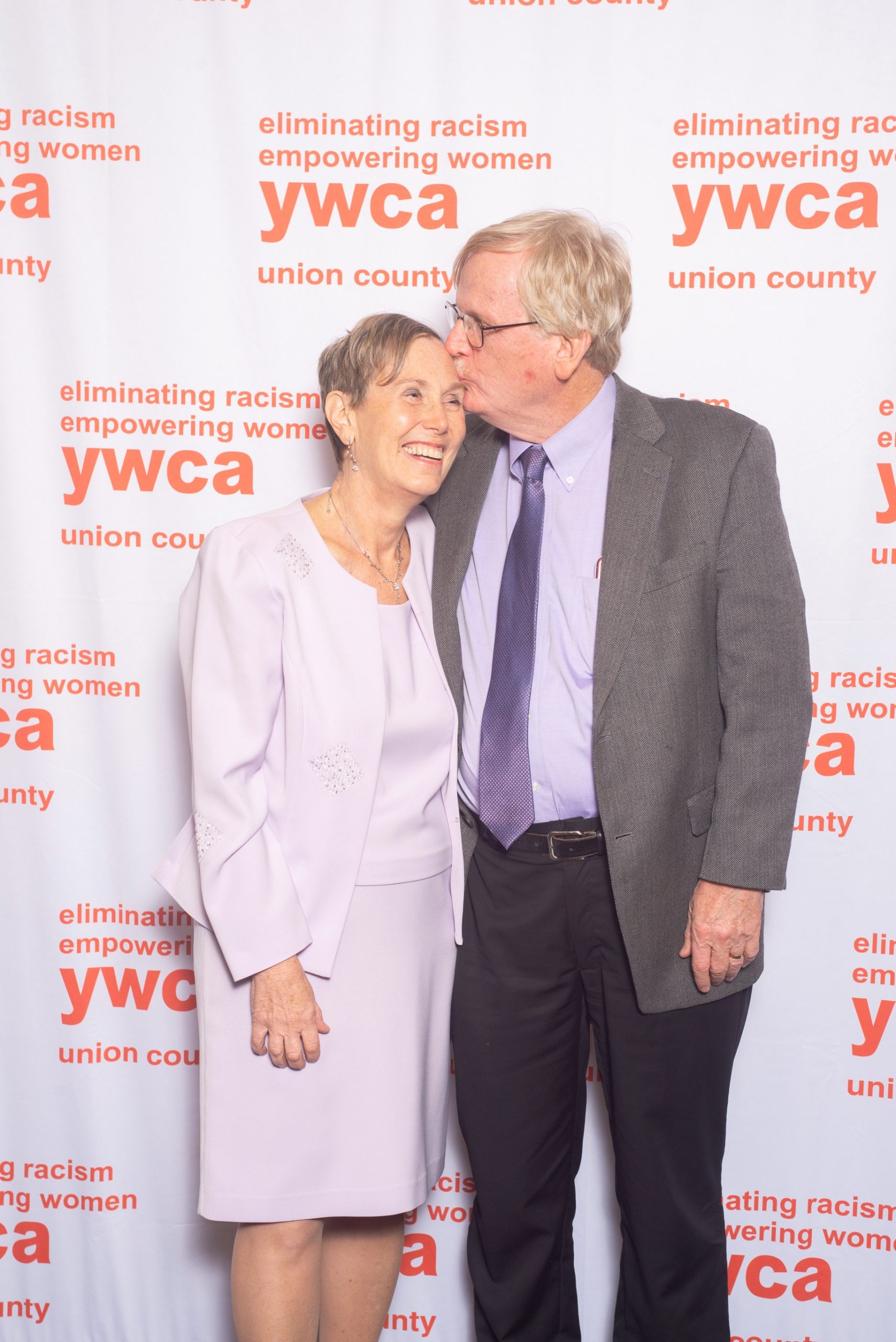
Jan and Richard at YWCA Gala

Visualizing Life and Making Better Choices

How to Be Present and Removed at the Same Time

Estimated reading time: 2 minutes, 8 seconds

Jan and Richard at YWCA Gala

Jan and Richard at YWCA Gala, October 2019

A few years back, I got into a car accident. Before the crash, I could analyze the cars in the intersection and anticipate the outcome. When the insurance agent asked me how I could comprehend the events that led up to the accident, I calmly explained my method of visualizing the intersection as a chessboard, with time seemingly stopped. I could foresee the car that would collide with mine. The agent took note of my explanation and concluded that I was not at fault.

I visualize scenes from my life similarly and experience out-of-body sensations like during a car accident. It has become a common occurrence for me.

I was deeply emotional when Jan expressed her desire to be with her boyfriend. I threw my wedding ring across the room and shouted that our marriage was over. However, I calmed down by visualizing our love story and the potential for our future. I realized how much I loved Jan and how finding a solution was crucial. By not focusing solely on my pain, I reignited the spark in our relationship and saved our marriage.

During Jan’s hospice care, I reminisced about our past while holding her hand in the present. I visualized our nearly fifty-year love story in slow motion. After Jan’s passing, I experienced the out-of-body sensation several times. For instance, at her funeral, it felt natural for me to thank those in attendance for mourning Jan. This altered state of visualization and decision-making has helped me manage my grief and live fully while sharing Jan’s love.

Have you ever had a feeling of having a sixth sense or a guardian angel? Do you sometimes feel like your perspective is altered and out of your control? I often question if it’s just my imagination, but I’ve learned to trust my intuition and give it a chance. Instead of reacting to the moment, I visualize the situation, which has been helpful. I am still figuring out if my choices will always lead to positive outcomes.


The Jan Lilien Education Fund sponsors ongoing sustainability and environmental awareness programs. Gifts made this month; I will match dollar-for-dollar. All donations are tax-deductible.

Subscribe

Contact Us

I receive a commission when you buy a book or product using a link on this page. Thank you for supporting Sharing Jan’s Love blog.



Home for Hospice

I must focus all my attention on Jan, who will come home for hospice care. Although resources are limited, I will give Jan my utmost love and support.

Show thread (1)

Love is Forever

We all have choices that can change our lives for better or worse, depending on how we decide. Jan had three opportunities to confirm our love for each other, and each time she selected me!

Share your thoughts and ideas

This site uses Akismet to reduce spam. Learn how your comment data is processed.

The Jan Lilien Education Fund!

Jan and Richard at YWCA Gala
×
Berlin- A Novel

Read: June 2023

Get this book

Berlin: A Novel by Bea Setton

by Bea Setton

I’ve begun reading Berlin: A Novel by Bea Setton. After finishing Kairos, a book set in a divided Berlin, Setton’s debut novel is witty and insightful, with a young woman battling a sense of emptiness who moves to Berlin for a fresh start. However, things go differently than planned.

Daphne, the protagonist, moves to Berlin hoping for a new beginning but deals with more drama than she left behind. She knows she needs to make friends, learn German, and navigate a new way of life. She even expects to spend long nights alone with Nutella and experience the difficulties of online dating in another language. But one night, something unexpected and unnerving happens in her apartment, and Daphne’s life suddenly turns dangerous.

Setton captures the modern female experience with sharp observations and wit, making Berlin a must-read for her generation.


The Jan Lilien Education Fund sponsors ongoing sustainability and environmental awareness programs. Gifts made this month; I will match dollar-for-dollar. All donations are tax-deductible.

Subscribe

Contact Us

I receive a commission when you buy a book or product using a link on this page. Thank you for supporting Sharing Jan’s Love blog.


×
Some Bright Nowhere

Read: November 2025

Get this book

Some Bright Nowhere

by Ann Packer

Ann Packer makes a triumphant return with a powerful novel, which is both tender and raw, visceral and unexpected. Emotionally vibrant and complex, Some Bright Nowhere explores the profound gifts and unforeseen costs of truly loving someone, as well as the fears and desires we experience as the end of life approaches. What if your partner’s dying wish broke your heart? How well do we know the deepest desires of those we love dearly?

The beloved bestselling author returns with her first novel in over a decade, offering an intimate and profoundly moving examination of a long marriage and how a startling request can change a couple’s understanding of themselves, both together and apart.

Eliot and his wife, Claire, have been happily married for nearly four decades. They raised two children in their quiet Connecticut town and have weathered the inevitable ups and downs of a long life together. However, eight years after Claire was diagnosed with cancer, the end is near, and it is time to gather loved ones and prepare for the inevitable.

Throughout Claire’s illness, Eliot has willingly—lovingly—taken on the role of caregiver, appreciating the intimacy and tenderness that come with this role, which is even more layered and complex than that of a devoted husband. But as he settles into what will be their last days and weeks together, Claire makes an unexpected request that leaves him reeling. In an instant, his carefully constructed world shatters.

As Eliot confronts this profound turning point in his marriage and his life, he grapples with the man and husband he has been, as well as the uncertainties of Claire’s final days.


Ann Packer is the author of five previous works of fiction, including the bestselling novels The Children’s Crusade and The Dive from Clausen’s Pier, which received the Kate Chopin Literary Award along with numerous other prizes and honors.

Her short stories have appeared in The New Yorker and the O. Henry Prize Stories anthologies, and her novels have been translated and published internationally. Packer divides her time between New York, the Bay Area, and Maine.


Discover your next favorite book and dive into a world of curated, exciting reads by purchasing through my links. You’ll have access to a diverse selection of books I’ve personally vetted for quality and enjoyment. Additionally, by supporting these selections, you’ll help me continue to provide you with more personalized recommendations. I earn a small commission from your purchase, which allows me to buy and share even more books with you. Your support truly makes a difference!


×
The Brief Wondrous Life of Oscar Wao

Read: August 2024

Get this book

The Brief Wondrous Life of Oscar Wao

by Junot Diaz

Today, I started reading Junot Diaz‘s The Brief Wondrous Life of Oscar Wao, one of The New York Times’ 100 Best Books of the Century. The book also won a Pulitzer Prize. Oscar is a sweet but disastrously overweight ghetto nerd who—from the New Jersey home he shares with his old-world mother and rebellious sister—dreams of becoming the Dominican J.R.R. Tolkien and, most of all, finding love.

But Oscar may never get what he wants. Blame the fukú—a curse that has haunted Oscar’s family for generations, following them on their epic journey from Santo Domingo to the USA. Encapsulating Dominican-American history, The Brief Wondrous Life of Oscar Wao opens our eyes to an astonishing vision of the contemporary American experience. It explores the endless human capacity to persevere—and risk it all—in the name of love.

×
The Bully Pulpit

Read: October 2019

Get this book

The Bully Pulpit

by Doris Kearns Goodwin

The Bully Pulpit by Doris Kearns Goodwin is a history of the first decade of the Progressive era told by focusing on the intense friendship of Theodore Roosevelt and William Howard Taft.

Although I had read many books about Theodore Roosevelt, I had limited knowledge about Taft until I read this book. Reading about their friendship and its eventual collapse helped me to understand both of these presidents and the times in which they lived in a way I had not understood previously.

The Bully Pulpit is also the story of the muckraking press, which arouses the spirit of reform that helps Roosevelt push the government to shed its laissez-faire attitude toward robber barons, corrupt politicians, and corporate exploiters of our natural resources. The muckrakers are portrayed through the greatest group of journalists ever assembled at one magazine—Ida Tarbell, Ray Stannard Baker, Lincoln Steffens, and William Allen White—teamed under the mercurial genius of publisher S. S. McClure.

Goodwin’s narrative is founded upon a wealth of primary materials. The correspondence of more than four hundred letters between Roosevelt and Taft begins in their early thirties and ends only months before Roosevelt’s death. Edith Roosevelt and Nellie Taft kept diaries. The muckrakers wrote hundreds of letters to one another, kept journals, and wrote their memoirs. The letters of Captain Archie Butt, who served as a personal aide to both Roosevelt and Taft, provide an intimate view of both men.

I recommend this book without reservations.

Subscribe

Contact Us

×
The Corrections: A Novel

Read: September 2024

Get this book

The Corrections: A Novel

by Jonathan Franzen

Today, I embarked on a profound exploration of the human condition through Jonathan Franzen‘s ‘The Corrections: A Novel.’ It guides us from the heart of the Midwest in the mid-century to the bustling streets of Wall Street and the enigmatic landscapes of Eastern Europe. It’s no surprise that it’s hailed as one of The New York Times 100 Best Books of the 21st Century.

Jonathan Franzen‘s ‘The Corrections: A Novel‘ is not just a family saga but a profound critique of our modern society. It’s a work of art that delves into the issues of our new century, enlightening us with its insights. Franzen masterfully juxtaposes the old-fashioned America of freight trains, civic responsibility, and holiday treats with the modern absurdities of neuroscience, home surveillance, hands-off parenting, DIY mental health care, and the anti-gravity New Economy. It’s a narrative that will evoke laughter, tears, and deep contemplation. Through ‘The Corrections,’ Franzen establishes himself as one of the leading interpreters of American society and the American spirit.

Enid Lambert is distraught. She conceals her anxiety from her neighbors and adult children, but her husband, Alfred, is slipping into a world of his own. Whether it’s the medication for his Parkinson’s disease or his pessimism, he’s becoming increasingly detached. His days are spent brooding in the basement, engaging in mysterious, unsettling actions, and struggling to understand Enid’s words. The depth of their struggle is palpable, drawing the reader into their world.

Trouble also brews in the lives of Enid’s children. Her eldest son, Gary, a banker in Philadelphia, has become callous and materialistic, trying to push his parents out of their old home and into a small apartment. The middle child, Chip, has abruptly quit his exciting job as a professor at D—— College for no discernible reason. He moved to New York City, seemingly embracing a “transgressive” lifestyle while working on a screenplay. Meanwhile, the youngest, Denise, has left her disastrous marriage only to waste her youth and beauty on an affair with a married man—or so Gary implies.

Enid, a lover of life’s pleasures, still looks forward to a final family Christmas and the upcoming Nordic Pleasurelines Luxury Fall Color Cruise with Alfred. However, his growing confusion and instability threaten these remaining joys. As Alfred’s condition worsens, the Lamberts must confront their family’s past failures, secrets, and long-buried wounds. Yet, in this journey of confrontation and reconciliation, the hope for a better future emerges.

×
Invisible Child

Read: December 2021

Get this book

Invisible Child: Poverty, Survival & Hope in an American City

by Andrea Elliott

Invisible Child: Poverty, Survival & Hope in an American City by Andrea Elliott was a gift from my son Jon. The New York Times selected “Invisible Child” as one of the best books published this year. It is indeed one of the top books on my all-time list.

GoodReads summary provides a good overview,

The riveting, unforgettable story of a girl whose indomitable spirit is tested by homelessness, poverty, and racism in an unequal America—from Pulitzer Prize-winning journalist Andrea Elliott of The New York Times

Invisible Child follows eight dramatic years in the life of Dasani Coates, a child with imagination as soaring as the skyscrapers near her Brooklyn homeless shelter. Born at the turn of a new century, Dasani is named for the bottled water that comes to symbolize Brooklyn’s gentrification and the shared aspirations of a divided city. As Dasani grows up, moving with her tight-knit family from shelter to shelter, this story goes back to trace the passage of Dasani’s ancestors from slavery to the Great Migration north. When Dasani comes of age, New York City’s homeless crisis explodes as the chasm deepens between rich and poor.

In the shadows of this new Gilded Age, Dasani must lead her seven siblings through a thicket of problems: hunger, parental drug addiction, violence, housing instability, segregated schools, and the constant monitoring of the child-protection system. When, at age thirteen, Dasani enrolls at a boarding school in Pennsylvania, her loyalties are tested like never before. As she learns to “code switch” between the culture she left behind and the norms of her new town, Dasani starts to feel like a stranger in both places. Ultimately, she faces an impossible question: What if leaving poverty means abandoning the family you love?

By turns heartbreaking and revelatory, provocative and inspiring, Invisible Child tells an astonishing story about the power of resilience, the importance of family, and the cost of inequality. Based on nearly a decade of reporting, this book vividly illuminates some of the most critical issues in contemporary America through the life of one remarkable girl.

Jan and I were involved and knew that child poverty and homelessness needed repair. In addition, Jan lived on Washington Park across from Ft. Greene Park in 1974-75. We knew the neighborhood where much of the book’s story takes place. 

Before meeting Jan in 1973, I was both a community/tenant organizer and a youth worker. In the latter role, I made weekly hostel trips for eight to ten young boys from East Williamsburg during 1973. The trips were the first the boys had ever been outside of their neighborhood.

Many of them had imaginations like Dasani. They also had her instinct to fight. One of my first tasks was to check for any weapons.

Decades later, when I would see any of them, now adults, they would ask when we were going on another trip. I wish I had met Jan when I made those trips. She would have helped me improve them and document the impact. If I could re-write history, I would have her join me as the second adult on the hostel trips.

After that summer, it was clear my primary skills were as a community/tenant organizer. Over the next few years, my work focused on creating affordable and supportive housing.

Jan and I did meaningful work that made a difference, yet the need for a permanent solution to the crisis remains. The book highlights the crucial role of resilience, the importance of family, and the cost of inequality. As a nation, we cannot undermine those values by breaking up families, impeding resilience, and maintaining racial and economic inequality. 

The current debate in Washington over the Build Back Better legislation needs to focus not on how much we spend but on its impact on children and families

David Brooks, a conservative commentator, has supported these expenditures for what they can do to address this country’s cultural and economic crisis. 

These packages say to the struggling parents and the warehouse workers: I see you. Your work has dignity. You are paving your way. You are at the center of our national vision.

This is how you fortify a compelling moral identity, which is what all of us need if we’re going to be able to look in the mirror with self-respect. This is the cultural transformation that good policy can sometimes achieve. Statecraft is soulcraft.

If you can only read one book this year, this is the one to read. Child poverty, homelessness, and inequality impact all of us. Ending child poverty and homelessness will make us a healthier and more inclusive nation. It is time for a compelling moral call to action!

Subscribe

Contact Us

When you buy a book or product using a link on this page, I receive a commission. Thank you for supporting Sharing Jan’s Love blog.

×