
Waiting for the Future to Arrive

Waiting for the Future to Arrive

Waiting or Godot Offers Roadmap for Recovery

Estimated reading time: 1 minute, 54 seconds
Waiting for the Future to Arrive

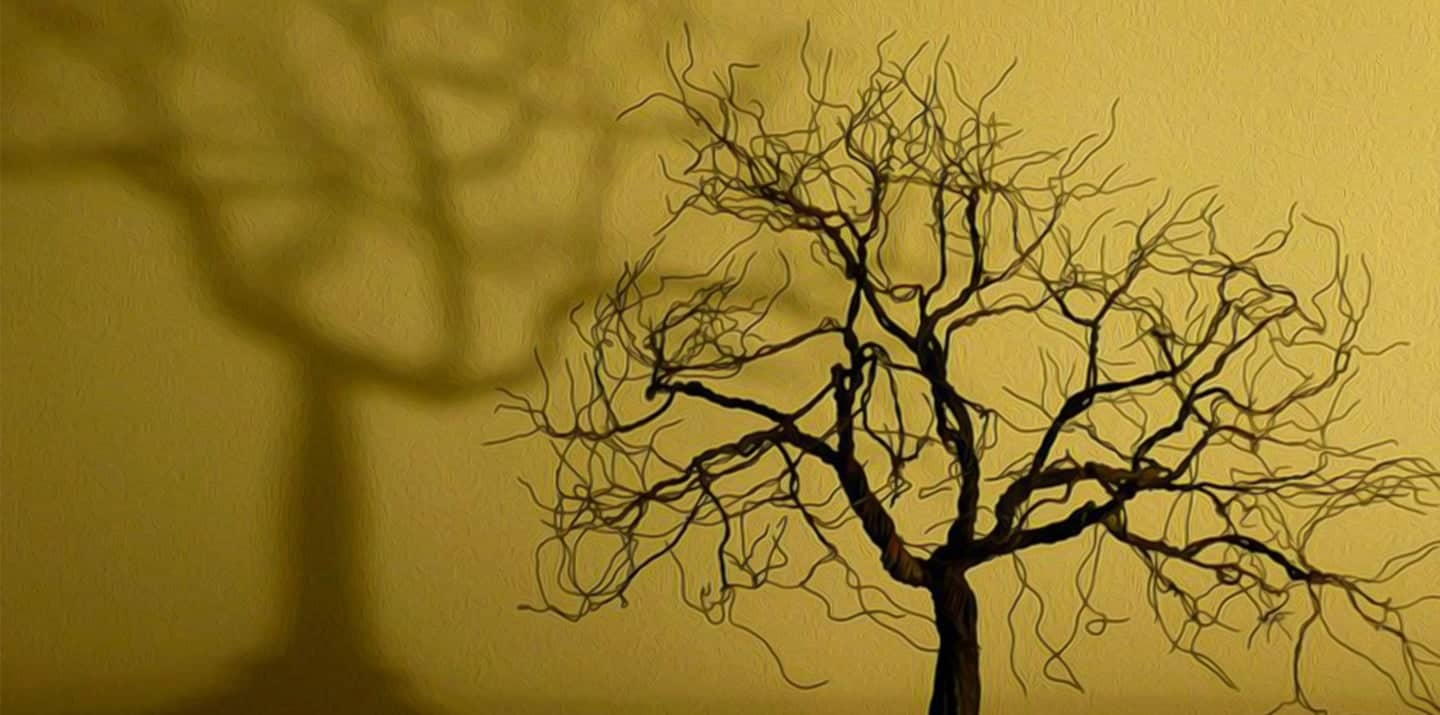
I am neither a theatre critic nor have I performed one on stage or screen. However, last weekend, I watched an outstanding performance of Waiting for Godot at the Shakespeare Theatre of NJ with my oldest grandchild. I have attended performances in Madison for over two decades and have always supported the theatre with a modest donation. While watching the play, I gained valuable insights into my journey with grief.

Waiting for Godot has been the subject of debate among critics since its first performance. Despite my initial doubts, I decided to follow the advice of Bonne J. Monte, the current director of the theatre, which encourages the audience to experience the performance rather than seek its meaning. In doing so, I could fully appreciate the live theatre experience.

Ms. Monte suggested that the play could represent a universal illusion – the hope for something or someone that could put us in a better place. However, this “thing” is as challenging as searching for meaning. This description accurately reflects my experience during the initial phase of grieving my wife’s death. I eventually came to terms with the fact that, no matter how much I wished my wife were still alive, her passing was irreversible. At the same time, I had to accept that no magical solution was waiting for me in the future that would make everything better..

By accepting the message of Waiting for Godot, I realized the importance of living in the present moment. Although my past with my wife was beautiful, I cannot let it consume my present. Instead, I choose to be present and welcome the future with open arms. I am prepared for the future and will do my best to live the best life possible.


The Jan Lilien Education Fund sponsors ongoing sustainability and environmental awareness programs. Gifts made this month; I will match dollar-for-dollar. All donations are tax-deductible.

Subscribe

Contact Us

I receive a commission when you buy a book or product using a link on this page. Thank you for supporting Sharing Jan’s Love blog.


Illumine My Life’s Path

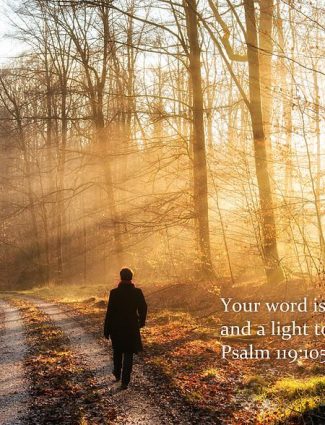
I was privileged to read a passage about illuminating our life's path for Kol Nidre this year. The selection of words amazed me as they reflected my current circumstances. Although I still have questions and need clarification, reflecting on how a few words profoundly impact our lives is inspiring. "How shall we come to know the purpose of our existence?" The answer seems obvious, yet it can be challenging to comprehend. As someone who was part of a couple for almost fifty years and now is alone, I often wonder about the purpose of my existence. While I can live alone indefinitely, I miss having a life partner and soul mate. But as the last part of my reading said, "Be gracious to us, answer us, empower us, and give us courage, for the answers are both in You and with You." It's comforting to know that the answers we seek are within us and that we have the power to find them.

Show thread (1)

My Past No Longer Consumes My Life

Waiting or Godot Offers Roadmap for Recovery

Estimated reading time: 1 minute, 54 seconds

My Past No Longer Consumes My Life

I lived in the past in the initial months after my wife died. The loss of a loved one is like a mega-earthquake. When I lost my parents, a few books fell on the outer edge of my bookcase. When my wife died, the entire bookcase collapsed. I knew I needed to rebuild the bookcase and pick up the books from the floor, but I was frozen. I wanted my wife back, even though I knew that was impossible. The past consumed my life for endless days and nights and kept me from living. Almost twenty-nine months later, I am facing the unknowable future by living in the present and not letting the past consume my life.

Relapse was a stark reminder of how much power the past once held over my life. However, it also highlighted the sense of liberation I now feel. Even though we may be called towards the future, it can be difficult to envision life after loss. Only when we fully grasp Merrit Malloy's Epitaph can we break free from the past's grasp. Love never dies; only people do. I could live in the present moment when I finally let go of my wife's love. I cannot predict the future, but I am no longer afraid. I will work towards building a fulfilling life, one day at a time.

4 comments add your comment

Share your thoughts and ideas

This site uses Akismet to reduce spam. Learn how your comment data is processed.

The Jan Lilien Education Fund!

Waiting for the Future to Arrive
×
Flesh

Read: May 2025

Get this book

Flesh: A Novel

by David Szalay

David Szalay, a finalist for the Booker Prize, has written a gripping and mesmerizing novel, Flesh, which follows a man whose life is turned upside down by events beyond his control. Concise and thought-provoking, Flesh delves into the subtle yet lasting effects of unresolved trauma amid the instability and violence of an increasingly globalized Europe. The novel offers sharp insights, unwavering emotional depth, and a remarkable portrayal of humanity.

Teenaged István lives with his mother in a quiet apartment complex in Hungary. Shy and new to the area, he struggles to engage with the social rituals of his classmates and soon becomes isolated. His only companion is his neighbor, a married woman of a similar age to his mother, whom he begrudgingly assists with errands. As their periodic encounters evolve into a clandestine relationship that István can barely comprehend, his life spirals out of control, culminating in a violent accident that results in a man’s death.

A tumultuous journey unfolds as István emigrates from Hungary to London, navigating a series of jobs before securing steady employment as a driver for London’s affluent elite. At each stage, his life is influenced by the goodwill or self-interest of strangers. Throughout it all, István remains a calm, detached observer of his existence. Through his perspective, we experience a tragic twist on the immigrant “success story,” lit by moments of sensitivity, softness, and Szalay’s keen observations.

Fast-paced and immersive, Flesh reveals István’s life through intimate moments with lovers, employers, and family members, charting his experiences over several decades. As the story unfolds, the tension between what is seen and unseen, and what can and cannot be expressed, intensifies until, ultimately, a sudden tragedy jeopardizes István’s life yet again.


David Szalay is the author of Turbulence, London and the South-East, and All That Man Is. He has been awarded the Gordon Burn Prize and the Paris Review Plimpton Prize for Fiction, and has been shortlisted for the Man Booker Prize. Born in Canada, he grew up in London and now lives in Vienna. His most recent novel is Flesh.


When you purchase a book through one of my links, I earn a small commission that helps support my passion for reading. This contribution allows me to buy even more books to share with you, creating an incredible cycle of discovering great reads together! Your support truly makes a difference!

Enjoy a limited-time offer of 20% off your next book purchase at Bookshop.org!


×
The Boy from the Sea

Read: May 2025

Get this book

The Boy from the Sea

by Garrett Carr

The Boy from the Sea by Garrett Carr is set on the west coast of Ireland during the 1970s and 1980s. This captivating debut novel tells the story of a baby boy found on the beach near a small fishing town, narrated by the locals who become enchanted by him. Both outrageously funny and profoundly moving, The Boy from the Sea showcases the talent of an essential new voice in Irish literature.

In 1973, a baby boy was discovered on the beach of a close-knit fishing village in Ireland. Fisherman Ambrose Bonnar offers to bring the child into his family, which includes his son Declan, his wife Christine, and, up the lane, Christine’s sister and aging father. The townspeople remain fascinated by the baby, whom they name Brendan, as he grows into a strange yet charismatic young man.

The Boy from the Sea tells the story of a family and a community thrown into turmoil by Brendan’s arrival. The family’s fortunes rise and fall over the years, just as the town does because nothing happens to one family here without affecting them all. The forces of a voracious global economy and modernized commercial fishing wreak havoc on their way of life. In the village, Brendan and Declan are wildly different and often at odds; meanwhile, Ambrose worries about his children but cannot divert his attention from the brutal work that keeps his family afloat. As the world around them changes, the mystery of Brendan’s origins draws them toward a surprising and stormy fate.


Garrett Carr teaches creative writing at the Seamus Heaney Centre at Queen’s University Belfast and frequently contributes to The Guardian and The Irish Times. His nonfiction work, The Rule of the Land: Walking Ireland’s Border, was chosen as a BBC Radio 4 Book of the Week. The Boy from the Sea marks Carr’s debut novel.


When you purchase a book through one of my links, I earn a small commission that helps support my passion for reading. This contribution allows me to buy even more books to share with you, creating an incredible cycle of discovering great reads together! Your support truly makes a difference!

Don’t miss out on this exciting opportunity! Enjoy a limited-time offer of 20% off your next book purchase at Bookshop.org! It’s the perfect chance to add this compelling novel to your collection.


×
Old Babes in the Wood: Stories

Read: March 2023

Get this book

Old Babes in the Wood: Stories

by Margaret Atwood

Old Babes in the Wood: Stories by Margaret Atwood is a collection of remarkable tales, which delight, illuminate, and are quietly devastating. I especially found the stories about Nell and Tig compelling and engaging. Widow describes a letter Nell almost wrote to a friend after Tig is gone. Nell sounded like me when she said, “the warping or folding of time. In some parts of this refolded time, Tig still exists, as much as he ever did.”

The letter Nell is writing to a friend she will never be sent because it speaks to the harsh reality that grief imposes upon us.

Margaret Atwood writes as Nell,

Have I gone into the dark tunnel, dressed in mourning black with gloves and a veil, and come out the other end, all cheery and wearing bright colors and loaded for bear?

No. Because it’s not a tunnel. There isn’t any other end. Time has ceased to be linear, with life events and memories in a chronological row, like beads on a string. It’s the strangest feeling, or experience, or rearrangement. I’m not sure I can explain it to you.

As much as it might have appeared that I was in a dark tunnel after Jan died, I was not and am not now. There is indeed no defined end to the grief journey.

We all must learn how to live without our loved ones. The pathway I have chosen may not work for anyone else.

The earlier Nell and Tig stories are memories about their lives, reminding me of how I wrote about how Jan and I met and eventually married.

I have always enjoyed reading Atwood‘s writing, including The Handmaid’s Tale and The Testaments. I highly recommend Old Babes in the Wood: Stories by Margaret Atwood!

Old Babes in the Wood was my twenty-third book of the year and fulfilled my Goodreads 2023 Reading Challenge, but it will not end my reading this year. 

The Goodreads summary provides an overview,

Margaret Atwood has established herself as one of the world’s most visionary and canonical authors. This collection of fifteen extraordinary stories–some of which have appeared in The New Yorker and The New York Times Magazine–explores the full warp and weft of experience, speaking to our unique times with Atwood’s characteristic insight, wit, and intellect.

The two brave sisters of the title story grapple with loss and memory on a perfect summer evening; “Impatient Griselda” explores alienation and miscommunication with a fresh twist on a folkloric classic; and “My Evil Mother” touches on the unbelievable, examining a mother-daughter relationship in which the mother purports to be a witch. At the heart of the collection are seven extraordinary stories that follow a married couple across the decades, the moments big and small that make up a long life of uncommon love–and what comes after.


The Jan Lilien Education Fund sponsors ongoing sustainability and environmental awareness programs. Gifts made this month; I will match dollar-for-dollar. All donations are tax-deductible.

Subscribe

Contact Us

I receive a commission when you buy a book or product using a link on this page. Thank you for supporting Sharing Jan’s Love blog.


×
The Brief Wondrous Life of Oscar Wao

Read: August 2024

Get this book

The Brief Wondrous Life of Oscar Wao

by Junot Diaz

Today, I started reading Junot Diaz‘s The Brief Wondrous Life of Oscar Wao, one of The New York Times’ 100 Best Books of the Century. The book also won a Pulitzer Prize. Oscar is a sweet but disastrously overweight ghetto nerd who—from the New Jersey home he shares with his old-world mother and rebellious sister—dreams of becoming the Dominican J.R.R. Tolkien and, most of all, finding love.

But Oscar may never get what he wants. Blame the fukú—a curse that has haunted Oscar’s family for generations, following them on their epic journey from Santo Domingo to the USA. Encapsulating Dominican-American history, The Brief Wondrous Life of Oscar Wao opens our eyes to an astonishing vision of the contemporary American experience. It explores the endless human capacity to persevere—and risk it all—in the name of love.

×
Invisible Child

Read: December 2021

Get this book

Invisible Child: Poverty, Survival & Hope in an American City

by Andrea Elliott

Invisible Child: Poverty, Survival & Hope in an American City by Andrea Elliott was a gift from my son Jon. The New York Times selected “Invisible Child” as one of the best books published this year. It is indeed one of the top books on my all-time list.

GoodReads summary provides a good overview,

The riveting, unforgettable story of a girl whose indomitable spirit is tested by homelessness, poverty, and racism in an unequal America—from Pulitzer Prize-winning journalist Andrea Elliott of The New York Times

Invisible Child follows eight dramatic years in the life of Dasani Coates, a child with imagination as soaring as the skyscrapers near her Brooklyn homeless shelter. Born at the turn of a new century, Dasani is named for the bottled water that comes to symbolize Brooklyn’s gentrification and the shared aspirations of a divided city. As Dasani grows up, moving with her tight-knit family from shelter to shelter, this story goes back to trace the passage of Dasani’s ancestors from slavery to the Great Migration north. When Dasani comes of age, New York City’s homeless crisis explodes as the chasm deepens between rich and poor.

In the shadows of this new Gilded Age, Dasani must lead her seven siblings through a thicket of problems: hunger, parental drug addiction, violence, housing instability, segregated schools, and the constant monitoring of the child-protection system. When, at age thirteen, Dasani enrolls at a boarding school in Pennsylvania, her loyalties are tested like never before. As she learns to “code switch” between the culture she left behind and the norms of her new town, Dasani starts to feel like a stranger in both places. Ultimately, she faces an impossible question: What if leaving poverty means abandoning the family you love?

By turns heartbreaking and revelatory, provocative and inspiring, Invisible Child tells an astonishing story about the power of resilience, the importance of family, and the cost of inequality. Based on nearly a decade of reporting, this book vividly illuminates some of the most critical issues in contemporary America through the life of one remarkable girl.

Jan and I were involved and knew that child poverty and homelessness needed repair. In addition, Jan lived on Washington Park across from Ft. Greene Park in 1974-75. We knew the neighborhood where much of the book’s story takes place. 

Before meeting Jan in 1973, I was both a community/tenant organizer and a youth worker. In the latter role, I made weekly hostel trips for eight to ten young boys from East Williamsburg during 1973. The trips were the first the boys had ever been outside of their neighborhood.

Many of them had imaginations like Dasani. They also had her instinct to fight. One of my first tasks was to check for any weapons.

Decades later, when I would see any of them, now adults, they would ask when we were going on another trip. I wish I had met Jan when I made those trips. She would have helped me improve them and document the impact. If I could re-write history, I would have her join me as the second adult on the hostel trips.

After that summer, it was clear my primary skills were as a community/tenant organizer. Over the next few years, my work focused on creating affordable and supportive housing.

Jan and I did meaningful work that made a difference, yet the need for a permanent solution to the crisis remains. The book highlights the crucial role of resilience, the importance of family, and the cost of inequality. As a nation, we cannot undermine those values by breaking up families, impeding resilience, and maintaining racial and economic inequality. 

The current debate in Washington over the Build Back Better legislation needs to focus not on how much we spend but on its impact on children and families

David Brooks, a conservative commentator, has supported these expenditures for what they can do to address this country’s cultural and economic crisis. 

These packages say to the struggling parents and the warehouse workers: I see you. Your work has dignity. You are paving your way. You are at the center of our national vision.

This is how you fortify a compelling moral identity, which is what all of us need if we’re going to be able to look in the mirror with self-respect. This is the cultural transformation that good policy can sometimes achieve. Statecraft is soulcraft.

If you can only read one book this year, this is the one to read. Child poverty, homelessness, and inequality impact all of us. Ending child poverty and homelessness will make us a healthier and more inclusive nation. It is time for a compelling moral call to action!

Subscribe

Contact Us

When you buy a book or product using a link on this page, I receive a commission. Thank you for supporting Sharing Jan’s Love blog.

×
Western Lane: A Novel

Read: March 2023

Get this book

Western Lane: A Novel

by Chetna Maroo

Western Lane: A Novel by Chetna Maroo is a taut, enthralling first novel about grief, sisterhood, and a young athlete’s struggle to transcend herself. Western Lane is about three sisters who have lost their mother. Their father is encouraged to provide structure in raising his daughters. Gopi, the narrator, is a squash player, and her father imposes a brutal training regimen. I highly recommend this novel!

The following passage explains the importance of squash to Gopi and how she views the world.

In the court, your mind is not only on the shot you’re about to play and the shot with which your opponent might reply, but on the shots that will follow two, three, four moves ahead. You’re watching your opponent’s position and the game he or she is playing, making calculations. This is how you choose which way to go. Though your mind is following several paths at once, it’s not a splitting but expansion forwards and backward in time, and it happens so quickly that it feels like instinct. Sometimes, you don’t even know you are thinking.

In the first few pages, I wondered what I would have done if I had been a single parent when my sons were young. I do not believe I would have imposed on my sons what Gopi’s father did to her. However, I have found reading and art to be powerful tools to help me cope with grief. I have focused on rituals, structure, and purpose.

The Goodreads summary provides an overview,

Eleven-year-old Gopi has been playing squash since she was old enough to hold a racket. When her mother dies, her father enlists her in a quietly brutal training regimen, and the game becomes her world. Slowly, she grows apart from her sisters. Her life is reduced to the sport, guided by its rhythms: the serve, the volley, the drive, the shot, and its echo.

But on the court, she is not alone. She is with her pa. She is with Ged, a thirteen-year-old boy with formidable talent. She is with the players who have come before her. She is in awe.

An indelible coming-of-age story, Chetna Maroo’s first novel captures the ordinary and annihilates it with beauty. Western Lane is a valentine to innocence, to the closeness of sisterhood, to the strange ways we know ourselves and each other.


The Jan Lilien Education Fund sponsors ongoing sustainability and environmental awareness programs. Gifts made this month; I will match dollar-for-dollar. All donations are tax-deductible.

Subscribe

Contact Us

I receive a commission when you buy a book or product using a link on this page. Thank you for supporting Sharing Jan’s Love blog.


×