
Walking is Vital to My Conscientious Resilience!

Estimated reading time: 16 minutes, 47 seconds

Ruth Bader Ginsburg’s Advice

Last week, I had the opportunity to immerse myself in “Memorial Days: A Memoir” by Geraldine Brooks, which left a deep mark on my heart. This beautifully written memoir navigates the emotional landscape of Brooks’s life as she copes with the devastating loss of her husband. One piece of wisdom that struck me came from Justice Ruth Bader Ginsburg, shared through a dear friend of Brooks’s: “Do your work. It might not be your best work, but it will be good work, and it will be what saves you.” This poignant reminder resonated powerfully with me, illustrating how essential it is to keep creating and connecting, even in our darkest hours. It’s a testament to the healing power of perseverance and purpose.

Looking back with perfect hindsight, it’s clear why I chose to start walking that day. On that bleak Friday morning, my only alternative was to languish at home, surrounded by haunting memories and a to-do list that seemed to multiply with every item I checked off. The weight of impending bills loomed over me like a dark cloud, especially after losing half of our family income with her last breath. I hadn’t had the heart to tackle the bills piled up like dust bunnies in my apartment for months. As Ms. Brooks insightfully points out in her memoir, navigating the aftermath of a loved one’s passing can quickly turn into a tangled mess, even for those who believe they’ve planned for every eventuality.


At times, work can become all-consuming. I often wonder if I’ve unintentionally developed a habit of excessive walking. In 2021, I walked at least one hundred miles a week on two separate occasions, each lasting three weeks. Living alone, I frequently question whether my motivation came from a desire to complete tasks, a search for meaning and purpose, or a loneliness that made long-distance walking my only solace.

Meeting Jan's Spirit!

Is it possible for a man in his seventies to walk that far? I have detailed records on my Apple Watch. I completed a holiday trifecta by walking over 100 miles for three weeks. Last summer, I walked 105.62 miles in one week, 97 miles the week before, and 98.04 miles the week after.

The details of the fall 2021 walks are as follows:

  • November 22-28, 2021 – 102.54 miles
  • November 14-20, 2021 – 100.31 miles
  • November 7-13, 2021 – 102.98 miles

The attentive reader may notice one day missing from the November cycle. I previously used Fitbit, which counts weeks from Sunday to Saturday, whereas the Apple Watch counts weeks from Monday to Sunday. On Sunday, November 21, the total miles recorded were 14.64.

During the three weeks in November, I walked 303.83 miles, averaging 101.28 weekly. In July, the total miles walked over three weeks was 300.66, and the average was 100.22 miles per week.

I shared the November walkathon results with my primary care physician, hoping she would be pleased to know that I had been exercising, especially how far I had walked. However, her text response was not what I expected. She said, “I am glad you are exercising, but I am worried that you might hurt your knees at your age. Please walk daily, but for shorter distances.

One of my weaknesses has been stubbornness, and I am actively working to overcome it. Initially, I ignored my doctor’s advice but realized I did not need to push myself excessively. Acknowledging her concerns, I have adjusted my target to 60-70 miles per week.


Pages: 1 2 3 4 5 6

10 comments add your comment

  1. As you know, I am walking because of you. I am currently at day 55 of 100. Once I reach day 75, I plan to change my goal to walk 150 days.

    I am excited by that goal because when I arrive at 150 days, I will have walked 10% of the days that you will have walked and it will be my one chance to have such alignment. I am excited!

    So, why am I walking? I am walking because having a concrete goal of walking 100 days gives me reason not to quit. I am guessing that you start your walk each day for a similar reason. It gives you a reason not to quit, to keep going.

    Once I begin my walk the reasons change and are different from day to day. However, the sense of accomplishment of having “walked today” is always there and my guess is that you likely walk for those endorphins too.

    Thank you for inspiring me!

    -Mark-

    • Mark, I want to express my gratitude for your friendship and support. It will be an honor to celebrate when you reach 150 days, and I’m currently at 1,410 days and counting.

      I walk to enjoy the endorphins, but like you, each day I walk gives me one more reason not to quit. Some days my body protests, but once I start, the pain disappears, and I find myself in moments of tranquility with nature and life.

      If I’ve inspired you to walk, you have encouraged me to live life fully after loss in countless ways.

      I will always be grateful to have you as a friend.

Share your thoughts and ideas

This site uses Akismet to reduce spam. Learn how your comment data is processed.

The Jan Lilien Education Fund!

Autocorrect

Read: August 2025

Get this book

Autocorrect: Stories

by Etgar Keret

Autocorrect” by Etgar Keret, a prominent figure in Israeli literature and film, is a darkly humorous collection of stories that delves into themes of identity, reality, and meaning. These narratives resonate with our current times, characterized by uncertainty and fragility, marked by misunderstandings and miscommunications, as we seek reasons and the strength to foster hope.

Etgar Keret‘s stories reveal the fault lines and uncomfortable truths in our society, all delivered in a style that is uniquely his own. He is the world’s most renowned living Israeli writer, known for his lean and accessible short stories that often blend whimsy, surrealism, and dark humor. Keret’s work explores the most minor and seemingly mundane aspects of life in profound and unusual ways.

The characters in his fiction face relatable challenges in work and relationships. They inhabit a world filled with rapidly advancing technology, yet the base nature of human passions and brutality repeatedly undermines this world. For instance, one character’s partner is a reality show contestant from a parallel dimension. At the same time, another discovers that the asteroid he paid to have named after his wife is on a collision course with Earth. In another story, an elderly widow persuades a popular AI program to commit suicide.


Etgar Keret, born in Ramat Gan in 1967, is a prominent figure in Israeli literature and film. Translated into more than forty languages, his writing has appeared in well-known publications such as The New York Times, Le Monde, and The New Yorker. He has received several prestigious awards, including the Caméra d’Or at the Cannes Film Festival in 2007, the Charles Bronfman Prize in 2016, and the esteemed Sapir Prize in 2018.

More than a hundred captivating short films and several remarkable feature films have brought his stories to life on the big screen. Keret teaches creative writing at Ben-Gurion University of the Negev. Since 2021, he has also been publishing a weekly newsletter titled “Alphabet Soup” on Substack.


When you purchase a book through one of my links, I earn a small commission that helps support my passion for reading. This contribution allows me to buy even more books to share with you, creating an incredible cycle of discovering great reads together! Your support truly makes a difference!

Enjoy a limited-time offer of 20% off your next book purchase at Bookshop.org!


×
Rejection: Fiction

Read: December 2024

Get this book

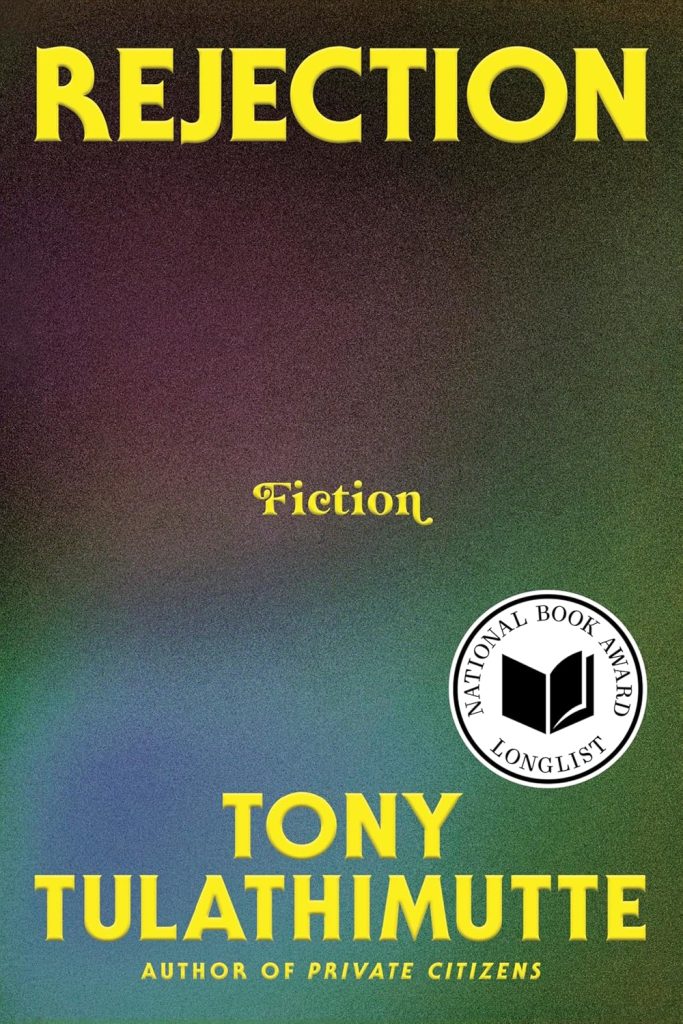
Rejection: Fiction

by Tony Tulathimutte

Today, I dove into Tony Tulathimutte‘s “Rejection: Fiction,” and I’m already captivated! This book was longlisted for the 2024 National Book Award in Fiction and named a New York Times Best Book of the Year. Tulathimutte, known for his award-winning work “Private Citizens,” weaves together a series of electrifying linked stories that keenly examine how rejection weaves its way into the lives and relationships of his deeply intertwined characters.

With sharp observations and outrageous humor, *Rejection* delves into the most sensitive issues of modern life. This collection of seven interconnected stories transitions smoothly between the personal crises of a complex cast of characters and the comic tragedies associated with sex, relationships, identity, and the internet.

In “The Feminist,” a young man’s passionate allyship turns into furious nihilism as he realizes, after thirty lonely years, that his efforts are not leading to romantic success or even getting laid; in “Pics,” a young woman’s unrequited crush spirals into obsession, systematically eroding her sense of self. “Ahegao; or, The Ballad of Sexual Repression,” depicts a shy late bloomer whose fumbling attempts at a first relationship result in a life-changing mistake. As these characters intersect through dating apps, social media feeds, dimly lit bars, and bedrooms, they reveal how our delusions can distort our desire for connection.

These brilliant satires examine the understated sorrows of rejection with a modern classic’s authority and a manifesto’s frenetic energy. Bold and unforgettable, Rejection is a striking mosaic that redefines what it means to face rejection from lovers, friends, society, and oneself.


When you purchase a book through one of my links, I earn a small commission that helps support my passion for reading. This contribution allows me to buy even more books to share with you, creating an incredible cycle of discovering great reads together! Your support truly makes a difference!


×
The Houseboat

Read: February 2023

Get this book

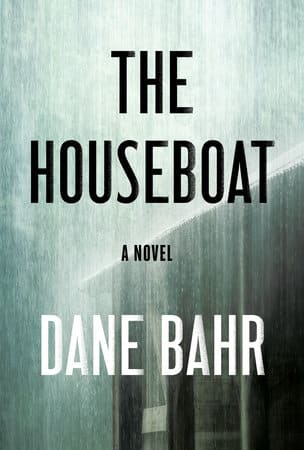
The Houseboat: A Novel

by Dane Bahr

The Houseboat: A Novel by Dane Bahr was one of 6 New Paperbacks to Read This Week in The New York Times. Miguel Salazar of the Times described it as “A girl claims her boyfriend has been murdered outside a small town in Iowa, and although no body is found, collective suspicion lands on a loner who lives in a rotting houseboat along the Mississippi River. Through chapters that shift in perspective and move through time, Bahr builds to a nail-biting denouement.”

Edward Nese, the regional marshall from Minnesota, was a character that I could identify with, as he was widowed but still married. Of course, in the early 1960s, I was still a middle school student and would probably have been freighted by The Houseboat

I recommend this true crime novel. Until the last page, you will be unsure how it will end.

After reading non-fiction history about the assassination of President Garfield, I needed a change of genre.

The Goodreads summary provides an overview,

James Sallis meets Mindhunter in this stylish and atmospheric noir set in a small town in Iowa in the 1960s, a midcentury heartland gothic with plentiful twists and a feverish conclusion.

Local outcast Rigby Sellers lives in squalor on a dilapidated houseboat on the Mississippi River. With only stolen manikins and the river to keep him company, Rigby spirals from the bizarre to the threatening. As a year of drought gives way to a season of storms, a girl is found trembling on the side of the road, claiming her boyfriend was murdered. The nearby town of Oscar turns its suspicions toward Sellers.

Town sheriff Amos Fielding knows this crime is more than he can handle alone. He calls on the regional marshall in Minnesota, and detective Edward Ness arrives in Oscar to help him investigate the homicide and defuse the growing unrest. Ness, suffering from his demons, is determined to put his past behind him and solve the case. But soon, more bodies are found. As Ness and Fielding uncover disturbing facts about Sellers, and a great storm floods the Mississippi, threatening the town, Oscar is pushed to a breaking point even Ness may not be able to prevent.


The Jan Lilien Education Fund sponsors ongoing sustainability and environmental awareness programs. Gifts made this month; I will match dollar-for-dollar. All donations are tax-deductible.

Subscribe

Contact Us

I receive a commission when you buy a book or product using a link on this page. Thank you for supporting Sharing Jan’s Love blog.


×
The Jackal's Mistress

Read: March 2025

Get this book

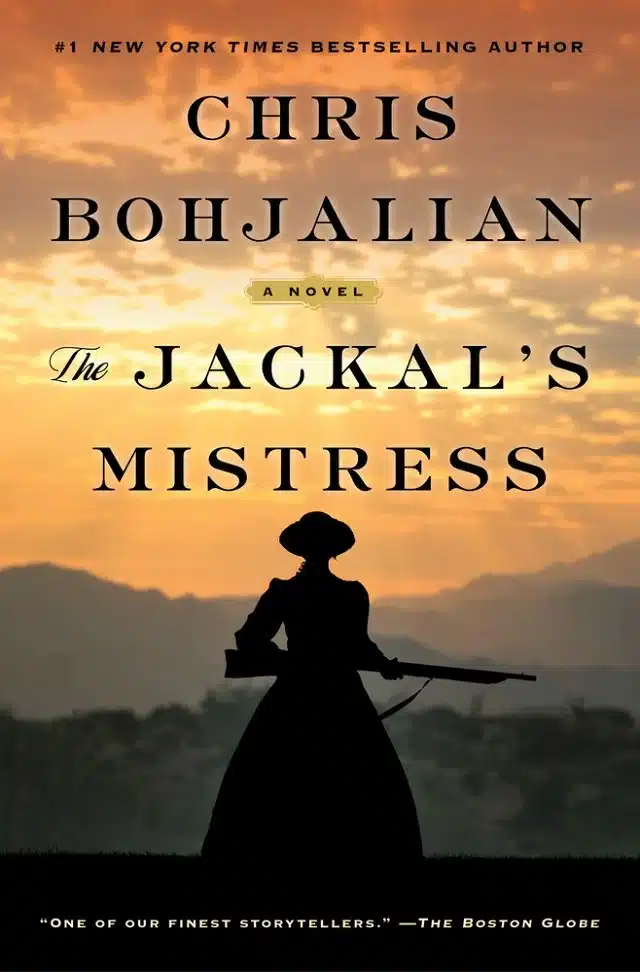
The Jackal’s Mistress

by Chris Bohjalian

Today, I dove into “The Jackal’s Mistress” by Chris Bohjalian, a gripping Civil War love story inspired by a true friendship that defied the odds. It follows the wife of a missing Confederate soldier as she stumbles upon a wounded Yankee officer. With the battlefield’s tension looming, she faces a heart-wrenching choice: How much is she willing to risk for the life of a stranger?

Written by a New York Times bestselling author renowned for captivating historical novels like “Hour of the Witch” and “The Sandcastle Girls,” this tale promises an unforgettable journey of love and sacrifice.

Virginia, 1864—Libby Steadman’s husband has been away so long that she can barely remember his voice in her dreams. While she longs for him at night, fearing he is dead in a Union prison camp, her days are spent running a gristmill with her teenage niece, a hired hand, and his wife. The Confederate Army requisitions all the grain they produce. It’s a precarious life in the Shenandoah Valley, a region that frequently changes hands, with control shifting back and forth between North and South. Libby wakes each morning expecting to see her land transformed into a battlefield.

Then, Libby discovers a gravely injured Union officer left for dead in a neighbor’s house, his hand and leg bones shattered. Captain Jonathan Weybridge of the Vermont Brigade is her enemy, but he is also in dire need. Libby faces a terrible decision: should she leave him to die alone, or should she risk treason and try to nurse him back to health? If she succeeds, will she attempt to secretly bring him across Union lines in hopes of negotiating a trade for news about her husband?

The Jackal’s Mistress” is a vivid and sweeping story of two people navigating the boundaries of love and humanity amid a backdrop of brutal violence. This heart-stopping novel is based on a largely unknown piece of American history and showcases one of our greatest storytellers.


Chris Bohjalian is the #1 New York Times bestselling author of twenty-five books, including “The Princess of Las Vegas,” “The Lioness,” “Hour of the Witch,” “Midwives,” and “The Flight Attendant,” which has been adapted into a limited series on Max starring Kaley Cuoco.

His other notable works include “The Red Lotus,” “The Guest Room,” “Close Your Eyes, Hold Hands,” “The Sandcastle Girls,” “Skeletons at the Feast,” and “The Double Bind.” Several of his novels, including “Secrets of Eden,” “Midwives,” and “Past the Bleachers,” have been adapted into movies. Bohjalian’s works have been translated into more than thirty-five languages. In addition to writing novels, he is also a playwright, with works such as “The Club,” “Wingspan,” and “Midwives.

He resides in Vermont and can be found online at chrisbohjalian.com and on Facebook, Instagram, X, TikTok, Litsy, and Goodreads.


When you purchase a book through one of my links, I earn a small commission that helps support my passion for reading. This contribution allows me to buy even more books to share with you, creating an incredible cycle of discovering great reads together! Your support truly makes a difference!


×
Monkey Grip: A Novel

Read: February 2024

Get this book

Monkey Grip: A Novel

by Helen Garner

Today, I began reading Monkey Grip: A Novel by Helen Garner. It’s a book that launched the career of one of Australia’s most celebrated writers. The story follows the infatuations of a young, single mother fascinated by the excesses of Melbourne’s late-70s counterculture. Monkey Grip is a seminal novel about Australia’s turbulent 1970s, including communal households, music, friendships, children, love, drugs, and sex.

Helen Garner is a renowned novelist, short-story writer, and journalist. She’s best known for her frank, unsparing, and intricate portrayals of Australian life, often drawn from the pages of her journals and diaries. A new US edition of her debut novel, which establishes Garner’s masterful and quietly radical literary voice, is now available.

The novel is set in Australia during the late 1970s and tells the story of Nora, a single mother and writer. Nora navigates Melbourne’s bohemian underground with her young daughter, Gracie, in tow. Nora falls in love with Javo, a flighty man trapped in his addiction. As their relationship disintegrates, Nora struggles to wean off a love that feels impossible to live without.

When Monkey Grip was first published in 1977, it caused a sensation. Critics praised Garner for her craft, but many criticized her gritty depictions of the human body, frankness about sex and drugs, the mess of motherhood, and her unabashed use of her own life as inspiration. Today, such criticism feels old-fashioned and glaringly gendered, and Monkey Grip is considered a modern masterpiece.

×
Piranesi

Read: May 2022

Get this book

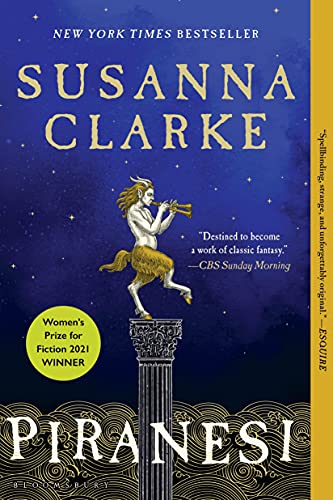
Piranesi: A Novel by Susanna Clarke

by Susanna Clarke

Piranesi by Susanna Clarke is about a man known as Piranesi who lives in a big house and explores the labyrinth of rooms and hopes of understanding the meaning. Is it any surprise that I would pick this book as my thirtieth of the year? As a widow, I journal and journey in a life I did not expect to live, and I still believe I will find meaning and purpose

In addition, a labyrinth is one of the options we have discussed for the next phase of the work in Hanson Park.

Piranesi is a page-turner, but that does not fully describe the beauty of the world that Susanna Clarke created. I highly recommend this book as it is one of my best this year. 

The Goodreads summary provides an overview of Piranesi by Susanna Clarke.

Piranesi’s house is no ordinary building: its rooms are infinite, its corridors endless, its walls are lined with thousands upon thousands of statues, each one different from all the others. Within the labyrinth of halls an ocean is imprisoned; waves thunder up staircases, rooms are flooded in an instant. But Piranesi is not afraid; he understands the tides as he understands the pattern of the labyrinth itself. He lives to explore the house.

There is one other person in the house—a man called The Other, who visits Piranesi twice a week and asks for help with research into A Great and Secret Knowledge. But as Piranesi explores, evidence emerges of another person, and a terrible truth begins to unravel, revealing a world beyond the one Piranesi has always known.

For readers of Neil Gaiman’s The Ocean at the End of the Lane and fans of Madeline Miller’s Circe, Piranesi introduces an astonishing new world, an infinite labyrinth, full of startling images and surreal beauty, haunted by the tides and the clouds.


Subscribe

Contact Us

When you buy a book or product using a link on this page, I receive a commission. Thank you for supporting Sharing Jan’s Love blog.

×

Discover more from Sharing Jan’s Love

Subscribe now to keep reading and get access to the full archive.

Continue reading