
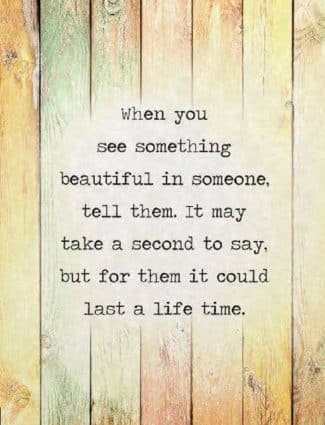
Beautiful

Jan’s Smiles Were Kaleidoscopes of Joy

Estimated reading time: 0 minutes, 42 seconds

Celebrate JanEvery day, I would say something special to Jan.

She was like a kaleidoscope. Her smile always reflected unique and beautiful new images that filled my heart and soul with happiness.

When I saw those glorious images, I would tell Jan how much I loved her and how happy I was to share a life with her.

Jan would always tell me I did not need to tell her how much I loved her.

I gently disagreed with her.

There is nothing more important than to share the joyous news with those we love and share life’s simple pleasures.

Subscribe

Contact Us

When you buy a book or product using a link on this page, I receive a commission. Thank you for supporting Sharing Jan’s Love blog.

5 comments add your comment

Share your thoughts and ideas

This site uses Akismet to reduce spam. Learn how your comment data is processed.

The Jan Lilien Education Fund!

Beautiful
×
Half in Shadow

Read: December 2021

Get this book

Half in Shadow: A Novel

by Gemma Liviero

Half in Shadow by Gemma Liviero is an unforgettable novel about courage, love, and consequences at the dawn of World War I. In German-occupied Belgium, a tragic loss forces Josephine Descharmes to navigate dangerous new territory. By day it’s compliance, serving German officers at the Hotel Métropole. By night it’s resistance, working with her brothers underground to help Allied soldiers and civilians across the border into Holland. Both paths put her and her family at significant risk.

Before Jan’s death, I preferred to read non-fiction or fiction about historical events. Although I had read nothing by the author before this novel, I decided to read based on the summary. When I finished the book, the author described her goal as a writer in a manner that confirmed my decision.

“Much of my aim in the stories I write is to put human faces, be they fictional, to the many who lived through these events and imagine the experiences and reactions by innocent parties thrust into such situations.”

Half in Shadow: A Novel by Gemma Liviero

Josephine’s involvement in the resistance begins slowly and gains strength with every page. Her brothers Eugene, Xavier, and her mother become realistic due to the precise writing of Ms. Liviero.

Arthur, the English soldier who falls in love with Josephine, becomes an equal member of the resistance and the family. Franz, the German in love with Josephine, is not as strongly defined as appropriate as he is the enemy.

The Amazon overview provides a brief overview of the novel.

As Josephine struggles to keep her family safe, Arthur, a grief-stricken English soldier trapped behind enemy lines, finds purpose and hope with Josephine and her work. Meanwhile, Franz, a German officer remorseful for war casualties, offers her protection and opportunity. These two men from opposing sides will open her heart and test her loyalties.

Amid the sorrows of war and threats of mortal danger and betrayal, Josephine must steer her fate. In a country deprived of freedom, she will make an impossible choice—one that will forever impact the family she cherishes and the man she loves.

The book’s conclusion, which I will not reveal, brings together all of the novel’s threads in a way that reminded me of the power of love and family.

This is one of the best books I have ever read. I highly recommend it.

Half in Shadow is the first time I have gotten a book from Amazon First Reads. I highly recommend First Reads as a way to read books earlier than their regular release. Half in Shadow is not scheduled to be published until January 1, 2022.

Subscribe

Contact Us

When you buy a book or product using a link on this page, I receive a commission. Thank you for supporting Sharing Jan’s Love blog.
×
How the Word is Passed

Read: December 2021

Get this book

How the Word Is Passed: A Reckoning with the History of Slavery Across America

by Clint Smith

How the Word Is Passed: A Reckoning with the History of Slavery Across America by Clint Smith. This book was a gift from my son Jon. The New York Times selected How the Word is Passed as one of the best books published this year. Beginning in his hometown of New Orleans, Clint Smith leads the reader on an unforgettable tour of monuments and landmarks—those that are honest about the past and those that are not—that offer an intergenerational story of how slavery has been central in shaping our nation’s collective history, and ourselves.

How the Word is Passed is one of the best books I have read in 2021. I had read an excerpt in The Atlantic on the Whitney Plantation, one of the only former plantations devoted to preserving the experience of the enslaved people whose lives and work sustained it. Like most of us, I had placed the book on my to-read list, where it remained lost in the cobwebs. Fortunately, my son Jon purchased the book for me.

Secondly, the book rekindled my long-lost dream of being an American Studies professor. As soon as Jan and I met, I dropped plans to leave Brooklyn and start graduate school in the fall of 1974. I made that decision primarily because of how much I loved Jan. But it was also partly that I did not have a clear vision of what my life would be like as a professor. The book provided clear examples of people like Yvonne Holden at The Whitney Plantation redefining history to be more accurate and inclusive. I probably could not have done as well as she did, but I can now see that it might have resulted in a career for me that could have been impactful.

Goodreads provides this overview for those who still need to be convinced to read this book.

It is the story of the Monticello Plantation in Virginia, the estate where Thomas Jefferson wrote letters espousing the urgent need for liberty while enslaving over 400 people on the premises. It is the story of the Whitney Plantation, one of the only former plantations devoted to preserving the experience of the enslaved people whose lives and work sustained it. It is the story of Angola Prison in Louisiana, a former plantation named for the country from which most of its enslaved people arrived and which has since become one of the most gruesome maximum-security prisons in the world. And it is the story of Blandford Cemetery, the final resting place of tens of thousands of Confederate soldiers.

In a deeply researched and transporting exploration of the legacy of slavery and its imprint on centuries of American history, How the Word Is Passed illustrates how some of our country’s most essential stories are hidden in plain view-whether in places we might drive by on our way to work, holidays such as Juneteenth, or entire neighborhoods—like downtown Manhattan—on which the brutal history of the trade in enslaved men, women and children has been deeply imprinted.

Informed by scholarship and brought alive by the story of people living today, Clint Smith’s debut work of nonfiction is a landmark work of reflection and insight that offers a new understanding of the hopeful role that memory and history can play in understanding our country.

How the Word is Passed is one of the best books I have read this year and many prior ones. I encourage you to read it and share your comments.

Subscribe

Contact Us

When you buy a book or product using a link on this page, I receive a commission. Thank you for supporting Sharing Jan’s Love blog.
×
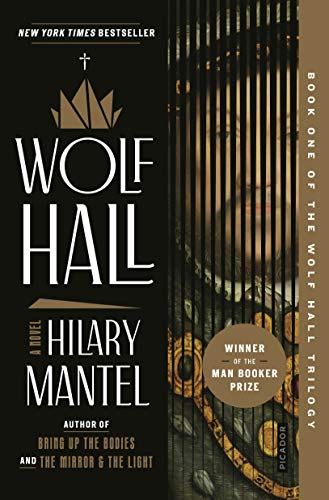
Last House: A Novel

Read: May 2024

Get this book

Last House: A Novel

by Jessica Shattuck

I started reading “Last House: A Novel” by Jessica Shattuck today. She is an esteemed New York Times bestselling author known for her work “The Women in the Castle.” This sweeping narrative, perfect for “The Dutch House” and “Great Circle” fans, explores a nation’s rise to power and a family’s complex ties to the resources that shaped their wealth. It also delves into the events that led to their greatest tragedy, a secret that threatens to tear them apart.

In 1953, a World War II veteran turned company lawyer, Nick Taylor, saw oil as the key to the future. He commutes to the city for work and returns to the peaceful suburbs to be with his wife, Bet, a former codebreaker now a housewife, and their two children, Katherine and Harry. Nick, who comes from humble origins, can provide for his family, including their secluded country escape called Last House, thanks to his work for American Oil. Last House, deep in the Vermont mountains, offers the Taylors a retreat from the stresses of modern life. Bet no longer worries about the Russian H-bombs that haunt her dreams, and the children can roam freely in the woods. Last House is a place that seems capable of surviving the end of the world.

1968, a turning point in American history, where the nation teeters on the brink of transformation. The streets pulsate with protestors challenging everything from the Vietnam War to racism and even the country’s reliance on Big Oil. As Katherine enters adulthood, she finds herself caught in the era’s tide, struggling to reconcile her ideals with the privileged upbringing her parents, part of the Greatest Generation, toiled to provide. But when the Movement takes a secure, more radical turn, each member of the Taylor family must face the repercussions of their choices for the causes they believed in. This rich historical backdrop infuses the Taylor family’s narrative with depth and intrigue, leaving us hungry for more about this transformative era.

Last House” spans multiple generations and nearly eighty years, telling the story of one American family during a time of grand ideals and significant downfalls. It explores themes of family dynamics, the impact of wealth, and the societal changes that shaped America. Set against the backdrop of our nation’s history, this emotional tour de force delves deeply into questions of inheritance and what we owe each other. It captures the gravity of time, the double edge of progress, and the hubris of empire to stunning effect.

×
Killing Stella

Read: July 2025

Get this book

Killing Stella

by Marlen Haushofer

Yesterday, I read “Killing Stella,” written by Marlen Haushofer and translated by Shaun Whiteside, which is a domestic horror story that culminates in an apocalyptic ending. This novella captures many of the themes present in Haushofer’s acclaimed novel, “The Wall,” presenting them within a claustrophobic, gothic, and striking narrative. It offers a gripping and incisive exploration of a fractured marriage, highlighting the remarkable talent of the author of “The Wall,” now available in English for the first time.

Main description: Left alone for the weekend while her husband and two children visit her in-laws, the narrator of “Killing Stella” recounts the addition of her friend’s daughter, Stella, to their already tense and tumultuous household. As she stares out the window at her garden, she worries about a baby bird in the linden tree, her husband Richard, who flits from one adulterous affair to another, her son’s gloomy demeanor, and her daughter’s obliviousness to everything. Most of all, she worries about Stella, a confused teenager who has met a sudden and disastrous end.


Marlen Haushofer (1920–1970) was an Austrian author known for her short stories, novels, radio plays, and children’s books. Her work has significantly influenced many German-speaking writers, including Nobel Prize winner Elfriede Jelinek, who dedicated one of her plays to Haushofer. One of her most notable works, “The Wall“, was adapted into a film in 2012, directed by Julian Pölsler and starring Martina Gedeck.

Shaun Whiteside is known for his translations of classic works from German, including those by Freud, Musil, and Nietzsche.


When you purchase a book through one of my links, I earn a small commission that helps support my passion for reading. This contribution allows me to buy even more books to share with you, creating an incredible cycle of discovering great reads together! Your support truly makes a difference!

Enjoy a limited-time offer of 20% off your next book purchase at Bookshop.org!


×
The Second Mountain: The Quest for a Moral Life

Read: May 2019

Get this book

The Second Mountain: The Quest for a Moral Life

by David Brooks

The Second Mountain: The Quest for a Moral Life by David Brooks is a book I often recommend. Mr. Brooks writes about the first mountain that most people climb. The book challenges the reader to “live for a cause greater than themselves.”

It is about “to be a success, make your mark, experience personal happiness.” Even when they reach the top of the mountain, most people find they are unhappy. The climb to the summit has become unsatisfying.

On the second mountain, life moves from self-centered to other-centered.” Life becomes interdependent, not independent; it becomes a life of commitment, not about us.

Mr. Brooks “explores the four commitments that define a life of meaning and purpose: to a spouse and family, to a vocation, to a philosophy or faith, and to a community.

We live in a society, Brooks argues, that celebrates freedom, that tells us to be true to ourselves, at the expense of surrendering to a cause, rooting ourselves in a neighborhood, binding ourselves to others by social solidarity and love. We have taken individualism to the extreme—and in the process we have torn the social fabric in a thousand different ways.

When I read The Second Mountain, it became clear that Jan and I never even attempted to climb the first mountain. We were constantly climbing the second mountain.

We had chosen to do work that repaired the world; we both had a faith community and lived in a community.

All we were missing as far as commitments when we met was each other. Our love for each other provided the missing link and allowed us to climb to the top of the second mountain.


The Jan Lilien Education Fund sponsors ongoing sustainability and environmental awareness programs. Gifts made this month; I will match dollar-for-dollar. All donations are tax-deductible.

Subscribe

Contact Us

I receive a commission when you buy a book or product using a link on this page. Thank you for supporting Sharing Jan’s Love blog.
×
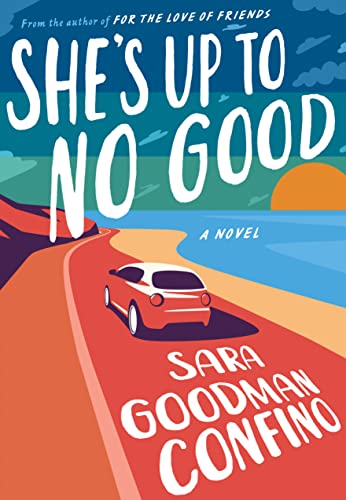
The Vanishing Half

Read: September 2021

Get this book

The Vanishing Half

by Brit Bennett

The Vanishing Half by Brit Bennett was a true page-turner, and I did not want to stop reading it even when I got to the last page. I am not a fan of sequels, but if I was ever going to change my mind, this is the book I would want to read a sequel.

Ms. Bennett focuses on two twins who run away from home at age 16. They have grown up in Mallard, a fictional town in Louisiana. “In Mallard, nobody married dark,” Bennett writes starkly. Over time, its prejudices deepened as its population became lighter and lighter, “like a cup of coffee steadily diluted with cream.” The twins, with their “creamy skin, hazel eyes, wavy hair,” would have delighted the town’s founder. One of the women chooses to pass as white while the other does not.

The Vignes twin sisters will always be identical. But after growing up together in a small, southern black community and running away at age sixteen, it’s not just the shape of their daily lives that is different as adults, it’s everything: their families, their communities, their racial identities. Many years later, one sister lives with her black daughter in the same southern town she once tried to escape. The other passes for white, and her white husband knows nothing of her past. Still, even separated by so many miles and just as many lies, the fates of the twins remain intertwined. What will happen to the next generation, when their own daughters’ storylines intersect?

Weaving together multiple strands and generations of this family, from the Deep South to California, from the 1950s to the 1990s, Brit Bennett produces a story that is at once a riveting, emotional family story and a brilliant exploration of the American history of passing. Looking well beyond issues of race, The Vanishing Half considers the lasting influence of the past as it shapes a person’s decisions, desires, and expectations, and explores some of the multiple reasons and realms in which people sometimes feel pulled to live as something other than their origins.

The question of why people choose to live differently than their origins is one that I often ponder. Growing up in a small town and living in a metropolis raises questions for me as to what my life is now and what was once.

I strongly recommend this book.

Subscribe

Contact Us

×