
When Richard Met Jan!

Estimated reading time: 9 minutes, 0 seconds
Wine on my Head and
Love in My Heart!

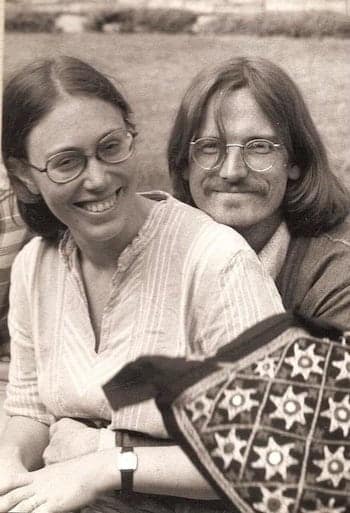
“You came to my party,” Jan exclaimed with a big smile to greet me. My concerns about needing someone to introduce me to her were no longer necessary. I’ve never been speechless, but in the early hours of November 11, 1973, I could not respond.

Finally, I said, “Hello, it’s so nice to see you.”

I should have stopped after saying hello. Alas, I did not.

If you had called me in January, I would have been on the subway in a New York minute to see you,” I said.

You never called me.” protested Jan as her smile turned into a frown.

“I did not have your number,” I responded.

I noticed her raising the wine glass in her right hand, but I thought she was about to have another sip to drink. But Jan was pouring her wine on my head, and nothing like that had ever happened to me.

Without fully thinking about the consequences, I raised my beer can and doused her head with it. I started apologizing, but her laughter stopped me with the words still in my mouth, and I started laughing with her. I thought I had made a significant mistake as soon as I did.
The party was noisy and filled with smoke when I arrived after midnight. The only sound I could hear was her lovely voice. Once we stopped laughing, it was as if we were alone.

Every time I started to say something, she made the same comment. I know there is a rumor about old married couples finishing each other’s sentences, and we were not finishing them; we were starting them together.

I did not want the conversation to stop, and I wanted to spend the rest of my life with her. But then, a familiar voice pierced the pod that surrounded us.

Richard, we are leaving,” said Mark, my co-worker and friend.

I was between a rock and a hard place. I knew I should leave with my friends, but I also wanted to stay with Jan. I was afraid if I left, Jan and I might not meet again. I did not even have her phone number or know her last name.

When Mark told me they were leaving, I was not thinking about the next five minutes.

My thoughts were on the next five weeks, five months, five years, and decades, Jan and I could live together and love each other.

I wanted to kiss her so she knew how I felt, but waI s unsure if she would let me.

I only needed two fingers to count the number of women I had kissed. Years ago, the number of brushoffs had exceeded the total of all my fingers and toes.

I was worried that Jan had a boyfriend, and he might be at the party, and perhaps all she wanted was a friend to have a few laughs and pour wine on their head.

I saw my three friends from East Williamsburg gather their coats. The time to decide was now.

I will meet you in the subway in a minute,” I said half-heartedly.

I rose slightly from my chair and leaned over toward her. I decided a kiss on her forehead would be safe. However, I kissed the top of her head.

She looked up and smiled at me. She smiled and lifted her head, and I kissed her forehead. Our lips embraced, and we kissed for the first time. It was the sweetest kiss in the universe.

I never made it back to East Williamsburg that night.

Next Page

Pages: 1 2 3

42 comments add your comment

    • Thanks, Steve. I appreciate your friendship and your opinion. The words flow like an incoming tide at the beach. The memories of falling in love with Jan remind me how fortunate I was to be loved by her.

      Other memories are bubbling inside of me, waiting for the words to fill the page. Writing about Jan, love, life, and grief helps me during this difficult time. Love never dies. I find this quote by Helen Keller one that helps me manage my grief.

      “What we have once enjoyed we can never lose. All that we love deeply becomes a part of us.”

      Thanks so very much for reading this post.

Leave a Reply to Richard W. BrownCancel reply

This site uses Akismet to reduce spam. Learn how your comment data is processed.

The Jan Lilien Education Fund!

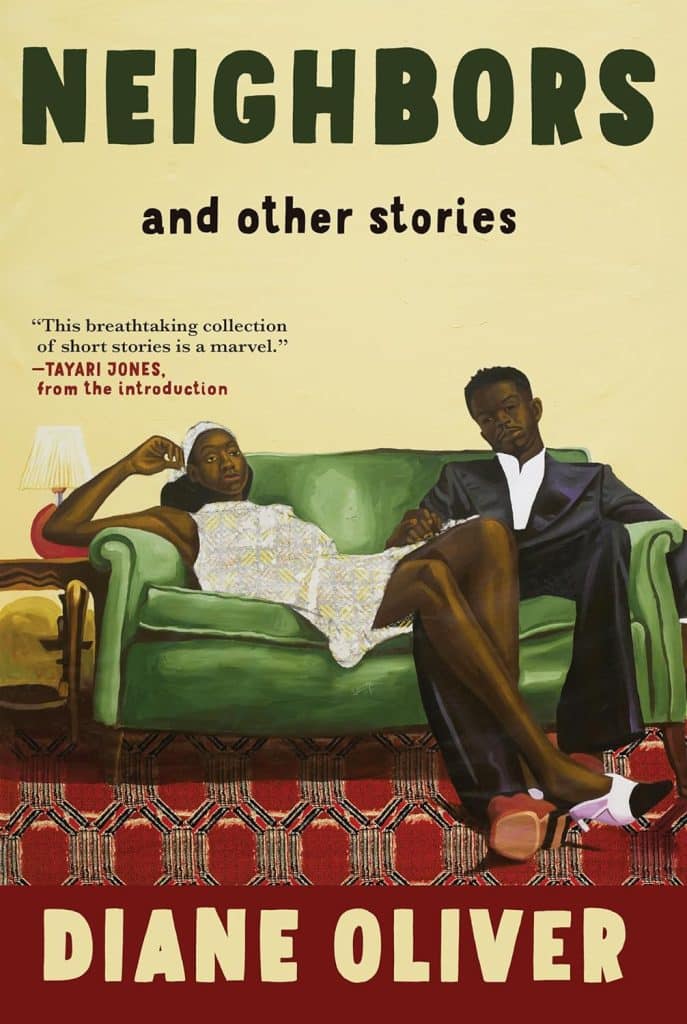
Neighbors and Other Stories

Read: February 2024

Get this book

Neighbors and Other Stories

by Diane Oliver

Today, I began reading Diane Oliver‘s Neighbors and Other Stories. It’s a powerful and eerie debut collection of stories that portrays the struggles of different characters as they face the everyday dangers of racism during the Jim Crow era. The book features an introduction by Tayari Jones.

Diane Oliver is an important yet often overlooked figure in African American literature of the 20th century. She was a gifted writer, ahead of her time, whose talent was cut short by her untimely death at 22 in 1966. Nevertheless, she left behind a remarkable collection of crisply written and often chilling tales that delve into race and racism in America during the 1950s and 60s. Oliver’s insightful stories remain relevant today; this is the only existing collection of her works. She has rightfully earned her place in the literary canon as a masterful storyteller.

The passage below describes several short stories with different themes. The first story, “The Closet on the Top Floor,” tells the story of Winifred, the first Black student in a newly integrated college. In this story, Winifred begins to disappear, creating a nightmarish scenario. The second story is titled “Mint Juleps not Served Here.” It’s about a couple who live deep in a forest with their son. They will go to bloody lengths to protect him from any danger. The third story, “Spiders Cry without Tears,” features a couple named Meg and Walt. They must confront prejudices and strains of interracial and extramarital love. Finally, the last story is the titular one, and it’s a high-tension narrative that follows a nervous older sister the night before her younger brother is set to desegregate his school.

These are powerful and personal depictions of African American families everyday struggles and moments of distress, illustrating how they utilize their abilities to overcome challenges. “Neighbors” is an enthralling compilation and a valuable historical and social document, displaying the remarkable literary skills of a previously overlooked author.

×
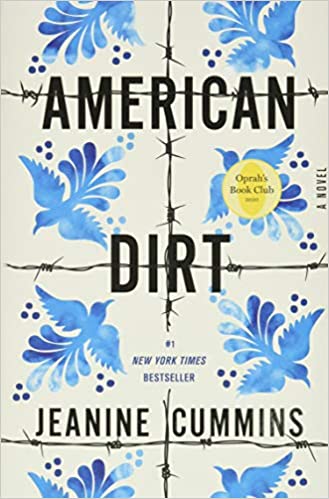
American Dirt

Read: September 2021

Get this book

American Dirt

by Jeanine Cummins

American Dirt by Jeanine Cummins is one of the best books I have read this year.

American Dirt is a “cross-genre novel that combines elements of a commercial thriller, literary fiction, suspense, and romance.” American Dirt refers to the land that is the United States of America and to the difficulty undocumented migrants face both before and after crossing the border.

According to SuperSummary,

Lydia Quixano Pérez, a bookstore owner in Acapulco, saves her son Luca from a massacre that wipes out their entire family at a quinceañera cookout. The perpetrators are three sicarios, killers for Los Jardineros, a violent local cartel. Javier Crespo Fuentes, Lydia’s close friend and the jefe of Los Jardineros, ordered the hit in retaliation for an exposé written by Lydia’s husband, a journalist named Sebastián Pérez Delgado. Javier’s murderous rage stems not from the article itself, but from the impact it has on his daughter, Marta, who commits suicide when she learns of her father’s true identity. Lydia and Luca spend the rest of the novel running from Javier’s men, encountering a diverse cast of migrants along the road to the US.

I read the book at the same time that Haitian migrants were being deported at the border. Ms. Cummins writes passionately about the plight of migrants and the difficulties they face as they seek a new life in the US. This book highlighted this to me in ways that I understood intellectually but not emotionally.

Ms. Cummins refers to a sign she saw in Spanish in Tijuana while she was researching this book:

También de este lado hay sueños.

On this side, too, there are dreams.

All of our ancestors were migrants, and they all had dreams of a better life. We need to find a better way to help those who now have goals find a home so that their hopes for a better future can come true.

Subscribe

Contact Us

×
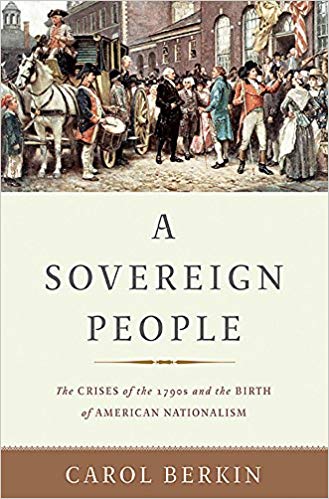
A Sovereign People: The Crises of the 1790s and the Birth of American Nationalism

Read: February 2019

Get this book

A Sovereign People: The Crises of the 1790s and the Birth of American Nationalism

by Carol Berkin

A Sovereign People: The Crises of the 1790s and the Birth of American Nationalism by Carol Berkin, Presidential Professor American Colonial and Revolutionary History; Women’s History Professor at Baruch College, focuses on four crises in the first decade. Most historians view these are part of the early partisan debates in America.

Professor Berkin takes a different perspective. She focuses on how the Whiskey Rebellion, the Genet Affair, the XYZ Affair, and the Alien and Sedition Acts helped build nationalism. Despite the partisan divisions, both sides could find solutions that helped America survive its first decade. The failure to resolve anyone of these could have doomed America to failure.

The Federalists – Washington, Hamilton, and Adams – were the leaders of that first decade and managed the successive crisis of sovereignty.

A Sovereign People is one of four books from my first One Day University class.

Subscribe

Contact Us

×
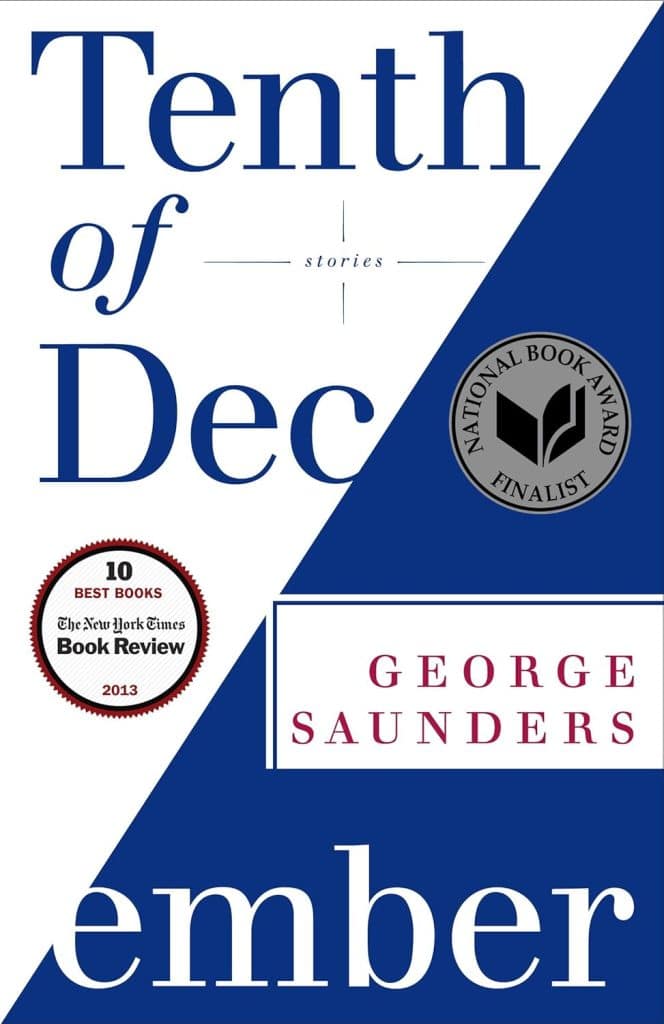
Tenth of December: Stories

Read: July 2024

Get this book

Tenth of December: Stories

by George Saunders

One of the most important and blazingly original writers of his generation, George Saunders, is an undisputed master of the short story. The Tenth of December is his most honest, accessible, and moving collection yet. It is one of the New York Times’ 100 Best Books of the Century. The book is structured as a collection of short stories, each offering a unique and compelling narrative.

In the taut opener, “Victory Lap,” a boy witnesses the attempted abduction of the girl next door and is faced with a harrowing choice: Does he ignore what he sees or override years of smothering advice from his parents and act?

In “Home,” a combat-damaged soldier moves back in with his mother and struggles to reconcile the world he left behind with the one he has returned to.

In the title story, a stunning meditation on imagination, memory, and loss, a middle-aged cancer patient walks into the woods to commit suicide, only to encounter a troubled young boy who, throughout a fateful morning, gives the dying man a final chance to recall who he is.

An unfortunate, deluded owner of an antique store; two mothers struggling to do the right thing; a teenage girl whose idealism is challenged by a brutal brush with reality; a man tormented by a series of pharmaceutical experiments that force him to lust, to love, to kill—the unforgettable characters that populate the pages of Tenth of December are vividly and lovingly infused with Saunders’s signature blend of exuberant prose, deep humanity, and stylistic innovation.

Writing brilliantly and profoundly about class, sex, love, loss, work, despair, and war, Saunders cuts to the core of the contemporary experience. These stories take on the big questions and explore the fault lines of our morality, delving into what makes us suitable and what makes us human. They are not just stories but profound explorations that will stimulate your intellect and make you ponder.

Unsettling, insightful, and hilarious, the stories in Tenth of December—through their manic energy, their focus on what is redeemable in human beings, and their generosity of spirit—not only entertain and delight but also fulfill Chekhov’s dictum that art should “prepare us for tenderness.” The humor in these stories will keep you entertained and laughing, even as they delve into profound themes.


George Saunders is the author of thirteen books, including the novel Lincoln in the Bardo, which won the Booker Prize, and five collections of stories, including Tenth of December, which was a finalist for the National Book Award, and the recent collection Liberation Day (selected by former President Obama as one of his ten favorite books of 2022).

Three of Saunders’s books—Pastoralia, Tenth of December, and Lincoln in the Bardo—were chosen for The New York Times’s list of the 100 Best Books of the 21st Century. Saunders hosts the popular Story Club on Substack, which grew out of his book, A Swim in a Pond in the Rain. In 2013, he was named one of Time’s 100 Most Influential People. He teaches in the creative writing program at Syracuse University.


When you purchase a book through one of my links, I earn a small commission that helps support my passion for reading. This contribution allows me to buy even more books to share with you, creating an incredible cycle of discovering great reads together! Your support truly makes a difference!


×
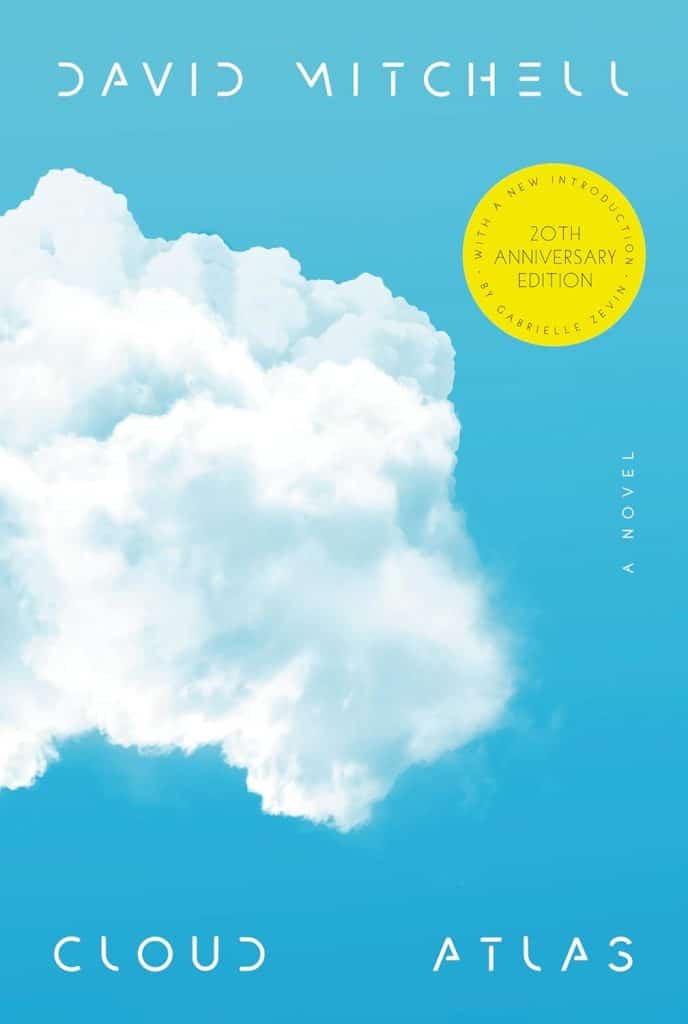
Cloud Atlas: A Novel

Read: September 2024

Get this book

Cloud Atlas: A Novel

by David Mitchell

Today, I started reading Cloud Atlas: A Novel by David Mitchell, one of The New York Times’ 100 Best Books of the 21st Century. Cloud Atlas begins in 1850 with Adam Ewing, an American notary, voyaging from the Chatham Isles to his home in California. Ewing is befriended by a physician, Dr. Goose, who begins treating him for a rare species of brain parasite.

The novel careens, with dazzling virtuosity, to Belgium in 1931, the West Coast in the 1970s, an inglorious present-day England, a Korean superstate of the near future where neo-capitalism has run amok, and, finally, a postapocalyptic Iron Age Hawaii in the last days of history. But the story doesn’t end even there. What sets Cloud Atlas apart is its unique narrative structure, which boomerangs back through centuries and space, returning by the same route, in reverse, to its starting point. This journey reveals how the disparate characters connect, how their fates intertwine, and how their souls drift across time like clouds across the sky.

As wild as a video game, as mysterious as a Zen koan, Cloud Atlas is an unforgettable tour de force that, like its incomparable author, has transcended its cult classic status to become a worldwide phenomenon. The novel’s diverse settings and cultures, from 1850 Chatham Isles to a postapocalyptic Iron Age Hawaii, appeal to readers across the globe, offering a rich and varied reading experience.

×
Thirst Trap

Read: November 2025

Get this book

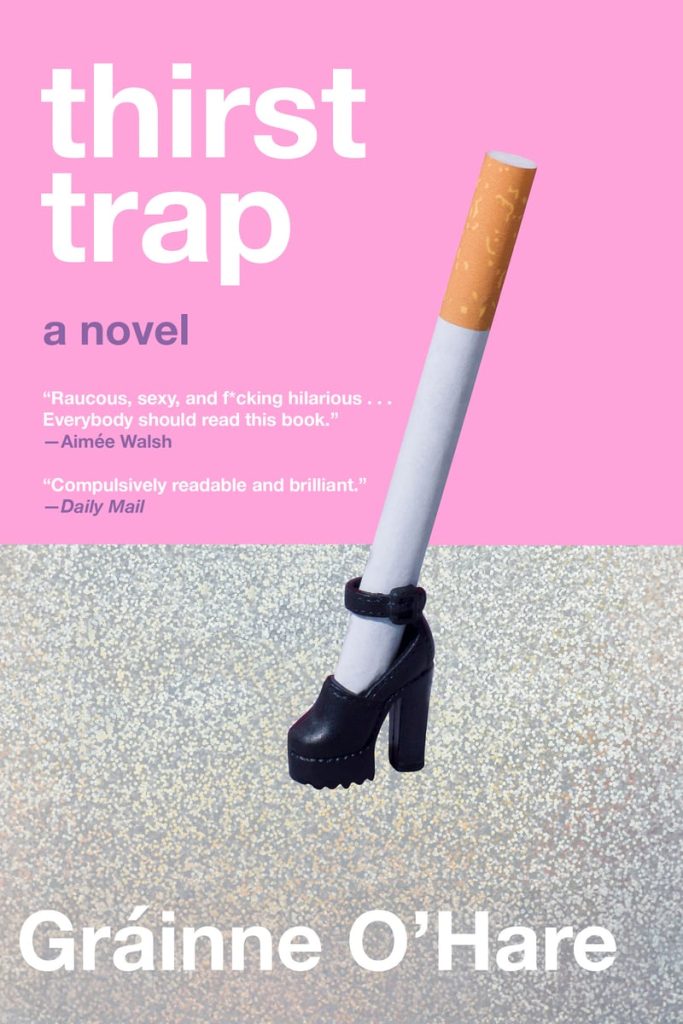
Thirst Trap: A Novel

by Gráinne O'Hare

Filled with heart and humor, Thirst Trap by Gráinne O’Hare is a lively celebration of friendship, embracing uncertainty, and indulging in “just one more round” before heading home. This sharply funny novel explores the challenges of being in your late 20s as you approach 30, questioning when you will tire of morning hangovers, dead-end entry-level jobs, and late nights at bars. This friend group is about to discover the answer.

Sometimes friends hold you together.
Sometimes they’re why you’re falling apart.

Harley, Róise, and Maggie have been friends for a long time. They met in primary school years ago, and they are still together, spending their nights on the sticky dance floors of Belfast’s grungiest pubs. Each woman is navigating her own challenges—entry-level jobs, messy romantic entanglements, and late nights—but they always find their way back to each other and to the ramshackle house they share. Amidst the familiar chaos, the three are still grieving their fourth housemate, whose room remains untouched, with the weight of their last big fight lingering heavily over them.

The girls’ house has witnessed the highs and lows of their roaring twenties—raucous parties, surprising (and sometimes regrettable) hook-ups, and hellish hangovers. However, as they approach thirty, their home begins to crumble around them, and the cracks in their friendship become harder to ignore. In the midst of the wreckage, they must decide whether their friendship will survive into a new decade or if growing up sometimes means letting go.


Gráinne O’Hare is a writer from Belfast based in Newcastle upon Tyne. She received a Northern Debut Award for Fiction from New Writing North and was awarded funding by the Arts Council for the development and completion of her first novel. She has also been shortlisted for the Francis MacManus Short Story Competition and the Bridport Prize, and came in the top three of the Benedict Kiely Short Story Competition.

She is a media sub-editor for Criticks reviews of the British Society for Eighteenth-Century Studies and holds a PhD in eighteenth-century women’s life-writing from Newcastle University.


Discover your next favorite book and dive into a world of curated, exciting reads by purchasing through my links. You’ll have access to a diverse selection of books that I’ve personally vetted to ensure quality and enjoyment. Additionally, by supporting these selections, you’ll help me continue to provide you with more personalized recommendations. I earn a small commission from your purchase, which allows me to buy and share even more books with you. Your support truly makes a difference!


×

Discover more from Sharing Jan’s Love

Subscribe now to keep reading and get access to the full archive.

Continue reading