
The Vanishing Half

Estimated reading time: 2 minutes, 3 seconds

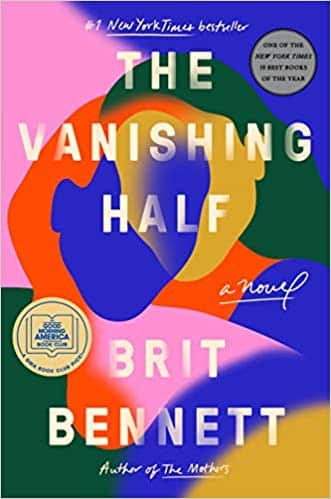
The Vanishing Half by Brit Bennett was a true page-turner, and I did not want to stop reading it even when I got to the last page. I am not a fan of sequels, but if I was ever going to change my mind, this is the book I would want to read a sequel.

Ms. Bennett focuses on two twins who run away from home at age 16. They have grown up in Mallard, a fictional town in Louisiana. “In Mallard, nobody married dark,” Bennett writes starkly. Over time, its prejudices deepened as its population became lighter and lighter, “like a cup of coffee steadily diluted with cream.” The twins, with their “creamy skin, hazel eyes, wavy hair,” would have delighted the town’s founder. One of the women chooses to pass as white while the other does not.

The Vignes twin sisters will always be identical. But after growing up together in a small, southern black community and running away at age sixteen, it’s not just the shape of their daily lives that is different as adults, it’s everything: their families, their communities, their racial identities. Many years later, one sister lives with her black daughter in the same southern town she once tried to escape. The other passes for white, and her white husband knows nothing of her past. Still, even separated by so many miles and just as many lies, the fates of the twins remain intertwined. What will happen to the next generation, when their own daughters’ storylines intersect?

Weaving together multiple strands and generations of this family, from the Deep South to California, from the 1950s to the 1990s, Brit Bennett produces a story that is at once a riveting, emotional family story and a brilliant exploration of the American history of passing. Looking well beyond issues of race, The Vanishing Half considers the lasting influence of the past as it shapes a person’s decisions, desires, and expectations, and explores some of the multiple reasons and realms in which people sometimes feel pulled to live as something other than their origins.

The question of why people choose to live differently than their origins is one that I often ponder. Growing up in a small town and living in a metropolis raises questions for me as to what my life is now and what was once.

I strongly recommend this book.

Subscribe

Contact Us

The Jan Lilien Education Fund!

Invisible Child

Read: December 2021

Get this book

Invisible Child: Poverty, Survival & Hope in an American City

by Andrea Elliott

Invisible Child: Poverty, Survival & Hope in an American City by Andrea Elliott was a gift from my son Jon. The New York Times selected “Invisible Child” as one of the best books published this year. It is indeed one of the top books on my all-time list.

GoodReads summary provides a good overview,

The riveting, unforgettable story of a girl whose indomitable spirit is tested by homelessness, poverty, and racism in an unequal America—from Pulitzer Prize-winning journalist Andrea Elliott of The New York Times

Invisible Child follows eight dramatic years in the life of Dasani Coates, a child with imagination as soaring as the skyscrapers near her Brooklyn homeless shelter. Born at the turn of a new century, Dasani is named for the bottled water that comes to symbolize Brooklyn’s gentrification and the shared aspirations of a divided city. As Dasani grows up, moving with her tight-knit family from shelter to shelter, this story goes back to trace the passage of Dasani’s ancestors from slavery to the Great Migration north. When Dasani comes of age, New York City’s homeless crisis explodes as the chasm deepens between rich and poor.

In the shadows of this new Gilded Age, Dasani must lead her seven siblings through a thicket of problems: hunger, parental drug addiction, violence, housing instability, segregated schools, and the constant monitoring of the child-protection system. When, at age thirteen, Dasani enrolls at a boarding school in Pennsylvania, her loyalties are tested like never before. As she learns to “code switch” between the culture she left behind and the norms of her new town, Dasani starts to feel like a stranger in both places. Ultimately, she faces an impossible question: What if leaving poverty means abandoning the family you love?

By turns heartbreaking and revelatory, provocative and inspiring, Invisible Child tells an astonishing story about the power of resilience, the importance of family, and the cost of inequality. Based on nearly a decade of reporting, this book vividly illuminates some of the most critical issues in contemporary America through the life of one remarkable girl.

Jan and I were involved and knew that child poverty and homelessness needed repair. In addition, Jan lived on Washington Park across from Ft. Greene Park in 1974-75. We knew the neighborhood where much of the book’s story takes place. 

Before meeting Jan in 1973, I was both a community/tenant organizer and a youth worker. In the latter role, I made weekly hostel trips for eight to ten young boys from East Williamsburg during 1973. The trips were the first the boys had ever been outside of their neighborhood.

Many of them had imaginations like Dasani. They also had her instinct to fight. One of my first tasks was to check for any weapons.

Decades later, when I would see any of them, now adults, they would ask when we were going on another trip. I wish I had met Jan when I made those trips. She would have helped me improve them and document the impact. If I could re-write history, I would have her join me as the second adult on the hostel trips.

After that summer, it was clear my primary skills were as a community/tenant organizer. Over the next few years, my work focused on creating affordable and supportive housing.

Jan and I did meaningful work that made a difference, yet the need for a permanent solution to the crisis remains. The book highlights the crucial role of resilience, the importance of family, and the cost of inequality. As a nation, we cannot undermine those values by breaking up families, impeding resilience, and maintaining racial and economic inequality. 

The current debate in Washington over the Build Back Better legislation needs to focus not on how much we spend but on its impact on children and families

David Brooks, a conservative commentator, has supported these expenditures for what they can do to address this country’s cultural and economic crisis. 

These packages say to the struggling parents and the warehouse workers: I see you. Your work has dignity. You are paving your way. You are at the center of our national vision.

This is how you fortify a compelling moral identity, which is what all of us need if we’re going to be able to look in the mirror with self-respect. This is the cultural transformation that good policy can sometimes achieve. Statecraft is soulcraft.

If you can only read one book this year, this is the one to read. Child poverty, homelessness, and inequality impact all of us. Ending child poverty and homelessness will make us a healthier and more inclusive nation. It is time for a compelling moral call to action!

Subscribe

Contact Us

When you buy a book or product using a link on this page, I receive a commission. Thank you for supporting Sharing Jan’s Love blog.

×
All the Sinners Bleed- A Novel

Read: June 2023

Get this book

All the Sinners Bleed: A Novel

by S. A. Cosby

Today, I delved into the gripping pages of “All the Sinners Bleed” by S. A. Cosby. This enthralling novel centers around Titus Crown, the first African American sheriff in Charon County, Virginia. Despite the county’s reputation for traditional customs such as moonshine, cornbread, and honeysuckle, Titus, with his FBI expertise, knows that the peace won’t last forever.

On the first anniversary of Titus’s election, a schoolteacher is murdered by an ex-student, and Titus’s deputies take down the perpetrator. As Titus delves deeper into the case, he uncovers a web of horrendous crimes and finds a serial killer lurking in plain sight, haunting Charon’s dirt roads and woodland clearings.

Titus is determined to solve the case, despite its connection to a nearby church, and he harbors a personal secret that haunts him. However, he faces opposition from a far-right group that wants to hold a parade to honor the town’s Confederate past while he tries to solve the issue.

Despite the challenges, Titus remains resolute in his love for Charon and his commitment to finding justice. The collision of religion and hatred cannot deter him from his duty.


S. A. Cosby is a New York Times bestselling writer from southeastern Virginia. He is the author of All the Sinners Bleed, which was on more than forty Best of the Year lists, including Barack Obama’s, as well as Edgar Award finalist Razorblade Tears and Los Angeles Times Book Prize winner Blacktop Wasteland. He has also won the Anthony Award, ITW Thriller Award, Barry Award, Macavity Award, BCALA Award, and Audie Award. He has been longlisted for the ALA Andrew Carnegie Medal for Excellence.


When you purchase a book through one of my links, I earn a small commission that helps support my passion for reading. This contribution allows me to buy even more books to share with you, creating an incredible cycle of discovering great reads together! Your support truly makes a difference!

Enjoy a limited-time offer of 20% off your next book purchase at Bookshop.org!


×
The Little Prince

Read: May 2021

Get this book

The Little Prince

by Antoine de Saint-Exupéry

The Little Prince by Antoine de Saint-Exupéry is often referred to as a children’s book. I read it as a child and later read it to my children. After Jan died, I picked it up again and read it more than once.

I have found quotes from the book very helpful during my grief journey. These are three that I often use in my writing and my conversations with friends and family.

The most beautiful things in the world cannot be seen or touched, they are felt with the heart.”

It is such a mysterious place, the land of tears.

You see, one loves the sunset when one is so sad.”

The first quote about beautiful things only felt in the heart summarizes how I knew Jan was the one for me within seconds of meeting her.

For those who have not read the book, this overview might help convince you to read it today!

The Little Prince describes his journey from planet to planet, each tiny world populated by a single adult. It’s a wonderfully inventive sequence that evokes the great fairy tales and monuments of postmodern whimsy. The author pokes similar fun at a business person, a geographer, and a lamplighter, all of whom signify some futile aspect of adult existence.

The Little Prince will be by my bedside as long as I live!

Subscribe

Contact Us

×
Memorial Days: A Memoi

Read: March 2025

Get this book

Memorial Days: A Memoir

by Geraldine Brooks

Today, I started reading “Memorial Days: A Memoir” by Geraldine Brooks, the bestselling Pulitzer Prize-winning author of Horse”. In this poignant and beautifully written memoir, she explores sudden loss and the journey toward healing. Why do I choose to read novels and memoirs about loss and grief? Perhaps it’s because, as Martín Prechtel wrote in his book The Smell of Rain on Dust”, “Grief is praise because it is the natural way love honors what it misses.”

Many cultural and religious traditions expect grieving people to withdraw from the world. In modern life, we frequently encounter bureaucratic obstacles and lengthy to-do lists. This is precisely what happened to Geraldine Brooks when her partner of more than thirty years, Tony Horwitz—just sixty years old and, to her knowledge, vigorous and healthy—collapsed and died on a sidewalk in Washington, D.C.

After spending their early years together in conflict zones as foreign correspondents, Geraldine and Tony settled down to raise two sons on Martha’s Vineyard. They lived a fulfilling life filled with meaningful work, good humor, and tenderness. Geraldine and Tony spent their days writing and evenings cooking family dinners or enjoying sunsets with friends at the beach. Their peaceful existence abruptly ended on Memorial Day 2019 when Geraldine received the dreaded phone call we all fear. The demands of life became immediate and overwhelming, leaving little room for grief. The sudden loss created a profound void in their lives.

Three years later, she booked a flight to a remote island off the coast of Australia to give herself the time to mourn finally. She often spent days alone in a shack on the pristine, rugged coast without seeing another person. It was a space for her to reflect on the various ways cultures grieve and consider which rituals might help her rebuild her life in the wake of Tony’s death.

Memorial Days,” a spare and profoundly moving memoir, portrays a larger-than-life man and the timeless love between two souls. It exquisitely captures the joy, agony, and mystery of life.


Geraldine Brooks is the author of six novels, including “Horse,” “People of the Book,” “Year of Wonders,” and the Pulitzer Prize-winning “March.” She has also written acclaimed nonfiction works, including “Nine Parts of Desire” and “Foreign Correspondence.” Her books have been translated into more than thirty languages and have sold millions of copies worldwide. Born and raised in Australia, Brooks now divides her time between Sydney and Martha’s Vineyard.


My journey through grief has significantly helped me grow as a person by focusing on conscientious resilience. I make it a point to read and walk daily, engage in worship, and actively participate as a volunteer and a good neighbor in my community. Fourteen hundred days ago, I wasn’t sure if I could continue living or how to move forward. However, by concentrating on strengthening my resilience, I now lead a life filled with meaning and purpose. I choose to look back not on what I lost but on what I have gained.

As my friend Danny said nearly a year ago, “You are an incredible person! You are a new person! A better person! Although Jan is not here physically, she has done so much for you!

My Rabbi, Rav Uri, echoed similar sentiments during his remarks when I received the Rev. Dr. Martin Luther King, Jr. Distinguished Service Award. If their beliefs are true, much of my progress directly results from my conscientious resilience!


When you purchase a book through one of my links, I earn a small commission that helps support my passion for reading. This contribution allows me to buy even more books to share with you, creating an incredible cycle of discovering great reads together! Your support truly makes a difference!


×
The Vegetarian: A Novel

Read: October 2024

Get this book

The Vegetarian: A Novel

by Han Kang

Today, I started reading The Vegetarian: A Novel by Han Kang, Winner of the 2024 Nobel Prize in Literature. The novel also won The International Booker Prize and is one of The New York Times’s 100 Best Books of the 21st Century. Celebrated by critics worldwide, The Vegetarian is a darkly allegorical, Kafka-esque tale of power, obsession, and one woman’s struggle to break free from the violence both without and within her.

Before the nightmares began, Yeong-hye and her husband lived an ordinary, controlled life. But the dreams—invasive images of blood and brutality—torture her, driving Yeong-hye to purge her mind and renounce eating meat altogether. It’s a small act of independence, but it interrupts her marriage and sets into motion an increasingly grotesque chain of events at home.

As her husband, her brother-in-law, and her sister each fight to reassert their control, Yeong-hye obsessively defends the choice that’s become sacred to her. Soon, their attempts turn desperate, subjecting first her mind and then her body to ever more intrusive and perverse violations, sending Yeong-hye spiraling into a dangerous, bizarre estrangement, not only from those closest to her but also from herself.


Han Kang was born in 1970 in South Korea. She is the author of The Vegetarian, which I have read, and winner of the International Booker Prize,  Human ActsThe White BookGreek Lessons, and We Do Not Part. In 2024, she received the Nobel Prize in Literature.


When you purchase a book through one of my links, I earn a small commission that helps support my passion for reading. This contribution allows me to buy even more books to share with you, creating an incredible cycle of discovering great reads together! Your support truly makes a difference!


×
Checkout 19: A Novel

Read: December 2022

Get this book

Checkout 19: A Novel

by Claire-Louise Bennett

Checkout 19: A Novel by Claire-Louise Bennett, a New York Times Best Ten Best Books of 2022; the newspaper highlights the novel’s “unusual setting: the human mind — a brilliant, surprising, weird and very funny one. All the words one might use to describe this book — experimental, autofictional, surrealist — fail to convey the sheer pleasure of ‘Checkout 19.'” I fully agree with this description and found myself living in my mind.

Since Jan died in May of 2021, I have found myself with no one to talk to about the day-to-day events that consume so much of our lives. Checkout 19: A Novel reminded me that I have only been carrying those intimate conversations in my mind. Is it surreal? Yes. Yes, it is. Reading this novel helped me to accept the importance of those conversations. The new characters and scenarios I conjure are less creative than Ms. Claire-Louise Bennett’s

Goodreads describes Checkout 19: A Novel as the adventures of a young woman discovering her genius through the people she meets–and dreams up–along the way. Checkout 19 is a radical affirmation of the power of the imagination, and the magic escapes those who master it open to us all.

I recommend this book.

The Goodreads summary provides an overview,

In a working-class town in a county west of London, a schoolgirl scribbles stories in the back pages of her exercise book, intoxicated by the first sparks of her imagination. As she grows, everything and everyone she encounters become fuel for a burning talent. The large Russian man in the ancient maroon car who careens around the grocery store where she works as a checkout clerk, and slips her a copy of Beyond Good and Evil. The growing heaps of other books in which she loses-and finds-herself. Even the derailing of a friendship, in a devastating violation. The thrill of learning to conjure characters and scenarios in her head is matched by the exhilaration of forging her own way in the world, the two kinds of ingenuity kindling to a brilliant conflagration.


The Jan Lilien Education Fund sponsors ongoing sustainability and environmental awareness programs. Gifts made this month; I will match dollar-for-dollar. All donations are tax-deductible.

Subscribe

Contact Us

I receive a commission when you buy a book or product using a link on this page. Thank you for supporting Sharing Jan’s Love blog.


×